Zhong Guo Qi Che Bao Wang

Search documents
“十五五”开年这么干——车企2026愿望清单解析
Zhong Guo Qi Che Bao Wang· 2026-01-15 08:38
1月6日,奇瑞集团明确2026年全年销量目标为320万辆,同比增加14.03%。同时,东风汽车把2026年整体销量目标定为325万辆,吉利汽车的销量目 标为345万辆,零跑汽车挑战年度销量100万辆,小米汽车的目标是55万辆,蔚来提出"每年保持40%~50%的增长"……车企的2026年规划与目标正在陆续 出炉。除了产销目标是新亮点,智能化、新能源技术创新也是车企新一年的"重头戏";对未来产业的布局及"出海"同样是车企2026年追逐的目标。 新年新目标 既稳健又激进 2026年作为"十五五"开局之年,许多车企都在摩拳擦掌,争取迎来"开门红"。东风汽车表示,2026年,为实现325万辆的整体目标、170万辆新能源车 与60万辆出口车的指标,要在多个维度同步推进。一方面,继续强化自主品牌的产品竞争力与品牌影响力,推动岚图、猛士等高端品牌在细分市场建立用 户认知,同时加快奕派、风神等大众化品牌的电动化转型与智能化普及。另一方面,合资板块需进一步加快电动化车型导入与智能化配置升级,稳定市场 份额的同时,探索出口与本地化协同的新路径。 1月1日,吉利汽车宣布,董事会已将本集团2026年的销量目标定为345万辆,较2025 ...


AI 时代:智能驾驶从技术想象走向产业现实
Zhong Guo Qi Che Bao Wang· 2026-01-15 08:30
Core Insights - The automotive industry is undergoing a profound transformation driven by artificial intelligence (AI), moving from early concept validation to practical implementation, reshaping the entire industrial ecosystem from technology development to business models [1][2]. Group 1: Restructuring the Automotive Value Chain - The core of the AI era is "cognition," contrasting with the "computation" focus of the information age, characterized by data-driven societal mechanisms, algorithm-influenced decision-making, and human-machine collaboration [4]. - AI systems possess learning, reasoning, and self-optimization capabilities, participating as "cognitive partners" in production, management, and service processes, significantly impacting manufacturing, transportation systems, and urban operations [4][5]. - Multiple countries have elevated AI to a national strategic level, promoting technological innovation and industrial application integration through systematic policies [4]. Group 2: Technological Pathways in Autonomous Driving - Three differentiated technological routes have emerged in the global autonomous driving sector: 1. The robust route represented by Waymo, utilizing a combination of lidar, radar, and cameras, achieving L4-level commercial operations but facing high costs and slow scalability [6]. 2. The aggressive route advocated by Tesla, relying on a "pure vision" approach with lower hardware costs, primarily applied in L2+/L3-level driving assistance, but facing challenges in extreme scenarios [6]. 3. The system redundancy route explored by Zoox, focusing on physical redundancy in vehicle structure and sensor layout, aiming for L4/L5-level fully autonomous driving but with a longer commercialization cycle [6]. - Autonomous driving technology has demonstrated high reliability in practical applications, such as Waymo vehicles operating smoothly in complex urban environments, enhancing passenger safety and trust through transparent real-time interaction [6][7]. Group 3: Future of Autonomous Driving - There is no "one correct" technological answer for autonomous driving; companies must balance safety, cost, scalability, and reliability [7]. - As AI agent capabilities evolve, computing costs decrease, and regulatory frameworks improve, autonomous driving is expected to expand from pilot projects to broader applications [7]. - Future competition will focus not only on sensors or algorithms but also on system engineering capabilities, data loop construction, and long-term technological patience, marking the beginning of a significant revolution in mobility [7].

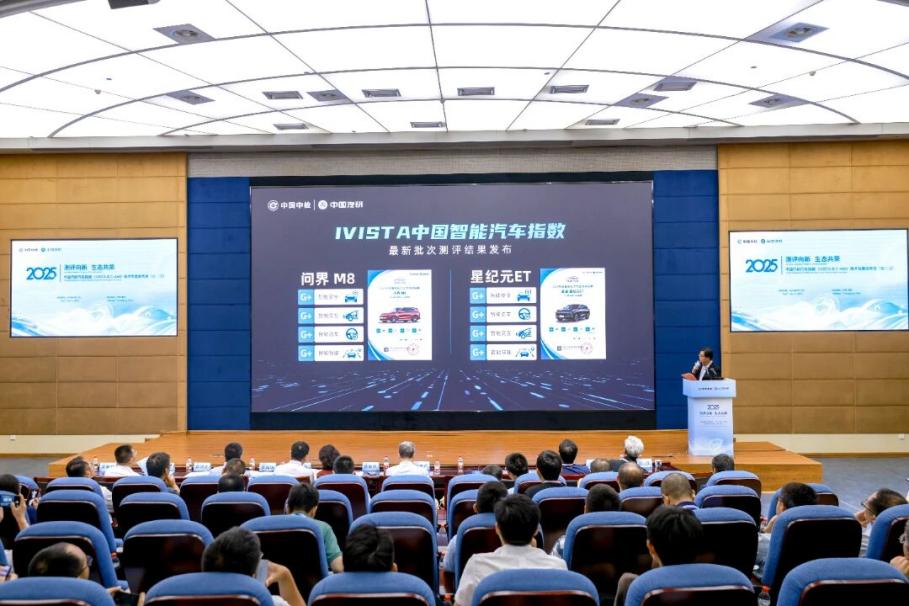
【回望2025】创新科普形式,赋能未来成长:汽车指数科普践行路上的“责任”答卷
Zhong Guo Qi Che Bao Wang· 2026-01-15 07:59
Core Viewpoint - The 2026 New Year message from the national president emphasizes the importance of innovation for high-quality development, the significance of public welfare, and the need for openness to the world. The China Automotive Research Institute (CARI) is committed to these principles through its automotive index, focusing on innovation, responsibility, and a global perspective in 2025 [1]. Group 1: Public Release - CARI prioritizes "public release" as a key action to fulfill social responsibility, aiming to transform rigorous evaluation results into trustworthy consumer references. In 2025, the automotive index published results from 8 evaluation batches, covering over 60 popular market models, providing comprehensive and reliable guidance for consumers [2]. Group 2: Public Science Popularization - CARI is dedicated to creating a new ecosystem for public science popularization, introducing a science popularization IP character named "Little Lion Pointer" to bridge the gap between professional evaluation technology and public understanding. This character, inspired by a lion, aims to make technical knowledge more accessible and relatable [4][6]. Group 3: Public Welfare Activities - CARI's public welfare initiatives have reached various communities, including universities and schools, to spread knowledge. The "University Tour" engaged nearly 3,000 students through technical lectures on topics like automotive safety and intelligent driving evaluation, fostering innovation and talent in the industry [7]. - The "Campus Tour" provided traffic safety education to children through interactive methods, encouraging them to become "safety little supervisors" within their families. This initiative aims to influence entire families through the education of a single child [10]. - CARI participated in national science popularization events, such as the World Intelligent Industry Expo, showcasing the "Little Lion Pointer" and offering immersive evaluation experiences to the public, enhancing understanding of professional evaluation results [15][19].

服务汽车以旧换新,懂车帝已累计带动新车消费4600亿元
Zhong Guo Qi Che Bao Wang· 2026-01-15 07:51
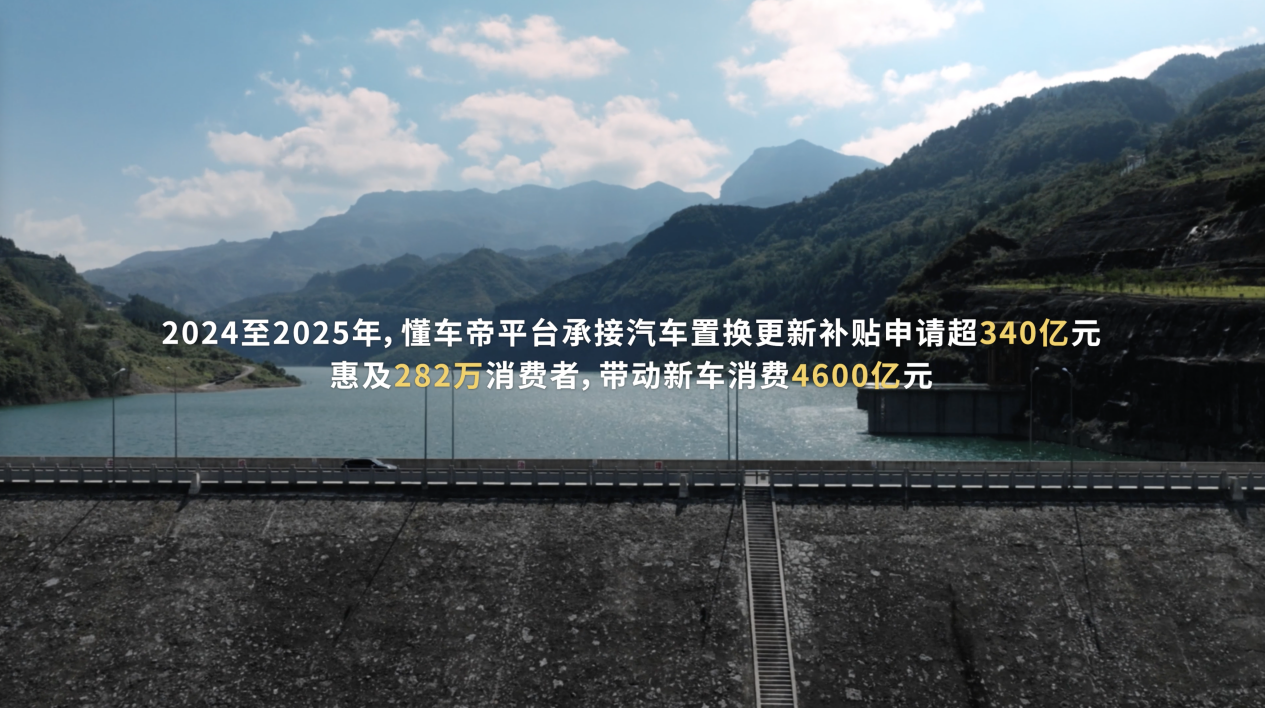
Core Insights - The article discusses the implementation of the new car trade-in subsidy policy across various regions in China, with the "懂车帝" app designated as the exclusive platform for subsidy applications in 2026 [1][5]. Group 1: Policy Implementation - The new car trade-in subsidy policy has been confirmed by multiple regions including Jilin, Hubei, Yunnan, Guangzhou, and Shenzhen, with "懂车帝" as the official application platform [1]. - In 2025, "懂车帝" served as the official platform for trade-in subsidy applications across 11 provinces and 2 cities, facilitating over 34 billion yuan in subsidy applications benefiting 2.82 million consumers and driving new car consumption of 460 billion yuan [1]. Group 2: Service Enhancements - Starting in 2023, "懂车帝" began to undertake the distribution of automotive consumption subsidies, launching a mini-program for subsidy applications in 2024 and expanding its services to multiple provinces [3]. - In 2025, "懂车帝" introduced a dedicated "government subsidy" channel on its app to streamline subsidy applications and policy inquiries, promoting the trade-in program [3]. Group 3: Subsidy Adjustments for 2026 - The 2026 subsidy policy includes several optimizations: subsidies for qualifying new energy vehicles are set at 8% of the vehicle price (up to 15,000 yuan), while subsidies for qualifying fuel vehicles are set at 6% (up to 13,000 yuan) [5]. - The policy aims to guide the market towards energy-efficient and environmentally friendly vehicle consumption by specifying eligible vehicle types [5]. Group 4: Consumer Engagement and Promotions - "懂车帝" plans to enhance consumer engagement by launching various promotional activities, including the "懂车神券·年货宠粉节," which aims to provide consumers with discounts and a seamless car buying experience [5][6]. - The platform will continue to expand its coverage for subsidy applications and promote the "sell old, buy new" initiative to encourage consumer participation in the trade-in program [6].
AI重塑汽车产业:从CES 2026看智能化革命的深度演进
Zhong Guo Qi Che Bao Wang· 2026-01-15 06:23
Core Insights - The CES 2026 event highlighted the accelerated transformation of the automotive industry towards smart technology, with AI becoming a core element in redefining automotive products [1] - The concept of "smart driving equity" emerged as a key theme in 2025, with advanced driving systems becoming accessible across a wider range of vehicle price points [2] - The rapid proliferation of smart driving technology necessitates new requirements for vehicle after-sales service systems, leveraging AI for efficient diagnostics [3] - The commercialization of Robotaxi services is gaining momentum, with significant growth in revenue and operational scale in major Chinese cities [5] - The evolution of smart cockpits is transforming vehicles into personalized assistants, enhancing user interaction and experience [6] - AI-driven marketing services are reshaping automotive marketing from broad outreach to precision targeting [7] - The competitive landscape is shifting towards ecosystem collaboration among automotive companies and technology suppliers, fostering innovation and efficiency [9] - The future of the automotive industry will be defined by AI, with a focus on collaborative ecosystems and comprehensive digital transformation [10] Group 1: Smart Driving Technology - The introduction of advanced driving systems like BYD's "Heavenly Eye" and Xiaopeng's XNGP is making smart driving features available in lower-priced vehicles [2] - The VLA architecture enables a more human-like decision-making process in driving, significantly reducing reliance on real vehicle data for testing [2] - The cost reduction in high-level driving systems, such as the integration of solid-state LiDAR, is facilitating their adoption in more affordable models [2] Group 2: After-Sales Service Innovations - The establishment of an AI-driven diagnostic system has achieved a 98.1% accuracy rate in diagnosing electric vehicle systems, significantly improving service efficiency [3] - The AI system reduces the time to address individual faults to approximately 20 seconds, enhancing the overall after-sales service experience [3] Group 3: Commercialization of Robotaxi - Major cities in China are rapidly expanding Robotaxi operations, with Wuhan leading in testing mileage and population coverage [5] - Companies like Pony.ai and WeRide are reporting substantial revenue growth in their Robotaxi services, indicating a shift towards profitability [5] - The market for Robotaxi services is projected to grow significantly, with estimates reaching $4.7 billion by 2035 [5] Group 4: Smart Cockpit Developments - The integration of advanced AI models in vehicle cockpits is transforming them into intelligent assistants capable of understanding user emotions and preferences [6] - The trend towards end-to-end AI solutions in cockpits is expected to enhance user experience and interaction [6] Group 5: Marketing and Service Automation - AI-driven marketing tools are enabling automotive brands to identify high-intent customers and streamline communication processes [7] - The use of AI in customer outreach has led to improved engagement rates and more efficient service delivery [8] Group 6: Ecosystem Collaboration - Automotive companies are increasingly forming strategic partnerships with technology suppliers to enhance their capabilities and reduce R&D costs [9] - The collaborative model is leading to faster product iteration cycles and improved technology deployment [9] Group 7: Future Outlook - The automotive industry is entering a new era defined by AI, with a focus on collaborative ecosystems and comprehensive digital transformation [10] - The competition will center around the efficiency of ecosystem collaboration and the ability to innovate rapidly [10]
2025年NOA乘用车销售超300万辆,《2025城市NOA汽车辅助驾驶研究报告》发布
Zhong Guo Qi Che Bao Wang· 2026-01-15 02:03
Core Insights - The report titled "2025 Urban NOA Automotive Assisted Driving Research Report" was officially released at the China Automotive Industry Association's information conference, aiming to analyze the development trends of urban NOA technology and industry, providing references for high-quality development of China's intelligent connected vehicle industry [1] Group 1: Market Growth and Trends - By the end of 2025, it is projected that over 3 million urban NOA-equipped vehicles will be sold in China, with a penetration rate of 15.1% for urban NOA features in passenger vehicles from January to November 2025, an increase of 5.6 percentage points compared to the entire year of 2024 [3][4] - The sales of new passenger cars with Level 2 driving assistance functions increased by 21.2% year-on-year in the first three quarters of 2025, with a penetration rate reaching 64%, expected to rise to 66.1% by the end of 2025 [3] Group 2: Competitive Landscape - Domestic brands accounted for 81.1% of urban NOA-equipped vehicle sales from January to November 2025, showcasing their innovation and competitiveness in the intelligent connected vehicle sector [4] - Major global automotive brands are collaborating with leading domestic third-party suppliers to achieve breakthroughs in intelligent driving, with companies like Mercedes-Benz, BMW, Audi, and Toyota implementing urban NOA features [4][6] Group 3: Technology and Innovation - The current market for third-party urban NOA suppliers is dominated by Momenta and Huawei, which together hold approximately 80% of the market share, with Momenta leading at 61.06% and Huawei at 19.76% [6] - The report highlights that the end-to-end large model has become the core engine for NOA technology iteration, driving a shift from modular architecture to integrated deep restructuring [7][8] Group 4: Future Outlook and Recommendations - The report anticipates that by 2030, urban NOA will become a mainstream feature in assisted and autonomous driving, with significant value creation expected in the automotive industry [11] - Recommendations for enhancing the urban NOA industry ecosystem include improving top-level design, strengthening technological innovation, and exploring collaborative development models among various technological routes [11]
德邦拟退市 快运业整合浪潮中的主动转身
Zhong Guo Qi Che Bao Wang· 2026-01-15 02:03
Core Viewpoint - Debon Logistics is voluntarily withdrawing its A-share listing on the Shanghai Stock Exchange, marking a significant shift in its strategic direction and impacting JD Logistics' layout and the overall express delivery industry transformation [1][2]. Group 1: Internal Drivers and Strategic Decisions - The decision to delist is driven by JD's commitment to resolve competition issues between JD Logistics and Debon, which was promised during JD's acquisition of a controlling stake in Debon [2]. - Debon reported a net loss of 277 million yuan for the first three quarters of 2025, a 153.54% decline year-on-year, highlighting the increasing costs of maintaining its listing status [2]. - The delisting allows Debon to fully integrate into JD's logistics system, shedding the constraints of being a listed company and focusing on upgrading its core business [3]. Group 2: Industry Trends and Competitive Landscape - Debon's delisting is a proactive move aligned with the logistics industry's shift from price competition to value competition, emphasizing resource integration and network optimization [4]. - The exit of traditional independent logistics giants like Aneng Logistics underscores the challenges faced by these companies amid capital pressures and competitive ecosystems [4]. - The trend towards consolidation in the logistics sector is evident, with major players pursuing mergers and acquisitions to enhance market concentration and operational efficiency [5][6]. Group 3: Future Implications and Challenges - Post-delist, Debon's financing capabilities will be significantly reduced, making it heavily reliant on resources from JD Logistics [5]. - Balancing independent operations with collaborative development within JD's ecosystem will be a critical challenge for Debon moving forward [5]. - The simultaneous delisting of Debon and Aneng signifies a strategic retreat that accelerates industry consolidation, indicating a shrinking space for smaller logistics firms [5][6].
2025年商用车产销重返400万辆以上
Zhong Guo Qi Che Bao Wang· 2026-01-15 02:03
Core Insights - The Chinese automotive industry achieved record production and sales in 2025, with total production reaching 34.53 million vehicles and sales at 34.40 million vehicles, maintaining its position as the world's largest market for 17 consecutive years [1] Group 1: Commercial Vehicle Market Recovery - The commercial vehicle market showed a clear recovery trend, with December production and sales reaching 416,000 and 425,000 units respectively, marking a month-on-month increase of 7.4% and 8.5%, and a year-on-year increase of 15.5% and 15.3% [2] - In December, truck production and sales were 357,000 and 361,000 units, with month-on-month growth of 7.2% and 6.7%, and year-on-year growth of 17.6% and 17.2% [2] - The production and sales of buses in December were 59,000 and 64,000 units, with month-on-month growth of 8.6% and 20.1%, and year-on-year growth of 3.9% and 5.5% [2] Group 2: Growth Drivers - The recovery of the commercial vehicle market in 2025 was supported by both domestic demand and exports, with domestic sales reaching 3.24 million units and exports at 1.06 million units, reflecting a year-on-year increase of 9% and 17.2% respectively [4] - The domestic sales of new energy commercial vehicles reached 870,000 units in 2025, a year-on-year increase of 63.7%, accounting for 26.9% of total commercial vehicle sales [5] - The export of new energy commercial vehicles surged to 83,000 units, a remarkable year-on-year increase of 86.8%, showcasing China's competitive edge in the global electric vehicle market [4][5] Group 3: Future Market Outlook - The commercial vehicle market is expected to experience steady growth in 2026, with a projected total sales volume of 4.5 million units, reflecting a year-on-year increase of 4.7% [7] - Supportive factors include government policies aimed at boosting consumption and investment, as well as the implementation of the "Automobile Industry Growth Work Plan (2025-2026)" [6] - Challenges such as geopolitical uncertainties, economic downturns, and reduced consumer demand may impact market performance, but the overall outlook remains positive [7]
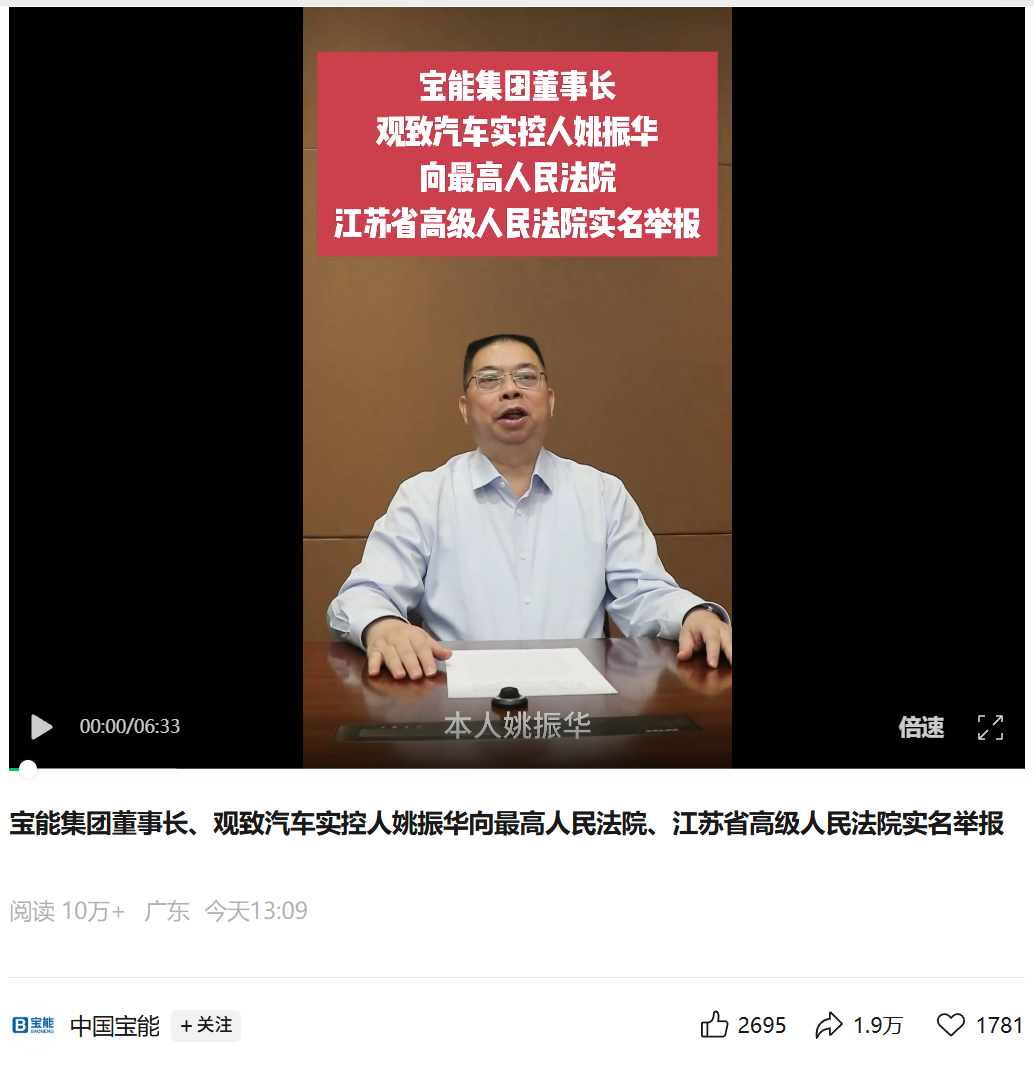
姚振华实名举报观致汽车被贱卖
Zhong Guo Qi Che Bao Wang· 2026-01-15 01:39
Core Viewpoint - Yao Zhenhua, chairman of Baoneng Group and actual controller of Qoros Auto, has filed a formal complaint against the upcoming auction of Qoros Auto's assets, alleging illegal operations in a 270 million yuan enforcement case, which could lead to the company's core assets being sold at a low price [1][3]. Group 1: Company Financials and Investments - Qoros Auto has a registered capital of 16.9 billion yuan, with Baoneng Group holding a 63% stake [3]. - Baoneng Group has invested approximately 26 billion yuan in Qoros from 2018 to the end of 2025, including 8 billion yuan for equity acquisition, 2.7 billion yuan in interest, 8.1 billion yuan in R&D, and 1.8 billion yuan in asset and equipment investments [6][7]. - Despite liquidity issues in late 2021, Baoneng continued to invest 2.5 billion yuan to maintain Qoros's operations and repay financial debts totaling 2.6 billion yuan [6]. Group 2: Asset Valuation and Auction Details - The core assets of Qoros Auto, which include land, buildings, and equipment, are valued at 8 billion yuan according to a third-party assessment, while the local court has undervalued them at 1.535 billion yuan [3][6]. - The first auction held on December 30, 2025, failed to attract bidders with a starting price of approximately 1.075 billion yuan, leading to a second auction with a reduced starting price of about 859.6 million yuan [4][6]. - The auction includes approximately 716,400 square meters of land and various facilities, with specific valuations for different areas of the factory [6]. Group 3: Business Potential and Market Position - Qoros Auto's Changshu factory has an annual production capacity of 150,000 vehicles and offers competitive products like Qoros 5 and Qoros 7, with the latter expected to generate significant export revenue [7]. - A required investment of about 2 billion yuan could enable the resumption of Qoros 7 production within 10 months, potentially generating over 20 billion yuan in annual revenue and substantial tax contributions [7]. - Over 60% of Qoros's creditors have applied for bankruptcy restructuring, seeking to halt the auction and protect their rights [7].
汽车早餐 | 丰田全球销量六连冠;朱晓彤获逾2亿美元股票激励;沃尔沃电池公司暂停运营
Zhong Guo Qi Che Bao Wang· 2026-01-15 01:31
Domestic News - The General Administration of Customs predicts that lithium battery exports will grow by 26.2% by 2025, with total exports reaching 26.99 trillion yuan, a year-on-year increase of 6.1% [2] - In early January, the price of lithium iron phosphate increased by 11.3% compared to late December 2025, as reported by the National Bureau of Statistics [3] - From January to November 2025, the cumulative sales of passenger cars equipped with urban NOA functions reached 3.129 million units, accounting for 15.1% of the total passenger car insurance volume [4] - The comprehensive inventory coefficient of automobile dealers in December 2025 was 1.31, a month-on-month decrease of 16.6% but a year-on-year increase of 14.9%, indicating inventory levels below the warning line but above the reasonable range [5] International News - Volvo's battery startup, NOVO Energy, has suspended operations and is seeking partners, with plans for layoffs affecting all positions, notifying unions and the Swedish labor market authority of 75 job cuts [6] - Toyota has maintained its position as the world's top-selling automaker for the sixth consecutive year, selling 10.32 million vehicles globally from January to November 2025, compared to Volkswagen's 8.98 million [8] - Tesla has extended the contract of senior vice president Zhu Xiaotong for another five years until January 2031 and granted him approximately 520,000 restricted stock units valued at about $233 million [9] - Honda announced a new "H" logo for its automotive business, set to be applied to the next generation of electric and hybrid vehicles, with the first models featuring the new logo expected to launch in 2027 and beyond [10] Corporate News - Xiaomi's chairman Lei Jun reported on the progress of the YU7 winter high-speed long-distance test, focusing on smart driving and battery life [11] - Dongfeng Fengshen plans to launch eight new and upgraded models over the next three years, with 2025 sales exceeding 138,000 units, a year-on-year increase of 37%, and an expansion of its terminal network to 367 stores by the end of 2025 [11] - BAIC Jihe has officially partnered with Kunlun Network Electric for charging network services, launching 15 charging stations and over 400 charging piles in Beijing [12] - ZEEKR's legal department issued a statement addressing false information circulating online about its community activities, emphasizing the negative impact on the brand and the need for compliance with internet information management laws [13] - Weichai Power has completed laboratory research on industry-leading sulfide all-solid-state batteries and is advancing towards industrialization, with strong demand for power generation products for data centers and plans to increase SOFC production capacity [14]