
Jin Shi Shu Ju

Search documents
美欧关系“破冰”?双方联手对俄祭出新制裁,施压普京结束冲突
Jin Shi Shu Ju· 2025-10-23 15:12
但在持续的俄乌冲突中,一个颇具讽刺意味的转折是,对于俄罗斯拒绝回到谈判桌的共同失望和猜疑, 反而让美国和欧盟走得更近了。 今年以来,美欧关系一直颇为棘手,双方在如何支持乌克兰、贸易紧张局势和关税等问题上分歧不断, 两大经济体之间的外交关系一度十分紧张。 AI播客:换个方式听新闻 下载mp3 音频由扣子空间生成 本周,双方展现了统一战线,华盛顿和布鲁塞尔相继宣布了针对俄罗斯石油和天然气行业的互补性制裁 方案。 今年年初特朗普重返白宫时,美欧关系曾一度急转直下。这位美国领导人立即将矛头对准欧盟,指责其 存在不公平贸易行为,理由是欧盟在商品交换方面长期保持贸易顺差。 美国驻欧盟大使Andrew Puzder周四表示,在向俄罗斯施压以结束俄乌冲突的问题上,美国和欧盟的立 场是一致的。特朗普总统一向坚决主张结束这场冲突……但当你看到谈判进展不顺时,就需要加大压 力。" 他指出,美国和欧盟几乎同时推出制裁方案,"这表明我们需要加大力度。我们愿意这样做,希望普京 能领会到这个信息,明白这场冲突需要结束。他似乎还没有领会到,但希望这次能让他明白。" Puzder说,近几个月来,美欧关系在一些地缘政治和经济领域总体上有所改善, ...
美国对俄挥出制裁“重拳”,油价应声大涨超5%!
Jin Shi Shu Ju· 2025-10-23 13:27
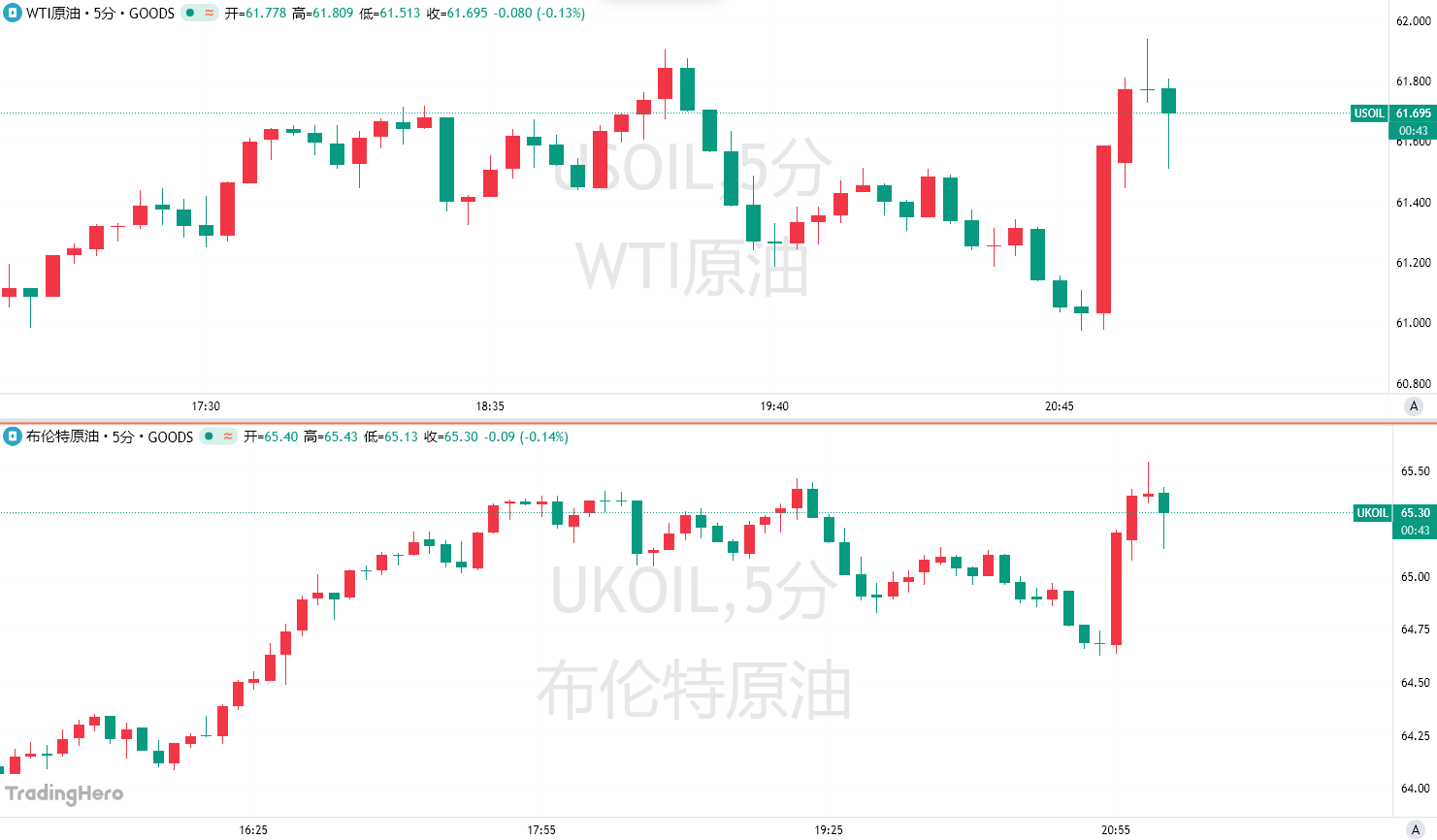
Core Viewpoint - The recent U.S. sanctions against major Russian oil companies have led to a significant increase in international oil prices, raising concerns about the supply from one of the world's top oil producers [1][4]. Group 1: Impact of Sanctions - The U.S. has blacklisted major Russian oil companies, including Rosneft and Lukoil, causing market fears that India, a key buyer, may reduce its purchases from Moscow [4][5]. - The sanctions represent a significant escalation in U.S. pressure on Moscow, potentially leading to major disruptions in Russian oil production and exports [5][6]. - The European Union has also imposed additional sanctions targeting Russian energy infrastructure, including a complete trading ban on Russian oil companies [5][6]. Group 2: Market Dynamics - Despite signs of oversupply in the oil market, the sanctions could have a substantial impact, particularly as India imports over one-third of its oil from Russia [6][7]. - The International Energy Agency (IEA) predicts that global oil supply will exceed demand by nearly 4 million barrels per day next year, indicating a potential buffer against the sanctions [6]. - Recent data shows that Russian oil exports have reached a 29-month high, suggesting that Russia has experience in circumventing sanctions [6][8]. Group 3: Price Movements - Brent crude prices have rebounded from a five-month low, with both WTI and Brent crude experiencing over a 4% increase, marking the largest rise since the Israel-Iran conflict began [1][9]. - The spread between near-term and longer-term Brent futures has narrowed due to concerns about potential oversupply, but recent price movements indicate a tightening market [8][9]. - Analysts expect Brent crude to trade within the range of $60 to $70 per barrel, reflecting a shift in market sentiment from oversupply concerns to potential supply disruptions [9].

“华尔街神算子”:年底前美股将迎追涨行情,7000点只是保守目标
Jin Shi Shu Ju· 2025-10-23 12:53
号称"华尓街神算子"的Fundstrat资本公司首席投资官汤姆·李(Tom Lee)将2025年的美股表现称为"最不 受待见的V型反弹"。他表示,尽管标普500指数(SPX)有望在年底前触及7000点关口,但投资者仍被 悲观情绪笼罩,这种情绪通常只在严重熊市中才会出现。 2025年投资者悲观情绪堪比过往熊市 10月21日,汤姆·李在Fundstrat YouTube频道发布的最新分析中指出,持续的负面投资者情绪是当前市场 的关键反常现象。他特别提到,美国个人投资者协会(AAII)近期调查数据显示,看空者数量超过看 多者,这一趋势贯穿了整个2025年。 "上三次出现如此低迷的负面情绪是在1990年、2008年和2022年,而这几年都是熊市。"汤姆·李表示。 他将这种根深蒂固的恐惧与市场实际表现进行对比:"投资者的行为仿佛我们正处于熊市,但今年以来 标普500指数已上涨13%。因此,我将其称为'最不受待见的V型反弹'。" 企业盈利韧性推动市场上涨 汤姆·李认为,这种"普遍恐惧情绪与强劲基本面并存"的局面,为市场大幅走高提供了动力。 标普500指数年底有望突破7000点 10月22日,汤姆·李在CNBC《收盘钟声》 ...
散户对冲逻辑变了?小摩力挺黄金:未来三年金价或将翻倍!
Jin Shi Shu Ju· 2025-10-23 12:14
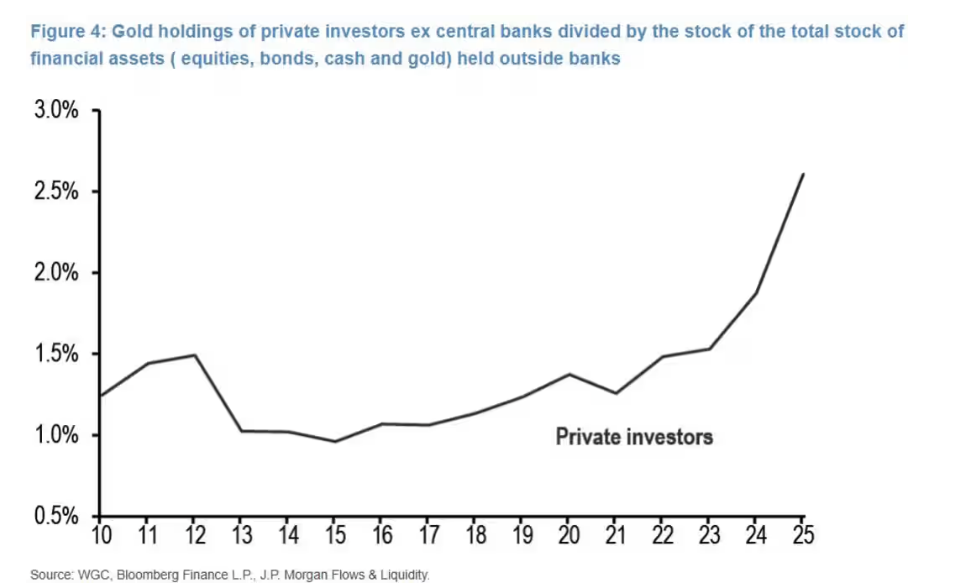
Core Viewpoint - The recent significant drop in gold prices has shifted market discussions towards whether gold will rebound and reach new highs, with Goldman Sachs maintaining a target of $4,900 per ounce by the end of 2026, driven by demand from central banks and institutional investors [1] Group 1: Market Dynamics - Gold prices experienced their largest single-day drop in over a decade, leading to debates on future price recovery [1] - Analysts from Goldman Sachs noted that various long-term capital allocators, including sovereign wealth funds and central banks, are planning to increase their gold holdings as a strategic diversification tool [1] - JPMorgan's strategist team believes that the recent gold price drop was primarily due to profit-taking by trend-following commodity trading advisors (CTAs), rather than retail investors exiting gold ETFs [1][2] Group 2: Investor Behavior - The surge in gold ETF purchases this year cannot be solely attributed to "devaluation trades" due to concerns over a weakening dollar; instead, there is a notable motivation to hedge against stock market risks [3] - Retail investors have been buying both stocks and gold while avoiding long-term bonds, which traditionally serve as a hedge against stock market risks [3] - The current allocation of gold by global non-bank investors stands at 2.6% of their total financial assets, suggesting that this ratio may still be too low if gold is to replace bonds as a hedge against stock risks [6] Group 3: Future Projections - JPMorgan's team hypothesizes that to increase the gold allocation from 2.6% to 4.6% by 2028, gold prices would need to rise by approximately 110% [8] - The assumption includes a projected increase in stock allocation to 54.6% and an annual increase of $7 trillion in the size of bonds and cash over the next three years [7][8]
数据“黑洞”中的一线曙光!CPI数据即将公布,但不是“好消息”?
Jin Shi Shu Ju· 2025-10-23 10:50
Core Insights - The U.S. government shutdown has led to a significant delay in the release of economic reports, creating uncertainty in the economic outlook [1] - The upcoming Consumer Price Index (CPI) report for September is expected to show a rise in inflation, with projections indicating an increase from 2.9% to 3.1% [2][3] - The cumulative effects of high inflation over the past five years have significantly impacted consumers, particularly in food prices, which have risen by 24% from 2020 to 2024 [2][3] Inflation Trends - Economists anticipate a 0.4% increase in prices for common goods and services in September, marking the fastest annual inflation rate in over a year [2] - The rise in prices is attributed to various factors, including increases in gasoline, food, and tariffs on goods, as well as slower-than-expected declines in housing-related inflation [2][3] Consumer Impact - The rising costs of food and utilities are major pain points for many Americans, particularly affecting middle and low-income households [4] - The K-shaped economic recovery is evident, with high-income individuals benefiting from rising stock markets and wages, while low-income households face a starkly different reality [4]
每日投行/机构观点梳理(2025-10-23)
Jin Shi Shu Ju· 2025-10-23 10:43
Group 1: Gold and Silver Market Insights - Goldman Sachs maintains a target price of $4,900 per ounce for gold by the end of 2026, citing increasing interest in gold as a strategic diversification tool [1] - UBS expects silver prices to rebound to $55 per ounce by June 2026, indicating a positive outlook for silver investments [3] - Swiss Bank analysts suggest that the recent significant drop in gold prices is a short-term oversell, with strong fundamental supply-demand dynamics supporting future price increases [2] Group 2: Currency and Economic Policy Analysis - Analysts from Dutch Bank express concerns that the dollar's ability to sustain its recent gains may be limited, especially if the market does not find reasons to rule out potential Fed rate cuts [4] - German Bank analysts predict that the upcoming U.S. inflation data may not have a lasting impact on the dollar, as the Fed is likely to focus on employment conditions rather than inflation [5] - Goldman Sachs anticipates that the Bank of Japan may maintain its policy rate unchanged due to high uncertainty regarding economic prospects [6] Group 3: Economic Growth Projections - Barclays economists predict that the Bank of Japan may raise its economic growth forecast for FY2025 from 0.6% to 0.8%, based on reduced tariff uncertainties and strong GDP growth [7] - Goldman Sachs forecasts that the Bank of England will likely cut rates in February 2024, with the potential for earlier cuts due to lower-than-expected inflation data [8] - French Bank analysts suggest that the Bank of England may lower rates in December, putting further pressure on the pound [9] Group 4: Sector-Specific Insights - Citic Securities highlights the strategic value of the rare earth industry, driven by export control policies and increasing demand from various sectors [6] - Citic Securities also sees potential bottoming opportunities in the liquor industry, with expectations of a recovery in market demand by Q3 2025 [7] - Citic Securities projects a moderate appreciation of the RMB in 2026, supported by favorable external conditions and domestic economic stability [8]
每日期货全景复盘10.23:焦煤期货延续反弹,创逾两个月新高
Jin Shi Shu Ju· 2025-10-23 10:42
Market Overview - The futures market shows a bullish sentiment with 65 contracts rising and 14 contracts falling today, indicating increased trading activity in upward-moving commodities [2] - Significant increases were observed in the prices of coking coal (+5.14%), coke (+4.21%), lithium carbonate (+4.17%), crude oil (+4.05%), and fuel oil (+3.42%) [5] - Conversely, the largest declines were seen in rapeseed (-1.22%), palm oil (-1.0%), and soybean oil (-0.7%), likely due to increased bearish pressure or negative fundamentals [6] Capital Flow - The most significant capital inflows were into the CSI 1000 (+7.413 billion), CSI 500 (+3.16 billion), and CSI 300 (+3.043 billion), indicating strong interest from major funds [8] - The largest capital outflows were from gold (-1.741 billion), soybean meal (-553 million), and silver (-379 million), suggesting notable withdrawals from these commodities [8] Position Changes - Notable increases in open interest were seen in lithium carbonate (+18.66%), coking coal (+14.44%), and CSI 1000 (+11.70%), indicating new funds entering these markets [11] - Significant decreases in open interest were recorded in lead (-12.28%), tin (-13.84%), and industrial silicon (-21.09%), suggesting potential exits by major funds [11] Key Events - In September, the total electricity consumption in China increased by 4.5% year-on-year, with the total reaching 888.6 billion kWh [12] - Domestic soda ash manufacturers reported a total inventory of 1.7021 million tons, a decrease of 0.86 thousand tons from the previous week [12] - Analysts suggest that Indonesia's B50 biodiesel blending policy may be delayed until 2027 due to funding constraints and unfavorable price differentials [13] Industry Insights - The urea industry is experiencing a significant decline in operating rates, with new high inventory levels reported [14] - As of October 23, rebar production has increased, while both factory and social inventories have decreased, indicating a potential shift in market dynamics [15] - Glass inventory has reached a three-month high, with a notable increase in stock levels across most regions [15] Future Focus - Upcoming data releases include U.S. initial jobless claims and September CPI, which are expected to influence market sentiment and economic outlook [17][18]

特朗普怒批普京,对俄石油巨头下狠手,莫斯科异常沉默
Jin Shi Shu Ju· 2025-10-23 09:38
在美国总统特朗普批评俄罗斯总统普京并对俄罗斯两家最大石油公司实施严厉制裁后的第二天,莫斯科 陷入了冰冷的沉默。 就在两位领导人进行了一次"非常富有成效"的电话交谈几天后,特朗普似乎站在了俄罗斯一边。然而, 这位美国总统在周三改变了策略,表达了对莫斯科的失望。 "我们取消了与普京总统的会晤。只是,感觉不适合见面。感觉我们不会达到必须到达的地方(俄乌停 火)。所以我取消了,但我们将来会这样做,"特朗普周三说。"每次我和普京谈话,我们都谈得很好, 然后就没有下文了,就是没有任何进展。" 普京的新闻秘书佩斯科夫尚未公开评论取消的会晤、制裁或未来举行特朗普-普京会谈的前景。 据报道,俄罗斯外交部发言人扎哈罗娃周四表示,俄外交部准备"继续与"美国国务院接触,但表示其在 乌克兰的目标"保持不变"。她补充说,对俄罗斯石油公司和卢克石油的最新制裁对找到和平解决方案适 得其反。 知名反西方鹰派人物、俄罗斯前总统梅德韦杰夫抨击了特朗普取消布达佩斯峰会的决定,他周四评论 说,"美国是我们的对手,他们爱说话的'和平缔造者'(特朗普)现在已经完全走上了对抗俄罗斯的道 路,已经完全与疯狂的欧洲站在一起。" 制裁压力 美国财政部表示,对卢克 ...
黄金上演高台跳水,倒车接人还是找“接盘侠”?华尔街激辩不休
Jin Shi Shu Ju· 2025-10-23 08:59
Core Viewpoint - Gold prices have experienced a significant decline of 7.6% this week after reaching historical highs, despite a year-to-date increase of 63% [1][2]. Group 1: Market Dynamics - Investors have been flocking to gold as a hedge against a declining dollar, driven by concerns over government spending, rising debt, and potential inflation [1]. - The recent drop in gold prices is attributed to technical overextension after a substantial rally, rather than a fundamental shift in the market [1]. - The momentum indicators for gold have deviated from normal levels, suggesting that the recent price movements may be driven by excessive trading behavior [1]. Group 2: Sentiment and Speculation - There is a growing concern among analysts about a potential bubble in the gold market, with some noting that gold has become perceived as a "risk-free" trade [2]. - The surge in physical gold purchases has reached extreme levels, indicating heightened retail interest and speculative behavior [2]. - Market sentiment has become overly optimistic, with warnings that such enthusiasm often signals a market peak [3]. Group 3: Future Outlook - Despite recent volatility, some analysts believe that factors such as political uncertainty and high government debt levels could continue to drive gold prices higher, potentially reaching $4,700, a 15% increase from current levels [3]. - The extreme rise in gold prices has made it susceptible to fluctuations, with analysts noting that entering an overbought territory without adjustments is rare [3].

日本央行拉响警报:股市出现过热迹象!
Jin Shi Shu Ju· 2025-10-23 08:52
Core Insights - The Bank of Japan (BOJ) has indicated early signs of overheating in the Japanese stock market and warned that uncertainties in U.S. trade policy could lead to significant market corrections, impacting financial institutions [2] - The Nikkei 225 index has surged nearly 24% this year, reaching a historical high following the election of Japan's first female Prime Minister, Sanae Takaichi, who supports fiscal stimulus [2] - The BOJ's semiannual Financial System Report highlights increased leverage and participation of foreign hedge funds in Japanese Government Bonds (JGB), which may exacerbate market volatility [2][3] Market Conditions - The Financial System Report includes a "heat map" visualizing asset price imbalances, showing that stock prices are in the "red" zone, indicating overheating, while other asset categories remain stable [3] - The report emphasizes the need to closely monitor risk asset price trends, particularly in the stock market, due to the BOJ's exposure to market risks [4] - Japanese real estate prices, especially in major urban areas, are rising due to demand from foreign investors, with new apartment prices in the Tokyo metropolitan area increasing by 20.4% year-on-year from April to September [4] Financial Stability - Despite the concerns, the BOJ asserts that the overall Japanese financial system remains stable, with strong bank capital bases and stable funding sources capable of withstanding various risks [4] - The BOJ continues to monitor signals of financial imbalances that could lead to a financial crisis, such as asset price bubbles and excessive credit expansion [4] - Critics argue that the BOJ's prolonged ultra-low interest rates and weak yen have lowered the cost for foreign investors, contributing to rising asset and real estate prices [4] Monetary Policy Outlook - BOJ Governor Kazuo Ueda has stressed the need for caution in future interest rate hikes due to uncertainties regarding the impact of U.S. tariffs on the Japanese economy [5] - A recent Reuters survey indicates that most economists expect the BOJ to raise interest rates again in the fourth quarter, potentially as early as next week [5]