
Wen Hua Cai Jing

Search documents
托克首席执行官淡化人工智能与国防对铜需求的作用
Wen Hua Cai Jing· 2025-10-14 01:11
Group 1 - The CEO of trading company Trafigura, Richard Holtum, stated that traditional applications will drive copper demand over the next decade, rather than data centers and defense industries [2] - Holtum emphasized that the demand for copper from consumer goods this year will far exceed that from the AI sector, with air conditioning systems alone using more copper than data centers [2] - Despite the focus on emerging applications, Holtum noted a disparity between the attention given to defense and AI sectors and their actual copper demand [2] Group 2 - Trafigura predicts that copper demand from the AI sector will increase by approximately 70,000 tons year-on-year by 2025, while durable consumer goods will contribute an additional 250,000 tons of demand growth [2] - Over the next decade, AI is expected to account for 1 million tons of copper demand growth, representing 10% of the total demand increase of 10 million tons during the same period [2]


铜供应忧虑推升智利17亿美元冶炼厂投资热度
Wen Hua Cai Jing· 2025-10-14 01:05
10月13日(周一),智利国有企业ENAMI负责人称,铜买家对供应链多元化的需求或将助力该企业为17亿美元的 冶炼厂项目筹集资金。 ENAMI旗下拥有70年历史的Hernan Videla Lira冶炼厂升级计划长期面临盈利能力与融资前景的质疑。 随着全球其他高效冶炼厂争夺有限精矿资源,矿商为精矿冶炼支付的加工精炼费已经破零,迫使部分海外冶炼厂 停产。 但ENAMI负责人Ivan Mlynarz表示,盈利能力并非潜在投资者的唯一考量。 "在当今地缘逻辑与动态格局下,以及我们如何保障全球供应链安全的背景下,该项目具有极强的吸引 力,"Mlynarz在LME周(LME Week)开幕前表示。这场全球金属行业年度盛会于本周一在伦敦拉开帷幕。"多家 企业正从这一角度审视该项目。" 智利仅占全球冶炼产能的6%。 ENAMI去年关闭了近乎淘汰的Hernan Videla Lira冶炼厂,目前认为重启该厂对帮助智利中小生产商进入全球市场 至关重要。 ENAMI表示计划于2025年底启动初期建设,五年后投产,年产阴极铜24万吨。 Mlynarz透露,包括矿企、大宗商品贸易商和银行在内的17家公司已表示有意出资支持该冶炼厂,以 ...
金属涨跌互现 期铜收涨,因市场信心改善【10月13日LME收盘】
Wen Hua Cai Jing· 2025-10-14 00:27
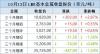
Group 1: Market Overview - LME copper prices rose by $302, or 2.87%, closing at $10,820 per ton due to easing trade concerns and improved copper import data from China [1] - COMEX copper reached an intraday high of $5.18 per pound, or $11,419.93 per ton, driven by supply disruptions in Indonesia, Chile, and the Democratic Republic of Congo, as well as expectations of U.S. interest rate cuts and a weaker dollar [4] Group 2: Copper Import Data - China's copper imports for September 2025 were 485,000 tons, marking a month-on-month increase and the highest monthly figure of the year, with a slight year-on-year increase of 1% [4] - Cumulative copper imports from January to September 2025 totaled 4,019,000 tons, reflecting a year-on-year decrease of 1.7% [4] Group 3: Other Metals Performance - LME three-month zinc prices increased by $19.5, or 0.65%, closing at $3,021 per ton, with zinc inventories in LME warehouses dropping to 37,475 tons, a 70% decline since July [4] - LME three-month lead prices fell by $31.5, or 1.56%, closing at $1,989 per ton [6] Group 4: Supply Outlook for Zinc and Lead - The International Lead and Zinc Study Group (ILZSG) forecasts a significant oversupply in the global refined zinc market in 2026, with an expected surplus of 271,000 tons [5] - ILZSG also predicts that global refined lead supply will exceed demand by 91,000 tons in 2025, with a slight increase in surplus to 102,000 tons in 2026 [5]
ILZSG:2026年全球精炼锌、铅市场面临供应过剩
Wen Hua Cai Jing· 2025-10-13 11:49
Group 1: Lead Market Insights - The International Lead and Zinc Study Group (ILZSG) forecasts a significant oversupply in the global refined lead market by 2026, with a surplus of 102,000 tons [1] - Global refined lead demand is expected to grow by 1.8% to 13.25 million tons in 2023 and by 0.9% to 13.37 million tons in 2026 [1] - Refined lead mine supply is projected to increase by 0.7% to 4.57 million tons in 2025 and by 2.2% to 4.67 million tons in 2026 [1] Group 2: Zinc Market Insights - Global refined zinc demand is anticipated to grow by 1.1% to 13.71 million tons in 2025 and by 1% to 13.86 million tons in 2026 [2] - Refined zinc metal production is expected to rise by 2.7% to 13.80 million tons in 2025 and further increase by 2.4% to 14.13 million tons in 2026 [2] - A surplus of 85,000 tons in refined zinc supply is expected in 2025, with the surplus projected to increase to 271,000 tons in 2026 [2]
印尼9月精炼锡出口量同比减少3.94%
Wen Hua Cai Jing· 2025-10-13 11:22
Core Insights - Indonesia's refined tin exports in September decreased by 3.94% year-on-year, totaling 4,844.21 tons [2] - However, there was a significant month-on-month increase of nearly 50% compared to August's exports of 3,246.46 tons [2] Summary by Category - **Export Performance** - Year-on-year decline in September exports by 3.94% [2] - Month-on-month increase of nearly 50% from August [2] - **Volume Data** - September refined tin exports amounted to 4,844.21 tons [2] - August refined tin exports were recorded at 3,246.46 tons [2]

德意志银行:今年第四季度至明年第一季度全球铜矿供应将下降
Wen Hua Cai Jing· 2025-10-13 11:22
SMM联合制作联系人 刘明康 10月13日(周一),德意志银行预计2025年第四季度至2026年第一季度全球铜矿供应将转为负增长,导致短期价 格峰值达到平均每吨11,000美元。 德意志银行称矿山供应紧张应足以抵消需求疲软对价格造成的下行风险。 (文华综合) 作为全球最大的铜消费国,中国产业链面临三大挑战:上游资源对外依存度攀升、中游加工环节产能过剩、下游 需求受高铜价抑制。为助力行业应对变局,上海有色网携手铜产业链企业联合编制《2026中国铜产业链分布图》 中英双语版,点击此链接即可免费领取铜产业链分布图:https://s.wcd.im/v/470opZ19l/。 156 5309 0867 liumingkang@smm.cn ...
海关总署:9月中国未锻轧铜及铜材进口量回升
Wen Hua Cai Jing· 2025-10-13 11:16
Group 1 - In September 2025, China's imports of unwrought copper and copper products reached 485,000 tons, marking the highest monthly figure of the year and a slight year-on-year increase of 1% [2] - From January to September 2025, the cumulative import volume was 4.019 million tons, reflecting a year-on-year decrease of 1.7% [2] - The traditional demand peak in September, known as "Golden September," contributed to the rebound in unwrought copper and copper products imports [2] Group 2 - As the world's largest copper consumer, China's industry chain faces three major challenges: increasing dependence on foreign upstream resources, overcapacity in the midstream processing sector, and suppressed downstream demand due to high copper prices [4] - To assist the industry in navigating these challenges, Shanghai Nonferrous Metals Network collaborated with copper industry chain enterprises to compile the "2026 China Copper Industry Chain Distribution Map," available in both Chinese and English [4]
伦敦金属交易所将推出可持续金属溢价定价机制
Wen Hua Cai Jing· 2025-10-13 11:16
Core Viewpoint - The London Metal Exchange (LME) plans to introduce a new mechanism to determine the premium customers are willing to pay for low-carbon metals that meet sustainability standards, addressing complaints from miners about competition with cheaper coal-produced metals [1][2]. Group 1: New Initiatives - LME will expand its existing partnership with the digital platform Metalshub, which currently facilitates low-carbon nickel trading, to include copper, aluminum, nickel, and zinc products that meet sustainability criteria [1]. - The new initiative is set to launch in the first quarter of next year, aiming to enhance trading volumes on Metalshub [1][4]. Group 2: Pricing Mechanism - The parent company of LME, Hong Kong Exchanges and Clearing, has established a new company in Dubai to independently set premium prices, which will assess buy and sell quotes if trading volumes on Metalshub are insufficient [2]. - LME has released a discussion paper outlining its proposed premium pricing methodology [4]. Group 3: Market Dynamics - LME's CEO Matthew Chamberlain noted that many end-users are reluctant to pay higher prices for sustainable products, indicating that some metals may not have any premium space [1]. - Since March of last year, Metalshub has completed 488 tons of low-carbon nickel transactions, reflecting initial market activity in this segment [3].

10月10日LME金属库存及注销仓单数据
Wen Hua Cai Jing· 2025-10-13 09:33
Core Insights - The report provides an overview of the inventory changes for various metals, including copper, aluminum, zinc, tin, and nickel, highlighting the fluctuations in registered and canceled warehouse receipts. Inventory Changes Summary Copper - Current inventory stands at 139,350 tons, a decrease of 50 tons from the previous day - Registered warehouse receipts are at 131,075 tons, with 8,275 tons canceled, representing a cancellation rate of 5.94% [1][3] Aluminum - Current inventory is 506,000 tons, down by 2,825 tons from the previous day - Registered warehouse receipts total 405,700 tons, with 100,300 tons canceled, leading to a cancellation rate of 19.82% [1][5] Zinc - Current inventory is 37,475 tons, a decrease of 475 tons - Registered warehouse receipts are at 22,900 tons, with 14,575 tons canceled, resulting in a cancellation rate of 38.89% [1][9] Tin - Current inventory is 2,385 tons, down by 25 tons - Registered warehouse receipts total 2,170 tons, with 215 tons canceled, leading to a cancellation rate of 9.01% [1][11] Nickel - Current inventory is 242,094 tons, an increase of 4,716 tons - Registered warehouse receipts are at 235,896 tons, with 6,198 tons canceled, resulting in a cancellation rate of 2.56% [1][13]

宏观情绪拖累 沪铜高位回落【10月13日SHFE市场收盘评论】
Wen Hua Cai Jing· 2025-10-13 09:01
Core Viewpoint - The copper market is experiencing price fluctuations due to escalating trade tensions, with recent price drops being partially offset by a recovery in market sentiment. The domestic copper inventory continues to accumulate amid high prices, and uncertainties in trade dynamics persist, leading to a high-level retreat in copper prices while concerns about supply from mining remain [1]. Group 1: Market Dynamics - On Friday, copper prices fell by 2.06%, with a significant drop occurring during the night session due to trade friction [1]. - Domestic copper concentrate processing fees remain low at -40 USD/dry ton, indicating limited changes in the market, necessitating close monitoring of whether tight supply will continue to affect the smelting sector [1]. - Recent price movements have raised concerns that high copper prices may suppress downstream demand [1]. Group 2: Supply and Production Insights - Codelco of Chile has raised its estimate for copper production losses at the El Teniente project, although its overall production targets remain unchanged [1]. - The Freeport Indonesia mine accident is expected to result in a production cut of approximately 470,000 tons from Q4 this year to next year, which will significantly alter the global supply-demand balance, leading to a tight equilibrium in global copper supply and demand by 2026 [1]. Group 3: Macroeconomic Factors - The Federal Reserve has initiated interest rate cuts, with market expectations indicating two more cuts within the year, contributing to a macroeconomic environment of dual easing in fiscal and monetary policy in the U.S. [1]. - Following the resolution of current market shocks, copper prices are expected to continue their upward trend, suggesting opportunities for strategic buying on dips [1].