
Tai Mei Ti A P P

Search documents
【钛晨报】央行牵头多部门联合部署,持续严打虚拟货币交易炒作;中国移动为何被调出上证50指数?市场人士释疑;国家航天局设立商业航天司
Tai Mei Ti A P P· 2025-11-30 23:41
会议指出,近年来各单位认真贯彻落实党中央、国务院决策部署,按照2021年中国人民银行等十部门联 合发布的《关于进一步防范和处置虚拟货币交易炒作风险的通知》要求,坚决打击虚拟货币交易炒作, 整顿虚拟货币乱象,取得明显成效。近期,受多种因素影响,虚拟货币投机炒作有所抬头,相关违法犯 罪活动时有发生,风险防控面临新形势、新挑战。 会议强调,虚拟货币不具有与法定货币等同的法律地位,不具有法偿性,不应且不能作为货币在市场上 流通使用,虚拟货币相关业务活动属于非法金融活动。稳定币是虚拟货币的一种形式,目前无法有效满 足客户身份识别、反洗钱等方面的要求,存在被用于洗钱、集资诈骗、违规跨境转移资金等非法活动的 风险。 会议要求,各单位要坚持以习近平新时代中国特色社会主义思想为指导,全面落实党的二十大和二十届 历次全会精神,把防控风险作为金融工作的永恒主题,继续坚持对虚拟货币的禁止性政策,持续打击虚 拟货币相关非法金融活动。各单位要深化协同配合,完善监管政策和法律依据,聚焦信息流、资金流等 重点环节,加强信息共享,进一步提升监测能力,严厉打击违法犯罪活动,保护人民群众财产安全,维 护经济金融秩序稳定。 【钛媒体综合】据央行网站 ...




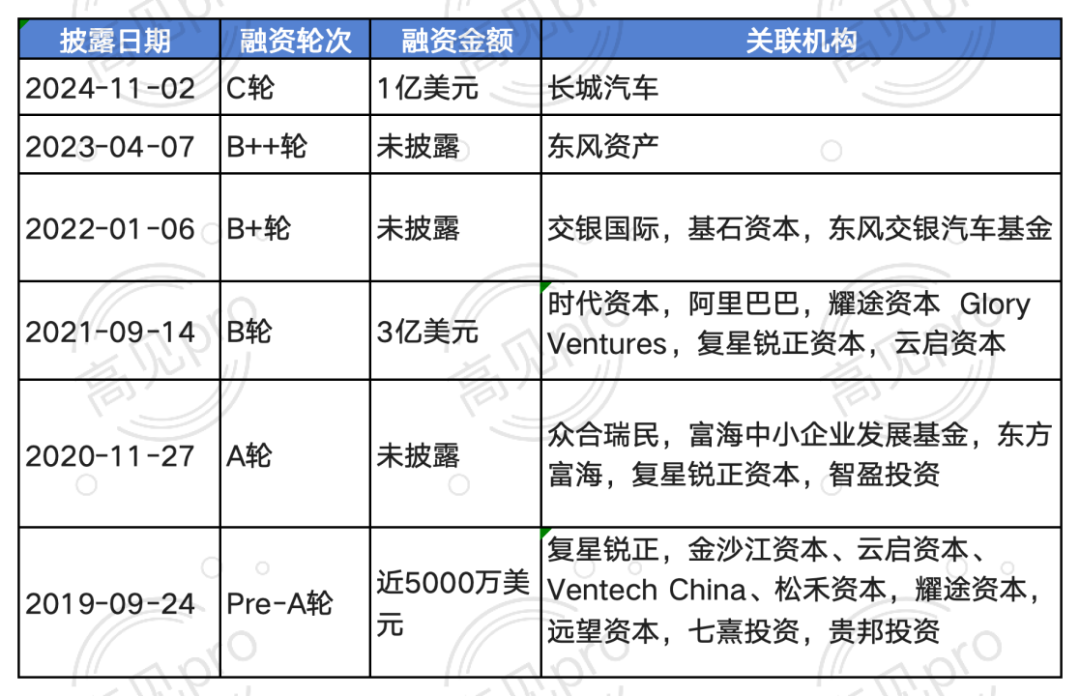
元戎启行、毫末智行背后的投资人,对长城汽车爱恨两重天
Tai Mei Ti A P P· 2025-11-30 13:02
Core Insights - Yuanrong Qixing and Haomo Zhixing, both established in 2019, are experiencing vastly different trajectories as of winter 2025, with Yuanrong Qixing showing significant growth and Haomo Zhixing facing operational stagnation [1][2]. Company Performance - Yuanrong Qixing has delivered over 200,000 vehicles equipped with its urban NOA system, achieving a market share of nearly 40% among third-party suppliers in a single month [1]. - The CEO of Yuanrong Qixing, Zhou Guang, indicated plans to accelerate production and expand into Robotaxi and overseas markets [1]. - In contrast, Haomo Zhixing announced a company-wide shutdown starting November 24, 2024, with no set date for resumption, and has faced significant layoffs and executive departures since 2024 [1][2]. Investment Landscape - Yuanrong Qixing has maintained a steady financing pace, completing six rounds of funding with a total exceeding $500 million, including a recent $100 million Series C round led by Great Wall Motors [4][5]. - The investment structure of Yuanrong Qixing evolved significantly after its Series A and B rounds, with major players like Alibaba and Dongfeng Motor Group entering as strategic investors, indicating strong industry recognition of its technology [6][7]. - Haomo Zhixing has completed seven funding rounds, but its investor landscape has shifted, with a decline in participation from prominent investors like Hillhouse Capital and Meituan, signaling a loss of confidence in its growth potential [11][12][13]. Strategic Relationships - The relationship between Yuanrong Qixing and Great Wall Motors has evolved from a client-supplier dynamic to a deeper strategic partnership, enhancing both companies' operational synergies [7]. - Haomo Zhixing, originally incubated by Great Wall Motors, has struggled to establish independent market competitiveness, leading to a significant decline in investor interest [13][15]. Future Outlook - Yuanrong Qixing's increased delivery volumes in 2025 are seen as a strong foundation for potential public listing preparations, with recent investor exits interpreted as a positive signal for its market ambitions [10]. - Haomo Zhixing's future remains uncertain, with ongoing discussions about share buybacks at previous high valuations, but disagreements on pricing reflect the company's current operational challenges [15].

没红绿灯的太空开始“堵车”了,“感知卫星”成了商业航天的新战场
Tai Mei Ti A P P· 2025-11-30 09:36
Core Viewpoint - The rapid growth of commercial space activities is leading to increased satellite launches and a crowded orbital environment, raising concerns about space debris and safety [2][3][9]. Group 1: Market Growth and Trends - The global commercial space market is projected to grow from $62 billion in 2020 to $75 billion in 2024, with an estimated revenue of $93.7 billion by 2029, reflecting a compound annual growth rate (CAGR) of 4.6% from 2024 to 2029 [3]. - The number of satellites is expected to increase from 12,000 to 57,000 over the next five years, with significant contributions from companies like SpaceX and OneWeb, as well as China's ambitious satellite deployment plans [3][5]. Group 2: Space Debris and Safety Concerns - The proliferation of satellites has led to a significant increase in space debris, with over 50,000 pieces larger than 10 cm and approximately 1.2 million pieces between 1 cm and 10 cm, posing a serious threat to operational spacecraft [5][6]. - Recent incidents, such as the damage to the Chinese Shenzhou 20 spacecraft due to space debris, highlight the urgent need for effective monitoring and mitigation strategies [2][6]. Group 3: Regulatory and Strategic Developments - The National Space Administration of China has established a Commercial Space Bureau to oversee the burgeoning commercial space sector, emphasizing the importance of safety and sustainable development [2][9]. - Various countries have implemented policies to address space debris, with China also accelerating its regulatory framework to ensure responsible satellite operations and debris mitigation [9][12]. Group 4: Space Situational Awareness and Technology - Space situational awareness (SSA) satellites are being developed to monitor space debris and potential collision risks, with both domestic and international companies investing in this technology [11][12]. - The commercial application of SSA satellites is expected to include data services, insurance risk assessment, and launch window optimization, creating a new business model in space management [12][13]. Group 5: Future Challenges and Collaboration - The complexity of commercial space operations necessitates collaboration across the industry to effectively manage space traffic and debris, distinguishing it from traditional aerospace sectors [16]. - The development of SSA capabilities is seen as a critical first step, but challenges remain in achieving high-precision tracking and addressing dynamic space environments [16].

对话卡尔动力CEO韦峻青:自动驾驶卡车赛道即将形成商业闭环 | 巴伦精选
Tai Mei Ti A P P· 2025-11-30 07:19
Core Insights - The primary goal of the company is not to completely replace human labor but to significantly enhance the feasibility of logistics solutions by reducing labor costs by 50% to 80% through scalable operations [2] - The ultimate aim of autonomous driving is 100% automation, but the company emphasizes a balanced approach where machines handle standardized transport tasks while humans manage more complex operations [2][5] - The company has developed a hybrid intelligent convoy model, which combines manned lead vehicles with unmanned following vehicles, and has successfully implemented regular autonomous driving tests in various regions of China [2][4] Company Strategy - The company plans to test its kargoBot Space transport robot in 2026, which will have a 25% increase in cargo space and a 10% increase in effective load, leading to a fivefold increase in gross profit per vehicle [4] - The CEO predicts that in the next decade, there will be one million unmanned transport vehicles operating across urban and rural areas, supporting a new logistics network [5] - The company focuses on enhancing its AI capabilities, having achieved end-to-end autonomous driving, and aims to develop a specialized driving model for heavy trucks based on extensive operational data [5][6] Market Positioning - The company believes that the hybrid intelligent convoy model will remain relevant, especially for bulk commodity transport, and anticipates that it will capture a significant market share in the long term [8][11] - The company has deployed over 400 autonomous trucks, with a hardware cost of only 90,000 yuan per unit, and has achieved a gross profit increase of 3 to 6 times through its operational model [13][14] - The CEO emphasizes the importance of achieving route-level profitability rather than just focusing on individual vehicle profitability, aiming for a sustainable business model that can handle large volumes of freight [14][15] Technological Development - The company utilizes data-driven reinforcement learning techniques and various autonomous driving solutions to achieve fully unmanned operations in complex logistics scenarios [3] - The hybrid intelligent convoy model enhances safety, fuel efficiency, and intelligence by allowing vehicles to share sensor data and control commands, improving overall operational efficiency [12][13] - The company is positioned as a key player in the autonomous truck sector, with a focus on leveraging specific domain data and fine-tuning applications to enhance performance [7][16]
【数智周报】 马斯克:Grok 5有10%概率实现AGI;国家数据局:支持数据交易所探索建立全链条服务体系;新AI模型可精准锁定人体致病突变……
Tai Mei Ti A P P· 2025-11-30 03:38
Group 1 - The Ministry of Science and Technology emphasizes the need for implementing major national technology tasks to achieve breakthroughs in key core technologies [2] - The focus is on enhancing high-quality technology supply and promoting deep integration of industry, academia, and research [2] - The government aims to strengthen the role of enterprises in technological innovation and support the establishment of innovation consortia [2] Group 2 - Liu Tieyan discusses the potential for AI to become an independent "scientist," highlighting the shift towards human-machine collaboration in research [3] - AI is expected to complement human intelligence, leading to a new era of collaborative evolution [3] Group 3 - Alibaba's CEO Wu Yongming states that an AI bubble is unlikely to occur in the next three years due to a supply-demand imbalance in AI resources [4] - Morgan Stanley Fund suggests that the expansion of AI applications will balance the significant capital investments made in the sector [5] Group 4 - Salesforce CEO Marc Benioff announces a shift from OpenAI's ChatGPT to Google's Gemini 3, citing significant advancements in reasoning and speed [6][7] - Elon Musk indicates that the upcoming Grok 5 model has a 10% chance of achieving Artificial General Intelligence (AGI) [8] Group 5 - OpenAI's former chief scientist Ilya Sutskever notes that the current paradigm of AI development is reaching its limits, advocating for a return to a research-focused approach [9] - The focus should shift from scaling models to enhancing their ability to learn and generalize [9] Group 6 - China Galaxy Securities predicts that by 2026, the trend of model democratization will drive AI applications from AI-enabled to AI-first [10] - The report emphasizes the importance of various AI application directions, including enterprise-level AI agents and vertical industry solutions [10] Group 7 - Alibaba's Q2 revenue reaches 247.8 billion yuan, with cloud intelligence group revenue growing by 34% year-on-year [16] - Dell Technologies reports a record high Q3 revenue of $27.005 billion, driven by strong demand for AI servers [17] Group 8 - EHang reports Q3 revenue of 92.5 million yuan, maintaining its annual revenue guidance of 500 million yuan [18] - The rapid growth of Alibaba's AI assistant, Qianwen, is highlighted, with downloads surpassing 10 million within a week [19] Group 9 - Tencent releases an open-source OCR model, HunyuanOCR, achieving state-of-the-art results in various applications [20] - Baidu establishes two new model research departments to focus on general AI and application-specific models [22] Group 10 - The Beijing AI industry is projected to exceed 450 billion yuan in scale by 2025, with significant growth in the core AI industry [33] - The launch of China's first AI incubation fund aims to foster innovation in the AI sector [34] Group 11 - Amazon allows businesses to test its Leo satellite service, competing with SpaceX's Starlink [35] - Analysts estimate that OpenAI's Sora incurs daily costs of $15 million, raising concerns about sustainability [36] Group 12 - HelloBoss launches an AI agent for recruitment, covering the entire hiring process [37] - South Korea plans to pilot an AI system for traffic management to alleviate congestion [38] Group 13 - Amazon encourages engineers to use its proprietary Kiro service over third-party AI coding tools [39] - A new AI model developed by Harvard and Barcelona researchers can accurately identify disease-causing mutations [40][41] Group 14 - Wedbush Securities supports the AI wave, betting on major tech stocks like Microsoft and Nvidia [42] - OpenAI removes Mixpanel from its production environment following a security incident [43] Group 15 - The Beijing government accelerates the commercialization of humanoid robots [46] - Shanghai's internet office initiates a crackdown on AI misuse [47] Group 16 - Beijing promotes the application of AI-assisted diagnostic technologies in healthcare [48] - The National Data Bureau supports the establishment of a comprehensive service system for data exchanges [49] Group 17 - The Ministry of Industry and Information Technology announces commercial trials for satellite IoT services [50] - Beijing's 14th Five-Year Plan emphasizes data legislation and high-quality data set construction [51][52] Group 18 - The National Bureau of Statistics reports a 12.8% growth in the computer and electronics manufacturing sector from January to October [54] - Tianjin's 14th Five-Year Plan includes building a supercomputing internet platform [55] Group 19 - The Ministry of Industry and Information Technology reports 515 million users of generative AI products by mid-year [56] - Beijing's action plan for "AI + audiovisual" aims to enhance algorithm breakthroughs in the media sector [57] Group 20 - Chongqing plans to establish a national integrated computing network hub [59]



Intel偷塔英伟达,比Google狠多了,直接挖角台积电核心人物
Tai Mei Ti A P P· 2025-11-29 08:15
Core Viewpoint - Nvidia is facing significant challenges due to increased competition and potential threats to its business model, particularly from Google and Intel, which could undermine its high profit margins and market dominance [1][2]. Group 1: Nvidia's Current Challenges - Nvidia's crisis began with major investors like Masayoshi Son reducing their stakes, leading to a public dispute over its financial performance and valuation [1]. - The company's high profit margins are under threat from Google's aggressive push with its TPU technology, which is now being offered to clients for on-premises deployment, potentially eroding Nvidia's market share [1]. - The departure of TSMC's senior vice president, who joined Intel, raises concerns about the stability of Nvidia's supply chain and its reliance on TSMC for advanced manufacturing processes [2][5]. Group 2: Impact of Key Personnel Movements - The former TSMC executive, who has extensive experience in advanced process technology, is now tasked with enhancing Intel's manufacturing capabilities, which could shift the competitive landscape [3][4]. - Intel's response to TSMC's legal actions indicates a strategic move to position itself as a viable alternative in the semiconductor manufacturing space, potentially impacting Nvidia's pricing power [5][7]. Group 3: Long-term Implications for Nvidia - The ongoing legal battle and personnel shifts may accelerate the emergence of a second top-tier foundry, which could diminish Nvidia's exclusive advantages in advanced manufacturing [6][8]. - If Intel successfully narrows the technological gap, Nvidia may lose its ability to leverage its manufacturing dominance to justify its high valuation and profit margins [7][8]. - The market's perception of the long-term stability of the Nvidia-TSMC partnership is changing, suggesting that Nvidia's competitive edge may not be as secure as previously thought [8].


AI医疗进阶3.0:医疗普惠潮下的效率革命与商业化破局丨2025·大复盘
Tai Mei Ti A P P· 2025-11-29 01:57
Core Insights - The consensus in the medical industry is that AI will not replace doctors but will serve as an essential assistant, supported by a strong regulatory framework [2] - The AI medical sector is transitioning from conceptual hype to substantial development driven by policies and market forces, with a projected industry scale of 115.7 billion yuan by 2025 [3][4] - The integration of AI into various medical applications is deepening, with significant advancements in areas such as imaging analysis and drug development [4][10] Industry Growth and Projections - The AI medical industry in China is expected to reach 115.7 billion yuan by 2025, with a compound annual growth rate of 10.5% from 2022 to 2028 [3] - By 2028, the industry scale is projected to increase to 159.8 billion yuan [3] Application Maturity and Areas of Focus - AI applications have expanded from diagnostic tools to encompass drug development, decision support, and medical robotics, with imaging analysis being the most mature area [4][10] - AI in medical imaging is projected to exceed 15 billion yuan by 2025, with a significant increase to 23.57 billion yuan by 2026 [10] Data Infrastructure and Challenges - As of July 2025, 206 algorithmic medical products have been registered, with 160 companies providing AI services directly to patients through apps [6] - The quality and standardization of medical data remain significant challenges, with a large volume of data being poorly structured and difficult to utilize effectively [21][22] Payment and Commercialization Issues - The integration of AI into the payment system is still developing, with current regulations preventing additional charges for AI-assisted diagnoses [23] - The recognition of AI's clinical value is crucial for its inclusion in payment systems, with a focus on demonstrating its effectiveness in improving patient outcomes [23][24] Future Directions and Sustainable Development - The AI medical sector is exploring diverse commercialization paths, with a focus on creating clear clinical value to ensure sustainability [27][30] - The concept of "inclusive healthcare" is emerging as a key focus, aiming to balance service quality, accessibility, and cost [30]
“智驾普及元年”年终大考:奇瑞猎鹰智驾的承诺兑现了吗?
Tai Mei Ti A P P· 2025-11-28 14:16
Core Insights - The article highlights the transition of China's intelligent driving industry from concept to practical application, with Chery's commitment to its intelligent driving strategy serving as a milestone [1][3]. Industry Overview - By 2025, the Chinese intelligent driving industry is expected to shift from "parameter competition" to "real-world validation," with consumer expectations evolving from "availability" to "usability" and "reliability" [3]. - The current stage of the industry is characterized by both technological breakthroughs and challenges in implementation [4]. Chery's Commitment - Chery's chairman publicly committed to equipping all models with the Falcon intelligent driving assistance system within the year, a move that sparked industry discussions due to the previous trend of high-level intelligent driving features being limited to premium models [3][6]. - As of the end of the year, Chery successfully integrated the Falcon system across all models, demonstrating its technical capabilities through real-world testing in complex driving conditions [3][6]. Challenges in Intelligent Driving - Many automakers face issues such as "feature reduction," "delayed functionality," and limitations to high-end models when delivering intelligent driving features [5]. - Current intelligent driving systems exhibit significantly higher error rates on unstructured roads compared to structured ones, with failure rates being 3-5 times higher [5]. Technical Foundation of Falcon Intelligent Driving - The Falcon system's success is attributed to a collaborative foundation of data, algorithms, and hardware, creating a "data loop - algorithm breakthrough - hardware redundancy" structure [7]. - Chery's Tianqiong Intelligent Computing Center has accumulated over 24 billion kilometers of driving assistance data, enhancing the system's adaptability across various road conditions [7][10]. Algorithm and Hardware Integration - The Falcon system utilizes the Momenta R6 reinforcement learning model, which allows for rapid decision-making in unforeseen scenarios, enhancing its performance in complex environments [10][11]. - The hardware setup includes a combination of sensors, ensuring reliable perception in challenging conditions, while the system's computational power is optimized for efficient data processing [12][14]. Long-term Strategy and Collaboration - Chery's approach to intelligent driving is rooted in a long-term commitment to technology development, having invested in intelligent technology since 2010 [17][19]. - The company employs a collaborative ecosystem model, partnering with various tech firms to enhance its capabilities while maintaining core technology independence [19]. Future Outlook - Chery aims to achieve end-to-end integration of its intelligent driving system by 2026, with ongoing updates to enhance functionality [21]. - The intelligent driving industry is moving towards a phase of "refined cultivation," focusing on real-world validation and user-centric solutions [22].

奕东电子6120万并购深圳冠鼎,业绩承压下加码液冷业务|并购一线
Tai Mei Ti A P P· 2025-11-28 14:03
Core Viewpoint - The acquisition of 51% stake in Shenzhen Guanding by Yidong Electronics aims to strengthen its supply chain capabilities in the liquid cooling sector, capitalizing on the growing demand for AI server liquid cooling solutions [2][5]. Group 1: Acquisition Details - Yidong Electronics plans to acquire 51% of Shenzhen Guanding for 61.2 million yuan, with the actual controller of Shenzhen Guanding investing 30 million yuan to acquire 10% of Yidong's subsidiary, Keli Star [2][3]. - The acquisition structure involves a unique cross-shareholding model, allowing the original management team to retain a significant stake, thereby maintaining their operational engagement [3]. - The deal is structured to bind long-term interests, ensuring that the original management team remains motivated and provides reliable technical and operational support to Yidong Electronics [3][8]. Group 2: Financial Performance - Shenzhen Guanding's revenue was 47.9 million yuan in 2024, with a significant increase to 67.46 million yuan in the first eight months of 2025, indicating rapid business growth [4]. - The company transitioned from a net loss of 846,200 yuan in 2024 to a net profit of 554,220 yuan in the first eight months of 2025, marking a critical turning point in profitability [5][4]. - Yidong Electronics reported a revenue of 1.71 billion yuan in 2024, a year-on-year increase of 16.37%, but faced a net loss of 40.01 million yuan due to increased depreciation and rising raw material costs [6][7]. Group 3: Market Context and Strategic Implications - The global liquid cooling market for data centers is projected to grow from approximately 1.96 billion USD (about 14 billion yuan) in 2024 to 2.84 billion USD (about 20 billion yuan) in 2025, with a growth rate of 44.9% [7][8]. - The acquisition is seen as an "accelerator" for Yidong Electronics to quickly gain core technologies, patent reserves, and customer resources in the rapidly growing liquid cooling sector [8]. - Despite the potential benefits, challenges remain in terms of cross-domain management, technology integration, and market expansion, which will be critical for the success of the acquisition [8].

AI如何改写就业规则?
Tai Mei Ti A P P· 2025-11-28 11:14
Core Viewpoint - The integration of AI is fundamentally altering employment rules, leading to a significant restructuring of job roles and organizational hierarchies across various industries [1][11]. Group 1: Impact on Employment - AI is not merely eliminating jobs but reorganizing tasks within roles, particularly those that are repetitive and rule-based [2]. - The value of human labor is being diluted as AI takes over standardized tasks, resulting in a decrease in demand for entry-level positions [3]. - The employment rate for young individuals aged 22-25 in the U.S. has dropped by 13% due to AI's impact, leading to a generational divide in the labor market [5]. Group 2: Organizational Changes - Companies are quietly undergoing a "revolution" in task and workforce restructuring, moving away from traditional pyramid structures to a more inverted model that emphasizes high-level integrators who can collaborate with AI [6]. - The traditional approach of hiring and training new employees is shifting towards seeking high-level talent capable of working alongside AI, making recruitment more challenging and costly [6]. Group 3: Industry-Specific AI Penetration - Industries such as information technology, finance, and law are experiencing the highest rates of AI penetration, with task replacement rates reaching 20-25% [7]. - Low-skill jobs in sectors like cleaning and food service currently face minimal impact, but this is expected to change as AI technology advances [4]. Group 4: Training and Skill Development - The effectiveness of retraining programs for low-skill workers is questionable, as participation in AI-related training has led to a 29% decrease in income for these individuals [8]. - There is a pressing need to shift focus from technical skills to general capabilities that AI cannot replicate, such as complex judgment and interpersonal communication [8][10]. Group 5: Future Employment Landscape - The long-term implications of AI integration suggest a shift in the labor market towards roles that require human judgment and the ability to collaborate with AI [11]. - Companies must adapt to the new employment rules by fostering environments that prioritize human skills that AI cannot replace, ensuring that employees can navigate the evolving landscape [9][10].