Tai Mei Ti A P P

Search documents
成都5亿元国资合资企业落地,国资产区平台成白酒第三极,与巨头共舞?|行业风向标
Tai Mei Ti A P P· 2025-11-28 10:32
(图片系AI生成) 近日,注册资本5亿元的成都蓉酒酒业有限公司(下称"蓉酒酒业")成立,其股东名单清一色为国资企业——成都产业投资集团有限公司持股51%、成都酒 业集团有限公司持股34%,成都市大邑县邑岭仁安建设发展有限公司、成都蒲江产业投资集团有限公司、成都天府粮仓农旅投资发展集团有限公司各持股 5%,实际控制人为成都市国资委。 复盘来看,由国资联合推动的酒业布局,在白酒行业并非孤立事件。过去数年时间,仁怀酱酒集团、川酒集团、遵义酒业集团等区域性国资产区平台公司相 继落地。实践证明,当白酒行业从"增量狂欢"进入"存量内卷","政府+国资"的组合拳不再只是"扶小扶弱"的过渡手段,而是成长为一股有望与名酒巨头平 起平坐的结构性力量。 作为控股股东,成都产业投资集团是成都市政府设立的大型国有资本投资运营平台,注册资本100亿元,已组建150余只产业基金、总规模超1900亿元,其资 本运作与产业链整合能力,将为蓉酒酒业提供资金与资源支撑。 第二大股东成都酒业集团则是邛崃市专为白酒产区服务的国有独资企业,手握北纬三十度酒业等子公司,具备白酒行业专业运营经验。此外,成都市大邑 县、蒲江县等地的国资企业入股,进一步强化了 ...


AI时代的微软和服务商生态:交易链条延长,从卖产品到卖服务
Tai Mei Ti A P P· 2025-11-28 09:41
Core Insights - The adoption speed of AI is unprecedented, but the success rate of AI projects is lower than expected [1] - Microsoft is increasingly relying on its partner ecosystem to drive AI sales and services [1] - In China, Microsoft is expanding its ecosystem by onboarding new service providers to enhance its market share and revenue [1] Group 1: Microsoft's Ecosystem Changes - Microsoft's partner ecosystem has shifted from a high entry barrier to a more inclusive model, driven by the need for specialized skills in AI and cloud services [2] - The rapid iteration of Microsoft products in the AI era requires service providers to have a deep understanding of AI to effectively communicate with clients [3] - Companies that commit fully to AI and invest resources will stand out in the market [3] Group 2: Market Demand and Service Transformation - There is a growing demand for productive service industries in China, creating significant market opportunities for AI solutions [4] - Longzhong Jiahua has developed a comprehensive AI solution service capability by leveraging Microsoft's technology ecosystem [4] - The business model is shifting from product sales to service-oriented processes, emphasizing ongoing support and customer success [5] Group 3: International Expansion and AI Integration - Longzhong Jiahua's overseas digital marketing business is increasingly integrating with cloud and AI trends, particularly in the short video and animation sectors [6] - The need for seamless payment systems in impulsive consumption scenarios highlights the importance of cloud services [6] - Companies embracing AI are seeing a rapid return on investment, with predictions of AI contributing significantly to global economic growth by 2030 [6]

不只是“做题家”!DeepSeek最新模型打破数学推理局限,部分性能超越Gemini DeepThink
Tai Mei Ti A P P· 2025-11-28 05:45
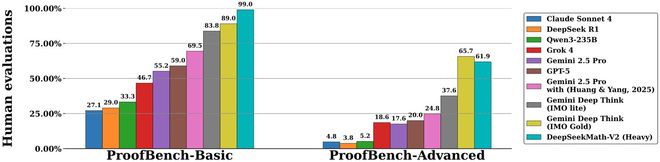
Core Insights - DeepSeek has released its latest mathematical model, DeepSeek Math-V2, which has generated significant excitement in the AI community due to its self-verifying capabilities in deep reasoning, particularly in mathematics [1][2]. Model Performance - Math-V2 demonstrates strong theorem-proving abilities, distinguishing itself from previous models that merely solved problems without rigorous reasoning [2]. - The model achieved gold medal-level results in the IMO 2025 and CMO 2024 competitions, and scored 118 out of 120 in the Putnam 2024 competition, showcasing its superior performance [2]. Benchmarking Results - In the IMO-Proof Bench evaluation, Math-V2 scored 99%, outperforming Google's Gemini Deep Think (89%) and GPT-5 (59%) [3]. - In advanced testing, Math-V2 scored 61.9%, just behind Gemini Deep Think's 65.7% [3]. Community Impact - The release of Math-V2 has sparked discussions across social media platforms and communities, highlighting its potential to automate verification-heavy tasks in programming languages [5][8]. - Experts in the AI field have praised DeepSeek's return and the significance of Math-V2, indicating a shift from "chatbot" to "reasoner" era in AI development [8][9].

不止于造车:小鹏正在重构其估值逻辑
Tai Mei Ti A P P· 2025-11-28 05:25
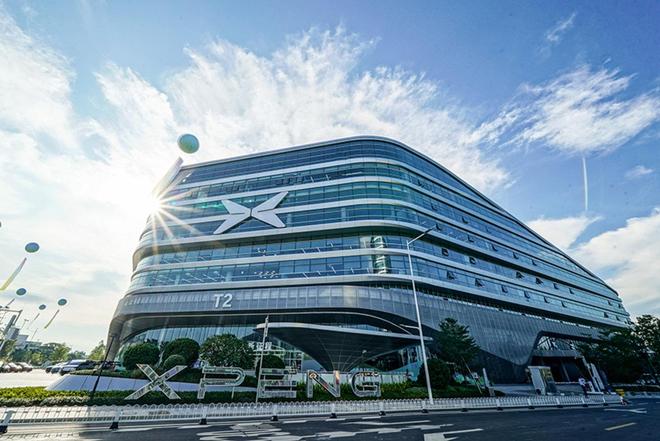
Core Insights - Xiaopeng Motors has demonstrated a significant turnaround, achieving a revenue of 20.38 billion yuan in Q3, a year-on-year increase of 100%, and a record delivery of 116,000 vehicles, with a gross margin of 20.1% [2] - The company has evolved from a struggling new energy vehicle manufacturer to a global provider of physical AI infrastructure, indicating a shift in its business model and market perception [2] Financial Performance - Q3 revenue reached 20.38 billion yuan, doubling from the previous year [2] - The delivery volume of 116,000 units marks a historical high for the company [2] - The gross margin of 20.1% signifies a transition to a more stable and profitable business model [2] Valuation Perspective - Major investment banks are adopting the Sum of the Parts (SOTP) valuation method for Xiaopeng, recognizing its diverse business segments beyond traditional automotive metrics [3][4] - The company is now viewed as a technology entity rather than just an automotive manufacturer, similar to how Tesla was re-evaluated in the past [5] Business Segments - Xiaopeng's operations are divided into four key segments: 1. Automotive business, providing stable cash flow [4] 2. AI chips, which support future AI computing needs [4] 3. Robotaxi services, representing a recurring revenue model [4] 4. Humanoid robots and flying cars, seen as the ultimate form of embodied intelligence [4] Strategic Moves - The introduction of the Kunpeng Super Range Extender is a tactical decision to expand market reach and data collection capabilities, addressing range anxiety for consumers [6][9] - The company is focusing on building a comprehensive data network through its vehicles to enhance AI model training [9] Technological Advancements - Xiaopeng is developing a self-research Turing AI chip, which serves as a universal brain for various intelligent terminals, including cars and robots [10] - The second-generation VLA model allows for a more intuitive AI driving experience, reducing costs and enhancing the feasibility of Robotaxi services [12] Ecosystem Development - Xiaopeng is shifting towards an ecosystem approach, collaborating with major players like Volkswagen and opening its Robotaxi and humanoid robot SDKs to the industry [14][16] - The company aims to position itself as a foundational technology provider in the physical AI space, similar to Android in the software domain [16] Global Expansion - Xiaopeng's overseas strategy has evolved to include local production and R&D in Europe, with Q3 overseas sales doubling, indicating a successful adaptation to global markets [16] Future Outlook - The company is poised for significant developments by 2026, with plans for Robotaxi trials, humanoid robot production, and flying car deliveries, potentially transforming its revenue streams [13] - Xiaopeng's vision of becoming a global embodied intelligence company is supported by its strong cash reserves and technological advancements [18]

千问和夸克,互补还是互搏?
Tai Mei Ti A P P· 2025-11-28 04:08
Core Insights - Alibaba's ambition in AI to C is evident as it launches the Qianwen app, aiming to compete directly with ChatGPT and establish itself as a key player in the AI consumer market [2][5] - The rapid success of Qianwen, achieving over 10 million downloads in just one week, indicates a potential shift in market dynamics, challenging the notion that Alibaba has lost its first-mover advantage [2][4] Financial Performance - Alibaba's latest financial report shows a revenue of 247.8 billion yuan, with a 15% year-on-year growth excluding certain retail segments, surpassing market expectations [4] Strategic Direction - Alibaba's CEO emphasizes a dual strategy focusing on both AI to B and AI to C, aiming to become a leading full-stack AI service provider while also developing consumer-facing AI applications [5][6] - Qianwen is positioned as a critical component of Alibaba's strategy to create a "super entrance" for AI, leveraging its technological advancements and ecosystem advantages [6][10] Technological Advancements - The Qianwen app utilizes the Qwen 3 - Max model, touted as the "world's strongest open-source model," with significant global downloads and recognition in AI performance rankings [5][6] - As of September 2024, the Qwen series has surpassed 600 million downloads globally, indicating strong adoption and interest from major tech players [6] Market Positioning - Despite technological strengths, Alibaba's presence in the domestic AI to C market has been limited, with Qianwen's current monthly active users (MAU) significantly trailing competitors like ByteDance's Doubao [6][10] - Qianwen's launch is seen as a strategic move to address Alibaba's shortcomings in the consumer AI space, aiming to enhance user engagement and ecosystem integration [6][10] User Experience and Functionality - Qianwen is designed to be a versatile AI assistant, offering features such as content generation, investment decision support, and image processing, catering to immediate user needs [8][9] - The long-term vision for Qianwen is to evolve into a comprehensive AI agent capable of executing tasks autonomously, integrating various Alibaba services seamlessly [9][10] Competitive Landscape - The relationship between Qianwen and Quark, another Alibaba product, raises questions about internal competition versus collaboration in the AI space [11][16] - Quark's previous focus on AI search and browsing may limit its effectiveness as a standalone AI assistant compared to the more specialized Qianwen [11][15] Future Challenges - Qianwen faces significant challenges in establishing user trust and habitual usage, akin to the long journey of WeChat in becoming an essential digital tool [10][20] - The need for effective integration of e-commerce, payment, and other services within Qianwen's ecosystem is critical for its success [20]


AI社交平台Soul再战港交所,“沉浸式情绪经济”故事好讲吗?
Tai Mei Ti A P P· 2025-11-28 03:15
Core Viewpoint - Soul App has submitted its IPO application to the Hong Kong Stock Exchange, with Tencent as a strategic investor holding 49.9% of the shares, and CITIC Securities acting as the sole sponsor for the IPO [2] Financial Performance - Soul's projected revenues for 2022, 2023, and 2024 are 1.667 billion, 1.846 billion, and 2.211 billion RMB respectively, with a compound annual growth rate (CAGR) exceeding 15% from 2022 to 2024 [2] - The company has recorded stable profitability since 2023, with adjusted profits of 337 million RMB for 2024 and 286 million RMB for the first eight months of 2025, and gross margins of 83.7% and 81.5% respectively [2] - The net cash generated from operating activities for 2024 is projected to be 421 million RMB [2] User Engagement and Market Position - Over 78.7% of Soul's daily active users (DAU) are from Generation Z, with approximately 39 million registered users and an average DAU of about 11 million in the first eight months of 2025 [3] - Users spend over 50 minutes daily on the platform, sending an average of 75 peer-to-peer messages each day, with a three-month user retention rate of 80% [3] - Soul ranks first among AI-driven immersive social platforms in China for DAU, daily average launches (20.1 times), and 30-day retention rate for new users (23%) [3] Business Model and Revenue Sources - The primary revenue source for Soul is AI-driven emotional value services, including virtual goods and membership privileges, which accounted for over 90% of revenue in the first eight months of 2025 [3] - The average revenue per paying user (ARPPU) is 104.4 RMB, indicating a strong willingness to pay for emotional value services [3] Company History and IPO Journey - Soul was established in 2015 and completed its D+ round of financing in 2021, with a steady financing rhythm and rapid valuation increase [4] - The company has raised over 310 million USD in total funding, with significant investments from Tencent and other notable investors [5] - Soul's IPO journey has faced challenges, including a halted NASDAQ listing in 2021 and a failed Hong Kong listing attempt in 2022, but it has now formally submitted its application to the Hong Kong Stock Exchange [6]

想留在牌桌上,大厂们必须要“卷”AI TO C | 马上评
Tai Mei Ti A P P· 2025-11-27 23:25
Core Insights - Alibaba's CEO Wu Yongming emphasized the dual strategy of "AI to C" and "AI to B" as core directions for the company, signaling a shift towards consumer-facing AI applications in the competitive landscape of internet giants [1][3] - The launch of the "Qianwen" app represents a significant move in this new battle for user engagement and market share, as companies seek to control the next generation of digital interaction [1][10] Group 1: Strategic Focus - Alibaba's AI strategy includes becoming a leading full-stack AI service provider in the "AI to B" sector while developing AI-native applications for consumers in the "AI to C" sector, leveraging its ecosystem advantages [3][4] - The timing of this push into AI to C is critical, as large model technologies have matured, providing a solid foundation for high-quality consumer applications [3][4] - The competitive landscape in e-commerce is intensifying, with rivals like Pinduoduo and Douyin posing significant challenges to Alibaba's market dominance, necessitating new traffic sources [3][10] Group 2: Market Dynamics - The AI-native applications are reshaping traffic distribution rules, with the ability to control the new generation of AI entry points becoming crucial for future e-commerce positioning [4][5] - The future online ecosystem will center around AI-native applications that serve as both traffic distribution points and value transmission hubs, akin to the roles of browsers and search engines in the past [5][6] - The transition from traditional interaction methods to conversational interfaces represents a fundamental shift in user engagement, with AI-driven chatbots emerging as key entry points [5][6] Group 3: Competitive Landscape - The AI to C battlefield is characterized by a bifurcated structure, with native AI companies on one side and traditional tech giants like Google, Microsoft, and Alibaba on the other, all vying for high-frequency user interactions [7][8] - ByteDance is leveraging its extensive content ecosystem and user behavior data to enhance its AI capabilities, creating a feedback loop that optimizes user experience and engagement [8][9] - Other companies like Tencent and Baidu are also navigating their strategies, with Tencent embedding AI into its WeChat ecosystem while Baidu struggles with a lack of diverse user scenarios [11][13] Group 4: Future Outlook - The competition for AI entry points is ultimately a contest for control over user scenarios, with companies needing to integrate AI deeply into everyday life to establish user habits and barriers to entry [12][17] - The success of AI strategies will depend on the ability to create a "scene-data-model" closed loop, ensuring continuous user feedback and model optimization [17][18] - The future landscape may see a few dominant AI applications emerging as primary entry points, while traditional platforms adapt to maintain relevance in a rapidly evolving digital environment [18][19]



【钛晨报】国家航天局:到2027年,基本实现商业航天高质量发展;新加坡国家AI计划放弃Meta模型,转向阿里千问;百度新设两个大模型研发部,直接向CEO汇报
Tai Mei Ti A P P· 2025-11-27 16:37
Group 1: National Space Administration Action Plan - The National Space Administration issued an action plan for the high-quality and safe development of commercial space from 2025 to 2027, aiming for significant growth in the industry scale and enhanced innovation capabilities by 2027 [2] - The action plan includes five key areas with 22 specific measures, focusing on enhancing innovation, efficient resource utilization, promoting industry growth, improving industry management services, and strengthening safety regulation across the entire chain [2][3][4][5] Group 2: Innovation and Resource Utilization - The plan emphasizes competitive opening of national research projects to commercial space entities, encouraging participation in civil aerospace projects and the commercialization of national technological achievements [2] - It proposes the establishment of a platform for space technology innovation and encourages local governments to create technology innovation centers in key areas such as reusable rockets and smart satellites [2][3] Group 3: Industry Growth and Management - The plan encourages optimization of the industry structure and supports the development of new technologies and products in the commercial space sector, including space resource utilization and space tourism [4] - It aims to establish a national commercial space development fund to attract long-term investments and promote international cooperation in satellite applications [4] Group 4: Safety Regulation - The action plan outlines the establishment of a comprehensive safety regulation system for commercial space activities, including safety checks throughout the product lifecycle and the creation of a commercial space safety regulation service platform [5] - It emphasizes the need for a clear organizational structure for safety regulation and the development of a quantitative risk assessment and decision-making mechanism [5]
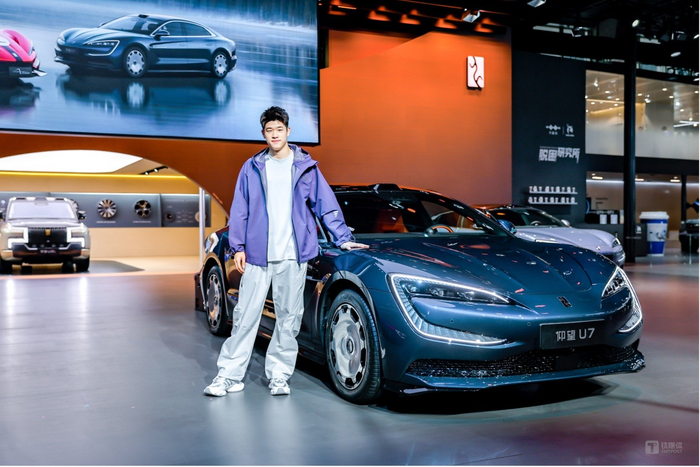
仰望的“后参数时代”:技术过剩能否转化为品牌护城河?
Tai Mei Ti A P P· 2025-11-27 15:21
Core Insights - The article discusses the evolution of Yangwang Automotive's brand strategy, moving from a focus on extreme technical specifications to establishing a high-end brand premium through engineering validation [2][3] - Yangwang's participation in the Guangzhou Auto Show showcases its new models, including U9X, U8L, and U7, as part of BYD's strategy to redefine luxury in the automotive market [2] Group 1: Technical Validation and Market Positioning - The U9X model achieved impressive performance metrics, including a Nürburgring lap time of 6 minutes and 59 seconds and a top speed of 496.22 km/h, which are significant in the automotive industry [3] - Yangwang aims to address historical shortcomings in China's automotive industry by validating its technologies through rigorous testing on both global and domestic tracks, thus enhancing its credibility in extreme conditions [3] - The U8L model shifts the brand narrative towards safety, targeting a demographic of Chinese entrepreneurs who prioritize physical safety over traditional luxury storytelling [5] Group 2: Challenges and Strategic Shifts - The U7 model faces significant challenges in the luxury sedan market, where consumer expectations for comfort and handling are high, competing against established brands like Porsche and Mercedes-Benz [6] - Yangwang's strategy of focusing on physical safety as a luxury attribute may face sustainability issues as the novelty of safety tests diminishes over time [5] - The company is attempting to transition from a "specification-heavy" approach to a more emotionally resonant brand identity, which is crucial for long-term success in the high-end market [7] Group 3: Future Outlook - Yangwang's strategy reflects a desire to build a technological moat in the high-end automotive sector, recognizing that technology advantages have a limited window of opportunity [7] - The company must internalize its technical specifications into a unique brand culture that resonates with high-net-worth individuals, which is essential for achieving true luxury status [7]

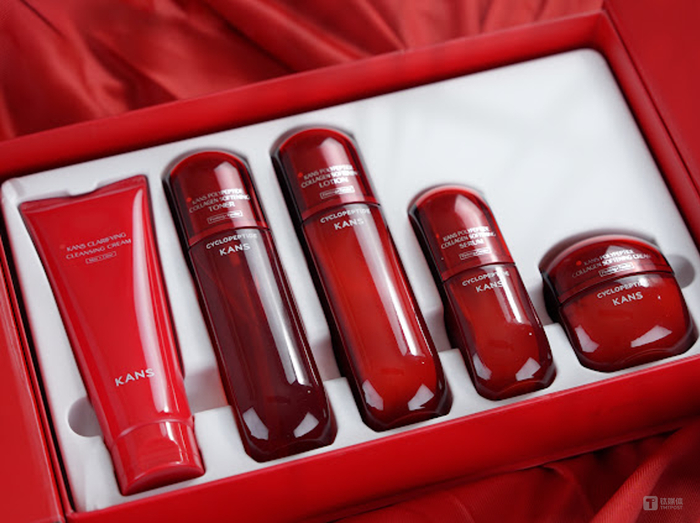
从爆款到品牌,国货美妆的升维之战 | 出海参考
Tai Mei Ti A P P· 2025-11-27 14:39
Core Insights - The current period is identified as the "best window" for Chinese beauty brands to expand overseas, supported by a growing global beauty market projected to reach $446.43 billion by 2025 and $1.2 trillion by 2030 [1][23] - Southeast Asia, particularly Vietnam, is highlighted as a key growth market for Chinese beauty brands due to its large population and high acceptance of Chinese products [1][2] Market Dynamics - Southeast Asia has a population of 670 million, with 65% aged between 18-35, and 78% acceptance of high-quality domestic products [1] - Brands like Colorkey, Han Shu, and Judy Doll have successfully penetrated the Vietnamese market, achieving significant sales milestones on platforms like TikTok [1][2][3] Competitive Landscape - The initial market entry strategy for many Chinese beauty brands relied on single product "hit" strategies, but the focus is shifting towards brand building and comprehensive market strategies [4][9] - There is a notable challenge in brand recognition, with Chinese brands still categorized as "others" in consumer perception compared to established Western and Korean brands [4][5] Brand Strategy - Successful brands are now prioritizing product quality and brand identity over low-cost strategies, with a focus on R&D and efficient operations [5][10] - Localized teams and tailored marketing strategies are essential for effective brand positioning in overseas markets [10][12] Content and E-commerce Integration - The rise of content-driven e-commerce platforms like TikTok is reshaping how beauty brands engage with consumers, allowing for lower-cost market entry and effective brand building [17][19] - Brands are leveraging TikTok for both product promotion and brand identity establishment, utilizing influencer marketing and user-generated content [11][21] Future Outlook - As competition intensifies in high-end markets like Japan and the U.S., collaboration among Chinese beauty brands is encouraged to enhance market presence and consumer trust [22][23] - The current global landscape presents a unique opportunity for Chinese beauty brands to capitalize on their supply chain strengths and adapt content for global markets [23]