清华金融评论

Search documents
开学时间已定!融入香港,走向世界,欢迎加入清华五道口“紫荆计划”项目
清华金融评论· 2025-10-17 09:11
Core Insights - The article emphasizes Hong Kong's strategic position as a key hub for entrepreneurs to seize new opportunities amid a shifting global economic landscape [2][6][7] Group 1: Program Overview - Tsinghua Wudaokou's "Zijing Plan" is the first flagship program focused on Hong Kong and globalization, set to commence on February 4 [3][7] - The program gathers top talents from various fields, including decision-makers from listed companies and leaders in AI and biotechnology, covering critical areas such as capital markets and technological innovation [3][6] - The curriculum is designed around a three-dimensional learning system: systematic lectures, in-depth discussions, and on-site visits to key institutions like the Hong Kong government and the Stock Exchange [3][7][14] Group 2: Learning Objectives - The program aims to help entrepreneurs understand Hong Kong's social culture, integrate into the local business ecosystem, and grasp opportunities in AI and Web3 [6][7] - Participants will gain insights into Hong Kong's unique advantages as a global financial center, free trade hub, and fintech testing ground [7][14] - The initiative encourages exploration of business opportunities in the Asia-Pacific region and the Belt and Road Initiative [6][14] Group 3: Networking and Collaboration - The program facilitates deep interactions with leaders from Hong Kong's financial, legal, and technological sectors, providing access to international resources and perspectives [15][32] - It aims to create a cross-regional and cross-industry platform for collaboration among entrepreneurs from both Hong Kong and mainland China [32][33] - Participants are encouraged to leverage Hong Kong as a strategic point for further development and global expansion [33]

建立健全基本制度,加强金融消费者权益保护丨金融普及教育专题
清华金融评论· 2025-10-16 09:31
Core Viewpoint - The article emphasizes the importance of consumer rights protection in the financial sector, particularly in the context of China's economic development and the evolving financial landscape. It highlights the need for a robust framework to safeguard consumer interests and enhance financial literacy, especially in the face of digital finance advancements [5][10]. Group 1: Financial Consumer Rights Protection - Financial consumers are crucial participants in the market and play a significant role in promoting high-quality economic development. Protecting their rights is essential for maintaining market confidence and preventing financial risks [5]. - The Chinese government has prioritized consumer rights protection, with recent meetings emphasizing the need for a comprehensive approach to enhance the legal and institutional framework [5][10]. - The article discusses the establishment of a multi-faceted consumer protection system that includes regulatory measures, infrastructure improvements, and collaborative governance to address the evolving challenges in consumer rights protection [5][10]. Group 2: Financial Education and Literacy - The development of inclusive finance has gained momentum since its introduction in 2013, with a focus on integrating financial education to enhance the financial literacy of various social strata [6][7]. - The "Golden Benefit Project" aims to empower individuals through financial knowledge, transforming opportunities into capabilities, thereby addressing financial exclusion [6][7]. - The article stresses the need for a comprehensive financial education system that involves government support, educational initiatives, and community engagement to improve national financial literacy [7]. Group 3: Dispute Resolution Mechanisms - The article outlines the increasing complexity of financial consumer disputes and the necessity for effective resolution mechanisms to prevent systemic risks [8][9]. - It proposes a collaborative governance model that integrates professional mediation organizations, financial management departments, and specialized courts to enhance dispute resolution efficiency [8][9]. - The use of technology, such as AI and blockchain, is recommended to improve the transparency and effectiveness of dispute resolution processes, thereby reducing the cost of consumer rights protection [9]. Group 4: Digital Finance and Consumer Protection - The rise of digital finance presents new challenges for consumer rights protection, necessitating the development of a new regulatory framework tailored to the unique aspects of digital financial services [14][15]. - The article advocates for the establishment of a public digital complaint platform to facilitate consumer rights protection in the digital finance space [14][15]. - It emphasizes the importance of enhancing consumer education regarding digital finance to improve awareness and risk management among consumers [15].
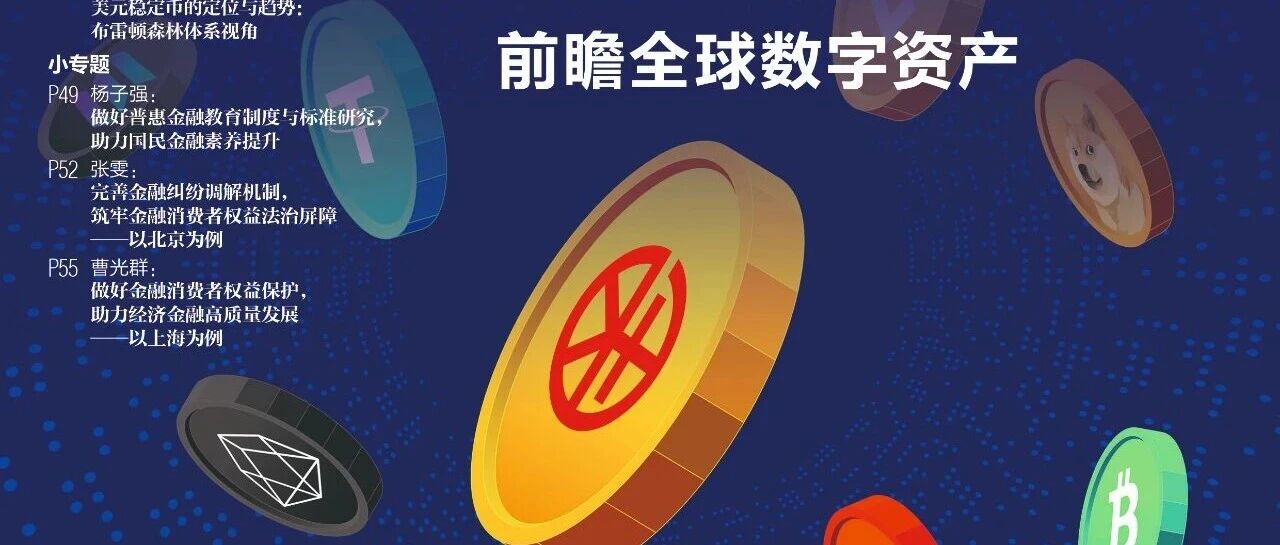
黄金RWA国际发展与前景展望|封面专题
清华金融评论· 2025-10-16 09:31
Core Viewpoint - The article discusses the transformation of physical gold into on-chain digital assets through Real World Asset (RWA) products, highlighting its role as a bridge between traditional finance and the digital economy, while exploring the international development models, challenges, and future prospects of gold RWA [2][3]. International Development Models of Gold RWA - The global gold RWA market exhibits diverse development patterns, shaped by the financial infrastructure, regulatory environment, and market characteristics of different countries and regions [5]. - In the United States, the market is driven by strict regulatory frameworks, with the SEC classifying most RWAs as securities, leading to a market-driven model where private innovation precedes regulatory guidelines [6]. - Europe adopts a legislative-led approach, balancing innovation and regulation, with initiatives like DORA and MiCA to standardize crypto and token businesses, fostering an innovation-friendly environment [7]. - Japan employs a pragmatic regulatory strategy, gradually amending laws to create space for gold RWA development, focusing on compliance and risk control rather than rapid innovation [8]. - Hong Kong aims to become an Asian hub for gold RWA through proactive policies, promoting tokenized gold investment products and enhancing its position as a digital financial center [9]. Challenges Facing Gold RWA Development - Gold RWA faces multiple challenges, primarily in regulatory compliance, technical risks, and market acceptance [11]. - Regulatory and compliance challenges include ensuring clear ownership of physical gold, legal recognition of gold RWA, and adherence to various jurisdictional regulations, complicating cross-border transactions [12]. - Technical risks involve ensuring data security, accurate rights mapping on the blockchain, and addressing vulnerabilities in smart contracts and private key management [13]. - Market acceptance is growing, with a compound annual growth rate exceeding 30%, but liquidity remains a significant issue, as the market lacks a robust liquidity structure to support trading activities [15].

扎实做好金融“五篇大文章” 加大金融支持实体经济力度|政策与监管
清华金融评论· 2025-10-16 09:31
Core Viewpoint - The article emphasizes the importance of the "Five Major Financial Articles" in enhancing financial services for the real economy and deepening the structural reform of financial supply during the "14th Five-Year Plan" period [2][3]. Group 1: Financial Support Progress - During the "14th Five-Year Plan" period, the People's Bank of China (PBOC) has made significant progress in implementing the "Five Major Financial Articles," establishing a policy framework that includes a guiding opinion and five specialized documents focusing on technology finance, green finance, inclusive finance, pension finance, and digital finance [3][4]. - As of August 2025, the loan balance for the "Five Major Financial Articles" reached 105.6 trillion yuan, accounting for 38.7% of total loans, with a year-on-year growth of 13.2%, outpacing the average loan growth rate by 6.6 percentage points [4]. Group 2: Technology Finance - The PBOC has developed a comprehensive policy framework to support technology finance, including action plans to enhance financing for technology enterprises and establishing a coordinated mechanism for technology finance [5][7]. - By August 2025, technology loans accounted for 28.8% of new loans, with a loan balance for technology SMEs reaching 3.4 trillion yuan, reflecting a year-on-year growth of 22% [7]. - The average interest rate for technology loans was 2.8% as of August 2025, showing a decrease of 0.5 percentage points year-on-year [7][10]. Group 3: Consumer Finance Support - The PBOC has introduced various financial support policies to boost consumption and expand domestic demand, including the establishment of a financial support policy system for consumption [11]. - As of August 2025, the loan balance for key service consumption sectors reached 2.78 trillion yuan, with a year-on-year growth of 5.12% [11]. - The total household consumption loan balance (excluding personal housing loans) was 21.13 trillion yuan as of August 2025, reflecting a year-on-year increase of 4.9% [12].
金价已突破4200美元,别恐高,有底层逻辑支撑|财富与资管
清华金融评论· 2025-10-15 09:00
Core Viewpoint - The recent surge in gold prices, surpassing $4200 per ounce, is driven by several underlying factors, including the Triffin Dilemma and the intertwining of political and financial dynamics, leading to a trend of "de-dollarization" [2][3][10]. Group 1: Factors Influencing Gold Prices - Gold has seen a significant increase of nearly $1600 per ounce this year, representing a rise of approximately 60% [3]. - The four main factors affecting gold prices are: 1. The weakening of the US dollar due to global de-dollarization trends [3]. 2. Expectations of lower US interest rates, which enhance gold's appeal [3]. 3. Increased market risk appetite due to escalating geopolitical conflicts [3]. 4. Central banks' ongoing purchases of gold for safety reasons [3]. Group 2: Political and Economic Context - The recent rise in gold prices is partly attributed to renewed tariff threats from the Trump administration against Chinese goods, which has created market volatility [5]. - The US government shutdown has heightened concerns about economic growth, leading to increased expectations for interest rate cuts by the Federal Reserve [7]. - The ongoing geopolitical tensions and trade wars have prompted countries to reduce their reliance on the US dollar, further supporting gold's attractiveness as a safe-haven asset [10]. Group 3: The Triffin Dilemma - The Triffin Dilemma highlights the conflict faced by a country whose currency serves as a global reserve, where it must balance trade deficits to provide liquidity while maintaining currency stability [9]. - As US debt continues to grow, confidence in the dollar is waning, contributing to the rise in gold prices [10]. Group 4: Investment Strategies - The TACO trading strategy, which capitalizes on the cyclical nature of Trump's tariff threats, has gained attention as a method for investors to buy assets during market downturns and sell when conditions improve [5]. - Bridgewater Associates' founder Ray Dalio suggests that investors should allocate up to 15% of their portfolios to gold, emphasizing its superior safe-haven qualities compared to the dollar [10].

央行最新发声!涉及货币政策框架|政策与监管
清华金融评论· 2025-10-15 09:00
Core Viewpoint - The article discusses the achievements and progress of China's monetary policy during the "14th Five-Year Plan" period, highlighting the effectiveness of the People's Bank of China (PBOC) in supporting economic recovery and financial stability through various monetary policy tools and reforms [3][4][5]. Group 1: Monetary Policy Framework and Achievements - The PBOC has established a modern monetary policy framework that effectively implements and transmits policies, contributing to the successful completion of the "14th Five-Year" economic and social development goals [4][5]. - Since the beginning of the "14th Five-Year" period, the PBOC has reduced the reserve requirement ratio (RRR) nine times, lowering it by 3.5 percentage points, which has released approximately 7 trillion yuan in long-term liquidity [5][6]. - The overall growth of financial metrics has been reasonable, with the annual growth rate of social financing scale and broad money supply (M2) around 9%-10%, significantly higher than the nominal economic growth rate of 6%-7% [6][7]. Group 2: Structural Monetary Policy Tools - The PBOC has improved the structural monetary policy tool system, focusing on key areas such as technological innovation, green development, and consumer services, ensuring comprehensive coverage of financial services [6][7]. - The interest rates for new corporate loans and personal housing loans were approximately 3.1% in August 2025, down by about 1.5 and 2.3 percentage points, respectively, compared to the end of 2020 [6][7]. Group 3: Interest Rate Marketization - The PBOC has deepened interest rate marketization reforms, establishing a price-based monetary policy adjustment mechanism, which has led to a more refined market interest rate control mechanism [8][9]. - The establishment of a market-based adjustment mechanism for deposit rates and the cancellation of the nationwide lower limit for personal housing loan rates have contributed to the marketization of commercial loan rates [8][9]. - Since the beginning of the "14th Five-Year" period, the PBOC has cumulatively lowered the policy interest rate by 0.8 percentage points, leading to significant reductions in the loan prime rate (LPR) for both one-year and five-year terms [9]. Group 4: Exchange Rate Stability - The PBOC has maintained a stable RMB exchange rate, allowing it to implement independent monetary policy and stabilize financial markets, with the RMB exchange rate showing resilience and dynamic equilibrium [10][11]. - The PBOC has emphasized a managed floating exchange rate system, preventing excessive fluctuations and reinforcing the market's role in determining the exchange rate [10][11]. Group 5: Expectations Management - The PBOC has focused on improving communication and expectations management regarding monetary policy, enhancing transparency and understanding of policy measures [12][13]. - Various channels have been utilized for effective communication, including press conferences, regular financial data releases, and public education on monetary policy [12][13][14].
9月CPI、PPI数据公布|宏观经济
清华金融评论· 2025-10-15 03:47
Core Viewpoint - The article discusses the recent trends in consumer prices and industrial producer prices in China, highlighting a decline in consumer prices and industrial producer prices, with specific emphasis on the impact of food prices on the Consumer Price Index (CPI) and the changes in various categories of goods and services [3][5][9]. Consumer Price Trends - In September 2025, the national consumer price index (CPI) decreased by 0.3% year-on-year, with urban areas seeing a decline of 0.2% and rural areas a decline of 0.5% [3]. - Food prices fell by 4.4% year-on-year, while non-food prices increased by 0.7% [3]. - The average CPI from January to September 2025 was down 0.1% compared to the same period last year [3]. Food Price Impact - In September, the prices of food, tobacco, and alcohol decreased by 2.6% year-on-year, contributing approximately 0.74 percentage points to the CPI decline [5]. - Specific food items such as fresh vegetables, eggs, and pork saw significant price drops of 13.7%, 11.9%, and 17.0% respectively, impacting the CPI by 0.35, 0.08, and 0.26 percentage points [5]. - Conversely, seafood prices increased by 0.9%, contributing 0.02 percentage points to the CPI [5]. Industrial Producer Price Trends - In September 2025, the industrial producer price index decreased by 2.3% year-on-year, with the decline rate narrowing by 0.6 percentage points compared to the previous month [9]. - The average industrial producer price from January to September 2025 was down 2.8% year-on-year [9]. Price Changes in Industrial Inputs - The prices of industrial producer inputs, such as fuel and power, decreased by 8.1%, while chemical raw materials and agricultural products also saw declines of 5.5% and 5.4% respectively [11]. - In September, the prices of industrial producer outputs remained stable, with production material prices unchanged [11]. - Year-on-year, the prices of production materials fell by 2.4%, with significant declines in mining and raw materials sectors [13].

第二届“中邮保险·紫荆杯”全国高校辩论赛圆满落幕:中央财经大学勇夺桂冠,北京交通大学荣获亚军
清华金融评论· 2025-10-14 09:39
Core Viewpoint - The article highlights the successful conclusion of the second "China Post Insurance・Zijing Cup" National College Financial Education Debate Competition, emphasizing the importance of financial literacy and education in promoting inclusive finance and risk prevention [1][3]. Group 1: Event Overview - The debate competition attracted participation from 48 universities and included 51 debate matches, with over 400 participants competing [1]. - The final competition was held at Tsinghua University, where the Central University of Finance and Economics team won the championship, and Beijing Jiaotong University secured the runner-up position [1][28]. Group 2: Importance of Financial Education - Zhang Wei, representing the organizing committee, stated that financial education is crucial for enhancing public financial literacy and preventing financial risks, thereby contributing to high-quality development in the financial sector [3]. - The event showcased the social responsibility and innovative practices of universities in promoting financial knowledge and talent development [3]. Group 3: Perspectives from Industry Leaders - Han Guangyue, Chairman of China Post Life Insurance, emphasized the significance of financial literacy as a foundation for benefiting the public and expressed hope that the competition would become a prestigious event in financial education [6]. - Liang Tao, former Vice Chairman of the China Banking and Insurance Regulatory Commission, discussed the challenges posed by artificial intelligence in financial consumer protection and provided five recommendations for addressing these challenges [8]. Group 4: Debate Topics and Insights - The final debate focused on the topic "In the AI-driven era of pension finance, should we prioritize 'rights first' or 'emotional care'?" with participants discussing systemic risks and the essence of pension finance as a social security mechanism [16][18]. - Judges and participants highlighted the need for a balance between economic security and emotional support in pension finance, especially in the context of technological advancements [20][22][27].
2025诺贝尔经济学奖,告诉了中国什么?|宏观经济
清华金融评论· 2025-10-14 09:39
Core Insights - The article discusses the significance of the 2025 Nobel Prize in Economic Sciences awarded to Joel Mokyr, Philippe Aghion, and Peter Howitt for their contributions to understanding how innovation drives economic growth, particularly in the context of China's current economic challenges [5][6]. Group 1: Innovation Ecosystem - Mokyr's core contribution highlights that an innovation ecosystem, composed of knowledge enlightenment and institutional guarantees, is essential to combat the issue of "involution" in China, which is characterized by ineffective competition and insufficient technological advancement [7][8]. - The historical context provided by Mokyr indicates that the "Bacon Plan" in the 17th century marked a pivotal moment for the role of knowledge in economic growth, emphasizing the importance of knowledge dissemination for technological breakthroughs [7][8]. - The emergence of innovation clusters, such as those in Beijing and Hangzhou, supports Mokyr's assertion that a collaborative environment among academia, capital markets, and government services fosters innovation [8]. Group 2: Competition and Innovation - Aghion and Howitt's theory of the "inverted U-shape relationship" between competition and innovation suggests that there is an optimal level of competition that stimulates innovation, while excessive competition can stifle it [10][11]. - The impact of this theory is evident in China's electric vehicle industry, where excessive competition has led to price wars that diminish profits and reduce R&D investments, highlighting the need for a balanced competitive environment [10][11]. - The commitment of 17 car manufacturers to a 60-day payment term is seen as a positive step towards restoring optimal competition in the industry [10]. Group 3: Creative Destruction - Aghion and Howitt's concept of "creative destruction" is presented as a necessary pathway for China to transition from "stock competition" to "incremental innovation," emphasizing the need to eliminate outdated capacities and explore new markets [12][13]. - The article contrasts the dominance of technology-driven companies in the U.S. with the prevalence of traditional firms in China's stock market, suggesting that the lack of a strong "creative destruction" mechanism hinders innovation [13]. - Policy recommendations include the government acting as a "rule guardian" to foster an innovation ecosystem and ensure that low-quality capacities exit the market, thereby promoting a competitive environment conducive to innovation [13]. Group 4: Conclusion - The insights from the 2025 Nobel Prize in Economic Sciences emphasize that combating "involution" requires not a rejection of competition but a return to a reasonable competitive framework that enhances innovation [15]. - The article outlines three core pathways to achieve this: establishing a supportive institutional framework, regulating competition to stimulate innovation, and encouraging technological and model innovation to shift from saturated markets to new growth areas [15].

对低利率环境下国有大型商业银行净息差管理的思考|银行与保险
清华金融评论· 2025-10-14 09:39
Core Viewpoint - The article emphasizes that China's monetary policy has been moderately loose in response to a complex macroeconomic environment, leading to a sustained low interest rate environment. State-owned large commercial banks must focus on serving the real economy and create greater value in the context of high-quality economic development [2][4]. Group 1: Interest Margin Analysis - The net interest margin (NIM) of state-owned large commercial banks has been narrowing significantly due to the continuous decline in market interest rates. From the end of 2018 to the end of 2024, the average NIM of the four major banks is projected to decrease from 2.18% to 1.52%, a drop of 0.66% [6]. - The average loan yield for the four major banks has decreased from 4.34% in 2018 to 3.55% in 2024, a decline of 0.79%. Similarly, the average investment yield has fallen from 3.59% to 3.09%, a reduction of 0.5% [7][8]. Group 2: Cost of Interest-Bearing Liabilities - The average deposit interest rate for the four major banks increased from 1.47% in 2018 to 1.76% in 2024, raising the cost of interest-bearing liabilities by 0.29%. The proportion of deposits in interest-bearing liabilities has decreased from 83.79% to 78.64% during the same period [9]. - The net interest income has shown negative growth as the effect of expanding asset scale to offset the narrowing NIM has diminished. Starting from 2023, the positive scale effect can no longer compensate for the negative rate effect, leading to a decline in net interest income for some banks [10]. Group 3: Future Interest Rate Trends - The article suggests that the low interest rate environment in China may persist for a considerable time due to various internal and external factors, including economic slowdown and structural issues such as technological stagnation and the fading demographic dividend [12]. - Internationally, major developed economies have entered a rate-cutting cycle, with central banks like the Federal Reserve and the European Central Bank reducing rates in response to easing inflation pressures and slowing employment growth [13].