美股研究社

Search documents
AI日报丨机构看好国产AI龙头等方向,英伟达收涨3%,放风春节前向中国客户交付H200芯片
美股研究社· 2025-12-24 07:13
Group 1 - The article highlights the rapid development of artificial intelligence (AI) technology, presenting significant opportunities in the market [3] - Semiconductor demand is increasing due to the growth in mobile applications and AI, leading to a 10% price increase in some production capacities at SMIC [5] - A lawsuit has been filed against major AI companies, including OpenAI and Google, for alleged copyright infringement, with potential damages of up to $150,000 per infringing work [5] Group 2 - The Hong Kong stock market is experiencing increased volatility, but analysts believe it still offers high investment value, particularly in domestic AI leaders and upstream resources [6][7] - Nvidia plans to deliver its H200 AI chips to Chinese customers before the Lunar New Year, with an estimated shipment of 5,000 to 10,000 modules, although delivery remains uncertain [9] - Google is set to launch new AI smart glasses in 2026, aiming to differentiate itself from competitors like Meta through advanced spatial understanding technology [10] Group 3 - Tesla's sales in Europe fell by 11.8% in November, while its competitor BYD saw strong growth, resulting in a decrease in Tesla's market share from 2.5% to 2.1% [11]


美财长贝森特提议:待通胀达标后,应改革美联储2%目标制
美股研究社· 2025-12-24 07:13
Core Viewpoint - The article discusses the perspective of U.S. Treasury Secretary Scott Bessent on the Federal Reserve's 2% inflation target, suggesting that once inflation is sustainably controlled at this level, a discussion on adopting a target range may be warranted [5][8]. Group 1: Inflation Target Discussion - Bessent proposes that discussions could revolve around a target range of 1.5% to 2.5% or 1% to 3% once inflation returns to 2% [5]. - He criticizes the pursuit of precise inflation targets, stating that it may appear unreasonable to adjust targets upward when actual inflation exceeds them [5][8]. Group 2: Current Inflation Data - The Consumer Price Index (CPI) showed a year-on-year increase of 2.7% as of November, while the Personal Consumption Expenditures (PCE) price index rose by 2.8% over the past 12 months [6]. - Bessent acknowledges the public's concerns regarding affordability and the high cost of living, attributing some inflationary pressures to the Biden administration's policies [8]. Group 3: Budget Deficit and Interest Rates - Bessent suggests that stabilizing or reducing the budget deficit could provide a rationale for lowering interest rates, referencing historical precedents from Germany before the euro's introduction [10]. - He emphasizes the need for collaboration between the Treasury and the Federal Reserve to achieve fiscal balance and control inflation [9][10].

微软拉响「红色警报」!纳德拉重回一线抓Bug,AI这仗输不起
美股研究社· 2025-12-24 07:13
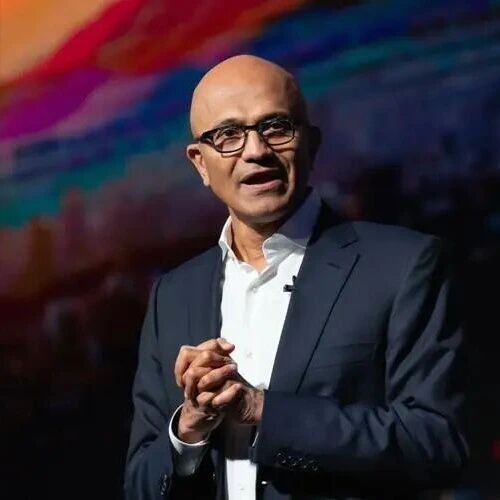
Core Viewpoint - The article discusses the shift in focus for Microsoft CEO Satya Nadella, who is now personally involved in product details, particularly regarding the usability of AI tools like Copilot, indicating a change in the competitive landscape of AI where user experience is paramount [2][10][31]. Group 1: User Engagement and AI Tools - Despite Microsoft’s dominance in office software, users are bypassing Copilot, indicating a need for the tool to prove its value [5][6][8]. - The competition has shifted from showcasing capabilities to retaining users, emphasizing the importance of user choice in daily interactions with AI [9][10]. - Copilot's design, which attempts to cover all scenarios, may lead to a mechanical interaction that detracts from user experience [12][14]. Group 2: Comparison with Smaller Tools - Smaller companies' tools, such as Cursor and Devin, focus on specific tasks, providing a simpler and more efficient user experience [17][20]. - Users are migrating from GitHub Copilot to these more specialized tools, not necessarily due to superior functionality, but because they offer less interruption and a more intuitive partnership [19][20]. Group 3: Emotional Cost and User Experience - The emotional cost of using AI tools, including frequent interruptions and a sense of being managed, affects user retention [28][29]. - Users prefer tools that understand when to engage and when to remain silent, highlighting the need for a balanced interaction [29][30]. Group 4: Strategic Shift for Microsoft - Nadella's return to product-level involvement reflects a recognition that scale and ecosystem do not guarantee user engagement [31][34]. - The article suggests that the next phase of AI competition will hinge on understanding user needs and experiences rather than just technological capabilities [35][37].

2026年市场展望:人工智能稍作喘息,而消费强势回归
美股研究社· 2025-12-24 07:13
Core Viewpoint - The article highlights a dichotomy in the current economic landscape, where the AI sector thrives while the broader economy struggles, leading to a "two worlds" scenario where wealth is concentrated among high-income groups and capital-rich companies, leaving ordinary citizens facing stagnation or decline in wealth [1][5]. Market Status - The AI sector has attracted unprecedented investment due to optimistic expectations of future demand, particularly following the launch of ChatGPT, which has initiated a prolonged upward trend for tech companies [4]. - Despite strong GDP growth figures, the underlying economic performance is uneven, heavily reliant on AI investments and infrastructure spending, with many indicators showing stagnation when these factors are excluded [5]. - The K-shaped economic structure indicates that while AI is booming, many individuals are experiencing job insecurity and financial distress, as evidenced by rising unemployment rates and low consumer confidence [5]. 2026 Outlook - Analysts predict a cooling of the AI investment frenzy by 2026, with a potential recovery in consumer spending as employment conditions improve [6][8]. - The implementation of tax reduction policies under the "Good Bill" is expected to provide short-term relief to consumers, potentially boosting disposable income and consumption in 2026 [8]. - Overall, analysts foresee a mixed impact on the S&P 500 index, with consumer spending recovery benefiting certain sectors while tech sector weakness may offset these gains [9]. Earnings and Valuation - Analysts project a 14% growth in S&P 500 earnings per share from December 2025 to December 2026, but this estimate has been revised down to about 10% due to pessimistic views on the AI sector [9]. - The current price-to-earnings ratio of the S&P 500 is around 25, which may decline to 22 or lower if large tech companies experience slower profit growth and valuation contraction [9][10]. - The combination of earnings growth and valuation contraction is expected to significantly offset any positive impacts from earnings increases, leading to a "hold" rating for major indices like the S&P 500 [10]. Strategic Recommendations - Given the anticipated market shifts, analysts recommend reallocating investments from high-priced tech stocks to undervalued sectors such as retail and dining, which are expected to outperform in 2026 [14].




再造一个拼多多的本质:寻找中国供应链的能力上限
美股研究社· 2025-12-24 07:13
Core Viewpoint - Temu has achieved in three years what Pinduoduo accomplished in ten years in the domestic e-commerce market, indicating a significant shift in expectations and ambitions for Pinduoduo's future growth [2][4]. Group 1: Temu's Growth and Supply Chain Efficiency - Temu's rapid growth to match the domestic main site in just three years suggests the potential for the group to double its overall scale in the next three years [4]. - The success of Temu serves as a test of China's supply chain capabilities, demonstrating its ability to support a global direct-to-consumer e-commerce system [4]. - Temu has proven that the Chinese supply chain can be replicated globally with industrial-grade efficiency, simplifying the complex cross-border e-commerce process for factories [7][9]. Group 2: Global Consumer Demand and Market Penetration - Temu has successfully tapped into global consumer demand, achieving significant market penetration in regions like Nigeria and South Africa, where it captured 45% of daily orders in Nigeria within three months of launch [11][13]. - The platform's design allows global consumers to access affordable, reliable, and well-designed Chinese products, leading to substantial growth [13]. Group 3: Supply Chain Upgrades and Brand Development - Pinduoduo's focus on upgrading the Chinese supply chain is aimed at achieving high-quality and brand-oriented products, moving beyond traditional sales methods [20][22]. - The platform's initiatives, such as the "100 billion support" plan, have led to significant increases in sales and supply chain quality, with agricultural product sales up 47% year-on-year [23]. Group 4: Long-term Vision and Market Strategy - Pinduoduo's ambition to "recreate another Pinduoduo" reflects a commitment to leveraging the tested capabilities of the Chinese supply chain to meet larger global demands [30]. - The strategy emphasizes not just selling products but also enhancing the organizational and data capabilities of Chinese manufacturers, transforming them from OEMs to brand owners [24][28].

英伟达:2026年或将是盘整之年
美股研究社· 2025-12-24 07:13
Core Viewpoint - 2026 is expected to be a year of consolidation for Nvidia's stock price as the AI industry transitions from explosive growth to a mature infrastructure phase, facing both opportunities and challenges due to global trade uncertainties and intensified competition among large cloud service providers [1] Group 1: China Market Developments - Nvidia plans to start shipping H200 series graphics cards to China in mid-February, pending approval, with expanded production expected to generate orders in the second quarter [2] - Despite the positive outlook, analysts express concerns about the actual benefits to Nvidia, as sales in China account for only about 13% of total revenue, and the 25% transaction fee along with other costs may further diminish profit margins [2] - The H200 series is technically inferior to the Blackwell series, leading to expectations of lower profit margins for these exports [2] Group 2: Competitive Threats - The primary threat to Nvidia comes from large cloud service providers like Google and Amazon, rather than competitors like AMD [3] - Google's launch of the Gemini 3 model, trained on its custom Tensor Processing Units (TPUs), marks a significant milestone in chip development, posing a substantial threat to Nvidia's AI graphics cards [5] - The total cost of ownership for Google's TPUv7 is estimated to be about 40% lower than Nvidia's GB200 series chips, indicating a competitive edge for Google [6] Group 3: Stock Performance and Valuation - Nvidia's stock has been fluctuating around the 20-day moving average since August, indicating a loss of upward momentum, with a descending wedge pattern forming between approximately $210 and $170 [6] - From a valuation perspective, Nvidia's forward P/E ratio of 39.17 is among the highest compared to major tech peers, suggesting that the stock is overvalued [6] - Analysts maintain a neutral outlook on Nvidia's prospects, anticipating a range-bound trading pattern in 2026 due to high valuation risks and the aforementioned competitive dynamics [7]

黄金再度飞升,“货币贬值交易”杀回来了?
美股研究社· 2025-12-23 09:55
Core Viewpoint - The article discusses the recent surge in gold prices, reaching a historical high, indicating the reactivation of "currency devaluation trades" due to the Federal Reserve's recent interest rate cuts and concerns over debt monetization [6][8]. Group 1: Gold and Silver Market Dynamics - Gold prices have surpassed $4,400 per ounce, with a return rate of 68% since 2025, while silver has also reached a historical high with a year-to-date increase of nearly 140% [6]. - The rise in gold and silver prices is attributed to dovish comments from Federal Reserve Chairman Jerome Powell and expectations of further interest rate cuts [8]. - The geopolitical tensions in Venezuela and Ukraine have enhanced the appeal of gold as a safe-haven asset [6]. Group 2: Currency Correlations - There is a growing correlation between low-debt sovereign currencies, such as the Swedish Krona and Swiss Franc, and the prices of precious metals [11]. - The strength of the Swedish Krona is linked to "currency devaluation trades," despite its historical volatility and lack of safe-haven status [12]. - The article highlights that while the US dollar appears stable, it is actually weak against a basket of currencies, despite its strength against the fragile Japanese Yen [12]. Group 3: Investment Strategies - The surge in gold prices is partly driven by ongoing yen carry trades, where investors short the yen to finance long positions in higher-risk assets [12]. - The recent interest rate hike by the Bank of Japan to 0.75% has not ended these carry trades, as the interest rate differential between Japan and the US remains significant [12]. - Japan's 10-year government bond yield has nearly doubled this year, reaching 2.08%, indicating a shift in the interest rate landscape [13].

增长预期 VS 估值压力:机构“超级投资者”视角下的亚马逊投资逻辑
美股研究社· 2025-12-23 09:55
Core Insights - Amazon (AMZN) has recently experienced several new catalysts, with significant movements from "super investors" indicating a mixed sentiment towards the stock [1][3][18] Group 1: Super Investor Activity - A total of 25 "super investors" hold Amazon shares, making it the fifth most held stock among their portfolios, with an average portfolio allocation of over 2.1% [3] - The average holding cost for these investors is approximately $220, closely aligning with the current market valuation of $227, suggesting a strong correlation between their positions and the stock price [5][18] - Among the top ten fund managers, there is a notable split in trading actions, with five increasing their positions, four reducing, and one maintaining their holdings [6][7] Group 2: Financial Projections and Valuation - Analysts have projected Amazon's total return on investment (ROI) over the next five years under various growth and price-earnings (P/E) scenarios, with the most optimistic scenario suggesting a total return of around 100% [8][11] - The expected compound annual growth rate (CAGR) for Amazon's earnings per share (EPS) over the next five years is approximately 14.6%, although analysts believe this may be overly optimistic, estimating a more conservative CAGR of around 12% [10][11] - The projected EPS for fiscal year 2025 is $7.06, with a year-over-year growth of 27.66%, and a forward P/E ratio of 32.20 [11] Group 3: Risks and Challenges - Despite strong performance from AWS, there are concerns regarding its competitive position against rivals like Microsoft Azure, which is experiencing faster growth [12] - Amazon may face challenges with profit margins, as indicated by a projected decline in implied profit margin from 11.6% to 9.9% in the upcoming quarter [13][16] - The company is actively developing its own AI chips, which could serve as a cost-effective alternative to Nvidia's chips, potentially supporting growth and profitability [16]


官宣扩充App Store广告位:苹果要躺着赚钱!
美股研究社· 2025-12-23 09:55
Core Viewpoint - Apple is set to enhance its advertising capabilities in the App Store by adding more ad placements starting in 2026, which will break the current limitation of displaying only one ad at the top of search results [4][5]. Group 1: Advertising Strategy - The new ad placements will be located in the lower part of the search results and will be clearly marked with a "blue ad label" [7]. - This move is expected to significantly increase Apple's revenue from the App Store, which is already a highly profitable business due to its vast user base and high margins [10][11]. Group 2: Financial Impact - Apple's service revenue, which includes subscription services, advertising income, and transaction fees, has become the second-largest source of revenue for the company, contributing to its financial growth [11][13]. - In Q4 of fiscal year 2025, Apple's service revenue reached $28.75 billion, a year-on-year increase of 15.13%, accounting for 28% of total revenue, surpassing market expectations [14]. Group 3: User Experience and Developer Concerns - The increase in ad placements may lead to a higher likelihood of users downloading applications that are not what they intended, potentially affecting user experience negatively [16][18]. - There are concerns that this strategy could disadvantage small and medium developers, as they may struggle to compete with larger companies for ad placements due to financial constraints [20]. Group 4: Market Position and Future Outlook - Apple is proactively expanding its advertising revenue in light of ongoing antitrust investigations and potential regulatory challenges that could impact its App Store business [22]. - Despite the current strong performance of the iPhone, with the iPhone 17 series achieving significant sales, Apple is preparing for potential future challenges by enhancing its advertising strategy [24][26]. Group 5: Balancing Act - The key challenge for Apple will be to find a balance between maximizing revenue from the App Store and maintaining a positive user experience and fair treatment for developers [30].

AI日报丨春晚AI冠名落定;钉钉发布全球首个工作智能操作系统;xAI被记者起诉
美股研究社· 2025-12-23 09:55
Group 1 - The article highlights the rapid development of artificial intelligence (AI) technology, presenting significant opportunities in the market [3] - Fire Mountain Engine will be the exclusive AI cloud partner for the 2026 Spring Festival Gala, with ByteDance's intelligent assistant Doubao participating in various interactive features [5] - DingTalk launched the world's first work intelligence operating system, Agent OS, aimed at facilitating collaboration between humans and AI [6] Group 2 - Alibaba has open-sourced a new image generation model, Qwen-Image-Layered, which allows for layer-based image editing similar to professional design software [7] - A journalist has filed a lawsuit against xAI and other tech companies for allegedly using copyrighted works without permission to train their AI systems [9] - The U.S. Department of Defense announced a partnership with xAI to expand its AI platform, integrating xAI's systems into its existing infrastructure [10][11][12]