经济观察报

Search documents
房东直租在减少
经济观察报· 2025-09-12 13:03
Core Viewpoint - The article discusses the rise of asset management-style housing rental services, where landlords entrust their properties to intermediaries for unified management, leading to improved living and service standards, but also raising concerns about the redistribution of interests among intermediaries, landlords, and tenants [2][4]. Summary by Sections Asset Management Rental Services - Asset management-style rental services involve landlords handing over their properties to intermediaries for management, including renting, collecting rent, maintenance, and operations [2][4]. - This model has gained traction among many intermediary companies, enhancing living standards but also sparking debates over the interests of landlords and tenants being overlooked [2]. Cost Comparison - A case study shows that renting a managed property costs 21.38 million yuan over three years compared to 19.98 million yuan for direct rental, indicating that direct rentals are cheaper but managed properties offer better management and services [4]. Intermediary Benefits - For intermediaries, the asset management business provides stable income and transforms scattered properties into operational assets, allowing for additional revenue from financial, home decoration, and housekeeping services [7]. Landlord and Tenant Perspectives - Landlords transition from being mere property owners to asset owners, reducing risks associated with vacancy and management tasks [7]. - Tenants benefit from higher service standards, reduced disputes with landlords, and conveniences like cleaning and maintenance services [8]. Challenges in the Market - Issues arise such as limited visibility for direct rentals, reduced viewing frequency for direct rental properties, and fewer options for landlords who wish to rent out their properties quickly [8]. - Many landlords still rely on professional intermediaries due to the complexities of self-renting [8]. Industry Trends - The revenue structure of intermediary companies is shifting, with rental service income rising significantly; for example, Beike's rental service revenue reached 21.8% by mid-2025 [10]. - Companies like I Love My Home report that asset management is their largest revenue source, indicating a trend towards stable income through property management rather than traditional brokerage [10]. Future Considerations - The article suggests that the current issues in the asset management rental sector are temporary and will improve as companies enhance their asset management capabilities [11]. - There is a need for better financial oversight in the management of tenant deposits, as the accumulation of funds can pose risks if management companies fail [12].




“易中天”市值破万亿,凭什么?
经济观察报· 2025-09-12 12:43
Core Viewpoint - The article discusses the current state of the optical module industry, particularly in the context of AI-driven demand and the recent surge in stock prices, questioning whether this is a new era or just a cyclical peak [1][4]. Market Performance - On September 11, the A-share market saw a significant increase, particularly in the CPO (Co-Packaged Optics) sector, which rose by 6.64%, attracting a net inflow of 19.763 billion yuan [2]. - Three companies, NewEase (300502.SZ), Zhongji Xuchuang (300308.SZ), and Tianfu Communication (300394.SZ), collectively referred to as "Yizhongtian," saw their stock prices rise significantly, with NewEase up 13.42%, Zhongji Xuchuang up 14.28%, and Tianfu Communication up 13.54% [2]. AI Demand and Infrastructure - Oracle's unexpected performance guidance due to increased cloud infrastructure contracts signaled strong ongoing demand for AI computing power, which in turn spurred interest in optical modules as essential components for data transmission [3]. - The optical module market has become a focal point for investors, with AI computing hardware being a primary driver of growth since 2025 [4]. Optical Expo Insights - The 26th China International Optoelectronic Expo (CIOE) attracted 77,418 attendees, highlighting the growing interest in optical communication technologies [6]. - The expo showcased advancements in high-speed optical modules, with major companies presenting their latest technologies in 800G and 1.6T modules, as well as CPO solutions [6][9]. Technological Developments - Optical modules are critical for high-speed data transmission, converting electrical signals to optical signals and vice versa, with a shift from traditional copper cables to faster, more efficient optical solutions driven by AI demands [7][8]. - CPO technology, which integrates optical components with switching chips on a single substrate, is emerging as a solution to reduce signal loss and power consumption [9]. Financial Performance - Companies in the optical module sector reported strong financial results, with Zhongji Xuchuang's net profit for the first half of 2025 reaching 3.995 billion yuan, a 69.4% increase year-on-year, and NewEase's net profit soaring by 355.68% to 3.942 billion yuan [16]. - The competitive landscape is shifting, with NewEase closing the gap on Zhongji Xuchuang in terms of revenue and profitability [17]. Market Debate - A debate has emerged regarding the sustainability of high valuations in the optical module sector, with some analysts questioning the feasibility of projected profits for companies like Zhongji Xuchuang [19][20]. - The discussion reflects differing perspectives on whether the current demand driven by AI represents a new paradigm or a temporary cycle [21][22]. Supply Chain Challenges - The optical module industry faces challenges related to reliance on imported high-end optical chips, with domestic production capabilities still developing [22]. - Companies are striving to enhance local supply chains to reduce dependency on foreign sources for critical components [22]. Future Growth Areas - The market is exploring new growth opportunities, including the application of optical interconnect technology within servers and long-distance data center interconnections [25][26]. - The demand for coherent optical modules is expected to rise as AI data centers expand, creating new revenue streams for companies in the sector [26].


100%缩瘤率!中国新药全球封神 百利天恒叩响MNC之门
经济观察报· 2025-09-12 12:39
Core Viewpoint - Iza-bren (BL-B01D1) is a groundbreaking ADC drug developed by the Chinese company BaiLi TianHeng, showing significant potential in treating EGFR-mutant non-small cell lung cancer (NSCLC) and other cancers, with promising clinical trial results that could reshape cancer treatment paradigms globally [1][9][16]. Summary by Sections Clinical Efficacy - In a study involving 50 patients with advanced or metastatic EGFR-mutant NSCLC, 94% experienced tumor shrinkage, with progression-free survival (PFS) exceeding one year, nearly doubling the duration compared to existing treatments [4][14]. - Another study with 38 patients showed that 100% had tumor reductions of over 30% when treated with Iza-bren in combination with the targeted drug Osimertinib, outperforming the best current therapies which have an 86% effective shrinkage rate [5][14]. Drug Development and Market Potential - Iza-bren is the first-in-class dual-target ADC, currently in Phase III clinical trials for multiple cancers, with expectations for a 2026 launch in China [9][18]. - The drug has received breakthrough therapy designations from both the Chinese National Medical Products Administration (NMPA) and the U.S. FDA for several indications, highlighting its potential to address unmet clinical needs [17][18]. Financial Implications - The potential annual sales peak for Iza-bren is estimated at $20 billion, positioning it among the top-selling cancer drugs globally, alongside established products like Merck's Pembrolizumab [25][27]. - Achieving over $20 billion in annual sales would place BaiLi TianHeng among the top pharmaceutical companies worldwide, a significant milestone for a Chinese biotech firm [28][29]. Company Vision and Strategy - BaiLi TianHeng aims to transform into a multinational corporation (MNC) rather than merely a supplier for larger firms, emphasizing the importance of maintaining global rights and pursuing joint development agreements [24][30]. - The company is building a robust pipeline beyond Iza-bren, with several other ADCs in clinical development, indicating a strong commitment to innovation and long-term growth in the biopharmaceutical sector [31][32].

治理校园欺凌要关注“人”
经济观察报· 2025-09-12 12:39
Core Viewpoint - The handling of the bullying incident at Cangwu Campus should focus on the individuals involved, emphasizing the need for rebuilding safety and psychological support for victims, as well as personalized rehabilitation plans for perpetrators, rather than solely relying on strict law enforcement [1][4]. Summary by Sections Incident Overview - The Cangwu County Education Bureau has taken significant action against the principal, vice-principal, and homeroom teacher of Shiqiao Middle School, suspending them for negligence. Nine students involved in the bullying have been sent to a specialized school for corrective education, reflecting the seriousness of the incident and responding to public calls for strict measures against school bullying [2]. Legislative Changes - The revised Public Security Administration Punishment Law now includes provisions for handling school bullying, allowing police to impose administrative penalties for acts of violence, insult, or intimidation among students. Schools failing to report or address severe bullying incidents will face mandatory corrections and potential disciplinary actions against responsible personnel [3]. Educational and Corrective Measures - The corrective education for minors includes various measures such as admonition, public apology, compensation for damages, and supervision by social organizations. The law specifies that serious offenders may be sent to specialized schools, indicating a more severe approach for repeated or serious misconduct [3][4]. Focus on Individual Needs - The approach to handling bullying cases should prioritize the needs of both victims and perpetrators, ensuring that interventions are tailored to address the root causes of the issues. This includes providing psychological support for victims and rehabilitation for offenders, rather than merely punitive measures [4].

在直播间跳舞的董事长
经济观察报· 2025-09-12 12:39
Core Viewpoint - The chairman of Meibang Apparel, Zhou Chengjian, is attempting to connect with the younger generation despite being at retirement age, as evidenced by his active presence on social media and participation in live streaming events [1][3]. Financial Performance - Meibang Apparel's stock price increased from 1.97 CNY per share to a peak of 2.94 CNY per share, marking a nearly 50% rise since September 1, 2025 [2]. - The company reported a significant decline in revenue, with a 45.23% drop year-on-year to 227 million CNY in the first half of 2025, and a net profit decrease of 87.07% to 9.93 million CNY [7]. - The revenue from men's clothing fell by 30.46% to 114 million CNY, while women's clothing revenue decreased by 23.57% to 62 million CNY [7]. Leadership and Strategy - Zhou Chengjian has returned to lead Meibang Apparel after his daughter, Hu Jiajia, stepped down due to significant losses during her tenure, which saw the company lose 3.2 billion CNY over seven years [6]. - Zhou has embraced social media, particularly Douyin (TikTok), where he has gained 83,000 followers and actively engages with consumers through live streaming [10]. - The chairman aims to reshape the brand's image to appeal to younger consumers by emphasizing youthfulness, trendiness, comfort, and cost-effectiveness [10]. Market Presence - The top five stores by revenue are located primarily in second-tier cities, indicating challenges for the brand in first-tier cities like Beijing and Shanghai [8]. - Zhou's live streaming efforts, including dancing and product demonstrations, are part of a broader strategy to revitalize the brand and engage directly with consumers [12].


当宝盈基金“王牌”基金经理决定离开
经济观察报· 2025-09-12 12:39
Core Viewpoint - The article discusses the recent transition of prominent fund manager Yang Siliang from Baoying Fund to Yifangda Fund, highlighting a trend of talent migration from small to large fund companies in the industry [1][4]. Group 1: Talent Migration - Yang Siliang, a star fund manager who managed over 11.5 billion yuan at Baoying Fund, has officially joined Yifangda Fund after resigning from Baoying [2][3]. - His departure is part of a broader trend of talent loss at Baoying Fund, reflecting a shift of skilled professionals from smaller firms to industry leaders [4][21]. - Yang's management record includes a return of 156.84% since October 2018, significantly outperforming benchmarks by over 10 percentage points in the last three years [6]. Group 2: Management Changes at Baoying Fund - Yang's exit is not an isolated incident; other key personnel, including Vice President Li Jun and Fixed Income Department Head Deng Dong, have also left Baoying Fund, indicating a significant management shake-up [9][10]. - The fund has seen a decline in its management scale, dropping from 115 billion yuan to approximately 85 billion yuan due to the departure of several fund managers [6][21]. - The fund's product line is facing challenges, with a significant portion of its assets concentrated in fixed income, which accounts for over 70% of its total management scale [15]. Group 3: Industry Challenges - The article highlights the increasing difficulties faced by mid-sized public fund companies, including product structure limitations, talent shortages, and weak bargaining power in sales channels [22][23]. - The trend of talent moving to larger firms poses a risk to the sustainability and development of smaller fund companies, which struggle to retain experienced professionals [21][23]. - The public fund industry is at a crossroads, needing to find ways to differentiate and innovate to avoid being trapped in a cycle of talent loss and underperformance [23].

A股持续升温 外资机构路演重拾热度
经济观察报· 2025-09-12 04:41
Core Viewpoint - The interest of foreign investors in A-shares is increasing, with a notable shift from "Derating" (value depreciation) to "Rerating" (value reassessment) observed since late 2024, driven by factors such as the recovery of the Chinese economy and advancements in artificial intelligence [3][10][11]. Group 1: Foreign Investment Trends - Since 2021, foreign interest in A-shares has declined, but this trend is reversing with more roadshows planned for 2024 [2][5]. - In September, major foreign institutions like UBS and Morgan Stanley hosted investment summits in Shenzhen, attracting a significant number of global investors interested in A-share opportunities [2][4]. - Foreign investors are increasingly focusing on long-term investments in China, with many already holding Chinese assets or showing renewed interest [2][5]. Group 2: Economic Factors and Opportunities - The recovery of the Chinese economy is expected to improve corporate profits, with a notable uptick anticipated in Q1 2025 [5][6]. - The development of the artificial intelligence sector in China is a key area of interest for foreign investors, particularly regarding its impact on traditional industries [3][10]. - The "反内卷" (anti-involution) policies are being closely monitored by foreign investors, as they could significantly affect corporate profitability and market dynamics [15]. Group 3: Market Dynamics and Investor Sentiment - The allocation of foreign investment in A-shares remains low at 7.4%, indicating substantial room for growth compared to other Asian markets [13]. - Recent data shows that global hedge funds have increased their net purchases of Chinese assets, reaching a two-year high in August [13][14]. - Concerns about excessive competition in sectors like e-commerce have led to cautious sentiment among foreign investors, particularly regarding internet companies [14][15].

创新药半场倒车?已有17家市值创历史新高,37家仍破发
经济观察报· 2025-09-12 04:19
Core Viewpoint - The article discusses the significant fluctuations in stock prices of innovative pharmaceutical companies, highlighting both the successes and failures in the market, particularly focusing on the performance of companies that reached historical highs in 2025 and those that have experienced substantial declines. Group 1: Performance of Innovative Pharmaceutical Companies - As of September 11, 2025, 90% of Hong Kong and STAR Market innovative pharmaceutical companies have seen significant stock price increases since the beginning of the year [6] - A total of 17 companies reached historical highs in stock price and market capitalization in 2025, with notable companies including BeiGene (688235.SH) and Innovent Biologics (01801.HK) [7][10] - Among these 17 companies, 12 have entered or are about to enter the commercialization phase, establishing stable revenue sources [7] Group 2: Key Events and Financial Performance - BeiGene and Innovent Biologics achieved their first profits in the first half of 2025, with BeiGene reporting a net profit of approximately 450 million yuan, a significant turnaround from a loss of 2.877 billion yuan in the same period last year [10] - Innovent Biologics reported a net profit of 834 million yuan, benefiting from the growth of PD-1 and other oncology drugs in the domestic market [10] - Other companies like Kintor Pharmaceutical (06990.HK) and Rongchang Biologics (688331.SH) have also made significant progress through BD transactions and drug approvals [11] Group 3: Declining Companies and Market Challenges - Despite the successes, 50% of innovative pharmaceutical companies still have stock prices below their initial offering prices, with 31 out of 55 Hong Kong 18A innovative pharmaceutical stocks experiencing declines [14][15] - Companies like Tengsheng Bo Pharmaceutical (02137.HK) and Akeso (09939.HK) have seen significant drops in stock prices, with some losing over 90% of their value since their IPOs [20][21] - The article notes that many of these declining companies faced challenges such as failed drug trials or adverse market conditions, leading to substantial losses [20][21] Group 4: Recent Trends and Future Outlook - Three companies, including Tongyuan Kang Pharmaceutical (02410.HK), have seen stock price declines of 70% or more since the beginning of the year, indicating ongoing volatility in the sector [25] - The article emphasizes the importance of BD transactions and successful drug approvals as key factors for recovery and growth in the innovative pharmaceutical market [12][22]



大众点评迎来对手高德
经济观察报· 2025-09-12 01:46
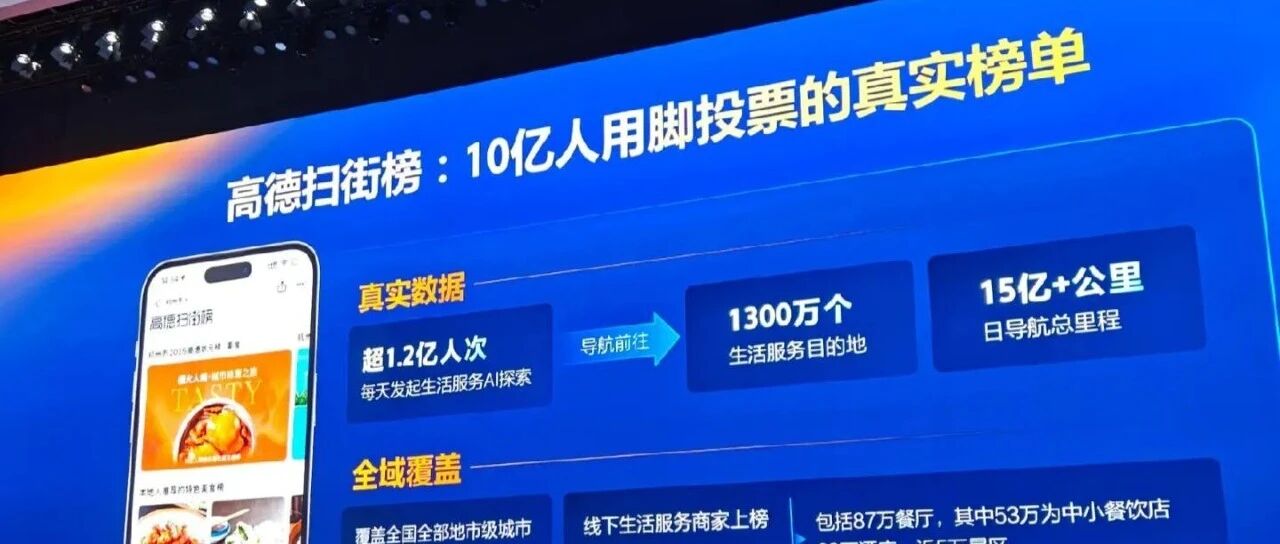
Core Viewpoint - Gaode Map aims to transition from being a mere navigation tool to becoming a key player in local consumption, leveraging its massive user traffic to connect offline services and enhance user experience in local life services [1][22]. Group 1: Product Development and Launch - In June, a secret team of over 20 product managers from Gaode was relocated to Alibaba's headquarters in Hangzhou to develop a new product called "Gaode Street Ranking," which was officially launched on September 10 [2][4]. - The "Gaode Street Ranking" is based on real user behavior data and incorporates the Sesame Credit system to filter out false reviews, ensuring the authenticity of the rankings [4][5]. - The ranking system competes directly with Meituan's "Must Eat List" and includes various categories such as food, attractions, and hotels, aiming to provide a more reliable evaluation system for users [4][13]. Group 2: Data and Evaluation Mechanism - The evaluation metrics for the "Gaode Street Ranking" rely on navigation behavior data, including arrival rates and repeat customer frequency, combined with user credit scores [5][7]. - The ranking updates in real-time based on user behavior, contrasting with Meituan's monthly updates, which rely on user-generated content [5][8]. - The team behind the ranking has expanded significantly, indicating the importance and urgency of the project, especially with the upcoming peak traffic during the National Day holiday [8][12]. Group 3: Competitive Landscape - The launch of the "Gaode Street Ranking" has intensified competition with Meituan, which responded by revamping its quality takeaway services and leveraging AI for better user decision-making [4][17]. - Gaode's strategy reflects a broader trend in the local service market, where platforms like Douyin are also increasing support for small businesses, indicating a competitive shift in the landscape [19][21]. - The rivalry is characterized by significant financial backing, with Gaode committing over 1 billion in subsidies to support local businesses, while Meituan also announced financial incentives for quality restaurants [17][18]. Group 4: Strategic Goals and Future Outlook - Gaode's long-term vision includes establishing a robust local service ecosystem that not only enhances user experience but also supports small and medium-sized businesses [21][27]. - The company aims to create a healthy consumption environment by promoting trustworthy services and businesses, thereby driving user engagement and satisfaction [21][26]. - Gaode's recent profitability indicates a successful pivot towards local services, contrasting with the ongoing losses in the competitive takeaway market, suggesting a more sustainable business model in the local consumption space [26][27].


对话出门问问李志飞:人类需要一个AI“影子”
经济观察报· 2025-09-11 11:52
Core Viewpoint - The company has adapted its strategy to embrace uncertainty by shedding historical burdens and continuously innovating in response to new environments [1][9]. Group 1: Product Development and Market Position - The AI product TicNote, a card-sized AI recording device, sold 30,000 units within four months, achieving a high rating of 4.8 on Amazon and ranking first in its category on JD.com [2]. - The company shifted its focus to software development, allocating 70% of its resources to software while collaborating with partners for hardware production [2][4]. - The company has transitioned from hardware-centric projects to software innovation, leading to the development of the AIGC product "Magic Sound Workshop," which has significantly increased revenue [5][6]. Group 2: Strategic Decisions and Organizational Changes - In 2019, the company attempted to develop recording products but faced challenges due to the lack of advanced natural language processing capabilities [19]. - The decision to abandon the "Sequence Monkey" model iteration was made in response to intense competition and the realization that third-party models were more cost-effective [11][12]. - The company has streamlined operations by cutting unprofitable projects and reducing organizational complexity, which has improved efficiency and brought it closer to breakeven [13][14]. Group 3: Future Outlook and Industry Context - The company aims to position TicNote as an entry-level product for AI agents, catering to users who need assistance with recording and summarizing information [7][20]. - The competitive landscape includes major players like Alibaba, which has launched similar AI recording devices, indicating a crowded market [8][21]. - The company recognizes the importance of adapting to user needs and technological advancements while navigating the uncertainties of the AI industry [23][25].