经济观察报

Search documents
平台配送费为何由商家承担
经济观察报· 2025-10-21 10:09
Core Viewpoint - The article discusses the shift in the burden of delivery fees from consumers to merchants in the context of intense competition among small and medium-sized businesses in the delivery service industry [1][2][10]. Delivery Fee Dynamics - In the digital economy, various instant delivery platforms are thriving, leading merchants to adopt aggressive promotional tactics, including discounts and absorbing delivery costs to attract customers [2][10]. - Globally, delivery fees are typically paid by consumers, with models in countries like the US and UK emphasizing consumer awareness of delivery costs through membership systems [4]. - In China, however, delivery fees are increasingly borne by merchants, particularly small and medium-sized ones, as platforms encourage them to absorb these costs to boost sales [5][10]. Theoretical Background of Delivery Fees - Delivery fees have evolved from being a straightforward cost to a complex variable in market competition, influenced by logistics, labor costs, and platform algorithms [7][8]. - The rise of instant delivery services has further complicated the structure of delivery fees, which now include various factors such as rider costs and peak time surcharges [8]. Merchant Behavior Regarding Delivery Fees - Merchants are often compelled to absorb delivery fees to improve their visibility and competitiveness on platforms, leading to a reliance on discounts rather than quality improvements [10][11]. - This behavior creates a "path dependency trap," where merchants focus on short-term gains at the expense of long-term brand building and customer loyalty [11][12]. Long-term Strategies for Merchants - To escape the cycle of competing on price, merchants should focus on enhancing product quality and brand recognition, moving away from the reliance on delivery fee absorption [15]. - Large chain brands exhibit resilience against price wars due to established supply chains and brand equity, allowing them to maintain order volumes without resorting to aggressive pricing strategies [11]. Recommendations for Industry Improvement - The article suggests a multi-faceted approach to address the over-competition in delivery fees, including platform governance, regulatory oversight, merchant upgrades, and consumer education [14][16]. - Platforms should shift towards a value-oriented algorithm that prioritizes quality and service stability over immediate sales metrics, thereby reducing the pressure on merchants to absorb delivery costs [14]. - Consumers should be educated to recognize the value of quality service over the lowest price, fostering a culture of rational consumption [16]. Regulatory Perspective - Regulators are encouraged to enhance fair competition rules and transparency in cost allocation, ensuring that delivery fee structures are clear and equitable [17].


美妆独角兽如何以“科研+品牌”双轮驱动定义国货新实力
经济观察报· 2025-10-21 10:09
Core Viewpoint - The cosmetics industry is experiencing overall growth, with technological innovation becoming a key indicator of a beauty company's "value" and a core engine driving high-quality growth [1] Group 1: Company Strategy and Leadership - Ximuyuan has appointed David A. Weitz, known as the "father of microfluidics," as its global chief scientific advisor, marking a new height in strategic collaboration within the Chinese beauty industry [5] - The brand aims to focus on both scientific research and brand building, emphasizing "deepening basic research and elevating brand tone" [2] Group 2: Research and Development Focus - Since its inception, Ximuyuan has concentrated on the sensitive skin segment, establishing a unique research system for "skin type-specific" efficacy and creating a comprehensive product matrix for sensitive skin [4] - By 2025, Ximuyuan has accumulated 373 authorized and applied patents, published 51 core papers, and participated in the formulation of 32 industry standards, showcasing its commitment to research in the sensitive skin field [14] Group 3: Collaboration and Market Impact - The collaboration with David A. Weitz has led to significant advancements, including a study presented at the 2025 IFSCC Congress, demonstrating a 20-fold increase in the light stability of active ingredients using microfluidic technology [8] - Following the announcement of celebrity endorsement by Cai Xukun, the brand achieved a total online exposure of 450 million, with specific products selling out within four hours on Tmall [12] Group 4: Long-term Vision and Market Recognition - Ximuyuan's approach of combining "research and brand" reflects a long-term commitment to building scientific capabilities while focusing on immediate market performance [13] - The brand has been recognized as the top seller of all-skin-type sensitive skincare products in China, indicating the effective commercial conversion of its research investments [16]

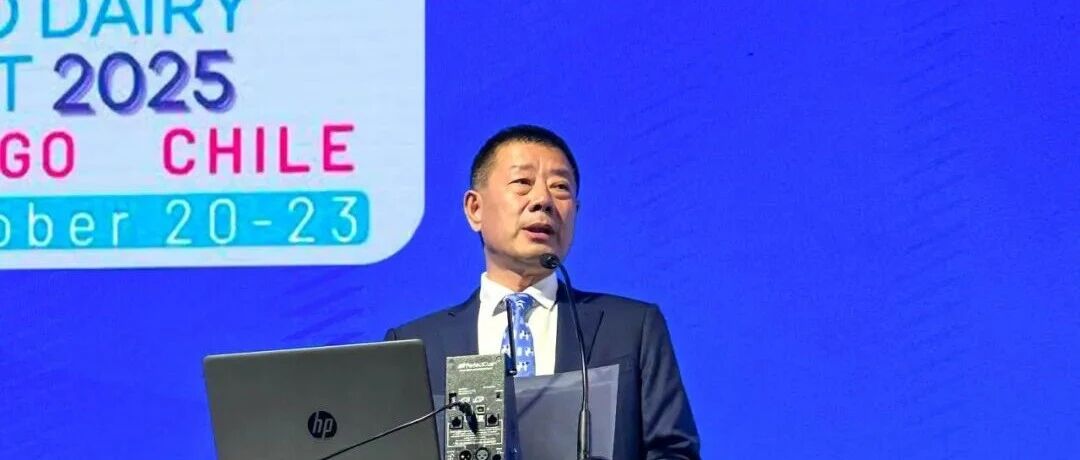
世界舞台,中国强音!飞鹤受邀登台世界乳业峰会开幕演讲,代表中国乳业分享“共生”方案
经济观察报· 2025-10-21 07:04
Core Viewpoint - The 2025 World Dairy Summit held in Santiago, Chile, focused on sustainable development practices, technological advancements, artificial intelligence, market trends, and nutritional science in the dairy industry, with Feihe being the only Chinese brand invited to deliver a keynote speech [1][2][5]. Group 1: Feihe's Contributions and Innovations - Feihe showcased its upgraded Xingfeifan Zhuorui product during the summit, emphasizing its "symbiotic model" developed over years of practice, which offers valuable "Chinese wisdom" and solutions to the global dairy industry's challenges [5][6]. - The chairman of Feihe, Cold Youbin, highlighted the importance of building a "symbiotic" development model to address the dual challenges of growth and sustainability in the global dairy sector [6][19]. - Feihe has established a complete industrial chain since 2006, becoming a global leader with 13 modern core factories, 13 owned pastures, and over 115,000 high-quality dairy cows, ensuring product quality and safety [8][10]. Group 2: Research and Development - Feihe has actively engaged in global innovation networks, collaborating with top research institutions to develop a comprehensive "innovation community," particularly in breast milk research [14]. - The company has achieved 100% self-control over farms, owned pastures, and raw milk, creating a "symbiotic ecosystem" that enhances resource recycling and product quality [10][12]. - Feihe's new product lines, such as the "new generation more suitable" series, aim to replicate the nutritional ecology of breast milk, enhancing the nutritional value and absorption rates of their products [16][18]. Group 3: Commitment to Sustainability - Feihe integrates ESG principles into every aspect of its operations, promoting a "green industrial chain" that aligns environmental protection with industrial development [19]. - The company has implemented an ecological recycling project in China's high-altitude regions, significantly reducing carbon emissions and contributing to sustainable agricultural practices [19]. - Feihe's participation in the summit reflects not only its achievements but also the overall strength of the Chinese dairy industry, as it shares its sustainable development experiences with global dairy leaders [21].
法院认定:东风汽车子公司总经理收受某上市公司董事长30万元贿赂
经济观察报· 2025-10-20 12:58
Core Viewpoint - The article discusses the legal case involving Luo Xinwen, the former Party Secretary and General Manager of Dongfeng Consulting, who was sentenced to seven years in prison for multiple crimes, including bribery and collusion in bidding, with Liu Aisen, the Chairman and General Manager of Sen Te Co., Ltd., being implicated in the bribery [2][18]. Group 1: Legal Proceedings - Luo Xinwen was sentenced to seven years in prison and fined 620,000 yuan for six crimes, including bribery and collusion in bidding [2][18]. - The court found that Liu Aisen, the Chairman of Sen Te Co., Ltd., bribed Luo with 300,000 yuan to maintain favorable relations for future bidding opportunities [5][9]. - The case involved multiple instances of Sen Te Co., Ltd. winning bids through collusion with Luo and his company, Dongfeng Engineering Consulting [10][12]. Group 2: Company Background - Sen Te Co., Ltd. specializes in the design, manufacturing, and installation of metal guardrails and has been recognized as a "hidden champion" in the construction metal enclosure system sector in China [9]. - The company has been actively developing Building Integrated Photovoltaics (BIPV) business in recent years [9]. - As of June 2025, Liu Aisen held 25.06% of Sen Te Co., Ltd.'s shares, making him the largest shareholder [8].



全年5%增速稳了,专家建议可进一步改善“微观感受”
经济观察报· 2025-10-20 11:56
Core Viewpoint - Achieving a 5% GDP growth target for the year is not difficult, but the challenge lies in bridging the gap between micro perceptions and macro statistics, with a growth that is felt by micro entities being more meaningful in the long term [1][4]. Group 1: Economic Growth Performance - In the first three quarters of 2025, GDP grew by 5.2%, accelerating by 0.2 and 0.4 percentage points compared to the previous year and the same period last year, respectively [2]. - The contribution rate of final consumption expenditure to economic growth reached 53.5% in the first three quarters, driving GDP growth by 2.8 percentage points, which is a 9% increase compared to the previous year [4]. - The contribution rate of final consumption expenditure in the third quarter was 56.6%, further highlighting its role in economic growth [4]. Group 2: Challenges in Consumption Growth - Despite being the main driver of economic growth, consumption faces challenges, including a decline in the growth rate of social retail sales, which fell to 3.0% in September [9]. - The overall low growth of CPI indicates that consumer prices are not rising significantly, which may affect consumption [9]. - Factors contributing to insufficient consumption include a prolonged adjustment in the real estate market, increased employment pressure, and intensified competition leading to price reductions [10][11]. Group 3: Policy Measures and Future Outlook - The government has prioritized boosting consumption and investment efficiency, with a focus on expanding domestic demand as a key task for 2025 [5]. - A series of macroeconomic policies are expected to be implemented to stimulate consumption, including measures to promote income growth and stabilize the real estate market [12]. - Experts predict that achieving the annual GDP growth target of around 5% is likely, with the fourth quarter GDP growth expected to stabilize within a reasonable range [15][16].

郑丽文披挂上阵,赖清德铤而走险几率大增
经济观察报· 2025-10-20 11:56
Core Viewpoint - The article discusses the potential political strategies of Lai Ching-te and the implications of the recent election of Zheng Liwen as the new chairperson of the Kuomintang (KMT), emphasizing the challenges and risks involved in the upcoming elections [4][5][6]. Group 1: Political Landscape - Zheng Liwen's election as KMT chairperson with over half of the votes signifies a shift in the party's approach towards cross-strait relations, aiming to clarify the "One China" principle and counter "Taiwan independence" sentiments [4][5]. - The article suggests that if the KMT performs well in the 2026 local elections, it could increase the likelihood of Lai Ching-te taking risky actions in the 2028 presidential election [4][6]. Group 2: Strategies and Risks - Zheng Liwen's strategy involves a two-pronged approach with her and Lu Xiuyan alternating in leadership roles, which poses a significant challenge to Lai Ching-te [6]. - The article speculates that Lai Ching-te might resort to extreme measures, such as declaring martial law, to secure electoral victory, although this is deemed unlikely due to the potential repercussions from mainland China [7][8]. - Lai's possible risky actions could include creating a self-inflicted crisis to garner sympathy from voters or targeting political opponents through legal means [8].

平均净值增长超15% 个人养老金基金再扩容
经济观察报· 2025-10-20 11:56
Core Viewpoint - The article discusses the increasing differentiation among personal pension fund products as they achieve both performance and scale, highlighting the need for investors to make informed choices as the year-end investment window approaches [5]. Group 1: Expansion of Personal Pension Funds - The personal pension fund catalog expanded again in the third quarter, reaching a total of 302 products by the end of September, with 8 new additions compared to the end of the second quarter [3][4]. - The new entrants predominantly feature index-enhanced funds, with five out of the eight new products focusing on tracking the CSI 500 and CSI 300 indices [6][7]. Group 2: Performance of Personal Pension Funds - Personal pension funds have shown impressive performance this year, with an average net value growth exceeding 15% and the highest return reaching 46% [4][10]. - As of October 17, only one out of 302 personal pension funds reported negative returns this year, while the average unit net value increase was 15.13% [10]. Group 3: Market Dynamics and Investor Behavior - The growth in personal pension fund scale is accompanied by a notable differentiation among products, with only one fund exceeding 1 billion yuan in scale, while most remain below 200 million yuan [12]. - Investors are increasingly favoring funds with lower risk levels and shorter holding periods, reflecting a preference for more flexible or conservative allocations [12]. Group 4: Investment Strategies and Future Outlook - As the fourth quarter approaches, it is considered a critical period for personal pension account funding and product allocation, prompting investors to reassess their portfolios [14]. - Analysts suggest a balanced allocation between stocks and bonds, focusing on sectors aligned with national long-term development strategies, such as technology innovation and high-end manufacturing [14][15]. - The personal pension market is expected to continue evolving, with potential inclusion of more diverse asset classes like public REITs in the future [15][16].

私域直播不是法外之地
经济观察报· 2025-10-20 11:56
Core Viewpoint - The article discusses the rise of "private domain" live streaming as a marketing tool that has been exploited for fraudulent activities targeting the elderly, leading to increased regulatory scrutiny and enforcement actions by market regulators [2][6]. Summary by Sections Private Domain Live Streaming - Private domain live streaming refers to an interactive marketing model where businesses or individuals engage specific user groups through their own traffic pools, such as WeChat groups and mini-programs [2]. - This model, initially intended to enhance service engagement, has been misused by fraudsters to target vulnerable populations, particularly the elderly [2][4]. Regulatory Actions - As of October 15, the State Administration for Market Regulation reported that 4,516 cases of illegal activities related to private domain live streaming have been investigated, resulting in fines totaling 68.7691 million yuan [2]. - Specific actions against fraudulent practices targeting the elderly, such as misleading health seminars, have led to 30 cases being filed, with fines and proposed fines amounting to 9.56 million yuan [2]. Fraudulent Tactics - Various deceptive tactics have been employed in private domain live streaming, including offering free items to lure elderly participants into groups where they are then subjected to aggressive sales pitches for overpriced products [3]. - Other methods include low-cost lottery schemes, misleading interactions, and the use of bots to create a false sense of community and urgency [3][5]. Challenges in Regulation - The closed nature of private domain live streaming makes it difficult for regulators to monitor and enforce compliance effectively [4][5]. - The decentralized distribution of content across private applications complicates real-time monitoring, and the fleeting nature of evidence makes it hard to pursue legal action against offenders [5]. - Targeting elderly individuals who are often less digitally literate increases the likelihood of them falling victim to these scams, as they may not retain evidence of the fraudulent activities [5]. Future Outlook - The article suggests that the era of unchecked private domain live streaming targeting the elderly is coming to an end, with regulators taking a more proactive stance [6]. - The market regulators are expected to implement comprehensive oversight measures to ensure accountability among platform operators and prevent the misuse of private domain live streaming [6].

对话CPM Group中国区总经理曲硕:金价也有周期——长涨短调
经济观察报· 2025-10-20 10:20
Core Viewpoint - The primary factor influencing gold prices is the demand for safe-haven assets, followed by inflation and monetary policy, while manufacturing demand has a negative impact [1][7]. Group 1: Historical Trends and Price Movements - Historically, international gold prices exhibit a "long rise, short adjustment" trend, with significant price increases followed by notable corrections. The typical upward cycle lasts 3 to 5 years, while corrections last 1 to 2 years [4]. - From 1978 to 2019, gold prices experienced multiple cycles of "rise-adjustment-shock," with notable peaks and corrections, such as the rise from $192 to over $700 in the late 1970s and the surge to $1800 in 2011 before a drop to around $1000 by 2016 [4][5]. - In 2024, gold prices are expected to break through $2000 per ounce, with a peak of $2800 per ounce anticipated due to increased geopolitical risks [5]. Group 2: Current Influencing Factors - The current surge in gold prices is driven by three main factors: expectations surrounding U.S. presidential policies, a shift of funds from U.S. Treasury sales to gold, and a significant increase in investment demand, particularly from former cryptocurrency investors [7]. - Inflation's impact on gold prices is currently weak, with U.S. inflation rates dropping from 6% to around 3.1%-3.2%, reducing the demand for gold as an inflation hedge [8]. - The manufacturing sector's demand for gold is declining due to high prices, leading industries like jewelry and electronics to minimize gold usage to control costs [8][9]. Group 3: Future Demand and Exploration Trends - Gold manufacturing demand is expected to decline significantly in 2024, dropping by 8.5% year-on-year to 85 million ounces, primarily due to high gold prices affecting consumption and production willingness [9]. - If gold prices remain high, demand is projected to further decrease to 84.5 million ounces in 2025, reflecting a continued slowdown [10]. - Despite rising gold prices, exploration spending has decreased due to higher financing costs and operational challenges in resource-rich regions, leading to a cautious approach among mining companies [10]. Group 4: Investment Strategies and Recommendations - Short-term investment in gold is not recommended due to the high risk of price corrections, with potential declines of $500 to $600 per ounce if market panic occurs [12]. - For physical gold investments, gold bars are preferred for their higher safety, while caution is advised for gold ETFs and futures due to past market volatility [12]. - A recommended allocation of 10% to 25% of personal assets in gold is suggested to balance safety and avoid over-reliance on gold for returns [13].

RIO老板刘晓东卖股套现14.7亿 百润股份称其不会再减持公司股份
经济观察报· 2025-10-20 10:16
Core Viewpoint - Liu Xiaodong, the actual controller of Bairun Co., Ltd., transferred 6.01% of his shares, cashing out approximately 1.47 billion RMB, while maintaining control with a 34.58% stake in the company [2][5]. Group 1: Share Transfer Details - Liu Xiaodong transferred 63 million shares at a price of 23.337 RMB per share, totaling 1.47 billion RMB [4][5]. - The share transfer has been completed, and Liu Xiaodong's stake in Bairun has decreased to 34.58% [5]. - The closing stock price of Bairun on October 20, 2025, was 26.24 RMB, indicating that the transfer price represented a nearly 10% discount from the current market price [7]. Group 2: Business Performance - Bairun's pre-mixed cocktail brand, RIO, generated revenue of 2.884 billion RMB in 2023, showing a slight increase from 2.3 billion RMB in 2015, but did not exceed 3 billion RMB [5]. - In the first half of 2025, Bairun's revenue from alcoholic products, primarily RIO, was 1.297 billion RMB, with a volume of 15.03 million boxes, reflecting a year-on-year decline of 12.68% [5]. Group 3: New Shareholder Profile - The buyer, Liu Jianguo, is a businessman from Wenzhou and the chairman of Benjian Golf Co., Ltd., holding approximately 38.67% of its shares [8][9]. - Liu Jianguo has a background in the small appliance industry and has previously sold a significant business to Philips for over 2 billion RMB [9]. - He has committed to a 12-month lock-up period for the shares acquired in this transaction [10].