美股IPO

Search documents
新药品关税“雷声大雨点小”?瑞银:主要药企已在美投资数百亿美元,可获完全豁免
美股IPO· 2025-09-27 02:02
Core Viewpoint - The recent announcement of a 100% tariff on imported drugs by President Trump is expected to have minimal actual impact on the pharmaceutical industry, as most large companies have already committed significant investments in U.S. production facilities, allowing them to qualify for tariff exemptions [1][3][5]. Group 1: Tariff Announcement and Implications - President Trump announced a 100% tariff on various imported products, including patented and branded drugs, effective from October 1 [3]. - Companies that have begun construction on pharmaceutical manufacturing facilities in the U.S. will be exempt from these tariffs, which is defined as having "broken ground" or being "under construction" [3][4]. Group 2: Investment Commitments by Pharmaceutical Companies - Major pharmaceutical companies have pledged substantial investments in U.S. production, with AstraZeneca and Roche each committing $50 billion, GlaxoSmithKline $30 billion, Novartis $23 billion, UCB $2 billion, and Sanofi $20 billion [6]. - Analysts suggest that the anticipated impact of the 100% tariff is likely to be low due to these significant investments [5][7]. Group 3: Market Reactions and Global Supply Chain - Following the tariff announcement, Asian stock markets declined, particularly affecting Asian pharmaceutical stocks, while European pharmaceutical stocks remained relatively stable [4]. - The complexity and interconnectivity of the global pharmaceutical supply chain are highlighted by the fact that nearly 90% of U.S. biotechnology companies rely on imported components for at least half of their approved products [8].


暴涨近15%!华尔街日报:特朗普女婿参与,游戏巨头艺电将“私有化”,500亿美元估值创杠杆收购记录
美股IPO· 2025-09-27 02:02
Core Viewpoint - Electronic Arts (EA) is in talks for a potential privatization deal valued at approximately $50 billion, which could become the largest leveraged buyout in history, surpassing the previous record of $45 billion set in 2007 [3][13][14]. Group 1: Transaction Details - The deal is led by a consortium including Silver Lake Partners, Saudi Arabia's Public Investment Fund (PIF), and Jared Kushner's investment firm, with JPMorgan responsible for financing arrangements [4][5]. - If finalized, this transaction would not only be the largest of 2025 but also set a new record for leveraged buyouts [3][13]. - EA's stock surged nearly 15% to a historical high of $193.35, raising the company's market capitalization to approximately $48 billion following the news [5]. Group 2: Financial and Market Context - The gaming industry has faced a slowdown after a period of explosive growth during the COVID-19 pandemic, leading to significant job cuts across the sector, including at EA, which has conducted three major layoffs in 2023 [17]. - EA's performance has been volatile, with its latest football game, "EA Sports FC 25," underperforming, but recent reports indicate that the overall product portfolio has delivered better-than-expected results [18]. - The upcoming release of "Battlefield 6" on October 10 is highly anticipated, as it will compete directly with Microsoft's "Call of Duty" series in the shooting game market [19]. Group 3: Consortium Strength - Silver Lake Partners manages approximately $110 billion in assets and has existing investments in the gaming sector, including a stake in Unity Software, a major client of EA [7][8]. - The Saudi PIF holds about 10% of EA's shares and has been increasing its investment profile, including the establishment of the Savvy Gaming Division for gaming and esports acquisitions [9][10]. - Jared Kushner's Affinity Partners, founded in 2021, has received backing from investors including the PIF [12].

黄仁勋最新专访:关于投资OpenAI、AI泡沫、ASIC的竞争.........(三万字全文)
美股IPO· 2025-09-27 02:01
Core Insights - OpenAI is likely to become the next trillion-dollar company, with AI-driven revenue projected to grow from $100 billion to $1 trillion within the next five years [1][4][10] - NVIDIA's partnership with OpenAI, involving a $100 billion investment, aims to support the establishment of OpenAI's autonomous AI infrastructure, positioning it as a major player in the AI market [3][10][11] - The shift from general computing to accelerated computing marks the end of Moore's Law, creating significant growth opportunities for NVIDIA in the global computing market [3][17][18] - AI is expected to contribute trillions to global GDP, enhancing human intelligence and creating new industries and applications [3][20][25] - NVIDIA's competitive advantage lies in its "extreme co-design" approach, which integrates chip, software, and system design to deliver exponentially improved performance [3][49][51] AI Growth and Economic Impact - The introduction of a new reasoning law in AI, emphasizing deep thinking before answering, is expected to lead to exponential growth in reasoning capabilities [3][8][9] - AI is projected to significantly enhance productivity and create new job opportunities, rather than eliminate existing jobs [3][20][25] - The potential market for AI infrastructure is estimated to reach $5 trillion, driven by the need for AI to enhance global economic activities [21][22][25] NVIDIA's Strategic Positioning - NVIDIA is transitioning from a GPU supplier to an AI infrastructure builder, integrating various ASICs to meet diverse AI workload demands [3][10][11] - The company's system-level design provides significant cost advantages, ensuring that even if competitors offer ASICs for free, NVIDIA's total cost of ownership remains lower [3][10][11] - NVIDIA's annual release cycle and deep collaboration with the supply chain enhance its ability to deliver high-performance products, creating a formidable competitive barrier [3][41][54] Market Dynamics and Future Outlook - The AI market is experiencing a dual exponential growth driven by increasing user numbers and the computational demands of AI applications [3][13][28] - The transition from CPU to GPU for AI applications is reshaping the infrastructure landscape, with traditional computing methods being replaced by AI-driven solutions [3][18][30] - Concerns about potential oversupply or market bubbles are mitigated by the ongoing demand for AI capabilities, as companies increasingly rely on AI for their operations [3][26][32]


摩根斯坦利:OpenAI抱紧英伟达和甲骨文,微软会被边缘化吗?
美股IPO· 2025-09-27 02:01
Core Viewpoint - Morgan Stanley believes that concerns about Microsoft being marginalized in the AI wave are unnecessary, upgrading Microsoft to "preferred" status with a target price of $625, indicating a 23% upside from the current price [2][3]. Group 1: Microsoft's Strategic Positioning - Microsoft is prioritizing its resources to serve enterprise clients with lower customer concentration, higher profit margins, and longer lifetime value (LTV) [5][9]. - The recent non-binding memorandum of understanding (MOU) with OpenAI signifies the evolution of their partnership, while Microsoft’s growth drivers extend beyond OpenAI, including strong growth in Azure cloud services and a solid ecosystem in enterprise productivity applications [5][10]. Group 2: AI Infrastructure and Competition - OpenAI has formed unprecedented partnerships with major tech companies, raising questions about Microsoft's competitive position in the GenAI field [3][6]. - Morgan Stanley's analysis suggests that Microsoft's decision to allocate some of OpenAI's computing needs to other suppliers reflects a strategic choice to maximize profits in a resource-constrained environment [6][9]. Group 3: Azure Growth and AI Business - Microsoft’s Azure AI business is projected to reach $10.4 billion in revenue by FY2025 and exceed $20 billion by FY2029, driven by ongoing investments and the enterprise cloud adoption trend [10][11]. - The diversification of AI-related business growth is evident, with Microsoft securing more AI cloud contracts outside of OpenAI, indicating a trend towards a more distributed revenue structure [11]. Group 4: Enterprise Applications and Productivity Ecosystem - Microsoft’s productivity applications (M365, Copilot, etc.) and its "digital office + knowledge worker" ecosystem are crucial for maintaining high customer stickiness against emerging AI challenges [13][15]. - Recent surveys show that 33% of enterprise customers have upgraded their O365 subscriptions to the higher-tier E5 version, with over half planning further upgrades, indicating strong demand for Microsoft’s productivity solutions [13].

华尔街日报:英特尔融资内幕,与苹果、台积电CEO商谈,特朗普政府入股前已启动
美股IPO· 2025-09-27 02:01
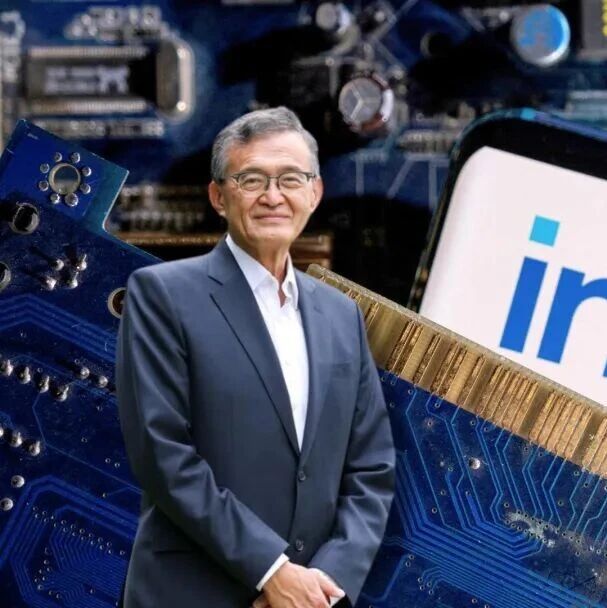
Core Viewpoint - Intel is actively seeking investments and customer commitments to recover from its current challenges, with efforts being accelerated following the U.S. government's acquisition of a 10% stake in the company [1][3]. Group 1: Investment and Partnerships - Intel is in discussions with companies like Apple and TSMC to secure investments or manufacturing collaborations [3]. - The U.S. government, particularly through Commerce Secretary Howard Lutnick, has been encouraging tech companies to collaborate more closely with Intel, leading to investments from SoftBank and NVIDIA [3][6]. - Despite receiving commitments of $2 billion from SoftBank and $5 billion from NVIDIA, Intel still requires additional funding due to a $3.7 billion loss in the first half of the year [6]. Group 2: Strategic Direction - Intel has faced pressure from shareholders and analysts to divest its wafer manufacturing business and focus on chip design, but the CEO believes maintaining manufacturing is crucial for U.S. national security [6]. - Prior to the appointment of the current CEO, there were pushes within the company to separate the manufacturing business, but Intel is now working on establishing a firewall between design and manufacturing to reassure clients [6].

08年预警次贷危机“一战成名”,明星对冲基金经理Einhorn警告:AI投入将产生“巨额”资本损失
美股IPO· 2025-09-26 03:38
Core Viewpoint - David Einhorn warns that the extreme capital expenditures by major tech companies in AI may lead to significant capital destruction despite potential long-term benefits [2][3][6] Group 1: AI Investment Concerns - Major tech companies like Apple, Meta, and OpenAI are committing trillions of dollars to AI infrastructure, raising concerns about the sustainability and rationality of such investments [3][5] - Einhorn questions whether the current scale of AI investments is reasonable, stating that the figures are so extreme that they are difficult to comprehend [6] Group 2: Economic Outlook - Einhorn highlights weak job growth and stagnant productivity as indicators that a recession may be on the horizon [2][3] - He reiterates long-term concerns about structural issues in the market, suggesting that fundamental flaws in market mechanisms are eroding the investment process itself [2][3] Group 3: Historical Context of Warnings - Einhorn's warnings are taken seriously due to his past success in predicting the 2008 financial crisis, where he accurately identified issues with Lehman Brothers' balance sheet [7][9] - His reputation was built on making a successful bet against high-risk financial stocks during the market collapse, leading to superior performance for his fund [8][9]

不要解雇库克!所有在世的前美联储主席、多位前财长和前白宫经济顾问致函最高法
美股IPO· 2025-09-26 03:38
Core Viewpoint - The article emphasizes the importance of maintaining the independence of the Federal Reserve, warning that any political interference, such as the potential dismissal of Federal Reserve Governor Lisa Cook by President Trump, could undermine public trust in the institution and destabilize the economy [3][4][5]. Group 1: Concerns Over Federal Reserve Independence - A coalition of former Federal Reserve chairs, Treasury Secretaries, and economists has urged the Supreme Court not to allow Trump's dismissal of Cook, arguing it could jeopardize economic health and lead to higher inflation [3][6]. - The submission to the Supreme Court highlights that allowing Cook's dismissal during her legal challenge would weaken public confidence in the Federal Reserve and disrupt efforts to stabilize prices and employment [4][5]. - The document stresses that a central bank's independence is crucial for maintaining low and stable inflation without increasing unemployment, as historically, political pressures have led to economic instability [5][6]. Group 2: Historical Context and Implications - The document references former Fed Chair Arthur Burns, who faced political pressure in the 1970s, resulting in a period of high inflation and economic turmoil, illustrating the risks of undermining central bank independence [6][7]. - The legal filing underscores concerns that a non-independent central bank may prioritize short-term gains over long-term economic stability, which could have detrimental effects on the economy [7][8]. Group 3: Legal Proceedings and Arguments - Cook's legal team argues that Trump's request to dismiss her is based on unverified allegations and that the Supreme Court should reject this unconventional application, as it threatens the independence of the Federal Reserve [11][13]. - The case hinges on whether Trump has "just cause" under the Federal Reserve Act to dismiss Cook, with legal experts suggesting that the court is likely to uphold protections for Fed governors against arbitrary dismissal [12][15]. - The Supreme Court's decision could set a precedent regarding the limits of presidential power over Federal Reserve officials, impacting the institution's operational integrity [14][15].

摩根大通:存储芯片,“饥饿游戏”开启,一场为期四年的上行周期
美股IPO· 2025-09-26 03:38
Core Viewpoint - The "memory hunger" trend driven by AI computing is pushing the entire industry into a structural growth phase, leading to an unprecedented four-year pricing upcycle in the DRAM market from 2024 to 2027, with the global storage market expected to reach nearly $300 billion by 2027 [1][2]. Group 1: Market Dynamics - The core driver of the current cycle is the immense demand for high-performance memory due to AI computing, which has rapidly expanded from high-bandwidth memory (HBM) to traditional DRAM and NAND flash [2][3]. - Suppliers may struggle to meet the entire demand in the next 12 months, supporting sustained price increases [2]. - The NAND flash market is also experiencing a strong rebound, partly due to a severe shortage of hard disk drives (HDD), pushing customers towards enterprise solid-state drives (eSSD) [2][9]. Group 2: DRAM Market Outlook - The DRAM market is entering an unprecedented four-year pricing upcycle from 2024 to 2027, breaking the previous pattern of volatility [3]. - By 2027, HBM is expected to account for 43% of the total value in the DRAM market, stabilizing traditional DRAM price fluctuations and enhancing overall market profitability [3]. - Even with potential price drops for HBM3E products in 2026 due to increased supply, the next-generation HBM4 is anticipated to maintain a premium of about 35%, keeping the average selling price (ASP) stable [3]. Group 3: AI-Driven Demand - The rise of AI inference, AI services, and edge AI applications necessitates upgrades in memory configurations for general servers to achieve lower latency and better power efficiency [8]. - By 2027, AI-related applications are projected to account for 53% of the DRAM market's total addressable market (TAM) [8]. Group 4: NAND Market Recovery - The NAND flash market is experiencing a strong pricing recovery after two years of underinvestment, driven by a surge in demand for eSSD [9]. - The shortage of traditional HDDs, with delivery cycles extending up to 52 weeks, is prompting a significant shift towards eSSD in nearline storage markets [9]. - The structural importance of NAND is increasing as AI models transition from training to inference applications, raising demands for data read speeds and latency [10].
消费者追求性价比,美国中产最爱Costco上季营收超预期增超8%
美股IPO· 2025-09-25 23:07
Core Viewpoint - Costco's financial performance in the fourth quarter reflects the resilience of its warehouse membership retail model in the current economic environment, with revenue and EPS growth exceeding expectations and strong demand for essential goods among consumers [8][10]. Financial Performance Summary - Revenue: In the fourth quarter, total revenue reached approximately $86.16 billion, a year-over-year increase of 8.1%, slightly above analyst expectations of $86.03 billion [4]. - EPS: Diluted EPS was $5.87, up nearly 11% year-over-year, surpassing the expected $5.80, although growth has slowed compared to the previous quarter's 13.2% [5][11]. - Same-store Sales: Adjusted for gasoline prices and foreign exchange, same-store sales grew by 6.4%, exceeding the expected 6.21%, while the previous quarter's growth was 8% [5][11]. Segment Performance Summary - Net Sales: Fourth-quarter net sales were approximately $84.43 billion, reflecting an 8% year-over-year increase, consistent with the previous quarter [6]. - Membership Fees: Membership fees totaled $1.724 billion in the fourth quarter, a 14% increase year-over-year, accelerating from the previous quarter's 10.4% growth [7][11]. - E-commerce: Excluding gasoline and foreign exchange impacts, e-commerce growth was 13.5%, down from 15.7% in the previous quarter but still above 10% [7][11]. Market Context and Competitive Position - Costco's strong sales growth is attributed to its competitive pricing, diverse product offerings, and popular private label brand, Kirkland, which attract consumers [12]. - The company demonstrates greater resilience to macroeconomic fluctuations compared to competitors, as its customers are required to pay membership fees and tend to be more affluent and loyal [12]. - Despite recent strong performance in the retail sector, concerns about inflation driven by tariffs and a weakening job market may challenge consumer confidence in the coming months [12]. Strategic Responses to Cost Pressures - In response to rising costs, Costco plans to maintain stable prices on certain products and may cease sales of items that become too expensive [13]. - The company is increasing local sourcing for products and enhancing in-store services, such as extended hours for premium members, to stimulate consumption [13]. - Competitors like Walmart's Sam's Club are also experiencing healthy sales growth, indicating a stable and rational consumer spending pattern despite price increases due to tariffs [13].


巴克莱:市场最大“黑天鹅”,AI资本支出放缓,三大“巨雷”会是美股噩梦
美股IPO· 2025-09-25 23:07
Core Viewpoint - Barclays' stock strategy team indicates that a 20% decline in data center capital expenditures over the next two years could lead to a 3-4% earnings pressure on the S&P 500 index, with a more severe potential valuation drop of 10-13% [4][24]. Group 1: Risks Identified - The report identifies three major risks that could trigger a crisis: 1. **Efficiency Risk**: Rapid improvements in AI model efficiency may lead to overbuilding of computing facilities, reminiscent of the "dark fiber" tragedy during the dot-com bubble [5][11]. 2. **Physical Limitation Risk**: Increasing electricity shortages are becoming a hard constraint on data center construction, potentially cooling capital expenditures [6][12]. 3. **Liquidity Risk**: If capital expenditures continue to outpace cash flow generation, financing pressures may arise, exacerbated by dwindling venture capital [7][18]. Group 2: AI Investment Landscape - Despite the potential slowdown in data center capital expenditures, the foundation for AI investment remains solid, with a projected annual growth of 30% in capital expenditures [8][9]. - The demand for computing power continues to exceed supply, driven by the proliferation of advanced reasoning models and AI agents [9][11]. Group 3: Economic Impact - Data center-related investments are projected to contribute approximately 1 percentage point to the 1.4% GDP growth in the first half of 2025 [19]. - If the U.S. economy enters a recession due to other factors, the simultaneous slowdown in AI capital expenditures could act as an "accelerator," worsening the situation [21][22]. Group 4: Valuation and Earnings Impact - The impact on earnings (EPS) from a 20% decline in data center capital expenditures is expected to be relatively mild, with a 3-4% drag on the S&P 500 index's EPS for the fiscal year 2026 [24]. - However, the valuation (P/E) impact is projected to be severe, leading to a 10-13% compression in the overall S&P 500 index [25]. - For industries directly benefiting from AI infrastructure, the average P/E compression could reach 15-20% [27].