Workflow
CHINA RES BEER(00291)
icon
Search documents
华润啤酒销售回升,白酒将缩减销售规模;“汾酒星际号”卫星发射成功丨酒业早参
Mei Ri Jing Ji Xin Wen· 2025-05-22 00:37
Group 1: China Resources Beer - China Resources Beer has seen a recovery in beer sales in April, rebounding from a slowdown in March, with Heineken being a key driver, achieving a 20% growth [1] - The company plans to reduce sales scale in the face of challenges in the liquor industry and aims to control operational expenses through regulated channel investments [1] - China Resources Beer maintains its 2025 targets of low single-digit growth in sales and average price, with expectations of double-digit profit growth [1] Group 2: Hong Kong Liquor Tax Policy - The reduction of high-end liquor tax in Hong Kong has led to a significant increase in imported liquor, with quantities rising over 15% and values increasing nearly 60% compared to the previous period [2] - This tax adjustment is beneficial for liquor companies, especially high-end liquor brands, allowing them to expand sales through Hong Kong as an export hub [2] - The price reduction of Moutai in the Hong Kong market has narrowed the gap with international liquors, attracting more international buyers and consumers [2] Group 3: Fenjiu's Satellite Launch - The successful launch of the "Fenjiu Starship" satellite enhances Fenjiu's brand recognition and international influence, marking a significant honor for the company [3] - This initiative represents a systematic upgrade of Fenjiu's brand value, breaking traditional marketing limitations and enhancing its international market presence [3] - The collaboration with the aerospace sector allows Fenjiu to innovate its marketing and cooperation models, supporting its high-end and international strategic layout [3] Group 4: Yingjia Gongjiu's Stock Response - Yingjia Gongjiu has acknowledged recent stock price declines and emphasized its focus on core business, product optimization, brand enhancement, and deepening marketing efforts [4] - The company's performance growth in Q1 2025 was significantly below the industry average, with stock prices hitting a three-year low [4] - The response to investor concerns appears to be a defensive public relations strategy, lacking any mention of buyback or increase plans, which may not boost investor confidence [4]
麦格理华润啤酒会议纪要:市场份额扩大,股东汇报改善
Zhi Tong Cai Jing· 2025-05-21 02:21
Core Viewpoint - China Resources Beer is experiencing strong performance in the beer industry, with a focus on market share growth and shareholder returns, despite recent stock sales by the president being attributed to personal financial planning rather than company fundamentals [1][3]. Group 1: Beer Business Performance - The beer business is outperforming industry peers, with a recovery in sales growth in April after a slowdown in March, driven by Heineken's 20% growth and successful penetration into key live house channels [1]. - Super X beer has rebounded with a 10% sales growth after a decline due to rebranding last year, supported by a well-adjusted product mix that maintains low single-digit average price growth [1]. - The company aims for low single-digit growth in both sales and average price, with a projected gross margin increase of approximately 1% and double-digit profit growth through cost savings [1]. Group 2: Channel Dynamics - The sales channel is shifting towards non-immediate consumption, with immediate consumption accounting for 38% of total beer sales, where over 60% is high-end beer [1]. - Non-immediate consumption channels represent 62% of total sales, with high-end products still in early stages, contributing only 40%, but showing high single-digit growth, which will be a key driver for the group's premiumization strategy [1]. Group 3: Regional Performance and Strategy - Regionally, Jiangsu, Zhejiang, Guangdong, and Fujian are performing well, while Sichuan is affected by weak consumer demand [2]. - The white liquor business will adopt a defensive strategy by reducing sales scale and controlling operational expenses to achieve breakeven, indicating effective management of goodwill impairment risks [2]. Group 4: Financial Projections - Revenue projections for 2024A to 2027E show a gradual increase from 38,635 million to 43,216 million, with revenue growth rates of (0.8%), 3.2%, 4.1%, and 4.1% respectively [5]. - EBIT is expected to grow from 6,960 million in 2024A to 9,930 million in 2027E, with growth rates of (10.0%), 16.9%, 11.8%, and 9.2% [5]. - Reported profit is projected to rise from 4,739 million in 2024A to 6,411 million in 2027E, with adjusted profit following a similar upward trend [5].
啤酒咋了?百威亚太减员约4000人,燕京啤酒、华润啤酒同步大幅减员
Sou Hu Cai Jing· 2025-05-20 03:13
Group 1: Beer Industry Developments - Major beer companies are reducing workforce to control costs amid increasing competition in the industry [1][3] - Budweiser APAC reduced its workforce from approximately 25,000 in 2023 to over 21,000 in 2024, a decrease of about 4,000 employees or 16% [3] - Yanjing Beer and China Resources Beer also reported reductions of over 1,000 employees each, while Qingdao Beer cut more than 800 positions [3] Group 2: Wine Industry Events - The 5th China (Ningxia) International Wine Culture and Tourism Expo will be held from June 9 to 12, showcasing over 200 domestic and international wineries [5] - The expo will feature various activities, including a national wine industry skills competition and a cultural exhibition [5] Group 3: Labor Issues in Wine Sector - Workers at LVMH's champagne house went on strike on May 13, protesting salary and job security issues [7] - The wine and spirits division of LVMH is facing financial pressure, with a reported loss of €1.5 billion in 2024, contrasting with a cash flow of €1 billion in 2019 [7] Group 4: Leadership Changes - Treasury Wine Estates appointed Sam Fischer as the new CEO, with a compensation package including a fixed salary of AUD 1.73 million and a signing bonus of AUD 4 million [10][11] Group 5: Company Responses and Strategies - Luzhou Laojiao addressed concerns about halting orders, stating that it is maintaining normal supply channels and preparing for the upcoming Dragon Boat Festival [12][13] - Luzhou Laojiao plans to launch innovative products targeting younger consumers, including a collaboration with the sci-fi series "The Three-Body Problem" [12] Group 6: Share Buybacks and Financial Confidence - Kweichow Moutai announced a share buyback of 624,600 shares for a total of CNY 10.11 billion, completing two-thirds of its buyback plan [15] - The company plans to spend between CNY 3 billion and CNY 6 billion on share repurchases within the next 12 months [15] Group 7: Ningxia Wine Export Growth - Ningxia's wine exports reached CNY 13.75 million in 2024, supported by the development of 30 well-known wine import and export enterprises [17] - The brand value of Ningxia's Helan Mountain wine exceeded CNY 34 billion, ranking 8th in the regional brand value list [17]
动态 | 青岛啤酒将整合旗下饮料业务;贵州茅台称目前没有港股上市的相关计划
Sou Hu Cai Jing· 2025-05-13 14:27
Company Developments - Luckin Coffee has launched a new round of franchise recruitment, targeting over 800 specific locations across 186 cities in China, with more than 500 locations already approved and over 400 stores opened as of April this year [1] - Three Squirrels has acknowledged a reduction in the number of distributors, with a 20% decrease over the past two years, and plans to optimize distributor management services to enhance cooperation and satisfaction [3] - BR Foods from Brazil plans to open a factory in China on May 15, focusing on producing hamburgers, chicken nuggets, and bacon using Brazilian meat [4] - Qingdao Beer Group will integrate its beverage business after merging with Qingdao Beverage Group, ensuring no competition among similar products [4] - Kweichow Moutai has stated there are currently no plans for a Hong Kong stock listing [5] - Anheuser-Busch announced a $300 million investment plan in its U.S. factories, equivalent to approximately 2.1 billion RMB, as part of a broader strategy to enhance operations and meet consumer demands [5] Industry Trends - The Chinese beverage industry is undergoing significant changes, with five major shifts identified: global upheaval, China's rise, a new industrial cycle, technological advancements, and changes in the new generation [3][4] - Nestlé Italy is focusing on the silver economy, with 35%-38% of sales coming from consumers aged 50-65, and plans to invest 1.5%-2% of revenue in R&D to improve product quality for older consumers [6] - Ferrero North America is set to launch its largest innovation initiative, introducing new square-shaped Ferrero Rocher chocolates and a new peanut flavor of Nutella [6] Regulatory and Economic Developments - The U.S. and China have made significant progress in trade talks, with the U.S. canceling 91% of tariffs and China reciprocating, which is expected to benefit producers and consumers in both countries [8]
破局卡脖子难题,国产啤麦产业链不断延伸
Hua Xia Shi Bao· 2025-05-13 11:16
Core Viewpoint - The "2025 Domestic Barley Industry Integration Development Forum and Social Responsibility Theme Event" held in Yangzhou aims to address the challenges faced by the domestic barley industry, focusing on achieving self-sufficiency in the beer barley supply chain and promoting the integration of the entire industry chain from breeding to consumption [2][3]. Group 1: Industry Challenges and Initiatives - China's beer industry has a high dependence on imported barley, with an import dependency rate of 90%, which poses challenges for cost control and brand competitiveness [3]. - China Resources Beer has taken the lead in promoting the "National Barley Revitalization" strategy, focusing on standardizing planting bases, malt processing, beer production, and brand marketing to enhance the domestic barley supply chain [3][4]. - The company aims to complete 20,000 acres of standardized domestic barley planting in Inner Mongolia, Northwest China, and Jiangsu by 2025 [3]. Group 2: Achievements and Innovations - Over the past three years, significant progress has been made in increasing the application ratio of domestic malt, expanding planting areas, and improving varieties and planting techniques [5]. - The domestic barley has undergone multiple generations of improvement since 1995, with modern breeding techniques being gradually adopted since 2020 [5]. - The "Yangnong Pi 14" variety is expected to achieve a yield of 767.5 kg per acre in 2024, setting a new record for barley yield in Jiangsu [5][6]. Group 3: Industry Collaboration and Ecosystem - The relationship between the beer and barley industries has evolved into a collaborative ecosystem, focusing on technology co-research, risk-sharing, and value-sharing [9]. - The "National Barley Revitalization" plan has facilitated cooperation between upstream and downstream sectors of the beer industry [9][10]. - A comprehensive collaboration model has been established, where research institutions work closely with farmers to provide technical guidance, ensuring high-quality barley production [10]. Group 4: Sustainability and Future Prospects - The integration of local production and sales in the barley supply chain is seen as a significant step towards reducing carbon emissions [11]. - The innovative branding of products like "Ken 14" reflects a commitment to local culture and quality, enhancing consumer perception of domestic products [12].
从“卡脖子”到“中国酿”,华润啤酒解码“国麦自主”背后的产业蝶变
Hua Xia Shi Bao· 2025-05-13 09:30
Core Viewpoint - The article emphasizes the importance of domestic barley production for the beer industry in China, highlighting the efforts of China Resources Beer to establish a self-sufficient supply chain for high-quality beer production [3][4][6]. Group 1: Industry Background - China has been heavily reliant on imports for over 90% of its beer barley, which has constrained cost control and supply chain security [4]. - The domestic barley self-sufficiency rate has been below 10%, indicating a significant gap in local production capabilities [3]. Group 2: Company Initiatives - China Resources Beer has initiated the "National Barley Revitalization" plan to boost domestic barley production, establishing standardized planting bases across various regions [4][8]. - The company has expanded its standardized barley planting area from 3,000 acres to over 16,000 acres, with plans to reach 20,000 acres by 2025 [7][8]. Group 3: Quality Improvement - The "Yangnong Barley 14" variety has achieved a new record yield of 767.5 kg per acre, showcasing advancements in domestic barley quality [6][7]. - The quality of domestic barley has improved, with metrics such as extraction rate and clarity showing significant enhancements, narrowing the gap with imported barley [7][8]. Group 4: Economic and Social Impact - The initiative has led to over a 20% increase in income for local farmers, contributing to the implementation of national rural revitalization strategies [8]. - The project aims to create a sustainable model that integrates leading enterprises, research institutions, and planting bases, fostering a collaborative ecosystem [8][12]. Group 5: Future Vision - The company envisions a replicable and sustainable model for domestic barley production that enhances the value of local barley and supports the entire supply chain from breeding to consumption [12]. - The successful launch of the "Keng Shisi" beer, made entirely from domestic ingredients, marks a significant milestone in changing perceptions of Chinese beer quality [10].
观酒|主业增长乏力布局饮料等外业,啤酒公司能做好副业吗?
Nan Fang Du Shi Bao· 2025-05-13 09:23
Core Viewpoint - The beer industry is experiencing performance pressure, leading companies to explore diversification through cross-industry ventures to boost growth and attract investment [1][4][5]. Group 1: Industry Trends - Major beer companies in China, including Chongqing Beer, Qingdao Beer, and Yanjing Beer, are increasingly engaging in cross-industry expansions, particularly into beverage and liquor sectors, as a response to declining beer sales [1][2][4]. - The trend of diversification is seen as a way to build a "second growth curve" and create a competitive advantage, although it may take around five years for these new ventures to significantly impact performance [1][6]. Group 2: Company Strategies - Chongqing Beer has launched new beverage products, such as Cang'e soda, leveraging existing distribution channels in strong markets like Xinjiang and Chongqing [2][3]. - Qingdao Beer is pursuing a full acquisition of a Huangjiu (yellow wine) factory and has integrated its beverage business with existing operations, aiming to avoid competition with its beer products [2][3]. - Yanjing Beer has introduced a new soda brand, Best, and plans to utilize its beer distribution channels to penetrate the market quickly, focusing on dining establishments [3][4]. Group 3: Performance Insights - Despite some positive signs in Q1, overall performance for major beer companies remains mixed, with revenue and profit declines reported for several firms in 2024 [4][5][7]. - The sales volume for beer has decreased, with notable declines for companies like China Resources Beer and Qingdao Beer, attributed to high previous year bases and changing consumer preferences [5][6]. Group 4: Market Outlook - Analysts suggest that while cross-industry ventures are necessary for growth, the actual benefits may take time to materialize, with successful examples from other industries taking over a decade to develop [6]. - The diversification trend among beer companies is expected to continue, driven by changing consumer environments and the need for companies to establish strong brand recognition [6].
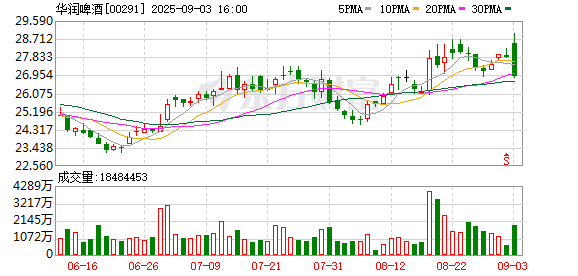
港股开盘 | 恒生指数低开0.23% 华润啤酒(00291)跌超6%
智通财经网· 2025-05-13 01:39
Group 1 - The Hang Seng Index opened down 0.23%, and the Hang Seng Tech Index fell 0.29% [1] - China Resources Beer dropped over 6%, while Li Auto fell over 2%. In contrast, UBTECH Robotics rose over 14% following a comprehensive cooperation agreement with Huawei [1] Group 2 - Cathay Securities noted that historical trends show that economic conditions, liquidity, and technical factors are crucial for the rise of Hong Kong stocks. They expect substantial progress in US-China trade negotiations and a decline in tariff risks, alongside the implementation of various incremental policies, which may lead to a stable macroeconomic recovery [2] - Domestic monetary easing measures have been implemented, maintaining liquidity, which could result in continued inflows of southbound funds into the Hong Kong stock market. Current valuations of Hong Kong stocks are at historically low levels, indicating high medium to long-term investment value [2] - China Galaxy Securities' chief strategist Yang Chao suggested focusing on consumer and technology sectors, as well as sectors with low trade dependency and high dividend yields in the short term [2] Group 3 - Citigroup's report anticipates moderate government stimulus to boost the domestic economy, particularly benefiting the consumer, internet, resources, and technology sectors. They believe that both mainland and Hong Kong stock markets appear undervalued, slightly below historical averages, maintaining a constructive outlook [3] - Citigroup upgraded the consumer sector to "overweight" and prefers domestic stocks, while downgrading the transportation sector to "neutral" due to rising US trade tariffs. They also favor large internet stocks and technology stocks supported by government policies [3] - Huatai Securities remains optimistic about the relative performance of Hong Kong stocks, suggesting a shift towards a more aggressive stance due to improved policy environments and low valuations in technology and consumer sectors [3] Group 4 - According to China Securities Journal, significant net inflows of southbound funds are expected from 2025 onwards, with strong inflows into ETFs indicating individual investors' interest in Hong Kong stocks. Estimates suggest a net inflow of HKD 80 billion to 100 billion for the year [4] - Huatai Securities' chief macroeconomist noted that overseas liquidity is likely to remain loose in the short term, which may not negatively impact Hong Kong stocks. Recent strong purchases of Japanese bonds and stocks by overseas investors suggest a global search for alternatives to US assets [4] - The Hong Kong dollar has strengthened recently, and while the interest rate differential with the US has narrowed, the strong Hong Kong dollar indicates potential global fund reallocation demand for Hong Kong stocks [4]
财报解读|2024年啤酒业绩集体降速,场景化与多元化增长路线初现
Di Yi Cai Jing· 2025-05-12 10:07
Core Insights - The beer industry is experiencing a slowdown in growth for 2024, with major companies reporting their first negative revenue growth in three years due to various factors including weather and market conditions [1][2]. Industry Performance - Major beer companies such as Budweiser APAC, China Resources Beer, Tsingtao Brewery, and Chongqing Brewery have reported revenue declines ranging from 1% to 13% in 2024, with Budweiser APAC experiencing the largest drop at 13% [2]. - The total beer production in China for 2024 was 35.213 million kiloliters, a decrease of 0.6% year-on-year, making beer the only declining category in the food and beverage sector [2]. - In the first two months of 2025, the cumulative production of major beer companies in China fell by 4.9% [3]. Shifts in Growth Strategy - The beer industry is transitioning from a focus on high-end products to a more diversified approach, including scenario-based layouts and multi-category operations to seek new growth [4][5]. - Companies are adapting to changing consumer preferences, with a shift from high-priced products to better value-for-money options, particularly in the mid-range price segment [5]. Diversification Efforts - Qingdao Beer announced a 665 million yuan acquisition of 100% equity in Jimo Huangjiu, marking its entry into the yellow wine market to diversify its product offerings [7]. - Other companies like Yanjing Beer and Chongqing Beer are also expanding into non-beer beverages, with Yanjing launching a new soda product and Chongqing introducing various soft drinks [7][8]. - The beverage industry is showing stable growth, with a 7.9% increase in all-channel growth for 2024, indicating potential opportunities for beer companies to expand into this sector [7][8].
Z世代不爱豪饮爱微醺,存量博弈下啤酒巨头如何“大象转身”?
Xin Lang Cai Jing· 2025-05-12 05:40
Core Insights - The Chinese beer market is entering a new phase characterized by stock competition and structural adjustments, with a projected 0.6% decline in production for 2024, marking the beginning of a "volume reduction and price increase" cycle [1][3] - Major beer companies are experiencing revenue declines, with the top five companies reporting a 4% drop in total revenue, while profit performance is increasingly divergent [3][5] Industry Performance - In 2024, the beer industry saw a 5.7% decline in revenue, making it the only category in the food and beverage sector to experience negative growth [5] - Key players like China Resources Beer, Budweiser APAC, and Tsingtao Brewery reported revenue declines of 0.76%, 8.9%, and 5.3% respectively, while Chongqing Brewery's revenue fell by 1.15% [5][8] - The total sales volume for major companies also decreased, with China Resources Beer down 2.5% and Budweiser APAC down 11.8% [8] Profitability Trends - Tsingtao Brewery managed a slight profit increase of 1.81%, while Yanjing Brewery saw a significant profit growth of 63.74%, contrasting with declines in profits for other major players [3][10] - Yanjing Brewery's revenue grew by 3.2%, allowing it to surpass Chongqing Brewery and become the fourth largest in the industry [10] Market Dynamics - The beer market is witnessing a shift in consumer preferences, particularly among younger generations who favor lighter drinking experiences, leading to a decrease in traditional beer consumption [12][13] - The restaurant industry is facing challenges, with a significant reduction in the number of registered dining establishments, impacting beer sales in on-premise channels [12][13] Strategic Responses - Companies are adapting by exploring new sales channels such as e-commerce and instant retail to meet changing consumer demands [13][14] - The rise of craft beer is also influencing the market, with a notable increase in the number of craft beer companies established in recent years [14] High-End Market Challenges - Despite efforts to target the high-end market, growth appears to be plateauing, with many companies facing competition from lower-priced craft beers [15][16] - Companies like Qingdao Beer and China Resources Beer are focusing on brand building and product innovation to maintain competitiveness in the high-end segment [15][18]