
BYD(01211)

Search documents
比亚迪(002594.SZ)2月份新能源汽车出口合计10.06万辆
智通财经网· 2026-03-01 22:40
Core Viewpoint - BYD reported its production and sales figures for February 2026, highlighting significant growth in its electric vehicle segment [1] Group 1: Production and Sales - In February 2026, the total production of new energy vehicles reached 175,300 units [1] - The total sales of new energy vehicles amounted to 190,200 units in February 2026 [1] - The company exported a total of 100,600 new energy vehicles in February 2026 [1] Group 2: Battery Installation - The total installed capacity of new energy vehicle power batteries and energy storage batteries was approximately 18.773 GWh in February 2026 [1]

比亚迪2月份新能源汽车出口合计10.06万辆
Zhi Tong Cai Jing· 2026-03-01 22:37
Core Insights - BYD disclosed its production and sales report for February 2026, indicating a total production of 175,300 units and total sales of 190,200 units for its new energy vehicles [1] - The company exported a total of 100,600 new energy vehicles in February 2026 [1] - The total installed capacity of new energy vehicle power batteries and energy storage batteries reached approximately 18.773 GWh in February 2026 [1]
又生变!造车新势力最新销量出炉!比亚迪跌破重要关口
Zhong Guo Ji Jin Bao· 2026-03-01 21:49
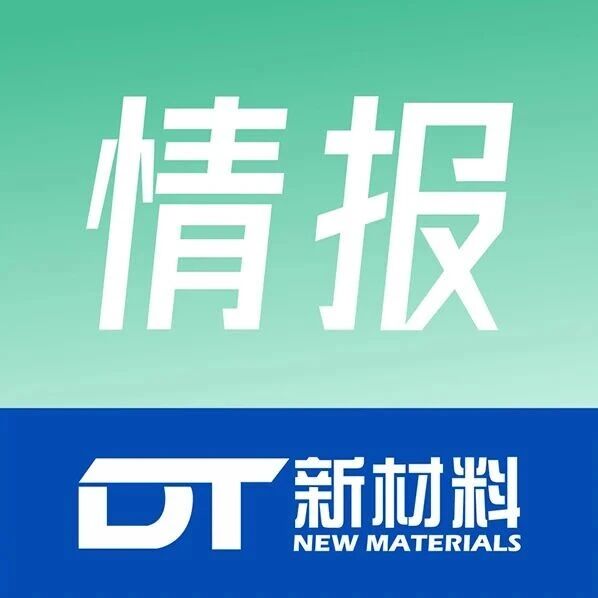
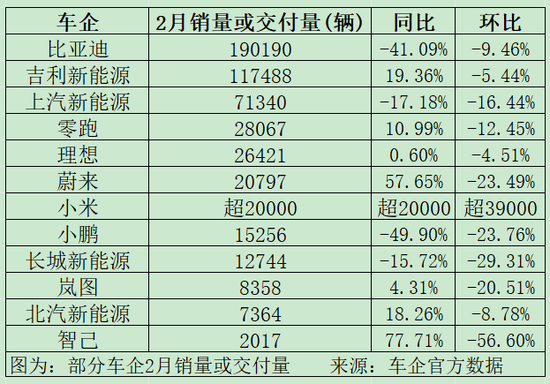
Core Viewpoint - The automotive market in February experienced a significant decline in sales, with BYD's monthly sales dropping below 200,000 units for the first time in recent years, while Leap Motor regained its position as the monthly sales champion among new car manufacturers [1][2][5]. Sales Performance - BYD's February sales were 190,190 units, a year-on-year decrease of 41.09% and a month-on-month decrease of 9.46% [2][5]. - Leap Motor achieved sales of 28,067 units in February, marking a year-on-year increase of 10.99% [1][12]. - Geely's new energy vehicle sales reached 117,488 units, a year-on-year increase of 19.36% [1][6]. - NIO's sales increased by 57.65% year-on-year to 20,797 units, benefiting from the popularity of its new ES8 model [1][12]. Market Dynamics - The overall automotive market faced challenges due to the extended Spring Festival holiday and new policies on electric vehicle purchase taxes, which reduced effective production and sales time [1][6]. - The competitive threshold for leading new car manufacturers has decreased to 20,000 units, indicating a shift in market dynamics [1][12]. - Xiaomi's founder announced the preparation of a new generation of their SUV model, indicating ongoing competition in the market [1][12][14]. International Sales Growth - Several companies, including Chery, BYD, SAIC, and Geely, reported significant growth in overseas sales, with Geely's overseas sales increasing by 144.30% year-on-year [15][18]. - Chery's February export volume reached 124,929 units, a year-on-year increase of 41.5%, marking its position as a leading exporter among Chinese car manufacturers [15][18].



比亚迪、陶氏供应商,先进封装材料“小巨人”,冲IPO!
Sou Hu Cai Jing· 2026-03-01 17:15
Core Viewpoint - Suzhou Jinyi New Materials Technology Co., Ltd. has resumed its IPO process after a year of inactivity, aiming to capitalize on the growing demand for advanced inorganic non-metallic powder materials in the electronics industry [1] Company Overview - The company specializes in electronic information functional materials and thermal conductive materials, aligning with the current trends of electronic packaging upgrades and increasing power density [2] - Its products have entered the supply chains of leading companies such as Henkel, Dow Chemical, and BYD, establishing strong technical barriers and order stickiness due to long certification cycles [4] Market Position - The company has secured stable supply relationships with major global manufacturers of rigid copper-clad laminates, covering the top twenty in the industry [4] - In the context of rapid advancements in AI server infrastructure, the demand for high-performance computing chips is driving a structural upgrade in the electronic materials system [4] Technological Advancements - The transition from traditional auxiliary materials to key foundational supports is evident, as functional powder materials are becoming critical in determining end-product performance [2][12] - The high-end copper-clad laminate materials are evolving from M7 and M8 grades to M9 grades, which are designed to support ultra-high-speed signal transmission and high-density PCB structures [10] Future Outlook - The next-generation Vera Rubin 200 platform is expected to begin shipping in Q4 of this year, with NVIDIA's GB300 AI server cabinet projected to reach a shipment volume of 55,000 units next year, representing a 129% year-on-year increase [10] - The competition in advanced electronic packaging and thermal management materials will focus on high-frequency transmission efficiency and energy dissipation control, with companies that achieve breakthroughs in foundational material science likely to gain a competitive edge in the upcoming industrial cycle [12]
比亚迪,出口首超国内!
DT新材料· 2026-03-01 16:05
Group 1 - The article discusses the February 2023 delivery data of various car manufacturers, highlighting significant sales figures for electric vehicles [2][3]. - BYD achieved a total of 190,190 electric vehicle sales in February, with 100,600 units exported, marking the first time exports surpassed domestic sales [3][4]. - Other manufacturers such as Leap Motor, Li Auto, and NIO reported deliveries of 28,067, 26,421, and 20,797 units respectively, with NIO showing a year-on-year growth of 57.6% [3][4]. Group 2 - The China Association of Automobile Manufacturers (CAAM) forecasts total vehicle sales in 2026 to reach 34.75 million units, a 1% increase year-on-year, with electric vehicle sales projected at 19 million units, reflecting a 15.2% growth [5]. - The article emphasizes the importance of recent government policies aimed at stimulating market demand and supporting the automotive industry during a critical transition period towards high-quality development [5].
又生变!造车新势力,最新销量出炉!比亚迪,跌破重要关口
Xin Lang Cai Jing· 2026-03-01 14:36
Core Viewpoint - The competition landscape among car manufacturers in China is changing, with Leap Motor regaining the title of monthly sales champion among new energy vehicle makers, while BYD's sales have fallen below 200,000 units for the first time in recent years [1][18]. Group 1: February Sales Performance - In February, BYD's sales reached 190,190 units, a year-on-year decline of 41.09% and a month-on-month decline of 9.46% [19][20]. - Leap Motor achieved sales of 28,067 units, marking a year-on-year increase of 10.99% [19][18]. - Geely's high-end brand Zeekr saw a significant increase in sales, with a 70% year-on-year growth to 23,900 units [24][7]. Group 2: Market Influences - The overall decline in sales is attributed to the long Chinese New Year holiday and the new policy on electric vehicle purchase tax, which has shifted from full exemption to a 5% tax rate starting January 1, 2026 [4][22]. - The competitive threshold for new energy vehicle makers has dropped to 20,000 units, intensifying competition among manufacturers [18][10]. Group 3: International Market Expansion - Several Chinese car manufacturers are increasing their focus on international markets, with Chery Group exporting 124,929 units in February, a year-on-year increase of 41.5% [34][32]. - Geely's overseas sales surged by 144.30% in February, highlighting the importance of international business as a key growth engine for the company [34][32]. - BYD, SAIC, Geely, and Great Wall all reported significant increases in overseas sales, with BYD exporting 100,600 units, a 50.09% increase year-on-year [34][32].
1月热销前十广东占三成,上海第八,2026新能源重卡区域市场或生巨变 | 头条
第一商用车网· 2026-03-01 13:31
Core Viewpoint - The new energy heavy truck market in China has experienced significant growth in January 2026, achieving a year-on-year increase of 127% despite a month-on-month decline of 65% compared to December 2025, indicating a robust start to the year [3][31]. Market Overview - In January 2026, a total of 16,100 new energy heavy trucks were sold across 269 cities in China, with 30 provinces having registered these vehicles, showcasing a widespread market penetration [3][31]. - The top ten cities accounted for 30.23% of total sales, a slight decrease from previous years, indicating a more distributed market rather than concentration in a few cities [5][31]. Regional Performance - Guangdong province led with 2,379 new energy heavy trucks registered, with Guangzhou, Foshan, and Shenzhen ranking among the top ten cities for sales [7][31]. - Notably, Guangzhou topped the sales chart with 784 units sold, where XCMG held a dominant market share of 43.1% [10][31]. - Foshan showed remarkable growth, moving from 20th place in 2025 to 2nd in January 2026, with a market share of 68.9% for the leading brand, Yuan Cheng [12][31]. Brand Competition - In January 2026, 14 brands were active in Shenzhen, with Shaanxi Automobile leading with a market share of 25.2% [14][31]. - Chongqing and Tianjin saw significant improvements in their rankings, with Chongqing and Tianjin rising by 5 positions each, and the leading brands in these cities were United Heavy Truck and China National Heavy Duty Truck respectively [18][20][31]. - Shanghai, previously the top city in 2025, fell to 8th place in January 2026, with no brand exceeding 100 units sold [29][31]. Conclusion - The new energy heavy truck market in China is showing signs of comprehensive growth, with expectations for further expansion in the number of cities where these vehicles will be registered and sold throughout 2026 [31].




比亚迪(002594) - 2026年2月产销快报
2026-03-01 13:30
证券代码:002594 证券简称:比亚迪 公告编号:2026-003 比亚迪股份有限公司 2026年2月产销快报 本公司及董事会全体成员保证信息披露的内容真实、准确、完整,没有虚假记载、误导性陈述或重大遗漏。 注:本公司 2026 年 2 月出口新能源汽车合计 100,600 辆; 本公司 2026 年 2 月新能源汽车动力电池及储能电池装机总量约为 18.773 GWh,2026 年累计装机总量约为 38.960 GWh。 务请注意,上述产、销量数字未经审核,亦未经本公司审计师确认,或会予以调整并有待最终确认。本公司刊发财务业绩后,股东及 潜在投资者务必详阅。 单位:辆 产量 销量 项目类别 本月 去年同期 本年累计 去年累计 累计同比 本月 去年同期 本年累计 去年累计 累计同比 新能源汽车 175,280 334,124 407,638 661,988 -38.40% 190,190 322,846 400,241 623,384 -35.80% -乘用车 172,525 329,211 400,360 653,022 -38.70% 187,782 318,233 393,300 614,679 -3 ...
比亚迪2月销量同比下滑36%,多家新势力逆势增长,2026年上半年新车密集上市潮将至
Jin Rong Jie· 2026-03-01 12:35
Group 1 - BYD's passenger car sales in February 2026 were 187,782 units, a year-on-year decline of 36.00% [1] - The sales of pure electric passenger vehicles were 79,539 units, down 35.00% year-on-year, while plug-in hybrid vehicle sales were 108,243 units, down 36.70% [1] - Plug-in hybrid models accounted for approximately 57.6% of BYD's passenger vehicle sales, indicating their continued importance in the sales structure [1] Group 2 - Total sales of BYD's new energy vehicles in February reached 190,190 units, reflecting a year-on-year decrease of 35.80% [1] - In the overseas market, BYD exported a total of 100,600 new energy vehicles in February [1] - The total installed capacity of new energy vehicle power batteries and energy storage batteries in February was approximately 18.773 GWh, with a cumulative total of about 38.960 GWh for the first two months of 2026 [1] Group 3 - Leap Motor delivered 28,067 units in February, representing a year-on-year growth of approximately 11% [1] - Li Auto delivered 26,421 units in February, with a historical cumulative delivery of 1,594,304 units [1] - NIO delivered 20,797 units in February, showing a year-on-year increase of 57.6% [1] Group 4 - GF Securities highlighted the performance of BYD's Qin PLUS and Tang models, noting the strong market share of the Sea Lion 06 and Galaxy A7 since their launch [2] - China Galaxy Securities anticipates a recovery in market demand as the first A-level auto show in Beijing approaches, with several flagship new models expected to launch in the first half of 2026 [2]
比亚迪股份(01211.HK):2月新能源汽车销量合计为19.019万辆
Ge Long Hui· 2026-03-01 12:17
Group 1 - The core point of the article is that BYD Company Limited (01211.HK) reported its sales and production figures for February 2026, highlighting significant growth in electric vehicle sales and battery installations [1] Group 2 - In February 2026, the total sales of new energy vehicles reached 190,190 units, contributing to a cumulative sales total of 400,241 units for the year [1] - The company exported a total of 100,600 new energy vehicles in February 2026 [1] - The total installed capacity of new energy vehicle power batteries and energy storage batteries in February 2026 was approximately 18.773 GWh, with a cumulative installed capacity of about 38.960 GWh for the year [1]