HAIDILAO(06862)

Search documents
武汉:一锅火辣撬动情绪经济
Shang Hai Zheng Quan Bao· 2026-01-19 18:45
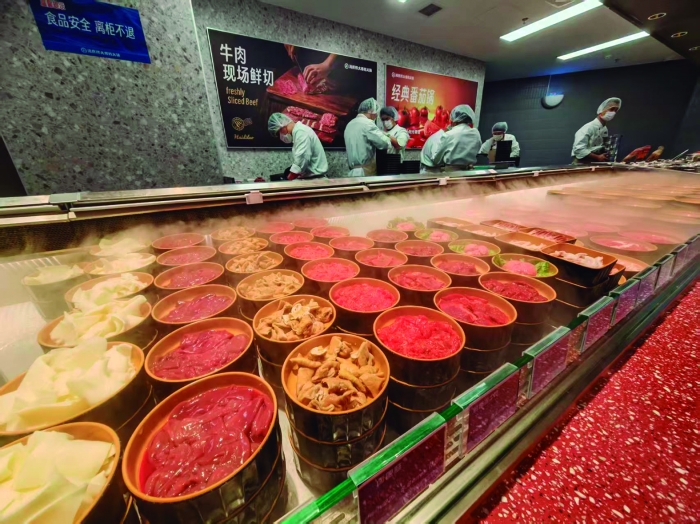
Core Insights - The newly opened Haidilao Dapaidang hotpot restaurant in Wuhan is attracting significant consumer interest, highlighting a trend in the night economy and emotional consumption [1][2][5] Group 1: Business Model and Operations - The Haidilao Dapaidang hotpot operates from 10:30 AM to 7:00 AM the next day, focusing on seafood and freshly sliced beef [2] - The restaurant employs a "market" style operation where customers select ingredients using small carts, enhancing the dining experience [5][6] - The pricing strategy is transparent, with dishes priced according to color-coded tableware, allowing for easy understanding of costs [5] Group 2: Consumer Experience and Demand - Customers report high satisfaction with the variety and quality of ingredients, with average spending around 100+ yuan per person [4] - The immersive dining experience and emotional satisfaction are key factors driving repeat visits, particularly among younger consumers [5][6] - The restaurant's unique atmosphere and the ability to customize meals cater to the preferences of a new generation of diners seeking both quality and value [6] Group 3: Market Trends and Future Expansion - The Chinese dining industry is recovering and evolving towards a focus on quality-price ratio and emotional value, raising expectations for operators [6] - Haidilao plans to expand the Dapaidang model to more cities, adapting to local culinary preferences [6]


拒绝复杂理论!华与华“接地气”策划玩转品牌传播
Sou Hu Cai Jing· 2026-01-19 08:06
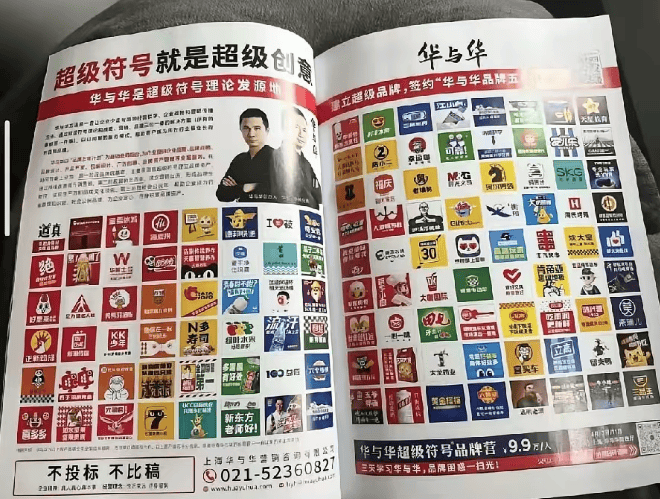
Core Insights - The acceleration of consumer market iteration and increasing homogenization among brands necessitate a clear cognitive identity for market positioning [1] - Professional planning is essential for overcoming communication challenges and accumulating core assets for brands [1] Group 1: Brand Communication - The essence of brand communication is to enable consumers to quickly perceive value and establish memory associations [3] - The core strategy of the company, "recognizable at a glance, easy to say, irresistible to play," simplifies communication and addresses consumer needs, contributing to the success of major national brands like Haidilao and Mixue Bingcheng [3] - The "Brand Triangle" theory proposed during the eight-year collaboration with Haidilao includes product structure, discourse system, and symbol system, providing a core framework for global brand positioning [3] Group 2: Symbol and Role Creation - The company created a brand character "Xiao Laolao" based on the panda, integrating elements of Sichuan culture to enhance emotional connections with consumers [4] - The character serves as a cultural ambassador, promoting traditional skills like noodle performances and Sichuan opera globally through various engagement scenarios [4] - The discourse system emphasizes cultural confidence, promoting "hot pot" as "Huoguo" internationally and creating memorable phrases and songs to enhance brand recognition [4] Group 3: Practical Planning Approach - The company's planning practices focus on simplification rather than complex theories or packaging, basing strategies on consumer cognitive patterns [6] - Effective combinations of symbols, roles, and discourse facilitate efficient brand value transmission [6] - The approach indicates that accumulating brand assets does not require elaborate crafting but rather accurately meeting needs and simplifying communication processes [6]
张勇能开启海底捞的“第二增长曲线”吗?
Tai Mei Ti A P P· 2026-01-19 07:10
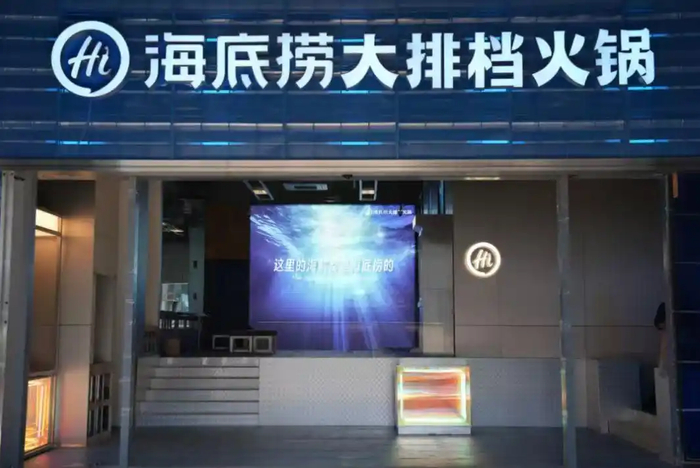
Core Viewpoint - The return of Zhang Yong as CEO of Haidilao is seen as a strategic move to address the company's challenges and revitalize its operations in a competitive market [2][3][10]. Management Changes - On January 13, 2024, Haidilao announced the resignation of several executives, including CEO Gou Yiqun, with Zhang Yong being appointed as CEO effective immediately [2]. - Zhang Yong's return marks a significant shift in leadership, as he was previously considered to have stepped back from day-to-day operations [3][9]. Market Reaction - Following the announcement of Zhang Yong's return, Haidilao's stock surged over 9%, reaching HKD 15.74 per share, the highest since May of the previous year, with a market capitalization of HKD 87.7 billion [3]. Historical Context - Zhang Yong had previously stepped down as CEO during a challenging period for Haidilao, which included a profit warning and significant losses in 2021 [5][8]. - The company had expanded rapidly in 2020, opening 544 new stores, which contributed to its financial difficulties [7][8]. Strategic Initiatives - The "Pomegranate Plan," aimed at incubating new restaurant brands, was initially led by Gou Yiqun and is expected to be a key focus for Zhang Yong [10][11]. - As of mid-2025, the "Pomegranate Plan" had successfully incubated 14 new brands, generating revenue of CNY 597 million, which accounted for 2.9% of total revenue [10]. New Business Developments - The launch of "Haidilao Dapaidang Hotpot" represents a shift in strategy, leveraging the Haidilao brand to reduce consumer decision-making difficulty and accelerate expansion [12]. - The new concept has already seen rapid growth, with nearly 10 locations opened or in preparation within a month of its debut [12]. Leadership Transition - The appointment of younger executives to the board indicates a shift towards a more dynamic management approach, focusing on various operational aspects [13]. - The challenges of balancing personalized consumer demands with scalable growth remain a critical focus for Haidilao as it seeks to establish a second growth curve [14].
社会服务板块2025年四季度前瞻:促消费政策频发、休闲需求稳中向好,关注出行链布局机会
CMS· 2026-01-19 05:07
Investment Rating - The report maintains a positive investment rating for the industry, highlighting a favorable outlook for the tourism and leisure sectors due to government policies aimed at boosting domestic consumption and service spending [1][35]. Core Insights - The report emphasizes the recovery of domestic tourism, with expected growth rates of 12% in revenue and 18% in visitor numbers for Q1-Q3 2025, driven by sustained leisure travel demand and the rise of experiential consumption [1][35]. - The overall tourism market is projected to grow by over 10% for the year, supported by government initiatives such as promoting spring and autumn travel and issuing cultural tourism consumption vouchers [1][35]. - Key companies recommended for investment include China Duty Free Group, Jin Jiang Hotels, Shouqi Group, Tongcheng Travel, and Ctrip Group, alongside high-growth tea beverage stocks like Gu Ming and low-valuation restaurant growth stocks like Green Tea Group [1][35]. Summary by Sections 1. Restaurant Sector - Offline consumption is gradually recovering, with Q4 restaurant revenue showing steady growth, achieving 519.9 billion and 605.7 billion yuan in October and November 2025, respectively, with year-on-year growth of 4.99% and 4.40% [7][10]. - Leading restaurant companies are recovering faster than the industry average, with significant revenue increases noted for major players [10][14]. 2. Tea Beverage Sector - The tea beverage sector has seen a surge in same-store sales growth due to delivery subsidies, with leading brands like Gu Ming and Hu Shang A Yi maintaining high growth rates of 15-20% [7][10][14]. - The number of new store openings has doubled compared to 2024, indicating aggressive expansion strategies among top brands [16]. 3. OTA (Online Travel Agency) - The recovery of outbound travel demand is evident, with strong performance in Southeast Asia routes and a notable increase in visitor numbers to Japan and South Korea [20][24]. - The report highlights the long-term profit potential of leading OTA companies like Ctrip and Tongcheng Travel, driven by the ongoing recovery in leisure travel demand and improved commission rates [24][25]. 4. Hotel Sector - The hotel industry is expected to see a stable RevPAR (Revenue per Available Room) in Q4, with a year-on-year growth of 6-8% in room supply [29][30]. - Major hotel chains like Shouqi and Jin Jiang are projected to maintain or improve their performance, benefiting from cost reductions and increased guest traffic during holiday periods [29][30][31]. 5. Investment Recommendations - The report suggests focusing on the travel sector, particularly companies involved in OTA, hotels, and scenic spots, as they are likely to benefit from favorable government policies [1][35]. - Additionally, it recommends investing in high-growth tea beverage stocks and undervalued restaurant growth stocks, indicating a diversified approach to capitalizing on the recovery in consumer spending [1][35].



张勇“出山”直面业绩双降挑战 海底捞变革破局新品牌营收占2.9%
Chang Jiang Shang Bao· 2026-01-18 23:52
Core Viewpoint - The return of Zhang Yong as CEO of Haidilao signals a strategic shift as the company faces challenges in its core hotpot business and seeks to diversify its operations [1][9]. Group 1: Leadership Changes - Zhang Yong resumes the roles of Chairman and CEO effective January 13, 2026, marking the third CEO change in four years for Haidilao [1]. - The previous CEO, Gou Yiqun, transitions to a key role in the company's digital transformation [1]. - Four experienced managers are appointed as executive directors, indicating a focus on strengthening leadership [1]. Group 2: Company Performance - In the first half of 2025, Haidilao's revenue decreased by 3.7% to 207.03 billion yuan, and net profit fell by 13.7% to 17.55 billion yuan [9]. - The "Red Pomegranate Plan" has generated new brand revenue of 5.97 billion yuan, a significant increase of 227.0%, now accounting for 2.9% of total revenue [9]. - In 2023, the company achieved a net profit of 44.95 billion yuan, with a table turnover rate of 3.8 times per day [7]. Group 3: Strategic Initiatives - Haidilao is diversifying its brand portfolio, launching new concepts such as Hi Lao Hotpot and other dining formats, including fast food and barbecue [6]. - The company has implemented various innovative services and new business models, such as night snacks and beauty services, to attract customers [6]. - Zhang Yong's return is accompanied by a renewed focus on addressing operational challenges and enhancing customer engagement through new offerings [10]. Group 4: Market Environment - The competitive landscape for hotpot restaurants is intensifying, with brands like Banou and Song Hotpot attracting customers through differentiated positioning [9]. - Consumer preferences are shifting towards value and experiential dining, which poses challenges for Haidilao's traditional service model [9]. - The company is adapting by optimizing its main business operations and exploring new market opportunities [10].
智通港股通资金流向统计(T+2)|1月19日
智通财经网· 2026-01-18 23:34
Group 1 - Tencent Holdings (00700), Alibaba Health (00241), and Alibaba Group-W (09988) ranked the top three in net inflow of southbound funds, with net inflows of 2.012 billion, 1.440 billion, and 1.128 billion respectively [1][2] - China Mobile (00941), Haidilao (06862), and China Aluminum (02600) ranked the top three in net outflow of southbound funds, with net outflows of -756 million, -460 million, and -434 million respectively [1][2] - Shenzhen Expressway (00548), Jiangsu Nanjing-Hangzhou Expressway (00177), and Anhui Wanan Expressway (00995) had the highest net inflow ratios at 73.29%, 68.10%, and 64.90% respectively [1][3] Group 2 - The top ten stocks by net inflow included Tencent Holdings (20.12 billion), Alibaba Health (14.40 billion), and Alibaba Group-W (11.28 billion), with respective closing prices of 633.000 (+0.88%), 7.780 (+18.96%), and 169.000 (+5.69%) [2] - The top ten stocks by net outflow included China Mobile (-7.56 billion), Haidilao (-4.60 billion), and China Aluminum (-4.34 billion), with respective closing prices of 80.800 (-0.19%), 15.740 (+9.15%), and 13.440 (-1.18%) [2] - The top three stocks by net outflow ratio were Industrial Bank of China Southern (03167) at -100.00%, Yancoal Australia (03668) at -62.10%, and Zhengzhou Bank (06196) at -60.19% [3]




张勇缺席海底捞的1414天
Ge Long Hui· 2026-01-18 22:30
Core Viewpoint - The return of Zhang Yong as CEO of Haidilao marks a significant shift in the company's strategy amidst a challenging industry landscape, reflecting the broader transformation of the hot pot sector from aggressive expansion to rational adjustment [1][2][12]. Company Summary - Zhang Yong's return comes after a 1414-day absence, during which Haidilao experienced two CEO changes and strategic shifts, leading to a market capitalization recovery to 877.35 billion HKD following the announcement [1][2]. - The company faced severe challenges during Zhang's absence, including a net loss of 3.8 billion CNY in 2022 and a drop in market capitalization from 1 trillion HKD to 300 billion HKD [3][4]. - Under the leadership of Yang Lijuan, Haidilao implemented the "Woodpecker Plan," closing over 300 underperforming stores and focusing on improving single-store profitability, resulting in a net profit of 4.495 billion CNY in 2023, a 227% increase year-on-year [4][5]. - The new CEO, Gou Yiqun, focused on digital transformation and multi-brand strategies, but faced challenges in sustaining growth, with a 3.7% decline in revenue in the first half of 2025 [5][6][12]. Industry Summary - The hot pot industry has undergone a structural transformation, shifting from a growth phase to a competitive phase characterized by market consolidation and increased competition [7][8]. - Haidilao's market share decreased from 8.7% to 6.3% over four years, while competitors like Banlu and Xiaobai gained market share through innovative strategies [7][9]. - Consumer preferences have shifted towards health-conscious and experiential dining, with the average spending on hot pot declining from 86.7 CNY in 2022 to 77.1 CNY in 2025 [9][10]. - The supply chain has become a critical competitive advantage, with leading brands investing in digital integration and fresh supply chain management to enhance efficiency and reduce costs [11][12]. Strategic Challenges - Haidilao faces three main challenges: growth stagnation, intensified competition, and organizational complexity, which the previous management struggled to address [12][13]. - The company needs to enhance operational efficiency and innovate service offerings to attract the Z generation, while also adjusting pricing strategies to remain competitive in lower-tier markets [14][15]. - Zhang Yong's return is seen as a strategic move to leverage his experience and vision to navigate these challenges and redefine the company's competitive edge in a rapidly evolving market [12][15][16].
海底捞(06862.HK):创始人接任CEO 新执董多具一线经验
Ge Long Hui· 2026-01-18 21:40
Group 1 - The company announced the resignation of CEO and Executive Director Mr. Gou Yiqun, with founder and Chairman Mr. Zhang Yong taking over as CEO again after four years [1] - The company has initiated the "Woodpecker Plan" to systematically adjust its store network and organizational structure amid operational pressures from rapid expansion [1][2] - The new executive directors appointed have diverse backgrounds in regional operations, product and supply chain management, and strategic support, enhancing the board's diversity [2] Group 2 - The hot pot industry is facing challenges, with the number of hot pot restaurants in China decreasing to 462,000 as of August 2025, down from 529,000 at the end of 2024, and average consumer spending dropping to 76.7 yuan, a decline of 11.3% from Q1 2023 [2] - The company has launched the "Red Pomegranate Plan," which has introduced 14 restaurant sub-brands, generating an additional revenue of 597 million yuan, a year-on-year increase of 227% [2] - The company is expected to achieve revenues of 43.8 billion yuan, 46.4 billion yuan, and 50.8 billion yuan for the years 2025 to 2027, with corresponding net profits of 4.23 billion yuan, 4.74 billion yuan, and 5.39 billion yuan [3]
可口可乐或放弃出售Costa;海底捞张勇归来;Alo将开中国首店|品牌周报
3 6 Ke· 2026-01-18 12:22
Group 1: Coca-Cola and Costa Coffee - Coca-Cola has reportedly abandoned the plan to sell Costa Coffee due to bidders' offers falling short of expectations, marking a "latest setback" for the company [1] - The expected price for Costa Coffee was around £2 billion (approximately ¥18.7 billion), which is about half of the £3.9 billion paid during its acquisition in 2018 [1] - Future plans for a potential sale of Costa Coffee may be revisited in the medium term [1] Group 2: Costa Coffee Financial Performance - Costa Coffee's revenue for 2024 is reported at £1.2 billion (approximately ¥11.2 billion), but the operating loss has more than doubled to £13.5 million (approximately ¥12.5 million) [2] - The company attributes the loss to weak foot traffic in commercial streets and pressure from low-cost competitors [2] Group 3: Haidilao Management Changes - Haidilao announced significant executive and board changes, with founder Zhang Yong returning as CEO effective January 13, 2026 [3] - The company aims to enhance management efficiency and decision-making through the promotion of intelligent and automated management processes [3] - New executive directors have been appointed to support innovation and long-term development [3] Group 4: Haidilao's Business Expansion - Since the launch of the "Pomegranate Plan" in 2024, Haidilao has introduced several new dining sub-brands, expanding its offerings beyond hot pot [4] - The company operates 14 restaurant brands with a total of 126 stores, in addition to its core hot pot business [4] Group 5: Hushang Auntie Profit Forecast - Hushang Auntie has issued a positive profit forecast for 2025, expecting net profits to reach between ¥495 million and ¥525 million, a year-on-year increase of 50% to 60% [5] - The growth is attributed to a multi-brand development strategy and ongoing operational efficiency improvements [5] Group 6: Salia's Profit Growth - Salia reported a net profit of ¥1.3 billion for the September to November 2025 period, a 16% year-on-year increase, achieving a two-year high [6] - The company’s sales increased by 15% to ¥31.7 billion during the same period, despite rising raw material costs [6] Group 7: Alo Yoga's Expansion in China - Alo Yoga is set to open its first store in China in Shanghai's Jing'an Kerry Center in the second quarter, with a second store planned for Beijing [7] - The brand emphasizes high-quality yoga and sportswear, with a pricing strategy positioned in the premium segment [7] Group 8: Global Yoga Apparel Market Growth - The global yoga apparel market is projected to reach $28.84 billion by 2025, with a compound annual growth rate of approximately 8.31% [8] - Alo Yoga has appointed former Dior executive Benedetta Petruzzo as CEO to accelerate global expansion [8][9] Group 9: Dongpeng Beverage Profit Forecast - Dongpeng Beverage expects a net profit of between ¥4.34 billion and ¥4.59 billion for 2025, representing a year-on-year growth of 30.46% to 37.97% [17] - The company continues to focus on channel management and product exposure to drive sales growth [17] Group 10: Moutai's Corporate Sales Strategy - Moutai has opened sales of its 1499 yuan per bottle Flying Moutai to qualifying corporate clients, focusing on existing customers for 2026 contracts [18] Group 11: San Yuan's Revenue Projection - San Yuan expects to achieve approximately ¥6.35 billion in revenue for the previous year, with a significant increase in net profit projected for 2025 [19] - The company maintains a leading market share in liquid milk in Beijing, with over 50% in low-temperature fresh milk [19] Group 12: Mammut Potential Acquisition - Swiss outdoor brand Mammut is considering a sale, with an estimated transaction value of up to €500 million, and Anta Group is seen as a potential buyer [20]

可口可乐或放弃出售Costa;海底捞张勇归来;Alo将开中国首店|品牌周报
36氪未来消费· 2026-01-18 12:12
Group 1: Coca-Cola and Costa Coffee - Coca-Cola has reportedly abandoned plans to sell Costa Coffee due to bids falling short of expectations, marking a setback for the company [3] - The expected sale price for Costa Coffee was around £2 billion (approximately ¥187 billion), which is about half of the £3.9 billion paid during its acquisition in 2018 [3] - Costa Coffee's financial performance has declined, with 2024 revenue at £1.2 billion (approximately ¥112 billion) and operating losses exceeding £13.5 million (approximately ¥1.25 million), attributed to weak foot traffic and competition from low-cost rivals [4] Group 2: Haidilao Management Changes - Haidilao announced significant executive and board changes, with founder Zhang Yong returning as CEO effective January 13, 2026, following a series of leadership transitions [5][6] - The company has been implementing various initiatives, including the "Red Pomegranate Plan," and has expanded its brand portfolio to include 14 restaurant brands with a total of 126 outlets [6] Group 3: Salia's Financial Performance - Salia reported a record high net profit of ¥1.3 billion for the September to November 2025 period, a 16% year-on-year increase, driven by a low-price strategy and increased customer numbers [7] - Sales during the same period grew by 15% to ¥31.7 billion, with operating profit rising 19% to ¥2 billion [7] Group 4: Alo Yoga's Expansion in China - Alo Yoga is set to open its first store in China in Shanghai's Jing'an Kerry Center in the second quarter, with a second store planned for Beijing's Sanlitun area [8][9] - The brand, founded in 2007, emphasizes high-quality yoga and activewear and has expanded its product range to include various lifestyle items [9] Group 5: Dongpeng Beverage's Profit Forecast - Dongpeng Beverage expects a net profit increase of 30.46% to 37.97% for 2025, projecting a profit of ¥4.34 billion to ¥4.59 billion [19] - The company aims to enhance its channel management and explore multi-category development to sustain growth [19] Group 6: Mamut's Potential Acquisition - Swiss outdoor brand Mammut is reportedly considering a sale, with an estimated transaction value of €500 million, and Anta Group is seen as a potential buyer [23]