KWEICHOW MOUTAI(600519)

Search documents
垃圾交易时间
Datayes· 2026-02-05 12:23
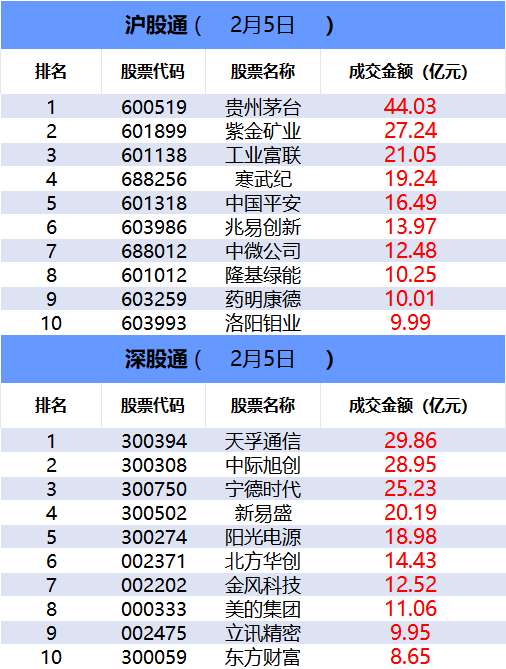
Core Viewpoint - The article discusses the current state of the A-share and Hong Kong stock markets, highlighting the volatility and the impact of external factors on investor sentiment, particularly in the technology and consumer sectors. Market Overview - The A-share market closed with the Shanghai Composite Index at 26,627.95, down 0.14% from the previous close of 26,847.32, with a trading volume of 3,151.12 billion [1]. - The Hong Kong market showed a rebound, while gold and silver prices experienced a narrowing decline [1]. Sector Performance - The consumer sector, including beauty care, tourism, food, and retail, saw significant gains, with the food and beverage sector's PE-TTM at 21.42, indicating a high safety margin [16]. - The film and media sector is optimistic about the upcoming Spring Festival box office, with several high-profile films scheduled for release [19]. Investment Trends - The banking sector is highlighted as having increased return potential post-adjustment, with large banks showing competitive advantages in wealth management [20]. - Real estate transactions in major cities like Beijing and Shanghai have shown a significant recovery, with January's transaction volume up 33% year-on-year [20]. Capital Flow - There was a net outflow of 720.23 billion from major sectors, with the power equipment sector experiencing the largest outflow [44]. - Northbound capital transactions totaled 2,889.38 billion, with Guizhou Moutai leading in trading volume at 44.03 billion [46]. Valuation Insights - The article notes that the valuation of the consumer sector is at historical lows, with non-bank financials and food and beverage sectors showing low PE ratios compared to historical averages [49].





茅台酒需求火爆!i茅台被指页面加载困难,股价已连涨多日
Nan Fang Du Shi Bao· 2026-02-05 12:11
Core Insights - The demand for Moutai liquor has surged, causing temporary outages on purchasing platforms and driving stock prices to new highs [2][3] - Moutai's stock price has seen significant increases, reaching a market capitalization of over 2 trillion yuan [3][4] Group 1: Demand and Sales Performance - On February 5, multiple consumers reported difficulties accessing the iMoutai platform to purchase Moutai liquor, indicating high market demand [2] - In January, iMoutai added 6.28 million new users, with active users exceeding 15.31 million, and over 1.45 million purchases of Moutai products were recorded [2] - The retail price of Moutai has risen above 1,800 yuan per bottle in several cities, with wholesale prices ranging from 1,660 to 1,680 yuan [3] Group 2: Stock Market Reaction - Moutai's stock price rebounded from a low of 1,322.01 yuan per share on January 28, surpassing key price thresholds of 1,400 and 1,500 yuan [4] - On February 5, despite a generally negative market sentiment, Moutai's stock rose to a high of 1,565 yuan per share, closing at 1,555 yuan, marking a nearly 10-month high [3][4] Group 3: Investment Sentiment - Notable investors are increasing their positions in Moutai, with one investor purchasing 77,200 shares for approximately 103 million yuan [4] - Analysts suggest that the white liquor sector is experiencing a "Matthew effect," where leading companies with clear sales performance are favored by investors [4][5] Group 4: Industry Outlook - The white liquor industry is expected to undergo a valuation recovery, supported by consumer demand and policy backing [5] - Moutai's stock price rebound reflects a re-evaluation of its intrinsic value and a shift in market sentiment [5]

i茅台又崩了,仅9.5%用户抢购成功,黄牛代抢费150元起
Guo Ji Jin Rong Bao· 2026-02-05 11:23
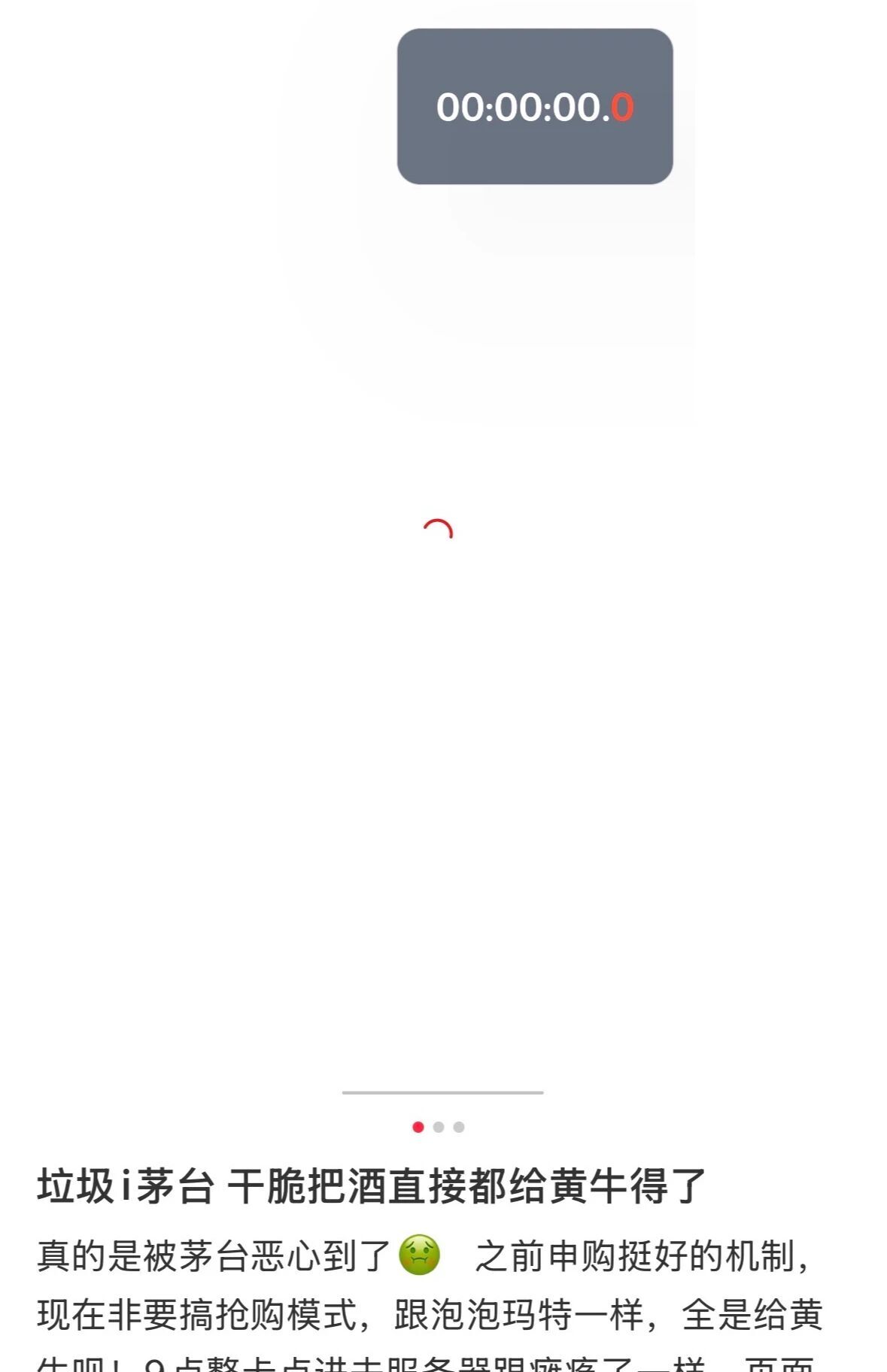
春节临近,飞天茅台行情持续升温,抢购模式遭到质疑。 2月5日上午,贵州茅台(600519)旗下官方自营数字营销平台"i茅台"app再度出现技术故障。 不少网友反映,自己准备抢购1499元飞天茅台,到抢购时间上线后发现app页面无法正常加载,反复出现"点击重试"提示,多次刷新也无果。 另有参与抢购者表示,即便成功进入页面,也无法下单,页面直接显示"已售罄",且i茅台客服热线也一直无法接通。 水芙蓉 摄 针对这一现象,贵州茅台证券部接线工作人员回应称:"近期都是一瓶难求的状态。因为订单暴增,电话咨询也比较多。" 图源网络 此类抢购"故障"已持续了一段时间。 自1月1日53度飞天茅台(普茅)正式在i茅台上线后,"准时上线却抢不到"的大有人在。该产品以云购抢购方式进行,每日9:09开售、每5分钟补货,"拼手速 先到先得"。 随着春节临近,飞天茅台的抢购难度进一步加大,部分消费者开始质疑抢购模式的合理性,认为之前的申购形式更好。此前,i茅台上的茅台生肖酒、精品 酒等热门产品主要以申购形式售卖,每天固定时间段集中摇号、随机抽签,且账号、场次和产品均有限制,这种模式下能否购买成功主要取决于运气。 不可否认的是,抢购模式一定 ...
食品饮料板块基金持仓报告:2025Q4白酒基金持仓低位,大众品环比改善
Caixin Securities· 2026-02-05 10:25
Investment Rating - The industry investment rating is "Leading the Market" [6] Core Insights - The report indicates that the consumer demand in 2026 is expected to improve, and given the low level of active equity fund holdings in the food and beverage sector, the rating of "Leading the Market" is maintained [6] Summary by Sections Overall Sector Performance - In Q4 2025, the active equity fund's heavy holdings in the food and beverage sector decreased slightly, with an overweight ratio increasing by 0.2 percentage points. The total market capitalization of the food and beverage sector was 43,559 billion, down 5.36% from Q3 2025, underperforming the CSI 300 index by 4.64 percentage points [6][8] Subsector Analysis - In Q4 2025, the heavy holdings in the liquor sector decreased, while the heavy holdings in the consumer goods sector increased. The heavy holdings in liquor were 2.93%, down 0.25 percentage points, while the consumer goods sector's heavy holdings were 1.12%, up 0.15 percentage points [6][19] Key Companies - Only Kweichow Moutai entered the top 20 heavy holdings of active equity funds in the food and beverage sector. The heavy holding ratio for Kweichow Moutai remained stable, while other liquor companies like Shanxi Fenjiu and Luzhou Laojiao saw decreases [6][36] Stock Connect Analysis - In Q4 2025, the food and beverage sector's holdings in the Stock Connect accounted for 5.4% of the total market value, down 0.92 percentage points, with an overweight ratio of +1.52 percentage points [6][39] Investment Recommendations - The report suggests that the food and beverage sector is positioned for potential growth, with a maintained rating of "Leading the Market" due to expected improvements in consumer demand and low fund holdings [6]





12只白酒股下跌 贵州茅台市值接近2万亿
Bei Jing Shang Bao· 2026-02-05 10:24
Core Viewpoint - The article highlights the performance of the liquor sector, particularly the stock movements of major Chinese liquor companies, amidst a broader market decline, indicating a potential recovery phase for the industry in the coming years [1]. Industry Summary - The Shanghai Composite Index closed at 4075.92 points, down 0.64%, while the liquor sector index closed at 2316.81 points, up 0.2% [1]. - The article notes that 12 liquor stocks declined, with Kweichow Moutai's stock price reaching 1555 CNY per share, an increase of 1.97% [1]. - Other notable stock performances include Wuliangye at 108.89 CNY per share (up 0.34%), Shanxi Fenjiu at 180.21 CNY per share (down 0.2%), Luzhou Laojiao at 125.46 CNY per share (down 0.67%), and Yanghe at 55.78 CNY per share (up 0.31%) [1]. Company Summary - Kweichow Moutai's stock price peaked at 1564.9 CNY per share during the trading session, with a total market capitalization reaching approximately 1.96 trillion CNY, closing at about 1.95 trillion CNY [1]. - According to a report by Kiyuan Food and Beverage, the liquor industry has historically shown strong cyclicality in response to macroeconomic conditions, and with inventory clearance, the industry is transitioning from passive responses to proactive adjustments [1]. - The report anticipates that by 2026, the industry will gradually stabilize, with improved consumer willingness to spend as household balance sheets recover, leading to the next upward cycle [1].
「数据看盘」机构活跃度大幅降低,一线游资扎堆平潭发展
Sou Hu Cai Jing· 2026-02-05 10:23
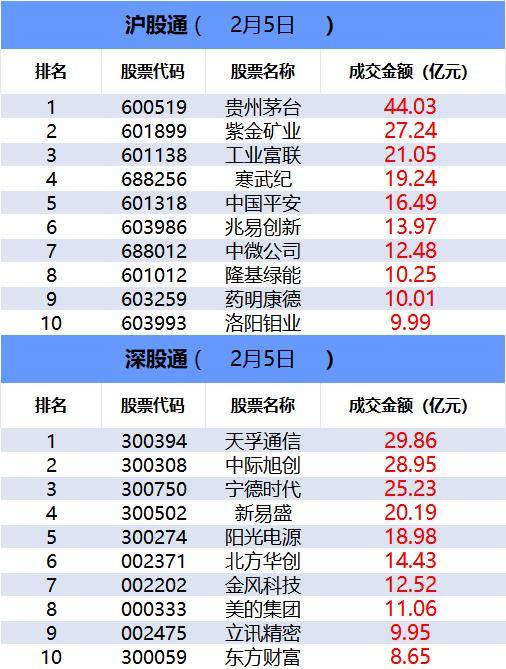
Key Points - The total trading amount for Shanghai Stock Connect today was 142.09 billion, while Shenzhen Stock Connect reached 146.84 billion [1] - The top traded stocks in Shanghai included Kweichow Moutai at 4.40 billion, Zijin Mining at 2.72 billion, and Industrial Fulian at 2.10 billion [2] - In Shenzhen, the leading stocks were Tianfu Communication at 2.99 billion, Zhongji Xuchuang at 2.89 billion, and CATL at 2.52 billion [3] Sector Performance - The sectors with the highest gains included film and television, tourism and hotels, and banking, while sectors with the largest declines were non-ferrous metals, electric grid equipment, and oil and gas [4] - The food and beverage sector saw a net inflow of 1.58 billion, while the film and television sector had a net inflow of 1.23 billion [5] - The electric new energy sector experienced a significant net outflow of 20.21 billion, followed closely by non-ferrous metals at 20.11 billion [6] Individual Stock Activity - The top individual stocks with net inflows included Pingtan Development at 1.29 billion, Wangsu Science and Technology at 0.76 billion, and N Beixin-U at 0.68 billion [7] - The stocks with the highest net outflows were Zijin Mining at -2.29 billion, Xinyi Technology at -1.76 billion, and Aerospace Development at -1.64 billion [8] ETF Trading - The top ETFs by trading amount included the Gold ETF at 20.06 billion, A500 ETF at 15.68 billion, and A500 ETF Huatai at 11.11 billion [9] - The ETFs with the highest growth in trading amount compared to the previous trading day were the Hong Kong Stock Connect Consumer ETF at 0.59 billion, and the S&P Consumer ETF at 0.50 billion [10] Futures Positioning - In the four major futures contracts, both long and short positions increased, with the IM contract seeing a significant increase in long positions [11] Institutional Activity - Institutional activity showed a notable decrease, with the number of stocks bought and sold and the net buying scale significantly reduced [12] - The stock Giant Lifting received 248 million from two institutions, while the stock Minexplosion Optoelectronics saw a sell-off of 81.16 million from one institution [12] Retail Investor Activity - Retail investors were active, with significant purchases in Pingtan Development and Tianfu Communication, indicating strong interest in these stocks [13] - Quantitative funds were also active, particularly in Zhejiang Wenlian, which saw intense trading activity [14]




反套路 | 谈股论金
水皮More· 2026-02-05 10:18
Market Overview - A-shares experienced a collective pullback today, with the Shanghai Composite Index down 0.64% closing at 4075.92 points, the Shenzhen Component down 1.44% at 13952.71 points, and the ChiNext Index down 1.55% at 3260.28 points [3][4] - The trading volume in the Shanghai and Shenzhen markets was significantly reduced to 2.19 trillion yuan, a decrease of 309 billion yuan compared to the previous day [3][4] Sector Performance - The consumer sector, particularly represented by "two bottles of liquor," led the gains, driven by expectations of increased consumption during the Spring Festival [4] - The beauty and personal care sector ranked first in gains, followed by tourism and hospitality, with significant contributions from Kweichow Moutai and Wuliangye to the market indices [4] Declining Sectors - Precious metals, including gold and silver, saw significant declines, impacting related sectors such as energy metals and non-metallic materials [5] - The coal and mining sectors also faced notable declines, influenced by previous gains due to production cuts in Indonesia [5] Technology Sector Insights - The technology sector's performance is closely linked to the U.S. market, with significant drops in major tech stocks like AMD and Nvidia, raising concerns for A-share tech stocks, particularly in the semiconductor sector [6] - The potential for a turning point in A-share tech stocks is highlighted, especially if U.S. tech stocks continue to decline due to high valuations and decreasing demand [6] Market Dynamics - The market saw a rebound led by bank stocks in the morning, followed by a surge in the securities sector, which contributed to the formation of a market bottom [6] - The insurance sector's performance in the afternoon further solidified the rebound, with notable performances from companies like China Ping An [6] Hong Kong Market Trends - The Hong Kong market also exhibited a rebound, with the Hang Seng Index closing up 0.14% and a significant increase in trading volume [7] - Notable individual stock performances included Tencent rebounding from a 3% drop and Baidu's strong performance following a share buyback announcement [7]




贵州茅台市值重返2万亿
Sou Hu Cai Jing· 2026-02-05 10:09
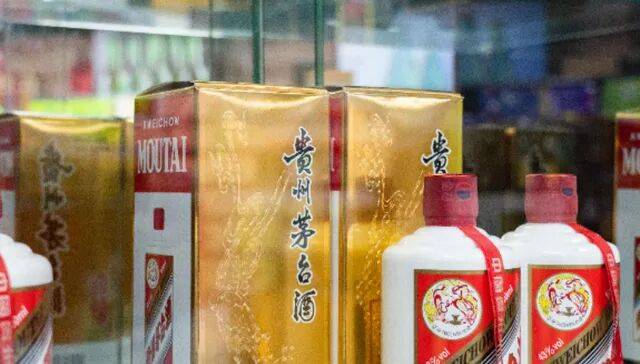
Group 1 - On February 5, Kweichow Moutai's stock price rose over 2%, with a market capitalization exceeding 2 trillion yuan for the first time in over eight months, closing at 1555 yuan per share, an increase of 1.97% [2] - The stock price had previously reached 2.05 trillion yuan on March 14, 2025, but faced adjustments due to market conditions before recently returning to this key level [2] - As the Spring Festival approaches, Kweichow Moutai products are experiencing strong sales, with reports of difficulties in purchasing through the iMoutai App due to high demand [3] Group 2 - The wholesale price of Kweichow Moutai products saw a significant increase, with a rise of 100 yuan to 1710 yuan per bottle for original cases and an 80 yuan increase to 1650 yuan per bottle for individual bottles, indicating robust market demand [3] - Notable investor Duan Yongping disclosed multiple purchases of Kweichow Moutai shares, totaling 77,200 shares at a cost of approximately 103 million yuan, reflecting confidence in the company's long-term value [4] - Research from China International Capital Corporation indicates that the price of Moutai is stabilizing, with expectations that the company will maintain steady performance across cycles, supported by strong sales and price resilience [4] Group 3 - Zhongyin Securities suggests that the liquor industry is still in a deep adjustment phase, with increasing competition leading to a more pronounced Matthew effect [5]
【数据看盘】机构活跃度大幅降低,一线游资扎堆平潭发展
Xin Lang Cai Jing· 2026-02-05 09:45
Core Viewpoint - The article highlights the significant trading activity in the stock market, particularly focusing on the food and beverage sector, with notable performances from companies like Kweichow Moutai and Tianfu Communication, indicating strong investor interest and capital inflow in these areas [1][3]. Trading Activity - The total trading volume for the Shanghai and Shenzhen Stock Connect reached 288.94 billion, with Kweichow Moutai and Tianfu Communication leading in individual stock trading volumes [1]. - Kweichow Moutai topped the Shanghai Stock Connect with a trading amount of 4.403 billion, while Tianfu Communication led the Shenzhen Stock Connect with 2.986 billion [2][3]. Sector Performance - The food and beverage sector saw a net inflow of 1.579 billion, marking a 2.80% net inflow rate, making it the top sector for capital inflow [4]. - Other sectors with notable capital inflows included the film and television industry and banking, while sectors like new energy and non-ferrous metals experienced significant outflows [4]. Individual Stock Movements - Pingtan Development recorded a net inflow of 1.285 billion, representing a 47.22% net inflow rate, making it the top individual stock for capital inflow [5]. - Conversely, Zijin Mining faced a net outflow of 2.293 billion, indicating a 17.10% net outflow rate, leading the outflow list [6]. ETF Trading - The top ETF by trading volume was the Gold ETF (518880) with a trading amount of 20.0574 billion, while the A500 ETF Fund (512050) followed with 15.6820 billion [7]. - The Hong Kong Stock Connect Consumer ETF (513070) saw a remarkable 363% increase in trading volume compared to the previous trading day, indicating heightened investor interest [7]. Futures Market - In the futures market, all four major index futures contracts (IH, IF, IC, IM) saw both long and short positions increase, with the IM contract showing the largest increase in long positions [8]. Institutional Activity - Institutional trading activity showed a decrease in both the number of stocks bought and sold, with notable purchases in stocks like Jushi Technology and Haixia Innovation [9][11]. - The trading activity of quantitative funds was high, particularly in stocks like Zhejiang Wenlian, which saw significant buying and selling from various quantitative funds [12].
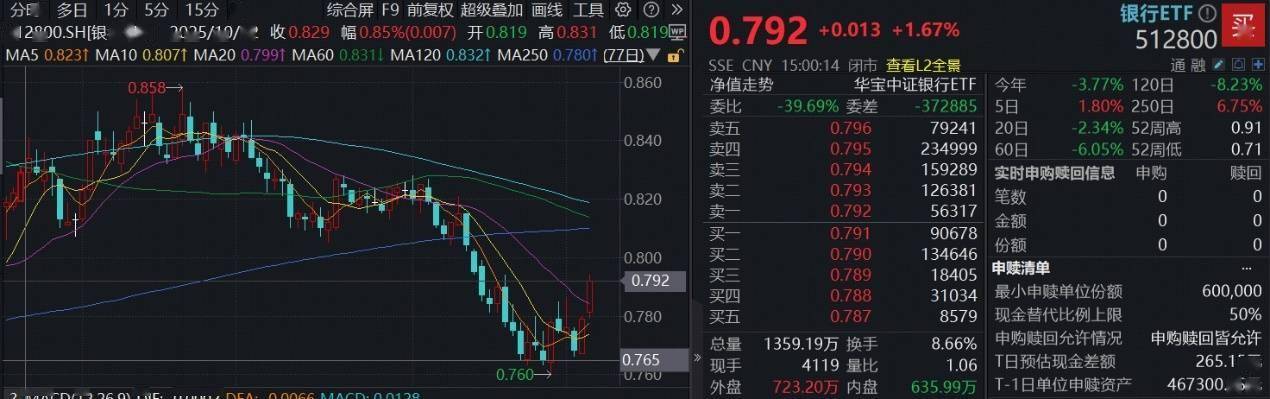
ETF盘后资讯|又变脸!有色突发重挫,资金火速抢筹!AMD风暴席卷科技股,银行、消费逆市抗旗,银行ETF(512800)放量大涨
Sou Hu Cai Jing· 2026-02-05 09:31
Market Overview - A-shares experienced increased volatility, with major indices collectively declining after two days of gains, particularly in the non-ferrous metals sector, while hard technology continued its downward trend [1] - The overall market turnover decreased to 2.19 trillion yuan, marking a continuous five-day decline in trading volume [1] Banking Sector - The banking sector showed resilience, with the largest bank ETF (512800) rising by 1.67%, indicating a historical trend of strong performance before the Spring Festival [1][5] - Notable individual bank stocks, such as Xiamen Bank, reached a rare limit-up, while several others saw significant gains, with Chongqing Bank up nearly 6% [2][5] - The bank ETF (512800) has a total scale exceeding 12.2 billion yuan, making it the largest and most liquid bank ETF in the A-share market [8][17] Consumer Sector - The consumer sector, particularly food and beverage, showed strong performance, with the food and beverage ETF (515710) rising by 1% and Kweichow Moutai reaching a six-month high [1][10] - The demand for Moutai remains robust, with its brand value ranked second in the 2025 Hurun China Brand List, indicating strong market positioning [10] Non-Ferrous Metals Sector - The non-ferrous metals sector faced a significant decline, with the non-ferrous ETF (159876) dropping by 4.8% amid falling gold prices and market volatility [1][13] - Despite the downturn, there was a net inflow of 21 million units into the non-ferrous ETF, suggesting investor confidence in the long-term prospects of the sector [1][13] Investment Outlook - Analysts from CITIC Securities suggest that the current market may face short-term correction pressure but expect stabilization before the Spring Festival, with a potential upward trend afterward [2] - The banking sector is highlighted as having the highest historical success rate before the Spring Festival, with an average return of 4.4% from 2017 to 2025 [5][8] - The food and beverage sector is viewed as undervalued, with the food index's price-to-earnings ratio at a low point, presenting a favorable long-term investment opportunity [10][11]