BYD(002594)

Search documents
首次!福特输给比亚迪
Guan Cha Zhe Wang· 2026-02-11 07:26
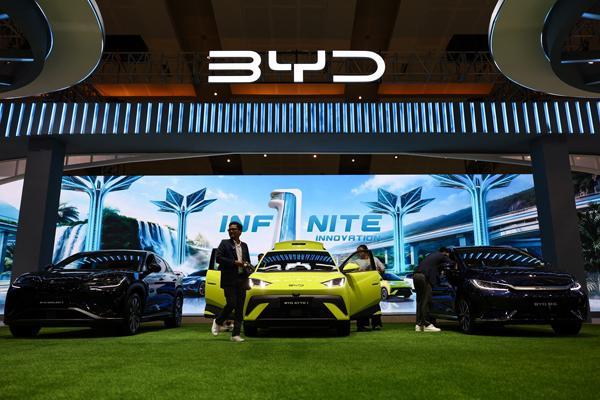
Group 1 - BYD's global sales are projected to surpass Ford's for the first time in 2025, with BYD's sales reaching 4.6 million units compared to Ford's approximately 4.4 million units [1] - Toyota continues to lead the global sales rankings for the sixth consecutive year, with a 4.6% increase in sales to 11.3 million units [1] - Ford's wholesale sales declined by nearly 2% last year, and its market share is decreasing in Europe and China due to competition from local manufacturers like BYD, Xiaomi, and Geely [1] Group 2 - Ford has announced a $19.5 billion investment for strategic adjustments, including a partnership with Renault to enhance its electric vehicle offerings in Europe [2] - BYD is expanding aggressively into international markets, with overseas sales expected to exceed 1.05 million units in 2025 and plans to sell 1.3 million vehicles outside China by 2026 [4] - BYD has initiated a lawsuit against the U.S. government regarding tariff policies, marking it as the first Chinese automaker to challenge these tariffs, which could open up significant opportunities for its passenger vehicle business in the U.S. if successful [5]



承泰科技完成港股上市备案,冲击“毫米波雷达第一股”,比亚迪撑起九成收入
Sou Hu Cai Jing· 2026-02-11 07:11
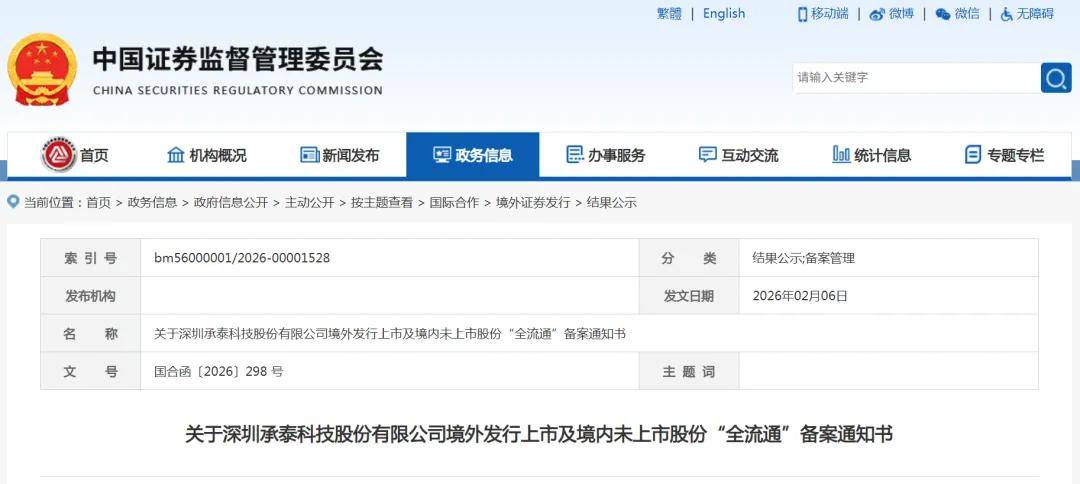
Group 1: Company Overview - Chengtai Technology is a leading supplier of millimeter-wave radar, which is a core component in the rapidly evolving intelligent driving sector of the Chinese automotive industry [2][6] - The company plans to issue up to 38,333,200 overseas listed ordinary shares and list on the Hong Kong Stock Exchange [1] - Chengtai Technology's two co-founders have backgrounds from Huawei, with the chairman and general manager having served as a technical supervisor [2][3] Group 2: Market Position and Performance - By 2024, Chengtai Technology is projected to be the largest domestic supplier in China's front millimeter-wave radar market by shipment volume, holding a market share of 9.3% [2] - The company ranks second in revenue among all suppliers of front millimeter-wave radar in China, with a market share of 4.8% [2] - The global market for automotive millimeter-wave radar is expected to grow from RMB 156 billion in 2020 to RMB 248 billion by 2024, with a compound annual growth rate (CAGR) of 12.3% [9] Group 3: Financial Performance - Chengtai Technology's revenue has shown rapid growth, with figures of RMB 57.7 million, RMB 157 million, and RMB 348 million for the years 2022, 2023, and 2024 respectively, reflecting a CAGR of 145.7% from 2022 to 2024 [10] - The company recorded net losses of RMB 79.2 million, RMB 96.6 million, and RMB 21.8 million for the same years [10] Group 4: Future Plans and Use of Proceeds - The net proceeds from the Hong Kong IPO will be used for new technology research and product development to maintain the company's leading position in the millimeter-wave radar industry [11] - Funds will also be allocated for testing equipment upgrades, marketing, strategic acquisitions, and to repay bank loans to improve financial flexibility [11]
3月19-20日 常州!2026锂电关键材料及应用市场高峰论坛
鑫椤锂电· 2026-02-11 06:41
Core Viewpoint - The lithium battery industry is poised for a significant growth cycle starting in 2026, characterized by strong demand recovery, accelerated global expansion, and disruptive technological advancements, leading to a "spiral rise" in both volume and price [3]. Group 1: Market Predictions - By 2025, global lithium battery production is expected to reach 2297 GWh, with a growth rate of 34.6% in 2026. The shipment growth rate for energy storage cells is projected to be as high as 70%, driven by both domestic and international demand [5]. - There is a notable supply gap in the production capacity of battery cells and various materials, which poses a challenge for ensuring a stable and efficient supply chain [5]. Group 2: Conference Overview - The 2026 Lithium Key Materials and Application Market Summit will be held on March 19-20, 2026, in Changzhou, Jiangsu, organized by Xinluo Information [4]. - The summit will focus on two main topics: in-depth discussions on cutting-edge technologies and market supply-demand dynamics, and B2B procurement matchmaking to connect top battery manufacturers and material suppliers [6]. Group 3: Key Topics and Participants - The conference will feature specialized sessions on lithium carbonate futures, market volatility responses from lithium battery companies, and the potential of global lithium resources [7][8]. - Notable participants include leading battery companies like CATL and BYD, as well as material suppliers covering the entire supply chain, including cathode materials, anode materials, electrolytes, and separators [6]. Group 4: Strategic Importance - The lithium battery industry is expected to play a crucial role in energy transition and carbon neutrality goals as it enters a new planning phase with the end of the 14th Five-Year Plan and the beginning of the 15th [6]. - The summit aims to provide authoritative data releases, benchmark company rankings, and deep industry connections to help businesses seize growth opportunities and achieve high-quality development [6].



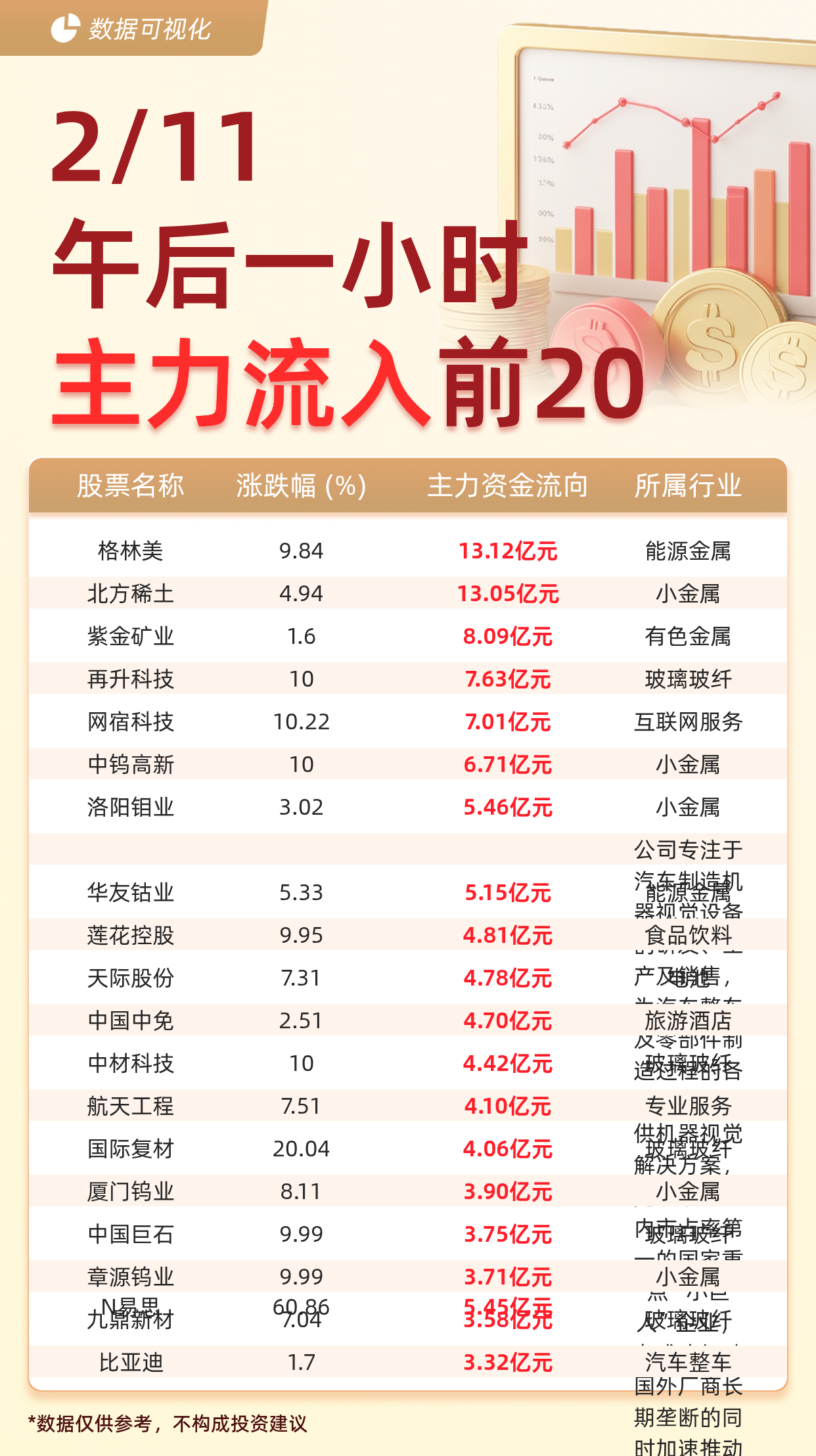
主力资金流入前20:格林美流入13.12亿元、北方稀土流入13.05亿元
Jin Rong Jie· 2026-02-11 06:20
Core Viewpoint - The data indicates significant capital inflows into various stocks, highlighting potential investment opportunities in specific sectors such as energy metals, rare metals, and technology [1][2][3] Group 1: Stock Performance and Capital Inflows - The top stock with capital inflow is Greeenmei, attracting 1.312 billion yuan with a price increase of 9.84% [2] - Northern Rare Earth follows closely with 1.305 billion yuan inflow and a 4.94% rise [2] - Zijin Mining received 0.809 billion yuan with a 1.6% increase [2] - Zaiseng Technology saw a capital inflow of 0.763 billion yuan, marking a 10% rise [2] - Wangsu Technology attracted 0.701 billion yuan with a notable increase of 10.22% [2] Group 2: Sector Analysis - The energy metals sector is represented by Greeenmei and Huayou Cobalt, both showing strong capital inflows and positive price movements [2] - The rare metals sector includes Northern Rare Earth and Zhongtung High-tech, both experiencing significant inflows and price increases [2] - The technology sector is highlighted by Wangsu Technology and Zaiseng Technology, both of which have seen substantial capital inflows and notable price gains [2][3]





固态电池-全面看好无负极路线
2026-02-11 05:58
Summary of Conference Call on Solid-State Battery Technology Industry Overview - The focus is on the solid-state battery industry, particularly the development of anode-free battery technology which offers higher energy density and lower costs compared to traditional lithium-ion batteries [1][2]. Key Points and Arguments - **Energy Density and Cost Advantages**: Anode-free batteries can achieve energy densities of 650 Wh/kg and 1,300 Wh/L, significantly outperforming traditional lithium-ion batteries [1][6]. - **Technological Advancements**: - CATL (宁德时代) is advancing self-generating anode technology, enhancing battery performance. - BYD is integrating a porous sponge-like structure to improve current collector performance in solid-state batteries [1][2][3]. - **Challenges**: The technology faces issues such as lithium dendrite formation and dead lithium, which are being addressed through current collector improvements, electrolyte optimization, and artificial SEI (Solid Electrolyte Interphase) membrane construction [1][4][8]. - **Market Position**: - CATL and BYD are leading the charge in the application of anode-free technology, with CATL's technology already in use in their products. - BYD has made progress in reducing kinetic barriers for lithium ions, ensuring preferential deposition at the bottom [2][7]. Additional Important Content - **Current Collector Improvements**: The most challenging aspect of anode-free technology is the enhancement of current collectors, with Zhongyi Technology (中一科技) leading in this area by producing ultra-thin copper foils that suppress lithium dendrite growth [9]. - **Market Potential**: If the modified current collector price is 8 RMB/m² and the national 100GWh capacity penetration rate reaches 10%, Zhongyi Technology could contribute over 500 million RMB in performance, corresponding to a market value of approximately 15 to 20 billion RMB [10]. - **Investment Opportunities**: The lithium battery industry is currently focused on battery and separator sectors, with recommendations for CATL and Xinwangda. The separator industry is expected to see price increases in the second half of 2026 due to high capacity utilization [12]. Companies to Watch - **Top Picks**: Zhongyi Technology is highlighted as a key player, along with companies related to calcium-based acid production and electrolyte manufacturers like Xiapu New Energy and Guoci Boyue [11].
智能化持续成为汽车产业核心增量方向,江淮汽车35亿元定增落地!港股汽车ETF(520600)盘中最高涨超2%,汽车ETF(159512)冲击3连涨
Xin Lang Cai Jing· 2026-02-11 05:55
Group 1 - Anhui Jianghuai Automobile Group Co., Ltd. announced the completion of a private placement, raising a total of 3.5 billion yuan by issuing 70.1684 million shares at a price of 49.88 yuan per share, which is approximately 8.7% lower than the market price of 54.61 yuan per share on February 10, 2026 [1] - In January 2026, Jianghuai Automobile produced 3,403 new energy passenger vehicles, representing a year-on-year increase of 96.25%, and sold 3,151 units, marking a year-on-year increase of 183.11% [1] - The Chinese automotive industry is undergoing a profound transformation led by electrification and intelligence, with market growth dynamics and competitive logic being systematically restructured [1] Group 2 - The Shanghai Intelligent Connected Vehicle Testing and Demonstration Promotion Working Group released the "Shanghai Intelligent Connected Vehicle Development Report (2025)", indicating that by the end of last year, 3,173 automated driving test roads covering 5,238.82 kilometers had been opened [2] - The report highlights that during the "14th Five-Year Plan" period, Shanghai will enter a new stage of "city-wide integration" with large-scale, multi-level real scene openings to expand the scope of automated driving [2] - Major automotive companies such as Li Auto, Xpeng, BYD, and Great Wall are expected to benefit from the anticipated resurgence of Full Self-Driving (FSD) technology in China, driven by new technology and product enhancements [2] Group 3 - As of February 11, 2026, the CSI Hong Kong Stock Connect Automotive Industry Theme Index rose by 2.00%, with the largest Hong Kong automotive ETF increasing by 1.70%, marking a four-day consecutive rise [3] - Key component stocks such as BYD and Jianghuai Automobile saw significant increases, with Jianghuai Automobile rising by 3.15% [3] - The automotive ETF tracking the CSI All-Share Automotive Index also experienced a rise, with major stocks like Wanfeng Aowei and Weifu High-Technology contributing to the upward trend [3]

国内乘用车市场分析:区域篇
3 6 Ke· 2026-02-11 05:09
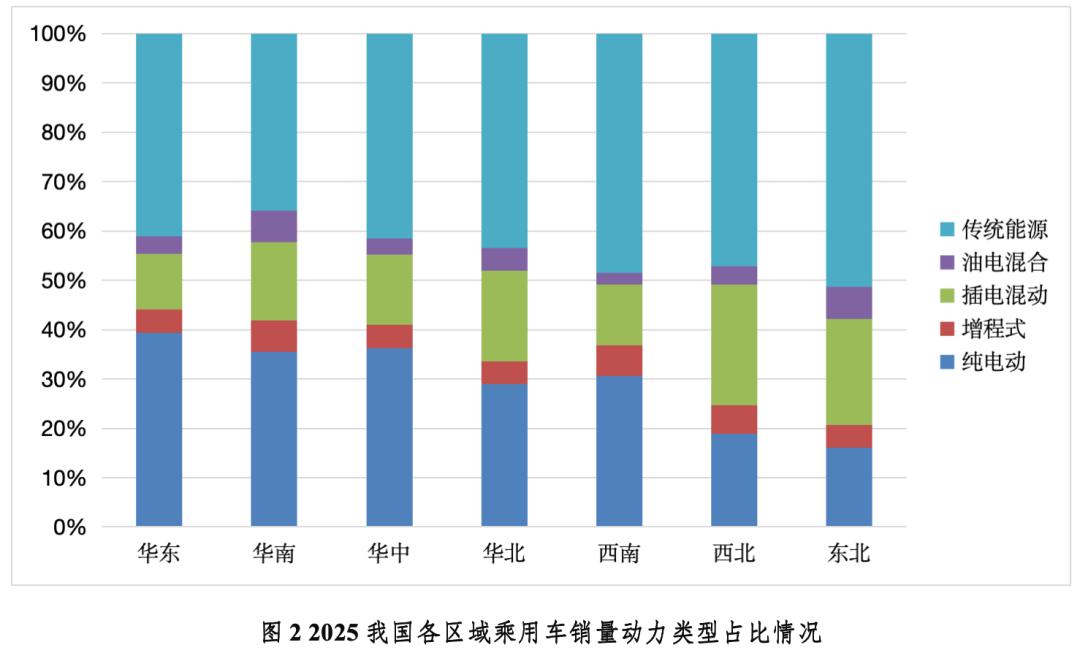
Core Insights - The article analyzes the regional development paths of new energy passenger vehicle sales in China, focusing on market potential in lower-tier cities and development models in typical cities [1] Regional Development Characteristics - China's new energy vehicle (NEV) industry shows a clear regional development pattern, starting from the southeastern coastal areas and expanding to core economic regions like the Pearl River Delta, Yangtze River Delta, Beijing-Tianjin-Hebei, and Sichuan-Chongqing [2] - The penetration rate of NEVs is highest in East and South China, accounting for approximately 54%, while North and Southwest China follow in the second tier. The Northwest and Northeast regions have lower penetration rates due to cold winter climates [2] Market Potential in Western and Northeast Regions - The western and northeastern regions still hold significant growth potential for NEVs, requiring differentiated promotion strategies based on regional resources and climate characteristics [5] - In high-altitude areas, range-extended electric vehicles are more suitable due to their ability to avoid power performance issues caused by thin air [5] - The Northeast faces challenges in NEV promotion due to harsh climates and insufficient charging infrastructure, suggesting the need for regional tax incentives and infrastructure improvements [5] Downstream Market Development Potential - Lower-tier markets are becoming the main driver of growth in China's NEV market, with first and second-tier cities reaching saturation [7] - The penetration rate of NEVs in first and second-tier cities has surpassed 55%, while it remains below 40% in third-tier and below cities, indicating strong growth potential [7] Company Strategies in Lower-tier Markets - Companies are accelerating their focus on lower-tier markets, with brands like Wuling deriving nearly 70% of their sales from these areas [11] - BYD, Geely, and Changan are launching models tailored to the needs of lower-tier markets, achieving rapid sales growth [11] Development Models in Typical Cities - Cities like Guangzhou, Beijing, Chengdu, Shanghai, and Shenzhen are projected to lead NEV sales from 2024 to 2025, each following distinct growth models [14] - The industrial-driven model, represented by Guangzhou, relies on local automakers to create market advantages [17] - The environment-driven model, exemplified by Shenzhen, focuses on building supportive infrastructure for NEVs [20] - The consumption-driven model, as seen in Chengdu, benefits from strong consumer policies and demographic advantages [21] - The policy-driven model in cities like Beijing and Shanghai is closely tied to regulations affecting fuel vehicles and incentives for NEVs [22] Recommendations for Expanding Automotive Consumption - To enhance automotive consumption, it is essential to eliminate unreasonable local restrictions and promote a unified national market [25] - Accelerating the construction of charging infrastructure and upgrading existing facilities is crucial for improving the automotive ecosystem [25] - Engaging in automotive cultural activities can stimulate market vitality and drive consumer demand [25] - Companies should leverage local market advantages to build brand recognition and trust among consumers [25]


比亚迪股份盘中上涨,录得5连升,花旗予其“买入”评级看高至174港元
Ge Long Hui· 2026-02-11 04:55
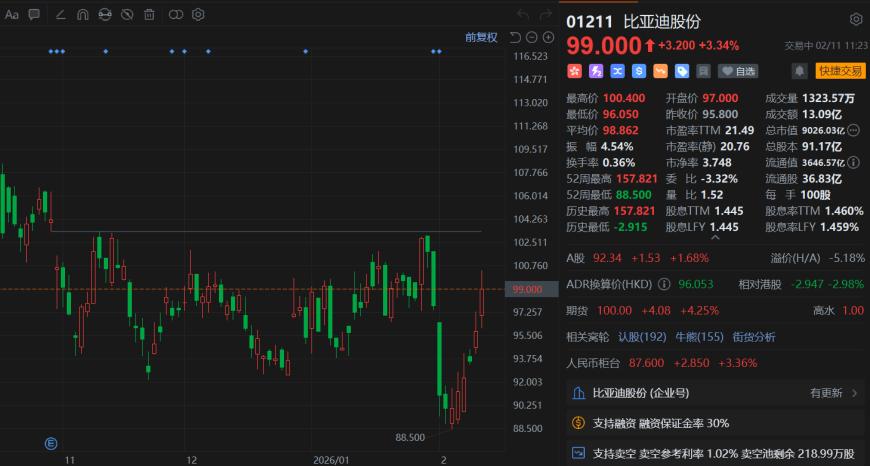
格隆汇2月11日|比亚迪股份(1211.HK)盘中再度涨超4%,并且录得5连升近乎抹平此前跌幅,股价重回 百港元大关,总市值9035亿港元。消息上,花旗发表研究报告指出,估算比亚迪在中国国内市场的2026 年1月底绝对库存量按月下降1.2%,至38.7万辆;然而,由于当月零售销量可能未达预期(估算1月按月 下降65%),按当月零售销量计算的相对库存天数,据该行估算,应从2025年12月底的1.2个月飙升至3.4 个月。该行表示注意到,未来的关键变量将是比亚迪在2月底及3月初推出的新产品及其定价点。该行予 以"买入"评级,目标价为174港元。值得一提的是,当地时间2月4日,根据德国联邦汽车运输管理局发 布的数据,比亚迪1月份在德国售出2,629辆新车,远高于去年同期的235辆,同比增长1018.7%,是特斯 拉1,301辆注册量的两倍多。 ...
盈利大幅不及预期,福特仍高喊反弹,比亚迪已在身后超车
Jin Shi Shu Ju· 2026-02-11 03:58
Core Insights - Ford Motor Company reported its largest quarterly earnings miss in four years for Q4, with guidance indicating 2026 will be a year of performance rebound [1] - Ford's global vehicle sales have fallen behind BYD for the first time [1] Financial Performance - Adjusted EBIT for 2026 is projected to be between $8 billion and $10 billion, up from $6.8 billion last year [1] - Adjusted free cash flow is expected to be between $5 billion and $6 billion, an increase from $3.5 billion in 2025 [1] - Capital expenditures are forecasted to be between $9.5 billion and $10.5 billion, higher than the previous estimate of $8.8 billion [1] - The latest earnings per share (EPS) fell 32% below consensus expectations, marking the first quarterly miss since 2024 and the worst performance since Q4 2021 [1] Cost Factors - The earnings miss was primarily due to unexpected tariff costs of approximately $900 million, linked to delays in the automotive parts credit policy [1] - Additional impacts on earnings were attributed to a fire at Novelis' aluminum supply plant, which is expected to fully resume operations by mid-year [2] - The fire incident is estimated to have caused about $2 billion in impact on Ford [2] Business Segments - Ford's traditional and fleet businesses are expected to offset losses of $4 billion to $4.5 billion from the "Model e" electric vehicle segment [3] - The "Ford Pro" fleet business is projected to generate pre-tax profits of $6.5 billion to $7.5 billion, followed by the traditional "Blue" business with expected profits of $4 billion to $4.5 billion [3] - Ford recorded a net loss of $8.2 billion last year, the largest annual loss since the 2008 financial crisis, with Q4 reflecting a net loss of $11.1 billion [3] Market Position - Ford's global wholesale vehicle sales declined nearly 2% in 2025, totaling just under 4.4 million units [3] - BYD's global sales reached 4.6 million units, surpassing Ford for the first time and elevating BYD to the sixth position in global automotive sales [3]
比亚迪股份盘中涨超4% 录得5连升 花旗予其“买入”评级看高至174港元
Ge Long Hui· 2026-02-11 03:45
Core Viewpoint - BYD's stock price has rebounded, surpassing HKD 100, with a market capitalization of HKD 903.5 billion, following a report from Citigroup that highlights inventory and sales trends in the Chinese market [1]. Group 1: Stock Performance - On February 11, BYD's shares rose over 4% during trading, marking a five-day consecutive increase [1]. - The stock price recovery has nearly offset previous declines, bringing it back to the HKD 100 level [1]. Group 2: Inventory and Sales Analysis - Citigroup estimates that BYD's absolute inventory in the domestic market will decrease by 1.2% month-on-month to 387,000 units by the end of January 2026 [1]. - However, retail sales for January are expected to fall short of expectations, with a projected month-on-month decline of 65% [1]. - The relative inventory days, based on January's retail sales, are estimated to rise from 1.2 months at the end of December 2025 to 3.4 months [1]. Group 3: Future Outlook - The key variables for BYD's future performance will be the new products and pricing strategies set to launch in late February and early March [1]. - Citigroup has assigned a "Buy" rating for BYD, with a target price of HKD 174 [1]. Group 4: International Sales Performance - In January, BYD sold 2,629 new vehicles in Germany, a significant increase of 1,018.7% compared to 235 units sold in the same month last year [1]. - This sales figure is more than double the 1,301 vehicles registered by Tesla in Germany during the same period [1].