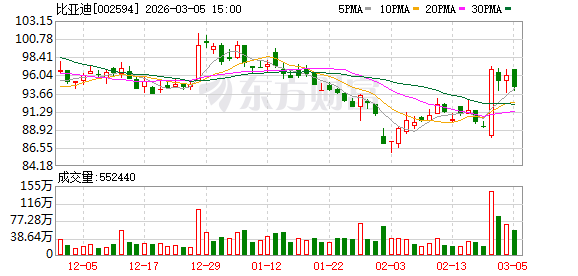
BYD(002594)
Search documents
Rising Global EV Sales Support the Investment Case for This ETF
Etftrends· 2025-12-01 20:09
Group 1: Electric Vehicle Market Growth - Global electric vehicle (EV) sales are on the rise, particularly in regions like Asia (excluding China), which supports the investment case for the Fidelity Electric Vehicles and Future Transportation ETF (FDRV) [1][3] - Developing countries in Asia are projected to reach close to 400,000 EV sales in 2024, marking a 40% increase from 2023 [3] - Policy incentives and the availability of affordable electric cars from Chinese OEMs are driving this rapid growth [5] Group 2: FDRV ETF Overview - FDRV tracks the Fidelity Electric Vehicles and Future Transportation Index, which includes global companies involved in the production of electric and/or autonomous vehicles, as well as EV components and technology [2] - As of September 30, FDRV has approximately 38% exposure to Asia, with significant holdings in companies like BYD, the largest EV manufacturer in China [5] Group 3: U.S. EV Market Dynamics - In the U.S., Tesla maintains a dominant position in the EV market, holding over 40% market share as of September [6][7] - U.S. EV sales reached 1 million units in the first nine months of 2025, with 438,000 units sold in Q3 alone [6] - Tesla's automotive revenue increased by 6% to $21.2 billion compared to the same period last year [7]
深圳比亚迪财产保险有限公司 北京营业部撤销公告
Zheng Quan Shi Bao· 2025-12-01 18:32
Group 1 - Shenzhen BYD Property Insurance Co., Ltd. Beijing Branch has been officially revoked as of November 20, 2025, as per the approval from the Beijing Regulatory Bureau of the National Financial Supervision and Administration [1] - The Beijing Branch was authorized to operate under the business scope determined by the head office [2] - The branch was established on December 22, 2016, and was located at Wangfujing Street, Dongcheng District, Beijing [2]
比亚迪破48万、鸿蒙智行破8万、零跑再破7万、小米持续破4万!11月新能源销量公布,多家车企再创新高!
电动车公社· 2025-12-01 16:04
关注 「电动车公社」 和我们一起重新思考汽车 临近年末,新能源汽车市场也在努力激情收官。最近几个月以来,不少车企都在蒸蒸日上,一次又一次地刷新销量成绩单。 话不多说,让我们一起来看看11月份各家的表现吧~ 比亚迪11月乘用车销量474921台 11月,比亚迪乘用车销量474921台。其中王朝丨海洋423558台,方程豹37405台,腾势13255台,仰望703台。 1、 今年前11个月,比亚迪累计销量已经超过418万辆,平均单月销量接近40万辆,依然保持着新能源领域的断崖式领先。最近一段时间比亚迪各个子品牌销量全 线上升,腾势N8L上市、钛7月销量破2.4万、仰望U9X打破极速纪录……销量名誉双丰收。接下来,就看比亚迪能在年底冲量的时间节点,带来怎样的全年业 绩表现了。 2、 吉利汽车11月新能源销量187798台 吉利汽车11月总销量310428台,其中新能源销量187798台。细分品牌方面,银河品牌132652台,领克品牌35059台, 极氪品牌28843台。 "持续向前"是吉利汽车最近几年的最大特点。今年前11个月,吉利汽车累计销量已经超过2787750辆,连续9个月保持着同比、环比双增长。具体产品上, ...
乘用车终端需求跟踪及展望
2025-12-01 16:03
Summary of Conference Call Records Industry Overview: Automotive Market Key Insights and Arguments - The automotive market in 2025 is significantly influenced by policy changes, with subsidy reductions and stricter measures expected to suppress consumption, particularly affecting the economy car segment [1][4] - In October, discounts on vehicles increased but did not lead to a price war; brands like BYD and Geely launched new models while older models saw moderate price reductions [1][6] - The penetration rate of new energy vehicles (NEVs) in 2026 will depend on the continuation of policies and technological upgrades, with trends towards larger batteries, longer ranges, and fast-charging technologies [1][8] - High-end joint venture brands are expected to continue losing market share, especially in the price range above 250,000 yuan, due to competition from domestic NEVs [1][9] Market Demand and Trends - Overall demand and foot traffic in November decreased compared to October, primarily due to a pause in subsidy policies leading to consumer hesitation [2] - December is expected to see a rebound in demand, but year-on-year comparisons will still show a decline due to inventory clearance needs and potential tax increases from new technology [2][5] - The first quarter of 2026 is anticipated to be optimistic due to seasonal sales and government subsidies, although challenges are expected in March and April, particularly for economy cars [5][16] Discount and Pricing Strategies - Discounts in October and November were deeper than in September, particularly during the National Day holiday, but did not violate regulatory policies [6] - Discounts for brands like BYD and Xpeng decreased by approximately 10% in November compared to October, indicating a shift in pricing strategies [6] Company-Specific Insights BYD - BYD plans to launch the M6 and a new generation of plug-in hybrid technology in 2026, aiming to enhance electric range and low-temperature fast-charging capabilities [3][12] - Domestic retail sales for BYD in 2025 are projected to be between 3.2 to 3.3 million units, a decline from 3.5 million units in 2024, but a recovery is expected in 2026 with about 10% growth [13] Tesla - Tesla's market outlook for the next two years is cautious, with expectations of stagnation or potential decline unless improvements in their Full Self-Driving (FSD) technology are made [11] - The introduction of lower-priced Model 3 and Model Y variants is anticipated to expand market share in the first quarter of 2026 [11] Xiaomi - Xiaomi's current monthly delivery volume is around 50,000 units, with a significant portion of orders being speculative due to the second-hand market collapse [17] - The delivery cycle is currently projected at 20 to 25 weeks, but actual delivery may take longer, leading to an order backlog [17] Joint Venture Brands - High-end joint venture brands like BMW and Mercedes are expected to face significant pressure, particularly in the mid-range segment, while lower-priced joint venture brands remain competitive due to a lack of strong rivals [10] Future Challenges - The implementation of the trade-in policy has been smooth initially, but challenges are expected in March and April 2026 due to diminishing subsidy levels and potential inventory issues [16] Additional Important Insights - The competition between BYD and Geely in technology upgrades is likely to intensify, with both companies aiming to push the NEV penetration rate above 60% by March 2026 [1][8] - The market for traditional fuel vehicles is expected to face challenges from the increasing presence of electric models, particularly in the under 100,000 yuan segment [10]
破局与新生,全球汽车产业去产能经验复盘与未来路径探索
2025-12-01 16:03
Summary of Key Points from Conference Call Records Industry Overview - The global automotive industry is undergoing a significant transformation towards low-emission and new energy vehicles, driven by regulations in Europe and the U.S. that penalize non-compliant companies, accelerating the phase-out of traditional fuel vehicles [1][3][4] - In China, policies such as restrictions on new fuel vehicle capacity, upgraded emission standards (National VI/VII), and incentives for new energy vehicles have significantly increased the penetration rate of new energy vehicles from 15% to nearly 50% [1][10] Core Insights and Arguments - **Regulatory Impact**: The implementation of stringent emission regulations, such as the EU's Euro 6d and the upcoming coffee regulations, is forcing automakers to phase out outdated models [3] - **Capacity Adjustment**: Companies like Beijing Hyundai are selling and shutting down factories due to declining sales, reflecting the need for capacity adjustments amid intensified market competition and geopolitical factors [1][8] - **Resource Optimization**: GAC Group's restructuring of GAC Mitsubishi to utilize idle capacity for GAC Aion's expansion demonstrates effective resource allocation and cost savings in new energy transitions [1][7] - **Export Growth**: Great Wall Motors and Chery have significantly increased their export volumes, reaching 334,000 and 936,000 units respectively, improving their overall export structure despite domestic market challenges [1][12][14] Important but Overlooked Content - **Historical Lessons**: The domestic automotive industry has learned from past experiences, such as limiting new fuel vehicle capacity and promoting mergers to optimize resource allocation, which has led to a more concentrated market [4] - **Future Challenges**: The introduction of the National VII emission standards will impose stricter testing requirements, likely leading to further elimination of outdated production capacities [13][15] - **Market Potential**: As of 2025, China's new energy vehicle penetration in overseas markets is 11%, with Western Europe being the most promising market at approximately 25% penetration [2][17][18] Notable Companies to Watch - **BYD**: Leading in the domestic new energy vehicle market, expanding into Europe, South America, and Southeast Asia, with overseas sales reaching 781,000 units, a 137% increase [19] - **Great Wall Motors**: Despite short-term challenges, the company is enhancing domestic channels and expanding into overseas markets, with future performance expected to improve [19] - **SAIC Motor**: Facing a decline in performance, but focusing on upward development of its own brands and stabilizing joint ventures, while collaborating with Huawei on new energy and smart technology [19] - **Yinlun**: Benefiting from stricter emission standards, focusing on automotive thermal management and exhaust after-treatment systems [19][21] - **China Automotive Research**: Stable revenue growth with new international standards incorporating new energy testing, likely to benefit from increased testing demand [19][21]
“比较冷”!比亚迪,跌了
中国基金报· 2025-12-01 15:39
Core Insights - The automotive industry in China is experiencing a mixed performance in November, with some leading companies showing a slowdown in sales growth or declines, while others achieve record sales [2][4][20] - BYD's November sales reached 480,186 units, a year-on-year decrease of 5.25%, and domestic sales fell by 26.81% [5][8] - New energy vehicle companies like Leap Motor and others have successfully met their annual delivery targets ahead of schedule [14][15] Sales Performance - BYD's November sales were 480,186 units, failing to surpass the 500,000 mark [5][6] - In contrast, SAIC and Geely saw significant year-on-year growth in their new energy vehicle sales, with increases of 19.75% and 53.36%, respectively [8][9] - Leap Motor's November deliveries reached 70,327 units, contributing to a total of 536,100 units delivered in the first eleven months of 2025, exceeding their annual target [14][15] Market Trends - The anticipated year-end sales surge, known as the "tailwind" effect, appears to be cooling off, with many companies reporting lower growth rates compared to the previous year [20] - The suspension of vehicle trade-in subsidies in several regions has impacted the market, leading to a decline in new orders [20][21] - NIO maintains its fourth-quarter delivery guidance, expecting to deliver between 120,000 and 125,000 units, despite market challenges [21] Competitive Landscape - Geely's new energy vehicle penetration rate reached a record high of 60.50% in November, driven by strong sales from its Galaxy brand [9][11] - Leap Motor and Xiaomi are also on track to exceed their revised annual delivery targets, indicating a competitive shift in the market [14][16] - The performance of state-owned enterprises like Lantu and Avita has also improved, with significant year-on-year sales growth [17][18]
港股公告掘金 | 比亚迪股份前11个月新能源汽车销量约418.2万辆 同比增长11.3%
Zhi Tong Cai Jing· 2025-12-01 15:38
Major Events - 加科思-B (01167) published data on KRAS G12C and SHP2 combination therapy in The Lancet Respiratory Medicine [1] - 励晶太平洋 (00575) announced strategic entry into the US market by Deep Longevity in Q1 2026 [1] - 和誉-B (02256) received FDA approval for IND application of oral small molecule KRAS G12D inhibitor ABSK141 [1] - 中国生物制药 (01177) completed the first patient enrollment in Phase I clinical trial for its self-developed innovative drug TRD208 in China [1] - 天图投资 (01973) plans to sell 45.22% stake in 优诺中国 for HKD 814 million [1] - 万国黄金集团 (03939) donated HKD 7 million to support victims of the Hong Kong fire [1] - 和谐汽车 (03836) donated HKD 5 million for fire rescue efforts in Hong Kong [1] - 博雅互动 (00434) donated HKD 1 million for post-disaster reconstruction in Hong Kong [1] - 粤港湾控股 (01396) launched a self-developed quantum computing cloud service scheduling platform [1] - 中基长寿科学 (00767) plans to acquire 25% stake in 综合细胞库有限公司 for HKD 300 million [1] - 众安集团 (00672) plans to place approximately 7.15% of its shares at a premium of about 1.96%, raising approximately HKD 74.96 million [1] - 江苏宏信 (02625) plans to increase investment in 海科宏信 by HKD 53.21 million [1] Share Buybacks/Reductions - 百融云-W (06608) plans to repurchase up to HKD 450 million of Class B shares [2] - 锦欣生殖 (01951) intends to repurchase shares for no less than HKD 100 million [2] - 小米集团-W (01810) repurchased 10 million shares for HKD 402 million on December 1 [2] - 腾讯控股 (00700) repurchased 102.9 million shares for HKD 636 million on December 1 [2] - 美的集团 (00300) repurchased 125.48 million A shares for HKD 9.9971 million on December 1 [2] - 中远海控 (01919) repurchased 94.5 million shares for HKD 12.76 million on December 1 [2] - 美丽田园医疗健康 (02373) saw non-executive director 李方雨 increase holdings by 41,500 shares [2] Operating Performance - 比亚迪股份 (01211) reported approximately 4.182 million electric vehicle sales in the first 11 months, a year-on-year increase of 11.3% [2] - 吉利汽车 (00175) achieved total vehicle sales of 2.78775 million units in the first 11 months, a year-on-year increase of 42% [2] - 长城汽车 (02333) reported approximately 1.19965 million vehicle sales in the first 11 months, a year-on-year increase of 9.26% [2] - 赛力斯 (09927) recorded total vehicle sales of 58,100 units in November, a year-on-year increase of 36.34% [2] - 蔚来-SW (09866) delivered approximately 36,300 vehicles in November, a year-on-year increase of 76.3% [2] - 小鹏汽车-W (09868) delivered 36,728 smart electric vehicles in November, a year-on-year increase of 19% [2] - 奇瑞汽车 (09973) reported total sales of 255,800 vehicles across five brands in November, a year-on-year decrease of approximately 2% [3] - 理想汽车-W (02015) delivered 33,181 new vehicles in November [3]
“比较冷”!比亚迪,跌了
Zhong Guo Ji Jin Bao· 2025-12-01 15:21
Core Viewpoint - The automotive industry in November shows a mixed performance, with some leading companies experiencing a slowdown in sales growth, while others achieve significant increases in sales [2][4]. Group 1: Sales Performance - BYD's November sales reached 480,186 units, a year-on-year decrease of 5.25%, with domestic sales dropping by 26.81% [3][9]. - Other companies like SAIC and Geely saw significant year-on-year growth in their electric vehicle sales, with SAIC's sales increasing by 19.75% and Geely's by 53.36% [10][12]. - New energy vehicle sales for November showed a total of 474,175 units produced, with a cumulative year-on-year increase of 7.29% [6]. Group 2: Emerging Players - New energy vehicle startups like Leap Motor and others have successfully met their annual delivery targets ahead of schedule, with Leap Motor delivering 70,327 units in November [14]. - Xiaomi and XPeng Motors are also on track to exceed their annual delivery goals, with XPeng's November deliveries reaching 36,728 units [14][15]. Group 3: Market Trends - The anticipated year-end sales surge, known as the "tailwind effect," appears to be cooling down, with many companies reporting lower growth rates compared to the previous year [16]. - NIO's CEO noted that recent policy changes, such as the suspension of vehicle trade-in subsidies in various regions, may impact the automotive market in the short term [17][18]. Group 4: Future Outlook - Despite the current challenges, industry leaders express optimism about long-term market recovery, suggesting that overall demand will stabilize over time [19].
车企11月“翘尾”行情降温,比亚迪月度销量仍未超50万辆
Zhong Guo Ji Jin Bao· 2025-12-01 15:20
Core Insights - The automotive industry in China is experiencing a mixed performance in November, with some leading companies showing a slowdown in sales growth or declines, while others achieve record sales [2][3][21] - BYD's November sales reached 480,186 units, a year-on-year decrease of 5.25%, with domestic sales down 26.81% [2][5][11] - New energy vehicle companies like Leap Motor and others have successfully met their annual delivery targets ahead of schedule [15][17] Group 1: Sales Performance - BYD's November sales were 480,186 units, failing to surpass the 500,000 mark [5][11] - SAIC and Geely saw significant year-on-year growth in November, with sales increasing by 19.75% and 53.36%, respectively [11][12] - Leap Motor's sales reached 70,327 units, marking a 75.08% increase year-on-year [4][15] Group 2: Market Trends - The expected year-end sales surge, known as the "tailwind effect," is cooling down, with many companies reporting lower growth rates compared to the previous year [21][22] - NIO's delivery guidance for Q4 remains unchanged, expecting deliveries between 120,000 and 125,000 units [21][22] - The suspension of vehicle trade-in subsidies in several regions is impacting short-term sales expectations [21][22] Group 3: Competitive Landscape - Geely's new energy vehicle penetration rate reached a record high of 60.50% in November, driven by the success of its Galaxy brand [12][14] - New energy vehicle companies like Lantu and Avita are also seeing significant sales growth, with Lantu's sales up 84.28% year-on-year [19][20] - Xiaomi and Xpeng have also set ambitious new sales targets for 2025, reflecting confidence in their market positions [17][15]
“比较冷”!比亚迪 跌了
Zhong Guo Ji Jin Bao· 2025-12-01 15:20
Core Viewpoint - The automotive industry in November showed a mixed performance, with some leading companies experiencing a slowdown in sales growth or declines, while others achieved record sales figures [2][16]. Group 1: Sales Performance - BYD's November sales reached 480,186 units, a year-on-year decline of 5.25%, with domestic sales dropping by 26.81% [3][7]. - Other companies like SAIC New Energy and Geely New Energy reported significant growth, with sales increasing by 19.75% and 53.36% respectively [9][12]. - New energy vehicle sales for Geely's Galaxy brand surged by 76% in November, contributing to its overall growth [9][12]. Group 2: New Energy Vehicle Trends - The overall new energy vehicle market is seeing a shift towards higher-end models, with companies like Geely making significant strides in this area [12]. - New entrants like Leap Motor and Xpeng have exceeded their annual delivery targets ahead of schedule, indicating strong market performance [14][15]. Group 3: Market Challenges - The anticipated year-end sales surge, known as the "tailwind" effect, appears to be cooling off, with many companies reporting lower growth rates compared to the previous year [16][17]. - The suspension of vehicle trade-in subsidies in several regions has created uncertainty in the market, affecting new orders and sales expectations [17][18]. Group 4: Future Outlook - Despite current challenges, industry leaders express optimism about long-term market recovery, suggesting that overall demand will stabilize over time [20].