Muyuan Foods (002714)

Search documents
牧原股份拟赴港上市 H股预计2月6日在港交所挂牌交易
Zhong Zheng Wang· 2026-01-29 13:16
牧原股份相关工作人员表示:"公司已成功引入正大集团、丰益、中化香港、香港豫农国际、富达基 金、RBC、高毅、平安人寿保险、大家人寿、UBS AM等多家知名机构作为基石投资者,合计认购金额 约53.42亿港元。" 据了解,牧原股份已明确本次募资净额核心投向,围绕全球化战略推进与核心竞争力提升展开。60%募 集资金用于海外布局:约62.76亿港元将用于拓展海外商业版图,包括加强越南等东南亚国家在内的海 外市场开拓,完善全球供应链体系,推动海外收购、战略联盟等资本运作。这一布局与公司现有海外动 作形成呼应,此前牧原股份已在越南设立全资子公司,并与当地企业合作落地年出栏160万头的高科技 养殖项目,为海外市场拓展奠定基础。30%募集资金攻坚技术创新:约31.38亿港元将投入全产业链研 发创新工作,重点巩固公司在育种、智能养殖、营养管理及生物安全等核心领域的技术优势。10%募集 资金补充运营资金:约10.46亿港元将用作营运资金及一般企业用途,为日常经营运转、各项战略举措 落地提供充足的流动性支持。 早在2025年5月27日,牧原股份首次向香港联交所递交发行上市申请并刊发相关资料;同年11月27日, 公司收到中国证券监 ...

牧原股份启动H股全球发售,预计2月6日上市交易
Bei Jing Shang Bao· 2026-01-29 12:47
公告显示,牧原股份H股香港公开发售于1月29日开始,预计于2月3日结束,2月4日前(含当日)公布 发行价格;发行价格最高不超过每股39港元。本次全球发售由摩根士丹利、中信证券及高盛担任联席保 荐人,H股预计于2月6日在港交所挂牌并上市交易。 北京商报讯(记者 郭秀娟 王悦彤) 1月29日,牧原股份披露港股发行事宜。公司拟全球发售约2.74亿股 H股,其中,中国香港发售股份2739.52万股,国际发售股份约2.47亿股;在超额配售权悉数行使的情况 下,公司本次全球发售H股的最大发行股数为3.15亿股。 ...
太猛了!加快轮动了
Ge Long Hui· 2026-01-29 11:49
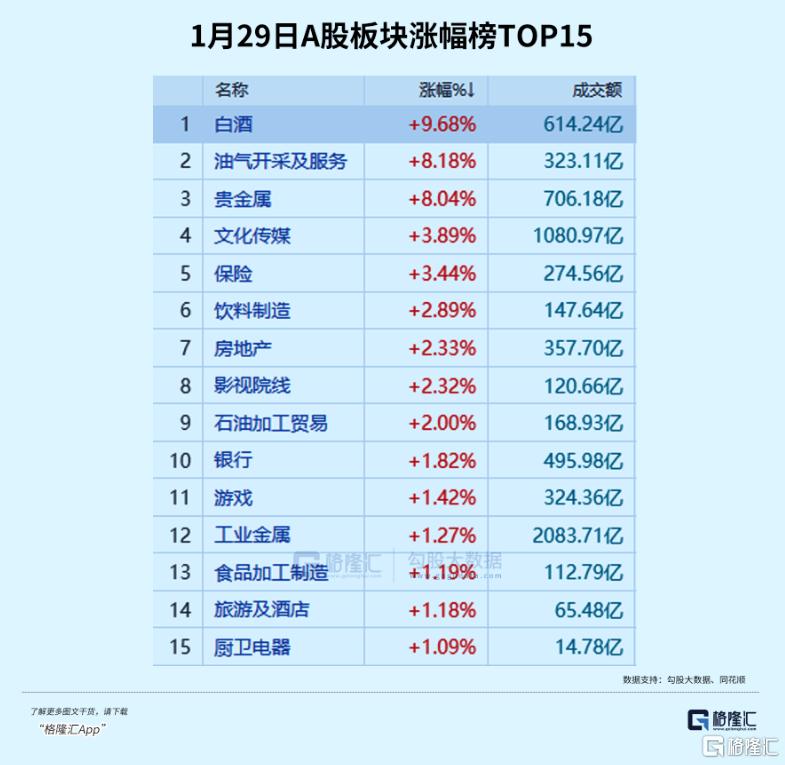
Group 1: Market Performance - The A-share liquor sector experienced a significant surge, with a rise of 9.68% on January 29, leading the market performance for the day [1][2] - The oil and gas extraction and service sector also saw a notable increase of 8.18%, with a total transaction volume of 32.31 billion [2] - The precious metals sector rose by 8.04%, with a transaction volume of 70.62 billion, indicating strong market interest [2] Group 2: Energy and Petrochemical Sector Dynamics - The energy and petrochemical sector's rise began in early January 2026, with domestic crude oil futures rebounding from 411 yuan/barrel to 475 yuan/barrel, a 15% increase [4] - The oil and gas extraction and service sector has accumulated a remarkable increase of 44.22% year-to-date, ranking second in market performance, only behind precious metals [7] - The petrochemical ETF (159731) has shown a cumulative increase of 14.71% since the beginning of the year, reflecting strong investor interest [9] Group 3: Geopolitical and Economic Influences - The recent surge in the petrochemical sector is driven by escalating geopolitical tensions, particularly between the U.S. and Iran, raising concerns over oil supply stability [11] - The market has priced in a risk premium of $3-8 per barrel due to fears of potential disruptions in oil supply from Iran, which produces approximately 3.3 million barrels per day [11] - The classic rotation pattern in commodity markets, where precious metals lead, followed by industrial metals and then energy, is being validated again [14][16] Group 4: Agricultural Sector Insights - The agricultural sector is expected to gain market attention as commodity prices rise, driven by increased costs in agricultural production due to higher energy prices [17][24] - The CPI and food prices have shown signs of recovery, with the CPI rising by 0.8% year-on-year, indicating a potential shift in consumer price dynamics [18] - The agricultural ETF (516810) tracks a comprehensive index covering the entire agricultural value chain, which may benefit from the rising commodity prices [26] Group 5: Industry Outlook - The petrochemical industry is at a turning point, with new policies aimed at preventing excessive competition and improving profitability [22] - The capital expenditure ratios in the refining and chemical sectors are showing a trend towards conservatism, indicating a strategic shift among companies [23] - The anticipated recovery in the petrochemical sector is supported by both geopolitical factors and the broader commodity market dynamics, suggesting a favorable outlook for industry leaders [24][25]





朝闻道 20260130:元月中阳收官在即,消费初显端倪
Orient Securities· 2026-01-29 09:33
Core Insights - The report indicates a cautious optimism for February, with expectations of a slow bull market continuing, despite a high-level narrow fluctuation in indices [6][3] - The mid-cap blue-chip stocks have shown strong performance in January, particularly in the gold and non-ferrous metals sectors, with signs of stabilization and rebound in the consumer sector, especially in food and beverage [6][3] - The report highlights a significant pessimism regarding pig prices for 2026, driven by underestimations of inventory and capacity reduction, suggesting a potential price recovery due to structural supply shortages [6][3] Market Strategy - The report emphasizes the importance of mid-cap blue-chip stocks, particularly in the food and beverage sector, which are expected to continue their rebound [6][3] - It suggests that the market's risk appetite and evaluation are shifting, with mid-cap blue-chip stocks valued between 10 billion to 50 billion being relatively favored [6][3] - The report recommends focusing on stocks with improvement logic or those in significant performance downgrading phases, particularly in the restaurant supply chain, dairy farming, regional liquor, and mid-to-high-end liquor [6][3] Industry Analysis - The report notes that the pig farming industry is experiencing a structural supply shortage, which is expected to limit the downward price potential for pigs, with a price turning point anticipated in Q2 2026 [6][3] - It highlights that the average weight of pigs post-slaughter is at a historical low, indicating a potential for price recovery as inventory levels are replenished [6][3] - The report identifies specific companies such as Muyuan Foods and Wens Foodstuffs as favorable investment targets within the pig farming sector [6][3]


养殖业板块1月29日涨1.85%,福成股份领涨,主力资金净流入2.53亿元
Zheng Xing Xing Ye Ri Bao· 2026-01-29 08:58
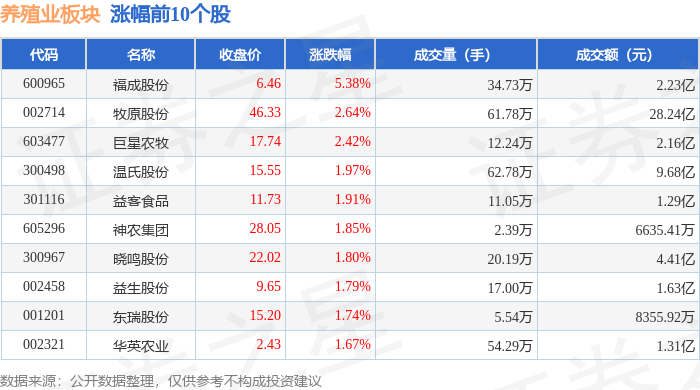
Core Viewpoint - The aquaculture sector experienced a rise of 1.85% on January 29, with Fu Cheng Co., Ltd. leading the gains, while the overall market showed mixed results with the Shanghai Composite Index up by 0.16% and the Shenzhen Component Index down by 0.3% [1] Group 1: Market Performance - The aquaculture sector's performance was highlighted by Fu Cheng Co., Ltd. closing at 6.46, up by 5.38% with a trading volume of 347,300 shares and a transaction value of 223 million yuan [1] - Other notable performers included Mu Yuan Co., Ltd. at 46.33, up by 2.64%, and Wen's Foodstuffs Group at 15.55, up by 1.97% [1] - The overall trading volume for the aquaculture sector was significant, with Mu Yuan Co., Ltd. alone accounting for a transaction value of 2.824 billion yuan [1] Group 2: Capital Flow - The aquaculture sector saw a net inflow of 253 million yuan from main funds, while retail investors experienced a net outflow of 82.155 million yuan [2] - Main funds showed a positive net inflow in companies like Mu Yuan Co., Ltd. with 24.6 million yuan and Wen's Foodstuffs Group with 95.752 million yuan [3] - Conversely, retail investors showed significant outflows in companies such as Mu Yuan Co., Ltd. with 132 million yuan and Fu Cheng Co., Ltd. with 6.78 million yuan [3]


牧原股份启动H股全球发售,冲刺港交所主板上市
Sou Hu Cai Jing· 2026-01-29 08:23
2026年1月29日,牧原股份在香港联合交易所网站刊登并派发H股招股说明书,正式启动H股全球发售,冲刺港交所主板上市。 本次H股基础发行股数为2.74亿股,发售结构兼顾本土与国际市场:香港公开发售占比10%,对应2739.52万股;国际发售占比90%,对应2.47亿股。同时, 牧原股份授予国际包销商15%的超额配股权,可额外配发最多4109.27万股H股,若超额配股权悉数行使,本次全球发售H股最大发行股数将达3.15亿股。 按照最高发售价测算,若超额配股权未获行使,牧原股份预计可募集资金净额约104.6亿港元;若超额配股权悉数行使,募资净额将增至约120.38亿港元。 市场有风险,投资需谨慎。本文为AI基于第三方数据生成,仅供参考,不构成个人投资建议。 来源:市场资讯 香港公开发售于1月29日上午9时开启,认购期至2月3日中午12时结束,预计不晚于2月4日公布发行价格,本次H股最高发售价设定为每股39港元。本次全球 发售由摩根士丹利亚洲、中信证券(香港)及高盛(亚洲)担任联席保荐人,H股预计于2月6日在港交所挂牌上市。 ...

牧原股份在港交所招股:募资金额约106.8亿港元,预计2月6日上市
Sou Hu Cai Jing· 2026-01-29 07:17
Core Viewpoint - Muyuan Foods Co., Ltd. is set to launch its H-share IPO on the Hong Kong Stock Exchange, aiming to raise approximately HKD 106.8 billion, with a share price not exceeding HKD 39.00 per share [3]. Group 1: IPO Details - The IPO will take place from January 29 to February 3, 2026, with shares expected to be listed on February 6, 2026 [1]. - Muyuan Foods plans to issue 274 million shares globally, with a net fundraising amount of approximately HKD 104.6 billion if the over-allotment option is not exercised [3]. - The company has secured 14 cornerstone investors who collectively subscribed for USD 685 million (approximately HKD 53.42 billion) in shares [3]. Group 2: Company Overview - Muyuan Foods is recognized as a technology-driven leader in the pork industry and has been the world's largest pig farming enterprise since 2021, based on production capacity and output [4]. - The company was established in July 2000 and is headquartered in Nanyang, Henan Province, with a registered capital of approximately CNY 5.46 billion [5]. - The major shareholders include Qin Yinglin and Muyuan Industrial, with the company having a market capitalization of around CNY 246.6 billion as of January 28, 2026 [1][5]. Group 3: Financial Performance - The revenue figures for Muyuan Foods over the past years are as follows: CNY 124.83 billion in 2022, CNY 110.86 billion in 2023, CNY 137.95 billion in 2024, and CNY 111.79 billion for the first nine months of 2025 [7]. - The net profit for the same periods was CNY 14.93 billion in 2022, a loss of CNY 4.17 billion in 2023, CNY 18.93 billion in 2024, and CNY 15.11 billion for the first nine months of 2025 [7]. - The company forecasts a net profit of CNY 14.7 billion to CNY 15.7 billion for the full year of 2025, with a basic earnings per share of CNY 2.73 to CNY 2.93 [7]. Group 4: Market Potential - The consumption of chilled pork in China remains relatively low compared to developed countries, indicating significant market potential for growth [6]. - Muyuan Foods is exploring overseas markets and aims to enhance the pig farming industry through technology and equipment exports, establishing a pig farming ecosystem [6]. - A strategic partnership with BAF Vietnam Agricultural Co., Ltd. has been formed to provide services such as pig house design and biosecurity management, marking the company's first step in global expansion [7].

牧原股份H股拟募资超百亿港元 布局全球市场
Zheng Quan Ri Bao Wang· 2026-01-29 06:27
Core Viewpoint - Muyuan Foods Co., Ltd. is taking a significant step towards international capital markets by issuing H-shares, which is expected to enhance its brand image and provide additional financing channels for global expansion [2]. Group 1: H-Share Issuance Details - The company plans to globally issue approximately 274 million H-shares, with 27.4 million shares for public offering in Hong Kong and about 247 million shares for international offering [1]. - The maximum number of shares that can be issued, including the exercise of the over-allotment option, is 315 million [1]. - The public offering in Hong Kong started on January 29 and is expected to end on February 3, with the issue price not exceeding HKD 39 per share [1]. Group 2: Fundraising and Utilization - The company expects to raise over HKD 10 billion through this H-share issuance, which will support its expansion in overseas markets [2]. - Assuming the maximum issue price of HKD 39, the net proceeds from the fundraising are estimated to be HKD 10.46 billion, potentially reaching HKD 12.038 billion if the over-allotment option is fully exercised [2]. - The allocation of the net proceeds includes 30% for supply chain development, 20% for enhancing overseas market presence, 10% for strategic initiatives, and 30% for R&D to drive technological innovation across the industry chain [3]. Group 3: Strategic Insights - The company's global strategy is clear and pragmatic, focusing on supply chain expansion, Southeast Asia market penetration, strategic mergers and acquisitions, and technological R&D [4]. - The approach includes leveraging light-asset technical solutions tailored to local market needs in countries like Vietnam and Thailand, while collaborating with leading overseas operators to accelerate implementation [4]. - This model aims to reduce operational risks and steadily enhance the company's global market competitiveness and industry influence [4].
永安期货日报-20260129
Xin Yong An Guo Ji Zheng Quan· 2026-01-29 03:22
Market Overview - The Federal Reserve maintained interest rates, voting 10 to 2 to keep the federal funds rate in the range of 3.5%-3.75%[13] - The Shanghai Composite Index rose by 0.27% to 4151.24 points, while the Shenzhen Component increased by 0.09%[1] - The Hang Seng Index surged by 2.58% to 27826.91 points, marking its highest level since August 2021[1] Economic Indicators - The U.S. economy shows signs of improvement, with the Fed indicating a more cautious approach to future rate adjustments[13] - Unemployment rates are stabilizing, as noted in the Fed's policy statement[13] - The Hong Kong Monetary Authority reported a record investment return of HKD 331 billion (approximately USD 424 million) for the year 2025, with an 8% return rate[13] Geopolitical Developments - Former President Trump warned Iran to reach a nuclear agreement quickly or face severe military consequences, leading to a spike in oil prices[1] - The U.S. Treasury Secretary denied any intervention in the yen's exchange rate, reaffirming a strong dollar policy, which caused the yen to depreciate by approximately 0.7%[13] Sector Performance - Precious metals, mining, and non-ferrous metals sectors showed strong performance, with significant gains in related stocks[1] - The Hang Seng Technology Index rose by 2.53%, reflecting positive sentiment in the tech sector[1]
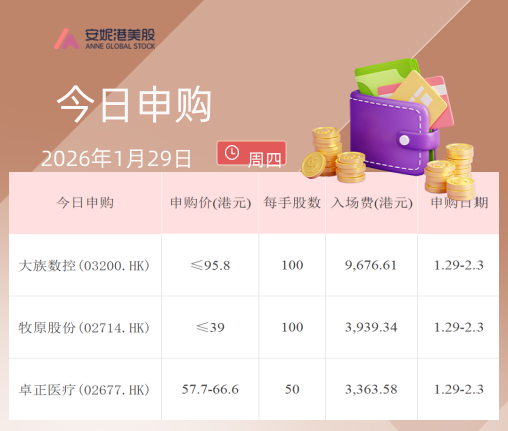
港股IPO早播报:大族数控、牧原股份和卓正医疗开始招股
Xin Lang Cai Jing· 2026-01-29 02:54
Group 1: Company Overview - Dazhu CNC Technology Co., Ltd. is a leading provider of PCB production equipment solutions in China, focusing on R&D, production, and sales of specialized equipment for PCB manufacturing. The company operates in sectors such as server and data storage, automotive electronics, mobile phones, computers, and consumer electronics. According to Zhaoshang Consulting, it holds a 10.1% market share in the PCB production equipment manufacturing sector in China as of 2024 [3] - Muyuan Foods Co., Ltd. is a technology-driven leader in the pork industry, established in 1992. The company operates through two main business segments: (i) pig farming, which includes the breeding and sale of commercial pigs, piglets, and breeding pigs, and (ii) meat processing, which involves the slaughtering and sale of pork products [9] - Distinct Healthcare Holdings Limited focuses on providing high-end medical services, targeting affluent consumers who prefer personalized healthcare. The company operates 19 medical institutions across major cities in China and has clinics in Singapore and Malaysia [15][16] Group 2: IPO Details - Dazhu CNC plans to offer 50.45 million shares globally, with 10% allocated for Hong Kong and 90% for international sales. The maximum offer price is set at HKD 95.8 per share, with an expected trading start date of February 6, 2026 [1] - Muyuan Foods intends to issue 274 million shares, with a maximum offer price of HKD 39.00 per share. The shares are also expected to start trading on February 6, 2026 [7] - Distinct Healthcare plans to offer 4.75 million shares, with a price range of HKD 57.7 to 66.6 per share, and is expected to begin trading on February 6, 2026 [13] Group 3: Financial Performance - Dazhu CNC's revenue for the years 2022, 2023, and 2024 was RMB 2.786 billion, RMB 1.634 billion, and RMB 3.343 billion, respectively. The net profit for the same years was RMB 432 million, RMB 136 million, and RMB 300 million [6] - Muyuan Foods reported revenues of RMB 124.826 billion, RMB 110.861 billion, and RMB 137.947 billion for the years 2022, 2023, and 2024, respectively. The net profit for these years was RMB 14.933 billion, a loss of RMB 4.168 billion, and RMB 18.925 billion [12] - Distinct Healthcare's revenue for 2022, 2023, and 2024 was RMB 473 million, RMB 690 million, and RMB 959 million, respectively. The company experienced a net loss of RMB 222 million in 2022, which increased to RMB 353 million in 2023, but achieved a net profit of RMB 80 million in 2024 [18]