
CATL(300750)

Search documents
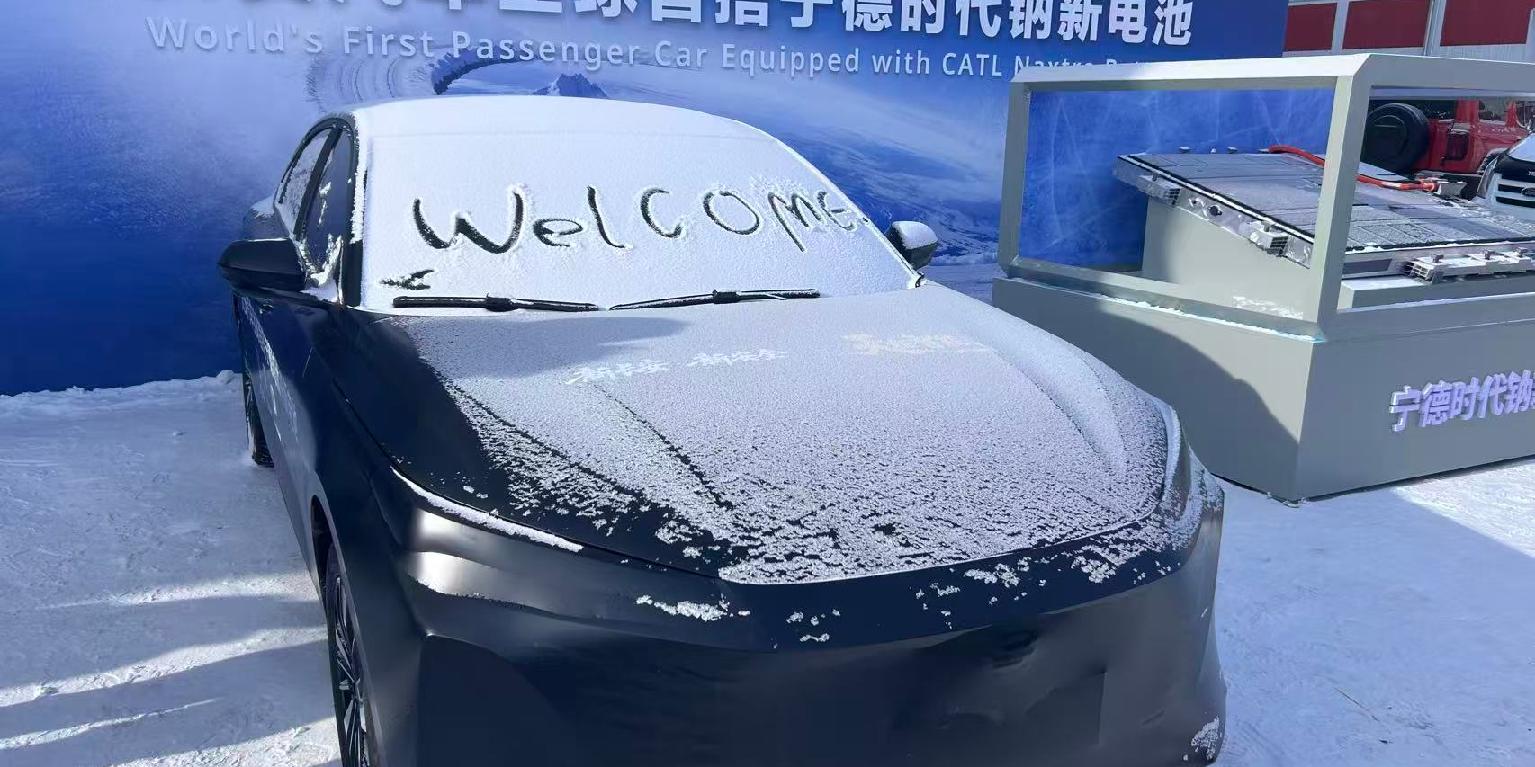
宁德时代纳电池首搭乘用车,首款车型为长安欧尚520
Jing Ji Guan Cha Wang· 2026-02-07 12:51
Core Viewpoint - CATL and Changan Automobile have jointly unveiled their first sodium-ion mass-produced passenger vehicle, set to launch mid-year, highlighting the sodium battery's low-temperature performance in harsh winter conditions [2][3]. Group 1: Product Launch and Features - The sodium-ion battery maintains over 90% capacity at -40°C and can discharge stably at -50°C, with an energy density of up to 175Wh/kg [3]. - The sodium battery's energy density is lower compared to lithium batteries, which range from 250-300Wh/kg for ternary lithium and 150-200Wh/kg for lithium iron phosphate [3]. - The sodium battery industry has faced slow development due to the lack of a complete supply chain and reliance on lithium battery production lines [3]. Group 2: Market Implications and Strategic Partnerships - The collaboration between CATL and Changan, a major player in the automotive industry, is expected to accelerate the adoption of sodium batteries in passenger vehicles [4]. - Changan's various brands, including Avita and Deep Blue, will incorporate CATL's sodium batteries, indicating a strategic push towards this new technology [4]. - The initial vehicle showcased at the launch was disguised, leading to speculation about its branding, but it was identified as an Oshan 520 [4]. Group 3: Consumer Acceptance and Cost Considerations - Consumer acceptance of sodium batteries is still uncertain, and Changan is cautious about using its main brands for initial launches [5]. - The cost of sodium batteries remains a concern, currently around 0.45 yuan/Wh, compared to lithium iron phosphate's cost of 0.340-0.410 yuan/Wh [5]. - Despite current challenges, sodium batteries have significant long-term market potential in various applications beyond vehicles, such as energy storage and starting batteries [5]. Group 4: Future Outlook and Industry Standards - CATL views sodium and lithium batteries as complementary technologies that can enhance the overall electric vehicle ecosystem [6]. - The sodium battery sector is entering a new phase with the implementation of standards for energy storage applications, marking a shift towards industrialization [6]. - By 2026, CATL plans to scale up sodium battery applications across multiple sectors, including energy storage and electric vehicles [6].



瞄准电车「加油站」,宁德时代再建万亿公共换电生态
3 6 Ke· 2026-02-07 10:25
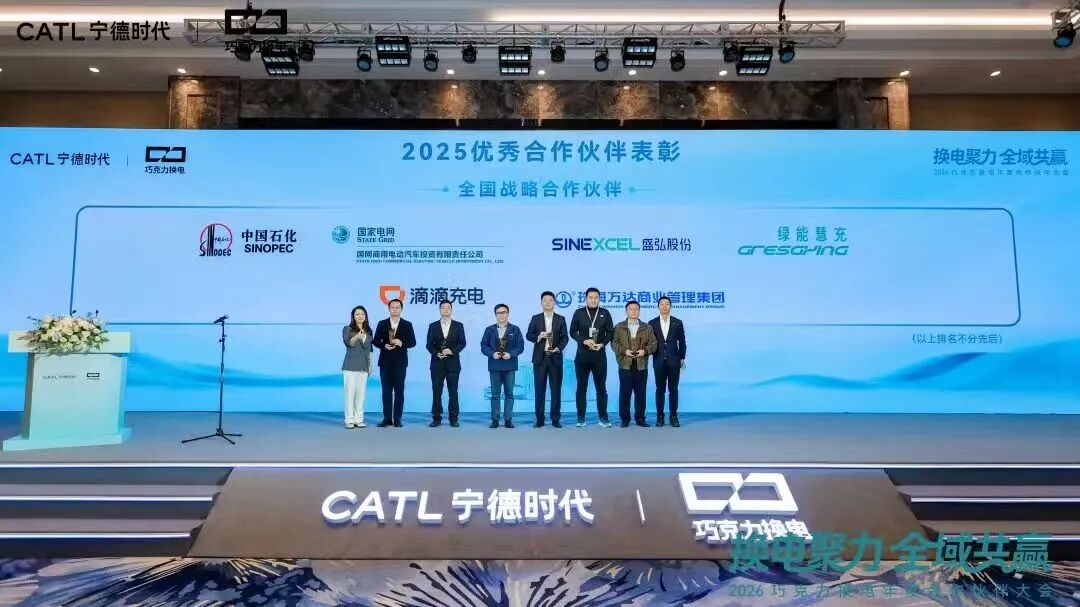
Core Insights - CATL is transitioning from a battery manufacturing company to a comprehensive energy service provider, focusing on building a battery swapping ecosystem in collaboration with various partners [1][5][29] Group 1: Business Strategy and Partnerships - CATL held a low-profile annual partner conference in Xiamen, featuring companies like Sinopec and Didi, indicating a shift towards collaboration in building a charging ecosystem [1] - The company aims to establish 30,000 battery swapping stations across China, with a target of over 3,000 stations by the end of 2026 [3][4] - CATL's subsidiary, Times Electric, has demonstrated strong execution capabilities by rapidly building 1,000 swapping stations within a year, showcasing organizational efficiency [4][28] Group 2: Market Position and Competition - The battery swapping model is gaining traction, with CATL's approach aiming to compete with established players like NIO, which currently operates around 3,700 swapping stations [3][4] - The company is positioning itself to capture a significant share of the growing electric vehicle market, which saw a penetration rate of 52% in 2025 [7][22] Group 3: Technological and Operational Efficiency - CATL is focusing on standardizing battery packs to cover 95% of electric vehicle models, enhancing compatibility and operational efficiency [10][25] - The company has developed a robust operational model, evidenced by the successful establishment of over 70 swapping stations in Chongqing, achieving a high user satisfaction rate [16][18] Group 4: Future Outlook and Market Trends - The demand for efficient and sustainable energy solutions is driving the need for a comprehensive battery swapping infrastructure, which CATL aims to fulfill [6][12] - The company is leveraging its technological expertise to create a closed-loop battery lifecycle management system, addressing supply chain challenges in lithium sourcing [7][24]
瞄准电车「加油站」,宁德时代再建万亿公共换电生态
36氪· 2026-02-07 10:17
Core Viewpoint - CATL is strategically expanding its battery swapping business through collaboration with various partners, aiming to build a comprehensive energy ecosystem for electric vehicles, with a target of establishing 30,000 battery swapping stations across China by 2025 [5][6][8]. Group 1: Business Expansion and Collaboration - In January, CATL held a low-profile annual partner conference in Xiamen, attended by companies like Sinopec and Didi, indicating a shift towards collaborative competition in building energy infrastructure [3]. - CATL's battery swapping business, operated by its subsidiary, aims to construct over 1,000 stations by the end of 2025, with plans to accelerate the pace of construction significantly [5][6]. - The company has set a long-term goal of establishing 30,000 battery swapping stations nationwide, with the first 1,000 stations completed in a year showcasing its operational efficiency [6][7]. Group 2: Market Position and Competitive Landscape - The current number of battery swapping stations is significantly lower than the over 100,000 gas stations in China, highlighting the potential for growth in this sector [6]. - NIO, a competitor, currently operates around 3,700 battery swapping stations, demonstrating the competitive landscape in the battery swapping market [6]. - CATL's rapid establishment of 1,000 stations within a year reflects its strong execution capabilities and organizational efficiency, which are crucial for competing in the energy infrastructure space [7][8]. Group 3: Technological and Operational Strategy - CATL is focusing on standardizing battery packs to cover 95% of electric vehicle models, which is essential for enhancing operational efficiency and service compatibility [19]. - The company has developed a robust operational model in Chongqing, achieving a high user satisfaction rate and demonstrating the viability of its business model [28][30]. - The integration of technology and quality assurance in its battery swapping stations is aimed at ensuring safety and reliability, with a 99.96% success rate in battery swaps [39]. Group 4: Future Outlook and Market Trends - The electric vehicle market is rapidly growing, with a penetration rate of 52% in 2025, necessitating a sustainable and efficient energy supply system [14]. - CATL's strategy includes expanding into the personal vehicle market with affordable electric models, aligning with the increasing demand for budget-friendly electric vehicles [31][36]. - The company aims to leverage its extensive resources and partnerships to establish a nationwide network of battery swapping stations, contributing to a sustainable energy ecosystem [42][43].
张一鸣登顶中国首富
Xin Lang Cai Jing· 2026-02-07 08:52
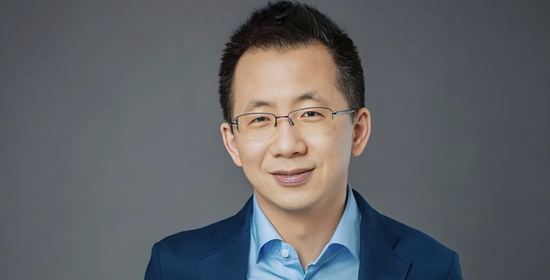
Group 1 - Zhang Yiming, founder of ByteDance, tops the Forbes 2026 China Rich List with a net worth of $69.3 billion, surpassing Zhong Shanshan for the first time [2][5] - The list reflects a significant reshuffling, with many traditional industries being disrupted by the rise of internet and hard technology sectors [2][5] - The top ten includes major figures from technology, new energy, and manufacturing, indicating a shift in wealth towards hard tech [6] Group 2 - Lei Jun of Xiaomi makes a notable comeback, ranking tenth with a net worth of $30.4 billion, surpassing Jack Ma, who is now ranked eleventh with $29.6 billion [2][5] - ByteDance's investments in AI, including a $160 billion budget for AI development, are key to Zhang Yiming's wealth increase [5] - The real estate tycoons have seen a decline, with internet billionaires now making up less than 40% of the list, highlighting a trend towards AI, new energy, and high-end manufacturing [6]





1200亿元大单存在误导 容百科技及责任人拟被罚950万
Xin Jing Bao· 2026-02-07 06:01
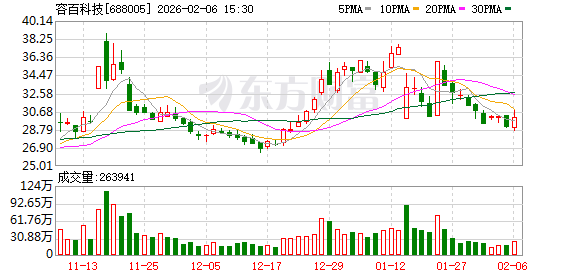
Group 1 - The core point of the article is that Rongbai Technology received an administrative penalty notice from the China Securities Regulatory Commission (CSRC) due to misleading statements related to a significant contract with CATL, resulting in a warning and a fine of 4.5 million yuan [2] - The company announced a major procurement agreement with CATL on January 13, 2026, to supply approximately 3.05 million tons of lithium iron phosphate cathode materials from Q1 2026 to 2031, with a total sales amount exceeding 120 billion yuan [2] - Following the announcement, the Shanghai Stock Exchange issued an inquiry letter, and the company was suspended from trading on January 14 [2]

1200亿元大单存在误导,容百科技及责任人拟被罚950万
Bei Ke Cai Jing· 2026-02-07 05:27
Core Viewpoint - Rongbai Technology is facing regulatory scrutiny from the China Securities Regulatory Commission (CSRC) due to misleading statements related to a significant contract with CATL, resulting in a proposed fine of 4.5 million yuan [1] Group 1: Regulatory Actions - Rongbai Technology received an administrative penalty notice from the CSRC's Ningbo Regulatory Bureau [1] - The company is proposed to be fined 4.5 million yuan, with the chairman and board secretary facing individual fines of 3 million yuan and 2 million yuan respectively [1] Group 2: Contract Details - On January 13, 2026, Rongbai Technology announced a major procurement agreement with CATL for lithium iron phosphate cathode materials [1] - The agreement involves supplying approximately 3.05 million tons of materials from Q1 2026 to 2031, with a total sales value exceeding 120 billion yuan [1] - Following the announcement, the Shanghai Stock Exchange issued an inquiry letter, leading to the suspension of Rongbai Technology's shares on January 14 [1]
容百科技因重大合同公告误导性陈述 拟被罚款450万元
Zheng Quan Ri Bao Wang· 2026-02-07 03:57
Core Viewpoint - Ningbo Rongbai New Energy Technology Co., Ltd. (Rongbai Technology) has received a notice of administrative penalty from the Ningbo Regulatory Bureau of the China Securities Regulatory Commission due to misleading statements in their announcement regarding a significant procurement agreement with CATL [1][2]. Group 1: Company Announcement - On January 9, Rongbai Technology signed a procurement cooperation agreement with CATL for the supply of 3.05 million tons of lithium iron phosphate cathode materials, with a total sales amount exceeding 120 billion yuan [1]. - The announcement was made on January 13, detailing the expected supply period from Q1 2026 to 2031 [1]. Group 2: Regulatory Findings - The Ningbo Regulatory Bureau found that the announcement did not accurately reflect the actual terms of the agreement, identifying four key issues: 1. The total sales amount of 120 billion yuan was a unilateral estimate by the company and not stipulated in the agreement [1]. 2. The procurement volume from CATL is based on a minimum of 70% of the forecasted 3.05 million tons, with final amounts to be determined by subsequent contracts [1]. 3. The supply end date of 2031 mentioned in the announcement does not align with the agreement's effective date of December 31, 2030 [1]. 4. A critical clause regarding Rongbai Technology's compliance with competitive requirements was not disclosed in the announcement [1]. Group 3: Penalties - The Ningbo Regulatory Bureau has proposed administrative penalties for the misleading statements, including a warning and a fine of 4.5 million yuan for Rongbai Technology, a warning and a fine of 3 million yuan for Bai Houshan, and a warning and a fine of 2 million yuan for Yu Jiyun [2].
宁德时代公布国际专利申请:“正极材料及其制备方法、二次电池、用电装置”
Sou Hu Cai Jing· 2026-02-06 22:59
Core Viewpoint - CATL has filed an international patent application for a new cathode material and its preparation method, indicating ongoing innovation in battery technology [1] Group 1: Patent Information - The patent is titled "Cathode Material and Its Preparation Method, Secondary Battery, and Power Device" with application number PCT/CN2025/097732, published internationally on February 5, 2026 [1] - This marks CATL's commitment to advancing its technology portfolio in the battery sector [1] Group 2: Research and Development - In 2023, CATL has announced a total of 186 international patent applications, representing an increase of 18.47% compared to the same period last year [1] - The company invested 10.095 billion yuan in research and development in the first half of 2025, reflecting a year-on-year increase of 17.48% [1]

宁德时代公布国际专利申请:“电池单体、电池装置、用电装置和电池单体的处理方法”
Sou Hu Cai Jing· 2026-02-06 22:59
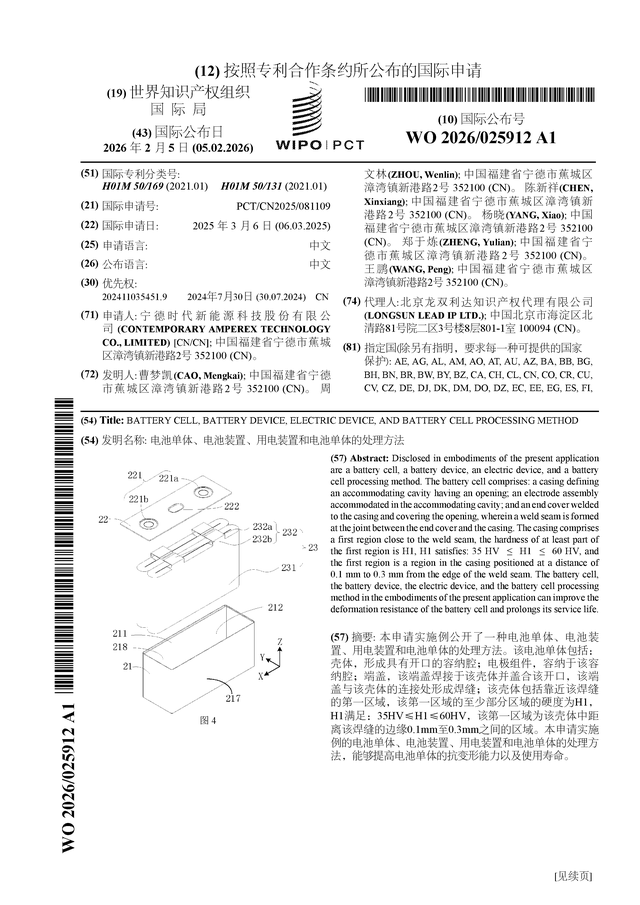
Group 1 - The core point of the article is that CATL (Contemporary Amperex Technology Co., Limited) has filed an international patent application for a battery-related technology, indicating its ongoing innovation efforts in the battery industry [1][4]. - The patent application is titled "Battery Cell, Battery Device, Power Device, and Processing Method for Battery Cell," with the application number PCT/CN2025/081109, and it is set to be published internationally on February 5, 2026 [1]. - In 2023, CATL has announced a total of 186 international patent applications, which represents an increase of 18.47% compared to the same period last year [4]. Group 2 - In the first half of 2025, CATL invested 10.095 billion yuan in research and development, reflecting a year-on-year increase of 17.48% [4].
宁德时代公布国际专利申请:“极片加工装置、电池加工系统、极片加工方法及电池”
Sou Hu Cai Jing· 2026-02-06 22:59
Group 1 - The core point of the article is that CATL (Contemporary Amperex Technology Co., Limited) has filed an international patent application for a battery processing system, indicating its ongoing innovation efforts in the battery industry [1] - The patent application number is PCT/CN2025/088805, with an international publication date set for February 5, 2026 [1] - CATL has announced a total of 186 international patent applications this year, representing an increase of 18.47% compared to the same period last year [1] Group 2 - In the first half of 2025, CATL invested 10.095 billion yuan in research and development, which is a year-on-year increase of 17.48% [1]