CATL(300750)

Search documents
钠锂双星时代,来了!
中国能源报· 2026-02-06 13:58
Core Viewpoint - The article highlights the launch of Changan Automobile's global sodium battery strategy in collaboration with CATL, marking a significant step towards the commercialization of sodium-ion battery technology in the automotive sector [2][4]. Group 1: Sodium Battery Launch and Features - Changan Automobile unveiled its first mass-produced sodium battery vehicle, which has successfully completed winter testing in extreme cold conditions, meeting key performance indicators for daily use [2]. - The sodium battery, branded as "Sodium New" by CATL, aims for large-scale application in various sectors by 2026, including battery swapping, passenger vehicles, commercial vehicles, and energy storage [2][4]. - The sodium battery vehicle boasts a range of over 400 kilometers, with an energy density of up to 175 Wh/kg, positioning it competitively within the industry [10]. Group 2: Policy Support and Industry Trends - Sodium-ion technology has been integrated into national strategic planning since 2022, with increasing policy support aimed at accelerating its development [4][5]. - The Ministry of Industry and Information Technology and other departments have emphasized the need for rapid advancements in sodium-ion battery technology as part of broader energy electronic industry development [4]. - By 2025, several national guidelines will focus on the integration of sodium-ion batteries in energy storage systems, highlighting their potential as a key component of new power systems [4]. Group 3: Technological Breakthroughs and Safety - CATL's sodium battery has achieved significant breakthroughs in low-temperature performance, demonstrating nearly three times the discharge power compared to lithium iron phosphate batteries at -30°C [10]. - The battery has passed rigorous safety tests under extreme conditions, showcasing its resilience and safety, which exceeds national standards [10][11]. - The company plans to establish over 3,000 battery swapping stations across more than 140 cities by 2026 to support the widespread adoption of sodium batteries [10]. Group 4: Resource Independence and Market Potential - The large-scale application of sodium batteries is expected to alleviate China's reliance on lithium resources, which are limited and heavily imported [12]. - Sodium resources are abundant and widely distributed, making sodium-ion technology a viable alternative to mitigate supply risks associated with lithium [12]. - The global market for sodium battery storage is projected to reach 580 GWh by 2030, with the potential for power sodium batteries to exceed 410 GWh, indicating a shift towards a dual technology landscape of sodium and lithium [12][14]. Group 5: Strategic Importance of Dual Technology - The parallel development of sodium and lithium technologies enhances the resilience of the energy system, ensuring stability in the face of potential disruptions in resource supply or technological bottlenecks [14]. - The article emphasizes the importance of diversifying energy storage technologies to safeguard national energy security and promote sustainable development in the automotive and energy sectors [14].


容百科技:因发布与宁德时代签署重大合同公告涉嫌误导性陈述,拟被给予警告并处以450万元罚款

3 6 Ke· 2026-02-06 13:05
36氪获悉,容百科技公告,收到中国证监会宁波监管局下发的《行政处罚事先告知书》。公司因2026年 1月13日发布的与宁德时代签署重大合同公告涉嫌误导性陈述,拟被中国证监会宁波监管局给予警告并 处以450万元罚款。董事长白厚善及董事会秘书俞济芸拟分别被罚款300万元和200万元。 ...
因重大合同公告涉嫌误导性陈述,容百科技拟被罚款450万元
Ge Long Hui· 2026-02-06 12:54
格隆汇2月6日|容百科技公告,公司于2026年1月18日收到中国证监会下发的《立案告知书》,因公司 重大合同公告涉嫌误导性陈述等,根据《中华人民共和国证券法》《中华人民共和国行政处罚法》等法 律法规,中国证监会决定对公司立案。公司于2026年2月6日收到中国证监会宁波监管局下发的《行政处 罚事先告知书》。 经查明,2026年1月9日,容百科技与宁德时代签订《磷酸铁锂正极材料采购合作协 议》,容百科技于2026年1月13日晚发布《关于与宁德时代签署日常经营重大合同的公告》,披露了"自 2026年第一季度开始至2031年,容百科技合计为宁德时代供应国内区域磷酸铁锂正极材料预计为305万 吨,协议总销售金额超1200亿元"等信息。 容百科技上述公告披露的相关信息未能真实、准确、完整地 反映合作协议实际条款内容等情况。白厚善作为容百科技董事长、总经理,审核并决定公告的内容,未 勤勉尽责,未能保证公司信息披露真实、准确、完整,是公司信息披露存在误导性陈述的直接负责的主 管人员。俞济芸作为容百科技董事会秘书,参与公告的起草、讨论并发布,未勤勉尽责,未能保证公司 信息披露真实、准确、完整,是公司信息披露存在误导性陈述的其他 ...
热点回应丨钠离子电池能否终结“电动爹”?低温性能与安全优势引关注
Ke Ji Ri Bao· 2026-02-06 12:37
Core Viewpoint - The introduction of sodium-ion batteries by CATL is expected to address the challenges faced by electric vehicles (EVs) in cold climates, such as reduced range and slow charging times, potentially transforming the market for EVs in northern regions [1] Group 1: Sodium-Ion Battery Advantages - Sodium-ion batteries exhibit superior low-temperature performance, maintaining over 90% capacity at -40°C and stable discharge even at -50°C, compared to lithium iron phosphate batteries which drop below 80% capacity at -20°C [2] - The safety profile of sodium-ion batteries is significantly higher, showing no smoke, fire, or explosion even under extreme conditions such as drilling or cutting, due to the thermal stability of sodium salt electrolytes [2] Group 2: Addressing Range Anxiety - In cold regions, sodium-ion batteries can enhance low-temperature discharge power by nearly three times compared to lithium iron phosphate batteries at -30°C, ensuring strong power output and fast charging in extreme weather [3] - The design of vehicles using sodium-ion batteries can eliminate the need for battery heating systems, reducing energy consumption and improving effective winter range to over 90% of the displayed value [3] - The penetration rate of new energy vehicles in northern provinces of China is currently below 10%, but the adoption of sodium batteries could potentially increase this figure to 30% or higher [3] Group 3: Long-term Maintenance and Infrastructure - Sodium-ion batteries have a lower long-term maintenance cost and a significantly reduced risk of thermal runaway, enhancing safety [4] - The raw materials for sodium-ion batteries are abundant and less expensive, with sodium reserves approximately 1200 times that of lithium, which could lower overall vehicle costs [4] - Existing charging infrastructure is compatible with sodium-ion batteries, requiring no modifications, as their operating voltage is similar to that of lithium iron phosphate batteries [4] - CATL plans to establish over 3,000 battery swap stations by the end of 2026, focusing on cold regions to improve user convenience [4] - The industry is moving towards a "sodium-lithium parallel" era, where lithium batteries target high-end markets while sodium batteries cater to cost-sensitive and low-temperature needs, promoting broader adoption of electric transportation [4]
「数据看盘」超6亿元资金抢筹恩捷股份,IM期指空头大幅加仓
Sou Hu Cai Jing· 2026-02-06 12:09
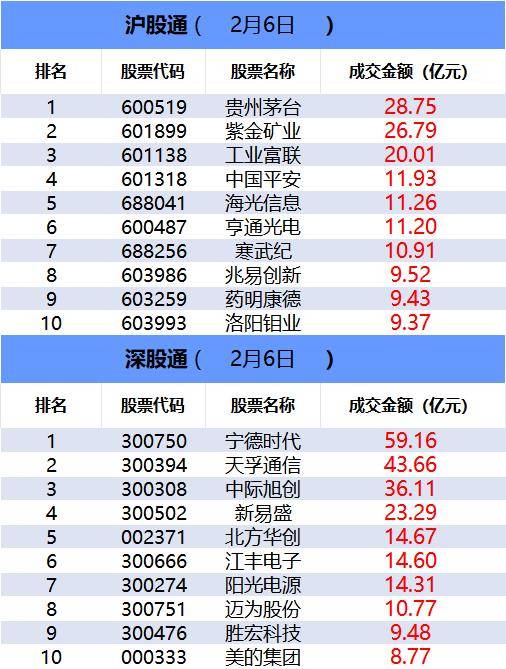
Core Viewpoint - The trading volumes of the Shanghai and Shenzhen Stock Connects indicate significant investor activity, with notable inflows and outflows in various sectors and stocks, reflecting market sentiment and investment trends. Trading Volume Summary - The total trading amount for the Shanghai Stock Connect was 134.14 billion, while the Shenzhen Stock Connect reached 153.30 billion [1]. Top Stocks by Trading Volume Shanghai Stock Connect - The top traded stocks included: - Kweichow Moutai (28.75 billion) - Zijin Mining (26.79 billion) - Industrial Fulian (20.01 billion) [2]. Shenzhen Stock Connect - The leading stocks were: - CATL (59.16 billion) - Tianfu Communication (43.66 billion) - Zhongji Xuchuang (36.11 billion) [3]. Sector Performance - Sectors such as oil and gas, batteries, and chemicals showed strong performance, while consumer sectors experienced declines [4]. Major Fund Inflows and Outflows Fund Inflows - The top sectors with net inflows included: - New Energy (51.65 billion, 1.97%) - Basic Chemicals (37.74 billion, 3.09%) [5]. Fund Outflows - The sectors with the highest net outflows were: - Defense and Military (50.28 billion, -5.27%) - Cultural Media (42.94 billion, -4.62%) [6]. Individual Stock Fund Monitoring Net Inflows - The stocks with the highest net inflows included: - Wuzhou Xinchun (11.85 billion, 30.31%) - Daji Shares (10.68 billion, 35.91%) [7]. Net Outflows - The stocks with the highest net outflows included: - Xinyi Sheng (29.11 billion, -17.14%) - Zhongbiao Xuchuang (15.56 billion, -8.69%) [8]. ETF Trading Summary Top ETFs by Trading Volume - The leading ETFs by trading amount included: - Gold ETF (19.03 billion, -5.10%) - A500 ETF Fund (14.96 billion, -4.58%) [9]. ETFs with Highest Growth in Trading Volume - The ETFs with the highest growth in trading volume included: - Brazil ETF (19.82 billion, 298.93%) - Hang Seng Dividend Low Volatility ETF (4.25 billion, 178.74%) [10]. Futures Positioning - Among the four major futures contracts, both long and short positions were reduced, with the IM futures contract seeing a significant increase in short positions, indicating heightened bearish sentiment [11]. Institutional Activity Buying Activity - Notable institutional buying included: - Enjie Shares (10.00%, 180 million) - Red Treasure (1.94%, 113 million) [12]. Selling Activity - Significant selling activity was observed in: - Jieli Suojun (2.79 billion) [13]. Retail and Quantitative Fund Activity Retail Activity - Retail investors showed reduced activity, with notable purchases in: - Jieli Suojun (1.63 billion) [14]. Quantitative Fund Activity - Quantitative funds were active, with significant purchases in: - Enjie Shares (1.07 billion) [15].

——电新行业2025年年报业绩前瞻:锂电储能周期拐点明显,光伏盈利探底
Shenwan Hongyuan Securities· 2026-02-06 12:01
Investment Rating - The report rates the industry as "Overweight" indicating a positive outlook for investment in the sector [1]. Core Insights - The lithium battery sector is expected to see a significant increase in both volume and price in Q4 2025, with production levels rising across various components, including a 15% increase in ternary cathodes and a 24% increase in lithium batteries [1]. - The photovoltaic industry is experiencing a reduction in losses, but Q4 is anticipated to be under pressure due to rising costs in silver paste and silicon materials, leading to expected losses for major companies [1]. - The wind power sector is witnessing a substantial recovery in profits driven by demand, with a 50.4% year-on-year increase in installed capacity in 2025, although Q4 performance may fall short of expectations due to reduced shipment volumes [1]. - The energy storage market is projected to maintain high growth rates, with independent storage becoming a key growth driver, supported by increasing demand in emerging markets and improved profitability models [1]. Summary by Sections Lithium Batteries - Q4 2025 is expected to see a significant increase in production across various lithium battery components, with production figures reaching 250,000 tons for ternary cathodes and 600 GWh for lithium batteries, reflecting a robust demand [1]. - Price increases in key materials such as lithium hexafluorophosphate and lithium iron phosphate are anticipated, contributing to stable profitability in the battery segment [1]. Photovoltaics - The industry faced substantial losses in the first three quarters of 2025, but there is a marginal improvement. Q4 is expected to be challenging due to rising costs and asset impairment [1]. - The cash flow in the silicon material segment is showing signs of recovery, with financing inflows increasing, although the overall industry remains under pressure [1]. Wind Power - The installed capacity for wind power in China reached 119.33 GW in 2025, marking a 50.4% increase year-on-year, leading to a significant recovery in profits for the sector [1]. - Despite a strong demand outlook, Q4 performance may be impacted by reduced shipment volumes and impairment factors [1]. Energy Storage - The energy storage sector is expected to continue its rapid growth, with independent storage becoming a core growth driver through capacity leasing and market transactions [1]. - The outlook for 2026 is positive, with anticipated demand growth in overseas markets and improved utilization rates in domestic large-scale storage [1]. Investment Recommendations - The report suggests focusing on four main investment lines: 1. Cyclical growth companies such as CATL and EVE Energy 2. Technological innovation firms like Rongbai Technology and Dingsheng Technology 3. Supply-side optimization companies including Tongwei and LONGi Green Energy 4. Companies expanding into AIDC as a secondary business [1].



钠电如何推进新能源汽车后50%渗透?
高工锂电· 2026-02-06 11:53
Core Viewpoint - The article emphasizes the critical role of sodium batteries in the future of electric vehicles, particularly in cold climates, and highlights the collaboration between CATL and Changan Automobile to validate sodium battery performance in extreme conditions [3][4][5]. Group 1: Market Trends and Projections - By 2025, the penetration rate of new energy vehicles in China's total auto sales is expected to exceed 50%, reaching 50.8%, with some months last year seeing nearly 60% penetration [3]. - CATL's sodium batteries are positioned as essential for the second half of the electrification process, particularly in northern markets where low-temperature performance is crucial [4][5]. Group 2: Product Development and Performance - CATL has developed various sodium battery products, including those for heavy-duty trucks and passenger vehicles, showcasing significant performance improvements in low-temperature conditions [7][9]. - In tests, sodium batteries demonstrated nearly three times the discharge power compared to conventional lithium iron phosphate models at -30°C, with over 90% capacity retention at -40°C [4][9]. Group 3: Commercialization and Strategic Partnerships - CATL has been actively delivering sodium battery products and has a clear commercialization strategy, moving from commercial vehicles to passenger cars and conducting winter tests to validate performance [5][6]. - The collaboration with Changan Automobile aims to produce models with over 400 km range, with future upgrades targeting 500 km to 600 km [10]. Group 4: Supply Chain and Industry Impact - The entry of CATL into the sodium battery market is expected to drive significant changes in the supply chain, leveraging similarities between lithium and sodium supply systems [13][14]. - CATL's partnership with Rongbai Technology for sodium battery materials is set to expand production capacity significantly, with a projected 101% year-on-year increase in sodium battery cathode material production by 2025 [15][16]. Group 5: Future Applications and Market Expansion - CATL plans to apply sodium batteries extensively in the energy storage sector by 2026, aligning with market reforms that enhance investment returns in storage solutions [17][18]. - The introduction of a new capacity pricing mechanism for independent storage stations is expected to reduce investment uncertainties in sodium battery storage [18]. Group 6: Technological Innovations - CATL has introduced the "sodium-iron" dual-core battery, combining sodium and lithium technologies, which offers a total energy capacity of 75 kWh and a range of 700 km [19].

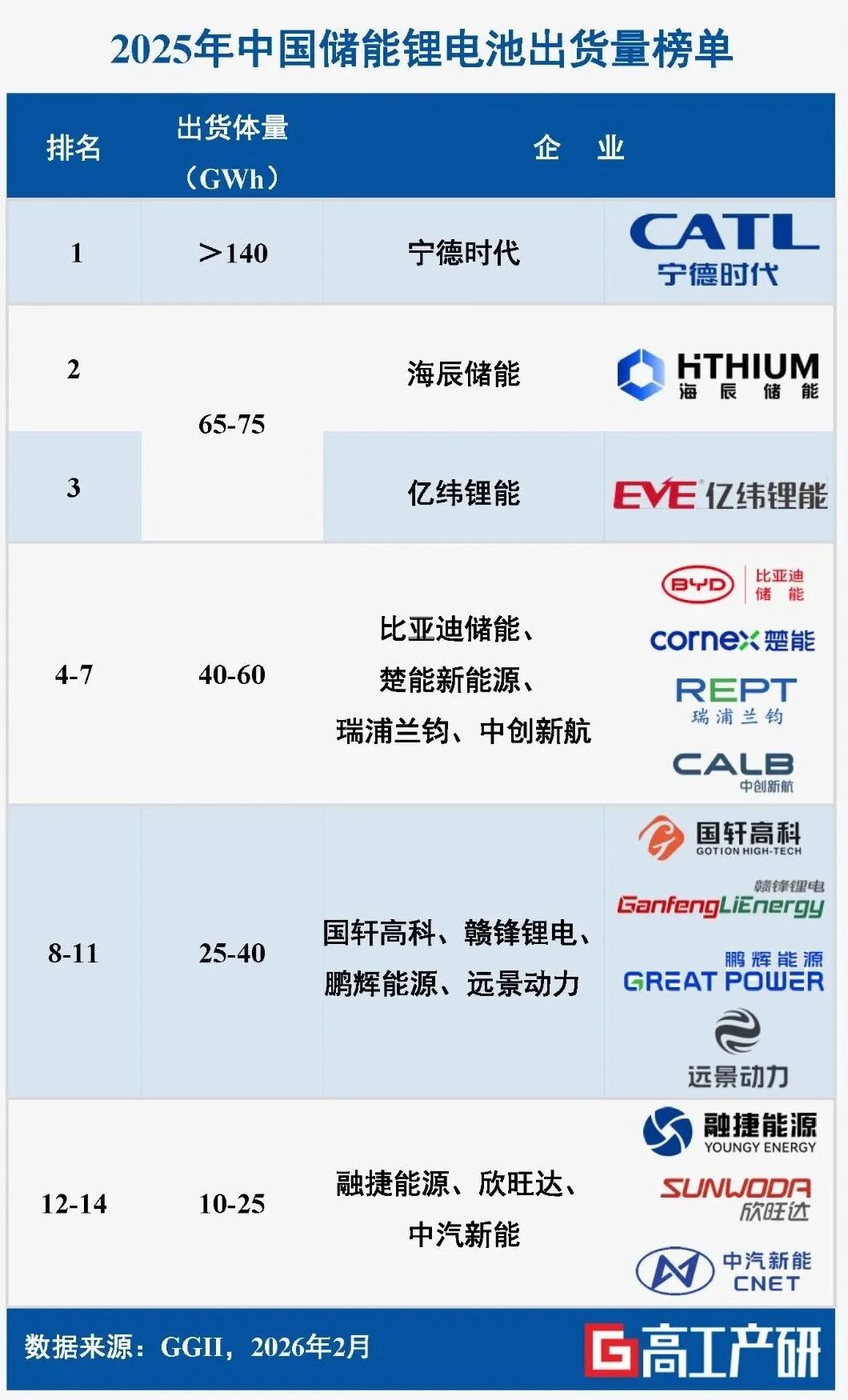
GGII:2025年中国储能锂电池出货量630GWh 同比增幅达85%
Zhi Tong Cai Jing· 2026-02-06 11:35
Core Viewpoint - The Chinese energy storage lithium battery market is expected to experience significant growth in 2025, with a shipment volume of 630 GWh, representing an 85% year-on-year increase, and maintaining over 90% of the global market share [1][4]. Group 1: Market Growth Drivers - The growth is driven by three main factors: the gradual exit of mandatory storage policies and the acceleration of independent storage projects in the domestic market, transitioning the industry from "passive configuration" to "active investment" [4]. - The overseas market is boosted by the U.S. installation surge, demand release in emerging markets, and the end of inventory depletion in overseas household storage, leading to strong order growth [4]. - New application scenarios, such as data centers, are contributing to the continuous increase in demand for energy storage cells [4]. Group 2: Competitive Landscape - The top 10 companies in China's energy storage lithium battery shipments for 2025 include CATL, BYD, Hicharge, EVE Energy, and others, which also rank among the top globally [1][2]. - The competition in the household storage lithium battery market in 2025 will focus on specialized production capacity and large-scale delivery capabilities, solidifying the market share and industry position of leading companies [5]. Group 3: Future Trends - In 2026, the household storage lithium battery market is expected to see a relaxation of capacity constraints, with the establishment of a dual mainline product matrix as 100Ah and 314Ah cells become standard options [4][5]. - The global supply chain layout is accelerating, with localized production becoming a key strategy to address trade barriers and raw material sourcing requirements in overseas markets [5]. - The penetration rate of large capacity cells (500+ Ah) is projected to exceed 20% in 2026, with most manufacturers expected to achieve mass production by the second half of the year [9]. Group 4: Market Projections - The energy storage battery market is anticipated to maintain a high growth trend into 2026, with an expected shipment of over 850 GWh, although capacity pressure will remain significant in the first half of the year [8][11]. - The price of energy storage cells is projected to increase by approximately 3-6 cents per Wh due to rising costs of key raw materials, which will be passed down to downstream procurement costs [12].


钠电池正式叩响主流乘用车市场大门,头部企业推动规模化上车
Xin Lang Cai Jing· 2026-02-06 11:27
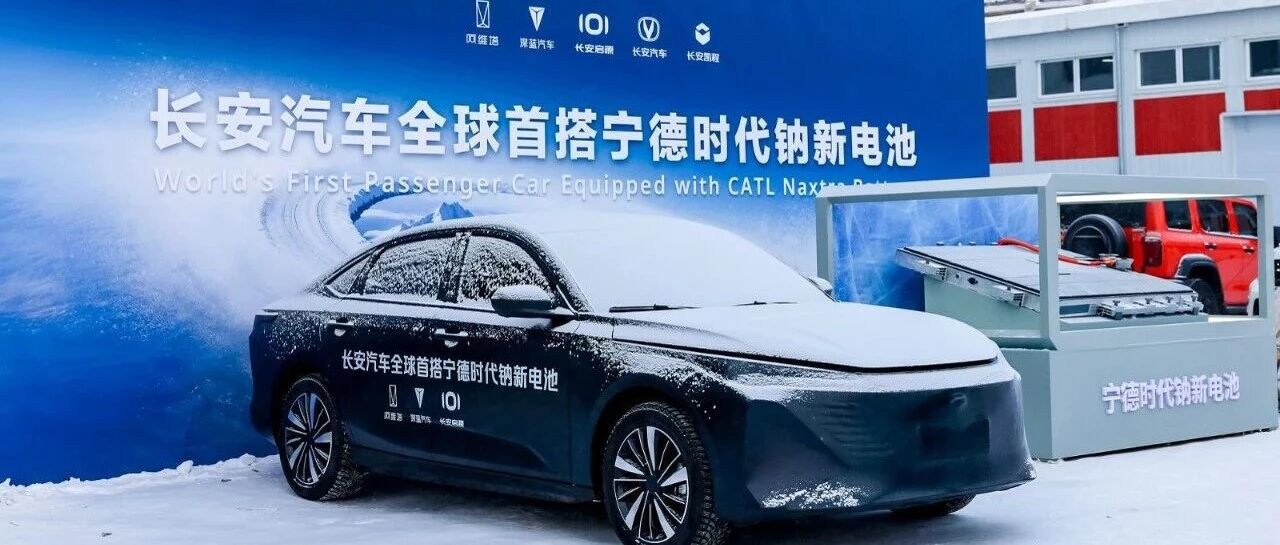
过去一年,国内动力电池厂商在钠电池商用化领域加速布局,头部企业通过技术突破、产能扩张及场景 落地,推动钠电池从实验室走向规模化应用。行业内最新的重磅则是,长安汽车和宁德时代两家巨头2 月5日在极寒汽车测试地牙克石举办了一场发布会,长安汽车正式发布全球钠电战略,同时宣布旗下阿 维塔、深蓝、启源、引力等多品牌,未来都将搭载宁德时代钠新电池。(智通财经) ...
7家中企包揽84%份额!2025年全球储能电池出货550GWh
Xin Lang Cai Jing· 2026-02-06 11:25
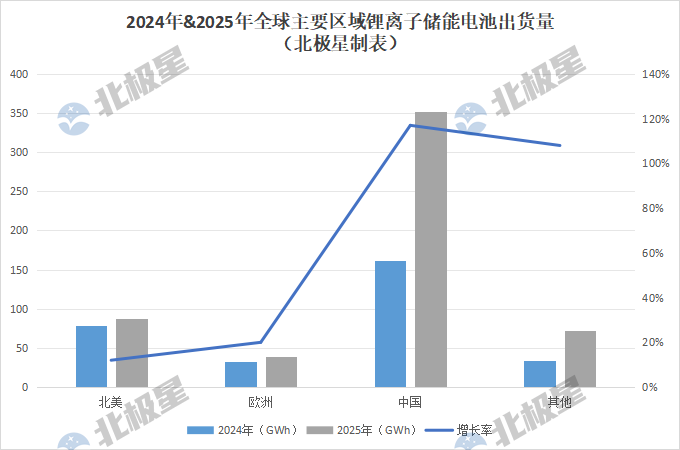
Core Insights - The global lithium-ion energy storage battery shipment reached 550 GWh in 2025, marking a 79% year-on-year increase, indicating rapid expansion in the energy storage industry [1][6][11] Group 1: Market Overview - China, North America, and Europe remain the primary target markets, with China accounting for 352 GWh (64% of global shipments) and a growth rate of 117%, highlighting its role as the core driver of global energy storage supply growth [1][6][11] - North America and Europe are experiencing growth, but their global market share is declining due to faster growth in China and emerging markets, which saw a growth rate of 108% [1][6][11] Group 2: Regional Dynamics - The slowdown in North America's growth rate and its declining global share is linked to U.S. policies, particularly high tariffs on Chinese products, which have impacted the supply of lithium iron phosphate batteries [7][10] Group 3: Company Rankings - The top nine companies in lithium-ion energy storage battery shipments are dominated by Chinese firms, with CATL leading at 167 GWh, holding a 30% market share, while the last two Korean companies account for only 4% [4][9][11] - The dominance of Chinese companies is attributed to the suitability of lithium iron phosphate batteries for energy storage needs, emphasizing safety and cost over energy density [4][9][10] Group 4: Future Outlook - Korean companies are adapting by modifying existing U.S. production lines and focusing on lithium iron phosphate technology to regain market share in North America, with expectations of a gradual recovery in their market presence [10]