
LI AUTO(LI)

Search documents
理想分享自动驾驶强化学习闭环训练框架
理想TOP2· 2025-11-27 16:10
Core Viewpoint - The article discusses the advancements in autonomous driving through the introduction of the AD-R1 framework, which utilizes closed-loop reinforcement learning to enhance safety and robustness in end-to-end autonomous driving systems, addressing the limitations of existing world models in predicting dangerous outcomes [2][4]. Group 1: Closed-Loop vs. Open-Loop Systems - Open-loop systems rely on offline data and static playback, while closed-loop systems interact dynamically with the environment, allowing for real-time adjustments to the vehicle's trajectory [1]. - The AD-R1 framework represents a significant step in closed-loop reinforcement learning for autonomous driving [1]. Group 2: Challenges in Imitation Learning - Imitation learning faces two main challenges: distribution shift due to unseen long-tail scenarios in the real world and the lack of negative feedback, making it difficult for AI to learn from mistakes [3]. - Optimistic bias is identified as a systemic flaw in reinforcement learning for autonomous driving, where models may generate unrealistic safe scenarios despite unsafe actions [3]. Group 3: AD-R1 Framework Components - The AD-R1 framework includes two core components: the development of an impartial world model and reinforcement learning based on future imaginings [4]. - The impartial world model employs counterfactual data synthesis to teach the model the consequences of unsafe driving behaviors [4]. Group 4: Model Training and Evaluation - The training process involves sampling candidate trajectories, imagining future scenarios using the impartial world model, scoring based on predicted outcomes, and updating the policy using the GRPO algorithm [8]. - The framework allows for detailed reward calculations through the use of 3D/4D voxel outputs, enhancing the evaluation of collision severity and ensuring vehicle stability on the road [8]. Group 5: Additional Features - Trajectory-aware gating is implemented to ensure the model focuses on relevant features along the driving path, while ego-trajectory fidelity loss penalizes deviations from the input control commands [6]. - The framework also includes volume collision penalties and vertical clearance checks to enhance safety in complex environments [8].


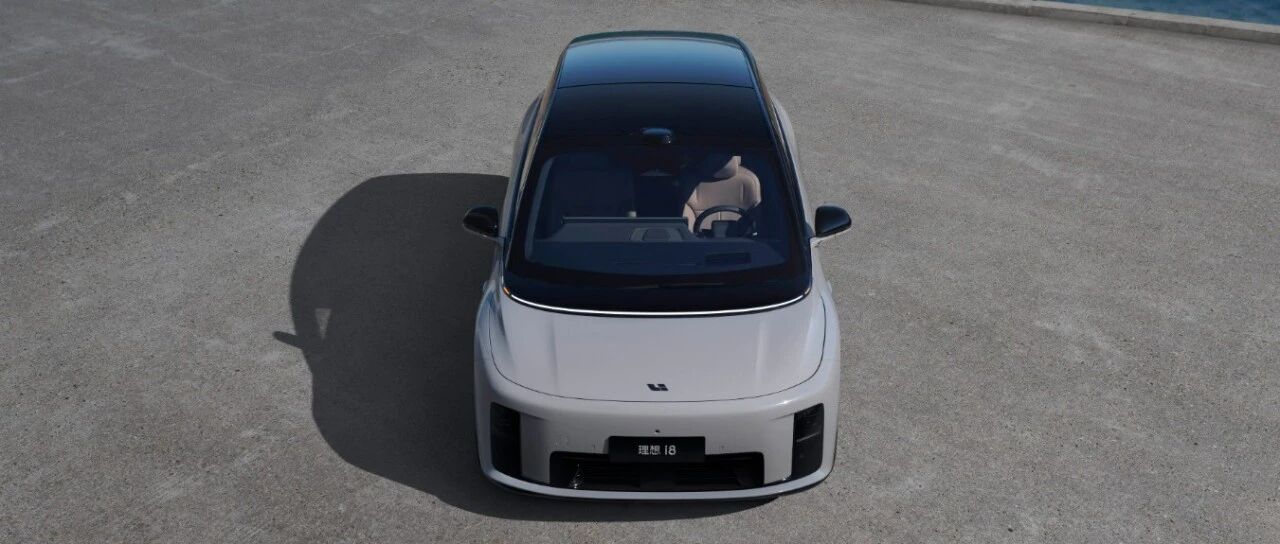
瞄准盈利目标 新势力车企多路线突围
Zheng Quan Ri Bao· 2025-11-27 15:59
Core Insights - The performance of four listed new energy vehicle companies in China, namely Leap Motor, Xpeng Motors, NIO, and Li Auto, shows significant divergence in their third-quarter results for 2025, highlighting the competitive landscape in the market [1] Sales Performance - Leap Motor achieved sales of 173,900 units, a year-on-year increase of 101.8%, leading the market - Xpeng Motors sold 116,000 units, up 149.3% year-on-year - Li Auto's sales reached 93,200 units, a decline of 39.0% year-on-year - NIO sold 87,100 units, marking a year-on-year growth of 40.8% [2] Revenue Data - Li Auto led in revenue with 27.4 billion yuan, although this represented a year-on-year decline of 36.2% - NIO reported revenue of 21.79 billion yuan, up 16.7% year-on-year - Xpeng Motors generated revenue of 20.38 billion yuan, a 101.8% increase year-on-year - Leap Motor's revenue was 19.45 billion yuan, reflecting a 97.3% year-on-year growth [2] Profitability - The profitability landscape showed "one profit and three losses" among the four companies - Leap Motor achieved a net profit of 150 million yuan, marking consecutive quarterly profitability - Xpeng Motors reported a net loss of 380 million yuan, significantly reduced from 1.81 billion yuan in the same period last year - Li Auto recorded a net loss of 620 million yuan, down from a profit of 2.8 billion yuan last year - NIO's net loss was 3.48 billion yuan, a decrease of 31.2% from 5.06 billion yuan year-on-year [2] Gross Margin Analysis - Xpeng Motors led with a gross margin of 20.1%, an increase of 4.8 percentage points year-on-year - Li Auto's gross margin was 16.3%, which adjusted for the recall costs of the Li MEGA model, would be 20.4% - Leap Motor reported a gross margin of 14.5%, up 6.4 percentage points year-on-year - NIO's gross margin stood at 13.9%, an increase of 3.2 percentage points year-on-year [3] Technological Innovation - The four companies are actively pursuing technological innovations, particularly in the field of physical AI - Xpeng Motors plans to launch three Robotaxi models by 2026 and aims for mass production of humanoid robots by the end of the year - Li Auto has invested heavily in AI, with a monthly usage rate of its VLA driver model reaching 91% and an expected annual R&D expenditure of 12 billion yuan, with over 6 billion yuan allocated to AI [4] - Leap Motor emphasizes self-research and development, achieving significant advancements in core components and technologies [4] Competitive Strategies - NIO continues to enhance its battery swap technology to create a differentiated competitive advantage and is accelerating its overseas market expansion [5] - Industry experts indicate that the third-quarter financial data reflects a new phase of differentiated development among Chinese new energy vehicle companies, with technology innovation, cost control, and globalization being critical success factors [5]


【2025年三季报点评/理想汽车】业绩短期承压,构建具身智能完整AI系统
东吴汽车黄细里团队· 2025-11-27 14:33
Core Viewpoint - The article discusses the financial performance and strategic adjustments of Li Auto, highlighting a significant decline in revenue and profitability in Q3 2025, alongside a shift back to a startup management model to enhance efficiency and user value [2][3][5]. Financial Performance - Li Auto reported Q3 2025 revenue of 27.36 billion yuan, a decrease of 36.2% year-on-year and 9.5% quarter-on-quarter, with vehicle sales revenue at 25.87 billion yuan, down 37.4% year-on-year and 10.4% quarter-on-quarter [2]. - The net profit attributable to shareholders was -620 million yuan, with Non-GAAP net profit at -360 million yuan, indicating a shift to losses compared to previous periods [2]. - The overall gross margin for Q3 2025 was 16.3%, down 5.2 percentage points year-on-year and 3.7 percentage points quarter-on-quarter, primarily due to increased manufacturing costs from the MEGA recall [3]. Cost Management - R&D expenses for Q3 2025 were 2.97 billion yuan, up 15.0% year-on-year, reflecting increased costs related to new model projects and technology [3]. - Selling, general, and administrative expenses were 2.77 billion yuan, a year-on-year increase of 17.6% [3]. Sales and Production - The company achieved wholesale sales of 93,000 vehicles in Q3 2025, with an average revenue per vehicle of 278,000 yuan, compared to approximately 260,000 yuan in Q2 2025 [3]. Strategic Adjustments - Li Auto plans to revert to a startup management model starting Q4 2025, focusing on deep dialogue, user value, and efficiency improvements to adapt to industry changes [5]. - The company is developing the M100 chip for its AI system, expected to be commercially available in 2026, aiming for a performance-to-power ratio three times better than current high-end chips [5]. Revenue and Profit Forecast - Due to structural adjustments in vehicle models, revenue forecasts for 2025-2027 have been revised down to 113.4 billion yuan, 138.1 billion yuan, and 191.2 billion yuan, respectively, with year-on-year changes of -22%, +22%, and +39% [6]. - Net profit forecasts for the same period have also been reduced to 900 million yuan, 1.6 billion yuan, and 6.4 billion yuan, reflecting significant declines in 2025 but strong recovery in subsequent years [6].

理想迎来逆风局
36氪· 2025-11-27 14:02
Core Viewpoint - The article discusses the challenges faced by Li Auto in the context of declining sales and the strategic pivot towards AI technology, emphasizing the need for a robust AI strategy to ensure long-term viability and competitiveness in the automotive market [5][13][24]. Financial Performance - Li Auto's Q3 financial results showed significant declines, with revenue at 27.4 billion yuan, a year-on-year decrease of 36.2%, and a net loss of 624 million yuan compared to a net profit of 2.8 billion yuan in the same period last year [5]. - The delivery volume for Q3 was 93,211 units, down nearly 39% year-on-year and over 16% quarter-on-quarter, contrasting with expected growth rates of over 20% and 40% for 2023 and 2024 respectively [5][8]. Strategic Shift to AI - The company is increasingly focusing on AI as a strategic pivot, moving away from its initial emphasis on range-extended vehicles, which are now facing market saturation and intense competition [7][19]. - Li Auto's leadership has made significant organizational changes to support the AI strategy, including restructuring teams and adopting new management practices to enhance efficiency and innovation [15][17]. Competitive Landscape - The automotive market is becoming more competitive, with new entrants and established players intensifying the race for market share, particularly in the AI and electric vehicle segments [9][11]. - Li Auto's market position is under pressure as competitors like Xpeng and NIO have surpassed its sales figures, highlighting the need for a compelling product offering and effective marketing strategies [11][12]. AI Development Focus - The company is concentrating its AI efforts on three main areas: the VLA system for assisted driving, the MindGPT model for intelligent cockpit features, and the underlying AI infrastructure [19][24]. - Li Auto's VLA system is positioned as a critical component of its AI strategy, aiming to create an AI that operates similarly to a human driver, although this development is expected to take time and may not yield immediate financial returns [19][22]. Investment in R&D - Li Auto plans to invest 12 billion yuan in R&D this year, with 5 billion yuan specifically allocated to AI, indicating a strong commitment to advancing its technological capabilities [24]. - The focus on "precise investment" rather than broad spending reflects the company's strategy to ensure that its resources are effectively utilized in developing competitive AI solutions [24].
业绩“变脸”,理想汽车要回归创业公司模式
Bei Jing Shang Bao· 2025-11-27 13:39
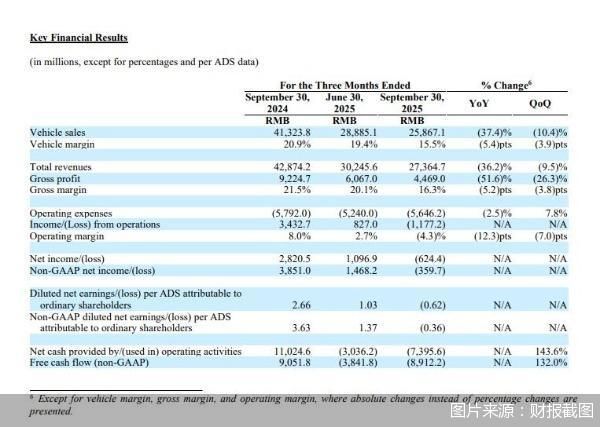
| | | For the Three Months Ended | | % Change6 | | | --- | --- | --- | --- | --- | --- | | | September 30. | June 30. | September 30. | YoY | 000 | | | 2024 | 2025 | 2025 | | | | | RMB | RMB | RMB | | | | Vehicle sales | 41.323.8 | 28,885.1 | 25.867.1 | (37.4)% | (10.4)% | | Vehicle margin | 20.9% | 19.4% | 15.5% | (5.4)pts | (3.9)pts | | Total revenues. | 42,874.2 | 30,245.6 | 27,364.7 | (36.2)% | (9.5)% | | Gross profit | 9.224.7 | 6.067.0 | 4.469.0 | (51.6)% | (26.3)% | | Gross margin | 21.5% | 20.1% | 1 ...
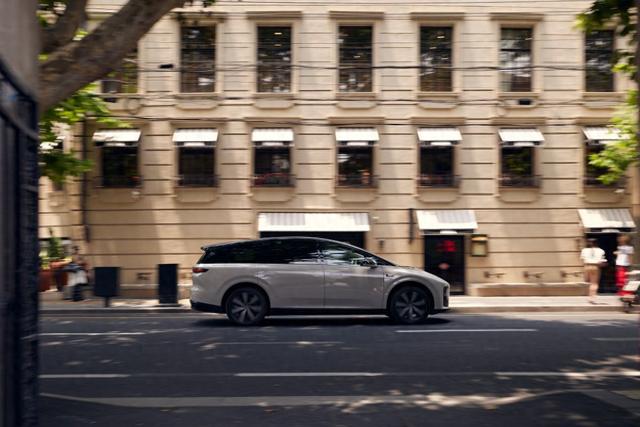
理想汽车:创新基因打底 下一个周期稳了
Bei Jing Ri Bao Ke Hu Duan· 2025-11-27 12:45
Core Insights - Li Auto's Q3 2025 financial report shows a revenue of 27.4 billion yuan for the quarter and 83.5 billion yuan for the first three quarters, with a strong focus on R&D investment, particularly in AI, which is expected to exceed 50% of the total R&D budget of 12 billion yuan for the year [1][11][14] - Despite intensified competition in the electric vehicle market above 200,000 yuan, Li Auto's new models, the i8 and i6, received over 100,000 orders, demonstrating the company's strong product definition capabilities [1][11] - The company's gross profit margin, excluding the impact of the MEGA recall costs, stands at 20.4%, indicating robust operational resilience amid fierce competition [1][3] Financial Performance - Li Auto's Q3 revenue reached 27.4 billion yuan, while the total revenue for the first three quarters was 83.5 billion yuan [1] - The company reported a cash reserve of 98.9 billion yuan, providing a solid financial foundation for future growth [1] - The gross profit margin for Q3, after adjusting for recall costs, was 20.4%, reflecting the company's ability to maintain profitability despite market challenges [1][3] Market Strategy - The shift from range-extended vehicles to a dual strategy of range-extended and pure electric vehicles is seen as a necessary transition for Li Auto, with the company focusing on product innovation to meet user needs [3][9] - Li Auto's initial success with the Li ONE model has positioned it as a leader in the new energy vehicle market, being the first new force car company to surpass 100 billion yuan in revenue and achieve profitability [7][9] - The company has strategically chosen to accelerate its growth by adopting a dual-line strategy, which has been in development since 2020, allowing it to capture new market opportunities [9][11] Innovation and Product Development - Li Auto's success is attributed to its focus on "product definition," aligning its offerings with the practical needs of family users, such as the introduction of four-zone voice control in the Li ONE [6][12] - The company has invested heavily in R&D, with Q3 2025 R&D expenses reaching 3 billion yuan, focusing on self-developed chips, intelligent operating systems, and advanced driver assistance systems [14][16] - The launch of the i8 and i6 models, equipped with innovative features like the new 5C lithium iron phosphate battery and self-developed silicon carbide electric drive system, has positioned Li Auto as a leader in the high-end pure electric market [11][14] Future Outlook - As the penetration rate of new energy vehicles exceeds 50%, the automotive market is entering a critical phase where competition will focus on technological endurance and innovation [12][16] - Li Auto's strategy for 2026 includes a stronger emphasis on product upgrades for range-extended vehicles and a concentrated approach to developing high-quality pure electric vehicles [14] - The company's comprehensive innovation system, which integrates user insights, technological advancements, and strategic iterations, is expected to sustain its competitive edge in the long term [16]
理想痛定思痛
Hua Er Jie Jian Wen· 2025-11-27 12:22
Core Viewpoint - Li Auto, once a profitable new energy vehicle company, reported a net loss of 620 million yuan in Q3, ending a streak of 11 consecutive profitable quarters. This marks a significant decline from a profit of 2.8 billion yuan in the same period last year and a profit of 1.1 billion yuan in Q2 of this year [4][5][6]. Financial Performance - In Q3, Li Auto's sales dropped from over 50,000 units per month at the end of last year to around 30,000 units, reflecting a significant decline in performance [4][5]. - The company's Q4 sales guidance is below market expectations, projecting only 100,000 to 110,000 units, which is lower than the anticipated 138,000 units [5][6]. Market Dynamics - The market share of range-extended vehicles has been shrinking, falling to 7.5% in October, while the share of pure electric vehicles has increased from 49% to 74% [6][7]. - Li Auto's L series, which previously achieved monthly sales of over 50,000 units, has now dropped to around 20,000 units, facing stiff competition from other brands [6][7]. Strategic Adjustments - Li Auto is undergoing strategic changes, including shortening the product iteration cycle from four years to two years and enhancing product differentiation through design rather than configuration [7][8]. - The company plans to adopt a dual-supplier model for batteries to increase production capacity for the i6 model, aiming for a monthly output of 20,000 units by early next year [7][8]. Organizational Changes - Li Auto has announced an end to its "learning from Huawei" strategy, which had been in place for three years, as the previous tactics are no longer suitable for the current market environment [8]. - The company is shifting back to a more agile, startup-like management style under the leadership of its founder, Li Xiang, to enhance operational efficiency [8][9]. Future Outlook - Li Auto is focusing on the electric vehicle market as a critical battleground, recognizing the need to adapt to changing market dynamics [7][8]. - The company still has a strong financial position with nearly 90 billion yuan in cash reserves, providing it with the necessary resources to implement strategic adjustments [8].

理想增长逻辑如何重构?
3 6 Ke· 2025-11-27 12:13
Core Insights - The Chinese electric vehicle market is undergoing a significant reshuffle in 2025, influenced by the impending decline of purchase tax incentives and intensified price wars [1] - Li Auto, once a profitable player, reported a 36.2% year-on-year revenue decline and a net loss of 624 million yuan in Q3 2025, raising concerns about its financial health [1][2] - Despite the disappointing financial results, the stock price of Li Auto rose post-earnings release, indicating a market reassessment of the company's short-term challenges versus its long-term strategy [1] Financial Performance - Li Auto's Q3 2025 revenue was 27.365 billion yuan, down 36.2% year-on-year and 9.5% quarter-on-quarter [2] - The gross margin for Q3 was 16.3%, a decrease of 5.2 percentage points from 21.5% in the same period last year, with vehicle gross margin at 15.5% [2] Key Challenges - The significant revenue drop is attributed to a 39.0% year-on-year decline in delivery volume, exacerbated by increased competition and product iteration issues [3] - The MEGA recall event imposed an estimated 1.1 billion yuan warranty cost, impacting profits and reducing the delivery capacity of the 2025 MEGA model [3][4] - Operating cash flow was negative at 7.4 billion yuan, with free cash flow at -8.9 billion yuan, indicating liquidity challenges [4] Market Dynamics - The overall electric vehicle market is shifting, with pure electric vehicle sales growing by 26% year-on-year, while range-extended and plug-in hybrid models saw declines [5][6] - Li Auto faces intense competition from new entrants like Xiaomi and AITO, alongside its own product iteration lag [6] Strategic Adjustments - Li Auto's founder announced a return to a startup management model to enhance decision-making agility and focus on user value [7] - The company plans to introduce its self-developed M100 chip by 2026, aiming to reduce reliance on external suppliers and enhance its AI capabilities [8] - Li Auto is also pursuing global expansion, with plans to enter markets in Latin America, Europe, and Southeast Asia by 2026 [8] Market Sentiment - The rebound in Li Auto's stock price post-earnings reflects a consensus that the worst may be over for the company, although future performance will depend on the successful rollout of its self-developed chip and electric vehicle production capacity [9][10]
新势力成绩单出炉:小米首盈、零跑续赚、理想转亏
Xin Lang Cai Jing· 2025-11-27 11:58
Core Insights - The domestic new energy vehicle market is experiencing intensified competition and rapid technological iteration, leading to significant performance differentiation among leading new forces in the automotive sector [2] Company Performance Summary NIO - NIO reported a total delivery of 87,100 vehicles in Q3, a year-on-year increase of 40.8%, with revenue reaching 21.79 billion yuan, up 16.7% year-on-year [4] - The company narrowed its net loss to 3.48 billion yuan, a reduction of 31.2% compared to the previous year, and aims for profitability in Q4 with a delivery guidance of 120,000 to 125,000 vehicles [4] Xpeng - Xpeng achieved a record delivery of 116,000 vehicles in Q3, a year-on-year increase of 149.3%, with revenue surpassing 20 billion yuan for the first time, reaching 20.38 billion yuan, up 101.8% year-on-year [5] - The net loss was reduced to 380 million yuan, down 78.9% from the previous year, and the company aims for overall breakeven in Q4 [5] Li Auto - Li Auto reported a total delivery of 93,211 vehicles in Q3, a year-on-year decline of 39%, with revenue of 27.4 billion yuan, down 36.2% year-on-year, marking its first loss in nearly three years with a net loss of 624.4 million yuan [6] - The company anticipates a Q4 delivery of 100,000 to 110,000 vehicles, with revenue expected to be between 26.5 billion and 29.2 billion yuan [6] Leap Motor - Leap Motor achieved revenue of 19.45 billion yuan in Q3, nearly doubling year-on-year, and reported a net profit of 150 million yuan, marking consecutive quarters of profitability [8] - The company delivered 173,852 vehicles, leading the new forces in sales, and plans to accelerate its global expansion [8] Xiaomi - Xiaomi's automotive division achieved its first quarterly profit with an operating income of 700 million yuan, contributing to a total revenue of 290 billion yuan, up 199% year-on-year [9] - The company delivered 108,796 vehicles in Q3 and aims to exceed 400,000 vehicle deliveries for the full year [9]


理想汽车-W(02015):一次性召回扰动短期表现,组织架构回归创业式管理
Haitong Securities International· 2025-11-27 11:34
Investment Rating - The report maintains a NEUTRAL rating for Li Auto with a target price of HK$81.34, reflecting a current price of HK$71.70 [2][6]. Core Insights - The one-off recall has disrupted quarterly earnings, but there is potential for a rapid recovery in Q4. The company reported a revenue of RMB 27.4 billion for Q3 2025, down 36% year-on-year and 10% quarter-on-quarter, with vehicle sales contributing RMB 25.9 billion [3][10]. - Li Auto is focusing on the 2026 facelifted L series as a growth driver, aiming to reclaim its leadership in the extended-range electric vehicle (EREV) segment. The company has started deliveries of the i6/i8 battery electric vehicle (BEV) models, enhancing its market presence [4][11]. - An organizational restructuring has been implemented to enhance decision-making speed and operational resilience, shifting back to a startup-style management approach [5][12]. Financial Summary - Revenue projections for 2025, 2026, and 2027 have been adjusted to RMB 111.6 billion, RMB 122.0 billion, and RMB 136.8 billion, respectively, reflecting a decrease of 14%, 28%, and 33% [6][13]. - The report indicates a non-GAAP net loss of RMB 360 million for Q3 2025, but underlying profitability is expected to return in Q4 2025 [3][10]. - The gross margin for Q3 was reported at 16.3%, with an underlying margin of 20.4% when excluding the recall impact [3][10].