
LI AUTO(LI)

Search documents
Chinese EVs inch closer to the US as Canada slashes tariffs
TechCrunch· 2026-01-16 16:04
Group 1 - Canada will reduce its 100% import tax on Chinese electric vehicles (EVs) to 6.1%, allowing companies like Geely, BYD, and Xiaomi to enter the North American market [1] - The initial cap on annual imports of Chinese EVs will be set at 49,000 vehicles, increasing to approximately 70,000 over five years [1] - This policy shift aligns with China's strategy to boost EV exports, particularly as the European Union considers lowering its tariffs on these vehicles [2] Group 2 - Chinese automakers, including Geely, are actively seeking to enter the U.S. market, with plans to announce their entry within the next two to three years [3] - Despite the lower prices of Chinese EVs compared to the average U.S. car, the previous 100% tariff has hindered their export potential to the U.S. market [5] - The U.S. has been working to distance itself from China's EV supply chain for national security reasons, which presents additional challenges for Chinese automakers [6]






城市NOA销量突破300万辆:智驾竞争进入体验决胜期
3 6 Ke· 2026-01-16 13:22
Group 1 - The report indicates that from January to November 2025, the cumulative sales of passenger cars equipped with urban NOA (Navigation Assisted Driving) in China reached 3.129 million units, accounting for 15.1% of the total passenger car insurance volume, an increase of 5.6 percentage points compared to the entire year of 2024 [1] - Notably, mainstream models priced below 300,000 yuan accounted for 68.9% of the sales, indicating that urban NOA, once a feature exclusive to high-end vehicles, is moving towards the mainstream consumer market [1] - The report highlights that domestic brands are actively innovating in the smart connected vehicle sector, capturing a dominant market position with an 81.1% share of urban NOA model sales [1][4] Group 2 - The market for third-party suppliers is becoming concentrated, with Momenta and Huawei together holding approximately 80% of the market share, with Momenta at about 61.06% and Huawei's HI model at approximately 19.76% [2][4] - The report anticipates that by 2030, urban NOA will become the mainstream function of assisted driving, with the Ministry of Industry and Information Technology predicting that high-level automated driving will create a trillion-yuan value increment for the automotive industry [2][7] - The report emphasizes that the current focus of industry competition has shifted from high-speed NOA to urban NOA, with the development level of NOA technology being crucial for China's competitive position in the global automotive industry [1][2] Group 3 - The report outlines a dual-driven market structure of "in-house development by car manufacturers + collaboration with third-party suppliers," with self-developed urban NOA models accounting for approximately 78.3% of total urban NOA sales from January to November 2025 [3] - New car manufacturers are leveraging software development and ecosystem capabilities to drive the development of NOA, with brands like Tesla, NIO, and Xpeng leading the market [3] - The report also notes that traditional brands are increasingly collaborating with local intelligent driving suppliers to accelerate the implementation of urban NOA features, indicating a shift in strategy among established automotive players [4] Group 4 - The report identifies the core elements of supplier competitiveness in the scaling phase as algorithm capability, data closure, and experience in large-scale production [5] - The end-to-end architecture is being restructured, with safety and user experience becoming focal points for upgrades, driven by the integration of end-to-end large models [6] - The ultimate goal of technological iteration is to enhance safety and user experience, with expectations that urban NOA's functionality and reliability will continue to expand as multi-modal large models and end-to-end technologies evolve [6][7]


内存疯涨,买车要多掏腰包?
3 6 Ke· 2026-01-16 12:36
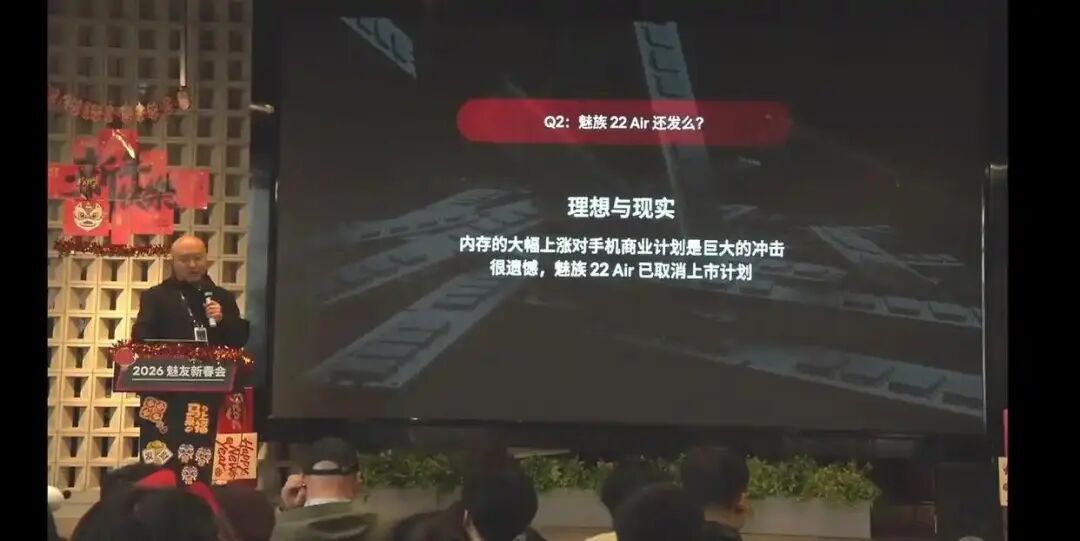
Group 1 - The price of memory chips has surged dramatically, with 16GB DDR4 memory increasing by 1800% and DDR5 by 500% compared to last year [1][3] - The automotive industry is facing significant cost pressures due to rising memory prices, with estimates suggesting that the memory cost for a car priced around 300,000 yuan has increased by 2,000 to 4,000 yuan [3][5] - Car manufacturers may respond to rising memory costs by either increasing prices or reducing features without lowering prices, leading to a potential decline in consumer experience [5][6] Group 2 - The primary driver behind the skyrocketing memory prices is the AI industry, which requires significantly more memory for training large models, diverting production away from standard memory used in consumer electronics and vehicles [6][7] - Major memory manufacturers like Samsung and SK Hynix have seen their stock prices soar, with Micron Technology's stock projected to increase by 240% by 2025 [7][9] - Domestic companies like Changxin Technology are emerging as potential players in the memory market, but they currently only meet a fraction of domestic demand, with China consuming nearly 40% of global memory but producing less than 10% [9][11] Group 3 - The current memory crisis resembles the previous chip shortage, where the focus was on basic components rather than advanced chips, indicating a supply chain issue that may persist [6][12] - Consumers looking to purchase vehicles may want to wait for potential price adjustments or take advantage of current pricing before manufacturers adjust for increased costs [13]

盘点2025:让车企走下坡路的九大“致命伤”
3 6 Ke· 2026-01-16 12:12
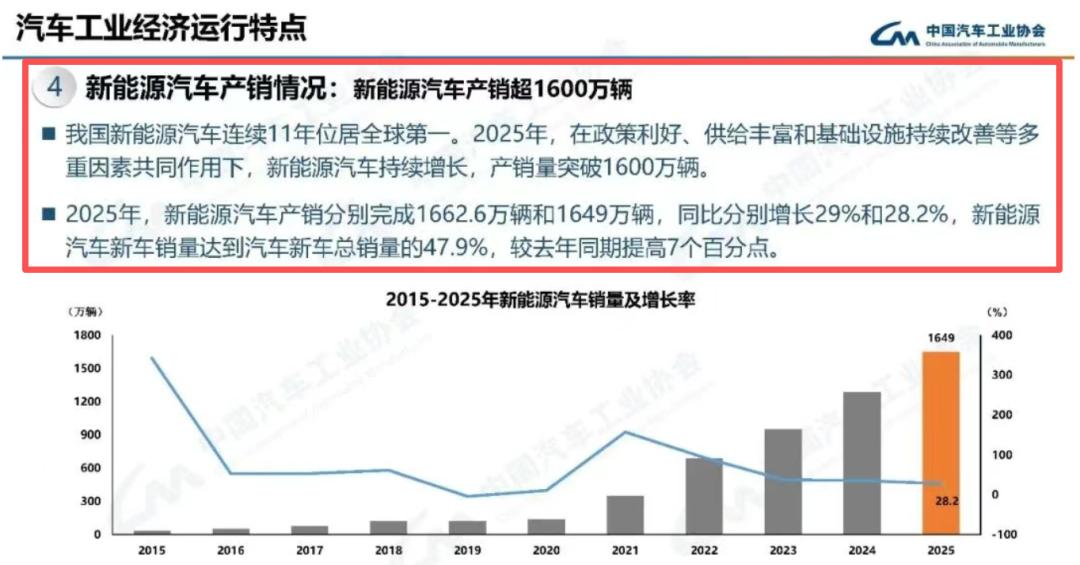
Core Insights - The Chinese electric vehicle (EV) market saw record production and sales in 2025, with 16.626 million units produced and 16.49 million units sold, marking a year-on-year growth of 29% and 28.2% respectively, maintaining its position as the global leader for 11 consecutive years [1][3] - A significant industry reshuffle is underway, with previously dominant brands experiencing declines, highlighting that success now hinges on minimizing errors rather than just speed [3][4] Group 1: Market Dynamics - The rapid evolution of the EV market has led to increased competition, with companies like Li Auto facing challenges due to slow product line updates, resulting in lost market share [4][9] - Competitors have surpassed Li Auto in key metrics such as electric range and technology, prompting Li Auto to accelerate its product upgrade cycle from four years to two [9][10] Group 2: Quality Control Issues - Manufacturing quality issues, such as the "spray powder" problem affecting BYD vehicles, have led to customer dissatisfaction and complaints, indicating potential weaknesses in quality control and supply chain management [10][11][14] - These quality concerns can erode brand loyalty and consumer trust, as they directly impact user experience [14] Group 3: Marketing and Trust - Some companies are engaging in "small print marketing," which obscures critical information and can lead to trust erosion among consumers, as seen with Xiaomi's SU7 [15][18] - The practice of reducing vehicle configurations without proper disclosure has resulted in significant backlash, particularly for XPeng's G6 model, leading to a sharp decline in brand reputation [18][22] Group 4: Design and Consumer Perception - Controversial design choices, such as those made for the Li Auto MEGA, have sparked public debate and negatively affected sales and brand image [23][25] - A disconnect between innovative design and consumer expectations can lead to adverse market reactions [25] Group 5: Supply Chain and Financial Health - The financial struggles of companies like Nezha, which reported a mere 15.45 million yuan in cash against debts exceeding 26 billion yuan, highlight the risks of aggressive expansion without solid financial foundations [30][32] - Poor supplier choices can lead to significant reputational damage, as seen with Zeekr's "zero self-ignition" claim being undermined by safety incidents [33][35] Group 6: Product Recalls and Safety - Major recalls due to safety issues, such as those affecting Xiaomi and BYD, underscore the importance of rigorous product testing and quality assurance [36][39] - Recalls not only incur financial costs but also severely damage brand reputation and consumer confidence [39] Group 7: Competitive Landscape - The EV industry is evolving into a comprehensive competition encompassing strategic stability, technological innovation, honest marketing, and robust supply chain management [39] - Companies that respect manufacturing principles and maintain a focus on user value are more likely to succeed in this challenging environment [39]
10家品牌荣膺“2025年度北京商业匠心智造品牌”
Bei Jing Shang Bao· 2026-01-16 08:57
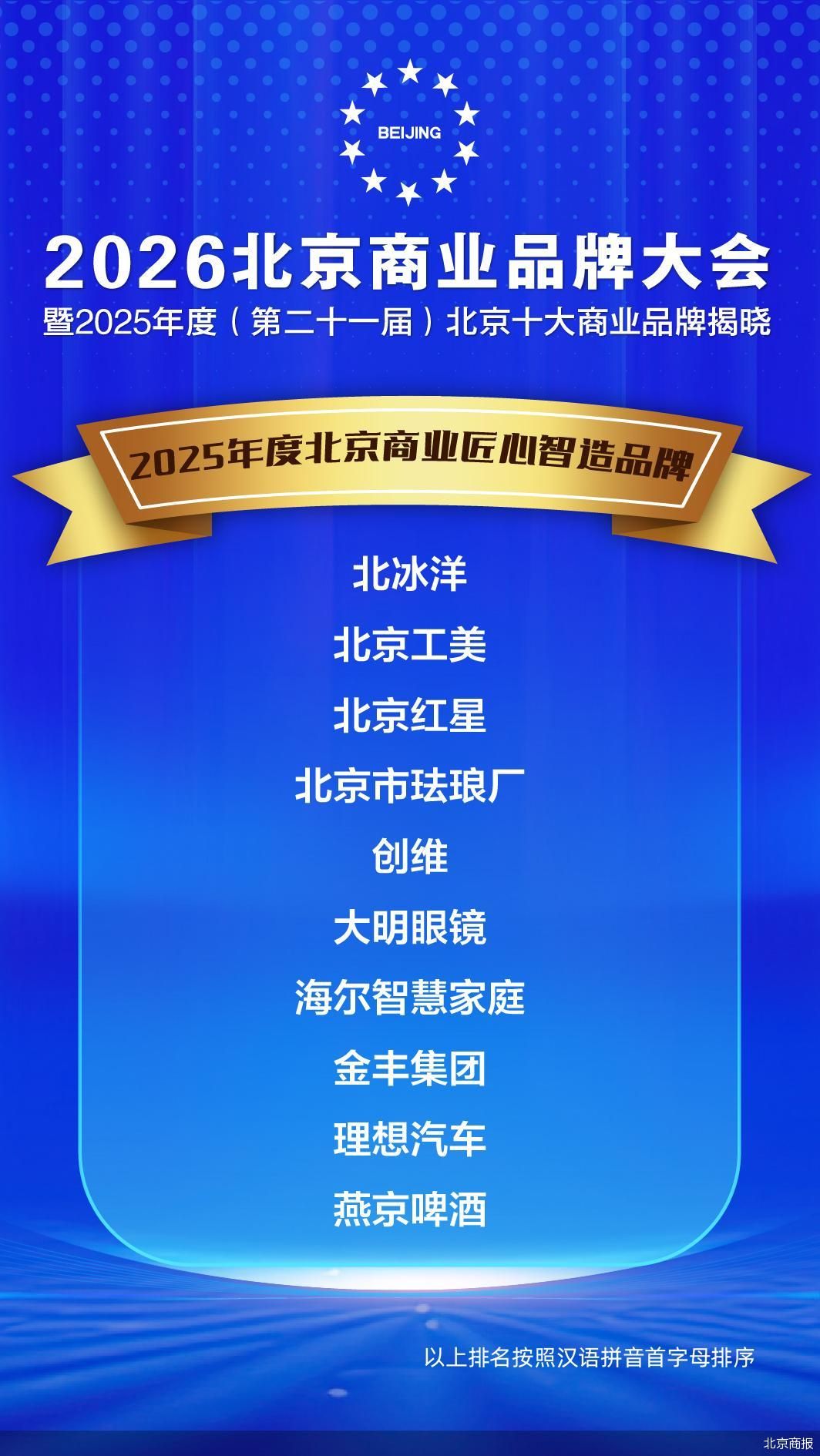
Core Insights - The 2026 Beijing Commercial Brand Conference and the announcement of the 2025 Top Ten Commercial Brands took place on January 16, guided by the Beijing Municipal Bureau of Commerce and organized by the Beijing Daily Media Group and the Beijing Commercial Association [1][4] - The theme of the event was "New Demand, New Supply," with government leaders, commercial experts, and corporate representatives gathering to witness the recognition of outstanding brands in Beijing [1] Group 1: Main Awards - The "2025 Top Ten Commercial Brands" represents brands with significant market influence and leadership in industry development [4] - The ten brands awarded as "2025 Beijing Commercial Craftsmanship Brands" include Beibingyang, Beijing Gongmei, Beijing Hongxing, Beijing Enamel Factory, Skyworth, Daming Glasses, Haier Smart Home, Jinfeng Group, Li Auto, and Yanjing Beer [1] Group 2: Subcategories and Special Awards - Four permanent subcategories were introduced: "Beijing Commercial Quality Service Brand," "Beijing Commercial Model Innovation Brand," "Beijing Commercial Craftsmanship Brand," and "Beijing Commercial New Star Brand" [4] - Three new special award categories were introduced for the first time: "2025 Financial Product Innovation Empowering Consumption Excellent Cases," "Beijing Cultural, Commercial, Tourism, and Sports Integration Excellent Cases," and "Beijing Fashion Consumption Power Leading Brand" [4]


汽车公司或降价或补贴,但没能迎来预想中的“开门红”
Xin Lang Cai Jing· 2026-01-16 03:48
Core Insights - The Chinese automotive market in 2026 has not experienced the anticipated "opening red" sales, with significant declines in both retail and wholesale figures for passenger vehicles compared to the previous year [1][10] - The adjustment of the new energy vehicle (NEV) purchase tax from full exemption to a 50% reduction has led to increased vehicle costs, impacting consumer purchasing decisions [1][11] - Despite promotional efforts from over 20 automakers to mitigate the effects of policy changes, consumer sentiment remains cautious, with many opting to wait for better deals [4][5][10] Market Performance - From January 1 to January 11, 2026, retail sales of passenger vehicles reached 328,000 units, a 32% decrease year-on-year, while wholesale figures were 381,000 units, down 40% year-on-year [1] - The penetration rate of NEVs has dropped significantly, with retail penetration at 35.5% and wholesale at 43.9%, both below the 50% average of 2025 [1] Consumer Behavior - Consumers are increasingly comparing NEVs with traditional fuel vehicles due to the increased cost of NEVs, with a price difference of around 10,000 yuan influencing purchasing decisions [2][5] - Many consumers are adopting a wait-and-see approach, seeking to compare various brands and waiting for potential discounts before making a purchase [5][10] Promotional Strategies - Over 20 automakers have introduced promotional policies, including price reductions and extended financing options, to attract buyers amid declining sales [4][5] - BMW has made significant price adjustments, with some models seeing reductions of over 300,000 yuan, reflecting the competitive landscape in the luxury car market [4][5] Inventory and Production - The delivery times for previously popular models have shortened, indicating a shift in demand and production capacity [7] - Some automakers are facing inventory pressure, with certain models being offered at substantial discounts to clear stock [8][10] Industry Trends - The automotive industry is shifting from a focus on price competition to value competition, with an emphasis on product quality and technological advancements [14][15] - The market is expected to see a growth in the 15 to 20 million yuan NEV segment, as automakers adjust their strategies to focus on this profitable market [11][14] Future Outlook - The overall automotive market in China is projected to reach 34.75 million units in 2026, with NEVs expected to grow by 15.2% to 19 million units [14] - The industry is anticipated to undergo a transformation as it adapts to policy changes and consumer preferences, with a focus on enhancing product value and expanding into international markets [14][15]
美团也要卖车了;贾国龙回应西贝关闭102家;千问App接入支付宝,上线AI付款;雷军:新一代小米SU7将提供9款配色丨邦早报
Sou Hu Cai Jing· 2026-01-16 00:44
Group 1: Company Developments - Xibei Restaurant confirmed the closure of 102 stores, which accounts for 30% of its total outlets, and assured customers that stored value cards can be used at other locations or refunded [1] - Thunder restarted litigation against former CEO Chen Lei, claiming damages of up to 200 million yuan due to alleged hidden asset extraction through a shadow company [3] - Xiaomi's new SU7 model will offer nine color options and is expected to launch in April 2026 with a starting price of 229,900 yuan [4] - Ideal Auto appointed Zhan Kun to lead the base model business, focusing on the development of the VLA (Vision-Language-Action) model [5] - Meituan entered the car sales market by signing a strategic cooperation agreement with Shanghai Xiche Future Intelligent Technology [5] - Wang Jian's company, Bawang Tea, is suing a netizen for defamation related to personal matters, with a court date set for March 3 [5] - Citigroup's CEO Jane Fraser indicated potential layoffs as part of efforts to improve company culture and profitability [7] - Former CEO of Weilong, Sun Yinan, has joined Dayao as CEO [7] - OpenAI's former research vice president is returning to the company following a leadership change at Thinking Machines [7] Group 2: Market Trends and Financial Data - The pickup market in China is projected to sell 589,000 units in 2025, reflecting a year-on-year growth of 11.8% [12] - Omdia's research indicates a slight decline of 1% in China's smartphone market for 2025, with Huawei regaining the top position with 46.8 million units sold [12][13] - The total smartphone shipments in China for 2025 are estimated at 282.3 million units, with Huawei, Vivo, and Apple leading the market shares [13]





向质而行!2025中国汽车驶出增长新动能
Zhong Guo Jin Rong Xin Xi Wang· 2026-01-15 13:33
Group 1 - The core viewpoint of the article highlights that China's automotive industry has achieved significant milestones in 2025, with production and sales both exceeding 34 million units, and new energy vehicles (NEVs) surpassing 16 million units, marking a continuous 17-year dominance in the global market [1][2] - The market share of NEVs in domestic new car sales has exceeded 50%, indicating that NEVs have become the dominant force in China's automotive market [2][3] - Major breakthroughs in the automotive sector include BYD surpassing Tesla in annual pure electric vehicle sales, and significant milestones achieved by other companies like FAW-Volkswagen and Changan Automobile [2] Group 2 - The penetration of intelligent assisted driving technology has accelerated, with over 60% of new passenger cars sold featuring advanced driving assistance systems [3] - The cost of battery cells has decreased, and improvements in battery life and charging speed have alleviated "range anxiety" for electric vehicles, with a growing charging infrastructure [3] - The automotive industry is experiencing a convergence with robotics and low-altitude economy, creating a new ecosystem that enhances technological integration and innovation [6] Group 3 - The automotive industry in China is undergoing a phase of standardization, with measures being implemented to regulate market competition and ensure safety [7][9] - A series of reforms have been introduced to combat "involution" in the market, promoting a shift from scale expansion to value enhancement among car manufacturers [9][10] - The "14th Five-Year Plan" emphasizes the importance of building a modern industrial system and enhancing the supply-demand adaptability of consumer goods, with smart connected vehicles being a key focus area [10]

本田讴歌预告新一代RDX:首款双电机混合动力系统讴歌车型;理想调整基座模型业务:詹锟接手,VLA 研发整合丨汽车交通日报
创业邦· 2026-01-15 10:15
Group 1 - Major automotive manufacturers, including Hyundai and Porsche, will voluntarily recall over 344,000 vehicles in South Korea due to various parts defects [2] - Li Auto has appointed Zhan Kun to lead the base model business, focusing on the integration of the VLA (Vision-Language-Action) model for autonomous driving and smart cockpit technologies [2] - CATL and Changan Automobile signed a five-year strategic cooperation memorandum to enhance collaboration in technology application, market expansion, and brand promotion [2] Group 2 - Acura has announced the development of the next-generation RDX compact SUV, which will be the first Acura model equipped with a dual-motor hybrid system [2]



从两个“百万”看中国新能源汽车产业量质齐升
Zhong Guo Zhi Liang Xin Wen Wang· 2026-01-15 09:20
Group 1 - The core message highlights the significant milestones achieved by Chinese electric vehicle manufacturers, with NIO producing its one-millionth vehicle, symbolizing a dual breakthrough in scale and brand for the industry [1] - The emergence of new energy vehicle companies like NIO, Li Auto, and Xpeng has redefined the automotive industry in China, moving away from traditional fuel vehicles to electric and intelligent models, thus reshaping business models and user relationships [2] - The collaboration between Huawei and JAC Motors to create the high-end vehicle, the Zunji S800, signifies a shift in the automotive industry towards high-end pricing and advanced technology integration, marking a new phase in China's automotive evolution [2] Group 2 - Data from the China Association of Automobile Manufacturers indicates strong performance in the new energy vehicle sector, with production and sales reaching 14.907 million and 14.78 million units respectively from January to November 2025, reflecting year-on-year growth of 31.4% and 31.2% [3] - The Chinese new energy vehicle industry is transitioning from survival to value creation, indicating a maturation phase as brands aim for global competitiveness [3]

