
Microsoft(MSFT)

Search documents
Worried About an AI Bubble? This Stock Gives You Exposure Without the Risk.
The Motley Fool· 2026-02-01 14:05
Core Viewpoint - The rise of artificial intelligence (AI) has significantly impacted technology valuations, with Microsoft positioned as a strong player in the AI ecosystem through its cloud platform, Azure [1][2]. Group 1: Microsoft's Role in AI - Microsoft is the second-largest cloud platform globally, behind Amazon Web Services (AWS), and plays a crucial role in supporting AI development through Azure [3]. - Azure's revenue has shown impressive growth, with a 40% year-over-year increase in the first quarter of fiscal year 2026 [4]. Group 2: Financial Performance and Market Position - Microsoft has a market capitalization of $3.2 trillion, with a current stock price of $429.91 and a gross margin of 68.59% [5][6]. - The company maintains a diversified portfolio, including enterprise software, Windows, Xbox, hardware, and LinkedIn, which mitigates risks associated with AI dependency [7][8]. Group 3: Investment Considerations - While some companies may be overly reliant on AI for growth, Microsoft's established business model ensures stability regardless of AI market fluctuations [7]. - The primary concern for Microsoft is whether its significant investments in AI will yield tangible profits, but its financial strength allows for strategic spending in the competitive AI landscape [9].


Microsoft’s $381 Billion Rout Exposes Dark Side of the AI Binge
Yahoo Finance· 2026-02-01 14:00
Wall Street’s apprehension about the cost of developing artificial intelligence technology has been simmering beneath the surface of the stock market for months. Now it’s starting to boil over. Microsoft Corp. reported solid earnings on Wednesday, but investors zeroed in on stagnating growth in its Azure cloud-computing business and the more than $100 billion it’s expected to dole out in capital spending this year. The next day, the stock tumbled 10%, and the selling continued on Friday, wiping out $381 b ...
How Microsoft Corporation (MSFT) Is Scaling AI Into Its Next Growth Engine
Yahoo Finance· 2026-02-01 13:30
Group 1 - Microsoft Corporation (NASDAQ:MSFT) is positioned as a key player in the AI expansion, with early investments in OpenAI contributing to its growth [1][2] - The company reported a 23% increase in net income to $30.9 billion and a 17% rise in revenue to $81.3 billion for the three months ending December 2025, surpassing consensus estimates [2] - Capital expenditure surged by 66% year over year to $37.5 billion, primarily due to increased spending on data centers to leverage the AI boom [2][3] Group 2 - CEO Satya Nadella emphasized that the significant rise in capital expenditure will be justified as businesses adopt Microsoft's technology [3] - Nadella stated that Microsoft has built an AI business larger than some of its major franchises, indicating strong growth potential in this sector [3] - Microsoft offers a diverse range of products and services, including Windows, Microsoft 365, Azure cloud services, LinkedIn, and Xbox [4]
4万个工作岗位,如何改变一个400万人口城市的命运?
虎嗅APP· 2026-02-01 13:11
以下文章来源于TOP创新区研究院 ,作者创新区研究组 TOP创新区研究院 . 创新区研究,就在TOP研究院。TOP研究院专注于全球创新区的一体化研究,从Talent(个人), Organization(组织), Place(区域)三大维度出发,通过"研究/连接/分享",探索中国创新区的实践路径。 本文来自微信公众号: TOP创新区研究院 ,作者:创 新区研究组,原文标题:《4万个工作岗位, 是如何改变一个400万人口城市命运呢?》,头图来自:视觉中国 4万个工作岗位,将如何改变一个400万人口城市的命运呢? 让我们从1979年的微软说起。 当年,微软决定将总部从新墨西哥州的阿尔伯克基,迁至西雅图东部的雷德蒙德小镇,迁到了他熟悉 的"故乡",这一决定不仅为当地带来了4万个就业岗位,也成为西雅图科技繁荣的磁石,吸引了众多 高科技企业接踵而至。 这其中,便有亚马逊。 1994年,杰夫·贝佐斯辞去华尔街工作,决心做一家在线书店。当时他在犹豫,因为俄勒冈有最大的 批发书商英格拉姆图书公司 (Ingram Book Company) ,运输成本上就更占优势。 但初始投资人尼古拉斯·汉默 (Nicholas Hammuer ...


境外权益(港美股)周度策略报告-20260201
Guo Tai Jun An Qi Huo· 2026-02-01 12:21
国泰君安期货·君研海外 境外权益(港美股)周度策略报告 国泰君安期货研究所· 海外研究 戴璐 Z0021475 联系人 杨藤 F03151619 日期:2026年2月1日 Guotai Junan Futures all rights reserved, please do not reprint 美股:本周微软大跌,市场在寻求盈利与Capex间更直接的联系 微软/甲骨文代表的软件公司与费城半导体(硬件)的差距进一步拉大 标普500成分股近1/3披露财报,美股各板块25Q4财报业绩仍然强劲 | 屯围 本期 | CQ4 结束: 11/16/2025 - 2/15/2026 V 周期 季度 | P | | --- | --- | --- | | &P 500 INDEX | | | | 意外 農民 | | | | 分类(BICS) | 营业收入意外 盈利意外 | 申报 | | #13 全部证券 | 165 / 500 1.43% 9.35% | | | 12) > 材料 | 0.63% 0.31% | 10 / 27 | | 13) > 工业 | 2.37% 31.01% | 37 / 74 | | 14 > 必 ...
高盛交易员:大逻辑没有变化,不要“过度解读”过去两天的暴跌,尤其要考虑1月大涨
Sou Hu Cai Jing· 2026-02-01 11:15
Core Insights - The market experienced extreme volatility this week, with Microsoft facing its second-largest single-day market value loss and SAP dropping 16% [1][2] - Silver saw a dramatic 30% drop in a single day, reflecting extreme volatility in the precious metals market [4][5] - Despite these fluctuations, key market drivers such as the dollar's performance, AI investment enthusiasm, strong U.S. economic growth, and geopolitical shifts remain unchanged [1][7][9] Market Performance - Microsoft’s stock fell by 10%, resulting in a record nominal trading volume, while SAP's stock plummeted by 16% with similarly high trading activity [2] - In contrast, Meta and Verizon saw significant gains, with increases of 10% and 11% respectively [2] Precious Metals Volatility - Silver's volatility surged to levels not seen since the darkest days of the global financial crisis and the COVID-19 lockdowns, driven by leverage, retail enthusiasm, and momentum chasing [4][5] - The SLV ETF trading volume exceeded $32 billion, and the GLD ETF recorded over $30 billion in trading volume for two consecutive days [4] Investor Positioning - Investor positioning has reached extreme levels, with total exposure at the 99th percentile, indicating overcrowding in holdings [1][10] - The semiconductor sector now represents 12% of hedge fund net risk exposure, up from just 1% two years ago, while the software sector has decreased from 18% to 3% [10] Economic and Geopolitical Context - The ongoing trends in the market reflect a strong U.S. economic growth momentum and a reordering of geopolitical priorities, particularly in defense and supply chains [9] - The dollar's performance continues to be a critical variable, with implications for monetary policy under the new Federal Reserve chair [7][11] Key Themes and Predictions - The narrative around AI may be shifting, with a more stringent identification of beneficiaries expected as the initial excitement wanes [11] - Hard assets, particularly copper, are gaining importance in investment portfolios due to infrastructure demand trends [12] - European equities face challenges, with current pricing reflecting a bleak outlook for the macroeconomic environment [13] - The potential for a stock market bubble remains a critical question for investors [14]




算力供给紧张,成为2026年主线
HUAXI Securities· 2026-02-01 11:13
证券研究报告|行业研究周报 [Table_Date] 2026 年 2 月 1 日 算力供给紧张,成为 2026 年主线 [Table_Title2] 计算机行业周报 [Table_Summary] 本周观点: 算力供给紧张,成为 2026 主线 全球 AI 基建需求依然强劲,26 年海外 AI 算力依然是主要配置方 向。TrendForce 预测 2025 年全球八大主要 CSPs 资本支出(CapEx) 总额约 4,300 亿美元(yoy+65%),预期 2026 年 CSPs 仍将维持积极 的投资,资本支出将进一步推升至 6,000 亿美元以上(yoy+40%), 展现出 AI 基础建设的长期成长潜能。 海外大厂创造 2026 算力新格局 根据财经宇宙,微软 CEO Satya Nadella 表示未来微软从 OpenAI 的"独家运营商",转型为全球 AI 资源的总调度商,让企业客户 能根据成本与性能需求,在 GPT 5.2、Claude4.5 等多款大模型间 灵活选择。微软正通过这种饱和式的基建投入,试图在 AI 从技术 神话下沉为工业底座的过程中,完成从一家"软件服务商"向未来 "算力基础服务商" ...
Could This Tech-Heavy Vanguard Fund Be Due for a Significant Decline in 2026?
The Motley Fool· 2026-02-01 10:23
Core Insights - The Vanguard Information Technology ETF (VGT) has shown significant growth, up 120% over the past three years, outperforming the S&P 500, which has risen approximately 73% during the same period [2][3]. Performance Overview - The S&P 500 index has experienced an average annual growth rate of about 20% over the last three years, significantly exceeding its long-term average of 10% [2]. - The Vanguard Information Technology ETF is currently priced at $747.92, with a daily change of -1.69% [6]. Valuation Concerns - Valuations for tech stocks are considered high, with major holdings in the ETF, such as Nvidia, Apple, and Microsoft, each accounting for over 12% of the fund, collectively making up around 45% of the entire portfolio [4][5]. - The market caps of these tech giants exceed $3 trillion, and their price-to-earnings multiples are over 30, indicating they are not cheap investments [5]. Investment Strategy - The performance of the Vanguard Information Technology ETF is heavily influenced by its largest holdings, suggesting that the overall success of the fund is tied to the performance of these leading tech companies [5]. - Companies are expected to continue investing heavily in AI, which could drive stock prices higher in the near future, despite the current high valuations [7]. Risk Assessment - The ETF's concentration in a few large tech stocks raises concerns for risk-averse investors, as a market correction could significantly impact the fund's performance [4][5]. - Individual risk tolerance is crucial in determining whether the ETF is a suitable investment, with long-term investors potentially finding it a good fit, while retirees may consider less volatile options [8][9].


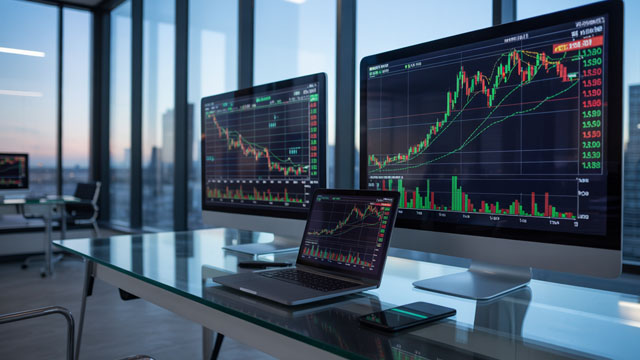
高盛交易员:大逻辑没有变化,不要"过度解读"过去两天的暴跌,尤其要考虑1月大涨
华尔街见闻· 2026-02-01 10:01
市场在本周创下多项极端纪录,微软遭遇史上第二大单日市值损失,SAP暴跌16%,白银单日重挫30%…… 高盛交易部门负责人Mark Wilson表示,尽管市场近期出现剧烈波动,但投资者不应过度解读这场"持仓清洗",因为 年初至今推动市场的核心驱动因素并未发 生实质性改变。 Wilson在周度报告中指出,评估此次调整的严重程度时, 应将其与1月以来的涨幅相提并论。 他强调,美元走势延续、AI投资热情不减、美国经济增长势头强 劲以及地缘政治重塑等关键变量均未改变。年初至今的市场表现依然反映这些核心趋势——稀土涨35%,核能股涨21%,欧洲防务涨20%。 这场调整的直接诱因是投资者持仓过度拥挤。 总敞口已处于99百分位数的极端水平,系统化量化策略的表现显示拥挤度成为突出问题。Wilson认为,此次快速 回调更多是技术性调整,而非基本面逻辑的转变。 市场本周的波动幅度令人瞠目。 微软单日下跌10%,遭遇史上第二大市值损失,但同时创下有史以来最高的名义成交额。SAP暴跌16%,同样伴随创纪录的交易量。涨幅方面同样惊人,Meta 上涨10%,Verizon飙升11%。 贵金属市场的波动更为极端。白银单日暴跌30%,SLV ...

电子行业研究:北美大厂AI开支超预期,存储业绩持续爆发
SINOLINK SECURITIES· 2026-02-01 09:53
需求恢复不及预期的风险;AIGC 进展不及预期的风险;外部制裁进一步升级的风险。 敬请参阅最后一页特别声明 1 继续看好 AI-PCB 及核心算力硬件、苹果产业链及自主可控受益产业链。Meta 2026 年全年资本开支指引超预 期,闪迪 2026 第三财季业绩指引超预期。我们继续看好覆铜板及存储芯片涨价趋势,具有较强的持续性,从产 业链公司陆续公布的营收及利润来看,业绩在持续兑现,继续看好核心受益公司。继续看好 AI-PCB 及核心算力 硬件、苹果产业链及自主可控受益产业链。 细分行业景气指标:消费电子(稳健向上)、PCB(加速向上)、半导体芯片(稳健向上)、半导体代工/设备/材料 /零部件(稳健向上)、显示(底部企稳)、被动元件(稳健向上)、封测(稳健向上)。 北美大厂 AI 开支超预期,存储业绩持续爆发。Meta 预计 2026 年全年资本支出在 1150 亿至 1350 亿美元之间, 主要用于数据中心、服务器和网络基础设施,较 25 年的约 700 亿美元 CAPEX 实现显著增长。我们看到 AI 对 meta 自身业务实现了积极帮助,AI 改进了推荐算法,直接导致用户在平台上的停留时间增加,新的序列学 ...
