
NIO(NIO)

Search documents
蔚小理2025年第三季度财报解析:小鹏交付量领跑 蔚来冲刺四季度盈利
Zhong Guo Zhi Liang Xin Wen Wang· 2025-12-09 07:28
Core Insights - The Chinese electric vehicle market is entering a critical phase of stock competition, with distinct performance differences among NIO, Xpeng, and Li Auto, reflecting a shift from single-dimensional competition to comprehensive strength comparison in the industry [1] NIO - NIO's multi-brand strategy has begun to yield results, achieving record delivery and revenue figures, with 87,071 vehicles delivered in Q3, a year-on-year increase of 40.8% and a quarter-on-quarter increase of 20.8% [3] - Q3 revenue reached 21.79 billion yuan, up 16.7% year-on-year and 14.7% quarter-on-quarter, with a significant improvement in profitability as automotive gross margin rose to 14.7%, the highest in three years [3][5] - Cost optimization has been a key factor in profitability improvement, with R&D expenses down 28% to 2.39 billion yuan, and cash reserves increased to 36.7 billion yuan, providing a solid foundation for future operations [5] - NIO aims for aggressive profitability targets, projecting Q4 deliveries of 120,000 to 125,000 vehicles, a year-on-year increase of 65.1% to 72.0%, and revenue of 32.76 billion to 34.04 billion yuan, a year-on-year increase of 66.3% to 72.8% [5] Xpeng - Xpeng experienced explosive growth in Q3, achieving record delivery of approximately 116,000 vehicles, a year-on-year increase of 149.3% and a quarter-on-quarter increase of 12.4% [10] - Total revenue reached 20.38 billion yuan, up 101.8% year-on-year, with a gross margin of 20.1%, marking a significant milestone [10][12] - R&D expenses reached a historical high of 2.43 billion yuan, reflecting a long-term commitment to technology development, while Q4 delivery guidance indicates a cautious approach with expected deliveries of 125,000 to 132,000 vehicles [12][14] Li Auto - Li Auto ended a streak of 11 consecutive profitable quarters, with Q3 revenue down 36.2% to 27.4 billion yuan and a net loss of 624 million yuan, marking its first quarterly loss in three years [15][17] - Q3 delivery volume was approximately 93,200 vehicles, a year-on-year decline of 39.0%, primarily due to weak demand for range-extended vehicles and slow ramp-up of pure electric models [17] - Despite the challenges, Li Auto maintains a strong cash reserve of 98.9 billion yuan and plans to return to a startup management model to focus on user value and efficiency improvements [19][21] Industry Trends - The competition logic in the electric vehicle market has fundamentally changed, with a focus on technological innovation as the new core competitive advantage, moving away from reliance on single blockbuster models or price wars [21] - The year 2026 is anticipated to be pivotal for reshaping the landscape of new forces in the industry, with the success of NIO, Xpeng, and Li Auto hinging on their strategic execution and responsiveness to market changes [21]


准备五年,小米蔚来相中的这家公司要上市,基本面如何?
Sou Hu Cai Jing· 2025-12-09 06:49
Core Viewpoint - The market for high-precision AI solutions is experiencing explosive growth, with a projected increase from RMB 47.7 billion in 2019 to RMB 222.5 billion by 2024, reflecting a compound annual growth rate of 36.1% [3]. Company Overview - Wisdom Interconnect Technology Co., Ltd. focuses on AI technology and spatial intelligence solutions, particularly in urban traffic management, utilizing computer vision and multimodal perception technologies [3]. - The company has been preparing for an IPO since 2021 and has recently submitted its application to the Hong Kong Stock Exchange after several previous attempts [3]. Market Position - Wisdom Interconnect ranks fourth among spatial intelligence solution providers in China's smart transportation sector, holding a market share of 6.6%, and is the leading provider of roadside spatial intelligence solutions with a 19.3% market share [5][6]. - The company has attracted investments from notable entities such as Xiaomi Group, NIO, and various venture capital firms [5]. Financial Performance - Revenue figures for Wisdom Interconnect during the reporting period are as follows: RMB 538 million in 2022, RMB 618 million in 2023, RMB 699 million in 2024, and RMB 103 million in the first half of 2025, with corresponding gross profits of RMB 128 million, RMB 154 million, RMB 209 million, and RMB 13.54 million [7]. - The company has reported continuous net losses totaling RMB 1.172 billion over the past three and a half years, primarily due to changes in the fair value of financial instruments [7]. Revenue Composition - The primary revenue source for Wisdom Interconnect is its roadside spatial intelligence solutions, with revenue contributions of 42.2%, 46%, 66.8%, and 87.1% across the reporting periods [8][9]. - The competitive landscape in the smart parking sector is intense, with numerous brands emerging, indicating no single dominant player [8]. Customer Dynamics - The number of clients has decreased from 257 to 59 over the reporting period, while the concentration of revenue from major clients has increased significantly [10]. - Despite the decline in total clients, the number of long-term stable clients has risen from 9 in 2022 to 30 in the first half of 2025, indicating a shift towards more sustainable relationships [10].
中概新能源车走高 蔚来(NIO)升2.68% 前11个月新能源乘用车国内零售销量同比增近2成
Xin Lang Cai Jing· 2025-12-09 05:32
金吾财讯 | 中概新能源车走高,蔚来(NIO)升2.68%,小鹏汽车(XPEV)升1.58%,理想汽车(LI)升0.85%。 来源:金吾财讯 乘联分会数据显示,11月新能源乘用车国内零售销量达132.1万辆,同比增长4.2%。前11个月,新能源 乘用车国内零售销量达1147.2万辆,同比增长19.6%。 ...
从“创新”到“立标”:蔚来牵头共同发布线控转向标准
Huan Qiu Wang· 2025-12-09 05:04
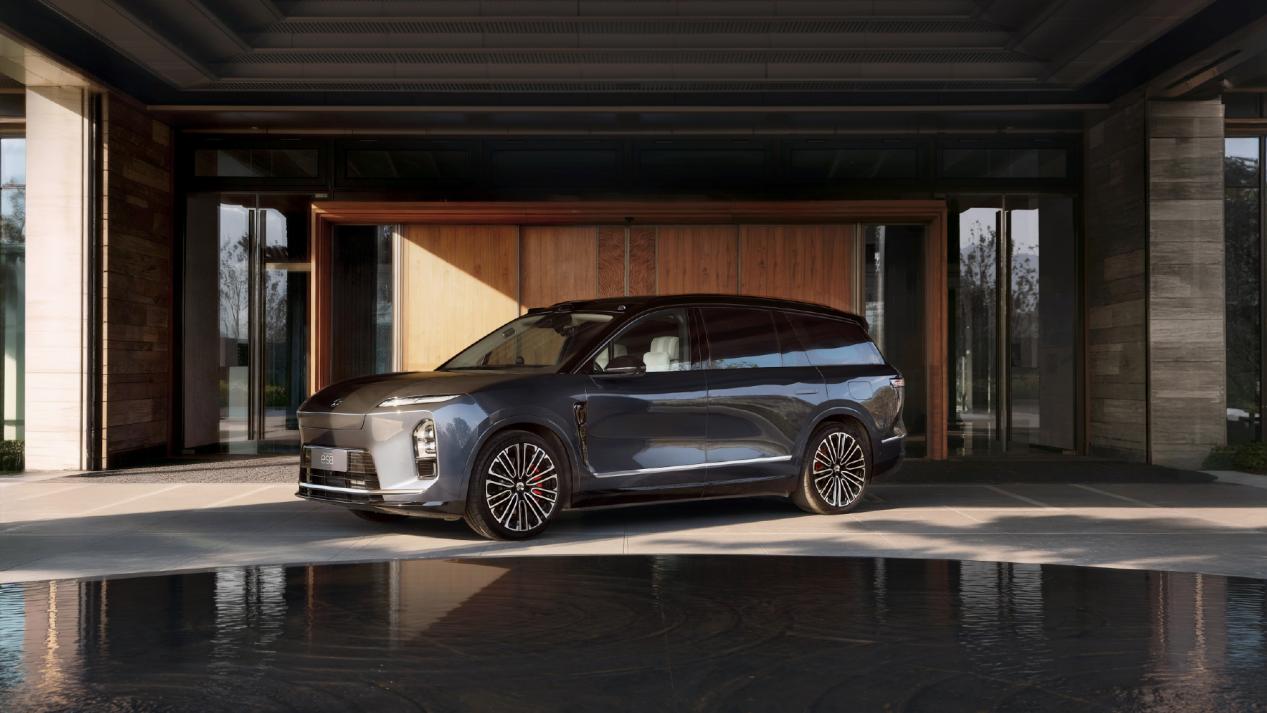
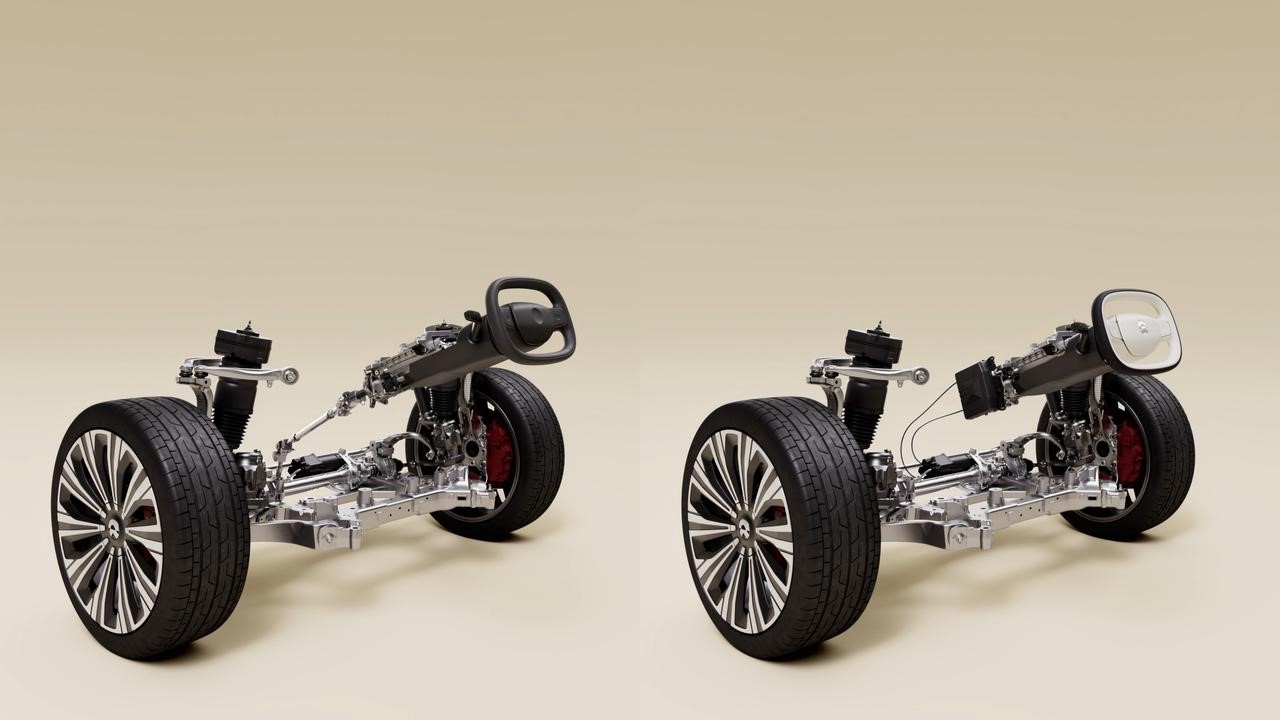
Core Viewpoint - The approval and implementation of the national standard GB17675-2025 for steer-by-wire systems in China marks a significant milestone in the automotive industry, transitioning from mechanical connections to advanced electronic steering technologies [1][5][10] Group 1: Technology Development - Steer-by-wire technology, originating from aerospace applications, has evolved over two decades to address the complexities of automotive environments, requiring a robust underlying architecture for reliability [2][5] - The new standard defines stringent safety and performance benchmarks, mandating dual redundancy in power, communication, and control systems to ensure steering functionality is maintained even in the event of a single failure [5][9] Group 2: Industry Impact - NIO's ET9 is the first mass-produced vehicle in China to utilize steer-by-wire technology, set to begin deliveries in Q1 2025, representing a critical industrial breakthrough in the smart electric vehicle era [4][10] - The establishment of the national standard is expected to streamline R&D and collaboration costs across the automotive supply chain, providing clear technical guidelines for component suppliers [9][10] Group 3: Consumer Experience - The steer-by-wire system allows for real-time adjustment of steering ratios, enhancing user experience during maneuvers such as parking, and enabling more precise control for autonomous driving algorithms [9][10] - The transition to steer-by-wire technology simplifies vehicle structure, reduces component complexity, and optimizes space and performance, paving the way for future software-defined vehicle features [9][10]
汽车:2026展望:鏖战升维,破界竞争
Zhao Yin Guo Ji· 2025-12-09 03:23
Investment Rating - The report assigns a "Buy" rating to several companies in the automotive sector, including Xpeng Motors, Geely Automobile, Great Wall Motors, BYD, GAC Group, and others, with target prices ranging from 2.5 to 125 [3][4]. Core Insights - The Chinese automotive industry is expected to achieve record-high retail and wholesale sales in 2025, with a more complex landscape anticipated in 2026 due to the phasing out of subsidies and tax incentives [2][4]. - The report expresses a more optimistic view on the resilience of the automotive sector compared to market expectations, predicting a slight decline in retail sales by 0.1% to 2,415 million units in 2026, while wholesale sales are expected to grow by 2.9% to 3,125 million units [4][22]. - The competition in the automotive sector is expected to intensify, with a record number of new models anticipated in 2026, leading to a potential increase in market share for domestic brands [4][24]. Summary by Sections Sales Forecast - Retail sales of passenger vehicles in China are projected to reach 2,418 million units in 2025, a 3.2% increase year-on-year, while wholesale sales are expected to exceed 3,000 million units for the first time [44][52]. - The report anticipates that the retail sales will remain stable in 2026, supported by the importance of automotive consumption to the Chinese economy and the introduction of new models [22][44]. Market Dynamics - The report highlights that the competition among automakers will become more fierce, with a record 173 new models expected to be launched in 2026 [23][24]. - The demand for electric vehicle batteries is expected to rise, potentially leading to increased battery prices, which could impact automaker profit margins [23][24]. Investment Strategy - The report recommends Geely Automobile as a top pick due to its solid fundamentals and attractive valuation, alongside the battery manufacturer Zhengli New Energy, which is expected to benefit from rising battery prices and a growing customer base [28][29]. - The report suggests that the valuation gap between traditional automakers and new entrants is likely to narrow as both groups adapt to market changes [25][26]. Export Potential - The report forecasts that China's passenger vehicle exports will increase by 16% in 2026, driven primarily by the growth in electric vehicle exports, which are expected to rise by 40% [61][62]. - The potential market for Chinese brands overseas is estimated at 7.8 million units, indicating significant growth opportunities in various regions [61][62].



从“量产先行”到“标准共建”:蔚来等牵头共同发布线控转向标准
Ren Min Wang· 2025-12-09 03:01
Core Viewpoint - The newly released GB17675-2025 standard for steer-by-wire (SBW) systems marks a significant advancement in China's automotive industry, addressing reliability challenges associated with the mass production of steer-by-wire technology [1][3]. Group 1: Standard Release and Implications - The GB17675-2025 standard for steer-by-wire systems has been officially published, indicating a move towards more advanced automotive technologies in China [1]. - The standard aims to ensure the reliability of steer-by-wire systems, which rely on redundant designs in power supply, communication, software, and hardware to maintain safety under extreme conditions [1]. Group 2: Company Initiatives and Investments - NIO, as one of the leading entities in the standard's development, has successfully addressed reliability issues in steer-by-wire systems through a dual-redundancy architecture, with its ET9 model set for delivery in Q1 2025 [1]. - NIO has invested over 50 billion yuan in the development of core technologies for smart electric vehicles, maintaining a quarterly R&D expenditure of approximately 3 billion yuan since 2022, and holds over 9,300 patents globally [1]. Group 3: Industry Impact and Future Directions - The practices of leading companies like NIO will guide the upstream supply chain, including chips, sensors, actuators, and software, towards high-end applications and overall upgrades [3]. - The establishment of the standard reflects the capabilities of top domestic automotive companies in technology development, complex system engineering, and the ability to translate practice into standards [3]. - The standard provides a basis for product access and application of steer-by-wire technology, marking a new phase in the development of intelligent chassis in the automotive sector [3].
港股开盘 | 恒指高开0.06% 新能源汽车板块走强 蔚来(09866)涨1.4%
智通财经网· 2025-12-09 01:37
恒生指数高开0.06%,恒生科技指数跌0.11%。盘面上,新能源汽车板块强势,蔚来涨1.4%,小鹏汽车 涨1.35%;半导体跌幅靠前,中芯国际跌1.67%,华虹半导体跌1.32%。 关于港股后市 国信证券认为,港股短期调整为2026年市场上涨打开空间。从资金面上看,11月南向资金净流入港股市 场超1100亿元人民币。今年南向资金在港股下跌时依然逆向加仓,这既体现了内地资金的充裕流动性, 也彰显了其低位布局港股的强烈意愿。该机构预测,港股2026年有望在30000-32000点之间运行。 光大证券表示,经历2025年反弹后,从估值来看,目前恒指市盈率高于过去5年均值,并向上偏离约一 个标准差,反映总体估值有所修复,但处合理区间;而科技指数刚回升至5年均值,反映估值仍有追落 后的空间。港股明年有机会再次见到30,000点以上的水平。近20年,港股股息收益率与内地10年债息之 差,与恒指的走势呈现出高度负相关性。随着近年港股上市企业逐步提升派息水平,恒指30,000 点所对 应的股息收益率仍然较目前内地债息环境具吸引力。 华夏基金认为,港股科技此前因非理性恐慌超跌,现利空已缓解,展望未来,AI发展路径务实,商业 化 ...
今日A股市场重要快讯汇总|2025年12月9日
Xin Lang Cai Jing· 2025-12-09 00:23
Group 1: Market Overview - The three major US stock indices closed lower on Monday, with the Dow Jones down 0.45%, the Nasdaq down 0.14%, and the S&P 500 down 0.35% [1][7] - Large tech stocks showed mixed performance, with Broadcom rising over 2%, while Tesla and Netflix fell over 3% [1][7] Group 2: Commodity and Currency Dynamics - WTI crude oil fell below $59 per barrel, down 1.84% [3][9] - Gold futures briefly surpassed $4220 per ounce before retreating, closing down 0.79% [4][9] - Spot gold fell below $4180 per ounce, down 0.39% [5][9] - US natural gas futures dropped over 9% due to narrowing temperature drop forecasts and high production levels, currently at $3.849 per million British thermal units [5][9] - A 7.5 magnitude earthquake near eastern Honshu, Japan, caused short-term fluctuations in the USD/JPY exchange rate, which rose by 0.5% to 155.81 yen [5][9] Group 3: International Market Developments - Paramount launched a hostile takeover bid for Warner Bros. Discovery, offering $30 per share in cash, an 8% premium over Netflix's previous $720 billion acquisition offer of $27.75 per share, potentially providing shareholders with an additional $18 billion in cash benefits [10] - Warner Bros. owns several major networks including CNN, TBS, HGTV, and the HBO Max streaming platform, with Paramount claiming the proposal is more likely to pass regulatory scrutiny [10] - Former President Trump plans to sign an executive order this week to simplify AI industry regulatory approval processes, aiming to prevent individual states from creating conflicting regulations that could undermine the US's competitive edge in AI [10]


8点1氪|盒马回应“草莓蛋糕制作中将糖放成盐”;万达集团被恢复执行17亿;国家税务总局:严禁平台向“小哥”转嫁涉税义务
3 6 Ke· 2025-12-09 00:02
Group 1 - Hema acknowledged issues with strawberry cakes sold, affecting approximately 60 units across 7 stores due to ingredient handling errors [2] - Wanda Group has a new enforcement order for over 1.7 billion yuan, with over 6.9 billion yuan in total enforcement amounts against the company [2] - The State Taxation Administration prohibits platform companies from shifting tax obligations to gig workers, ensuring they are not overcharged [3][9] Group 2 - PepsiCo plans to reduce its product variety in the U.S. market by nearly 20% by early next year, aiming to cut operational costs and enhance efficiency [5] - The price of three-valent flu vaccines has dropped to 5.5 yuan, attributed to intense competition and oversupply in the vaccine market [8] - Paramount has proposed a cash acquisition offer of $30 per share for Warner Bros. Discovery, valuing the company at $108.4 billion [7] Group 3 - Faraday Future's board approved a five-year plan to produce 400,000 to 500,000 vehicles, with the first batch of FX Super One vehicles set to roll off the production line [13] - The International Monetary Fund (IMF) has officially launched its Shanghai Regional Center to enhance cooperation with the Asia-Pacific region [12] - The U.S. government announced a $12 billion aid package for farmers affected by tariff policies, addressing the negative impact on agricultural markets [14]

纳斯达克中国金龙指数收涨0.08%,热门中概股涨跌不一
Mei Ri Jing Ji Xin Wen· 2025-12-08 21:09
Core Viewpoint - The Nasdaq China Golden Dragon Index experienced a slight increase of 0.08%, indicating mixed performance among popular Chinese concept stocks [1] Group 1: Stock Performance - Baidu saw a significant rise of over 3% [1] - Xpeng Motors and New Oriental both increased by more than 2% [1] - NIO and GDS Holdings rose by over 1% [1] - Li Auto, Bilibili, and Kingsoft experienced slight gains [1] - ZTO Express, Ctrip, and NetEase all declined by more than 2% [1]


