
Nvidia(NVDA)

Search documents
高盛顶级科技交易员称“分化仍是游戏的核心”
Goldman Sachs· 2026-02-10 03:24
Investment Rating - The report indicates a mixed sentiment towards the technology sector, with a focus on dispersion among stocks, suggesting a cautious but potentially favorable investment environment for select companies [6][18]. Core Insights - The technology sector is experiencing significant dispersion, with approximately 50 stocks in the Nasdaq 100 index rising over 60% while another 50 stocks have fallen by over 40% since October [6][8]. - Institutional trading has favored selling, particularly in the information technology sector, with hedge funds net selling U.S. stocks for the fourth consecutive week [8][9]. - The forward P/E ratio for the Nasdaq 100 has decreased from 28-29 times in late 2025 to about 24-25 times, indicating a return to more normalized valuation levels [9][11]. - The report highlights strong earnings growth expectations for the information technology and communication services sectors, projecting around double-digit growth in earnings per share (EPS) for the year [11]. Summary by Sections Market Performance - The Nasdaq 100 index has shown volatility, with the worst three-day performance since April 2025, yet ended the week nearly flat [5][6]. - Major tech stocks like Amazon, Microsoft, and Meta have seen their prices decline, raising questions about market sentiment and future performance [9][22]. Earnings and Revenue Insights - The report notes that 85% of companies in the information technology sector reported positive surprises in earnings, indicating strong performance relative to expectations [12]. - The anticipated capital expenditures for major tech companies are projected to grow by 65% in 2026, reaching $618 billion, up from previous estimates of $537 billion [18]. Sector-Specific Observations - The software as a service (SaaS) sector is under scrutiny, with investors uncertain about the sustainability of recent rebounds in stock prices [15][18]. - The report emphasizes the importance of capital expenditure trends, particularly for companies like Google, Amazon, and Microsoft, as they navigate through a period of uncertainty regarding profitability and growth [18][22]. Investor Sentiment - There is a notable divide in investor sentiment regarding the potential of artificial intelligence and its impact on the tech sector, with some viewing it as a disruptive force while others remain cautious [14][24]. - The report identifies several stocks as controversial, including Uber and Take-Two Interactive, reflecting the ongoing debates about their future performance and market positioning [13][26].





硅光和CPO产业趋势分析及当前的投资建议
2026-02-10 03:24
分析师 2: 尊敬的各各位同仁,大家早上好。也是很抱歉在周一的早上打扰大家来听我们的电话会。 我也看到了有大几十位的投资人已经在线了。周末的其实威尔的 CPU 的讨论,并不是我 们特别想看到的,一方面大量的信息源是来自于这个就是专家专家口径。另一方面,很多 的讨论已经到了就是大家对 CPU 预测动机这个层面上去,相关的信息网上都能看到,我 们不涉及这个部分。但是在今天早上,也就是在春节前的最后一个交易日,我们出来讨论 这个问题。其实也是沿着我个人还有我们团队一贯的风格,我们正本清源地去讨论我们现 在已经看到的,基于公开信息。 去怎么看待 CPU,光模块的这些关系。我们也是希望包括我们的策略,我们也是希望能够 帮助我们的客户,在面对 CPU 产业缺失的时候,继续能把,在把握下一轮的光通信的投 资上,有更清晰的思路和逻辑。我们在 2026 年的年度策略报告里的,针对光的这个部分, 我们提出了三个层次的思考。分别叫做业绩核心、关键增量和估值变量。在这个关键,在 这个业绩核心里,我们提出了围绕着归工的 1.6T,中国的光芯片行业,包括龙头的光模块 公司正在努力的向上游攀升。 这样的话,未来的三年,我们有希望看到中国的 ...
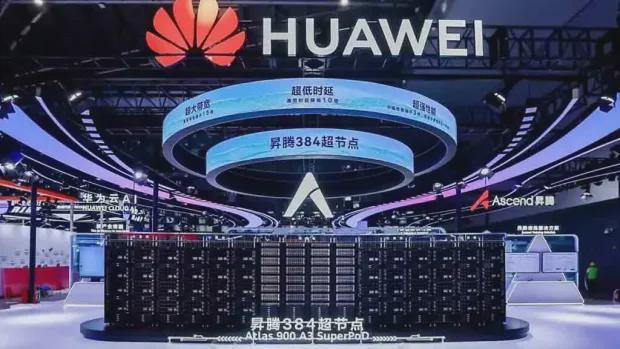
华为超节点赶超英伟达:驾驭“光”很关键
Guan Cha Zhe Wang· 2026-02-10 03:20
Core Insights - The emergence of SuperPods as a new AI computing infrastructure has become a focal point in the industry since 2025, with Huawei's Ascend 384 SuperPod leading the way in performance metrics compared to foreign competitors [1][3] - The demand for computing power is far from being met, with token consumption expected to exceed trillions daily in China, highlighting the inadequacy of simply stacking servers to address the computing gap [3][4] Group 1: SuperPod Characteristics - SuperPods are not merely about stacking chips; they represent a fundamental restructuring of traditional computing architectures, enabling equal interconnectivity among CPUs, NPUs, and memory units [4][6] - Key features of a true SuperPod include high bandwidth to eliminate communication delays, low latency, and the ability to form a logically unified system through unified memory addressing [6][7] Group 2: Efficiency and Performance - SuperPods can significantly enhance computing efficiency, with potential model utilization rates increasing from 30% to 45%, effectively a 50% improvement, which can help mitigate the limitations of chip manufacturing processes [7][8] - The architecture of SuperPods differs from traditional systems, as Huawei employs optical communication technology, allowing for greater scalability and interconnectivity compared to NVIDIA's copper-based systems [8][9] Group 3: Innovation and Ecosystem - Huawei's systematic innovation in chip design, optical components, and foundational protocols has positioned it uniquely in the market, leveraging over 20 years of experience in optical technology [9][12] - The company is also developing general computing SuperPods, with the TaiShan 950 SuperPod set to launch in Q1 2026, aimed at replacing various server applications [11][12] Group 4: Software and Community Engagement - The success of SuperPods relies not only on hardware but also on a robust software ecosystem, including open-source initiatives like CANN and openEuler, which are crucial for fostering industry collaboration [14] - Huawei has engaged a large developer community, with 3.8 million registered developers for Kunpeng and nearly 4 million for Ascend, emphasizing the importance of open-source collaboration in the AI era [14]

硅光,大爆发
3 6 Ke· 2026-02-10 03:15
Core Insights - Silicon photonics technology is transforming data centers, with significant changes expected in the future [1] - The market for optical devices is projected to grow significantly, driven by advancements in artificial intelligence networks [3][25] - The transition from copper cables to fiber optics is underway, with major companies like Corning and Meta making substantial investments [7][12] Market Growth - The optical device market has grown from several billion dollars in 2003 to approximately $13 billion in 2023, with expectations to reach $25 billion by 2030 [3] - CignalAI forecasts the market will reach $31 billion by 2029, indicating robust growth in the sector [3] - Coherent's investor report predicts the pluggable optical device market will grow from $6 billion in 2023 to $25 billion by 2030 [12] Technology Advancements - Silicon photonics integrates previously disparate photonic devices into improved CMOS processes, enhancing data transmission capabilities [6] - The use of single-mode fiber (SMF) is prevalent in optical communications, with various wavelength bands utilized for low signal loss [9][11] - Coherent and Lumentum are key players in the optical circuit switch (OCS) technology market, with potential market sizes being revised upwards due to increasing customer interest [15] Industry Dynamics - Companies like Nvidia and Broadcom are set to launch Ethernet switches using co-packaged optical devices (CPO) to reduce power consumption [16] - The shift towards CPO is driven by its energy efficiency, which is one-third of that of pluggable devices, making it significant for large-scale applications [18][25] - TSMC is positioned to become a leading silicon photonics foundry, with projected revenues from silicon photonics expected to exceed $1 billion by the end of the decade [21][26] Competitive Landscape - GlobalFoundries has claimed the top position in silicon photonics foundry services, with a focus on long-haul coherent applications [21] - Tower Semiconductor is also a significant player, offering an open platform for silicon photonics that caters to a growing market [23][24] - The silicon photonics industry is expected to see rapid growth, with projections indicating an eightfold increase in foundry revenues from 2026 to 2032 [25]



未知机构:华泰通信关于CPO我们应该关注什么-20260210
未知机构· 2026-02-10 02:25
Summary of Conference Call on CPO by Huatai Communication Industry Focus - The discussion centers around the **CPO (Co-Packaged Optics)** technology and its rising market interest, indicating a significant shift in investment focus towards this area [1][2]. Core Insights and Arguments 1. **Rising Market Attention**: - The market's attention on CPO has rapidly increased due to potential catalysts expected in the next 1-2 months, including GTC, OFC, and related US earnings reports. Additionally, the surge in Taiwanese stocks related to CPO has contributed to this heightened interest, alongside a shift in A-share market focus from quarterly performance to long-term growth potential [2][3]. 2. **Application Scenarios**: - CPO technology is expected to reduce power consumption and lower trial-and-error costs. Companies like NVIDIA and Broadcom are anticipated to lead the push for CPO in the "scale out" side, while the "scale up" side will leverage CPO's advantages in transmission distance and integration, potentially allowing for optical integration within cabinets, indicating a broad future growth space [4]. 3. **Mass Production Timeline and Clients**: - NVIDIA is projected to achieve mass production of CPO by Q4 2026, with bulk production starting in 2027. Clients likely to adopt these solutions first include those purchasing complete NV solutions, such as CoreWeave and Lambda in NeoCloud, as well as major CSPs like Microsoft and Oracle [5]. 4. **Investment Opportunities**: - CPO is expected to drive incremental demand for both active and passive components. The report highlights optimism for passive components like FAU/MPC, shuffle, and polarization-maintaining MPO, with companies such as Tianfu, Zhishang, Taichengguang, and Juguang being key players. For active components, leading optical module manufacturers like Xuchuang and Xinyi are expected to engage in optical engine design, while optical chip manufacturers like Yuanjie may enter the ultra-high power CW light source market [6]. Other Important Insights - The report emphasizes the importance of understanding the evolving landscape of CPO technology and its implications for various stakeholders in the optical communication industry. It also notes that the insights regarding companies not covered in the report are based on publicly available information [6].
未知机构:国联民生通信硅光和CPO产业趋势分析及当前的投资建议会议纪要-20260210
未知机构· 2026-02-10 02:20
Summary of Conference Call on Silicon Photonics and CPO Industry Trends Industry Overview - The conference focuses on the trends in the Silicon Photonics (SiPh) and Co-Packaged Optics (CPO) industries, particularly the advancements in CPO technology and its implications for the optical module market [1][2]. Key Points and Arguments CPO Technology Development - NVIDIA has updated its CPO switches to a 200G platform, indicating that the CPO replacement will not deepen at the 100G platform, with future penetration rates centered around 1.6T optical modules [1][2]. - By 2026, NVIDIA aims to promote CPO applications in scale-out scenarios, while scale-up replacements face higher barriers such as SerDes rates and CoWoS industry collaboration [1][2]. CPO's Impact on Optical Modules - Two high-power CW light sources can replace one 1.6T optical module. For instance, NVIDIA's Quantum switch, which has a capacity of 51.2T, originally required 72 1.6T optical modules but can now operate with only 144 CW light sources, resulting in a fourfold reduction in laser requirements [1][6]. Competitive Landscape - Lumentum and Coherent predict that pluggable optical modules will remain the main product from 2026 to 2027, covering rates of 1.6T and 3.2T. CPO's advantages will only manifest in specific scenarios, such as AI supercomputers with over 100,000 GPUs [2][3]. Optical Module Industry Fundamentals - Lumentum has initiated 6-inch wafer production for EML, quadrupling output and halving costs, which is expected to alleviate concerns regarding 1.6T optical module capacity by 2026 [2]. - Major tech companies like Amazon, Google, Microsoft, and Meta are projected to have capital expenditures of $260 billion in 2026, a 60% year-on-year increase, ensuring short-term demand for optical modules [2][11]. Investment Logic and Valuation - Leading companies like Xuchuang and Xinyi have not reached a strong consensus on profit forecasts related to 1.6T optical module deliveries, leading to attractive valuations. Signals of upstream EML capacity expansion are expected to shift market sentiment from capacity concerns to demand optimism [2][11]. CPO/OCS Technical Progress - CPO technology is advancing in scale-out scenarios, with NVIDIA's 200G platform already having products available. However, the TCO advantage of CPO is only significant in ideal scenarios with large-scale clusters [3][10]. - The scale-up scenario is seen as the core direction for CPO, but it requires advancements in 400G SerDes and CoWoS packaging, with no clear product forms currently available [3][10]. Industry Chain and Investment Strategy - Key players in the CPO/OCS industry include NVIDIA's partners such as Broadcom, Corning, and TSMC. Investment strategies should focus on core players within the industry chain [4][5]. - The investment strategy suggests focusing on confirmed targets within the CPO/OCS sector, avoiding high-risk investments, and capitalizing on market fluctuations through strategic positioning [5][7]. Market Sentiment and Future Outlook - The sentiment around CPO is currently weak, impacting the demand and long-term valuation of optical modules. However, the expected capital expenditures from leading tech companies provide a solid foundation for short-term demand [11][12]. - The market is expected to experience high volatility as new technologies progress, and investors are advised to remain cautious and strategic in their approach to CPO and optical module investments [12][13]. Additional Important Insights - Discussions around the potential use of CPO in the RubinUltra L2 layer remain speculative, with no official confirmation. If implemented, it would not affect the demand for external scale-out optical modules [8][9]. - The NPO technology is progressing rapidly, with manufacturers pushing for samples and advancements, potentially offering competitive advantages over CPO in terms of production feasibility and cost [10].
未知机构:三星电子预计将在本月开始向英伟达量产并出货这是业界-20260210
未知机构· 2026-02-10 02:10
三星电子预计将在本月开始向英伟达量产并出货—— 这是业界首次。 不过,据报道三星在英伟达全部 HBM4 需求中的份额仅为 "中 20%"范围。 三星的 HBM4 拥有业界最高的性能(工作速率为每秒 1.7 吉比特),也是第一个通过质量(qual)测试的。 那么为什么三星在英伟达配额中的预计份额仍落后于仍在进行最终 qual测试的 SK 海力士(中 50% 三星电子预计将在本月开始向英伟达量产并出货—— 这是业界首次。 我们试图回答这一近期在市场上日益受到关注的问题。 据半导体行业消息人士 9 日透露,英伟达在去年 12 月暂定将 HBM4 的供货量分配给三星电子、SK 海力士和 美光 ——SK 海力士约占中数 50% 多一点、三星约占中数 20% 多一点、美光约占 20%。 英伟达在认证测试尚未完成前就分配供货量是有原因的:由于 HBM 的生产需 "超过六个月",必须提前将产量分配 给供应商,以确保今年下半年配备 HBM4 的新款人工智能加速器 Vera Rubin能稳定量产。 不过,据报道三星在英伟达全部 HBM4 需求中的份额仅为 "中 20%"范围。 三星的 HBM4 拥有业界最高的性能(工作速率为每秒 ...
未知机构:为什么三星只获得了英伟达HBM4配额的20-20260210
未知机构· 2026-02-10 02:10
为什么三星只获得了英伟达 HBM4 配额的 20%? 三星电子预计将在本月开始向英伟达量产并出货HBM4(第六代高带宽内存)—— 这是业界首次。 不过,据报道三星在英伟达全部 HBM4 需求中的份额仅为 "中 20%"范围。 三星的 HBM4 拥有业界最高的性能(工作速率为每秒 1.7 吉比特),也是第一个通过质量(qual)测试的。 那么为什么 为什么三星只获得了英伟达 HBM4 配额的 20%? 据半导体行业消息人士 9 日透露,英伟达在去年 12 月暂定将 HBM4 的供货量分配给三星电子、SK 海力士和美光 ——SK 海力士约占中数 50% 多一点、三星约占中数 20% 多一点、美光约占 20%。 英伟达在认证测试尚未完成前就分配供货量是有原因的:由于 HBM 的生产需 "超过六个月",必须提前将产量分配 给供应商,以确保今年下半年配备 HBM4 的新款人工智能加速器 Vera Rubin能稳定量产。 据称,这些分配考虑了与 HBM 供应商多年的交易历史、各公司 HBM4 的生产能力,以及通过认证测试的可能 性。 对 HBM4 技术实力的验证感到满意…… 三星的盈利能力最大化策略 三星约 20% 的市 ...

韩国SK集团会长与英伟达CEO黄仁勋举行“炸鸡会谈”
Xin Lang Cai Jing· 2026-02-10 02:09
据业内消息人士周一透露,韩国SK集团会长崔泰源最近在美国与英伟达CEO黄仁勋会面,双方就高带 宽内存(HBM)供应以及更广泛的人工智能业务合作事宜进行了商讨。 据消息人士透露,此次会面于本月早些时候在加州的一家炸鸡店举行。双方讨论了 HBM4 的供应计 划,HBM4 是下一代 HBM 技术,预计将在英伟达即将推出的名为"维拉鲁宾"的AI加速器中得到应用。 竞争对手三星电子公司预计将于今年下半年开始生产 HBM4 产品。 业内消息人士称,SK海力士今年仍很可能会是英伟达最大的 HBM 供应商,其在 HBM4 市场的份额预 计约为 70%。 上述消息人士称,此次讨论还涉及了与 SK 集团有关的潜在合作事宜,该集团正计划在存储芯片之外拓 展人工智能解决方案业务。 据报道,崔泰源从本月月初起就一直在美国,与美国一些大型科技公司的高管们举行了一系列会议。 责任编辑:于健 SF069 据业内消息人士周一透露,韩国SK集团会长崔泰源最近在美国与英伟达CEO黄仁勋会面,双方就高带 宽内存(HBM)供应以及更广泛的人工智能业务合作事宜进行了商讨。 据消息人士透露,此次会面于本月早些时候在加州的一家炸鸡店举行。双方讨论了 HBM ...
硅谷“炸鸡会谈”:SK海力士董事长密晤黄仁勋,锁定55%HBM4份额并开启AI基建协作
Hua Er Jie Jian Wen· 2026-02-10 01:58
硅谷的炸鸡店里,或许没有精致的餐具,但却盛放着数千亿美元的生意。 据韩国媒体报道,当地时间2月5日,正在美国访问的SK集团会长崔泰元与英伟达CEO黄仁勋,在硅谷 的一家名为"99 Chicken"的韩式炸鸡店中进行了一场非正式的"炸鸡啤酒(Chimaek)会谈"。 观察人士称,双方的讨论内容可能不仅限于第六代高带宽内存(HBM4)的供应量谈判,还包括在构建 下一代AI数据中心方面的战略合作。 这是SK集团以HBM为杠杆,正式进军下一代AI基础设施市场的信号。 HBM4供应格局,SK海力士承诺无障碍交付 此次会晤的焦点在于HBM4的供应保障。英伟达下半年将推出的下一代AI加速器"Vera Rubin"将采用每 片288吉字节容量的HBM4。 由于HBM生产需约4个月,加上台积电封装的2至3个月,整个周期长达6至7个月,这使得英伟达对拥有 行业最大产能的SK海力士依赖程度加深。 SK海力士去年底与英伟达达成协议,将供应HBM4需求量的55%以上,目前正在进行性能优化。崔泰 元在会面中向黄仁勋承诺"无障碍供应"。 据报道,SK海力士的HBM4虽采用12纳米晶圆代工和1b DRAM等相对落后一代的工艺,但性能表现与 ...