
PDD(PDD)

Search documents
国内最值钱 IT 公司排行
猿大侠· 2025-07-07 03:16
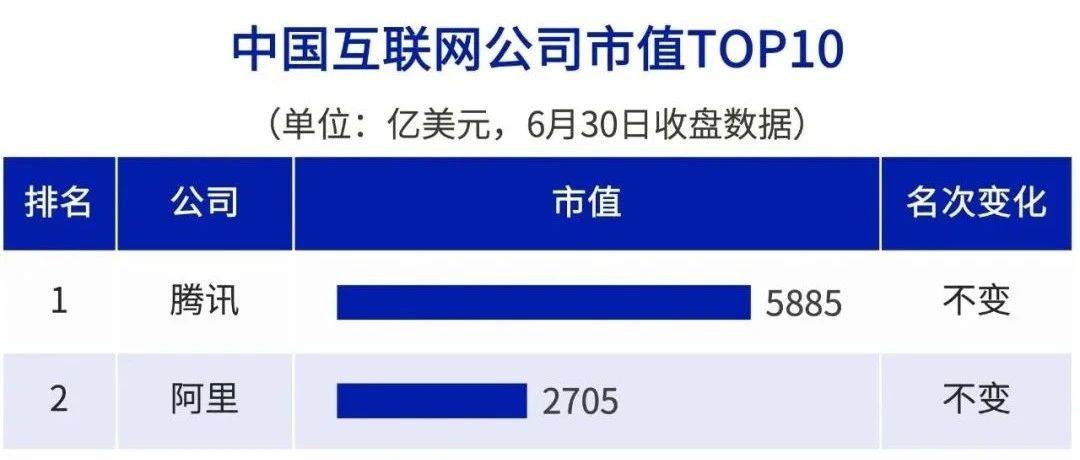
Core Viewpoint - The article discusses the shift in the ranking of China's top internet companies from the traditional BAT (Baidu, Alibaba, Tencent) to the current ATM (Alibaba, Tencent, Xiaomi), highlighting the decline of Baidu and the rise of Xiaomi due to its successful automotive sales [2][4][5]. Group 1: Market Capitalization Rankings - The current top 10 internet companies in China by market capitalization are led by Tencent at 588.5 billion, followed by Alibaba at 270.5 billion, and Xiaomi at 198.7 billion [4]. - Baidu has fallen out of the top 10, now valued less than Tencent Music, indicating a significant decline in its market position [5]. Group 2: Campus Recruitment Salaries - Tencent's campus recruitment offers range from 24k to 33k monthly, with total annual packages between 36 million to 55.5 million [7][8]. - Alibaba's offers are competitive, with total packages ranging from 41.8 million to 54.4 million [9][10]. - Xiaomi's offers are lower, with total packages between 16.5 million to 39 million [11][12]. - Pinduoduo offers the highest salaries, with total packages reaching up to 66.6 million [13][14]. - Meituan's offers range from 29.45 million to 62 million, indicating a strong recruitment strategy [15]. - NetEase offers packages between 33 million to 60.8 million, reflecting its profitability in the gaming sector [16][17]. - JD's offers are competitive, with total packages exceeding 50 million for some positions [18][19]. - Ctrip's offers range from 33 million to 42 million, comparable to leading internet companies [20][21]. - Kuaishou's average annual salary for campus recruits is over 40 million, showing a significant increase from the previous year [22]. - Tencent Music's recruitment packages are also competitive, reflecting its rising market value [23]. Group 3: Historical Context - A comparison of internet company rankings from 2015 shows Tencent, Alibaba, and Baidu as the top three, while projections for 2025 suggest Tencent, Alibaba, and Xiaomi will lead the market [24][25].






外卖电商平台补贴,咖啡茶饮和广告渠道直接受益
SINOLINK SECURITIES· 2025-07-06 13:53
Investment Rating - The report maintains an optimistic outlook for the Hong Kong stock market, particularly for new IPOs and sectors like new consumption and innovative pharmaceuticals [8]. Core Insights - The report highlights that the recent subsidies from food delivery e-commerce platforms directly benefit coffee, tea, and advertising channels [8]. - The education sector remains robust, with leading institutions expanding market share and developing AI products for international education [3][19]. - The luxury goods sector is experiencing slight pressure from macroeconomic factors, but brands with strong innovation capabilities are still seeing growth [20]. - The coffee and tea industry is in a growth cycle, with coffee demand remaining strong, while tea faces short-term challenges due to increased competition [27]. - E-commerce is under pressure with slowing growth rates, but instant retail is emerging as a new battleground [31]. - The travel and OTA sectors are seeing limited impact from recent subsidies, with a focus on undervalued leading players [8]. - Music streaming platforms are identified as quality internet assets driven by domestic demand, with ongoing developments in subscription services [36]. - The virtual asset market is on an upward trend, supported by traditional financial institutions entering the space [40]. - The real estate market is under pressure, particularly in major cities, with a focus on opportunities in companies like Beike [8]. - The automotive service market is experiencing a decline, with a continued focus on ecosystem changes [8]. Summary by Sections 1. Education - The K12 education sector remains highly prosperous, with leading institutions reporting good summer enrollment progress and a focus on AI product development [3][19]. - The education index saw a decline of 1.78% during the reporting period, outperforming the Hang Seng Technology Index but underperforming other major indices [10]. 2. Luxury Goods - The luxury goods sector is slightly pressured by macroeconomic factors, with notable growth in brands with strong innovation [20]. - Key luxury stocks showed positive performance, with Samsonite and Prada increasing by 5.61% and 6.09% respectively [20]. 3. Coffee and Tea - The coffee sector remains in a growth cycle, with strong demand and a high frequency of consumption [27]. - The tea sector faces short-term challenges due to increased competition and supply growth [27]. 4. E-commerce - The e-commerce sector is experiencing a slowdown, with significant competition impacting profitability [31]. - Instant retail is becoming a new focus, with major platforms launching aggressive subsidy plans [31]. 5. Travel and OTA - The travel sector is seeing limited impact from subsidies, with a focus on undervalued leading players [8]. 6. Music Streaming - Music streaming platforms are identified as high-quality assets driven by domestic demand, with ongoing developments in subscription services [36]. 7. Virtual Assets - The virtual asset market is on an upward trend, with traditional financial institutions increasingly entering the space [40]. 8. Real Estate - The real estate market is under pressure, particularly in major cities, with a focus on opportunities in companies like Beike [8]. 9. Automotive Services - The automotive service market is experiencing a decline, with a continued focus on ecosystem changes [8].



电商年中大促收官:“剁手党”疯狂扫货,数据亮瞎眼!
Sou Hu Cai Jing· 2025-07-06 03:56
Core Insights - The 2025 e-commerce mid-year promotion has set a new record in consumer spending, showcasing a significant increase in sales across various platforms [1][3] - Major e-commerce platforms, including traditional giants like Taobao and JD, as well as emerging players like Pinduoduo and Douyin, have all reported substantial revenue growth during this event [3] - The rise of live-streaming sales has transformed the shopping experience, with influencers achieving impressive sales figures, indicating a shift in consumer purchasing behavior [3] E-commerce Performance - The overall consumption scale during the promotion reached historical highs, with platforms experiencing explosive growth in sales figures [3] - Cross-border e-commerce has also seen a remarkable increase in order volume, reflecting consumers' eagerness to purchase international products from the comfort of their homes [3] Consumer Behavior - The promotion's success is attributed to improved consumer purchasing power, as individuals are willing to spend on both essential and luxury items [3] - The efficiency of logistics has enhanced the shopping experience, with rapid delivery times contributing to consumer satisfaction [3] Marketing Strategies - E-commerce platforms employed various promotional tactics, such as discounts and bundled offers, to attract consumers, demonstrating the effectiveness of these marketing strategies [3] - Despite some consumers expressing concerns about overspending, the overall sentiment remains positive, highlighting the appeal of these promotional events [3] Market Dynamics - The vibrant performance of the e-commerce sector during the promotion reflects the resilience and dynamism of the consumer market, indicating a strong demand for quality products [3] - The event not only benefited businesses but also provided consumers with a satisfying shopping experience, showcasing a win-win scenario for both parties [3]

海外建厂隐性成本易被忽略,配持枪保安、建食堂是当地刚需丨鲸犀百人谈Vol.39
雷峰网· 2025-07-04 11:07
Core Viewpoint - The article emphasizes that going global is akin to a new era of entrepreneurship, where heavy asset investment must adhere to a long-term perspective [1] Group 1: Historical Context of Chinese Companies Going Global - 28 years ago, Haier established its first overseas factory in the Philippines, marking a milestone for Chinese manufacturing brands [2] - 10 years ago, Hisense acquired Sharp's factory in Mexico for $23.7 million, allowing for local production and significant time savings compared to shipping from China [2] - In the past 7 years, numerous Chinese e-commerce platforms like Pinduoduo and Alibaba have begun exploring overseas markets, leading to increased competition and market dynamics [2][3] Group 2: Key Drivers for Supply Chain Expansion - Geopolitical factors and tariffs significantly influence companies' decisions on where to expand internationally [7] - The demand for near-shore delivery has risen, prompting companies to locate closer to their customers to mitigate risks associated with long-distance shipping [7] - Cost considerations remain crucial, with companies seeking to optimize logistics by shipping components for local assembly rather than complete products [7] Group 3: Stages and Criteria for Going Global - Companies typically progress through three stages: product export, brand export, and manufacturing/supply chain export [10] - A threshold of $500 million in annual sales is identified as a benchmark for companies considering supply chain expansion [10] - Smaller companies are advised to start with product or sales export before attempting manufacturing abroad due to higher risks and capital requirements [10] Group 4: Changes in the Global Environment for Manufacturing - The geopolitical landscape has shifted, making it a critical factor in site selection for overseas factories [12] - Labor costs have increased in traditional low-cost regions, impacting the attractiveness of locations like Vietnam and Thailand for new factories [12] - The rising land prices and increased brand recognition of Chinese companies abroad have altered the dynamics of overseas manufacturing [13] Group 5: Challenges and Hidden Costs in Overseas Manufacturing - Companies must prepare for unexpected operational costs, such as security measures and compliance with local labor laws [20] - Low labor costs do not necessarily equate to lower overall costs due to potential inefficiencies and training expenses [21] - The complexity of compliance and legal requirements can lead to additional costs that companies must account for in their budgets [20] Group 6: Strategies for Successful Overseas Expansion - Joint ventures can reduce capital investment and help navigate local market challenges, but they may also dilute decision-making power [32] - Companies are encouraged to establish local partnerships to leverage existing networks and resources, particularly in regions with complex regulatory environments [32] - The article suggests that companies should consider existing facilities rather than building new ones to minimize initial investment risks [31]




美团优选仓促离场,多多买菜“爆单”忙接盘
Xin Lang Cai Jing· 2025-07-04 04:21
Core Insights - Meituan's withdrawal from community group buying has led to a surge in interest for Pinduoduo's "Duoduo Maicai" as the dominant player in the market [1][5] - Pinduoduo is rapidly expanding its operations to absorb the demand left by Meituan, with a significant increase in daily sales and recruitment of staff [4][8] - The community group buying sector has seen a decline in competition, with only Pinduoduo remaining as a national platform, allowing it to consolidate resources and adjust its business strategy [5][10] Company Developments - Meituan has suspended services in multiple provinces, focusing on instant retail, which has disrupted suppliers and led to chaos in inventory management [1][4] - Pinduoduo has reported a 50% increase in daily sales volume and is actively recruiting workers with salaries exceeding 10,000 yuan in various regions [4][8] - The company is offering incentives to attract former Meituan suppliers and is adjusting commission rates for team leaders to enhance recruitment [5][8] Market Dynamics - The community group buying market has experienced a significant contraction, with major players like Meituan, Alibaba, and JD.com scaling back operations [5][10] - Pinduoduo is leveraging the exit of competitors to strengthen its market position, with plans to enhance logistics and reduce costs [7][10] - The shift in focus from community group buying to instant retail may lead to increased competition among major e-commerce platforms, including Meituan, JD.com, and Alibaba [10][11] Challenges and Concerns - Despite the growth opportunities, some suppliers are hesitant to transition to Pinduoduo due to concerns over its low-price model and the potential for reduced product quality [9][12] - The community group buying model faces inherent challenges, including low margins and high operational costs, which may limit long-term sustainability [9][12] - Pinduoduo must find a balance between community self-pickup and instant delivery models to maximize efficiency and profitability [12]

金十图示:2025年07月04日(周五)中国科技互联网公司市值排名TOP 50一览


news flash· 2025-07-04 02:56
Group 1 - The article presents the market capitalization rankings of the top 50 Chinese technology and internet companies as of July 4, 2025 [1] - Alibaba leads the list with a market capitalization of approximately $259.36 billion [3] - Xiaomi and Pinduoduo follow, with market capitalizations of about $188.79 billion and $147.06 billion respectively [3] Group 2 - Meituan and NetEase rank sixth and seventh, with market capitalizations of $93.88 billion and $84.12 billion respectively [4] - Other notable companies include JD.com at $46.23 billion and Baidu at $29.68 billion [4] - The list includes a variety of companies from different sectors, such as Ideal Auto and Kuaishou, with market capitalizations of $27.77 billion and $32.88 billion respectively [4][5] Group 3 - The total market capitalization of the top 50 companies reflects the ongoing growth and competition within the Chinese technology sector [1] - The rankings are calculated based on the latest exchange rates, indicating the dynamic nature of the market [6] - Companies like NIO and Perfect World also feature in the rankings, showcasing the diversity of the industry [5][6]

阿里电商终于有救了!这次是淘宝闪购
Sou Hu Cai Jing· 2025-07-04 01:14
Core Insights - Alibaba's dominance in the Chinese e-commerce market has significantly declined from over 80% in 2013-2014 to a projected 33% in 2024, with competitors like Pinduoduo and Douyin gaining market share [2][4] - Pinduoduo's innovative "social裂变" model and Douyin's algorithm-driven "货找人" approach have effectively challenged Alibaba's traditional e-commerce strategies [3][4] - The introduction of AI-driven e-commerce and the launch of Taobao Flash Sale are Alibaba's strategic responses to regain market share [6][8] Market Dynamics - Pinduoduo's market share has risen to 19% and Douyin's to 18% by 2024, while JD.com holds 17% [4] - Pinduoduo's active buyer count reached 900 million, narrowing the gap with Alibaba's 915 million users [3][4] - In lower-tier markets, Pinduoduo maintained a 52% order share during the 2025 618 shopping festival, indicating strong competitive positioning [3] Strategic Initiatives - Alibaba's AI e-commerce aims to enhance service efficiency and user experience through personalized recommendations and 24/7 customer support [6][7] - Taobao Flash Sale achieved over 10 million daily orders within six days of launch, with a peak of 60 million orders on July 2, 2023 [7][8] - The Flash Sale initiative includes a substantial 50 billion yuan subsidy plan to attract consumers and support merchants [8] Competitive Landscape - Instant retail is gaining traction, with a projected market size of 1.5 trillion yuan by 2025, growing at a rate of over 40% annually [9] - Meituan's Flash Sale is a significant competitor, capturing 35% of the instant retail market with a daily order volume exceeding 10 million [10] - The success of Taobao Flash Sale in retaining users post-subsidy will be crucial for Alibaba's overall e-commerce recovery [10][11]

黄金,跳水!
中国基金报· 2025-07-04 00:20
Core Viewpoint - The S&P 500 and Nasdaq indices reached all-time highs, while the Chinese concept stocks showed mixed performance, with brain regeneration technology soaring nearly 122% [2][3][4]. Market Performance - On July 3, U.S. stock indices closed higher, with the Dow Jones up 0.77% at 44,828.53 points, the S&P 500 up 0.83% at 6,279.35 points, and the Nasdaq up 1.02% at 20,601.1 points, marking new historical highs for both the S&P 500 and Nasdaq [5][6][7]. - Major technology stocks mostly rose, with the Wande American Technology Seven Giants Index increasing by 1.03%. Amazon rose by 1.59%, Microsoft by 1.58%, and Nvidia by 1.33% [10]. Chinese Concept Stocks - Chinese concept stocks exhibited mixed results, with the Nasdaq Golden Dragon China Index up 0.4% and the Wande Chinese Technology Leaders Index down 0.98%. Notable declines included Xiaomi down 3.61%, Meituan down 2.56%, and Alibaba down 1.87% [12][13]. Legislative Developments - The U.S. House of Representatives passed the "Big and Beautiful" bill, which includes significant tax cuts and spending measures. The bill passed with 218 votes in favor and 214 against, and is expected to be signed into law by President Trump [18][19][21]. Economic Indicators - U.S. Treasury yields rose across the board, with the 2-year yield increasing by 9.92 basis points to 3.880%, and the 10-year yield rising by 6.30 basis points to 4.342%. This increase is attributed to strong labor market data, which diminished expectations for a Federal Reserve rate cut [22][23]. - Following the release of strong non-farm payroll data, gold prices fell, with spot gold down 0.92% to $3,326.085 per ounce [24]. Notable Stock Movements - Brain regeneration technology stocks surged nearly 122%, with a year-to-date increase of nearly 18,000% [15][17].



纳斯达克金龙中国指数初步收涨0.2%。热门中概股小鹏涨2.3%,蔚来涨0.4%,网易、百度、新东方、腾讯、拼多多至多跌超0.6%,阿里跌2%,小米跌3.6%。
news flash· 2025-07-03 17:05
Group 1 - The Nasdaq Golden Dragon China Index saw a preliminary increase of 0.2% [1] - Popular Chinese concept stocks such as Xiaopeng Motors rose by 2.3% and NIO increased by 0.4% [1] - Major companies like NetEase, Baidu, New Oriental, Tencent, and Pinduoduo experienced declines of up to 0.6%, while Alibaba fell by 2% and Xiaomi dropped by 3.6% [1]


金十图示:2025年07月03日(周四)中国科技互联网公司市值排名TOP 50一览


news flash· 2025-07-03 02:52
Core Insights - The article presents the market capitalization rankings of the top 50 Chinese technology and internet companies as of July 3, 2025, highlighting significant players in the industry [1]. Group 1: Top Companies by Market Capitalization - Alibaba leads the list with a market capitalization of $2,641.6 billion [3]. - Xiaomi Group follows with a market cap of $1,925.84 billion [3]. - Pinduoduo ranks fourth with a valuation of $1,476.01 billion [3]. - Meituan and NetEase are also notable, with market caps of $963.67 billion and $842.15 billion, respectively [3][4]. Group 2: Additional Notable Companies - JD.com and SMIC (Semiconductor Manufacturing International Corporation) have market capitalizations of $468.06 billion and $449.86 billion, respectively [4]. - Kuaishou and Baidu are also included, with market caps of $329.93 billion and $297.16 billion [4]. - Other companies like Tencent Music, Li Auto, and Beike have market caps ranging from $211.93 billion to $296.92 billion [4][5]. Group 3: Companies with Lower Market Capitalization - Companies such as Vipshop, Kingdee International, and Ufine Network have market caps between $61.18 billion and $77.59 billion [5][6]. - The list continues with firms like Perfect World and Reading Group, which have market caps of $39.38 billion and $37.76 billion, respectively [6].
