PDD(PDD)

Search documents
蔡跃洲:拼多多崛起得益于我国的制度优势和超大规模市场优势
Zhong Guo Jing Ying Bao· 2025-11-04 01:02
Core Insights - The rapid development of China's e-commerce industry has been significantly influenced by the emergence of new platforms like Pinduoduo since 2015, which has expanded from urban to rural markets and facilitated large-scale international expansion [1][4] Group 1: Factors Driving E-commerce Growth - The first driving factor is the grasp of the new technological revolution and industrial transformation trends since 2010, leading to significant advancements in information technology and communication [2][3] - The second factor is the improvement in infrastructure, particularly in rural areas, which has been supported by government initiatives, resulting in over 99% coverage of 4G and fiber broadband in administrative villages by the end of 2021 [3][4] - The third factor is China's vast market advantage, with the number of internet users projected to reach 1.108 billion by the end of 2024, allowing platforms to leverage network externalities [4][5] - The fourth factor is the rapid economic growth and significant increase in per capita income, with GDP per capita rising from $4,550 in 2010 to $13,432 in 2024, driving changes in consumption patterns [5][6] Group 2: Future Trends and Innovations - Future technological innovations are expected to further reshape the e-commerce landscape, with developments in artificial intelligence and smart technologies leading to a shift from "people finding goods" to "goods finding people," enhancing user experience and convenience [5][6]

洪涛:拼多多创新发展正当时
Zhong Guo Jing Ying Bao· 2025-11-04 01:02
Core Insights - The development of e-commerce in China has evolved through various stages over 34 years, entering a phase characterized by "multiple strong coexistence" and a focus on high-quality development in the next decade [1] Group 1: Historical Context - The concept of e-commerce in China began in 1993, with significant milestones including the introduction of EDI in 1991, leading to various phases such as introduction, interruption, growth, development, and prosperity [1] - The last decade has been marked as a new era for e-commerce, emphasizing the need for innovative paths for platforms like Pinduoduo [1] Group 2: Pinduoduo's Development - Pinduoduo has continuously innovated since its inception, with key initiatives including the group buying model in 2015, the "Duoduo Orchard" in 2018, and the "Billion Subsidy" program starting in 2019 [1] - The company has also launched initiatives like the "Western Action" in 2022 to address regional imbalances in online shopping and plans for a trillion support program by 2025 [1] Group 3: Paths for High-Quality Development - Seven paths for achieving high-quality development in new e-commerce platforms have been proposed, including unique models, distributed supply chain development, and transforming competitors into partners [2][3] - Emphasizing the importance of a new e-commerce culture that integrates product, marketing, brand, and ethical considerations is crucial for the sustainable growth of the industry [2][3] Group 4: Rural E-commerce and Modernization - The modernization of rural e-commerce and agricultural product e-commerce is highlighted as essential, with e-commerce serving as a critical support for the circulation industry, which plays a foundational role in the national economy [2]
美股指数涨跌不一,AI巨头唱独角戏,亚马逊、英伟达市值各增千亿美元
Feng Huang Wang· 2025-11-03 22:46
Core Points - The market shows signs of concern despite a strong start to November, traditionally known as a strong month for US stocks, with the S&P 500 index rising by 0.17% and the Nasdaq Composite by 0.46%, while the Dow Jones Industrial Average fell by 0.48% [1] - Amazon AWS announced a $38 billion computing power contract with OpenAI, marking a significant partnership within the "Big Seven" tech companies [2] - Microsoft signed a $9.7 billion computing power contract with Australian cloud service provider IREN, and Lambda also secured a multi-billion dollar contract with Microsoft [5] - Nvidia's stock rose over 2%, contributing to a market capitalization increase of over $100 billion, driven by news of chip exports to the UAE [5] - Google issued $17.5 billion in bonds in the US market, following a €6.5 billion issuance in Europe, receiving approximately $90 billion in orders [5] - Despite the S&P 500 index reaching new highs, over 400 stocks in the index declined during the trading session, indicating a divergence between index performance and market breadth [5] - Historical data shows November has been the best-performing month for US stocks over the past 30 years, with an average gain of 2.6% when the S&P 500 is up over 10% year-to-date [6][7] Company Performance - Amazon's market capitalization increased by $104.5 billion, equivalent to approximately ¥743.7 billion, following the announcement of its contract with OpenAI [2] - Nvidia's stock rose by 2.17%, while other major tech stocks like Apple and Microsoft saw slight declines [8] - Tesla's stock increased by 2.59%, while other companies like Meta and Berkshire Hathaway experienced declines [8] - Chinese concept stocks showed mixed performance, with the Nasdaq Golden Dragon China Index rising by 0.26% [9] Other Industry News - The US electric vehicle market faced a significant drop in sales due to the expiration of federal purchase subsidies, with Hyundai reporting an 80% drop in sales for its Ioniq 5 and 71% for the Ioniq 9 [10] - Kimberly-Clark's stock fell by 14.57% after announcing a $48.7 billion acquisition of Kenvue, while Kenvue's stock rose by 12.32% [11] - Tesla's sales in Europe continued to decline, with a reported 89% drop in Sweden and 86% in Denmark, although there was slight growth in France [12] - Berkshire Hathaway's third-quarter report indicated a $1.2 billion decrease in the value of its Apple holdings, suggesting potential further reductions in its stake [13]





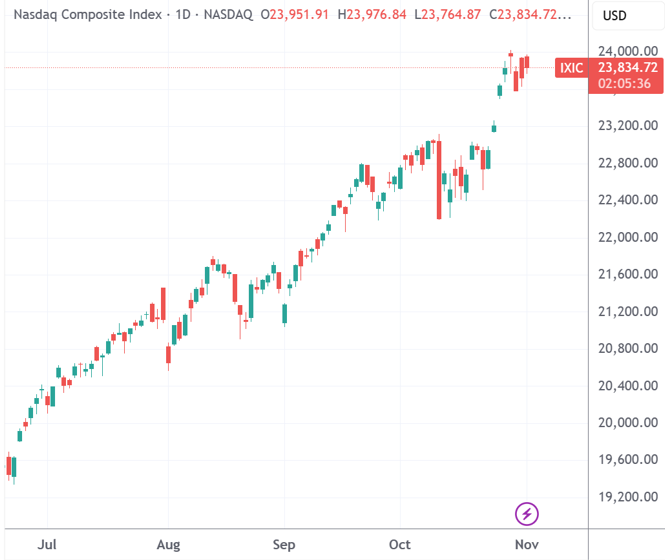
比特币等突发闪崩 24小时内超12亿美元头寸被平仓!亚马逊涨约4%创新高 与OpenAI签380亿美元合同!
Mei Ri Jing Ji Xin Wen· 2025-11-03 22:43
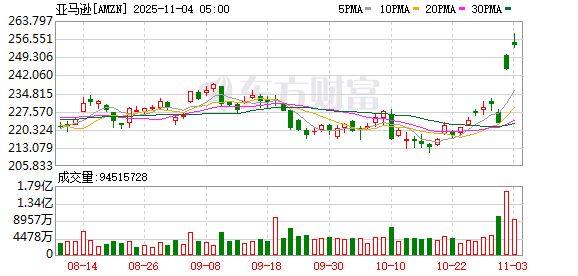
Group 1 - Amazon's stock rose approximately 4%, reaching an all-time high, following a $38 billion agreement with OpenAI to supply NVIDIA AI chips over the next seven years [2] - This deal is seen as a validation of Amazon's capabilities in building and operating large-scale data center networks, despite its previous lag in the AI sector [2] - The AI-driven market rally has been further fueled by positive earnings outlooks from five of the "Big Seven" tech companies [2] Group 2 - NVIDIA's stock increased by over 2% after the U.S. approved a deal for Microsoft to sell chips to the UAE, allowing the shipment of advanced NVIDIA chips [2] - Tesla's stock rose by over 2%, while Google saw a nearly 1% increase; however, Intel, Netflix, and Meta experienced declines of over 1% [2] - The Nasdaq China Golden Dragon Index rose by 0.26%, with notable gains in Tencent Music and NIO, while Alibaba and JD.com saw slight declines [6][7]


热门中概股美股盘前多数走强
Ge Long Hui A P P· 2025-11-03 13:04
Group 1 - iQIYI and Xpeng Motors saw an increase of over 1% [1] - Bilibili, NetEase, Baidu, and NIO experienced a rise of nearly 1% [1] - JD.com increased by 0.06% and Pinduoduo by 0.03% [1] Group 2 - Alibaba experienced a decline of nearly 1% [1]


中国互联网_美国、英国及欧盟市场推广反馈-China Internet_ US & UK_EU Marketing Feedback _ US&UK_EU Marketing Feedback
2025-11-03 02:36
Summary of Conference Call Notes Industry Overview - **Industry**: China Internet - **Key Focus**: AI plays, cloud infrastructure, food delivery, quick commerce, and e-commerce competitive landscape Core Insights 1. **Investor Sentiment Shift**: There has been a notable shift in investor sentiment towards owning China equities, particularly in the AI sector within the China Internet industry, compared to previous concerns over tariffs [1][2] 2. **Key Companies Discussed**: Major companies of interest included Alibaba (BABA), Tencent, Sea Ltd, TME, Grab, Baidu, Meituan, PDD, NTES, JD, Kuaishou, and YMM, with a significant focus on Alibaba and Tencent [1][2] 3. **Earnings Expectations**: Investors are anticipating solid earnings from Tencent, with discussions centered on its AI strategy and cloud infrastructure positioning [2] 4. **Sea Ltd's Performance**: There is concern regarding Sea's recent share price weakness, with investors focusing on upcoming earnings and the competitive landscape affecting Shopee margins [2] 5. **Grab's Management Confidence**: Growing investor interest in Grab is attributed to increased confidence in management execution and market potential [2] 6. **Meituan's Positioning**: Positioning in Meituan appears to be lower than before, with selective interest in PDD [2] 7. **Concerns for Trip.com Group (TCOM)**: While investors remain positive on TCOM's fundamentals, there are rising concerns about limited margin upside and potential threats from AI [2] 8. **AI Impact on Gaming**: Discussions around NetEase (NTES) focused on how AI is benefiting the gaming industry [2] 9. **Baidu and Kuaishou**: Conversations primarily revolved around AI, cloud services, and valuation metrics [2] 10. **JD.com**: Comments on JD were mainly about operational catalysts and competition [2] 11. **Didi Global Interest**: There is interest in Didi Global related to autonomous driving and the competitive landscape in Brazil [2] Additional Insights - **Macro Factors**: Investors are also interested in macroeconomic factors such as consumption sentiment, regulatory environment, and potential stimulus measures in China [1] - **Competitive Landscape**: The competition in food delivery and quick commerce in China is a significant topic of discussion, particularly regarding its impact on margins [1] This summary encapsulates the key points discussed during the conference call, highlighting the evolving landscape of the China Internet sector and investor sentiment towards various companies within this space.





浙商早知道-20251103
ZHESHANG SECURITIES· 2025-11-02 23:32
Group 1: Pinduoduo (PDD) Overview - The core recommendation is based on the easing competitive pressure on the main platform, with deep adjustments to merchant ecology and user experience, indicating a positive long-term development outlook for the platform [4] - Key drivers include an increase in platform monetization rate, accelerated GMV growth in the domestic main site, and effective growth in overseas GMV due to logistics model improvements [4] - Revenue projections for 2025-2027 are estimated at 423,761 million, 492,256 million, and 560,410 million, with growth rates of 7.60%, 16.16%, and 13.85% respectively [4] Group 2: Saiwei Era (301381) Overview - The recommendation is driven by technology-led brand incubation, establishing Saiwei Era as a leading player in the cross-border e-commerce apparel sector [5] - Key drivers include stable consumer demand in North America and better-than-expected sales from small brands in the apparel category [5] - Revenue forecasts for 2025-2027 are projected at 12,664.01 million, 15,535.53 million, and 19,091.68 million, with growth rates of 23.25%, 22.67%, and 22.89% respectively [5] Group 3: Macro Economic Insights - Economic activity in October is expected to show some slowdown compared to the previous month, but overall resilience is anticipated [6] - The analysis is based on the October PMI data released by the National Bureau of Statistics, indicating a structural continuation of new momentum [6] Group 4: A-Share Strategy Insights - The strategy suggests maintaining a "slow bull" mindset at a strategic level while keeping current positions tactically, as market trends remain unclear [7] - The outlook for the Shanghai Composite Index indicates that if it remains above the trend line and does not fall below the previous platform top of 3,936 points, the upward trend will be preserved [7] - The focus is on observing the movements of the brokerage sector, which has potential for short-term gains, while also considering relatively low positions in steel, consumption, and infrastructure sectors [7]
拼多多黄标信号!平台风向突变,商家如何应变?
Sou Hu Cai Jing· 2025-11-02 13:17
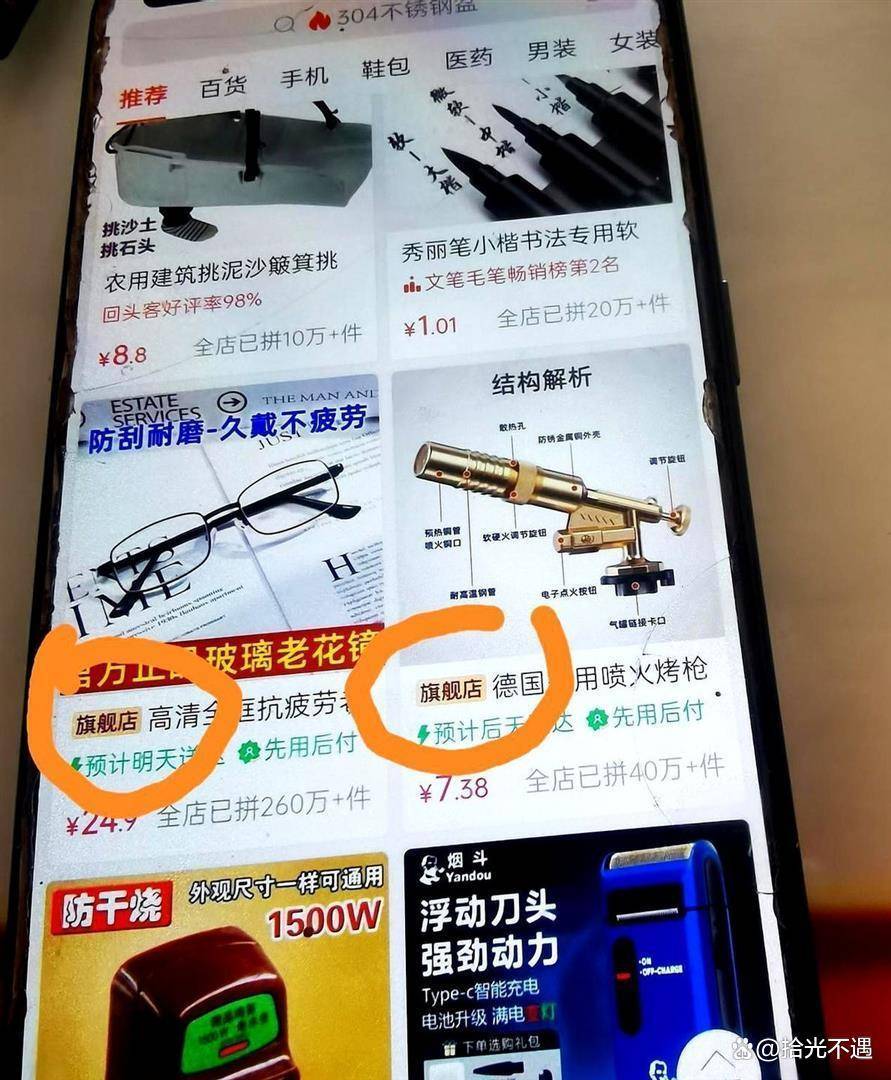
Core Viewpoint - Pinduoduo is shifting its focus from a low-price strategy to prioritizing product quality and compliance in services, as evidenced by the introduction of the "Yellow Label" system for merchants [1][8]. Group 1: Changes in Merchant Operations - The introduction of the "Yellow Label" signifies Pinduoduo's official certification for "ordinary quality merchants," indicating that stores meet basic quality standards in product quality, service level, and logistics speed [3][4]. - Merchants without the Yellow Label face reduced traffic and must adapt to new platform rules, which have increased pressure on their operations [3][5]. - Significant changes in after-sales rules require merchants to respond to refund requests within 36 hours, or the system will automatically process refunds, raising the stakes for response times [4][5]. Group 2: Increased Penalties and Stricter Assessments - New penalties for activity violations have been introduced, with fines of up to 50,000 yuan for selling counterfeit goods and 15,000 yuan for unauthorized product changes during promotional activities [5][6]. - The assessment criteria for major promotional events, such as Double 11, have become stricter, focusing more on product quality and requiring merchants to maintain high ratings and positive reviews [5][6]. Group 3: Strategic Recommendations for Merchants - Merchants are advised to focus on product quality and customer satisfaction to meet the platform's assessment criteria, as merely competing on price is no longer sufficient [6][7]. - Utilizing official service tools provided by Pinduoduo can help merchants manage their operations more efficiently and reduce errors [7]. - Merchants should aim for diversified operations and maintain relationships with existing customers to enhance overall competitiveness and stability in their business [7][8].
段永平2025年初对话:回到事情的本源上,很多答案就清楚了
雪球· 2025-11-02 13:00
Group 1 - The article discusses the insights shared by Duan Yongping during a recent talk at Zhejiang University, focusing on investment strategies and personal development in the context of current market trends [3][4]. - Duan emphasizes the importance of long-term thinking in decision-making, whether in learning, entrepreneurship, or investment [6][10]. - He warns against the misuse of AI tools, particularly in academic settings, advocating for a balanced approach to technology [6][9]. Group 2 - Duan highlights the necessity of taking risks that one can afford, suggesting that aspiring investors should not chase quick profits but rather focus on sustainable growth [12][14]. - He asserts that good business models do not lead to low-margin markets, indicating that entrepreneurs should carefully consider their market entry strategies [24][25]. - The discussion includes the importance of understanding the essence of business and making informed decisions based on long-term perspectives [29][30]. Group 3 - Duan addresses the challenges of entrepreneurship, stating that those who are meant to start businesses will do so without needing encouragement, and emphasizes the need for genuine passion in entrepreneurial endeavors [18][36]. - He discusses the impact of economic downturns on young people, suggesting that good companies continue to thrive even in tough times, and advises seeking opportunities in reputable firms [93][95]. - The conversation touches on the global expansion of Chinese companies, with Duan noting that successful globalization often depends on the right timing and product-market fit [97]. Group 4 - Duan critiques the notion of blindly following trends, emphasizing that innovation should be purposeful and address real user needs [51][55]. - He discusses the balance between risk and reward in investment, particularly in high-risk scenarios, advocating for a thorough understanding of the business model before investing [84][90]. - The article concludes with reflections on the nature of value investing, stressing that it is fundamentally about investing in value rather than speculative gains [79][81].




第17届双十一,5大电商平台论剑,规则、流量、战场已彻底改变
Sou Hu Cai Jing· 2025-11-02 04:14
Core Insights - The article discusses the evolution of China's e-commerce industry, particularly focusing on the "Double Eleven" shopping festival, which has transformed from a niche event into the world's largest shopping extravaganza since its inception in 2009 [1][3]. Group 1: Historical Evolution of Double Eleven Strategies - The Double Eleven event can be divided into three main phases from 2015 to 2024, each characterized by distinct features and competitive dynamics [4]. - The first phase (2015-2017) was dominated by Alibaba's Taobao/Tmall and JD.com, with a focus on price competition and traffic acquisition. Sales figures grew from 91.2 billion yuan in 2015 to 168.2 billion yuan in 2017 [7]. - The second phase (2018-2020) saw the entry of content platforms like Douyin and Kuaishou, leading to a more intense competition landscape. Pinduoduo emerged as a significant player with its social group-buying model [8][9]. - The third phase (2021-2024) marked a shift towards refined operations, with platforms focusing on user experience and sustainable growth. Sales peaked at 540.3 billion yuan in 2021, but platforms began emphasizing quality metrics over gross merchandise volume (GMV) [10]. Group 2: Tactical Evolution of Major Platforms - Taobao/Tmall's pricing strategy evolved from "site-wide 50% off" to complex promotional rules, and finally to simplified rules like "official discounts" starting in 2023 [12][44]. - JD.com maintained a straightforward pricing strategy, introducing "official discounts" and "instant sales" while enhancing its logistics capabilities, achieving an average fulfillment time of 18 minutes by 2025 [18][76]. - Pinduoduo's strategy shifted from "lowest price" to "same price for the same item," reflecting a focus on merchant interests and product quality [24][77]. - Douyin e-commerce emphasized content-driven sales, integrating short videos and live streaming to create a seamless shopping experience, with significant sales growth during the Double Eleven period [31][79]. - Kuaishou e-commerce leveraged its "old iron economy" to build strong relationships with users, achieving high repurchase rates through trust-based interactions [37][40]. Group 3: Key Tactical Dimensions - Pricing strategies across platforms transitioned from complex calculations to straightforward discounts, with a notable emphasis on user-friendly promotions [44][46]. - Traffic acquisition methods evolved from traditional advertising to content marketing, with platforms increasingly relying on live streaming and social media to attract users [48][51]. - User operations shifted towards precision marketing, with platforms utilizing data analytics to enhance user engagement and loyalty [55][58]. - Supply chain management became a focal point, with platforms investing in logistics efficiency and real-time delivery capabilities to improve customer experience [62][65].