TSMC(TSM)

Search documents
Taiwan's Flagship Chip Maker Charts a Future Beyond Taiwan
WSJ· 2026-01-18 10:30
TSMC has for decades provided a "Silicon Shield†to its namesake island. Now it sees both business and geopolitical reasons for going big in the U.S. ...


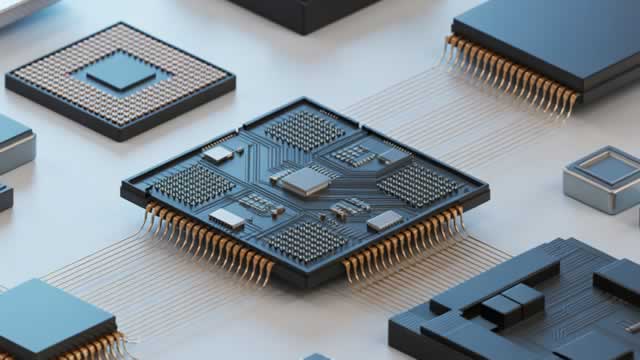
行业点评报告:先进封装龙头积极抢滩布局,产业进入“扩产+提价”新阶段
KAIYUAN SECURITIES· 2026-01-18 07:43
Investment Rating - The industry investment rating is "Overweight" [1] Core Insights - The semiconductor industry is expected to experience significant growth driven by advancements in AI and high-end packaging technologies. TSMC has raised its capital expenditure guidance for 2026 to between $52 billion and $56 billion, a substantial increase of up to 36.9% from 2025, with a focus on advanced packaging and testing [3][4] - Major companies are actively expanding capacity to meet the rising demand for advanced packaging, with investments in new facilities and technologies across various sectors, including automotive and AI [4] - Price increases in packaging services are anticipated due to strong structural demand and rising raw material costs, with some companies already implementing price hikes of up to 30% [5] Summary by Sections Capital Expenditure and Growth - TSMC's capital expenditure for 2026 is projected to be between $52 billion and $56 billion, with advanced packaging investments expected to contribute over 10% of revenue by 2026 [3] - The revenue contribution from advanced packaging is expected to grow from approximately 8% in 2025 to slightly above 10% in 2026, indicating a higher growth rate than the overall company growth [3] Capacity Expansion - Major players like Changdian Technology and Jinglong Technology are investing heavily in new facilities to enhance their testing capabilities for high-end semiconductors, with investments reaching billions [4] - Companies such as Tongfu Microelectronics and Nexperia are also planning significant investments to boost their packaging capacities, indicating a trend of expansion in response to market demand [4] Price Trends in Packaging - The packaging industry is experiencing price increases driven by high demand for AI and memory chips, with companies like ASE and others in Taiwan raising prices by 5-20% and up to 30% respectively [5] - The increase in raw material costs, including metals like gold and copper, is contributing to the overall rise in packaging costs, which may lead to improved profitability for packaging companies [5] Investment Recommendations - Investors are advised to focus on domestic companies actively engaged in high-end advanced packaging, such as Changdian Technology and Tongfu Microelectronics, as well as those benefiting from the sector's growth like Yongxi Electronics and Huada Technology [6]


美股科技行业周报:台积电预计26年资本支出大幅提升,美国自动驾驶车辆豁免上限或大幅提升-20260118
Guolian Minsheng Securities· 2026-01-18 07:32
Investment Rating - The report suggests a positive investment outlook for the AI hardware sector, highlighting strong demand for AI computing power and significant capital expenditure growth from TSMC in 2026 [5][19]. Core Insights - TSMC's Q4 2025 revenue reached $33.7 billion, exceeding Bloomberg's consensus by 3.3%, with a gross margin of 62.3% and an adjusted net profit of $16.29 billion, surpassing expectations by 10.4% [2][11]. - The HPC segment remains the core growth driver for TSMC, accounting for 55% of Q4 revenue and showing a 48% year-over-year growth, which is expected to continue into 2026 [2][19]. - The SELF DRIVE Act is poised to significantly increase the annual exemption limit for autonomous vehicles from 2,500 to 90,000 units per manufacturer, facilitating large-scale deployment of Level 4 autonomous vehicles [4][17]. - AMD and Intel's server CPU inventories are reportedly sold out, with a projected price increase of up to 15% due to high demand from hyperscale cloud providers [4][18]. Summary by Sections TSMC Performance - TSMC's Q4 2025 revenue was $33.7 billion, with a gross margin of 62.3% and an adjusted net profit of $16.29 billion, all exceeding market expectations [2][11]. - For the full year 2025, TSMC's revenue is projected at $122.56 billion, with a gross margin of 59.9% and an adjusted net profit growth of 552.7% [2][11]. - The company plans a capital expenditure of $52-56 billion for 2026, a significant increase from $40.9 billion in 2025, with expected revenue growth of nearly 30% year-over-year [12][19]. AI Hardware Demand - The report emphasizes strong and certain demand for AI computing power, with TSMC's HPC business expected to account for 58% of total revenue in 2025, growing at 48% year-over-year [5][19]. - The introduction of Anthropic's Cowork feature marks a significant advancement in AI applications, allowing for more autonomous task management and collaboration [3][14]. Autonomous Vehicle Regulations - The SELF DRIVE Act aims to enhance the regulatory framework for autonomous vehicles, proposing to raise the exemption limit for manufacturers significantly, which could accelerate the deployment of autonomous vehicle technology [4][17]. - The bipartisan support for the SELF DRIVE Act indicates a strong political will to advance autonomous vehicle technology in the U.S. [4][17]. Server CPU Market - The server CPU market is experiencing a supply-demand imbalance, with AMD and Intel's inventories reportedly sold out, leading to anticipated price increases of up to 15% [4][18]. - The demand surge is primarily driven by hyperscale cloud providers upgrading their server architectures [4][18].
周观点:从台积电业绩看全球AI需求爆发-20260118
GOLDEN SUN SECURITIES· 2026-01-18 06:32
Investment Rating - The report maintains a "Buy" rating for the semiconductor industry, particularly focusing on companies like TSMC and others involved in AI and advanced manufacturing processes [6][30]. Core Insights - TSMC's FY25Q4 performance exceeded expectations, driven by strong demand for advanced processes, with revenue reaching $33.73 billion, a 25.5% year-over-year increase [10][11]. - The company anticipates continued robust growth in AI demand, with a projected CAGR of mid-to-high 50% for AI accelerator business from 2024 to 2029 [16][20]. - TSMC's capital expenditure for 2026 is expected to be between $52 billion and $56 billion, primarily for advanced process capacity expansion [2][20]. Summary by Sections TSMC Performance - TSMC's Q4 FY25 revenue was $33.73 billion, with a gross margin of 62.3% and a net profit margin of 48.3% [10][11]. - The company expects Q1 FY26 revenue to be between $34.6 billion and $35.8 billion, with a gross margin of 63%-65% [10][12]. AI Demand and Market Trends - AI demand is identified as a significant growth driver, with high-performance computing (HPC) accounting for 55% of TSMC's revenue in Q4 FY25 [13][16]. - The report highlights a healthy and genuine demand for AI, with expectations for continued growth in advanced processes and AI-related applications [2][20]. Capital Expenditure and Capacity Expansion - TSMC plans to allocate 70%-80% of its 2026 capital expenditure to advanced process expansion, with careful assessment of customer needs [2][20]. - The company is expanding its manufacturing capacity in the U.S., Japan, and Taiwan to meet long-term trends in AI and HPC [17][20]. Technology Roadmap - TSMC's N2 process has entered mass production, with expectations for rapid ramp-up in 2026, alongside the introduction of N2P and A16 processes [18][20]. - The N2 family is anticipated to become a key platform with a long lifecycle, reinforcing TSMC's leadership in advanced process technology [18][20].
AI、半导体:台积电大幅提升2026年资本开支
Huajin Securities· 2026-01-18 05:55
Investment Rating - The industry investment rating is "Outperform the Market" (maintained) [1][36] Core Insights - TSMC significantly increased its capital expenditure forecast for 2026 to between $52 billion and $56 billion, up from $40.9 billion in 2025, driven by strong demand for AI hardware [3][6] - The report highlights the robust growth in AI-driven high-performance computing (HPC) platforms, which accounted for 55% of TSMC's Q4 revenue, with advanced process nodes (3nm and 5nm) contributing 63% of Q4 revenue [3][6] - The report emphasizes the anticipated growth in the semiconductor cycle driven by AI, recommending a focus on the entire semiconductor supply chain, including key stocks such as SMIC, Hua Hong Semiconductor, and others [3][34] Summary by Sections Industry Dynamics - TSMC reported Q4 revenue of $33.73 billion, a year-on-year increase of 25.5% and a quarter-on-quarter increase of 1.9%, with a gross margin of 62.3% [6] - The report notes that TSMC's net profit reached NT$505.74 billion, a 35% year-on-year increase, with a net profit margin of 48.3% [6] Market Review - The electronic industry saw a weekly increase of 3.77% from January 12 to January 16, with the computer sector leading at 3.82% [9][11] - Among the electronic sub-sectors, the integrated circuit packaging and testing sector had the highest increase at 14.47% [11] High-Frequency Data Tracking - Panel prices for TVs are expected to see a mild increase in January, driven by strong supply control from manufacturers and rising material costs [14] - Memory prices showed an upward trend, with DDR5 16G prices rising from $32.50 to $35.00 and DDR4 16Gb prices increasing from $70.50 to $76.13 between January 12 and January 16 [19]
通信行业研究:台积电业绩超预期,千问App全面接入阿里生态
SINOLINK SECURITIES· 2026-01-18 05:54
1)台积电资本支出及业绩超预期:A)台积电公布 2025 年 Q4 财务报告,公司当季营收为 337.3 亿美元,同比+25.5%, 环比+1.9%。全面上修业绩增速与毛利率指引,将 2024 至 2029 年 AI 营收 CAGR 从原先的"40%中段"提升至"50%中 高段"。B)2026 年资本支出规模进一步扩大至 520 亿至 560 亿美元。公司管理层强调,约七成至八成资本将投向先 进制程技术,其余用于特殊制程、先进封装等领域,以应对持续旺盛的 AI 芯片需求。全球 AI 算力需求持续旺盛。2) 国产芯片、国产大模型、国产应用携手共进,加速国产链向上:A)首个完全依托国产芯片全程训练的 SOTA 多模态模 型 GLM-Image,开源 24 小时内登顶全球知名 AI 开源社区 Hugging Face Trending,标志国产 AI 模型的端到端自主研 发能力在国际竞争中取得突破。B)DeepSeek 发布新论文,提出 Engram 机制,在等参数、等算力条件下显著提升模型 在知识调用、推理、代码、数学等任务上的表现。同时,DeepSeek 开源相关记忆模块 Engram。我们认为此机制意味 着在 ...
通信行业周报:台积电和谷歌表现亮眼,重视硅光链和谷歌链-20260118
KAIYUAN SECURITIES· 2026-01-18 04:41
Investment Rating - The industry investment rating is "Overweight" [1] Core Insights - The report highlights strong performance from TSMC and Google, emphasizing the importance of the silicon photonics chain and Google chain [14][17] - TSMC's capital expenditure for 2026 is significantly increased, indicating robust growth signals in AI [5][15] - Apple's partnership with Google to utilize the Gemini model for AI applications, particularly in Siri, is noted as a positive development for Google's AI capabilities [17] Summary by Sections 1. Weekly Insights - TSMC's Q4 2025 revenue reached $33.7 billion, slightly above expectations, with a quarter-on-quarter growth of 1.9% [5][14] - TSMC's 2025 annual revenue was $122 billion, a year-on-year increase of 35.9%, outperforming the foundry industry growth of 16% [5][14] - The report recommends focusing on investment opportunities in silicon photonics and liquid cooling due to the AI-driven demand [16] 2. Communication Data Tracking - As of November 2025, China's 5G base stations totaled 4.83 million, with a net increase of 579,000 from the end of 2024 [28] - The number of 5G mobile phone users reached 1.193 billion, a year-on-year growth of 19.06% [28] - 5G mobile phone shipments in November 2025 were 27.614 million units, accounting for 91.6% of total shipments, with a year-on-year growth of 1.08% [28] 3. Operator Performance - China Mobile's cloud revenue for the first half of 2025 was 56.1 billion yuan, up 11.3% year-on-year [47] - China Telecom's Tianyi Cloud revenue for the same period was 57.3 billion yuan, a 3.8% increase [47] - The ARPU values for China Mobile, China Telecom, and China Unicom remained relatively stable, with slight decreases noted for China Unicom [47][52][56] 4. Investment Recommendations - The report recommends focusing on three main AI investment themes: "Optical, Liquid Cooling, and Domestic Computing Power" [18] - Specific recommended stocks include Zhongji Xuchuang, Xinyi Sheng, and Yingwei Ke [16][18] - The report also highlights potential beneficiaries in various sectors, including AI applications, operators, and satellite internet [18][19][26]

美国威胁韩国:存储芯片100%关税
半导体行业观察· 2026-01-18 03:32
美国商务部长霍华德・卢特尼克(Howard Lutnick)表示,随着特朗普政府加大对额外外国投资的 呼吁,未在美国投资的韩国存储芯片制造商和中国台湾企业可能面临高达 100% 的关税,除非它们承 诺增加在美国本土的产量。 在纽约州锡拉丘兹郊外举行的美光科技公司(Micron Technology Inc.)新工厂破土动工仪式后,卢 特尼克表示,根据与中国台湾的贸易协定中阐明的潜在征税规定,也可能影响到韩国的芯片制造商。 "所有想要生产存储芯片的人都有两个选择:要么支付 100% 的关税,要么在美国建厂," 卢特尼克 周五在回答记者提问时说,他没有点名任何特定的公司。"这就是产业政策。" 卢特尼克的言论呼应了周四签署中国台湾贸易协议后的一项警告,该协议给予承诺在美国制造业投资 的公司基于配额的关税减免。"如果他们不在美国建厂," 卢特尼克告诉 CNBC,"关税很可能是 100%。" 目前,唐纳德・特朗普暂时推迟了对大多数外国制造的半导体征收关税,而是要求卢特尼克和美国贸 易代表杰米森・格里尔(Jamieson Greer)与贸易伙伴谈判,以减少美国对芯片进口的依赖。白宫本 周早些时候表示,特朗普可能会 "在不 ...

先进封装,全速扩产
半导体行业观察· 2026-01-18 03:32
Core Viewpoint - The article discusses the significant investment and strategic shifts in the semiconductor packaging industry, particularly focusing on advanced packaging technologies driven by the AI wave and the structural changes in the storage industry [1][2]. Group 1: Investment and Market Trends - SK Hynix announced a 19 trillion KRW (approximately 12.9 billion USD) investment to build an advanced chip packaging factory in Cheongju, South Korea, reflecting the structural changes in the storage industry due to AI [1]. - The global advanced chip packaging market is projected to grow from 50.38 billion USD in 2025 to 79.85 billion USD by 2032, with a compound annual growth rate (CAGR) of 6.8% [2]. - By early 2026, leading packaging and testing companies are expected to ramp up advanced packaging capacity, indicating a competitive landscape focused on advanced packaging capabilities [2]. Group 2: TSMC's Dominance - TSMC is recognized as the leader in advanced packaging, holding over 60% market share in semiconductor manufacturing and establishing significant competitive barriers in advanced packaging technologies [2][3]. - TSMC has developed three branches of CoWoS technology: CoWoS-S for medium-sized chips, CoWoS-R for greater design flexibility, and CoWoS-L for large AI chips [3]. - TSMC's SoIC technology, based on CoWoS and wafer-on-wafer stacking, offers higher interconnect density and improved performance compared to traditional 2.5D packaging [3]. Group 3: Capacity Expansion and Technological Advancements - TSMC's CoWoS capacity is projected to increase 6-8 times from 2023 to 2026, with a CAGR exceeding 60% [5]. - TSMC's new advanced packaging facilities, including the flagship AP6 plant in Zhunan, are designed for full automation and are expected to handle significant orders from major clients like NVIDIA and AMD [5][6]. - TSMC is also expanding its advanced packaging capabilities in the U.S. with plans for two new facilities in Arizona, focusing on SoIC and CoPoS technologies [6]. Group 4: Competitors' Strategies - ASE, as the largest packaging and testing foundry, is benefiting from the advanced packaging trend, with over 60% of its ATM business expected to come from advanced packaging by 2025 [9]. - ASE is developing its own 2.5D packaging platform, FOCoS, and is expanding its production capacity across multiple sites, including a new K28 plant aimed at meeting the demand for AI and GPU chips [10][11]. - Amkor is enhancing its market position through partnerships, such as its collaboration with Intel on EMIB technology, and expanding its facilities in the U.S. to meet advanced packaging demands [15][16]. Group 5: Mainland China's Participation - Mainland Chinese companies are actively investing in advanced packaging technologies and capacity, with firms like Yongxi Electronics and Changjiang Electronics focusing on high-density packaging and automotive electronics [20][22]. - Yongxi Electronics is establishing a new production base in Malaysia to enhance its overseas strategy, while Changjiang Electronics is expanding its automotive electronics packaging capabilities [21][22]. - Tongfu Microelectronics is also increasing its advanced packaging capacity, particularly in automotive and high-performance computing sectors, to meet growing market demands [23][24]. Group 6: Future Outlook - The article concludes that while TSMC's dominance in advanced packaging is unlikely to be challenged in the short term, other specialized packaging firms are seeking to differentiate themselves through flexible capacity and innovative technologies [25][27]. - The collective expansion of packaging firms represents a significant industry bet on the demand for AI-driven computing power, with the potential for winners to emerge as the market stabilizes and technology paths clarify [27].

苹果芯片,退居第二
半导体行业观察· 2026-01-18 03:32
"苹果的出货量依然巨大,品牌实力也无可匹敌。但该公司不再是晶圆厂、基板制造商或关键零部件 供应商的'锚定客户'。这是一个根本性的变化。" 这一点至关重要,因为掌控供应链的科技公司更有可能赢得竞争。当你能订购最大数量的关键零部件 时,你就能获得更优惠的价格和更可靠的供应。这将转化为价格更具优势且比竞争对手更早上市的产 品。如今,这种权力正转向英伟达(Nvidia)以及亚马逊、微软和谷歌(又称 "AMG")等大型云服 务巨头。 最明显的迹象出现在全球最大的芯片制造商台积电(TSMC)。台积电以前因大量生产用于 iPhone 的尖端芯片而闻名,这也让苹果相对于其他消费硬件厂商拥有了巨大优势。 但在台积电本周公布财报后,情况变得非常清晰:智能手机业务已不再是其最重要的部门。如今,高 性能计算 —— 这一由英伟达等公司的 AI 芯片以及超大规模云服务提供商主导的领域 —— 约占台积 电营收的 58%,远超智能手机处理器业务。 公众号记得加星标⭐️,第一时间看推送不会错过。 十多年来,苹果一直处于科技供应链的中心。凭借其巨大的规模,它能够决定价格、锁定产能,并主 导从芯片、内存到底板和封装等各类供应商的发展路线图。但那个 ...