TSMC(TSM)

Search documents
英伟达GPU VS谷歌TPU:哪些产业链竞争激烈?:传媒
Huafu Securities· 2026-01-16 13:25
Investment Rating - The industry rating is "Outperform the Market" indicating that the overall industry return is expected to exceed the market benchmark index by more than 5% in the next 6 months [15]. Core Insights - The competition between NVIDIA and Google in the AI chip market is heavily reliant on TSMC's CoWoS advanced packaging, which is currently a critical bottleneck in the AI chip supply chain [3]. - TSMC's capital expenditure for 2026 is projected to be between $52 billion and $56 billion, reflecting a year-on-year growth of 27% to 37% due to strong AI demand [3]. - NVIDIA is collaborating with Amkor to expand its production capacity in the U.S. from 2026 to 2029, as TSMC reallocates some advanced packaging orders to OSAT manufacturers [3]. - Samsung and Intel are actively enhancing their advanced process capabilities, with Samsung aiming to increase its global 2nm monthly capacity to 21,000 wafers by the end of 2026 [4]. - HBM is identified as a key battleground in the competition between NVIDIA's GPUs and Google's TPUs, influencing both performance limits and the actual deliverable quantities of chips [4]. - NAND and SSD demand is significantly amplified in AI data centers, with NVIDIA's Rubin platform enhancing data sharing and reuse, potentially increasing SSD demand [5]. - There is a rising demand for inference cards as large model vendors seek alternatives to NVIDIA's chips to reduce dependency and costs [6]. Summary by Sections Advanced Process and Packaging - TSMC leads in advanced packaging with CoWoS capacity constraints impacting NVIDIA and Google's AI chip output [3]. - Amkor and ASE are being utilized to alleviate TSMC's capacity pressure, with Amkor investing $5 billion in advanced packaging facilities in Arizona [3][4]. Storage Side - HBM is crucial for the competition between NVIDIA and Google, while on-chip SRAM is emerging as a new direction for inference storage [4]. - The collaboration between NVIDIA and Groq focuses on inference technology utilizing on-chip SRAM [4]. Client Side - Major AI model vendors are diversifying their computational resources, with Anthropic planning to deploy up to 1 million TPUs by 2026 and OpenAI partnering with Cerebras for a large-scale AI inference platform [6]. Investment Recommendations - The report suggests focusing on sectors within the semiconductor supply chain, including foundries, advanced packaging, storage, and AI model applications, amidst the competitive landscape between NVIDIA and Google [7].




Market Alert: AI Rally Extends, Druckenmiller Dumps Nvidia, Tesla Stalls
247Wallst· 2026-01-16 12:55
Core Viewpoint - The U.S. AI stock rally continues, driven by strong earnings from TSMC, but signs of caution are emerging as some investors rotate out of positions and precious metals show unusual strength, indicating potential hedging against risks [1][13]. Group 1: AI and Semiconductor Sector - TSMC's Q4 results confirmed ongoing AI infrastructure spending, beating estimates and raising its 2026 capex forecast, leading to bullish ratings from major banks [2]. - The semiconductor supply chain benefited from this momentum, with Jefferies raising Nvidia's price target to $275, while AMD's stock surged 11% due to strong performance in AI testing [3]. - AMD's Relative Strength Index (RSI) reached 60, indicating strong momentum without being overbought, suggesting a healthy rally [4]. Group 2: Investor Sentiment and Stock Movements - Stanley Druckenmiller sold his entire Nvidia stake, indicating a belief that easy gains for the stock may be over, with analysts divided on Nvidia's future prospects [5]. - Retail investors are increasingly engaging with high-beta stocks, as seen with AST SpaceMobile's significant price increase driven by social media sentiment [6]. - Micron Technology showed rational momentum with a 42% increase over the past month, supported by strong earnings growth and favorable valuation metrics [7]. Group 3: Tesla's Challenges - Tesla's stock has struggled, gaining only 0.6% this week and down 8% over the past month, with significant sales declines in key markets [8]. - The upcoming transition to a subscription model for Full Self-Driving (FSD) is tied to ambitious growth targets, but the product remains at Level 2, facing competition from other companies [9]. Group 4: Precious Metals and Economic Signals - Silver and gold prices have surged, with silver up 20% this week and 43% over the past month, indicating potential hedging against economic instability [11]. - Amazon's copper supply deal with Rio Tinto for AWS data centers highlights the importance of securing physical commodity supply chains amid AI infrastructure demands [12].



岛内舆论:民进党当局“以投资换税率” 恐掏空台湾产业优势
Xin Lang Cai Jing· 2026-01-16 11:54
Group 1 - The Taiwan-US trade agreement has raised concerns in Taiwan, with opinions suggesting that it may lead to the relocation of core industrial chains and result in a loss of talent and resources for Taiwan [1] - The agreement includes a reduction of the so-called "reciprocal tariffs" imposed by the US on Taiwan to 15%, in exchange for Taiwan's technology sector increasing investments in the US by $500 billion [1] - There are fears that the semiconductor industry, particularly TSMC, will accelerate its investments in the US, which could lead to a gradual erosion of Taiwan's irreplaceable position in the global supply chain [1][2] Group 2 - The Taiwan People's Party criticized the agreement for including investments in the US energy sector, arguing that it undermines local industry development at a time when Taiwan is struggling with energy transition and supply issues [2] - An analysis by a professor from National Central University indicates that the requirement for Taiwan's tech industry to significantly increase investments in the US will limit local investment opportunities [2] - Concerns were raised about the scale of the investment, which is equivalent to approximately 80 times the annual budget of the Taipei City Government, and the potential for Taiwan's semiconductor supply chain to be entirely relocated [2]
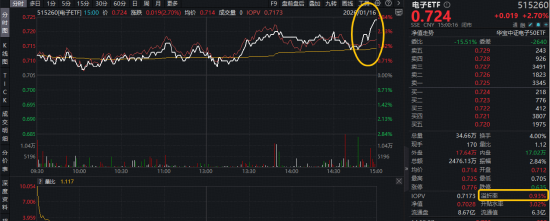
台积电业绩远超预期!半导体逆市狂飙,电子ETF(515260)翘尾收涨2.7%,尾盘溢价飙升!兆易创新等4股涨停
Xin Lang Ji Jin· 2026-01-16 11:27
Core Viewpoint - The electronic sector is leading the A-share market, with the electronic ETF (515260) showing strong performance, closing up 2.7% and achieving a premium rate of 0.93% at the end of the trading day, indicating strong buying interest [1] Group 1: Market Performance - The electronic sector received a net inflow of 30.511 billion, ranking first among all 31 Shenwan primary industries [2][3] - Major stocks in the electronic ETF, including Zhaoyi Innovation and Changdian Technology, attracted 4.538 billion and 3.181 billion respectively, topping the A-share inflow rankings [2][3] - Semiconductor leaders such as Changdian Technology, Zhaoyi Innovation, and Tongfu Microelectronics hit the daily limit, while Huazhong Microelectronics rose over 13% [4] Group 2: Industry Trends - TSMC's recent earnings report for Q4 2025 exceeded expectations, marking the seventh consecutive quarter of double-digit growth, and raised its 2026 capital expenditure guidance to 52-56 billion USD, reflecting strong and sustainable demand in the AI industry chain [5] - The U.S. government's recent imposition of a 25% tariff on specific semiconductors may create a stronger "accelerated replacement" window for domestic equipment amid increasing supply chain uncertainties [5] - The trend of "self-control and AI resonance" is expected to strengthen further in 2026, with a focus on domestic computing power and semiconductor equipment [5] Group 3: Investment Tools - The electronic ETF (515260) and its linked funds are designed to passively track the electronic 50 index, heavily investing in semiconductor and consumer electronics sectors, including AI chips, automotive electronics, and PCB [5] - The ETF serves as an efficient tool for investors to gain exposure to core assets in the electronic sector [5]


Billionaire Stanley Druckenmiller of Duquesne Dumped His Fund's Stake in Nvidia and Has Latched Onto a New Favorite Trillion-Dollar AI Stock
The Motley Fool· 2026-01-16 11:06
Core Insights - The rise of artificial intelligence (AI) is seen as a transformative technological leap, comparable to the internet revolution [2][3] - Billionaire investor Stanley Druckenmiller has divested his entire stake in Nvidia, a leading AI hardware company, and shifted his focus to Taiwan Semiconductor Manufacturing Company (TSMC) [4][12] Company Insights - Nvidia has a dominant position in the AI hardware market, with its GPUs accounting for over 90% of those deployed in enterprise data centers [5] - Despite its competitive advantages, Druckenmiller sold his Nvidia stake, possibly due to profit-taking and concerns about overhyped AI expectations [7][9] - TSMC has been a consistent investment for Druckenmiller, with purchases made in four of the last five quarters, driven by the demand for AI GPUs [12][13] - TSMC's growth is not solely dependent on AI, as it also manufactures CPUs and chips for various applications, providing a diversified revenue stream [15] Market Insights - Analysts estimate that AI could contribute $15.7 trillion to the global economy by 2030, indicating a significant market opportunity [3] - TSMC's stock has seen substantial growth, with a market cap exceeding $1 trillion, supported by the increasing demand for AI-related chips [12][13] - The forward price-to-earnings ratio for TSMC is currently at 25, reflecting a valuation that, while not as attractive as before, still presents a value proposition [16]
台积电日本厂,转向2nm?
半导体芯闻· 2026-01-16 10:27
Group 1 - TSMC's Kumamoto Factory (Kumamoto Plant 1) is set to begin mass production by the end of 2024, with a second factory (Kumamoto Plant 2) under construction, although its construction has reportedly been halted [1] - The halt in construction of Kumamoto Plant 2 may be due to TSMC's consideration to produce more advanced products, specifically 2nm chips, in response to increasing demand for Physical AI applications [1][2] - TSMC's Chairman Wei Zhejia stated that the types of semiconductors and the mass production timeline for Kumamoto Plant 2 will depend on customer demand and market conditions [1] Group 2 - Originally, Kumamoto Plant 2 was planned to produce 6nm chips for applications such as autonomous driving, but reports indicate that the project has shifted focus to potentially producing 4nm chips instead [2] - The construction of Kumamoto Plant 2 was officially initiated in October 2025, but equipment was removed from the site around December 2025, indicating a significant pause in the project [2]
台积电预计今年营收增幅近30%,PC /手机客户行为无明显变化
Sou Hu Cai Jing· 2026-01-16 10:16
Core Insights - TSMC expects a nearly 30% increase in overall revenue in 2026 when calculated in USD [1] - The global "foundry 2.0" industry is projected to grow by 14% year-on-year in 2026, with TSMC's revenue reaching 35.9% in 2025 [1] Revenue Growth - TSMC's revenue growth in the "foundry 2.0" sector was 16% in 2025, while the company anticipates a 14% growth for the industry in 2026 [1] - AI accelerators contributed over 10% to TSMC's revenue in 2025, with a projected CAGR of nearly 60% from 2024 to 2029 [1] - TSMC forecasts a CAGR of nearly 25% for overall revenue in USD from 2024 to 2029 [1] Segment Contributions - Advanced packaging is expected to contribute approximately 8% to TSMC's total revenue in 2024, increasing to over 10% in 2025, and exceeding ten percentage points by 2026 [1] - Advanced packaging and mask manufacturing will account for 10-20% of TSMC's capital expenditures in 2026, higher than previous levels [1] Market Conditions - TSMC has not observed changes in customer behavior in the PC and mobile sectors due to the memory supply crisis, as high-value mobile chip supplies are less sensitive to memory price fluctuations [3] - The company has confirmed a reduction in 8-inch and 6-inch production capacity but will continue to support customers in these areas [3]
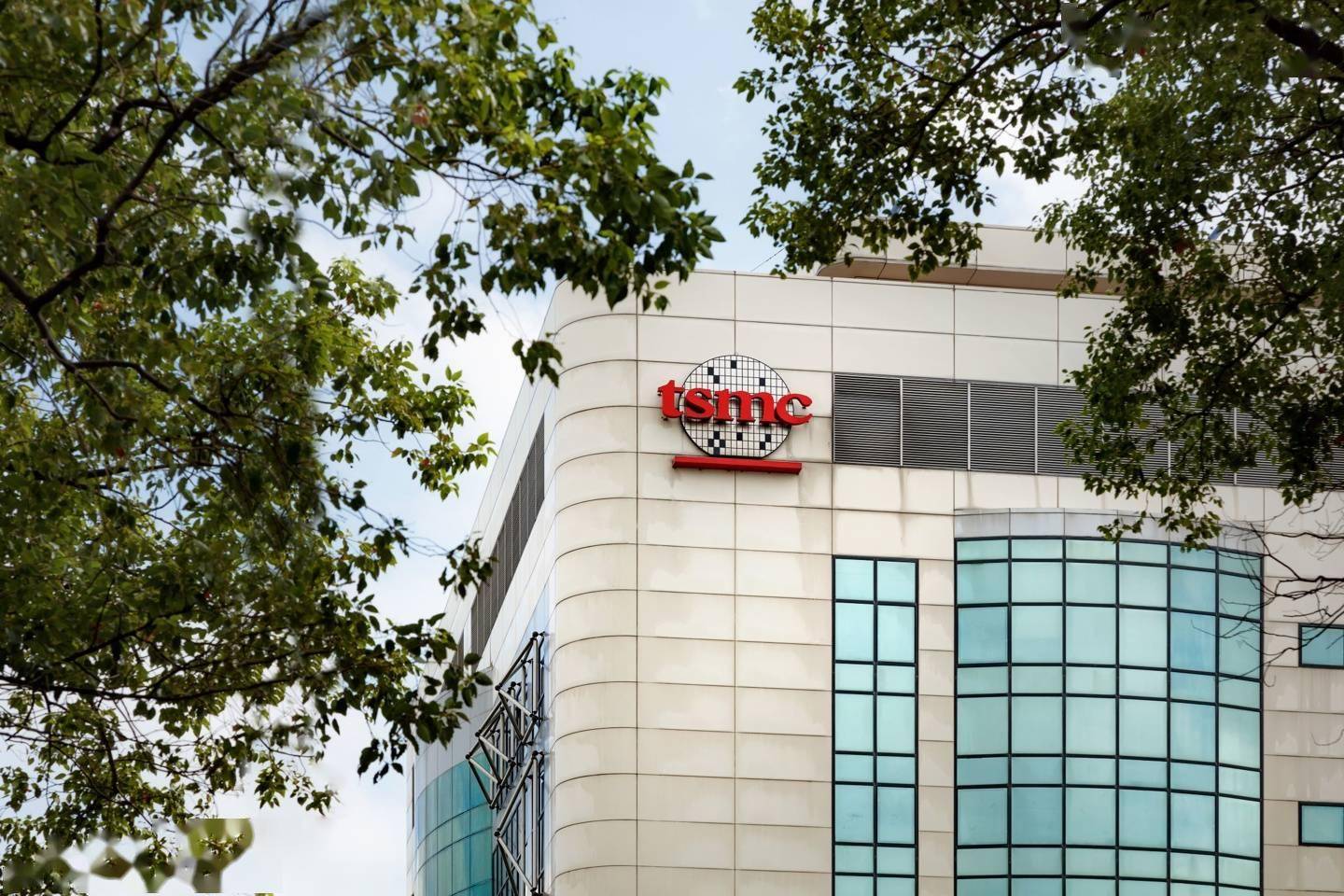
TSMC ramps up Arizona production as AI demand drove 2025 revenue to $122B
Yahoo Finance· 2026-01-16 10:05
This story was originally published on Manufacturing Dive. To receive daily news and insights, subscribe to our free daily Manufacturing Dive newsletter. Dive Brief: Taiwan Semiconductor Manufacturing Co. ended 2025 with a net revenue of $122.4 billion, a 35.9% increase compared to last year, due to continued demand for artificial intelligence. Net revenue for TSMC’s fourth quarter increased 25.5% year over year to $33.7 billion, slightly higher than its guidance of $33.4 billion, CFO Jen-Chau Huang sai ...
U.S. Stock Market futures are up in Friday morning pre-market. Check factors that will drive S&P 500, Dow Jones, Nasdaq today
The Economic Times· 2026-01-16 09:33
U.S. Stock Market Factors to Watch Out on FridayThe frenzy around AI has sent Nvidia and other superstar stocks to dizzying heights, stirring criticism that their prices had shot too high. Nvidia rose 2.1 per cent on Thursday after TSMC’s Chief Financial Officer Wendell Huang said it’s seeing “continued strong demand” in an encouraging signal for the entire AI industry.TSMC’s stock that trades in the United States rose 4.4 per cent on Thursday. Wall Street steadied on Thursday as stocks related to artificia ...


台积电:硅基话语权的巅峰
格隆汇APP· 2026-01-16 09:29
Core Viewpoint - TSMC's recent financial report signifies not just growth but a transformative era driven by AI, marking the onset of the fourth industrial revolution [5][21]. Financial Performance - TSMC reported a net profit of NT$505.7 billion, exceeding expectations of NT$467 billion, with a year-on-year increase of 35% [7]. - The gross margin reached 62.3%, surpassing the anticipated ceiling of 60.6% [8]. - For Q1 2026, TSMC's revenue guidance is set between $34.6 billion and $35.8 billion, significantly above the expected $33.22 billion [15]. - The gross margin guidance for Q1 2026 is projected at 63%-65%, outpacing market expectations of 59.6% [16]. - Capital expenditures for 2026 are expected to reach $52 billion to $56 billion, far exceeding the previous year's $40.9 billion and market expectations of $46 billion [17]. AI and Technology Leadership - TSMC's advanced 3nm, 5nm, and 7nm processes contributed 77% of total revenue, with 3nm and 5nm alone accounting for 63% [12]. - The company anticipates a nearly 30% growth in revenue in 2026, surpassing the 25% market expectation, with a five-year compound annual growth rate (CAGR) of 25% starting in 2024 [24]. - TSMC has raised its CAGR forecast for AI accelerators from 45% to a range of 55%-59% for 2024-2029, indicating a robust growth trajectory [26]. Advanced Packaging Technologies - CoWoS (Chip-on-Wafer-on-Substrate) is TSMC's proprietary advanced packaging technology, with expected monthly production capacity reaching 115,000 pieces by the end of 2026 [30]. - The demand for CoWoS is so high that it has created an overflow capacity of approximately 15,000 pieces per month, benefiting other packaging companies [32]. - CoWoP (Chip-on-Wafer-on-PCB) is a revolutionary technology that bypasses the capacity constraints of ABF substrates, simplifying structure and reducing costs [37][38]. Global Expansion Strategy - TSMC is executing an unprecedented global factory expansion plan, with key sites in Taiwan, the USA, Japan, and Germany, to meet demand and strategically position itself in the geopolitical landscape [58][59][60][61]. - The company is establishing a 2nm core base in Hsinchu and Kaohsiung, which will serve as the heart of its operations [59]. Conclusion - TSMC is not merely a semiconductor company; it is a pivotal player in the evolution of technology and the AI revolution, shaping the future of the global digital economy [63].