
上美股份

Search documents
毛戈平林清轩们资本市场交锋,但上市仅是开始
2 1 Shi Ji Jing Ji Bao Dao· 2026-01-16 13:10
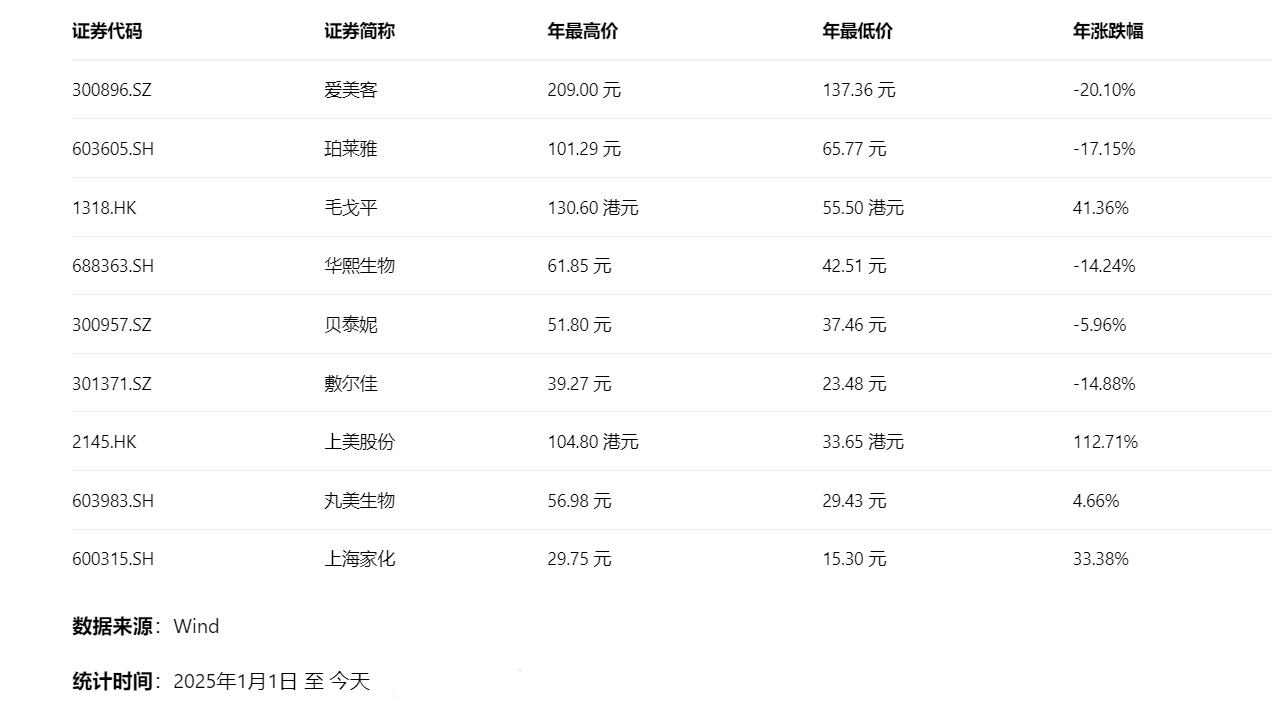
Core Insights - The Chinese beauty industry is experiencing a surge in IPOs, with over 41 beauty-related companies aiming for listings on the Hong Kong Stock Exchange since 2025, indicating a strong desire for growth and market expansion [1] - Lin Qingxuan's listing marks the beginning of its multi-brand and global strategy, while the stock performance of other brands like Maogeping shows significant volatility post-IPO [1][2] Group 1: Market Trends - Lin Qingxuan officially listed on the Hong Kong Stock Exchange on December 30, 2025, with an initial share price of 77.77 HKD, opening at 85 HKD, a 9.3% increase, and achieving a market capitalization of over 11.8 billion HKD [2] - Other companies like Perlay and Marubi are facing challenges, with Perlay's stock experiencing a significant decline and a slowdown in revenue growth, raising concerns about its market position [3][4] Group 2: Internationalization Efforts - Many beauty brands are focusing on internationalization as a core strategy, with companies like Perlay and Natural Hall aiming to enhance their global brand recognition through their IPOs [6][7] - Despite the ambitions, most brands still rely heavily on the domestic market for revenue, with limited success in overseas sales [7][8] Group 3: Investment and Development - Brands are investing in acquisitions and partnerships to strengthen their market presence, such as Perlay's investment in the cosmetic brand Huazhi Xiao and collaborations with private equity firms for global expansion [7][8] - The imbalance between marketing and research and development is a concern, as many brands have low R&D investments compared to their marketing expenditures, which may hinder their competitiveness in international markets [8][9]


徐汇知识产权全链条保护实现“全能” 2000个商标1个月内变更完
Jie Fang Ri Bao· 2026-01-16 01:51
Group 1 - The Xu Hui District Intellectual Property Protection Center has been established to create a comprehensive "one-stop" service system for intellectual property issues, gathering nine units including the district court and procuratorate [1][2] - The center aims to develop a "15-minute intellectual property service circle" centered around No. 650 Caobao Road, enhancing public services and addressing the needs of innovative entities [1][2] - The center has successfully handled a large-scale trademark registration change for Shanghai Shangmei Cosmetics Co., Ltd., completing the process in one month instead of the usual year [3] Group 2 - Xu Hui District hosts 114 trademark agencies and 54 patent agencies, actively attracting quality service institutions to enhance intellectual property services [4] - Armstrong (China) Investment Co., Ltd. has applied to join the Shanghai Key Trademark Protection Directory, which will strengthen its defense capabilities against intellectual property infringements [4] - The center is promoting the concept of "data intellectual property registration," allowing companies to monetize valuable data resources, such as AI algorithms, as part of their assets [4] Group 3 - The Xu Hui District Intellectual Property Bureau has organized a customized expert consultation for American Standard (China) Co., Ltd. to enhance brand protection against counterfeiting [6] - A three-person expert team was assigned to provide actionable advice, including changing enforcement locations and leveraging customs policies to combat counterfeit sources [6] - The core trademark of American Standard has been included in the Shanghai Key Trademark Protection Directory, enhancing its protection against infringement [6]
央视曝光韩束涉嫌违法添加,上美股份创始人吕义雄的百亿目标遇阻
Xi Niu Cai Jing· 2026-01-13 05:41
Group 1 - The core issue revolves around the controversy regarding Han Shu's face masks containing the banned ingredient Epidermal Growth Factor (EGF), leading to a significant trust crisis for the brand and its parent company, Up Beauty Co. [2][3] - Han Shu's response included presenting testing reports claiming no EGF was added, but discrepancies in test results from different third-party organizations raise questions about the legitimacy of the findings [4][9] - The investigation highlighted that the cosmetic industry may have "AB formula" practices, where different formulations are used for testing and actual production, contributing to the confusion [4][10] Group 2 - The pricing strategy of Han Shu has come under scrutiny, with reports indicating that a product priced at 399 yuan may only cost around 26 yuan to produce, raising concerns about inflated pricing and marketing over substance [10][12] - Han Shu's heavy reliance on marketing, with significant sales expenses amounting to 23.37 billion yuan in the first half of 2025, contrasts sharply with its low research and development expenditure of only 1.03 billion yuan [11][12] - Up Beauty Co. is heavily dependent on Han Shu, which accounted for 81.4% of the company's total revenue in the first half of 2025, indicating a lack of diversification in its brand portfolio [12][13] Group 3 - The company has attempted to revitalize its other brands, such as One Leaf, but faces challenges due to market saturation and lack of unique competitive advantages [13][14] - The ongoing controversy and reliance on a single brand may hinder Up Beauty Co.'s long-term stability and growth, especially in a highly competitive beauty market [14]
国信证券:消费行业2026年聚焦新消费与困境反转 看好四大细分赛道
智通财经网· 2026-01-13 03:54
Core Viewpoint - Guosen Securities maintains an "outperform" rating for the consumer sector, anticipating potential rebounds in 2025 due to policy support and structural opportunities in specific sub-sectors like gold jewelry, beauty care, offline retail, and cross-border e-commerce [1] Group 1: 2025 Market Review - In 2025, the SW retail index increased by 11.6%, underperforming the CSI 300 index by 6.1 percentage points, as the market adjusted after significant gains in 2024 [2] - The SW beauty care index rose by 0.4%, lagging behind the CSI 300 index by 17.35 percentage points, with a notable decline in the second half of the year due to a shift in market focus towards technology [2] - The overall consumer sector showed stable fundamentals in 2025, with emerging structural highlights and strong rebound potential supported by clearer consumption-promoting policies [2] Group 2: 2026 Outlook - The new consumption trend is expected to continue into 2026, driven by changes in consumer sentiment among younger demographics and the successful market entry of new consumption companies [3] - Traditional consumption leaders are facing operational challenges but are adapting by innovating and adjusting their retail channels, leading to potential recovery starting from late 2024 [3] Group 3: Investment Recommendations - **Gold Jewelry**: The sector is entering a peak consumption season with overall valuations at low levels, and companies with strong product offerings are expected to see growth [4] - **Beauty Care**: The sector is returning to low levels, with traditional leaders showing signs of recovery and new product launches driving growth [4] - **Offline Retail**: The end of the year marks a sales peak, with potential positive impacts from CPI recovery and ongoing adjustments in supermarket operations [4] - **Cross-Border E-commerce**: Market sensitivity to external tariffs is decreasing, and leading companies are expected to benefit from the upcoming overseas consumption peak [4]

商贸零售行业1月投资策略:政策支持有望进一步加码,板块龙头蓄势待发
Guoxin Securities· 2026-01-12 13:43
Investment Rating - The report maintains an "Outperform" rating for the retail sector [3][56]. Core Insights - The retail sector is expected to benefit from increased policy support, with leading companies poised for growth [1][3]. - The overall consumption environment in 2025 is projected to be stable, with structural highlights emerging, particularly as consumption policies become clearer [1][12]. - The report identifies two main trends for 2026: the continuation of new consumption trends and the anticipated reversal of challenges faced by traditional consumption [2][20]. Summary by Sections Market Performance Review - In 2025, the SW retail index increased by 11.6%, underperforming the CSI 300 index by 6.1 percentage points, while the beauty care index rose by only 0.4%, lagging behind the CSI 300 by 17.35 percentage points [1][16]. - The retail sector's performance was initially strong in the first half of 2025 but faced a decline in the second half due to a shift in market focus towards technology [1][16]. Investment Recommendations - The report suggests several sectors for investment: 1. **Gold and Jewelry**: The sector is entering a consumption peak, with low valuations and expected growth in same-store sales and channel expansion. Recommended companies include潮宏基, 菜百股份, and 周大福 [3][56]. 2. **Beauty and Personal Care**: The sector is returning to low valuations, with traditional leaders showing signs of recovery. Recommended companies include 上美股份 and 珀莱雅 [3][56]. 3. **Offline Retail**: The end of the year is a peak sales period, with potential positive impacts from CPI recovery. Recommended companies include 名创优品 and 永辉超市 [3][56]. 4. **Cross-border E-commerce**: Companies are expected to benefit from reduced external tariff impacts, with recommendations including 小商品城 and 安克创新 [3][56]. Key Company Earnings Forecasts - The report provides earnings forecasts and investment ratings for key companies, all rated "Outperform" for 2025 and 2026, including 潮宏基, 上美股份, and 珀莱雅, with respective PE ratios indicating growth potential [5][59]. Recent Industry Data Tracking - As of November 2025, the total retail sales of consumer goods reached 43,898 billion yuan, with a year-on-year growth of 1.3%. The growth was influenced by high base effects and the timing of promotional events [26][30]. - Online retail sales for the first 11 months of 2025 reached 144,582 billion yuan, growing by 9.1%, with physical goods online retail accounting for 25.9% of total retail sales [28][30]. Policy Support and Future Outlook - Recent policy initiatives emphasize the importance of boosting consumer spending, with a focus on increasing the consumption rate and stabilizing demand through various measures [13][24]. - The report anticipates that traditional consumption leaders will gradually improve their performance as they adapt to new market conditions and innovate their product offerings [24][20].


流量失灵,美妆品牌换战场了
3 6 Ke· 2026-01-12 11:49
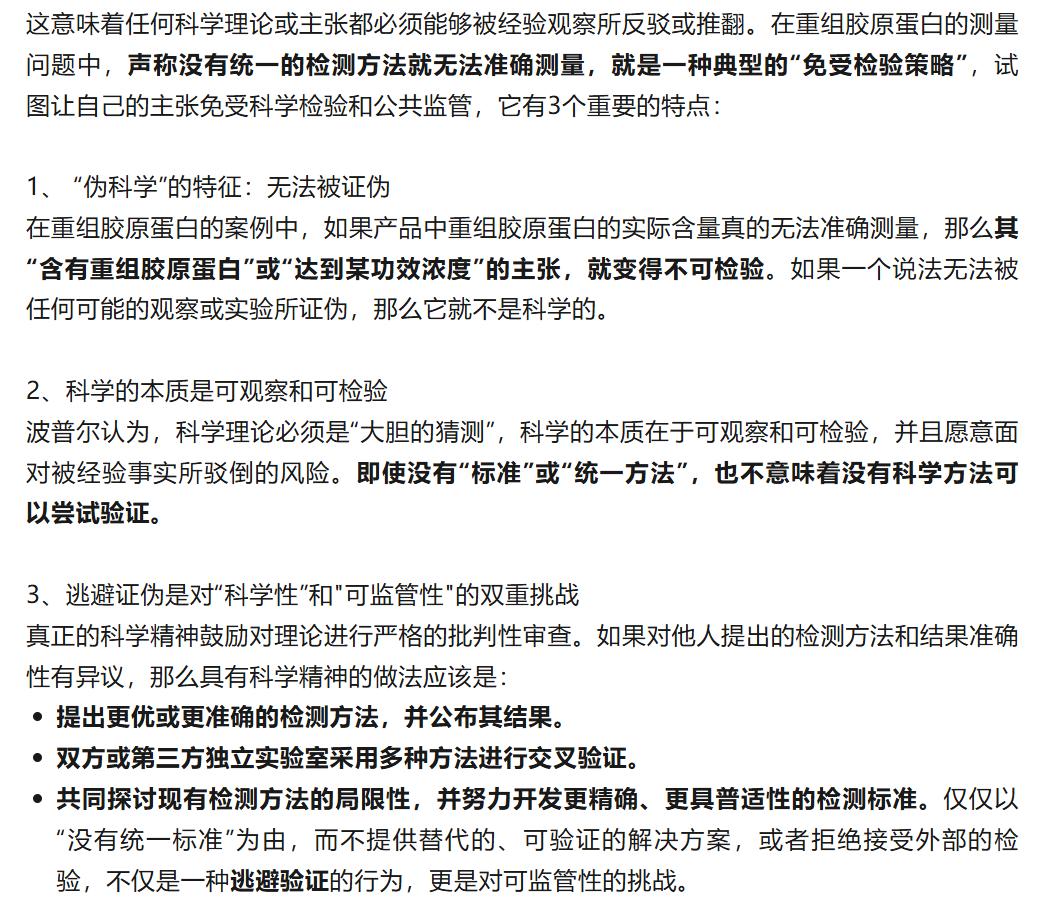
Core Insights - The beauty industry is undergoing a significant transformation as consumers prioritize product ingredients and efficacy over marketing narratives and brand stories [1][2] - The competition among companies is shifting from traditional marketing to a focus on scientific validation and technical authority, particularly regarding core ingredients [1][3] Group 1: Industry Dynamics - The battle for defining the "ingredient king" is exemplified by the prolonged conflict between Huaxi Biological and Juzhi Biological over recombinant collagen, highlighting the industry's shift towards scientific discourse [1][2] - Companies are increasingly engaged in disputes over intellectual property and scientific narratives, as seen in the conflict between medical company Aierfu and skincare brand Zhanmeiya, which revolves around the storytelling of scientific advancements [3] Group 2: Market Competition - The competition for established, cash-generating scientific products is illustrated by the dispute between Shuiyang Co. and Ruoyu Chen over the agency rights for the Spanish brand "Mestique," which has shown remarkable growth in the Chinese market [5][6] - The financial performance of companies varies significantly, with some experiencing revenue growth alongside increased R&D spending, while others face declining revenues despite high R&D investments [6][7] Group 3: Consumer Behavior - A significant shift in consumer preferences is noted, with 58.8% of consumers prioritizing product ingredients in their purchasing decisions, indicating a growing demand for transparency and efficacy [15][21] - The rise of the "ingredient party" has led to increased scrutiny of product claims, pushing companies to provide credible testing reports and validate their ingredients [15][21] Group 4: Future Trends - The beauty industry's future is marked by a "scientific arms race," with brands striving to establish their authority in scientific research and ingredient validation [8][16] - Companies are exploring unique natural ingredients and integrating skincare with makeup, reflecting a trend towards holistic beauty solutions [20][21]

美护行业2026年度投资策略:国产替代趋势延续,优质国货凸显强a
Hua Yuan Zheng Quan· 2026-01-12 07:27
Group 1 - The report maintains a positive outlook on the beauty and personal care industry, highlighting the ongoing trend of domestic substitution and the emergence of high-quality domestic brands [1][5] - The beauty and personal care sector is expected to continue its growth trajectory, driven by strong brand marketing, product matrix, channel strategies, and management strategies [5][27] - The report identifies key investment opportunities in leading domestic brands such as Mao Ge Ping, Marubi, Proya, and RuYuchen, which are expected to maintain strong growth due to their competitive advantages [5][27] Group 2 - In 2025, the beauty and personal care sector showed stable revenue performance, with a slight increase in profit growth compared to revenue growth [17][22] - The overall performance of the beauty sector in 2025 was moderate, with a year-on-year revenue increase of 3.1% and a net profit increase of 5.0% [17][22] - The cosmetics market in 2025 experienced a steady retail growth rate, with a year-on-year increase of 4.8% in retail sales for cosmetics in China [22][27] Group 3 - The report notes a significant shift in consumer preferences towards efficacy-driven skincare products, with a growing focus on product ingredients and effectiveness [53][57] - The luxury segment of the beauty market is experiencing robust growth, particularly during promotional events, with high-end brands leading the sales increase [63][64] - The report highlights the transformation of sales channels, with Tmall focusing on high-end beauty products while Douyin showcases the rise of domestic brands [30][28] Group 4 - The medical aesthetics market is projected to maintain a compound annual growth rate (CAGR) of around 10% from 2025 to 2028, despite a slowdown in overall growth [31][38] - High-end consumers are increasingly seeking anti-aging treatments, with a notable rise in spending among this demographic [41][39] - The medical aesthetics industry is undergoing a consolidation phase, driven by stricter regulations and a slowdown in the growth of medical institutions [42][43] Group 5 - The personal care market is seeing strong growth in body care products, with a market share of 56% for body care and 44% for hair care [47][45] - The primary consumer demographic for personal care products is women aged 21-35, indicating a growing emphasis on personal care among younger consumers [48][49] - The report emphasizes the importance of product efficacy, with consumers increasingly prioritizing moisturizing, oil control, and beauty-enhancing benefits in personal care products [48][50]
从破产边缘到百亿市值,东北网红家族的“高端”之路
3 6 Ke· 2026-01-11 07:22
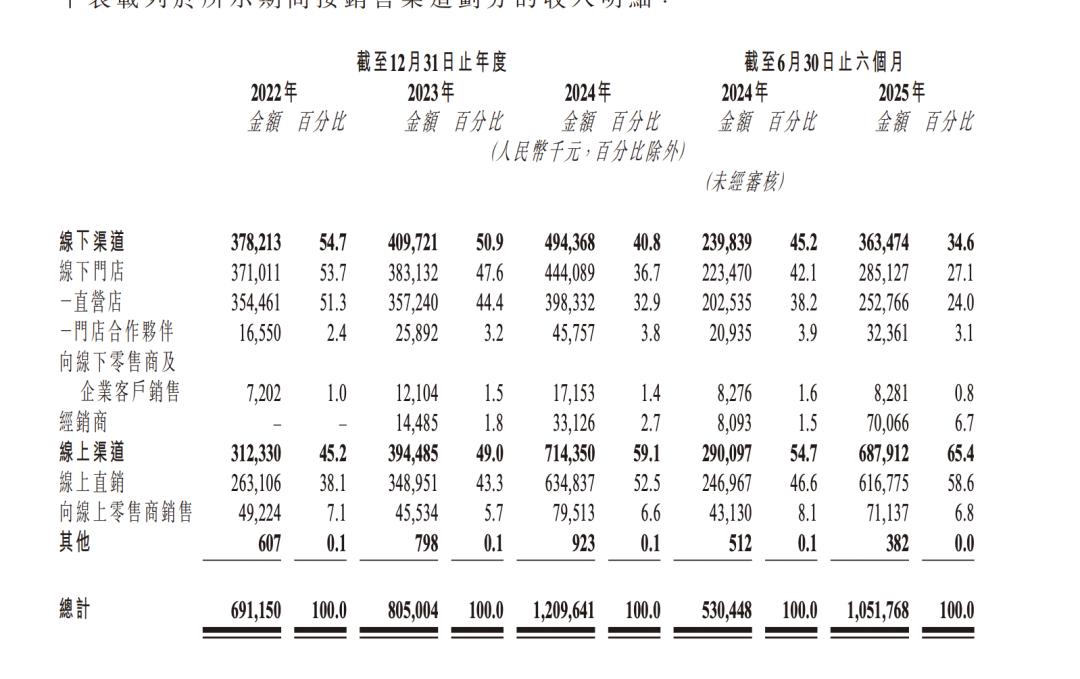
Core Viewpoint - Lin Qingxuan has successfully listed on the Hong Kong Stock Exchange, becoming the first high-end domestic skincare brand to do so, amidst a wave of consumer company IPOs expected by 2025 [1][2]. Company Overview - Lin Qingxuan was founded in 2003 during the SARS outbreak, initially starting with handmade soaps priced at 25 yuan each. The brand shifted towards high-end products with the launch of camellia oil in 2014 [2]. - The company has a notable shareholder base, including brands like Youngor and global beauty giant L'Oréal [2]. Market Position - Lin Qingxuan is positioned as a leader in the high-end domestic skincare market, ranking first among Chinese high-end domestic skincare brands and being the only domestic brand in the top 15 high-end skincare brands in China [15]. - The brand has established a high pricing strategy, similar to that of other high-end brands like Maogeping, and has created a unique market segment for domestic beauty products [4][15]. Financial Performance - On its first trading day, Lin Qingxuan's stock price rose by 9.3%, closing at 85 HKD per share, with a total market capitalization of approximately 11.9 billion HKD [2]. - Revenue figures from 2022 to the first half of 2025 show a compound annual growth rate (CAGR) of 51.2%, with online revenue increasing from 45.2% in 2022 to 65.4% in the first half of 2025 [11][12]. - The gross profit margin has consistently remained above 81%, with core products like camellia oil achieving a gross margin of 86.2% [17]. Sales and Marketing Strategy - Lin Qingxuan has adopted a unique family-based influencer marketing strategy, leveraging the founder and family members to create a content-driven approach to attract customers [13]. - The company has invested heavily in sales and distribution, with cumulative expenses reaching 2.263 billion yuan from 2022 to the first half of 2025, accounting for 55.2% of revenue in the first half of 2025 [20]. Store Expansion - The number of Lin Qingxuan stores has grown from 366 in 2022 to 554 by mid-2025, with over 95% of these located in shopping malls across major cities [18][19].
行业周报:陕西旅游A股上市,以旅游资源构建核心竞争壁垒-20260111
KAIYUAN SECURITIES· 2026-01-11 06:11
Investment Rating - The industry investment rating is "Positive" (maintained) [1] Core Viewpoints - The report highlights the successful IPO of Shaanxi Tourism, which leverages its rich tourism resources and strong operational experience to build competitive advantages through a combination of performance-driven tourism, cable car operations, and dining services [22][24][34] - The report emphasizes the resilience of the cultural tourism industry amid ongoing trends to expand domestic demand and promote consumption, suggesting that Shaanxi Tourism's future growth will be supported by new performance projects and cable car capacity upgrades [36] Summary by Sections Retail and Social Services Market Review - The retail and social services indices rose by 4.23% and 4.71% respectively during the week of January 5 to January 9, 2026, with the Shanghai Composite Index increasing by 3.82% [12][14] - Among the sub-sectors, the supermarket segment showed the highest growth, with an increase of 8.18% year-to-date [15][17] Industry Dynamics: Shaanxi Tourism - Shaanxi Tourism, a leading regional tourism company, successfully listed on the Shanghai Stock Exchange on January 6, 2026, becoming the first A-share listed company of the year [22] - The company reported significant revenue contributions from its tourism performance and cable car operations, with a net profit margin and gross profit margin remaining high post-pandemic [24][27] - Revenue breakdown for the first half of 2025 shows that tourism performance accounted for 60.2%, cable car operations for 35.8%, and dining services for 4.0% [24] Investment Recommendations - The report recommends focusing on high-end gold and fashion jewelry brands, highlighting companies like Chow Tai Fook and Chao Hong Ji, which are expected to benefit from market trends [39] - It also suggests monitoring offline retail companies adapting to market changes and AI-enabled cross-border e-commerce leaders, with specific recommendations for Yonghui Supermarket and Aiying Room [39] - In the cosmetics sector, the report emphasizes brands that capture emotional value and innovate with safe ingredients, recommending companies like Mao Ge Ping and Proya [40]


行业点评报告:医美化妆品12月月报:山茶花专家林清轩港交所上市,新增重点推荐美丽田园医疗健康-20260110
KAIYUAN SECURITIES· 2026-01-10 14:54
Investment Rating - The industry investment rating is "Positive" (首次) [1] Core Insights - The beauty and personal care industry is experiencing a mixed performance, with the beauty care index declining by 1.70% in December 2025, ranking 24th among all primary industries [15] - The medical beauty sector is seeing innovation with the approval of new products, such as the cross-linked recombinant collagen implant by Jiangsu Chuangjian Medical Technology Co., which is expected to inject new momentum into the market [7][34] - Lin Qingxuan, a pioneer in the "oil-based skincare" segment, has successfully listed on the Hong Kong Stock Exchange, marking a significant milestone for domestic high-end skincare brands [8][39] Summary by Sections Market Review - In December, the beauty care index reported a decline of 1.70%, underperforming the broader market, which saw the Shanghai Composite Index increase by 2.06% [15] - For the entire year of 2025, the beauty care index showed a cumulative increase of 0.39%, again lagging behind the Shanghai Composite Index's 18.41% growth [15] Medical Beauty - Jiangsu Chuangjian Medical's cross-linked recombinant collagen implant has been approved, making it the fifth such product in China and the first cross-linked version [34] - The industry is shifting from single product competition to a full-chain layout, with companies like Jinjian Biological and Junzi Biological also making significant advancements in the recombinant collagen space [34][36] Cosmetics - Lin Qingxuan has established itself as a leader in the high-end domestic skincare market, achieving the highest retail sales among domestic brands in 2024 [39] - The company has built a comprehensive supply chain and employs an OMO (Online-Merge-Offline) model to enhance customer engagement and sales [39][49] - Lin Qingxuan's core product, the camellia oil essence, has a high repurchase rate of 33.5%, indicating strong customer loyalty [51] Investment Recommendations - The report recommends focusing on differentiated upstream medical beauty product manufacturers and chain medical beauty institutions, highlighting companies like Meili Tianyuan Medical Health and Aimeike [9][53] - In cosmetics, the report suggests investing in brands that innovate in emotional value and safe ingredients, with a focus on domestic brands like Maogeping and Lin Qingxuan [54]