巨子生物

Search documents
美容护理行业2025年中期投资策略:焕新,变革
Donghai Securities· 2025-07-08 08:35
Investment Rating - The report rates the beauty and personal care industry as "Positive" for investment [3]. Core Insights - The beauty and personal care sector has shown strong performance, with a cumulative increase of 6.90% as of June 2025, outperforming the market by 6.87 percentage points [7]. - The industry is entering a stable development phase, with performance differentiation among companies. Leading firms like Proya and Marubi are achieving steady growth, while emerging material companies like Jinbo Bio and Juzi Bio are experiencing rapid growth [9]. - The cosmetics market is maturing, with a slight decline in market size expected in 2024, projected at 774.645 billion yuan, down 2.83% year-on-year [19]. Summary by Sections Market Review - The beauty and personal care sector has shown a strong performance, with the beauty care segment outperforming the market [7][9]. - The cosmetics market is transitioning to a stable growth phase, with a strong siphoning effect observed during major shopping events like "618" and "Double Eleven" [18]. Cosmetics - The cosmetics market is experiencing a stable growth phase, with a year-on-year increase of 4.1% in the first five months of 2025, compared to a decline of 1.1% in 2024 [18]. - The market size for cosmetics is projected to be 774.645 billion yuan in 2024, reflecting a slight decline from previous years [19]. - Domestic brands are gaining market share, with the market share of domestic products reaching 55.7% in 2024 [45]. Medical Aesthetics - The non-surgical medical aesthetics market is growing rapidly due to its safety and ease of operation, with a projected compound annual growth rate (CAGR) of 15%-20% over the next five years [55]. - The market for collagen products is expected to reach 58.57 billion yuan by 2025, with significant growth anticipated in the coming years [65]. Personal Care - The personal care segment has shown strong growth, driven by new consumer trends and increased awareness of personal health care [91]. - The online penetration rate for personal care products is currently low, indicating significant growth potential in e-commerce [97].
价值研究所|卷字号!医美玩家开始“资质卡位”了
中国基金报· 2025-07-08 04:46
Core Viewpoint - The medical beauty industry is experiencing a significant transformation as pharmaceutical companies and beauty brands aggressively enter the market, indicating a restructuring of industry boundaries driven by consumer upgrades and technological revolutions [1][9]. Group 1: Industry Dynamics - Major pharmaceutical players are rapidly entering the medical beauty sector, with all four major pharmaceutical distribution giants—Sinopharm, Shanghai Pharmaceuticals, China Resources Pharmaceutical, and Jiuzhoutong—now involved in the medical beauty space [3][5]. - Jiuzhoutong was the first to recognize the potential of the medical beauty market, investing in Aimeike in 2016 and subsequently collaborating with other companies, achieving a significant increase in its medical beauty service institutions to 10,560, a year-on-year growth of 84.81% [5][9]. - The medical beauty market in China is projected to reach a scale of 638.2 billion yuan by 2030, with a compound annual growth rate (CAGR) of 14.5% from 2021 to 2030 [9]. Group 2: Investment Trends - Notable investments include Zhong Shanshan, the former richest man in China, who invested 3.4 billion yuan in Jinbo Biotechnology, becoming its second-largest shareholder, highlighting the growing interest in the collagen market [6][9]. - Jiuzhoutong reported a significant increase in its medical beauty revenue, achieving 851 million yuan in sales for 2024, a year-on-year increase of 120.47%, with a three-year CAGR of 111.64% [9]. Group 3: Market Opportunities - The medical beauty sector is attracting beauty brands, with companies like Chuangyan Biotechnology and Proya entering the market with medical-grade products, indicating a shift towards higher-quality offerings [12][13]. - The demand for medical-grade products is rising, with single-use medical dressings priced between 15 to 35 yuan, reflecting consumers' willingness to pay for higher-quality solutions [13]. Group 4: Competitive Strategies - Companies are adopting various strategies to enter the medical beauty market, including investment and acquisition, technology extension, brand crossover, channel integration, and medical-research collaboration [15]. - The future winners in the medical beauty space are expected to be those who can integrate the entire supply chain from research to sales, emphasizing safety and effectiveness in product offerings [15].



招银国际每日投资策略-20250708
Zhao Yin Guo Ji· 2025-07-08 01:51
Market Overview - Global markets experienced a mixed performance, with the Hang Seng Index closing at 23,888, down 0.76% for the day but up 40.13% year-to-date [1] - The S&P 500 and Nasdaq also saw declines of 0.79% and 0.92% respectively, while the DAX in Germany rose by 0.58% [1] - The report highlights a rise in risk aversion due to escalating trade tensions, particularly with new tariffs imposed by the U.S. on several countries [3] Industry Insights - The Chinese pharmaceutical sector has shown strong performance, with the MSCI China Healthcare Index up 41.4% year-to-date, outperforming the MSCI China Index by 16.2% [4] - The report emphasizes the need for a rational perspective on the valuation of innovative drugs, as the market anticipates higher transaction frequencies and scales for overseas deals [4] - Recent policy measures from the National Healthcare Security Administration are expected to enhance the long-term payment landscape for innovative drugs, with commercial health insurance projected to reach 977.3 billion yuan in 2024, a growth of 8.2% [5] Investment Recommendations - The report identifies several companies within the healthcare sector as attractive investment opportunities, including: - **Giant Bio**: Expected sales recovery driven by product and brand expansion [6] - **Guo Shengtang**: Rapid expansion of stores and strong cash flow [6] - **Angelalign**: Improving profitability in overseas markets [6] - Other recommended stocks include: - **Sangfor Technologies (1530 HK)**, **Giant Bio (2367 HK)**, **Guo Shengtang (2273 HK)**, **Angelalign (6699 HK)**, **BeiGene (ONC US)**, and **Innovent Biologics (1801 HK)** [6] Focus Stocks - The report lists several focus stocks with potential upside, including: - **Geely Automobile (175 HK)**: Target price of 24.00, representing a 47% upside [7] - **Xpeng Motors (XPEV US)**: Target price of 28.00, representing a 56% upside [7] - **Sany International (631 HK)**: Target price of 8.70, representing a 32% upside [7] - Other notable mentions include **Luckin Coffee (LKNCY US)**, **Polaire (603605 CH)**, and **Tencent (700 HK)**, all rated as "Buy" with significant upside potential [7]
42亿,洗护领域迎来最大收购?
3 6 Ke· 2025-07-08 00:47
Core Viewpoint - The hair care market is becoming a significant opportunity for both domestic and international companies, with increasing investments and acquisitions in this sector [1][2][9]. Investment and Acquisition Activities - In 2023, notable acquisitions include L'Oréal's purchase of Color Wow and Kid's King's acquisition of the hair care brand Si Yu for 1.65 billion yuan [1]. - Blackstone is in negotiations to acquire Juno Hair, South Korea's largest high-end salon chain, for approximately 590 million USD (around 4.233 billion yuan), which would be one of the largest acquisitions in the personal care services industry in Korea [2][5][7]. Financial Performance and Valuation - Juno Hair reported sales of approximately 300 billion KRW (around 1.572 billion yuan) last year, with an EBITDA of 37 billion KRW (around 194 million yuan) [4]. - The proposed acquisition valuation for Juno Hair is over 20 times its EBITDA, which is considered unusually high for the Korean salon industry [2][5]. Market Growth and Trends - The global shampoo market is projected to grow from 34.46 billion USD (approximately 247.185 billion yuan) in 2023 to 56.54 billion USD (approximately 405.567 billion yuan) by 2032, with a compound annual growth rate (CAGR) of 5.71% [9]. - The Chinese hair care market has expanded from 43.39 billion yuan in 2017 to 65.5 billion yuan in 2023, with expectations to reach 82.79 billion yuan by 2027 [13]. Competitive Landscape - Major international beauty brands, including L'Oréal and Proya, are actively entering the hair care market, with L'Oréal's professional hair product division experiencing continuous sales growth [11][14]. - Domestic brands are focusing on launching new hair care products, with significant growth reported in high-end segments [14][17]. Emerging Opportunities - The scalp care segment is identified as a potential growth area, with a significant increase in consumer interest and market size for anti-hair loss products, projected to grow from 2.332 billion yuan in 2018 to 7.636 billion yuan in 2022 [18]. - Companies are shifting their focus from traditional hair care solutions to innovative scalp and hair management products, indicating a trend towards more specialized offerings in the market [17][18].


大摩宏观闭门会:反内卷,见真章?关注三个重要政策的拐点-原文
2025-07-07 15:45
Summary of Key Points from the Conference Call Industry or Company Involved - The discussion primarily revolves around the macroeconomic policies in the United States and their implications for global markets, particularly focusing on the "Big and Beautiful" bill and trade tensions between the U.S. and China. Core Points and Arguments 1. **Impact of the "Big and Beautiful" Bill**: The bill is expected to increase the U.S. fiscal deficit significantly, potentially adding nearly $3 trillion over the next decade, raising concerns about the sustainability of U.S. debt levels [18][19][35]. 2. **Trade Tensions and Tariff Uncertainty**: The upcoming deadline on July 9 for tariff negotiations is critical. The expectation is that the current tariff structure will remain largely unchanged, leading to continued uncertainty in global trade and investment [5][6][17][38]. 3. **China's Economic Response**: China's economic situation is distinct, with a focus on internal reforms and consumption stimulation. The government is expected to prioritize structural reforms over currency adjustments to address economic imbalances [11][14][23][24]. 4. **Consumer Spending Trends**: There are mixed signals in consumer spending, with high-end consumption facing challenges. The introduction of policies like fertility subsidies is under scrutiny for their potential impact on consumer behavior [2][49][50]. 5. **AI Investment Trends**: Despite a positive narrative around AI investments in China, actual capital expenditure and profitability remain uncertain. The U.S. continues to show strong demand for AI-related investments [2][22][40]. 6. **Market Sentiment and Stock Performance**: The U.S. stock market is expected to experience volatility in the short term due to tariff uncertainties, but a longer-term positive outlook remains as the market adjusts to new fiscal policies [39][40][41]. 7. **Monetary Policy Outlook**: The Federal Reserve is not expected to cut interest rates this year, but a significant easing cycle is anticipated starting in March next year, which could support the stock market [41][42]. 8. **Global Asset Allocation Trends**: There is a shift in global asset allocation, with investors diversifying away from U.S. assets due to concerns over long-term debt sustainability, while still maintaining confidence in U.S. corporate performance [21][30][48]. Other Important but Possibly Overlooked Content 1. **Reform Necessity in China**: The need for a shift from an investment-driven growth model to one that emphasizes consumption is highlighted as crucial for sustainable economic growth [23][24][26]. 2. **Fiscal Policy Adjustments**: The call for reforming the fiscal system to reduce reliance on production-based taxes and enhance income-based taxation is emphasized as a means to stimulate consumer demand [24][25]. 3. **Long-term Economic Strategy**: The upcoming Fourth Plenary Session in October is seen as a pivotal moment for potential policy shifts that could impact China's economic trajectory [28][29][31]. 4. **Consumer Price Pressures**: Ongoing deflationary pressures are affecting consumer prices, making it difficult for companies to maintain margins and profitability [50][52]. This summary encapsulates the key discussions and insights from the conference call, providing a comprehensive overview of the current economic landscape and its implications for investment strategies.
大摩宏观闭门会:反内卷,见真章?关注三个重要政策的拐点 -纪要
2025-07-07 15:45
Summary of Key Points from Conference Call Records Industry or Company Involved - Focus on the impact of the "Big and Beautiful Act" in the U.S. and its implications for the U.S. economy and global markets [1][2][8][13] - Discussion on U.S.-China trade relations and tariffs, particularly in the context of the upcoming deadlines [3][4][14] - Examination of the Chinese consumption sector and structural reforms aimed at stimulating consumption [5][20][21] - Analysis of the AI industry in both the U.S. and China, highlighting differences in demand and supply challenges [6][26][27] Core Points and Arguments - The "Big and Beautiful Act" is expected to boost the U.S. economy in the short term through infrastructure investment and tech R&D, but raises concerns about long-term fiscal sustainability, with potential deficits reaching 7% of GDP [1][2][8][13] - Trade tensions between the U.S. and other countries may evolve in three scenarios: extension of the current tariff pause, escalation of tariffs, or reaching new agreements, with ongoing uncertainty affecting global economic confidence [3][4] - China is implementing structural reforms to stimulate consumption, with signals from both central and local governments indicating a focus on rebalancing the economy [5][11] - AI demand in the U.S. is strong, with significant capital expenditure growth, while China's AI sector faces challenges in actual profit realization and hardware supply constraints [6][26][27] Other Important but Possibly Overlooked Content - The expected limited appreciation of the RMB against the USD in the next 12 months, with a potential depreciation of the USD by at least 6% [7] - The Chinese stock market is predicted to experience volatility and range-bound trading due to tariff uncertainties and policy expectations [17][19] - New consumer support measures, such as fertility subsidies, are being discussed, but their immediate impact on consumption may be limited [21][22] - The performance of consumer stocks during the mid-year reporting period is expected to show resilience due to cost management and profit margin expansion [23][24] - Recommendations for consumer investments include companies with stable earnings and growth potential, such as Anta and Baisheng China, while cautioning against chasing high-growth stocks without proper timing [25]
深度 | 美妆如何攻克医美渠道“高墙”?
FBeauty未来迹· 2025-07-07 13:32
Core Viewpoint - The beauty industry is increasingly entering the medical aesthetics channel, with over 20 beauty brands adopting a dual beauty strategy of "medical aesthetics + beauty" to enhance their market presence and professional credibility [2][6][30]. Group 1: Market Overview - The medical aesthetics market in China is experiencing strong growth, with 18,584 compliant specialized medical aesthetics institutions reported as of January 2024 [6][7]. - The main active regions for medical aesthetics consumption are concentrated in the Pearl River Delta, Yangtze River Delta, and Chengdu-Chongqing areas [7][8]. Group 2: Industry Structure - Medical aesthetics institutions can be categorized into three types: public hospitals, large chain private hospitals, and small private hospitals and clinics [4][5]. - The development of the domestic medical aesthetics industry has gone through three main stages: initiation (1994-2000), gradual standardization (2000-2010), and rapid development (2010-present) [5]. Group 3: Brand Strategies - Many beauty companies have established significant medical aesthetics channel layouts, such as Huaxi Biological covering 7,000 medical institutions and Juzhi Biological entering approximately 1,700 public hospitals and 3,000 private hospitals and clinics [8][10]. - International beauty brands are also accelerating their medical aesthetics channel expansion, with brands like SkinCeuticals and Estée Lauder entering high-end medical aesthetics lines [10][12]. Group 4: Consumer Trends - There is a growing consumer demand for effective skincare solutions that combine beauty products with medical treatments, reflecting a trend towards the integration of lifestyle beauty and medical aesthetics [17][20]. - Consumers are increasingly seeking products with professional medical backing and comprehensive management solutions from pre-operative care to post-operative recovery [18][20]. Group 5: Challenges and Opportunities - Despite the initial success of some brands in the medical aesthetics channel, challenges remain, including product quality inconsistency and the need for effective consumer education [16][18][20]. - The dual beauty model is becoming a significant trend, with medical aesthetics companies also venturing into lifestyle beauty, leveraging their technical expertise and clinical data [22][23]. Group 6: Future Outlook - The competition in the medical aesthetics channel is expected to intensify, with beauty brands needing to establish unique advantages through solid technical research and deep medical collaboration [29][30]. - The future winners in this space will be those who can embed "professional trust" in the medical aesthetics channel and leverage "real clinical value" to gain endorsements from both doctors and consumers [30].
AI重塑消费全流程,兴趣经济来临……终于有报告讲透了
Nan Fang Du Shi Bao· 2025-07-07 12:26
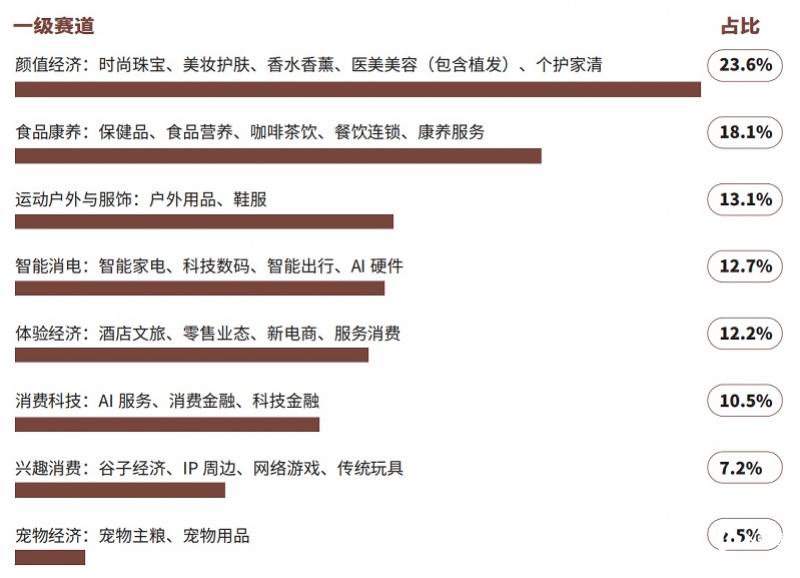
Core Insights - The "2025 High-Quality Consumer Brand TOP100 Innovation Ecological Conference" will be held in Shanghai, focusing on brand influence, innovation, social responsibility, and company scale [1] - A report titled "2025 High-Quality Consumer Brand TOP100 Trend Insight" will be released, highlighting four major trends in high-quality consumer brands [1] Group 1: Trends in High-Quality Consumer Brands - The rise of health consciousness is driving the growth of wellness and sports consumption, with outdoor sports and health products seeing the highest brand representation [5][6] - AI technology is enhancing product and service upgrades across various sectors, becoming a core competitive advantage in high-end home appliances [5][36] - Novel experiences are igniting consumer enthusiasm, particularly in the experience economy, where immersive and interest-based consumption is gaining traction [6][25] - Emotional value is unlocking new consumption scenarios, especially among younger consumers who prioritize emotional connections in their purchases [6][27] Group 2: Brand Distribution and Characteristics - Nearly 300 brands are competing across nine major sectors, with the largest representation in the beauty economy (23.6%) and health food sector (18.1%) [2][3] - Over 70% of the candidate brands are "post-00s brands," indicating a trend towards newer companies [7][8] - The geographical distribution of brands shows a concentration in major cities like Shanghai, Beijing, and Guangzhou, with Shanghai being favored by foreign brands [11][12][14] Group 3: Consumer Behavior and Market Dynamics - The beauty and personal care market is experiencing a shift towards efficacy-driven products, with a notable increase in consumer awareness regarding product effectiveness [16][18] - The outdoor sports market is becoming increasingly segmented, with traditional apparel brands entering the space to capture the growing demand for specialized outdoor gear [19][20] - The health and wellness industry is projected to reach a total revenue of 9 trillion yuan by 2024, driven by a growing awareness of health among consumers [22][23] Group 4: AI and Technology Integration - AI is reshaping the consumer experience across various sectors, with applications in personalized recommendations, smart home devices, and immersive entertainment experiences [35][38] - A significant majority of surveyed companies (87%) believe that AI technology will bring substantial changes to the consumer sector, with many planning to increase AI integration [40][43] - The integration of AI in consumer products is becoming a key trend, with companies focusing on enhancing user experience through intelligent features [36][37]
美护商社行业周报:孩子王小商品城25H1业绩预增,MINISOLAND全球壹号店开业9个月业绩破亿-20250707
Guoyuan Securities· 2025-07-07 11:42
Investment Rating - The report maintains an "Overweight" rating for the industry, with a focus on new consumption sectors such as beauty care, IP derivatives, and gold jewelry [5][32]. Core Insights - The beauty care sector saw significant activity, with Douyin's beauty category GMV exceeding 20 billion yuan in June, where skincare accounted for 66.4% and color cosmetics for 33.6% [3][24]. - Notable companies like MINISO achieved over 100 million yuan in sales within nine months of opening their global flagship store [4][29]. - The report highlights the performance of key companies, with projected net profits for Xiaoshangpin City expected to be between 1.63 billion to 1.7 billion yuan, marking a year-on-year increase of 12.57% to 17.40% [30]. Market Performance - During the week of June 30 to July 4, 2025, the retail trade, social services, and beauty care sectors experienced declines of 0.16%, 0.74%, and 0.55% respectively, ranking 27th, 17th, and 29th among 31 primary industries [14][18]. - The report notes that the education, professional chain, and trade sectors saw the highest gains, with increases of 7.47%, 7.42%, and 5.2% respectively [2][14]. Key Industry Events and News - The report discusses various industry events, including the approval of a topical finasteride spray by NMPA, marking it as the first and only approved product for male androgenetic alopecia [3][24]. - L'Oréal announced the acquisition of the professional hair care brand Color Wow, valued at approximately 10 billion yuan [3][26]. - The report also mentions the performance of companies like Huaxi Biological, which reported significant revenue declines for its brands in 2024 [31]. Investment Recommendations - The report recommends focusing on companies such as Shangmei Co., Juzhi Biological, Marubi Biological, and others within the beauty care sector [5][32].
化妆品医美行业周报:25H1收官国货表现分化,毛戈平等领衔增长-20250706
Shenwan Hongyuan Securities· 2025-07-06 11:44
Investment Rating - The report maintains a "Positive" outlook on the cosmetics and medical beauty industry [2]. Core Insights - The cosmetics and medical beauty sector underperformed the market during the week of June 27 to July 4, 2025, with the Shenwan Beauty Care Index declining by 0.6% and the Shenwan Cosmetics Index down by 1.5% [3][4]. - Domestic brands such as Maogeping and others showed significant growth, with some achieving over 50% growth in June, which is expected to positively impact Q2 performance [3][9]. - The report highlights a strong performance from leading domestic brands during the 618 shopping festival, with a notable increase in sales momentum post-event [9][10]. Summary by Sections Industry Performance - The Shenwan Beauty Care Index decreased by 0.6%, while the Shenwan Cosmetics Index fell by 1.5%, indicating weaker performance compared to the Shenwan A Index [4]. - The personal care products index saw a slight increase of 0.7%, but still lagged behind the Shenwan A Index by 0.4% [4]. Key Company Performance - Expected performance for major companies in Q2 includes: - Upbeauty: Revenue and net profit expected to grow by 16% and 25% respectively [11]. - Marubi: Anticipated revenue and net profit growth of 22% and 28% [11]. - Proya: Projected revenue and net profit growth of 10% and 15% [11]. - Maogeping: Expected revenue and net profit growth of 38% and 35% [11]. - Ruifeng: Anticipated growth of 70% and 75% in revenue and net profit respectively [11]. - Juzhibio: Expected growth of 25% and 20% in revenue and net profit [11]. Market Trends - The report notes a robust recovery in consumer demand, with a 4.1% year-on-year increase in retail sales for cosmetics in the first five months of 2025 [20]. - The domestic market is seeing a shift with local brands gaining market share, as evidenced by the performance of brands like Proya and Maogeping during major shopping events [34]. Investment Recommendations - Recommended stocks include: - Upbeauty, Proya, and Marubi for their comprehensive brand matrices and growth potential [15]. - Maogeping and Juzhibio for their strong positioning in niche markets [15]. - Attention is advised for Shanghai Jahwa, Betaini, and Huaxi Biological for potential growth [15]. E-commerce Insights - Data from Douyin indicates significant growth for domestic brands, with Han Shu achieving a GMV of 7.2 billion yuan, reflecting a 53% year-on-year increase [16]. - The overall GMV for domestic brands in June reached over 50% growth, indicating a strong market presence [9][16].