美的集团

Search documents
深圳市科陆电子科技股份有限公司关于筹划资产出售暨关联交易的提示性公告
Shang Hai Zheng Quan Bao· 2026-01-04 21:20
Core Viewpoint - Shenzhen Kelu Electronics Technology Co., Ltd. is planning to sell assets related to the Guangming Smart Energy Industrial Park to several companies, including Guangming Science City Industrial Development Group Co., Ltd., China Science and Technology Development Institute Co., Ltd., and Midea Innovation Investment Co., Ltd. [2][3] Group 1: Transaction Overview - The company has signed a letter of intent for asset acquisition, which includes factories, R&D offices, and supporting apartments [2][3] - The transaction is still in the planning stage, and the final agreement will depend on further negotiations and approvals from relevant authorities [2][3] - The transaction is classified as a related party transaction, with Midea Innovation Investment Co., Ltd. being a wholly-owned subsidiary of the company's controlling shareholder, Midea Group Co., Ltd. [3][10] Group 2: Transaction Parties - Guangming Science City Industrial Development Group Co., Ltd. has a registered capital of RMB 500 million and is involved in urban renewal and park infrastructure construction [4][5][6] - China Science and Technology Development Institute Co., Ltd. has a registered capital of RMB 26 million and focuses on high-tech project development and investment [7][8] - Midea Innovation Investment Co., Ltd. has a registered capital of RMB 10 million and provides investment advisory services [9][10] Group 3: Transaction Impact - The asset sale is expected to improve the company's asset quality and optimize its asset structure, allowing for cash recovery to supplement operational funds and enhance capital efficiency [18]

最新!2026年高股息现金牛名单曝光,最高股息率超13%,你的自选股上榜了吗?
Sou Hu Cai Jing· 2026-01-04 20:52
在2026年年初,股市的震荡不安牵动着众多投资者的神经。动荡的市场中,一种投资策略悄然升温,那便是聚焦于那些能够稳定派发现金红利的上市公司。 比起难以捉摸的股价波动,实实在在的分红入账,更能给人以安心之感。 一份最新的高股息率股票名单于1月2日在投资圈内迅速传播,犹如寒冬里的一束暖阳。这份名单精选出A股中股息率超过5%的公司,数量多达137家。何谓 股息率?简单来说,就是投资者购买股票后,仅凭公司分红,一年所能获得的回报率。超过5%的股息率,意味着其收益水平已高于不少银行理财产品。 在A股市场,高分红公司同样受到一部分长期资金的青睐。例如,保险资金、社保基金等对资产的安全性和现金回报有较高要求,因此高股息股票池往往是 其重点配置的方向。对于普通投资者而言,关注股息率也是以一种更为保守的视角来审视公司的质量。一家公司愿意且有能力持续拿出大量利润分给股东, 至少说明其盈利是真实可靠的,且财务状况稳健。 名单中,东方雨虹以高达13.61%的股息率傲居榜首。这意味着,如果在除权除息日前买入该股票,理论上仅靠分红,投资者便可获得超过13%的年度现金回 报。紧随其后的是广汇能源,股息率为12.64%,中谷物流则为12.1 ...

回购增持分红多措并举 深市公司“真金白银”护航市场稳定
Shang Hai Zheng Quan Bao· 2026-01-04 20:26
◎记者 时娜 上市公司的回购增持热潮持续至2026年。2026年1月4日,东诚药业、世纪华通等上市公司发布回购股份 计划,宁德时代、美的集团、潍柴动力、蓝思科技等多家深市龙头公司也披露了回购进展情况,英派斯 等公司披露增持计划实施情况,以"真金白银"传递信心,夯实公司价值投资基础。此外,多家上市公司 近日宣布向投资者派发"大红包"。 股份回购是上市公司优化股权结构、提升股东回报的重要抓手。2026年伊始,便有深市上市公司发布股 份回购计划。 东诚药业1月4日公告,计划以集中竞价交易方式回购股份,金额不低于1亿元(含),不超过2亿元 (含),用于实施股权激励和/或员工持股计划。回购价格不超过18.00元/股。 2025年以来,深市上市公司积极回应号召、立足自身发展,持续掀起"真金白银"的回购、增持、分红热 潮,多措并举提升投资者回报,为资本市场健康发展注入强劲动力。 上市公司下"红包雨" 据上海证券报记者不完全统计,2025年12月31日至2026年1月4日晚,仅深市就有15家公司披露半年度或 三季度分红实施公告,相关分红将于2026年1月陆续到账。 其中,天赐材料公告,公司2025年前三季度利润分配预案已获2 ...






上市公司回购增持:莫负投资人信任之托(四)
Sou Hu Cai Jing· 2026-01-04 15:48
Core Viewpoint - The article discusses the paradox of stock buybacks and share repurchases in the A-share market, highlighting the skepticism surrounding their effectiveness as genuine signals of corporate value amidst instances of stock price declines following such announcements [1][2]. Group 1: Buyback and Repurchase Trends - In early 2026, the trend of buybacks and share repurchases remains strong in the Shenzhen market, with companies like Dongcheng Pharmaceutical and Century Huatong announcing significant repurchase plans [1]. - By the end of 2025, Shenzhen companies disclosed a total of 424 buyback plans, with a maximum repurchase amount exceeding 800 billion and a maximum share purchase amount exceeding 300 billion [1]. - Major players in various sectors, including electronics and biomedicine, are leading the buyback efforts, with Midea Group and CATL making substantial repurchases [1]. Group 2: Investor Skepticism - The case of a company experiencing a stock price drop immediately after announcing a buyback raises questions about the sincerity of such actions, leading investors to wonder if these moves are genuine value affirmations or merely public relations tactics [2][3]. - The disparity between theoretical benefits of buybacks and the reality of declining stock prices creates confusion in the market, prompting investors to question the motives behind these actions [3]. Group 3: Recommendations for Genuine Buybacks - Companies should treat buybacks as strategic decisions based on thorough value assessments rather than as emergency measures during stock price declines [4]. - Regulatory bodies need to enhance rules to prevent buybacks from being used for market manipulation or information arbitrage, ensuring transparency and protecting smaller investors [4]. - Investors should focus on the actual actions taken by companies, assessing the consistency and sustainability of buyback plans rather than just the announcements [4]. Group 4: Trust and Market Confidence - The effectiveness of buybacks as a confidence-building tool relies on the trust of market participants, and misuse of this tool can undermine overall market confidence [5]. - The article emphasizes the need for companies to engage in genuine actions that contribute to long-term value rather than short-term fixes, fostering a partnership between companies and investors based on shared interests [5].



国补落地及2026年消费趋势判断
2026-01-04 15:35
Summary of Conference Call Notes Industry Overview - The conference call primarily discusses the **automobile** and **home appliance** industries in China, focusing on government subsidy policies and their implications for market dynamics and consumer behavior [1][2][20]. Key Points on Government Subsidies - **2025 National Subsidy Funding**: The funding mainly comes from special government bonds, with a total government debt of **14 trillion RMB**. The narrow deficit is **5.66 trillion RMB**, and special bonds amount to **1.8 trillion RMB** [2][3]. - **Subsidy Strategy Changes**: The automobile industry will see a shift to a high-price, high-subsidy and low-price, low-subsidy model, which is expected to reduce demand. The subsidy for electric vehicles and traditional vehicles will be adjusted based on vehicle price [2][14]. - **Impact on Tax Revenue**: Consumer subsidies are expected to increase sales and tax revenues, but the tax revenue growth rate is projected to be **2%**, lower than the nominal GDP growth rate of **4%**, indicating fiscal pressure [9]. Automobile Industry Insights - **Market Trends**: The automobile sector is expected to face a decline in domestic demand by **3-4%** in 2026, but the penetration rate of new energy vehicles is anticipated to increase by **4-5%**. Exports are expected to grow by **15%**, with new energy vehicle exports increasing by **35%** [14][19]. - **Investment Opportunities**: Key growth areas include international expansion, high-end market development, and smart technology integration, particularly in L4 autonomous driving [15][17]. - **Consumer Behavior**: There is a significant consumer wait-and-see attitude, with **40-60%** of consumers hesitant to make purchases, leading to inventory buildup [19]. Home Appliance Industry Insights - **Subsidy Policy Changes for 2026**: The number of subsidized categories will be reduced from **12 to 6**, focusing on energy-efficient products. The maximum subsidy per product will decrease from **2000 RMB to 1500 RMB** [20]. - **Market Performance**: The home appliance sector showed mixed results in 2025, with overall sales growth in the first half but a decline in the second half due to tightening policies and high base effects [21]. - **Future Outlook**: If the government continues to provide **80 billion RMB** in subsidies, the home appliance market is expected to see modest growth, with air conditioning sales projected to increase by **4.7%** under reduced subsidy effectiveness [22]. Competitive Landscape - **Market Dynamics**: The competitive landscape in the home appliance industry is shifting towards larger companies like Midea and Haier, which are enhancing shareholder returns through dividends and stock buybacks. Emerging markets and new product exports are becoming crucial for growth [24]. - **Investment Potential**: The two-wheeler market and emerging products like robotic vacuums are highlighted as having strong investment potential due to resilient demand and low valuations [23]. Conclusion - The conference call emphasizes the cautious approach of the government in adjusting subsidy policies to stabilize investment and consumption while addressing fiscal pressures. The automobile and home appliance industries are adapting to these changes, with a focus on innovation and international expansion as key growth strategies.
电商家电专家空调铝代铜专家周日双交流
2026-01-04 15:35
Summary of Conference Call Notes Industry Overview - The conference call primarily discusses the home appliance industry, focusing on sales performance and trends in 2025 and projections for 2026 [2][4][5]. Key Points and Arguments Sales Performance in December 2025 - December 2025 recorded the lowest absolute sales for the year, with total payments for home appliances at 52.9 billion yuan, a year-on-year decrease of 8.3% [2]. - Specific category sales included: - Air conditioners: 13.2 billion yuan, down 9.7% - Washing machines: 8.5 billion yuan, down 5.1% - Refrigerators: 11.3 billion yuan, down 10.9% - Black electronics (e.g., TVs): 12.6 billion yuan, down 7.2% [3][2]. Market Trends and Projections - The overall home appliance market is expected to decline by 9% in Q4 2025, though the decline is not as severe as initially feared [4]. - For Q1 2026, a modest growth target of 4% is set, with expectations of maintaining low single-digit growth [8][2]. National Subsidy Policy Changes for 2026 - Starting January 1, 2026, the national subsidy policy will expand to over 20 provinces, covering six major categories of home appliances [5]. - Although the first quarter will have sufficient funding, the total annual budget is expected to be lower than in 2025 [5]. - Priority will be given to energy-efficient products, with local governments and platform merchants expected to increase subsidies [5][6]. E-commerce and Consumer Engagement - JD.com aims to break regional barriers and expand its reach into first-tier and rural markets, expecting to add 30-40 million new users to the subsidy program [7]. - Over 100 million users benefited from JD.com's promotional policies in the first half of 2025 [7]. Recent Sales Trends - Recent sales data shows a slight recovery, with home appliance sales reaching nearly 10 billion yuan in three days, a year-on-year increase of 1.4% [8]. - However, air conditioners and refrigerators are still experiencing negative growth [8]. Price Trends and Material Changes - The average price of air conditioners rose to 2,900 yuan in December, a month-on-month increase of nearly 12% [10]. - The shift from copper to aluminum in air conditioning units is being driven by rising raw material costs, with significant cost savings projected [13][15][21]. - The air conditioning industry is expected to see price increases due to ongoing material cost pressures, with Midea announcing a 3-4% price hike [21]. Aluminum-Copper Transition in Air Conditioning - Major manufacturers are transitioning to aluminum in air conditioning units, with North American markets leading the way [13][20]. - The use of aluminum is expected to save costs significantly, with potential for replacing 100,000 tons of copper annually in the industry [15][17]. - Concerns about product reliability have been addressed through improved testing standards, ensuring that aluminum does not compromise product lifespan [14]. Competitive Landscape - Major brands like Midea, Gree, and Haier are facing challenges with declining sales across various categories, with specific negative growth rates reported for each brand [9]. - The competitive landscape is shifting as companies adapt to new materials and market demands, with Gree's stance on aluminum usage being particularly noteworthy [20]. Additional Important Insights - The home appliance market is experiencing a significant transformation driven by material cost changes and evolving consumer preferences, with a focus on energy efficiency and sustainability [5][21]. - The impact of local government subsidies and e-commerce strategies will play a crucial role in shaping market dynamics in 2026 [7][5].

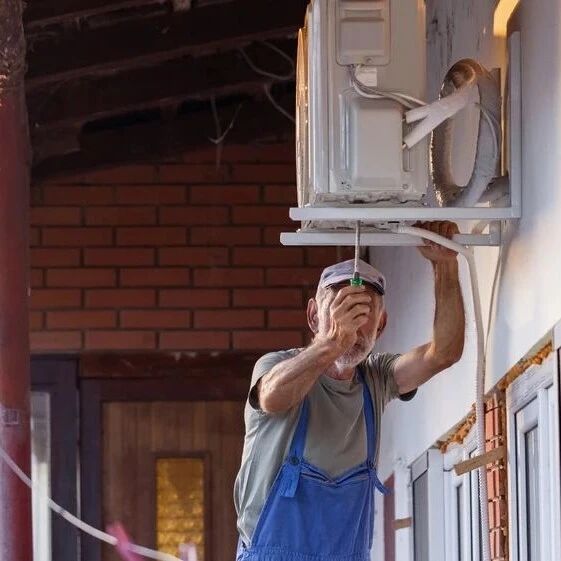
以后的空调制冷都不行了?铝代铜到底是升级还是减配
虎嗅APP· 2026-01-04 14:15
Core Viewpoint - The article discusses the ongoing debate in the air conditioning industry regarding the shift from copper to aluminum in key components, particularly heat exchangers, and the implications for product performance and cost [5][8][25]. Group 1: Industry Trends - Major air conditioning brands, including Haier, Midea, and TCL, have formed an alliance to promote the use of aluminum instead of copper, while Gree has opted out, citing concerns over quality and reliability [5][6][25]. - The shift to aluminum is driven by rising copper prices, which have surged to over $12,000 per ton, making copper a significant cost component in air conditioning units, accounting for approximately 30% to 40% of total costs [30][29][28]. Group 2: Technical Considerations - The transition involves replacing copper pipes in heat exchangers with aluminum pipes, which could potentially affect cooling efficiency due to aluminum's lower thermal conductivity (about 60% of copper's) and other performance metrics [12][10][8]. - Advances in technology, such as microchannel technology and specialized coatings, are being developed to mitigate the disadvantages of aluminum, including its thermal conductivity and corrosion resistance [14][16][18]. Group 3: Market Dynamics - The global demand for copper is increasing, driven by sectors like AI and electric vehicles, which require significant amounts of copper for infrastructure and manufacturing [38][42]. - Geopolitical risks and supply chain vulnerabilities related to copper mining are prompting manufacturers to consider aluminum as a more stable alternative, given its abundance and lower cost [50][49]. Group 4: Consumer Implications - Consumers are concerned that the switch to aluminum may compromise the performance of air conditioning units, leading to calls for manufacturers to ensure quality and possibly lower prices to reflect the cost savings from using aluminum [51][52]. - The article suggests that if manufacturers can demonstrate that aluminum-based systems perform comparably to copper systems, they should consider passing on cost savings to consumers through lower prices or extended warranties [52].
汽车行业周报:2026年汽车以旧换新国补延续,比亚迪超越特斯拉成为纯电汽车全球销冠-20260104
KAIYUAN SECURITIES· 2026-01-04 13:43
Investment Rating - The industry investment rating is "Positive" (maintained) [1] Core Views - The automotive sector is expected to experience a bottom recovery due to the implementation of the vehicle trade-in policy in 2026, with BYD surpassing Tesla to become the global sales champion for pure electric vehicles [5][16] - The domestic automotive market saw significant sales growth in 2025, with BYD leading with 4.6 million units sold, a 8% increase year-on-year [5][16] - The report highlights the competitive landscape, with new energy vehicle sales driving market growth, particularly for companies like BYD and NIO [5][16] Industry News - In 2025, BYD sold 4,602,436 vehicles, maintaining its position as the top seller, while new entrants like Leap Motor and Xiaomi also showed strong sales growth [5][13] - Tesla's 2025 delivery data revealed nearly 1.64 million vehicles delivered, with a 8.6% decrease compared to the previous year [14][16] - NIO has expanded its battery swap network, aiming to build 1,000 new battery swap stations by 2026 [15] - The lithium battery industry is experiencing price increases, with demand for energy storage batteries remaining high [18] - The 2026 vehicle trade-in policy will adjust subsidies based on vehicle price, with a maximum subsidy of 20,000 yuan [19] Market Performance - The automotive sector outperformed the market with a 1.49% increase, ranking fifth among A-share industries [6][28] - The passenger vehicle index saw a decline of 1.20%, while the automotive parts index increased by 3.63% [6][28] - The report indicates a decrease in PE ratios for passenger and commercial vehicle sectors, while the automotive parts sector saw a 12% increase in PE ratios [10][12] Investment Recommendations - For passenger vehicles, the report recommends companies like JAC Motors and Seres, with beneficiaries including Geely [7] - In the automotive parts sector, companies such as Desay SV and Zhejiang Xiantong are recommended, with beneficiaries including Weichai Power and Huayu Automotive [7]

美的集团:“上海星闪开放实验室”正式揭牌
Bei Jing Shang Bao· 2026-01-04 13:24
Core Viewpoint - Midea Group has launched the "Shanghai Star Flash Open Laboratory," the first open innovation platform in China focusing on the application of Star Flash technology in the smart home sector [1] Group 1: Technology Overview - Star Flash is a new generation of wireless short-range communication technology developed in China, designed to overcome the limitations of traditional Bluetooth and Wi-Fi [1] - The technology combines the advantages of both Bluetooth and Wi-Fi, featuring ultra-low latency, high reliability, and anti-interference capabilities [1] Group 2: Industry Impact - Star Flash is a key connectivity foundation for the HarmonyOS ecosystem, facilitating its penetration from smart cars and smart manufacturing into the smart home sector [1] - The technology aims to enhance the connectivity experience for the Internet of Things (IoT) [1]
2026上海国际家电及消费电子展AWE
Sou Hu Cai Jing· 2026-01-04 13:10
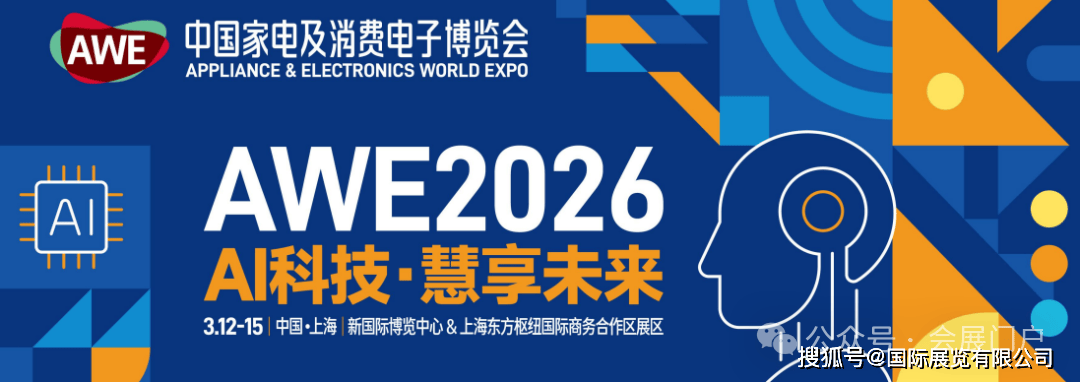
Group 1 - The AWE2026 (China Household Appliances and Consumer Electronics Expo) will take place from March 12 to 15, 2026, in Shanghai, featuring a new "one exhibition, dual zones" model [4] - The theme of AWE2026 is "AI Technology, Enjoying the Future," focusing on the innovative applications of artificial intelligence in the home appliance and consumer electronics sectors [6][10] - Over 1,500 exhibitors from more than 70 countries and regions are expected, with anticipated attendance exceeding 400,000, showcasing thousands of smart living products and solutions [6] Group 2 - Major Chinese brands such as Haier, Midea, Changhong, TCL, and Hisense will showcase their latest AI technologies and scenario-based products, highlighting China's technological leadership in manufacturing [6] - International brands like Bosch, Panasonic, Samsung, and LG will also participate, adding a global dimension to the expo [6] - The event will emphasize "full-domain interconnection," "proactive intelligence," and "personalized adaptation," marking a shift from focusing solely on product functionality to integrating advanced technologies [8] Group 3 - AWE2026 will introduce a new exhibition area in the Shanghai Oriental Hub International Business Cooperation Zone, aimed at showcasing advanced technologies in the consumer electronics industry [10] - This expo is positioned as a significant international event following the operational launch of the business cooperation zone, leveraging its unique advantages for global brand aggregation and technological innovation [10]