
华润

Search documents
万凯新材20250617
2025-06-18 00:54
Summary of Conference Call on Polyester Bottle Chip Industry Industry Overview - The conference call involved leading companies in the polyester bottle chip industry, including Yisheng, China Resources, Wankai, Sinopec, and Sanfangxiang, which reached a consensus to reduce production by 20% to enhance industry profitability [2][3][4]. Key Points and Arguments - **Production Reduction Plan**: The industry has initiated a self-regulatory production cut of 20%, aiming to improve profit margins and stabilize processing fees at around 500 RMB per ton [2][3][6]. - **Capacity Control**: A commitment was made to prohibit any new polyester bottle chip production capacity for the next three years, ensuring controlled market supply and stable processing fees [2][4]. - **Industry Supervision Committee**: An industry supervision committee will be established to monitor the execution of the production cut and oversee industry operating rates, with the goal of reducing social inventory to reasonable levels [2][9]. - **Market Demand**: From January to May 2025, order volumes remained stable compared to the previous year, with exports around 700,000 tons and domestic growth rates of approximately 7% [2][14][15]. - **Price Dynamics**: The first quarter of 2025 saw favorable price differentials for polyester chips, but the second quarter faced pressure due to rising upstream raw material prices (PX, PTA) and increased operating rates [2][11]. Additional Important Insights - **Export Performance**: China’s bottle chip exports account for about 40% of total production, with export prices and volumes outperforming domestic sales despite rising shipping costs [5][17]. - **Future Capacity Outlook**: An additional 2 million tons of production capacity is expected to be introduced in the first half of 2025, but no new capacity is anticipated from 2026 onwards, indicating a potential improvement in industry profitability [5][12]. - **Inventory Levels**: Current social inventory has decreased significantly compared to the end of last year, although it remains high relative to historical data due to recent increases in total inventory levels [10]. - **Market Sentiment**: The industry outlook is cautiously optimistic, supported by the cooperation of major enterprises, particularly state-owned companies like China Resources [8]. Conclusion The polyester bottle chip industry is undergoing significant changes with a focus on production cuts and capacity control to stabilize prices and improve profitability. The establishment of a supervisory committee and the commitment to avoid new capacity additions reflect a strategic shift towards sustainable growth in the sector.
畅通国内国际双循环中部六省会合力锻造“中国交通第五极”
Zheng Quan Shi Bao· 2025-06-17 18:14
Core Viewpoint - The six provincial capital cities in Central China have jointly launched the "Cooperation Initiative for Coordinated Development of Transportation" to establish an international comprehensive transportation hub cluster, aiming to create China's "Fifth Pole" of transportation [1][8]. Group 1: Transportation Infrastructure Development - The initiative aims to enhance the transportation network in Central China, which is strategically positioned to connect the eastern and western regions, as well as the northern and southern parts of the country [1][3]. - Central China's high-speed rail mileage accounts for 34.5% of the national total, with road network density 2.5 times the national average and civil aviation airport density 1.4 times the national average [3][4]. - The construction of transportation infrastructure is seen as essential for facilitating domestic and international circulation, with a focus on developing a "big channel pattern" [5][6]. Group 2: Economic Growth and Industrial Development - The initiative is expected to stimulate economic growth by enhancing connectivity, which will attract more industries and investments to the region [8][10]. - Zhengzhou has become a hub for various industrial clusters, including electronics, new energy vehicles, and biomedicine, supported by its transportation advantages [9][10]. - The establishment of the "Fifth Pole" is anticipated to create a positive feedback loop between transportation and industrial development, enhancing the region's economic dynamism [8][10]. Group 3: Collaborative Efforts and Challenges - The initiative emphasizes the need for inter-provincial cooperation and coordination to overcome challenges such as insufficient connectivity and weak international links [11][12]. - Suggestions from city representatives include developing a unified regional transportation plan and enhancing data sharing among transportation sectors to improve efficiency [12]. - The construction of an international comprehensive transportation hub is seen as a means to attract investment, talent, and innovation to Central China, positioning it as a key node in the national development landscape [12].
化工日报:周末伊以冲突加剧,但瓶片减产计划增多-20250617
Hua Tai Qi Huo· 2025-06-17 03:04
1. Report Industry Investment Rating No relevant content provided. 2. Core Views of the Report - In the context of the intensified Israel-Iran conflict over the weekend, the crude oil price first soared and then declined, and the polyester industry chain fluctuated significantly accordingly. The planned production cuts of bottle chips increased, and the polyester industry chain was under pressure due to the weakening demand expectation [1]. - Regarding the cost side, the recent oil price has risen sharply due to the intensified Middle - East conflict. If the conflict causes more damage to energy facilities or affects the Strait of Hormuz, the oil price may face further upward risks; otherwise, the geopolitical premium may decline again. The gasoline cracking spread in the US has retracted, and the blending demand is not promising. The PX short - process plants may restart as the profit recovers [2]. - For PX, the PXN was 234 dollars/ton (with no change from the previous period). The PX load at home and abroad has generally increased recently, but it will decline again in July. The tight supply - demand situation needs further attention [2]. - For TA, the spot basis of the main contract was 231 yuan/ton (a 6 - yuan increase from the previous period), and the spot processing fee was 310 yuan/ton (a 70 - yuan decrease from the previous period). The PTA load continued to increase this week, and the supply became more abundant. It is expected that the PTA spot price will oscillate following the cost side in the short term [3]. - In terms of demand, the polyester operating rate was 90.9% (a 0.2% decrease from the previous period). The terminal orders have weakened again since late May, and the downstream operating rates have declined slightly. The polyester load has remained stable recently after a decline, and the demand is expected to be weak in the off - season [3]. - For PF, the spot production profit was - 26 yuan/ton (a 26 - yuan increase from the previous period). The price will remain high under the low inventory of short - fiber factories and the operation to maintain the processing margin [3]. - For PR, the spot processing fee of bottle chips was 309 yuan/ton (a 5 - yuan decrease from the previous period). The bottle - chip price increased following the raw materials, but the new order procurement enthusiasm of overseas customers was not high due to the high ocean freight in June. The inventory pressure of polyester bottle - chip factories has increased again. The production cuts of major factories are being implemented, and the processing fee is expected to face pressure in the short term [4]. - The trading strategy suggests that PX/PTA/PF/PR are bullish in the short term under the Israel - Iran conflict, and attention should be paid to the evolution of the Middle - East geopolitical conflict. The fundamentals are gradually weakening, and further production - cut actions of polyester and the geopolitical conflict need to be monitored [5]. 3. Summary According to the Catalog Price and Basis - The report presents the trends of TA and PX main contracts, their basis and inter - period spreads, as well as the PTA East - China spot basis and the basis of 1.56D*38mm semi - dull pure - white short fibers [9][10][12]. Upstream Profits and Spreads - It shows the PX processing fee (PXN), PTA spot processing fee, South Korean xylene isomerization profit, and South Korean STDP selective disproportionation profit [18][21]. International Spreads and Import - Export Profits - The report includes the toluene US - Asia spread, the spread between South Korean FOB toluene and Japanese CFR naphtha, and the PTA export profit [26][28]. Upstream PX and PTA Operation - It provides information on the PTA loads in China, South Korea, and Taiwan, as well as the PX loads in China and Asia [29][32][33]. Social Inventory and Warehouse Receipts - The PTA weekly social inventory, PX monthly social inventory, PTA total warehouse receipts + forecast volume, PTA warehouse receipt inventory, PX warehouse receipt inventory, and PF warehouse receipt inventory are presented [38][41][42]. Downstream Polyester Load - It shows the production and sales of filaments and short fibers, polyester load, direct - spinning filament load, polyester bottle - chip load, and the operating rates of weaving, texturing, and dyeing in Jiangsu and Zhejiang. Also, the inventory days and profits of different types of filaments are provided [50][52][62]. PF Detailed Data - The report includes the polyester short - fiber load, factory equity inventory days, 1.4D physical and equity inventories, the operating rates and production profits of pure - polyester yarn and polyester - cotton yarn, and the spread between raw and recycled polyester short fibers [73][81][83]. PR Fundamental Detailed Data - It presents the polyester bottle - chip load, bottle - chip factory inventory days, spot and export processing fees, export profit, and the price spreads between different periods of bottle chips [90][92][97].
哈根达斯中国业务或将被出售
3 6 Ke· 2025-06-12 23:33
Core Insights - Häagen-Dazs is facing dual challenges from local brand competition and changing consumer perceptions, necessitating a strategy that maintains its premium positioning while optimizing cost-effectiveness and enhancing brand value through sustainable practices [1][12] - The potential sale of Häagen-Dazs' China operations has sparked industry interest, marking a significant turning point for the brand after nearly 30 years in the market [1][11] - General Mills is reportedly collaborating with advisors on potential asset disposal, with initial valuations reaching hundreds of millions of dollars, although negotiations are still in early stages [1][11] Industry Context - The news of Häagen-Dazs' potential sale contrasts sharply with Unilever's plan to spin off its ice cream business, highlighting a trend of foreign brands reassessing their strategies in China amid market challenges [2][11] - The decline in performance of international brands in China is evident, with notable examples including Pandora and Starbucks, which have also faced store closures and strategic adjustments [2][3] - General Mills reported a 5% year-over-year decline in net sales for Q3 of FY2025, with international markets, including China, contributing to this downturn [2][3] Market Dynamics - Häagen-Dazs has experienced a significant drop in store traffic, with double-digit declines reported, reflecting broader challenges in the high-end ice cream market [3][5] - The brand's fixed costs remain high while profit margins are under pressure, exacerbated by a shift in consumer preferences towards value-for-money options [3][8] - Local brands like Zhong Xue Gao and Moutai Ice Cream are capturing market share through differentiated strategies and competitive pricing, appealing to younger consumers [5][8] Strategic Implications - The potential sale of Häagen-Dazs could lead to a fundamental shift in its brand positioning and operational model, with new investors possibly adopting successful local strategies [11][12] - The ongoing transformation in the ice cream market may accelerate the reshaping of competitive dynamics, providing new opportunities for both local enterprises and international capital [12] - To regain growth, Häagen-Dazs must adapt to the "quality-price ratio era" by enhancing market penetration, optimizing pricing strategies, and reinforcing brand value through sustainable initiatives [1][12]



价格上涨背后,产品力成为竞争关键词
Mei Ri Shang Bao· 2025-06-04 23:28
Group 1 - The Anqier block in Hangzhou has emerged as a new residential area following the closure of specialized markets, with significant land supply initiated in 2024, leading to competitive bidding among major developers like Binjiang Group, Dajia, and China Resources [1][6] - The first two plots had a capped price of 46,500 yuan per square meter, while subsequent plots saw a significant price increase, with the final China Resources plot reaching a floor price of 50,683 yuan per square meter, indicating a potential opening price exceeding 70,000 yuan [1][6] - The increase in property prices is attributed to the scarcity of luxury housing supply in the city center and the enhanced product offerings in the Anqier block, marking a shift to a competitive landscape for high-end real estate [1][6] Group 2 - The Jinshang Wanxiangfu project, developed by Binjiang in the Anqier block, features a prime location near the Grand Canal and offers a mix of high-rise and stacked villa products, targeting a more affluent clientele [2][4] - The project covers an area of 15,000 square meters with a total construction area of approximately 49,000 square meters, consisting of 150 units, and has attracted over 1,000 potential buyers during its showcase [2][3] - The design emphasizes luxury with high ceilings, extensive use of premium materials, and a variety of themed spaces, including a large outdoor water feature and a comprehensive underground clubhouse [3][5] Group 3 - The Jinshang Wanxiangfu project is positioned as an upgraded offering with no price cap, featuring larger unit sizes to meet high-end market demands, with main unit areas ranging from 183 to 355 square meters [5][6] - The project is set to launch soon, with expectations of average prices reaching the "70,000" range, reflecting the high-end positioning and significant investment in luxury finishes [6][7] - Other projects in the Anqier block, such as those by Dajia and China Resources, are also preparing for market entry, indicating a competitive environment among top-tier developers [7][8]

长江期货PTA产业周报:宏观预期转好,短期偏强震荡-20250519
Chang Jiang Qi Huo· 2025-05-19 02:20
Report Industry Investment Rating No information provided. Core View of the Report The macro - expectation has improved, and the short - term market is expected to fluctuate strongly. The prices of PX, PTA, ethylene glycol, and short - fiber are expected to show different trends in the short term, with PX and PTA likely to continue to fluctuate strongly, ethylene glycol to fluctuate in the range of 4400 - 4550, and short - fiber having a rebound expectation but limited upside [23]. Summary by Relevant Catalogs 1. Market Review - **PX**: Last week, the PX price continued to rebound. The cost - end crude oil price strengthened, and the PX supply side continued to cut production, with weekly output decreasing and social inventory slowly declining. The PXN slightly recovered. As of May 14, the Asian PX market average price increased by 9.11% - 9.38% compared to the previous week [2][7]. - **PTA**: The PTA price continued to rise last week. The international oil price at the cost end supported the rebound of chemical products. The PTA start - up rate increased, and the downstream polyester load slightly decreased. The PTA inventory continued to decline, and the price continued to rise. From May 8th to May 15th, the PTA spot price increased by 8.09% [2][3]. - **Ethylene Glycol**: The ethylene glycol price rebounded significantly last week. Initially, it was supported by the rising international oil price, and then the market rebounded from the low level due to the improvement of the macro - situation. However, the rebound amplitude was limited due to the increase in port data [2]. - **Short - fiber**: The short - fiber price followed the raw material price fluctuations last week. Initially, the market purchasing was active, and the basis increased. Then, due to the improvement of the macro - situation and short - fiber supply - demand, the price slightly recovered, but the price rebound was less than that of PTA due to concerns about tariff impacts on terminal consumption [2]. 2. Supply Situation - **PX**: The domestic PX production last week was 64.63 tons, a decrease of 5.94% compared to the previous week. The domestic PX weekly average capacity utilization rate was 77.07%, a decrease of 4.87% compared to the previous week. The PX - N and PX - M spreads increased [8][10]. - **PTA**: The domestic PTA weekly average capacity utilization rate last week was 74.63%, a decrease of 0.35% compared to the previous week and an increase of 4.68% compared to the same period last year. Some devices had maintenance and restart operations [13]. - **Ethylene Glycol**: The total capacity utilization rate of Chinese ethylene glycol was 61.04%, a decrease of 2.42% compared to the previous week. The weekly output of Chinese ethylene glycol devices was 36.83 tons, a decrease of 1.32% compared to the previous week [15]. 3. Downstream Demand - **Polyester**: The weekly output of the Chinese polyester industry last week was 158.33 tons, an increase of 0.96% compared to the previous week. The weekly average capacity utilization rate was 90.93%, a decrease of 0.56% compared to the previous week. The difference in the trends of output and capacity utilization rate was due to the commissioning of new polyester devices [20]. - **Terminal Weaving**: The comprehensive start - up rate of domestic main weaving production bases last week was 57.65%, an increase of 2.09% compared to the previous week. The start - up rates of different types of looms varied. The trade negotiation between China and the US had a positive impact, and the weaving factories actively purchased raw materials [22]. 4. Market Outlook - **PX**: The cost - end crude oil price is rising, and domestic and foreign devices continue to be under maintenance. The expected weekly output is 64.73 tons. The PX price is expected to continue to fluctuate strongly [23]. - **PTA**: The cost - end crude oil support is weak, but production is expected to increase. The downstream polyester load reduction is limited, and the terminal weaving start - up rate is rising. The short - term price is expected to continue to fluctuate strongly [23]. - **Ethylene Glycol**: The international oil price has rebounded from the low level, and the cost support has improved. The ethylene glycol port inventory remains low. The price is expected to fluctuate in the range of 4400 - 4550 [23]. - **Short - fiber**: The raw - material PTA price is expected to continue to fluctuate strongly, providing cost support. The short - fiber still has a rebound expectation, but the upside is limited [23].
以稳为主,支持转型 - 稳市场稳预期一揽子政策解读
2025-05-07 15:20
Summary of Key Points from Conference Call Records Industry Overview - The records primarily discuss the banking, real estate, and insurance industries, focusing on recent monetary policy changes and their implications for these sectors. Core Insights and Arguments Monetary Policy Changes - The central bank's decision to cut the reserve requirement ratio (RRR) by 50 basis points (BP) and interest rates by 10 BP was unexpected and directly benefits the banking sector, while also positively impacting real estate through lower public housing loan rates and related policies [1][3][20]. - The release of approximately 1 trillion yuan in liquidity from the RRR cut is expected to lower banks' funding costs and support further leverage expansion, positively affecting net interest margins [1][6]. Market Reactions - The stock market's performance was categorized into three types based on policy expectations: technology and consumer sectors underperformed, real estate and insurance sectors met expectations, and the banking sector outperformed due to the unexpected RRR and interest rate cuts [2][3]. Sector-Specific Impacts - The banking sector is expected to benefit from the RRR cut, with a projected positive impact of 0.6 BP on net interest margins and a potential profit increase of 2% this year [6][7]. - The real estate market is anticipated to benefit from reduced mortgage costs, with public housing loan rates dropping from 2.85% to 2.6% [20]. Investment Strategies - The strategy group recommends maintaining a core allocation in technology, domestic consumption, and dividend stocks, as these sectors showed improved fundamentals in Q1 and are expected to benefit from ongoing policy support [5][1]. - The introduction of new regulations for public funds aims to align management fees with performance, which is expected to guide fund managers towards better performance benchmarks, favoring large-cap indices like the CSI 300 [1][4]. Insurance Sector Developments - The approval of increased long-term equity investment limits for insurance funds is expected to enhance market vitality by bringing in more long-term capital [11][13]. - The insurance sector is projected to continue increasing its allocation to dividend stocks, with expectations of reaching a total allocation of over 5% of total assets in the coming years [17][15]. Real Estate Financing and Policy Adjustments - Recent policy adjustments include optimizing real estate financing measures, which may involve more favorable loan rates and increased financing quotas for urban renewal projects [23]. - The introduction of REITs into the stock connect program is seen as a significant move to expand investment opportunities and enhance market liquidity [24]. Other Important but Overlooked Content - The central bank's cautious approach to interest rate cuts reflects a focus on stabilizing bank net interest margins while encouraging lending to key sectors like technology and consumer finance [7][6]. - The challenges faced by local governments in implementing stock acquisition policies highlight the need for sustainable financial models to support such initiatives [21][22]. - The anticipated capital supplement plans for large insurance groups indicate a proactive approach to mitigate systemic financial risks amid a challenging economic environment [19]. This summary encapsulates the key points from the conference call records, providing insights into the implications of recent monetary policies and strategic recommendations for various sectors.
发展数年营收反低于2012年,惠泉啤酒利息收入占比已过半
Sou Hu Cai Jing· 2025-04-30 09:30
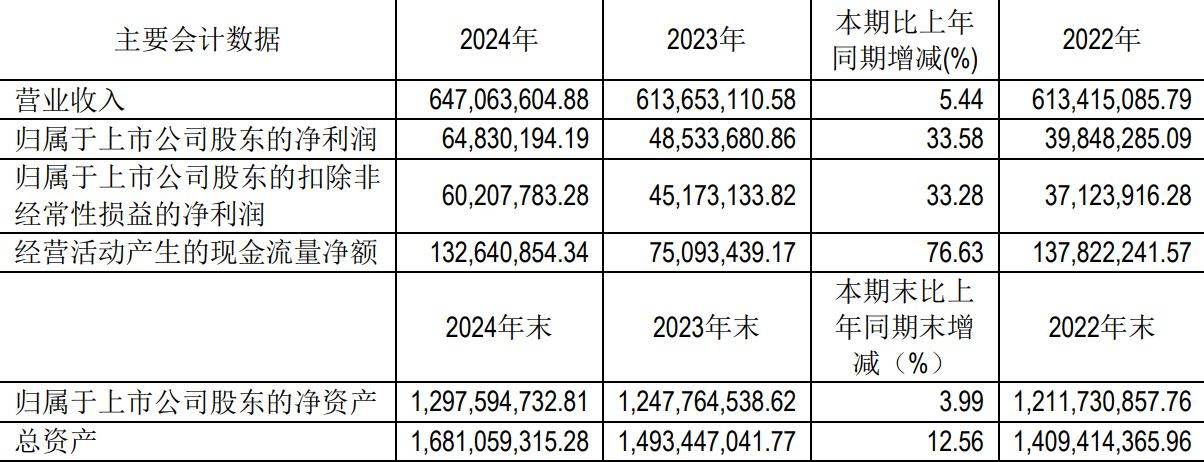
Industry Overview - The total production of the industry remains the highest globally in 2024, but the consumption side shows a trend of "stable quantity and improved quality" [1] - The five major groups, including China Resources, Qingdao, Budweiser, Yanjing, and Carlsberg, occupy over 70% of the market share, creating a monopolistic competition landscape [1] - Regional beer brands face increasing pressure from these giants, leading to a further contraction of their survival space [1] Company Performance - Huichuan Beer reported an operating revenue of approximately 647 million yuan in 2024, reflecting a year-on-year growth of about 5.44% [2][3] - The net profit attributable to shareholders was around 64.83 million yuan, showing a significant year-on-year increase of approximately 33.58% [2][3] - Interest income and investment income accounted for a substantial 57% of the total profit, indicating a reliance on non-core business activities for profitability [4][5] Financial Data - The net profit growth was primarily driven by non-beer business activities, as the core beer business struggled to contribute significantly to profits [2][4] - Operating cash flow from operating activities increased by 76.63% year-on-year, reaching approximately 132.64 million yuan [3] - The total assets of Huichuan Beer grew by 12.56% year-on-year, amounting to approximately 1.68 billion yuan [3] Market Challenges - Despite a 30.61% increase in revenue from mid-to-high-end products, the low-end market saw a decline, with ordinary product revenue dropping by about 21.05% [6] - Sales expenses exceeded the net profit from the beer business, indicating high costs associated with promoting mid-to-high-end products [6][7] - The company has faced intense competition from major players since 2012, leading to a decline in market share and revenue [8][10] Historical Context - Huichuan Beer has a long history dating back to 1938, transitioning from traditional liquor production to beer in the 1980s [8] - The company was listed on the Shanghai Stock Exchange in 2003 and has undergone several expansions to reach a production capacity of 800,000 tons [8] - Despite recent revenue growth, the company's 2024 revenue of approximately 647 million yuan is still lower than the 690 million yuan reported in 2012, indicating a long-term decline [10]

打工人的“穷鬼超市”,走不出江浙沪?
FBIF食品饮料创新· 2025-04-27 00:55
以下文章来源于每日人物 ,作者每人作者 每日人物 . 轻商业,懂生活。 来源:每日人物(ID:meirirenwu) 文:郑思芳 编辑:Yang 在商超界,如果说盒马是精致白领的面子,山姆是中产家庭的里子,那么奥乐齐就是"穷鬼打工人"最后 的体面。 图片来源:奥乐齐官网 奥乐齐从上海走向苏州、无锡是必然。上海的常住人口接近2500万上限,而苏州、无锡吸纳了大量"沪 漂"外溢的年轻劳动力。苏州工业园区的程序员、无锡物联网新城的创业者,与上海漕河泾的打工族共 享同一套生存逻辑——交完房租后,100元要掰成10份花。 奥乐齐的出沪第一天 "时间都花在这上面嘞,哪个地方没东西卖哟,跑到这个地方来的。"奥乐齐苏州店的开业现场,长长的 队伍里,时不时地传来吐槽的声音。 如今,一家超市的开业,能引起这么大规模的排队,除了胖东来,恐怕只有奥乐齐了。 奥乐齐,一家来自德国的超市,却摒弃了进口精品的高价路线,用超过500件9.9元的商品,活生生地 把自己打造成了"穷鬼乐园"。在进入中国的6年时间里,就像胖东来扎根河南一样,奥乐齐死死地守着 上海这片寸土寸金的土地,连着开了60多家门店,都没有踏出上海一步。 互联网上,无数上海之外 ...
中国军人出身企业家的12条管理铁律
Hu Xiu· 2025-04-22 00:46
Core Concepts - The article discusses the military-inspired management strategies implemented by companies like Huawei, China National Chemical Corporation (Sinochem), and Vanke, emphasizing the importance of power balance, results-oriented assessments, and agile organizational structures [1][4][9]. Group 1: Power Balance and Management Structures - Huawei's "three powers separation" system (nominating, reviewing, and impeaching rights) is designed to prevent personal biases from harming the company, similar to military management mechanisms [1]. - Vanke's "weak relationship culture" utilizes digital approval processes to eliminate personal interference, ensuring accountability through automated monitoring [2][3]. Group 2: Results-Oriented Assessment - Sinochem's balanced scorecard approach breaks down strategic goals into four dimensions, including financial growth and customer satisfaction, akin to a military operations map [4][5]. - The implementation of military-style KPIs has led to significant operational improvements, such as a 15% profit growth target and a customer complaint rate of less than 0.3% [5][6]. Group 3: Focused Strategies - Huawei's "needle-point strategy" concentrates resources on key areas like 5G and chip development, with 70% of R&D budget allocated to these sectors, resulting in a 16% share of global 5G patents [6][8]. - Sinochem's "full industry chain" model controls every aspect of the food supply chain, achieving over 90% self-control in critical processes [7][8]. Group 4: Agile Organizational Structures - Huawei has established multiple "legion" teams that operate like special forces, allowing for rapid decision-making and project execution, significantly reducing project initiation times [9][10]. - The "heavy-duty brigade + marine corps" model at China Resources enables quick integration of acquired companies, reducing the average integration period from nine months to about three [10]. Group 5: Performance and Accountability - Huawei's "bottom-line elimination" policy, inspired by Jack Welch's "721 vitality rule," ensures that underperforming employees are removed to maintain organizational vigor [11][12]. - The company employs a rigorous self-criticism mechanism within its executive management team to ensure high standards and accountability [21][23]. Group 6: Strategic Resilience - Huawei's "backup plan" during the global supply chain crisis exemplifies a robust risk management system, with significant investments in technology and supply chain redundancy [14][15]. - The company has achieved a fourfold increase in its share of the global semiconductor market, demonstrating the effectiveness of its strategic resilience [16]. Group 7: Talent Development and Promotion - The "merit-based promotion" system at Huawei ties executive advancement to battlefield performance, with nearly half of its executives coming from challenging markets [17][18]. - China Resources employs a "merit point system" for promotions, fostering a closed-loop ecosystem of acquisition, integration, and advancement [18]. Group 8: Cultural and Philosophical Integration - Huawei's "striver agreement" aligns individual interests with corporate goals, fostering a collective mindset among employees [19][20]. - The military-inspired management practices of these companies reflect a blend of Eastern wisdom and military philosophy, contributing to a new commercial civilization [34][35].
