
爱玛科技

Search documents
【盘中播报】9只个股突破年线
Zheng Quan Shi Bao Wang· 2025-07-15 03:13
Core Viewpoint - The A-share market shows a mixed performance with the Shanghai Composite Index at 3503.55 points, slightly down by 0.46%, while the total trading volume reached 802.366 billion yuan, indicating active market participation [1]. Group 1: Market Performance - The Shanghai Composite Index is currently above the annual line, reflecting a stable market condition despite a minor decline [1]. - A total of 9 A-shares have surpassed the annual line today, with notable stocks showing significant deviation rates [1]. Group 2: Notable Stocks - Zhongdian Port (证券代: 001287) leads with a price increase of 9.99% and a deviation rate of 7.78% from the annual line, with the latest price at 20.26 yuan [1]. - Xinmai Medical (证券代: 688016) and Qianjiang Motorcycle (证券代: 000913) also show positive performance with deviation rates of 2.62% and 1.86%, respectively [1]. - Other stocks like Xueda Education (证券代: 000526) and Ziguang Guofeng (证券代: 000938) have lower deviation rates of 1.17% and 0.71%, indicating they have just crossed the annual line [1].


山东开展“黄河大集”“运河大集”“海洋大集”系列活动,丰富夏季消费场景——在烟火大集里探寻消费密码
Da Zhong Ri Bao· 2025-07-14 01:04
Core Viewpoint - The summer "Daji" (large market) events in Shandong are enhancing local consumption and cultural experiences, attracting a significant number of young participants and showcasing regional products [1][2][3]. Group 1: Event Highlights - The "2025 Shandong Vibrant Summer Consumption Season" was launched in Yantai, featuring five themed exhibition areas with 126 booths, showcasing over 1,400 products across 12 categories, attracting nearly 10,000 attendees, primarily young people [3]. - The "Daji" events are not limited to Yantai; they are being held across Shandong, emphasizing local specialty products, such as "Dongchang Good Products" from various towns in Liaocheng [5]. - The "Daji" events are designed to create a continuous consumption pattern with over 100 activities planned in Yantai, focusing on themes like robotics competitions and local cuisine [4]. Group 2: Economic Impact - The "Daji" events have facilitated significant sales, with the "Good Products Entering the City" initiative in Dongchangfu District generating 3 million yuan in sales from 29 events this year [6]. - In Ju County, the electric bicycle trade-in program has led to the sale of 36,200 electric bicycles, generating over 72 billion yuan in sales, indicating strong consumer engagement [7]. - Ju County has seen sales of 7,367 electric bicycles this year, amounting to 2.37383 million yuan, with subsidies provided to consumers totaling 338,680 yuan [8]. Group 3: Cultural Integration - The "Daji" events serve as a platform for cultural consumption, with activities like the "Cultural Promotes Consumption · Youth Carnival" in Longkou City, where traditional crafts like Henan face sculpture are showcased and sold [9]. - The integration of culture and consumption at these events has led to a sales figure exceeding 320,000 yuan for the non-heritage market in Longkou City since June [9]. - The events are seen as a way to promote local culture and products, enhancing rural consumption and creating immersive shopping experiences [9].

两学霸联手惊人逆袭创造419亿市值财富 九号公司欲赶超雅迪成“一哥”仍临四大挑战
Chang Jiang Shang Bao· 2025-07-13 23:06
Core Insights - The article highlights the recognition of Wang Ye, the founder and CEO of Ninebot, as one of the best CEOs in China by Forbes in 2025 [1] - Ninebot has achieved a market capitalization of 41.95 billion yuan, surpassing its competitor Yadea Holdings, which has a market cap of 37 billion yuan [2] - The company has seen significant growth in revenue and net profit, with a 2024 revenue of approximately 14.2 billion yuan and a net profit of 1.084 billion yuan, closing the gap with Yadea [2][13] Company Overview - Ninebot was founded in 2014 by Wang Ye and Gao Lufeng, both graduates of Beihang University, after previous entrepreneurial experiences [3][4] - The company initially focused on electric balance bikes and has since expanded its product line to include electric scooters, all-terrain vehicles, and service robots [7][10] Market Position - Ninebot has become a leader in the electric balance bike market, holding over 60% of the global market share, particularly in B2B applications [5][10] - The company has achieved the title of global sales champion in electric scooters for three consecutive years, with 70% of smart electric scooters sold in China coming from Ninebot [10][11] Financial Performance - Ninebot's revenue and net profit have shown remarkable growth since its IPO, with a revenue increase of 136.48% and a net profit increase of 1384.93% from 2020 to 2024 [12][13] - In Q1 2025, the company reported a revenue of 5.112 billion yuan, a year-on-year increase of 99.52%, and a net profit growth of over 200% [13] Challenges Ahead - The company faces significant challenges, including intense price competition in the saturated electric two-wheeler market and the need for channel reconstruction after moving away from Xiaomi's ecosystem [12][14] - Ninebot's new ventures, such as robotic lawn mowers, are still in the investment phase, posing profitability risks [14] - The company must navigate supply chain uncertainties and brand perception issues as a "toy factory" [14]
行业周报:出口链现布局拐点,加强底部稳健资产布局,聚焦新消费核心龙头-20250713
Xinda Securities· 2025-07-13 03:32
Investment Rating - The industry investment rating is "Positive" [2] Core Viewpoints - The report emphasizes the importance of strengthening the bottom-line asset layout and focusing on core leaders in the new consumption sector, indicating a shift in the export chain layout [2][3] - The report highlights that the pulp price is expected to stabilize in Q3 and potentially recover in Q4, suggesting a bottoming out of the pulp cycle [2][3] - The report notes that the new tobacco sector, particularly the GLO HILO product, is expected to see accelerated shipment rhythms, indicating strong market potential [2][3] - The home furnishing sector is showing stable order performance, with companies like Qu Mei actively transforming their retail strategies [2][3] - The packaging sector is experiencing robust overseas orders, with expectations for a recovery in the metal packaging segment [2][3] - The report discusses the positive growth outlook for the pet industry, particularly for companies like Petty Co., which is expected to maintain stable export growth [4][5] Summary by Sections Pulp and Paper - Arauco has restarted sales of hardwood pulp at $500 per ton, indicating a firm pricing stance despite buyer negotiations for lower prices [2] - The report anticipates that the pulp price will stabilize in Q3 and may recover in Q4 due to various market indicators [2][3] Export Sector - New tariffs imposed by the U.S. on certain countries are expected to impact the export landscape, but the overall direction appears to be stabilizing [2][3] - Costco's sales in the U.S. showed a year-on-year increase of 4.7%, indicating steady demand growth [2] New Tobacco - The GLO HILO product is expected to see an increase in market share due to improved product strength and channel capabilities [2][3] Home Furnishing - The home furnishing sector is experiencing stable performance, with companies like Qu Mei focusing on retail transformation and expanding into shopping center channels [2][3] Packaging - The report indicates strong overseas demand for paper packaging and a potential recovery in the metal packaging sector due to reduced competition [2][3] Pet Industry - Petty Co. is expected to achieve slight growth in exports, supported by strong relationships with overseas clients and a focus on customized products [4][5] E-commerce - The report highlights the impressive performance of "Jiao Ge Peng You" in H1 2025, with a GMV of approximately 69.8 billion yuan, reflecting a year-on-year increase of 17.11% [5] Tools - Ju Xing Technology is expected to see strong performance in H1 2025, with revenue projections indicating resilience despite uncertain tariff policies [5]
2025中国两轮车共享换电电池TOP排行榜及行业白皮书重磅发布!
起点锂电· 2025-07-12 10:07
Core Viewpoint - The article discusses the development and trends of the electric two-wheeler industry in China, focusing on the shared battery swapping model and the lithium battery market, highlighting the impact of policies, market dynamics, and technological advancements on growth opportunities and challenges in the sector [2][4][26]. Group 1: Electric Two-Wheeler Industry Development - The electric two-wheeler shipment volume in China is projected to reach 54 million units in 2025, driven by the implementation of "old-for-new" policies and increased exports [8][9]. - In 2024, the shipment volume of lithium electric two-wheelers is expected to be 4.62 million units, with significant growth attributed to exports [8][9]. - The shared electric two-wheeler market has evolved through various stages, including rapid development, policy tightening, and recent policy relaxation, indicating a shift towards a more supportive regulatory environment [9][15]. Group 2: Shared Electric Two-Wheeler - The shared electric two-wheeler market in China saw a 21.1% increase in new deployments in 2024, with expectations for continued growth in 2025 [15]. - Major players in the shared electric two-wheeler market include Hello, Meituan, and Qingju, which collectively accounted for over 65% of new deployments in 2024 [15]. - The development of shared electric two-wheelers is supported by a growing acceptance of the shared economy model, with increasing demand for efficient urban mobility solutions [9][15]. Group 3: Battery Swapping for Electric Two-Wheelers - The battery swapping model is gaining traction due to its efficiency and safety advantages over traditional charging methods, with several cities implementing supportive policies [12][29]. - In 2024, the battery swapping market is expected to see a deployment of 1.51 million battery packs, with a projected increase in the coming years as policies become more favorable [25][29]. - The demand for battery swapping is particularly strong among delivery riders, who require quick and reliable battery solutions to meet their operational needs [16][19]. Group 4: Lithium Battery Market - The total shipment of lithium batteries for electric two-wheelers in China is projected to reach 9.42 million units in 2024, with a significant portion attributed to shared and swapping applications [48][49]. - The market is witnessing a shift towards lithium iron phosphate batteries due to their safety and longevity, while the share of ternary lithium batteries is gradually decreasing [49][52]. - The export market for lithium batteries is expanding, with a notable increase in demand from Southeast Asia and other regions, indicating a growing international presence for Chinese manufacturers [48][49]. Group 5: Industry Trends and Challenges - The electric two-wheeler industry is expected to benefit from supportive government policies aimed at promoting green transportation and improving safety standards [27][29]. - The market is becoming increasingly concentrated, with smaller players facing challenges due to stricter regulations and competition from larger, more established companies [27][29]. - The development of standardized battery specifications and interfaces is crucial for the growth of the battery swapping industry, facilitating interoperability and expanding service availability [29][30].


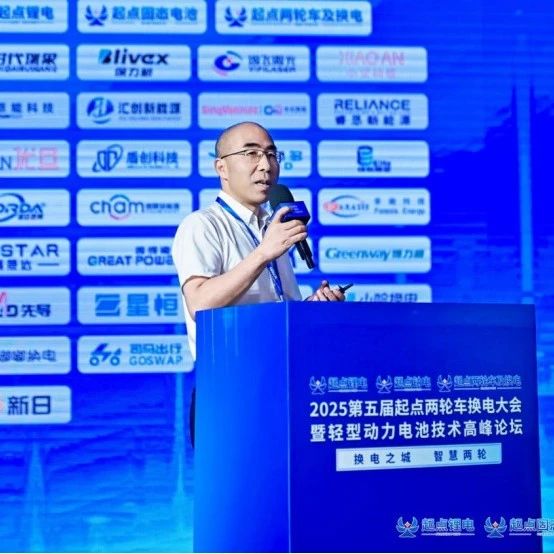
时代瑞象 总工程师 徐斌:磷酸锰铁锂产业化研究
起点锂电· 2025-07-11 11:53
Core Viewpoint - The article discusses the advancements and applications of lithium manganese iron phosphate (LMFP) batteries, highlighting their advantages, challenges, and the company's innovative solutions in the context of the electric two-wheeler industry [1][19]. Group 1: Company Overview - The company, Shidai Ruixiang, was established in October 2022 and is located in the Gansu Province high-tech industrial park, focusing on the production of manganese-based cathode materials with a planned capacity of 100,000 tons [6]. - The first phase of 20,000 tons of LMFP production was officially launched on April 18, 2025, with the production line fully operational and capacity enhancement underway [6]. Group 2: Advantages of LMFP - LMFP offers several advantages, including high energy density (697 Wh/kg), higher voltage platform (4.1V), superior low-temperature performance (77-80% retention at -20°C), and cost advantages compared to other materials [8][9]. - The cost of LMFP is approximately 43,000 yuan per ton, with direct material costs accounting for about 73.7% [9]. Group 3: Challenges of LMFP - Key challenges include manganese-iron uniformity issues, low conductivity, slow ion diffusion rates, and the Jahn-Teller effect, which can lead to structural distortion and lithium intercalation inconsistencies [10][11][12][13]. - The low packing density of LMFP particles affects the overall energy density performance [11]. Group 4: Modification Strategies - Conventional modification strategies for LMFP include nanonization to increase surface area, carbon coating to enhance conductivity, and ion doping to improve electrochemical performance [14][15][16][17][18]. Group 5: Application Scenarios - In 2022, Xinheng Power became the first company to industrialize LMFP batteries in the light vehicle sector, with major brands like Yadi and Aima adopting LMFP batteries in 70% of their products [19]. - By November 2023, CATL began mass production of LMFP M3P batteries for Tesla Model Y and other vehicles, marking the start of large-scale commercial use [21].
轻工消费2025年夏季策略:新消费需求多点迸发,竞争格局重构进行时
Shenwan Hongyuan Securities· 2025-07-11 11:44
Group 1 - The report highlights the emergence of new consumer demands driven by generational changes, with the Z generation becoming the main consumer force, leading to a restructuring of the competitive landscape in the consumer goods sector [3][5][11] - The growth of domestic brands is emphasized, particularly in categories such as personal care, pet products, and home goods, where companies like Baiya Co., Ltd. and Dengkang Oral Care are gaining market share through innovative products and effective marketing strategies [5][19][24] - The report identifies significant opportunities in the AI-driven product categories, such as AI mattresses and AI glasses, which are expected to see high growth in the medium to long term [5][19][29] Group 2 - The housing market is projected to stabilize, with policies encouraging home upgrades and replacements, which will drive demand for home goods, particularly in the AI mattress segment [6][9] - The packaging industry is undergoing a global supply chain restructuring, leading to accelerated consolidation and improved profitability for leading companies [7][10] - The report notes that the export sector is expected to see a reduction in the impact of tariff policies, allowing for better growth prospects in overseas markets [10][19] Group 3 - The report discusses the rise of IP-derived products, particularly in the emotional consumption space, where younger consumers are increasingly drawn to products that fulfill social and emotional needs [34][37][43] - Companies like Bluku and Chengyuan Co., Ltd. are highlighted for their innovative approaches in the IP toy market, leveraging strong brand partnerships and diverse product offerings to capture market share [44][49][56] - The report emphasizes the importance of digital marketing and e-commerce strategies in driving sales for companies in the consumer goods sector, particularly in the context of changing consumer behaviors [50][52][61]


新消费蔚然成风,传统盘踵事增华——轻工行业2025年度中期投资策略
2025-07-11 01:13
Summary of Key Points from Conference Call Records Industry Overview - The traditional light industry investment logic is diverse, categorized into three main directions: stable growth with high dividends (e.g., Yutong Technology, Yongxin Co.), growth potential (export chain companies like Jiangxin Home), and cyclical (paper and metal packaging) [1][3][4] - The new consumption industry is currently in a high prosperity and growth phase, with opportunities particularly in information tobacco, trendy toys, and personal care sectors [2] Core Insights and Arguments - **IP Derivative Market Potential**: The market is driven by rising GDP per capita and increasing demand for spiritual consumption, with emotional, social, and collectible values propelling industry growth [1][5] - **Bubble Mart's Growth**: Expected revenue of 30 billion yuan and profit of 10 billion yuan this year, with projections of 45 to 50 billion yuan in revenue and 15 to 17 billion yuan in profit in the coming years. The company is expanding its product matrix and global market presence [1][7] - **Blucor's Short-term Decline**: The recent drop in Blucor's stock price presents a buying opportunity, with a focus on expanding its IP offerings to girls and adults, potentially increasing revenue to 8 to 10 billion yuan [1][8][9] - **Tobacco Industry Shift**: The global tobacco industry is transitioning to new tobacco products due to the decline of traditional cigarettes, with major companies like Philip Morris and British American Tobacco increasing investments in this area [1][12][13] Additional Important Insights - **Export Sector**: Companies like Jiangxin Home have significant growth potential in the U.S. market, with a focus on brand recognition and global market expansion [1][24] - **Packaging Industry**: Yutong Technology and Yongxin Co. are highlighted for their high dividend yields and international expansion strategies, with Yutong aiming for a balanced domestic and international sales ratio [1][22] - **Paper Industry Outlook**: The paper industry is currently at a historical low in pricing, with expectations for demand recovery in the coming years, particularly for companies like Sun Paper [1][21] - **Environmental Packaging**: New companies in the environmental packaging sector, such as Zhongxin Co., are emerging, with potential for significant growth if new production capacities are realized [1][25] This summary encapsulates the key points from the conference call records, providing insights into the light industry, new consumption trends, and specific company performances and strategies.
首席联合电话会 - 消费专场
2025-12-04 15:36
Summary of Conference Call Records Industry Overview - **Home Appliance Industry**: The home appliance industry is experiencing a shift in production to Vietnam due to tariff advantages and the U.S. imposing tariffs on Chinese goods. Companies like Ecovacs, Roborock, and Dechang have established factories in Vietnam, while Midea and Zhaochi are expanding their production lines there [1][3]. - **Pharmaceutical Industry**: The innovative drug sector is a focal point, with business development (BD) generating significant cash flow, which is being reinvested into research and development. Companies like Baicheng Pharmaceutical and Tigermed are highlighted for their potential in this area [1][5]. Key Insights - **Tariff Impact**: The U.S. has a 20% tariff agreement with Vietnam, while other Southeast Asian countries face tariffs above 30%. This makes Vietnam an attractive location for production, allowing companies to benefit from lower tariffs when exporting to the U.S. [2]. - **Domestic Market Strength**: The domestic home appliance market remains robust, with strong growth post-618 promotion. The air conditioning sector is seeing high e-commerce growth rates, supported by national subsidy policies [1][4]. - **Expected Performance**: Companies in the export chain, particularly leading firms, are expected to see clear performance growth as the second quarter may represent a bottom for these companies [3]. Additional Observations - **Consumer Electronics**: Companies like Ecovacs and Roborock are well-positioned due to their production capabilities and supply chain stability in Vietnam. The upcoming Black Friday and Christmas shopping seasons are expected to boost demand [3]. - **Two-Wheeler Market**: The two-wheeler market is projected to see significant growth, with Yadea expected to achieve a 50-60% increase in July. The market is benefiting from low base effects and policies encouraging trade-in and replenishment [10]. - **Pork Farming Sector**: The pork farming sector is currently in a cyclical downturn, with recommendations for companies with cost advantages like Muyuan Foods and Wen's Foodstuffs. Supply pressures are expected to increase in the second half of the year [12][13]. - **Pet Food Sector**: The pet food sector has seen growth in domestic sales, driven by local brands innovating and expanding their channels. Despite challenges from trade conflicts, companies are adapting by relocating production [11]. Recommendations - **Investment Focus**: Investors are advised to focus on companies with strong domestic performance and export potential, such as Ecovacs, Roborock, Hisense, TCL, and Haier [1][4]. - **Emerging Opportunities**: Companies like Jeya and Yuanfei Pet are expected to outperform due to market share gains and replenishment cycles in the third quarter [8][9]. This summary encapsulates the key points from the conference call records, highlighting the dynamics within the home appliance and pharmaceutical industries, as well as other relevant sectors.
韧性与弹性——家电行业2025年度中期投资策略
2025-07-11 01:05
Summary of Key Points from the Conference Call on the Home Appliance Industry Industry Overview - The home appliance sector is influenced by both U.S. tariff policies and domestic subsidy policies, with a positive impact from the easing of tariffs in May 2025 and a subsequent pullback due to the suspension of subsidies in some regions in June 2025 [1][4] - The sector's various subfields, including white goods, kitchen appliances, black goods, lighting equipment, and components, are generally undervalued, with public fund holdings in the home appliance sector at 6.28%, a slight increase of 0.14 percentage points [1][5][6] Core Insights and Arguments - Domestic demand has been significantly stimulated by subsidy policies, particularly for high-priced small appliances, with notable growth in categories such as photography equipment, which saw a year-on-year increase of 38.8% in April 2025 [1][7] - The two-wheeler market has also benefited from subsidy policies, with over 600,000 new vehicles sold by May 20, 2025, generating sales of 17.8 billion yuan [1][8] - The air conditioning market has experienced a notable decline in average prices, with a controlled year-on-year decrease, indicating rational demand [1][9][10] Subsector Performance - In the first half of 2025, the home appliance sector performed well overall, with positive returns in all subfields except for black goods. The home appliance index rose by 1.2 percentage points, outperforming the CSI 300 index [2] - The air conditioning market is undergoing structural adjustments, with an increase in the proportion of low-priced models and more promotional activities [3][12] - The refrigerator, washing machine, and television markets are trending towards high-end specifications, with increased demand for multi-door refrigerators and large-capacity washing machines [3][14] Export and International Market Dynamics - The U.S. tariffs on Chinese home appliances remain high, with most categories exceeding 40%, leading to a decline in exports to the U.S. [15][21] - The overseas market significantly contributes to China's home appliance exports, with air conditioning exports nearing 60% and refrigerators over 40% [17] - The sales scale in overseas markets is approximately 50% of that in China, with potential for higher domestic growth driven by international demand [18] Future Outlook - The home appliance sector may face risks of a downturn in the second half of 2025, but strong domestic demand supported by subsidies is expected to provide resilience [19][22] - Companies like Gree and Midea are recommended for investment due to their stable dividend yields and potential for recovery in the face of tariff impacts [21][22]


