腾讯

Search documents
每日投资策略-20251110
Zhao Yin Guo Ji· 2025-11-10 06:30
Macro Economic Overview - China's CPI year-on-year growth has turned positive, driven by rising food prices and core inflation, with the core CPI growth reaching a six-month high of 1.2% [5] - PPI recorded its first month-on-month increase in a year, with a year-on-year decline narrowing, indicating a potential improvement in profitability for leading enterprises [5] - China's exports have significantly declined in October, particularly to developed countries, highlighting increasing economic growth pressures [6] Industry Insights - The MSCI China Healthcare Index has risen by 59.5% year-to-date, outperforming the MSCI China Index by 24% [6] - The healthcare sector has seen a recent pullback of 10% since October, presenting opportunities in undervalued stocks [6] - The demand for innovative drug research and development is recovering, supported by capital market financing and increased overseas clinical trials [6] Company Analysis - BeiGene (百济神州) has shown continuous improvement in profitability, with a strong sales growth trend driven by its drug Zanu, which is gaining market share in the CLL market [10] - The company achieved a revenue of $3.81 billion in the first nine months of 2025, a 43% year-on-year increase, and expects to exceed its revenue guidance for the fiscal year [10] - BeiGene's operational efficiency has improved, with a reduction in sales and management expenses as a percentage of product sales, leading to a net profit of $125 million in Q3 2025 [10] Investment Recommendations - The report recommends a cautious approach in the healthcare sector, focusing on undervalued stocks such as 三生制药 (3SBio), 固生堂 (Gusongtang), and others [9] - BeiGene is rated as a "Buy" with a target price raised to $392.43, reflecting its strong market position and growth potential in the CLL market [12] - Hua Hong Semiconductor (华虹半导体) reported a record revenue of $635 million in Q3 2025, with a maintained "Hold" rating and a target price of HKD 68, indicating that its valuation is already reflected in the current market price [12]

四季度行情,选好工具更重要
Sou Hu Cai Jing· 2025-11-10 06:00
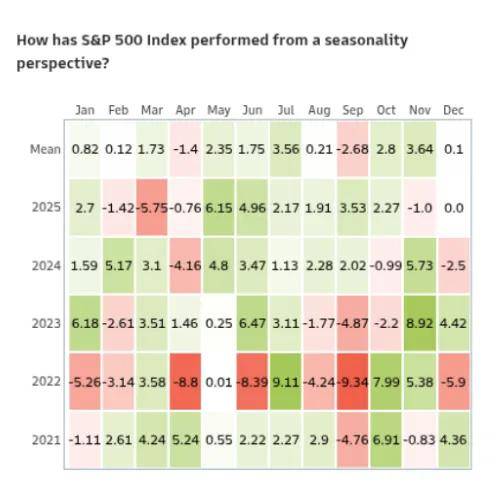
Group 1 - Recent pullbacks in Hong Kong and US stock markets are driven by three main concerns: US-China negotiations, the uncertainty surrounding the US government shutdown, and profit-taking by institutions [1][2] - Trump's statement about the imminent end of the US government shutdown is alleviating market concerns, and historical data suggests that November and December are typically strong months for US stocks [2][4] - The potential end of the government shutdown could lead to a resumption of macroeconomic data releases and liquidity improvements in the market [5] Group 2 - The likelihood of a Federal Reserve rate cut in December is increasing, with current market expectations suggesting a probability above 60% [4] - Recent data indicates a significant rise in layoffs in the US, particularly in the technology, retail, and service sectors, which may contribute to a weaker employment outlook [4] - The SOFR rate surged to 4.22%, the highest increase in a year, indicating liquidity issues in the repurchase market due to the government shutdown [5] Group 3 - The focus for investment opportunities in both Hong Kong and US markets should be on AI technology, with current valuations of tech companies remaining reasonable compared to historical levels [7] - The Southbound Hong Kong Stock Connect ETF, specifically the Hang Seng Tech ETF (3442.HK), offers a diversified investment in both US and Hong Kong tech stocks, providing a strategic allocation opportunity [10][11] - The Southbound ETF products are advantageous due to their ample daily quotas and extended trading hours, making them more accessible for investors [10][19] Group 4 - The Southbound ETF market is seeing strong demand, with the Southern Eastern ETF holding a significant market share among Southbound ETFs [17][19] - The Southern Eastern FTSE East-West Stock Select ETF (3441.HK) has achieved a 31% return since its launch, demonstrating the potential for stable growth through high free cash flow companies [15][19] - The combination of Hong Kong internet stocks and US tech giants provides a unique investment strategy that is not commonly available in the market [11][19]

透视北美光模块,国产算力链更新
2025-11-10 03:34
Summary of Conference Call on North American Optical Modules and Domestic Computing Chain Updates Industry Overview - The conference call focused on the North American optical module industry and the domestic computing chain, highlighting investment opportunities in the optical communication industry from 2026 to 2027, particularly for companies like Alibaba and Tencent [3][4][5]. Key Insights and Arguments - **Investment Timing**: Current low-budget conditions present a significant opportunity for investment in niche areas within the optical communication sector, with substantial flexibility across various segments [3][4]. - **Market Sentiment**: North American optical module manufacturers reported earnings that exceeded expectations, indicating strong market recognition of the optical module industry's trends [3][6]. - **Performance of Key Companies**: - **Lumentum**: Reported a significant increase in shipments of 100G eML, CW silicon photonics chips, and 200G eML, leading to a revenue forecast exceeding $600 million for the next quarter [6][10]. - **Coherent**: Achieved a quarter-over-quarter growth of approximately 10%, with expectations of strong demand and supply improvements accelerating data center business growth [3][6]. - **Fabrinet**: Surpassed revenue expectations due to growth in the telecom market and DCI business, with Amazon's advanced computing boards driving development [6][7]. Emerging Trends - **AI and Communication Sector Outlook**: Both domestic and international AI development trends are viewed positively, with major companies like Alibaba, Tencent, Google, AWS, and Meta expected to maintain robust capital expenditures [4][8]. - **1.6T Optical Module Demand**: There is a notable increase in demand for 1.6T optical modules, with Lumentum and Coherent highlighting the need for 200G EML and CW lasers, driven by customer demand [4][10]. - **Supply Chain Dynamics**: The optical chip shortage has worsened, with Lumentum reporting a shortfall increasing from 20% to 25-30%, leading to anticipated price increases in 2026 and plans to boost production capacity by over 40% [10][11]. Market Challenges and Opportunities - **Challenges**: The optical chip market faces supply-demand imbalances, with significant shortages reported by major suppliers [11]. - **Opportunities**: Despite supply challenges, strong demand for optical chips presents growth opportunities for companies actively preparing to increase production, including Chinese manufacturers [11]. OCS and DCI Market Prospects - **OCS Market**: The OCS market is expected to see rapid growth, with orders primarily concentrated among overseas manufacturers like Coherent and Lumentum, projecting sales reaching $100 million by Q4 2026 [12][13]. - **DCI Demand Growth**: DCI demand has shown consistent quarter-over-quarter growth, with companies like DeKeLi expected to secure more orders as they expand production capacity [14]. Overall Market Sentiment - The overall sentiment remains optimistic for the optical module sector, with key trends such as the rise of 1.6T modules, optical chip shortages, and DCI demand being critical areas for investment [15]. The upcoming earnings reports, particularly from Nvidia, may further enhance market sentiment [15].


港股异动丨腾讯涨超2%,即将公布业绩
Ge Long Hui· 2025-11-10 02:02
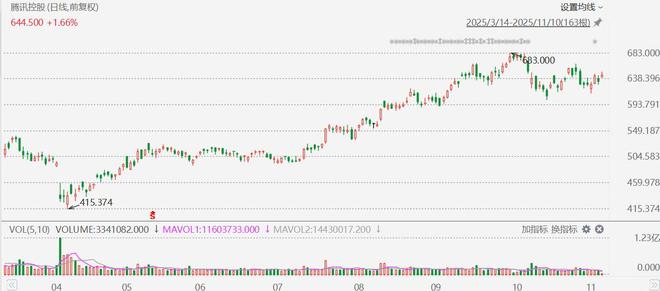
Core Viewpoint - Tencent's stock initially rose by 2.44% to HKD 649.5 but has since narrowed to around a 1.6% increase as the company prepares to announce its earnings on November 13 [1] Group 1: Earnings Expectations - The focus of Tencent's third-quarter earnings is expected to revolve around the development of artificial intelligence, with the market awaiting management's insights on AI applications across various businesses and potential revenue growth [1] - Bloomberg analysis suggests that Tencent's adjusted net profit for the third quarter may maintain low double-digit growth, primarily influenced by seasonal factors in the domestic gaming business [1] Group 2: Market Conditions - Although Tencent is relatively less affected by uncertainties in external trade policies, a slowdown in domestic economic growth could indirectly pressure its fintech and advertising businesses [1]
具身的大小脑路线都在这里了......
具身智能之心· 2025-11-10 00:02
Core Insights - The exploration towards Artificial General Intelligence (AGI) highlights embodied intelligence as a key direction, focusing on the interaction and adaptation of intelligent agents within physical environments [1] - The development of embodied intelligence is marked by the evolution of its core components, the brain and cerebellum, which are essential for perception, task understanding, and action execution [1] Industry Analysis - In the past two years, numerous star teams in the field of embodied intelligence have emerged, establishing valuable companies such as Xinghaitu, Galaxy General, and Zhujidongli, driving advancements in embodied intelligence technologies [3] - Major domestic companies like Huawei, JD, Tencent, and Ant Group are actively investing and collaborating to build a robust ecosystem for embodied intelligence, while international players like Tesla and Wayve are focusing on industrial applications and autonomous driving [5] Technological Evolution - The evolution of embodied intelligence technology has progressed through several stages, from low-level perception to high-level task understanding and generalization [6] - The first stage focused on grasp pose detection, while the second stage introduced behavior cloning, allowing robots to learn from expert demonstrations [6][7] - The introduction of Diffusion Policy methods in 2023 marked a significant advancement, enhancing stability and generalization in task execution [6][9] - The current phase emphasizes the integration of Vision-Language-Action (VLA) models, which enable robots to understand human instructions and perform complex tasks [7][9] Future Directions - The industry is exploring the fusion of VLA models with reinforcement learning, world models, and tactile sensing to overcome existing limitations [9][11] - This integration aims to enhance robots' capabilities in long-term tasks, future prediction, and multi-modal perception, expanding their operational boundaries [11][12] Educational Initiatives - There is a growing demand for engineering and system capabilities in the field of embodied intelligence, prompting the development of comprehensive educational programs [17] - These programs aim to equip participants with practical skills in simulation, model training, and the deployment of advanced embodied intelligence architectures [17][20]

美国AI新规为何令黄仁勋坐立不安,喊出中国要赢
Guan Cha Zhe Wang· 2025-11-09 23:53
Core Viewpoint - The global AI competition is intensifying, with China's DeepSeek laboratory launching a highly efficient large language model that rivals top systems at a significantly lower cost, raising concerns in the U.S. about losing technological dominance [1][2]. Regulatory Environment - U.S. AI regulations are evolving from federal "top-down design" to state-level "grassroots autonomy," leading to a fragmented regulatory landscape with over 260 AI-related bills proposed across all states, complicating compliance for companies [2][4]. - The Biden administration has enacted laws like the National AI Initiative Act (2023) and expanded chip export controls, but bipartisan disagreements have stalled comprehensive federal legislation [2][4]. State-Level Regulations - California's SB 53 mandates transparency for AI models with training costs exceeding $100 million, requiring detailed reports on training data and potential risks, with severe penalties for non-compliance [5][6]. - New York's AI Consumer Protection Act requires discrimination risk assessments for high-risk AI applications, potentially increasing compliance costs for financial institutions by 15%-25% [6][7]. - Colorado's AI legislation emphasizes developer responsibility and mandates detailed technical documentation, creating significant compliance burdens for national companies [7][8]. Compliance Challenges - The diverse and stringent state regulations create a "compliance maze," increasing administrative and legal burdens for companies operating across multiple states [4][6]. - The requirement for independent verification and extensive documentation can lead to delays and increased costs, impacting companies like NVIDIA and their product timelines [5][9]. Energy and Geopolitical Concerns - The energy demands of AI training are substantial, with regulations imposing additional costs and requirements for carbon emissions reporting, further straining U.S. companies compared to their Chinese counterparts [10][11]. - China's government support for tech giants in reducing energy costs poses a competitive threat to U.S. firms, as American companies face high electricity prices and regulatory fines [11][12]. Conclusion - The emergence of DeepSeek has narrowed the competitive gap with leading U.S. firms, while the fragmented regulatory environment in the U.S. may inadvertently provide opportunities for China to advance in AI technology [12].


年薪百万招不到人!具身智能“人才荒”,十年内有解吗?
机器人大讲堂· 2025-11-09 15:30
人才市场的热度是产业活力最直接的晴雨表。猎聘最新发布的《 2025三季度人才供需洞察报告》(以下简称 《报告》) 显示, 2025年三季度具身智能领域新发职位同比猛增72.86%,这一增速不仅远超同期科技行业 平均水平,更比人工智能行业整体增速高出近18个百分点,形成 明显的 人才需求 "虹吸效应"。 | | | | 新发职位同比增长排名 | 三级职能 | 2025Q3新发职位同比增长 | | --- | --- | --- | | No.1 | 机器人工程师 | 88.14% | | No.2 | 汽车设计工程师 | 80.31% | | No.3 | 车身工程师 | 75.93% | | No.4 | 飞行器设计与制造 | 74.48% | | No.5 | 保险销售 | 70.06% | | No.6 | 投资/理财顾问 | 69.23% | | No.7 | 行政后勤/总务 | 67.45% | | No.8 | 算法工程师 | 66.37% | | No.9 | 汽车产品规划 | 65.78% | | No.10 | 药品研发 | 65.36% | | No.11 | 装配工程师 | 57.99% ...

激增35.6%!就业市场巨变
Ge Long Hui· 2025-11-09 09:20
Group 1 - The core point of the article highlights the significant increase in female delivery workers in China, particularly in the food delivery and ride-hailing sectors, with female riders on Meituan rising from 517,000 in 2022 to 701,000 in 2024, a growth rate of 35.6%, which is 1.8 times the overall industry growth of 19.3% [1] - By 2025, the total number of delivery riders in China is projected to reach approximately 14 million, with women making up 24.3% of this workforce [1] - The article notes that the rise of female delivery workers is not limited to food delivery, as the number of female ride-hailing drivers on Didi is expected to increase from 600,000 in 2023 to over 1.05 million in 2024, marking a 75% increase [1] Group 2 - The article discusses the challenges faced by female delivery workers, including low income, with over 60% earning less than 5,000 yuan per month, and a high percentage of low-priced orders [25] - It highlights the dual burden of work and family responsibilities, with 85% of married female riders taking on more than 70% of household chores, leading to a demanding schedule that includes both work and childcare [25][23] - The article also points out the lack of labor rights and protections for female riders, with 92% not having signed labor contracts and less than 15% having social insurance coverage, exposing them to significant risks without proper compensation [30][27] Group 3 - The article emphasizes that the increase in female delivery workers is a response to economic pressures, with many women entering this workforce due to job losses in other sectors, particularly in service and manufacturing [21] - It notes that the average age of female riders is 37, and many are married with children, indicating that they are often the primary caregivers in their households [23] - The article concludes that the rise of female delivery workers reflects broader economic trends and societal pressures, where women are forced into flexible, low-paying jobs due to a lack of better opportunities [35][36]

电子产品缺“骨架” 龙头厂商赚大钱!
Zhong Guo Jing Ying Bao· 2025-11-08 11:25
Core Insights - The PCB supply chain is facing significant shortages of upstream materials, particularly affecting high-end substrates like ABF and BT boards, with expectations that shortages will persist for another year [1] - The demand for PCBs is expected to remain strong over the next 2-3 years, with a peak in the fourth quarter of the current year, despite the ongoing material shortages [1][3] - The shortage is attributed to a surge in demand from the recovering global electronics industry and highlights the vulnerabilities in the supply chain [1][4] Material Shortages - Key materials such as T-Glass, quartz cloth, and low CTE fiberglass are in short supply, impacting the production of high-end PCBs [1] - The global demand for HVLP4-grade copper foil, essential for AI servers, is projected to exceed supply, with a current monthly production capacity of only 700 tons against a demand of 850 tons [3][4] - The supply of fiberglass materials is also constrained, with a projected demand of 18.5 million meters by 2026, while current capacity is only 10 million meters, resulting in a shortage of over 50% [3] Market Dynamics - The AI server market is driving a significant increase in PCB prices, with standard server PCBs priced between $3,000 and $15,000, while AI training server PCBs can exceed $200,000 [3] - Major cloud service providers are expected to increase their capital expenditures significantly, with a forecasted total exceeding $420 billion by 2025, marking a 61% increase from previous years [3] Financial Performance - Leading PCB manufacturers like Huadian and Weiergao reported substantial revenue growth in Q3 2025, with Huadian achieving a revenue of 5.019 billion yuan, up 39.92%, and a net profit increase of 46.25% [6] - The PCB industry is entering a new growth cycle, with a projected market value of $73.565 billion in 2024, reflecting a 5.8% year-on-year increase [7] Capacity Expansion - At least 11 PCB companies have announced expansion plans to increase high-end production capacity, with significant investments planned [7][8] - Companies like Jingwang Electronics and Shengyi Technology are investing heavily in new projects to meet the rising demand for high-end PCBs [8] Strategic Considerations - While leading companies are expanding capacity, there is a risk of overcapacity if AI demand slows down, particularly if growth rates drop below 15% post-2026 [9][10] - Smaller manufacturers are advised to focus on niche markets and technological differentiation to avoid direct competition with larger firms [9][10]

乌镇峰会热点观察·互联生“数”智能赋“能” AI领域创新、安全依旧是主题词
Yang Shi Wang· 2025-11-08 08:20
Group 1 - The 2025 World Internet Conference in Wuzhen features a record number of 24 sub-forums focused on various topics, with five specifically dedicated to artificial intelligence [1][4] - Artificial intelligence is highlighted as a key technology driving a new wave of technological revolution and industrial transformation, with significant implications across various industries [4] - Experts emphasize the increasing sophistication of AI models, which enhance interaction with devices, making communication more natural and aligned with human habits [7] Group 2 - The future of AI development is expected to focus on areas such as world foundational models, embodied intelligence, and AI constrained by physical laws, indicating a shift towards more advanced AI technologies [9] - The maturity of AI technology suggests an inevitable explosion in its application, with a particular emphasis on the safety of developing superintelligent agents to ensure ethical progress [11]