特步国际

Search documents
聚焦港股消费ETF(513230)布局机遇,把握“以旧换新”百亿红利
Mei Ri Jing Ji Xin Wen· 2026-01-08 06:06
Group 1 - The Hong Kong stock consumer sector experienced a slight decline, with the Hong Kong Consumer ETF (513230) dropping over 0.5% [1] - Major stocks such as Upstream Holdings, Master Kong Holdings, and Uni-President China saw significant declines, while stocks like Weidong Gourmet and Mixue Group showed notable gains [1] - The launch of the "old-for-new" subsidy program by various platforms, including JD.com and Suning, aims to stimulate consumer spending, supported by a 625 billion yuan special government bond plan for 2026 [1] Group 2 - The tourism sector saw record high activity during the New Year holiday, with significant growth in outbound travel, surrounding tours, and duty-free shopping [1] - Huachuang Securities maintains a positive outlook on the performance of service consumption-related sectors in 2026 [1] - The Hong Kong Consumer ETF (513230) tracks the CSI Hong Kong Stock Connect Consumer Theme Index, encompassing leading consumer stocks across various sectors, including Pop Mart, Yum China, and Anta Sports [1]
淘宝闪购:2026首要目标是份额增长,坚定加大投入达到市场绝对第一
Xin Lang Cai Jing· 2026-01-08 05:14
Core Insights - Alibaba's Taobao Flash Purchase has made significant progress in the latest quarter, with a clear investment strategy aimed at achieving market leadership by 2026 [1][5] - The focus remains on market share growth, with strong momentum in the fourth quarter of 2025, particularly in non-food instant retail, and a faster reduction in losses compared to competitors [1][7] Group 1: Business Performance - In the December quarter, Taobao Flash Purchase saw continuous growth in GMV share, with an increase in average order value (AOV) and stable order share [1][6] - The platform achieved a peak daily order volume of 120 million in August, with monthly active buyers surpassing 300 million, indicating rapid market share growth [6][7] - The non-food retail segment is accelerating, with significant collaboration effects observed with Hema and Tmall Supermarket, leading to a 70% year-on-year increase in daily orders for Hema after integration [3][6] Group 2: Strategic Initiatives - The company is focusing on high-value user engagement and retail category development, utilizing features like "explosive good stores" to drive higher average transaction values [2][6] - New service upgrades, such as 20-minute free delivery and 1v1 delivery, are enhancing overall user experience [2][6] - The company plans to continue investing in high-value user acquisition and non-food retail over the next few quarters to increase user scale and loyalty [4][7] Group 3: Financial Outlook - The expected loss for Taobao Flash Purchase in the fourth quarter is around 20 billion, with a faster loss reduction compared to competitors, alleviating market concerns about sustainable investment [3][7] - Efficiency improvements are driven by three key levers: user structure optimization, order structure optimization, and fulfillment cost optimization [7]

分野与突围:中国鞋业洗牌期,中小鞋企生存法则——对话升维咨询
首席商业评论· 2026-01-08 04:27
Core Viewpoint - The article discusses the significant transformation in the Chinese footwear industry, highlighting a shift from traditional consumption patterns to a focus on comfort, functionality, and health, which reflects broader changes in consumer values and aesthetics [6][10]. Group 1: Market Dynamics - The Chinese footwear industry produced 13 billion pairs of shoes in 2024, accounting for over 54% of global production and 62.20% of exports, maintaining its position as the world's largest producer and exporter [7]. - There is a stark contrast in market performance, with traditional shoe brands facing declining sales while specialized sports brands experience high demand, indicating a bifurcation in consumer preferences [6][10]. - The article notes that many small and medium-sized shoe enterprises are struggling due to overcapacity and a mismatch between traditional business models and evolving consumer demands [11][12]. Group 2: Consumer Behavior Changes - Consumers are increasingly seeking shoes that meet specific needs for different occasions, moving away from the previous model where one type of shoe sufficed for multiple activities [12][15]. - The demand for specialized footwear has led to a clear market divide: generic styles are struggling to sell, while technologically advanced products are in high demand, indicating a shift towards professionalization and high-end offerings in the market [16][18]. Group 3: Industry Challenges - The article identifies three critical disconnects affecting small and medium-sized shoe companies: a structural mismatch between traditional capabilities and new market demands, supply chain issues, and a lack of genuine innovation [11][20]. - Many companies are trapped in outdated operational models, relying on low-cost production and imitation rather than investing in brand development and innovation [18][20]. Group 4: Strategic Recommendations - Companies are encouraged to undergo systemic restructuring, focusing on strategic clarity, capability enhancement, and dynamic long-termism to adapt to market changes [27][39]. - The article emphasizes the importance of understanding unique value propositions and targeting specific consumer segments to create competitive advantages [28][32]. - It suggests that successful companies will be those that maintain a strong commitment to quality, leverage data-driven decision-making, and remain open to learning from other industries [43][44]. Group 5: Future Outlook - The article concludes that the future of the footwear industry will favor companies that can create real, perceivable value for consumers, moving away from traditional competitive strategies based on scale and cost [46][57]. - It highlights the necessity for businesses to innovate continuously and adapt to changing consumer needs, emphasizing that those who can effectively address these challenges will thrive in the evolving market landscape [49][50].


研究了10000名消费者,我们为2026写下30条新消费暴利的秘密
3 6 Ke· 2026-01-06 03:15
Core Insights - The Chinese consumer market in 2026 will be driven by five core consumer groups, shifting from "cost-performance" and "emotional value" to "quality-price ratio" and "holistic self-consumption" [1] - Consumers will prioritize rationality and quality, expecting brands to be both functional and emotionally resonant [1] Group 1: Generation Z (Ages 18-27) - Consumption for Generation Z is a means of self-expression and social identity, where purchases serve as "social currency" to enter specific circles [3][5] - They are willing to spend significantly on items that symbolize their identity, such as limited edition sneakers or local cultural products, reflecting their values and community [5][6] - The rise of "identity consumption" indicates that purchases are more about expressing beliefs and belonging than fulfilling needs [6] - The "谷子经济" (Guzi Economy) represents a mature emotional currency system, with a market size projected to reach 200 billion, driven by fandom and collectibles [9] - Young consumers are increasingly skeptical of influencer marketing, preferring authentic and relatable brand interactions [10][11] - The trend of "micro-luxury" consumption allows young consumers to find joy in small, affordable indulgences, enhancing their daily lives [12] - There is a growing demand for time-saving solutions, with consumers willing to pay for convenience in their daily routines [13][15][17] - The second-hand market is thriving, combining environmental consciousness with unique personal style, as consumers seek vintage items for both quality and social status [18][19] - Digital ownership, such as collecting unplayed games or apps, provides a sense of security and potential [20] - Aesthetic preferences are shifting towards simplicity and authenticity, rejecting excessive packaging and marketing [21][23][24] - Young consumers are exploring less commercialized areas for authentic experiences, seeking a contrast to urban life [25][26] Group 2: Small Town Middle-Aged Consumers - This demographic is characterized by stable income, property ownership, and a strong sense of local pride, making them a foundational consumer group [30] - Their purchasing decisions heavily rely on recommendations from friends and family, emphasizing trust over advertising [30] - Leisure activities define their consumption patterns, focusing on local experiences and community engagement [31][32] - Social currency is significant, with purchases serving to enhance their social image within their communities [33] Group 3: Millennials - There is a polarization in spending habits, with consumers seeking high value in everyday items while indulging in premium products for self-care and family [40][42] - Service consumption is on the rise, as consumers prefer to pay for convenience and quality outcomes rather than doing tasks themselves [43][44] - The "healing economy" is emerging, with consumers regularly engaging in emotional wellness activities, indicating a shift towards prioritizing mental health [46] - Anti-aging products are becoming more sophisticated, with consumers investing in comprehensive health management systems [47] - Membership-based shopping models are gaining traction, as consumers value curated selections that save time and ensure quality [49] - The revival of physical media, such as books and vinyl records, reflects a desire for tangible experiences and meaningful consumption [50] Group 4: New Middle-Class Women - The concept of "self-pleasure" is evolving into a comprehensive investment in personal growth, encompassing various aspects of life [51][52] - Women are increasingly investing in education, fitness, mental health, and skincare, seeking holistic self-improvement [52] - Brands must shift from merely meeting needs to providing integrated solutions that empower consumers [52]

可选消费W01周度趋势解析:免税优异表现拉动增长,港股消费跌幅较大-20260105
Haitong Securities International· 2026-01-05 14:47
Investment Rating - The report assigns an "Outperform" rating to multiple companies including Nike, Midea Group, JD Group, Haier Smart Home, Gree Electric, and others, while Lulu Lemon is rated as "Neutral" [1]. Core Insights - Duty-free sales have shown exceptional performance, driving growth in the discretionary sector, while Hong Kong consumer stocks have experienced significant declines [4][11]. - The luxury goods sector has outperformed, with a weekly increase of 1.5%, while the retail sector also saw a rise of 1.1% [5][13]. - The report highlights that the overall sentiment in travel-related sectors remains high, contributing positively to the discretionary consumption outlook [3]. Weekly Performance Review - The weekly performance of various sectors is as follows: luxury goods > retail > overseas sportswear > overseas cosmetics > US hotels > domestic sportswear > credit cards > snacks > pets > domestic cosmetics > gold and jewelry > gaming, with respective weekly changes of 1.5%, 1.1%, 0.8%, -0.3%, -0.4%, -2.4%, -2.4%, -2.8%, -2.9%, -4.5%, -4.6%, and -5.6% [11][12]. - The retail sector's growth was significantly driven by China Duty Free, which saw a 7.6% increase due to strong sales during the New Year holiday [6][13]. Monthly and Year-to-Date Performance - Monthly performance shows retail leading with a 4.9% increase, followed by overseas sportswear and US hotels, while domestic cosmetics and gaming sectors faced declines [11]. - Year-to-date performance indicates that overseas cosmetics and US hotels have performed well, while domestic cosmetics and snacks have shown negative growth [12]. Valuation Analysis - The report notes that the valuation of various sectors remains below their average over the past five years, with expected PE ratios for 2025 indicating significant potential for growth [9][14]. - Specific sectors such as overseas sportswear are projected to have a PE of 31.2 times, which is 59% of the past five-year average, while domestic sportswear is at 13.3 times, 70% of the average [14][15].
研究了10000名消费者,我们为2026写下30条新消费暴利的秘密 |「万字长文」
新消费智库· 2026-01-05 13:23
Group 1 - The core consumption logic in China is shifting from "cost-performance" and "emotional value" to "quality-price ratio" and "comprehensive self-satisfaction" as consumers become more rational and discerning in their purchases [2][3] - The Z generation (ages 18-27) views consumption as a means of expressing identity and belonging, prioritizing "identity consumption" over mere "need consumption" [4][6][10] - The "谷子经济" (Guzi Economy) is emerging as a significant market, driven by emotional value and the willingness of consumers, especially the Z generation, to pay for intangible assets like fandom and community [10][11] Group 2 - The Z generation is increasingly skeptical of influencer marketing, with only 11% trusting recommendations from online personalities, preferring authentic and relatable brand interactions [12][13] - The trend of "micro-luxury" consumption is rising, where consumers seek small indulgences that provide immediate happiness and a sense of control over their lives [12][13] - The demand for convenience is leading to a rise in "extreme time-saving" solutions, with consumers willing to pay for products that simplify their daily routines [15][16] Group 3 - The second-hand market is gaining traction as consumers seek unique, high-quality items while also valuing sustainability, with platforms for vintage and second-hand goods becoming social hubs [16][17] - Digital assets are being accumulated for their potential future value, with consumers finding satisfaction in owning a vast array of digital content, even if unused [18][19] - A trend towards "aesthetic minimalism" is emerging, with consumers favoring simpler, less polished designs that emphasize authenticity over excessive packaging [20][23] Group 4 - The younger generation is increasingly seeking authentic experiences, often traveling to less commercialized areas to escape urban monotony and engage with local cultures [24][25] - The Z generation is characterized by "precise ambiguity," using specific labels to express their multifaceted identities, which brands must understand and respect [26][27] - The "小镇中年" (Small Town Middle-Aged) demographic is becoming a stable consumer base, relying heavily on community recommendations and valuing local pride [30][32] Group 5 - The "leisure economy" is thriving, with consumers prioritizing leisure activities that enhance their quality of life, such as local dining and short trips [33][34] - Social currency is becoming a key driver of consumption, where purchases are made not just for personal use but also to enhance social standing within local communities [35][36] - The preference for trusted national brands is evident, with consumers favoring mid-range products that offer reliability and value for money [36][37] Group 6 - The rise of service consumption reflects a shift towards valuing time and convenience, with consumers willing to pay for services that simplify their lives [46][47] - The "healing economy" is emerging as a significant market, with consumers regularly engaging in emotional wellness activities to cope with modern stressors [48][50] - Anti-aging products are evolving into a more systematic and scientific approach, with consumers investing in comprehensive anti-aging solutions [51][52] Group 7 - Membership-based shopping models are gaining popularity, as consumers seek curated selections that save time and ensure quality [52][54] - The revival of physical media, such as books and vinyl records, highlights a desire for tangible experiences and the ritualistic aspects of consumption [57][58] - The "new middle-class women" are redefining self-satisfaction, investing in holistic self-improvement across various aspects of life [61][62]

朝闻国盛:2026年“抢开局”5大看点
GOLDEN SUN SECURITIES· 2026-01-05 00:14
证券研究报告 | 朝闻国盛 gszqdatemark 2026 01 05 年 月 日 朝闻国盛 2026 年"抢开局"5 大看点 今日概览 ◼ 重磅研报 【宏观】政策半月观—2026 年"抢开局"5 大看点——20260104 【宏观】2026"国补"4 大看点—兼评 12 月 PMI 超季节性回升—— 20251231 【策略】1 月策略观点与金股推荐:配置趋势共识,博弈产业催化—— 20260104 【策略】人民币升值下的投资线索——20260101 【金融工程】上证指数再次确认日线级别上涨——20260104 【金融工程】择时雷达六面图:本周拥挤度指标弱化——20260104 【固定收益】一月债市的风险和机会——20260104 【固定收益】资金平稳跨年,新年政府债发行开启——流动性和机构行 为跟踪——20260103 【固定收益】缓和的落地,节后债市修复——20260101 【通信】无光不 AI,硅基光电子引爆新一轮算力革命——20260104 【化工】2026 年度策略:—迎接破晓时刻——20260101 【电新】光伏:反内卷带来行业拐点,新技术引领突围——20260104 【有色金属】2026 ...
元旦客流引领复苏,空调提价打响反内卷
Yin He Zheng Quan· 2026-01-04 11:19
Investment Rating - The report indicates a positive outlook for the service consumption sector, particularly in light of the government's efforts to stimulate consumer spending through various holidays and subsidies [1][4]. Core Insights - The report highlights a significant increase in service consumption during the New Year holiday, with a total of 590 million people expected to travel, marking a 19.5% year-on-year increase [2]. - The introduction of a large-scale subsidy program for replacing old appliances is expected to boost consumer spending, with an initial allocation of 62.5 billion yuan (approximately 9.1 billion USD) for 2026 [4]. - Midea's decision to raise air conditioner prices is seen as a strategic move to counteract intense competition in the industry, with price increases of 2% and 4% planned for early January [4]. Summary by Sections Service Consumption Growth - The report notes that during the New Year holiday, railway passenger volume is projected to reach 48.22 million, a 53.1% increase year-on-year, while road travel is expected to account for 540 million people, up 15.5% [2]. - The recovery in travel is anticipated to drive growth in the cultural tourism, hotel, and restaurant sectors, making service consumption a key driver of domestic demand recovery [2]. Domestic and International Tourism - The report indicates a substantial increase in inbound tourism, with ticket bookings for inbound travel during the New Year holiday rising by 110% year-on-year [3]. - Major cities like Shanghai, Beijing, and Guangzhou remain popular among international tourists, while smaller cities like Dali and Xishuangbanna have seen a threefold increase in inbound visitors [3]. Government Subsidies and Industry Response - The government has initiated a subsidy program for replacing old appliances, which is expected to support consumer demand during peak seasons like the New Year and Spring Festival [4]. - Midea's price adjustments are viewed as a necessary step to improve the competitive landscape of the air conditioning industry, which has faced rising costs due to increased copper prices [4].
万万没想到!2025年买房最狠的是这几个
Sou Hu Cai Jing· 2026-01-04 05:20
Core Viewpoint - The real estate market is witnessing significant purchases from various sectors, particularly from gaming and energy companies, despite a general downturn in property prices [1][10]. Group 1: Gaming Companies - The gaming sector, particularly companies like "Kawoo," is aggressively investing in real estate, with Kawoo purchasing properties in Shanghai at prices exceeding double the current market rate, indicating a 200% premium [2][4]. - Other gaming companies, such as "Yanyu Games" and "Feiyu Technology," are also making substantial real estate investments, including a 3.31 billion yuan purchase of a commercial complex and a 5.03 million yuan acquisition of a large property in Beijing [4][5]. Group 2: Energy Companies - Energy companies, often referred to as "coal bosses," are making bold investments in real estate during a market downturn, with firms like "Jinfeng Cement" spending over 2.4 billion yuan on a hotel in Shanghai [5][6]. - Notable purchases include "Manshi Coal" acquiring three apartments in Shanghai for 4.142 billion yuan and "Ordos Group" purchasing a comprehensive office property for 2.67 billion yuan [7][8]. Group 3: Diverse Investors - A wide range of investors from various industries, including food, clothing, and logistics, are also entering the real estate market, with companies like "Mondelez" and "Anta" making significant purchases [10]. - These investments serve multiple purposes, such as asset allocation, brand enhancement, and cash flow management, highlighting the strategic importance of real estate for businesses [10].

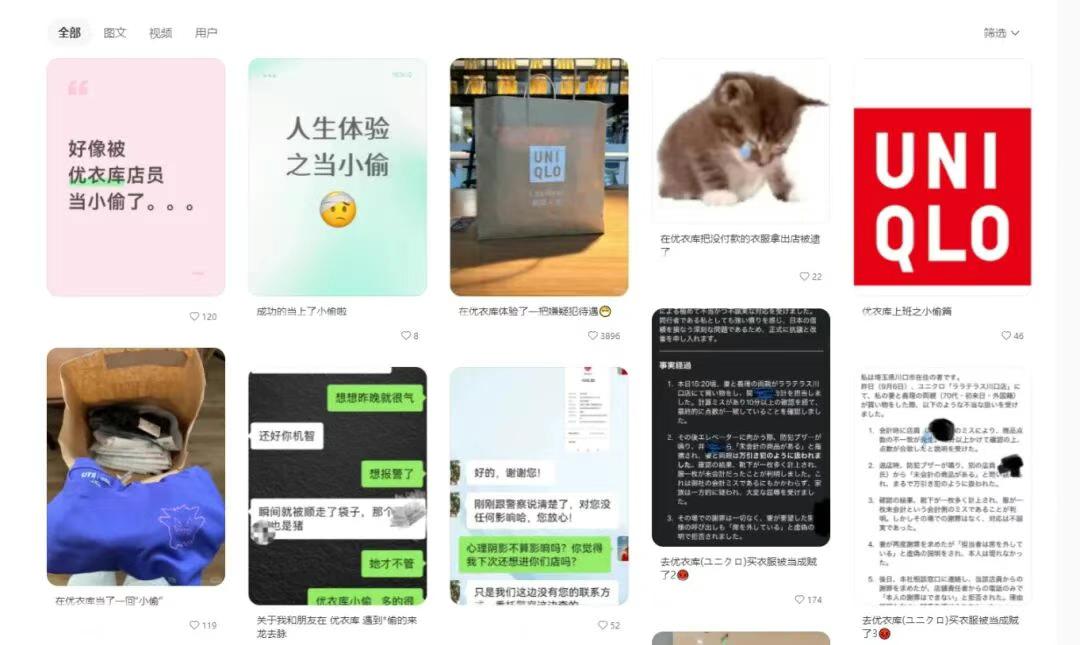
偷拍「疑似小偷」的顾客成了优衣库员工KPI?多少人逛个街吃火锅都在被商家悄悄标记
3 6 Ke· 2026-01-04 01:48
Core Viewpoint - Uniqlo has been reported to use "surveillance" on customers to prevent theft, leading to significant backlash from consumers who feel offended by being treated as potential thieves [1][3][4]. Group 1: Surveillance Practices - Some Uniqlo stores have been found to take photos of "suspicious customers," which are then shared in internal group chats with hundreds of employees [3][4]. - The criteria for being labeled as "suspicious" can be arbitrary, including simply wearing a backpack or a mask while passing by fitting rooms [3][4]. - This practice is not isolated to individual employees but is driven by management directives, with area managers pressuring staff to identify at least one suspicious case daily [4][13]. Group 2: Theft Challenges - Uniqlo's self-service shopping model, while providing a comfortable experience, also creates opportunities for theft, as the store layout allows for easy concealment of stolen items [5][12]. - Common theft methods include cutting RFID tags from clothing in fitting rooms, which has resulted in significant monthly losses for some stores [6][9]. - The increase in theft incidents has led to heightened scrutiny on loss rates, which are now tied to employee performance metrics, further pressuring staff to monitor customers closely [13][26]. Group 3: Customer Experience and Privacy Concerns - The use of surveillance and tagging customers has raised concerns about privacy and the potential for discrimination, as customers may be unfairly categorized based on superficial traits [21][26]. - The trend of labeling customers is not limited to Uniqlo; it reflects a broader industry practice where businesses collect extensive data on consumer behavior, sometimes leading to uncomfortable or invasive profiling [22][27]. - As retailers increasingly rely on technology and data to manage customer interactions, there is a growing anxiety about how this information is used and the implications for personal privacy [27][28].