
奔驰

Search documents
技术豪华PK品牌豪华
Jing Ji Guan Cha Wang· 2025-04-30 15:42
Core Insights - The articles highlight the competitive landscape between traditional luxury car brands from Germany and emerging Chinese luxury brands, emphasizing the challenges faced by the former in the Chinese market [1][9][11] Group 1: Market Dynamics - Porsche's sales in China dropped by 42% year-on-year in Q1, with its share of global sales falling from 30% four years ago to 13.25% [1] - The emergence of Chinese luxury brands, such as BYD's Yangwang, Huawei's ZunJie, and Chery's Jetour, is reshaping the luxury car market, leveraging advancements in new energy and smart technology [1][2][4] Group 2: Product Launches and Innovations - Traditional luxury brands like Mercedes-Benz, BMW, and Audi are set to launch over 10 new models annually in China, focusing on new generation smart vehicles [2][6][7] - The ZunJie S800, developed by Huawei and JAC, has gained significant attention, with pre-orders exceeding 2,000 units within two hours of its unveiling [2][3] - Jetour's new luxury off-road series, including models like the G700 and G900, showcases advanced technologies and aims to disrupt the market [3][4] Group 3: Brand Positioning and Strategy - Traditional luxury brands emphasize heritage and brand value, while Chinese brands focus on "technological luxury" and innovative user experiences [2][11] - The competition is not just about products but also about redefining what luxury means in the automotive sector, with both sides vying for consumer preference [9][10][11] Group 4: Consumer Trends and Future Outlook - The shift in consumer preferences towards technology-driven luxury experiences is influencing the strategies of both traditional and emerging brands [10][11] - The ongoing battle for market share and brand definition will depend on how well these companies adapt to changing consumer expectations and technological advancements [11]
浙江荣泰(603119):主业业绩快速增长,切入机器人打造新增长极
HUAXI Securities· 2025-04-30 12:49
Investment Rating - The report assigns an "Accumulate" rating to the company [6]. Core Viewpoints - The company is a leading player in the new energy mica products sector, experiencing rapid growth in performance, with a revenue of 1.135 billion yuan in 2024, up 41.8% year-on-year, and a net profit of 230 million yuan, up 34.0% year-on-year [1][14]. - The company has a strong order backlog and is actively expanding overseas production capacity, with expected sales from new energy projects amounting to approximately 9.238 to 9.963 billion yuan, primarily from overseas orders [2][25]. - The company is entering the robot screw field by acquiring a 51% stake in Shanghai Diz Precision Machinery Co., Ltd. (KGG), which is expected to enhance its growth potential in the robotics sector [3][36]. Summary by Sections New Energy Mica Products - The company has a leading market share of 27% in the global new energy mica products sector, with a strong focus on high-temperature insulation materials for electric vehicles [13]. - The revenue from new energy products reached 898 million yuan in 2024, a year-on-year increase of 56%, accounting for 79% of total revenue [19]. Order Backlog and Overseas Expansion - The company has established deep partnerships with high-quality clients such as Tesla, Volkswagen, and CATL, resulting in a robust order backlog [2][25]. - The company is expanding its overseas production capabilities, with projects in Mexico and Thailand aimed at meeting increasing demand [30]. Robotics Sector Entry - The acquisition of KGG is aimed at leveraging existing customer resources to penetrate the robotics components market, particularly in humanoid robots [3][36]. Financial Projections - The company is projected to achieve revenues of 1.568 billion yuan, 2.228 billion yuan, and 3.057 billion yuan for the years 2025, 2026, and 2027, respectively, with year-on-year growth rates of 38.2%, 42.1%, and 37.2% [4][40]. - The expected net profits for the same years are 322 million yuan, 452 million yuan, and 632 million yuan, with growth rates of 39.9%, 40.2%, and 40.1% [4][40].

宝马摊牌了
虎嗅APP· 2025-04-30 10:38
出品丨虎嗅汽车组 作者丨肖漫 头图丨宝马官方 去年,宝马研发投入达到91亿欧元,创历史新高。据宝马称,大部分的研发资源和技术成果都将倾注在宝马明年将在中国量产的"新世代车型"。 新世代是宝马CEO齐普策定义的宝马公司转型的第三阶段。 转型方案的第一步是 i 品牌所代表的"Project i项目",第二阶段始于同一款车型上推出搭载不同驱动技术的产品,提供多元的动力选择,在前两个阶 段,宝马的转型还不够彻底,一些车型还是"油改电",智能化做得也不好,但新世代车型会搭载宝马过去几年卧薪尝胆后做的全新技术和产品,呈现 一个全新面貌的宝马。 早在2021年,齐普策宣布2.0版"三步走"转型方案时就这么说:"对我们来说,'新世代'构成了彻底重新思考汽车的核心……以电动出行为先的原则,我 们正在革新产品的基本逻辑,并将其与全新的汽车架构相结合。" 今年上海车展,新世代首发亮相驾趣概念车,这也是我们第一次足以近距离探视宝马未来的底牌。 宝马亮剑 在车展亮相前,宝马就以一场动态驾控秀展现了宝马新世代概念车的性能,直接上演54°的极限爬坡挑战。 对于智能座舱,宝马认为,智能人机交互不是将过度的数码电子化产品塞进车内,不是车里的屏 ...
长城汽车李瑞峰:没必要再做增程技术 将以全动力布局应对竞争
Jing Ji Guan Cha Wang· 2025-04-30 09:41
Core Viewpoint - Great Wall Motors emphasizes its commitment to not pursuing range-extended electric vehicles, focusing instead on its Hi4 technology as a superior hybrid solution [1] Group 1: Technology and Product Strategy - Great Wall Motors is one of the few companies in the industry that does not engage in range-extended hybrid technology, believing that its Hi4 technology system is a better hybrid solution [1] - The Hi4 technology system integrates core technologies such as efficient engines, transmissions, and electric drives, covering a diverse range of hybrid products from passenger to commercial vehicles [1][2] - The company has achieved a comprehensive new energy layout across its five brands, including Wei, Haval, Ora, Tank, and Great Wall Pickup, with a focus on self-research and development [2] Group 2: Market Position and Competition - The automotive market is becoming increasingly competitive, with major players like BBA (Benz, BMW, Audi) and Toyota launching aggressive new energy strategies, which will reshape the market landscape by 2026 [2] - Great Wall Motors aims to maintain its competitiveness in the new energy vehicle sector by adhering to a long-term high-quality development philosophy and focusing on quality market share [2] Group 3: Sales and Marketing Strategy - Great Wall Motors plans to explore a direct sales model, with the first 33 direct stores set to open on May 1, aiming to enhance communication with customers and create a closed-loop system from manufacturing to sales [4] - The company has launched the "ONE GWM" global strategy to integrate its six major brands for overseas market expansion, marking the beginning of a new era in brand strategy development [4] Group 4: International Expansion - Great Wall Motors has been operating in overseas markets for nearly 30 years, with over 1,400 sales channels and cumulative overseas sales exceeding 1.9 million vehicles [5] - The company has established vehicle assembly plants in Thailand and Brazil, and KD factories in various countries, indicating a strong commitment to international growth [5] Group 5: Regulatory Compliance and Future Trends - In response to recent regulatory requirements regarding the promotion of assisted driving, Great Wall Motors acknowledges the necessity of these regulations and commits to strict compliance [5] - The company believes that the future of intelligent driving will involve continuous technological advancements and improved regulations, emphasizing the importance of responsible marketing practices [5]

卷智驾,成为了车企的“生死局”?
3 6 Ke· 2025-04-30 08:33
Group 1 - The automotive industry is shifting focus from price wars to smart driving technology, with companies realizing that mere price reductions have limited impact on consumer behavior and can harm brand value [1] - BYD has announced that all its models will be equipped with smart driving features, leading to a rapid industry-wide adoption of L2-level assisted driving in vehicles priced under 150,000 yuan [2][4] - The penetration rate of L2-level assisted driving in new passenger car sales in China reached 57.3% in 2024, indicating a transition from the "trial phase" to the "popular phase" for smart driving technology [2] Group 2 - Various new models, such as the BYD Seal and Leap Motor B10, are now offering advanced driving assistance features at lower price points, demonstrating a trend of cost control and technology accessibility [4][6] - The competition in smart driving technology is intensifying among domestic brands, which are rapidly expanding their offerings across different price segments, challenging traditional pricing logic [8] Group 3 - Joint ventures and collaborations are becoming essential for foreign car manufacturers to maintain market share, with companies like Dongfeng Nissan partnering with local tech firms to enhance their smart driving capabilities [10][12] - Luxury brands are also responding to the competition, with Audi and BMW introducing advanced smart driving features in their new models, indicating a shift in the luxury segment towards more accessible technology [12][14] Group 4 - Safety has emerged as a key focus in the marketing of smart driving technologies, with companies emphasizing the importance of safety features over aggressive performance claims [15][19] - The Shanghai Auto Show highlighted the industry's commitment to safety and reliability in smart driving systems, with companies like Huawei and Xiaopeng Motors prioritizing safety in their product offerings [15][17] Group 5 - The concept of "safety redundancy" and "scene optimization" has become prevalent in discussions about smart driving, reflecting the industry's recognition of the need for safety in the face of rapid technological advancement [20] - The transition of consumer attitudes towards smart driving from novelty to necessity underscores the importance of reliable technology, as companies strive to balance cost, safety, and technological advancement [20]



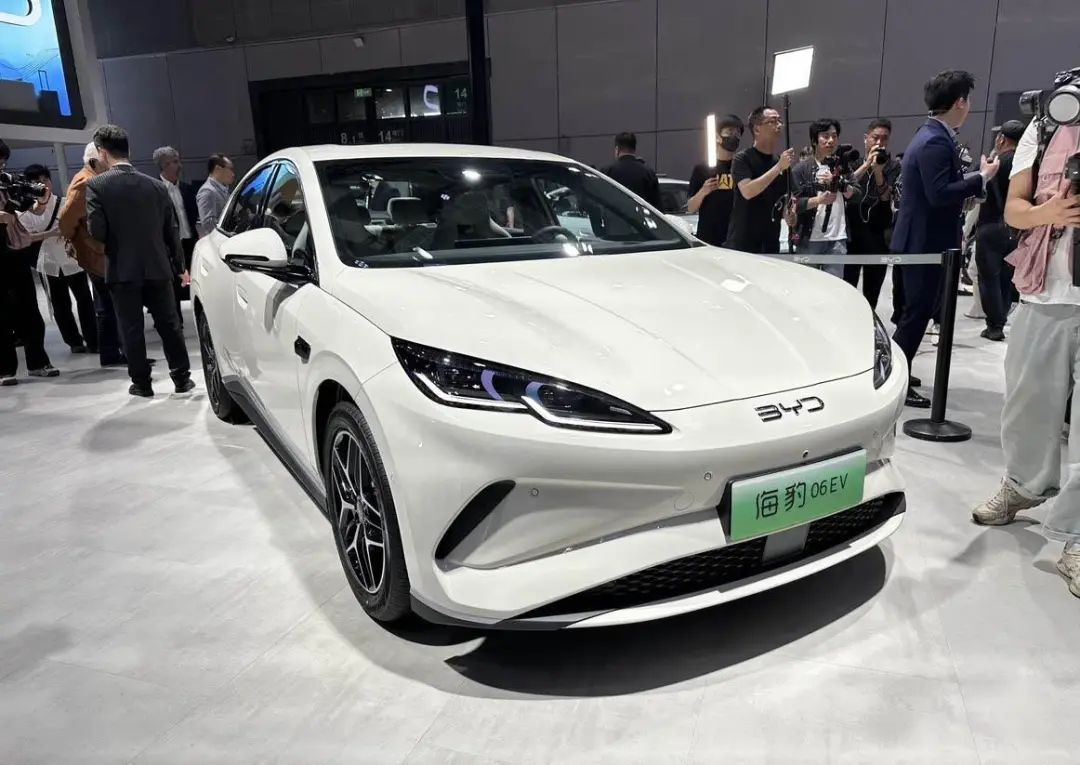
上海车展证明了一个道理:中国汽车是“封锁不住的”
Guan Cha Zhe Wang· 2025-04-30 08:06
Core Insights - The 2025 Shanghai Auto Show marks a significant turning point in the global automotive industry, with a noticeable shift towards technology and innovation rather than entertainment and gossip [1][6][8] - International attention has shifted towards Chinese automotive companies, indicating a change in the industry's center of gravity towards the East [6][28] - The event is expected to influence the global automotive landscape for the next 5-10 years, as foreign journalists and industry experts recognize the advancements made by Chinese manufacturers [5][6] Industry Trends - The focus of the auto show has transitioned from marketing to technological advancements, with significant discussions around product capabilities and innovations [9][10] - The automotive industry is experiencing a competitive environment where technology is becoming the key differentiator, moving away from mere marketing strategies [10][11] - The establishment of standards in automotive technology is crucial, as it defines the competitive landscape and pricing power [15][18] Technological Advancements - Chinese companies are leading in patent filings, with over 50% of patents in the fields of new energy vehicles and intelligent connected vehicles originating from China [14] - Notable technological showcases include NIO's advanced driving systems and other innovations that highlight the capabilities of Chinese manufacturers [13][22] - The introduction of new technologies at the auto show reflects a broader trend of Chinese companies aiming to set industry standards rather than just following them [20][34] Market Dynamics - The presence of foreign media and potential buyers at the auto show indicates a growing interest in Chinese automotive products, with many international dealers seeking partnerships [23][25] - The market share of foreign automotive manufacturers in China has significantly decreased, highlighting the rapid advancement of local companies [27] - The shift from "market for technology" to "technology wins market" illustrates the evolving dynamics of the automotive industry in China [29][30] Future Outlook - The advancements showcased at the 2025 Shanghai Auto Show signal a new era for the Chinese automotive industry, with expectations for continued growth and innovation [31][32] - The emphasis on user needs and technological progress positions Chinese automotive companies to lead in the future global market [34]

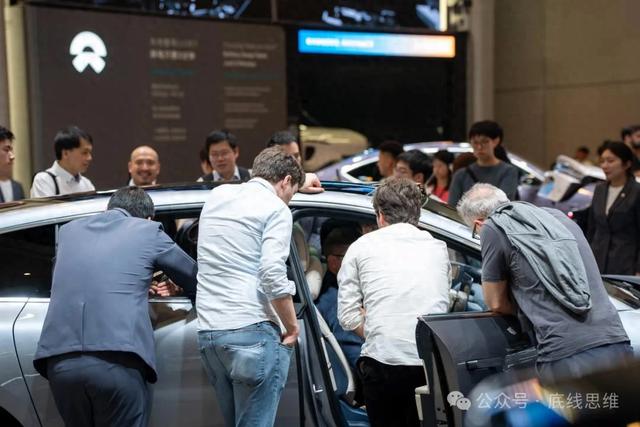
2025上海车展的一些小感受
Zhong Guo Qi Che Bao Wang· 2025-04-30 06:15
Group 1 - The 2025 Shanghai Auto Show showcased a shift from "traffic-driven" marketing to a focus on technology and product capabilities, reflecting a more rational approach in the automotive industry [4][5][6] - The Ministry of Industry and Information Technology's regulations on smart driving advertising have led to a more cautious and safety-oriented promotion of intelligent driving technologies [4][5] - The emergence of domestic supply chains has been highlighted, with over 50 domestic and international parts suppliers participating prominently in the exhibition, indicating the rise of China's automotive supply chain [9][10] Group 2 - The acceleration of localization in smart driving technology was evident, with both domestic and foreign companies collaborating to adapt technologies to the unique conditions of Chinese roads [5][6][7] - Major foreign automakers, including Mercedes-Benz, BMW, and Toyota, showcased their electric vehicles prominently, signaling a commitment to the electric vehicle market in China [7][8] - The introduction of flying cars and humanoid robots at the auto show indicates a potential new focus area for the automotive industry, expanding the scope of competition and future mobility solutions [10] Group 3 - The presence of nearly 50 well-known technology, semiconductor, and chip companies at the supply chain exhibition reflects the growing importance of chips in the automotive sector, particularly in the context of electrification and intelligent driving [11][12] - Despite the optimistic developments observed at the auto show, challenges remain, particularly regarding the financial capabilities of domestic supply chain companies to keep pace with rapid technological advancements [12]

中国始终是外商投资的热土、高地与蓝海——欧企在华发展的确定性、机遇性与未来性
Xin Hua Wang· 2025-04-30 05:17
Group 1: Certainty - The automotive industry exemplifies the certainty of China's market, with BMW's Shenyang factory producing a vehicle every 55 seconds, highlighting "Chinese efficiency" [2] - Companies like Schneider Electric have shown confidence in China's market by increasing R&D investment by over 15% annually, with more than 2,200 R&D personnel and over 3,000 patents in China [2] Group 2: Opportunities - China's middle-income group exceeds 400 million, contributing over 80% to economic growth, presenting significant market opportunities [3] - Bosch's R&D expenditure in China reached 11 billion RMB (approximately 1.4 billion euros) in 2023, driven by robust growth expectations in the smart mobility sector [3] - The health consumption market is projected to exceed 20 trillion RMB by 2030, with an annual growth rate of 15%, creating innovation opportunities [3] - BASF plans to concentrate 75% of its global production capacity in China, seizing green development opportunities amid Europe's energy crisis [3] Group 3: Future - European companies are adopting a "co-opetition" strategy in response to the technological rise of Chinese firms, with Siemens and China Baowu Steel Group collaborating on a "lighthouse factory" [4] - Airbus is investing in the Chinese market, with a new A320 assembly line in Tianjin set to begin operations by the end of 2025, reflecting confidence in China's aviation market [4] - The 2024-2025 Business Confidence Survey by the China-Germany Chamber of Commerce indicates that German companies in China are entering a new phase of localization, integrating deeply into the Chinese business ecosystem [4]
4月30日电,奔驰表示,特朗普关税将对息税前利润、自由现金流产生负面影响。
news flash· 2025-04-30 05:06
Group 1 - The core viewpoint is that Mercedes-Benz indicates that Trump's tariffs will negatively impact its earnings before interest and taxes (EBIT) and free cash flow [1] Group 2 - The company is facing challenges due to external economic policies, specifically tariffs imposed by the Trump administration [1] - The anticipated negative effects on financial metrics highlight potential vulnerabilities in the company's operational performance [1] - This situation may influence investor sentiment and market perception regarding the company's future profitability [1]
奔驰表示,特朗普关税将对息税前利润、工业FCF产生负面影响。
news flash· 2025-04-30 05:04
Core Viewpoint - The company indicates that Trump's tariffs will negatively impact EBIT and industrial free cash flow [1] Group 1 - The tariffs imposed by Trump are expected to have a detrimental effect on the company's earnings before interest and taxes (EBIT) [1] - The industrial free cash flow (FCF) of the company is also projected to be adversely affected by these tariffs [1]