未提及具体公司

Search documents
【大佬持仓跟踪】光纤+液冷+海工,公司产品可实现800G甚至T量级超大传输容量,光纤市占率全球前三,拥有复合液冷解决方案
财联社· 2025-08-26 04:52
Core Viewpoint - The article emphasizes the importance of timely and professional information interpretation in the investment landscape, focusing on the investment value of significant events, analysis of industry chain companies, and key points of major policies [1] Group 1: Company Overview - The company specializes in fiber optics, liquid cooling, and marine engineering, achieving transmission capacities of 800G and even T-level [1] - It ranks among the top three globally in fiber optic market share and offers a comprehensive liquid cooling solution [1] - The company has successfully mass-produced high-speed copper cables and currently holds orders exceeding 30 billion [1] - The product range for submarine cables is extensive, indicating a diverse portfolio [1]


通州张家湾镇财务机器人“上岗”,农村“三资”管理提质增效
Xin Jing Bao· 2025-08-24 09:57
Core Insights - Zhangjiakou Bay Town is implementing a digital financial robot to enhance the management of rural collective "three assets" (funds, assets, resources) [1] - The initiative aims to transform and upgrade financial management through technology, achieving intelligent financial accounting across the town [1] Summary by Sections Implementation and Coverage - The digital financial robot pilot was launched in October 2024, initially covering five administrative villages, and expanded to 13 villages by November 2024, with full coverage of 57 villages expected by January 2025 [1] Performance Metrics - As of March 2025, the financial robot processed over 4,500 economic transactions, with the accuracy rate improving from 92% in September 2024 to 99.7% by March 2025 [1] - The efficiency of processing transactions has significantly increased, with each village handling 30-50 transactions monthly, which previously took days for manual accounting but now only takes 1-2 hours with the robot [1] Impact on Workforce - The automation of tasks such as voucher verification and data entry has allowed each accountant to manage 6-8 villages instead of the previous 3-4, thereby reducing labor costs significantly [1]

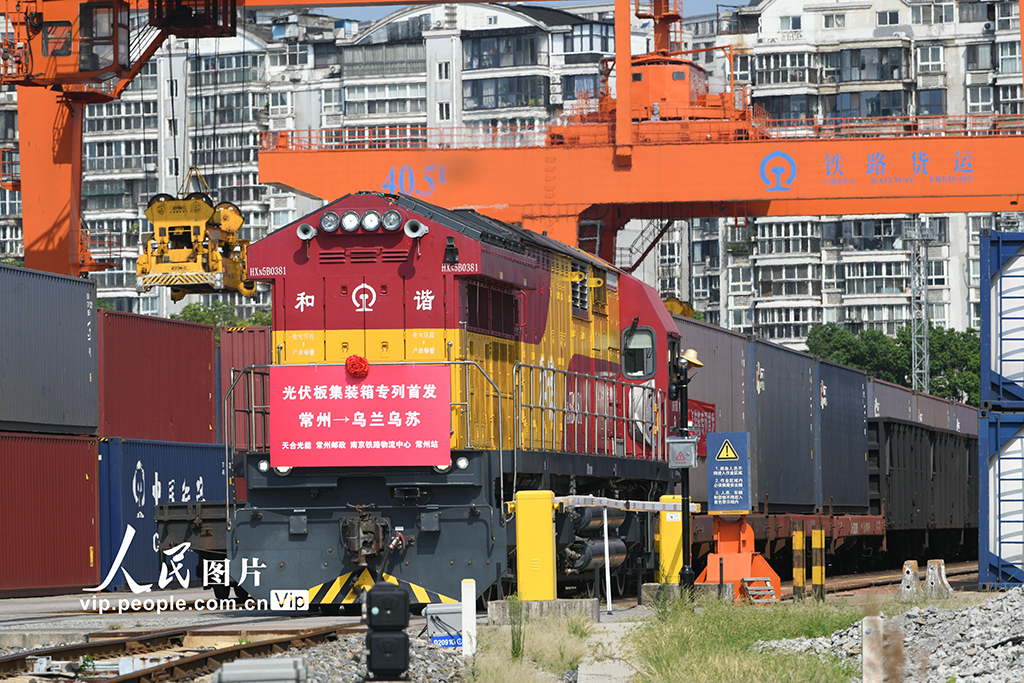
江苏常州:首列光伏板集装箱专列发运
Ren Min Wang· 2025-08-24 03:03
Core Viewpoint - The first container train carrying photovoltaic panels has been dispatched from Changzhou, Jiangsu, marking a significant step in the promotion of renewable energy transportation and logistics in the region [1][2][3]. Group 1 - The train is part of an initiative to enhance the logistics efficiency for the solar energy industry, facilitating faster and more reliable transportation of solar panels [1][2]. - This development is expected to support the growth of the photovoltaic industry in Jiangsu, which is a key area for solar energy production in China [1][3]. - The dispatch of the train aligns with national goals to increase the use of renewable energy sources and reduce carbon emissions [2][3]. Group 2 - The container train service is anticipated to improve the supply chain for solar panel manufacturers, potentially leading to cost reductions and increased competitiveness in the market [1][2]. - The initiative reflects a broader trend in the logistics sector towards specialized transportation solutions for renewable energy products [1][3]. - This move is likely to attract more investments into the renewable energy sector in Jiangsu, further solidifying its position as a leader in solar energy production [2][3].
险资关注人工智能、创新医药等领域投资机会
Zheng Quan Ri Bao· 2025-08-22 23:26
Core Insights - The confidence of insurance institutions in China's bond and A-share markets has significantly increased for the second half of 2025, with a focus on sectors like artificial intelligence, high-dividend assets, and innovative pharmaceuticals [1][2]. Investment Confidence - 55.56% of insurance asset management institutions and 47.67% of insurance companies hold an optimistic view on the bond market for the second half of 2025 [1] - 52.78% of insurance asset management institutions and 55.81% of insurance companies are optimistic about the A-share market [1] - Compared to last year's survey, there is a notable increase in optimism, with a 13.89 percentage point rise for insurance asset management institutions and a 2.1 percentage point rise for insurance companies regarding the bond market [1] - For the A-share market, optimism increased by 30.56 percentage points for insurance asset management institutions and 31.76 percentage points for insurance companies [1] Investment Focus - The most favored A-share sectors by insurance institutions for the second half of the year include banking, pharmaceuticals, electronics, and computers [2] - Key investment areas identified are artificial intelligence, high-dividend assets, new productive forces, and innovative pharmaceuticals [2] Future Outlook - The investment trend of insurance capital is expected to continue, emphasizing long-term value investment and supporting industries of national strategic significance [3] - As stock positions increase, there is a need for enhanced investment capabilities in research, due diligence, allocation, risk control, valuation, and technology [3]
暴涨!刚刚,鲍威尔宣布!美联储降息大消息!
Zhong Guo Ji Jin Bao· 2025-08-22 14:52
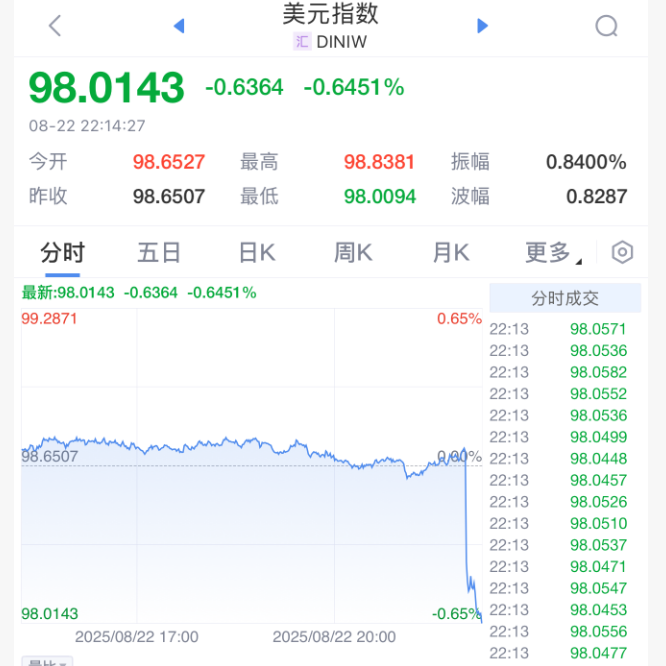
Core Viewpoint - Federal Reserve Chairman Jerome Powell signals potential interest rate cut in September, indicating a shift in monetary policy due to changing economic risks [3][4][8] Group 1: Economic Conditions - Powell highlights that the labor market appears stable but is experiencing a unique balance due to significant slowdowns in both labor supply and demand, leading to rising downside risks for employment [3][12] - The U.S. GDP growth rate has slowed to 1.2% in the first half of the year, significantly lower than the projected 2.5% for 2024, primarily due to reduced consumer spending [13] - Inflation risks are currently tilted upwards, while employment risks are leaning downwards, creating a challenging situation for policymakers [4][14] Group 2: Monetary Policy Outlook - Powell suggests that the baseline outlook and risk balance may necessitate adjustments to the policy stance, with a reasonable scenario indicating a one-time increase in price levels due to tariffs [3][14] - The market now anticipates a 90% probability of a rate cut in September, up from 75% prior to Powell's speech, with traders pricing in two rate cuts by the end of the year [8] - Powell's comments indicate a dovish stance, suggesting he may support a 25 basis point rate cut at the upcoming Federal Open Market Committee meeting [7][8] Group 3: Market Reactions - Following Powell's speech, the dollar index fell approximately 0.5%, and U.S. Treasury yields dropped, with the two-year yield decreasing by 9 basis points to 3.70% [5] - Major U.S. stock indices surged, with the Dow Jones rising over 700 points, the Nasdaq increasing by nearly 2%, and the S&P 500 gaining about 1.5% [8]
策略研究深度报告:后关税时代,中国制造的全球竞争力
Guolian Minsheng Securities· 2025-08-21 11:23
Group 1 - The report highlights the formation of a new global trade framework in the "post-tariff" era, emphasizing the reduction of trade deficits and the return of manufacturing to the U.S. as key objectives of the Trump administration [4][6][25] - The average rate of the new "reciprocal tariffs" is approximately 20%, down from 29% in April, indicating a narrowing of differences among various economies [7][14] - The report constructs a quantitative assessment framework based on three dimensions: price elasticity, share resilience, and capacity elasticity, to analyze the competitive advantages and challenges faced by Chinese manufacturing [4][8] Group 2 - Chinese manufacturing maintains a price advantage, with most products showing a price advantage concentrated in the 0%-75% range, suggesting that even under extreme assumptions of tariff costs, many products still hold competitive pricing [8][10] - The resilience of market share is crucial, as certain products like small appliances and air conditioners exhibit both price advantages and strong market shares, indicating higher demand resilience [8][10] - The report notes that while tariff risks cannot be completely eliminated, the globalization of supply chains is mitigating some of these risks, particularly in key manufacturing sectors [9][10] Group 3 - Certain core products from Chinese manufacturing are expected to maintain strong export competitiveness despite current tariff conditions, with specific categories like electronics and home appliances showing notable resilience [10][22] - The report emphasizes that U.S. importers may find it less cost-effective to switch suppliers in the short term, as the overall impact of tariffs on exports is lower than anticipated [10][22] - The analysis suggests that the ongoing trade negotiations and tariff adjustments will continue to shape the competitive landscape for Chinese manufacturing in the global market [25]
美股愁了
Hu Xiu· 2025-08-21 06:15
Core Viewpoint - The U.S. stock market is experiencing a correction, primarily driven by concerns over AI bubbles, regulatory policies, and interest rate outlooks, leading to a shift in investor behavior towards undervalued and defensive assets [1] Group 1: Market Reaction - On August 20, major U.S. stock indices continued their downward trend, with the Nasdaq falling by 0.67%, while the S&P 500 also declined, and the Dow Jones showed relative resilience [1] - Investors are moving towards undervalued sectors and defensive assets, indicating a rapid decline in market risk appetite, which has also contributed to a 1% increase in gold prices on COMEX [1] Group 2: Federal Reserve's Stance - The Federal Reserve's July meeting minutes, released on August 20, revealed that most members are more concerned about inflation risks than employment risks, maintaining the benchmark interest rate in the 4.25%-4.50% range [2] - The market interpreted the minutes as hawkish, leading to a significant reduction in expectations for a large rate cut in September, with the probability of a 25 basis point cut remaining high at 81.9% according to CME's FedWatch tool [2] Group 3: Political Pressure on the Federal Reserve - President Trump publicly called for the resignation of Federal Reserve Governor Lisa Cook, citing allegations of mortgage fraud, which is seen as a serious political intervention that could undermine market confidence in U.S. monetary policy [3] - This political noise has increased investor uncertainty regarding policy direction, prompting a shift of funds towards safe-haven assets like gold, while also creating a dual sentiment in the futures market regarding potential policy easing and political uncertainty [3] Group 4: Implications for Gold and Tech Stocks - The current environment suggests that while rate cuts are typically seen as beneficial for stocks, if perceived as a response to increased recession risks, it could negatively impact future earnings and thus be detrimental to tech stocks [4] - Gold prices are currently supported by uncertainties surrounding the Russia-Ukraine negotiations and the Federal Reserve's policy direction, with potential for a pullback if these uncertainties ease [4][5] - For investors, gold serves as a necessary but costly insurance, and while some defensive positioning is reasonable, expectations for excessive returns should be tempered, especially in a market driven by domestic policies and liquidity [5]
FICC日报:A股中期分红增长,股指反弹-20250821
Hua Tai Qi Huo· 2025-08-21 05:29
Report Industry Investment Rating No relevant content provided. Core Viewpoints - A-share mid - term dividends are increasing, and the stock index has rebounded. The spot market shows that the three major A - share indexes opened lower and closed higher, with the Shanghai Composite Index rising 1.04% to 3766.21 points, reaching a ten - year high, and the ChiNext Index rising 0.23%. The number of listed companies announcing mid - term dividend plans has significantly increased, with over 140 companies announcing plans and the total proposed dividend amount exceeding 100 billion yuan. In the overseas market, the three major US stock indexes closed mixed [1]. - In the futures market, the basis of stock index futures has significantly narrowed, and both the trading volume and open interest of stock index futures have increased [2]. - In recent days, the A - share market has shown a pattern of low - opening reversals and high - opening pullbacks. With the continuous increase in market expectations, washing behavior is mostly carried out through intensified intraday fluctuations. The technology sector has shown catalytic effects, the semiconductor market has exploded, and foreign capital inflows have also boosted the consumer sector. The market has shown obvious high - low switching characteristics, and attention should be paid to the risks after the low - level weighted stocks make up for losses [3]. Summary by Directory Market Analysis - **Domestic Focus**: President Xi Jinping emphasized that Tibet should continue to focus on stability, development, ecology, and border strengthening. Major projects such as the Yarlung Zangbo River hydropower project and the Sichuan - Tibet Railway should be promoted in an orderly manner [1]. - **Overseas Focus**: The minutes of the Fed's July monetary policy meeting showed that most officials thought it appropriate to keep the benchmark interest rate unchanged, and only two officials advocated for a rate cut. The use of payment - type stablecoins may accelerate expansion, which could increase the demand for reserve assets, including treasury bonds [1]. - **Stock Market Performance**: In the A - share spot market, most sector indexes were up, with beauty care, petroleum and petrochemicals, electronics, and the automotive industry leading the gains, while only the pharmaceutical and biological industry closed slightly lower. The trading volume of the Shanghai and Shenzhen stock markets on that day was 2.4 trillion yuan. In the overseas market, the Dow Jones Industrial Average rose 0.04% to 44938.31 points, and the Nasdaq Composite Index fell 0.67% to 21172.86 points [1]. - **Futures Market Performance**: In the futures market, the basis of stock index futures has significantly narrowed, and both the trading volume and open interest have increased [2]. Strategy - The A - share market has shown a pattern of low - opening reversals and high - opening pullbacks. With the continuous increase in market expectations, washing behavior is mostly carried out through intensified intraday fluctuations. The technology sector has shown catalytic effects, the semiconductor market has exploded, and foreign capital inflows have also boosted the consumer sector. The market has shown obvious high - low switching characteristics, and attention should be paid to the risks after the low - level weighted stocks make up for losses [3]. Charts - **Macroeconomic Charts**: Include the relationship between the US dollar index and A - share trends, the relationship between US treasury bond yields and A - share trends, the relationship between the RMB exchange rate and A - share trends, and the relationship between US treasury bond yields and A - share style trends [6][8][10]. - **Spot Market Tracking Charts**: Show the daily performance of major domestic stock indexes, including the Shanghai Composite Index, Shenzhen Component Index, ChiNext Index, CSI 300 Index, SSE 50 Index, CSI 500 Index, and CSI 1000 Index. Also include the trading volume of the Shanghai and Shenzhen stock markets and the margin trading balance [6][13][14]. - **Stock Index Futures Tracking Charts**: Include the open interest and trading volume of IF, IH, IC, and IM contracts, the latest open interest ratios of these contracts, the net open interest of foreign capital in these contracts, the basis of these contracts, and the inter - delivery spread of these contracts [6][15][36].
十年新高之下的“投资焦虑”怎么破?聊聊ETF这剂良方
Sou Hu Cai Jing· 2025-08-18 10:15
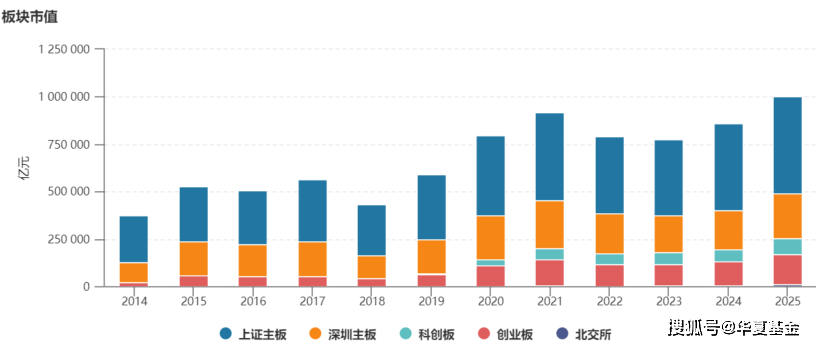
Core Viewpoint - The A-share market is experiencing significant highs, with major indices reaching new peaks, yet investor anxiety is rising due to differing positions in the market [1][2][4]. Group 1: Market Performance - The Shanghai Composite Index has surpassed 3731 points, marking a ten-year high, while the North Stock 50 Index has reached an all-time high, and the ChiNext Index has hit its highest level since February 2023 [2]. - Despite the market's upward trend, there is a growing sense of anxiety among investors, with some feeling left out and others frustrated by stagnant holdings [3][4]. Group 2: Investor Sentiment - The anxiety among investors stems from a psychological phenomenon known as the "anchoring effect," where the historical context of the 3700-point level creates a fear of heights [6]. - The current market structure has evolved significantly since 2015, with the number of listed companies increasing from approximately 2800 to over 5400 and total market capitalization rising from around 50 trillion to over 100 trillion [7]. Group 3: Valuation Insights - The current TTM price-to-earnings ratio for the entire A-share market is 21 times, placing it in the 83rd percentile over the past decade, indicating a balanced valuation rather than extreme highs or lows [9]. - The equity risk premium is currently around 2.95%, suggesting that the market has not yet entered a phase of excessive enthusiasm [9]. Group 4: ETF as a Solution - ETFs are presented as a potential solution to alleviate investor anxiety, as they can track indices and provide exposure to market movements without the need for individual stock selection [5][19]. - ETFs can help investors avoid the pitfalls of "chasing highs" and provide a diversified investment approach, reducing the risk of missing out on market trends [20][21]. Group 5: Strategic ETF Allocation - A balanced ETF strategy should focus on growth potential while maintaining defensive positions, with an emphasis on core broad-based ETFs that are currently undervalued [24][25]. - The construction of an "anti-anxiety" ETF portfolio should consider both growth sectors, such as technology and healthcare, and defensive assets like dividend-paying stocks [27][28].
国家统计局新闻发言人就2025年7月份国民经济运行情况答记者问
中汽协会数据· 2025-08-18 08:02
Core Viewpoint - The economic performance in July 2025 demonstrates resilience and vitality despite external pressures and adverse weather conditions, with steady growth in production, consumption, and investment, alongside stable employment and prices [7][10][20]. Economic Performance Overview - The industrial output in July showed a year-on-year increase of 5.7%, with the equipment manufacturing sector growing by 8.4%, indicating strong industrial growth [7][51]. - The service sector also performed well, with a production index growth of 5.8% in July, driven by increased tourism and related services [7][15]. - Social retail sales increased by 3.7% year-on-year in July, with a notable 4% growth in goods retail [8][14]. - Fixed asset investment grew by 1.6% from January to July, with significant contributions from equipment updates and manufacturing investments [8][45]. Trade and Employment - The total import and export volume increased by 6.7% year-on-year in July, reflecting the resilience of foreign trade despite a complex international environment [8][31]. - The urban unemployment rate remained stable at 5.2%, indicating a steady employment situation [9][20]. New Growth Drivers - High-tech manufacturing saw a 9.3% increase in output, with significant growth in sectors like integrated circuits and new energy vehicles [10][38]. - The digital economy is rapidly developing, with a 8.4% increase in digital product manufacturing in July [10][38]. Consumer Trends - Consumer demand is being stimulated by policies such as the "old for new" consumption initiative, leading to increased sales in home appliances and cultural products [8][14]. - The service sector is experiencing growth, particularly in tourism and digital services, with a notable increase in transportation and cultural service indices [15][56]. Investment Landscape - Investment in manufacturing is growing, with a 6.2% increase in manufacturing investment from January to July, particularly in textiles and automotive sectors [45][46]. - Infrastructure investment is also on the rise, with water management and information transmission sectors seeing significant growth [46][47]. Policy Impact - The implementation of proactive macroeconomic policies is supporting production and investment growth, with a focus on stabilizing employment and market expectations [10][23]. - The government's commitment to deepening reform and opening up is enhancing the resilience and vitality of the economy [21][32].