
零跑

Search documents
六座特斯拉,搅局国产新能源
3 6 Ke· 2025-07-22 10:14
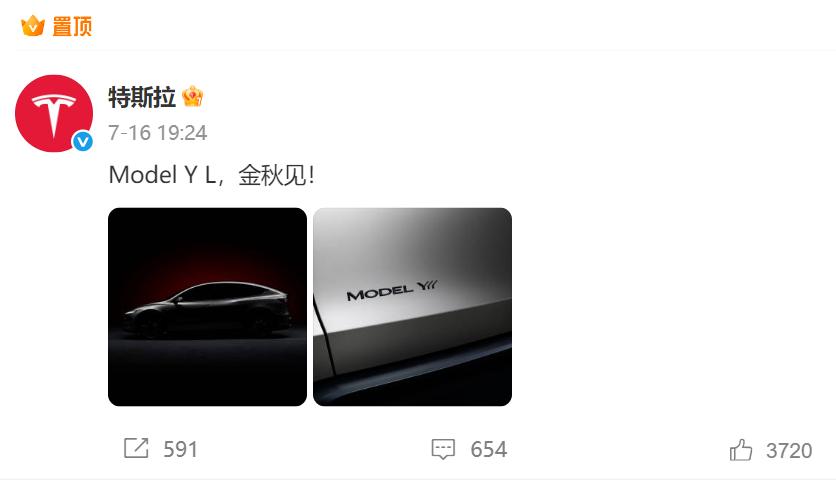
Core Viewpoint - Tesla is launching a new model, the Model Y L, specifically designed for the Chinese market, which is expected to intensify competition in the domestic family vehicle segment [1][3]. Group 1: Tesla's Model Y L Overview - The Model Y L features a longer body, measuring 4976 mm in length and 3040 mm in wheelbase, making it larger than the standard Model Y and even the Model X [5][6]. - The introduction of the Model Y L is seen as a necessary response to declining sales, with Tesla's deliveries dropping by 1.1% year-over-year to 1.789 million units in 2022, and a 13.5% decline in Q2 2023 compared to the same period last year [3][5]. - The Model Y L aims to address the "space anxiety" of Chinese family users, a need that has already been recognized and met by local competitors [8][9]. Group 2: Competitive Landscape - Domestic brands like Li Auto, Aito, and Leap Motor have already established a strong presence in the large six-seat SUV market, making it challenging for Tesla to penetrate this segment [9][16]. - The pricing strategy for the Model Y L is crucial, with estimates suggesting a price range of 335,000 to 365,000 yuan, which could put pressure on similarly priced domestic models [13][15]. - The entry of the Model Y L is expected to invigorate the family vehicle market, pushing all players to reassess their pricing, configurations, and market strategies [19][23]. Group 3: Market Dynamics and Future Implications - The family vehicle segment is evolving, with a growing preference for large SUVs that meet family needs, as indicated by a J.D. Power survey showing that over half of consumers prioritize space when purchasing a vehicle [17][19]. - The competition will shift from merely offering a third row of seats to ensuring that the third row is practical and comfortable, which will become a key differentiator among brands [19][21]. - As the market heats up, companies that fail to adapt to changing consumer demands may struggle to survive, while those that innovate and understand local needs will thrive [21][23].


沪光股份20250720
2025-07-21 00:32
Summary of Conference Call Notes Industry Overview - The automotive industry experienced a price stabilization starting July 1, with major market leaders reducing end-user discounts, which is expected to stimulate consumer demand for vehicles, similar to the market response following last year's discount strategies [2][3] - New models from brands such as Xiaomi, Leapmotor, and Li Auto are anticipated to launch between July and September, likely driving total sales significantly [2][4] Company Focus: Hu Guang Co., Ltd. - Hu Guang Co. benefited from the delivery of the Wanjie M8, achieving 35,000 units, resulting in a performance inflection point with revenue and profit margins increasing over 70% quarter-on-quarter [2][7] - The company expects a fundamental turnaround in the second half of the year, particularly in Q4 [2][7] New Client Acquisition - New clients for Hu Guang in the second half include SAIC Huawei, Geely Zeekr, and NIO's Leda, with Leda's L90 model already receiving approximately 50,000 orders, contributing about 5,000 yuan per vehicle in value, which will significantly boost revenue [2][8] - The first model from SAIC Huawei is expected to launch in September with a target production of 70,000 units this year, representing another important revenue project for Hu Guang [8][12] Financial Projections - Hu Guang's full-year performance for 2025 is conservatively estimated between 750 million to 800 million yuan, with Q2 marking a profitability inflection point and Q4 expected to set historical highs [5][13] - The current valuation is approximately 15 times earnings, indicating a sufficient margin of safety [5][13] Robotics Sector Insights - In the robotics sector, while no major catalytic events are expected in the second half, individual product advancements and the recovery of leading enterprises in the supply chain are anticipated to create a series of catalysts in Q3 and Q4 [9][10] Investment Recommendations - Investors are advised to focus on new models with strong month-on-month sales trends, particularly those from Xiaomi, Leapmotor, and Li Auto, as well as key players in the robotics sector like Fuda and Haoneng [11] - Companies with low valuations and high certainty, such as Hu Guang, should also be prioritized, along with potential in the seating sector from companies like Jifeng and Yanpu [11] Strategic Directions - Beyond automotive wiring harnesses, Hu Guang has made significant progress in the robotics field, including project development and customer sampling, with plans to extend wiring products into drones and lawnmowers for rapid platform expansion [14] - In the face of increasing competition in the automotive sector, Hu Guang aims to leverage its scale advantages and quality customer structure to navigate through the cycle effectively [15]

反“内卷”规范竞争秩序 推动汽车行业生态重塑
Cai Jing Wang· 2025-07-20 04:17
据新华社,7月16日召开的国务院常务会议明确提出,要着眼于推动新能源汽车产业高质量发展,针对该产业领域 出现的各种非理性竞争现象,坚持远近结合、综合施策,切实规范新能源汽车产业竞争秩序。 该会议内容释放了清晰信号,针对新能源汽车领域愈演愈烈的非理性竞争,政府将打出"组合拳"强力纠偏。从成本 调查、价格监测到产品生产一致性监督检查,再到对车企支付账期承诺的督促,这标志着中国新能源汽车产业正迎 来从"量"走向"质"的高质量发展新阶段。 会议明确提出,要加强成本调查和价格监测,强化产品生产一致性监督检查,督促重点车企落实好支付账期承诺。 "新能源汽车产业延续快速增长态势,已经成为我国汽车市场的主导力量。但看到成绩的同时,汽车行业出现的一 些问题也不容忽视。"中国汽车工业协会常务副会长兼秘书长付炳锋接受采访时说,要综合治理各种非理性竞争现 象,坚决维护公平有序的市场环境,推动行业健康、可持续发展。 矫正畸形反内卷 中国新能源汽车产业在电动化、智能化的双重驱动下实现了蓬勃发展。据中国汽车工业协会最新发布的数据显示, 2025年上半年,我国新能源汽车产销量分别为696.8万辆和693.7万辆,同比分别增长41.4%和40 ...
恩智浦:为何中国智驾是关键?
半导体芯闻· 2025-07-18 11:07
Core Viewpoint - The automotive industry is a key driver of innovation in the semiconductor market, with China emerging as a global leader in electric and smart vehicles, prompting major semiconductor companies to increase their investments in the Chinese market [1][3][4]. Group 1: China's Automotive Market - China's automotive market is growing rapidly, with a compound annual growth rate (CAGR) exceeding 10%, and is home to global innovators like Changan Deep Blue and Leap Motor [4]. - The penetration rate of new energy vehicles in China is approaching 50%, and the development cycle for new platforms has been shortened to one year, showcasing the market's rapid iteration and innovation [4]. - By 2030, the global semiconductor market is expected to exceed $1.3 trillion, with China playing a crucial role in driving this growth, particularly in electric vehicles (accounting for 70% of global sales and 76% of battery production) and robotics [3][4]. Group 2: NXP's Strategy and Technology - NXP Semiconductors is focusing on a "software-defined vehicle" (SDV) approach, transitioning from a hardware-centric to a software-driven automotive architecture [5][6]. - The CoreRide platform, launched by NXP, integrates hardware, software, and ecosystem collaboration to accelerate the deployment of SDVs, allowing for rapid software updates and innovation [5][6][7]. - NXP's CoreRide platform aims to enhance speed in hardware deployment, over-the-air (OTA) updates, and development cycles, which are critical metrics for OEMs in their software-defined strategies [7]. Group 3: Advanced Technologies - NXP is a leader in UWB technology, enabling digital car keys and enhancing vehicle access through smartphones, with capabilities for future upgrades without additional hardware [9]. - The development of 4D imaging radar is crucial for advancing autonomous driving, with projections indicating that by 2029, 40% of vehicles will feature L2+/L3 capabilities [10][11]. - NXP's S32R47 imaging radar processor represents a significant advancement, doubling performance and tripling antenna support compared to previous generations, while also reducing size by approximately 38% [11]. Group 4: Battery Management Systems - The evolution of battery management systems (BMS) is critical for electric vehicles, with NXP moving towards a software-free BMS model to optimize costs and enhance safety [18][21]. - NXP's BMx7318/7518 series battery cell controllers support flexible configurations and high-temperature environments, addressing the needs of high-voltage battery systems [21]. Group 5: Localization and Ecosystem Collaboration - NXP has been operating in China for 39 years, with a significant local presence including 6 R&D centers and 14 offices, emphasizing its commitment to local innovation and responsiveness [22][23]. - The establishment of a dedicated China division aims to integrate sales, R&D, and operations to better serve local customers and enhance global market capabilities [22][23]. - Collaborations with major automotive companies like Geely and Great Wall are strengthening NXP's ecosystem, facilitating innovation and development in the automotive sector [23][26].

纯电还是增程/插混,用户都是怎么选择的?
车fans· 2025-07-18 00:29
Core Viewpoint - The article discusses the current market dynamics of electric vehicles (EVs), range-extended vehicles, and plug-in hybrids, focusing on consumer preferences and the long-term viability of these technologies. Group 1: Consumer Preferences - Consumers are increasingly choosing pure electric vehicles (EVs) over range-extended and plug-in hybrid models due to better technology and practicality, such as the 800V silicon carbide technology offered by brands like Leap Motor [3]. - Range anxiety drives some consumers to opt for range-extended vehicles, as they provide the flexibility of both electric and gasoline power [4]. - The cost-effectiveness of pure electric vehicles is a significant factor, with lower operating costs compared to traditional fuel vehicles, especially when charging during off-peak hours [9]. Group 2: Market Trends - The sales of pure electric and plug-in hybrid vehicles are showing a balanced trend, with some brands reporting nearly equal sales ratios of 1:1 between the two types [12]. - The development of charging infrastructure and advancements in battery technology are expected to alleviate range anxiety, making pure electric vehicles more appealing in the future [5][12]. - The design and performance advantages of pure electric vehicles, such as better platform and aesthetics, are influencing consumer choices, particularly for urban commuting [12][15]. Group 3: Brand Insights - Leap Motor is focusing on both pure electric and range-extended models, with a noted preference for pure electric among consumers [3]. - Geely's sales indicate a preference for pure electric vehicles, with plug-in hybrids being chosen primarily for long-distance travel needs [9]. - BYD's offerings show that pure electric models are perceived as having better performance and design, while plug-in hybrids are seen as more economical [12].
中大型纯电动SUV市场深度重构
Zhong Guo Qi Che Bao Wang· 2025-07-16 01:59
Core Insights - The entry of Xpeng G7 into the mid-to-large pure electric SUV market at a starting price of under 200,000 yuan has disrupted the industry, challenging the pricing strategies of leading models like Tesla Model Y and Xiaomi YU7 [2][3] - The price point of 200,000 yuan has shifted from being a threshold for mid-range SUVs to a benchmark for high-end technical configurations, with 85% of potential buyers expecting features like an 800V platform and Level 2 assisted driving at this price [2][3] - This transformation reflects a broader restructuring of the automotive industry, emphasizing technological equality, cost control, and market competition [2][4] Price System Restructuring - The pricing system for mid-to-large pure electric SUVs is undergoing a significant overhaul, moving away from traditional hierarchical pricing based on size, brand, and configuration [3] - New entrants like Buick E5 and Xingtu Star ET are also adopting aggressive pricing strategies, indicating that the 200,000 yuan mark is no longer the entry point for this segment [3] - The decline in battery material costs and the maturation of local supply chains are contributing to a decrease in manufacturing costs, making technological accessibility a reality rather than just a marketing slogan [3][9] Market Dynamics - The restructuring of the pricing system is leading to a profound change in market dynamics, where traditional brand premium-based hierarchies are being replaced by a new order focused on technological value and user experience [6] - The high-end market above 500,000 yuan is now primarily supported by a few traditional luxury fuel vehicles, while the 300,000 to 500,000 yuan range has become a battleground for new entrants [6][10] - The 200,000 to 300,000 yuan segment is now highly competitive, featuring models like Xpeng G7 and Deep Blue S09, while the 150,000 to 200,000 yuan range is seeing new challengers like Leap Motor C16 [6][10] Value Standards Shift - The market is witnessing a shift in value standards, where consumers are no longer satisfied with basic specifications but are seeking comprehensive smart experiences and quality [7] - In the electric vehicle era, the focus has shifted from engine displacement and luxury features to electronic architecture, intelligent driving capabilities, and charging efficiency as new value metrics [7][9] Accelerated Technological Accessibility - The price restructuring in the mid-to-large pure electric SUV market signifies the beginning of a new era where technological configurations, rather than brand history, dictate pricing [9] - Future competition will center around three key dimensions: intelligent driving experience, charging efficiency and range performance, and cabin experience integration [9][10] - The market is expected to see a clearer segmentation based on price, with the 150,000 to 250,000 yuan range becoming the largest mainstream market, while the 100,000 to 150,000 yuan segment is emerging as a new blue ocean [10][11]


中泰国际每日晨讯-20250716
ZHONGTAI INTERNATIONAL SECURITIES· 2025-07-16 01:49
Market Overview - The Hong Kong stock market saw a significant rise on July 15, with the Hang Seng Index increasing by 386 points or 1.6%, closing at 24,590 points, marking a four-month high [1] - The Hang Seng Tech Index rose by 2.8%, closing at 5,431 points, indicating a potential breakout from a sideways trend since May [1] - The total market turnover increased to over 288.4 billion HKD, signaling positive market sentiment with rising prices and volumes [1] - Notable inflows were observed in the Hong Kong Stock Connect, with a net inflow of 3.82 billion HKD [1] Macroeconomic Dynamics - In Q2 2025, China's GDP grew by 5.2% year-on-year, with a 5.3% growth in the first half, exceeding expectations and suggesting a potential shift in policy focus towards structural support rather than short-term stimulus [2] - The nominal GDP growth rate for Q2 was only 3.9%, with a deflationary pressure indicated by a -1.3% GDP deflator, marking nine consecutive quarters of negative inflation [2] - Investment contribution to GDP rose to 24.7%, while consumption contributed 52.3%, reflecting a slight increase of 0.6 percentage points [2] Industry Dynamics - The new energy vehicle sector led the market gains recently, with companies like Li Auto and NIO seeing stock increases of 1%-4% [5] - The healthcare sector also performed well, with the Hang Seng Healthcare Index rising by 2.9% following the announcement of a new commercial health insurance drug list by the National Healthcare Security Administration [5] - The photovoltaic sector faced declines, with major companies like Xinyi Solar and LONGi Green Energy dropping by 2.9%-3.9% due to a U.S. investigation into imported polysilicon [6] Real Estate Sector Insights - The new housing transaction volume in 30 major cities fell by 26.5% year-on-year, contrasting with a previous week’s increase of 5.8% [10] - In first-tier cities, cumulative new housing transaction volumes showed mixed results, with Beijing down 0.2% and Shanghai up 2.9% year-on-year [11] - The land transaction volume in 100 major cities dropped by 44.9% year-on-year, indicating a significant slowdown in real estate activity [13] Company-Specific Insights - WuXi AppTec (2359 HK) is expected to exceed earnings expectations for the first half of 2025, with projected revenue growth of 20.6% to 20.79 billion RMB and a 44.4% increase in adjusted net profit [7] - The company’s second-quarter revenue is anticipated to rise by 15.4% to 11.14 billion RMB, driven by improved operational efficiency [7] - The target price for WuXi AppTec has been raised to 98.20 HKD, reflecting an upward revision in earnings forecasts [9]
乐道L90,能用19.39万掀桌吗?
3 6 Ke· 2025-07-15 12:40
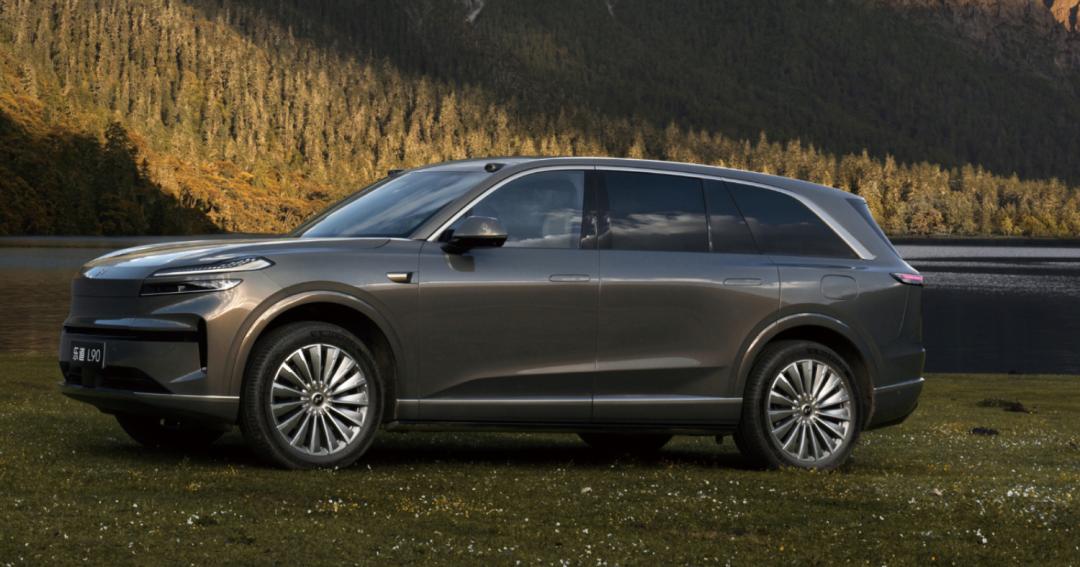
Core Insights - The launch of the Ledo L90 aims to boost NIO's sales targets for the year, with a starting price of 279,900 yuan for full purchase and 193,900 yuan for battery rental, positioning it competitively against rivals like Li Auto's L8 [3][4][6] - The L90 is designed with a focus on family needs, featuring spacious interiors and a maximum CLTC range of 605 kilometers with an 85 kWh battery [7][8] - The competitive landscape includes pressure from Xiaomi's Yu7 and Li Auto's i8, both targeting similar market segments, with the Yu7 priced at 253,500 yuan, which is lower than the L90 [12][13][15] Pricing Strategy - The L90's pricing strategy is seen as a shift towards making large SUVs more accessible, with a significant price difference compared to competitors like the Li L9 and Aito M9 [6][8] - Despite competitive pricing, concerns arise regarding the potential impact on profit margins, especially with the low-priced battery-as-a-service (BaaS) option [21][22] Market Positioning - The L90 is positioned as a family-oriented vehicle, addressing common pain points in family travel, and aims to capture a larger share of the mid-to-low-end market [5][7][16] - The vehicle's launch is critical for Ledo to meet ambitious sales targets, with expectations of selling over 20,000 units monthly to contribute significantly to NIO's overall sales [20][22] Sales Performance and Projections - Ledo's previous model, the L60, underperformed, leading to a need for the L90 to achieve higher sales to support NIO's profitability goals for Q4 2025 [10][19][20] - NIO's overall sales target for 2025 is 444,000 units, with Ledo expected to contribute at least 50% of that total [19][20] Competitive Landscape - The SUV market is highly competitive, with various brands vying for consumer attention, making it essential for the L90 to differentiate itself effectively [12][16] - The upcoming launch of the Li i8 and the recent release of the new Leap C11 further intensify competition in the segment [13][15]
蔚来港股单日大涨超10%,市场关注乐道L90能否扭转困局
Di Yi Cai Jing· 2025-07-14 06:51
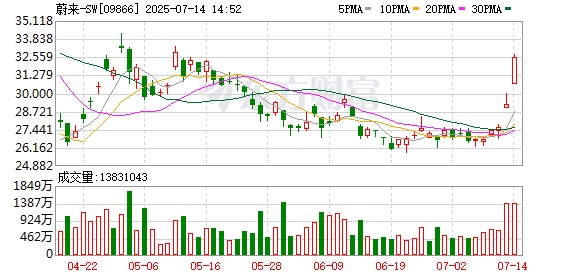
Group 1 - NIO's stock price surged by 10.77% to HKD 32.40 per share following the launch of its new SUV model, L90, which has a starting price of RMB 27.99 million for outright purchase and RMB 19.39 million for battery rental [2] - The CEO of NIO, Li Bin, emphasized the importance of delivery rhythm and stated that the production and capacity preparations for L90 are actively underway [2] - Analysts from various institutions have expressed optimistic expectations for NIO, with estimates of a short-term rebound in stock price due to marginal improvements and cost reduction effects [3] Group 2 - NIO's sales volume for the first half of the year reached 114,200 units, with June sales at 24,900 units, reflecting a month-on-month increase of 7.29% [4] - Despite the positive sales figures, NIO faces significant challenges to achieve profitability in the fourth quarter, with a target of 440,000 units for the year and a critical balance point of 400,000 units [4] - The automotive industry is expected to see consolidation, with only the most competitive brands likely to succeed in the coming years, as indicated by a report from AlixPartners [3]

国信证券:新品密集上市有望提振板块景气度 建议关注车企财报行情
Zhi Tong Cai Jing· 2025-07-14 02:26
Group 1: Market Performance - In June 2025, the retail sales of passenger cars reached 2.084 million units, representing a year-on-year increase of 18.1% and a month-on-month increase of 7.6% [1] - Cumulative retail sales from January to June 2025 amounted to 10.901 million units, showing a year-on-year growth of 10.8% [1] - The retail sales of new energy passenger vehicles in June 2025 were 1.111 million units, up 29.7% year-on-year and 8.2% month-on-month [1] Group 2: Stock Market Trends - In June, the CS automotive sector declined by 0.13%, with the CS passenger vehicle index falling by 2.34% [2] - The CS automotive sector has increased by 28.88% since the beginning of 2025, outperforming the CSI 300 index by 14.17 percentage points [2] Group 3: Cost Tracking - As of the end of June 2025, the prices of float glass, aluminum ingots, and zinc ingots changed by -27.3%, +2.3%, and -6.4% year-on-year, respectively [3] Group 4: Inventory Levels - The inventory warning index for Chinese automotive dealers in May 2025 was 52.7%, a decrease of 5.5 percentage points year-on-year and 7.1 percentage points month-on-month [4] Group 5: Market Focus - The launch of Tesla's Robotaxi service and the acceleration of domestic Robotaxi deployment are key developments [5] - New models to watch include Li Auto i8, Zeekr 9X, Leapmotor C11, and others [5]
