安踏

Search documents
北交所策略专题报告:氨纶行业竞争格局进一步改善,关注北交所美邦科技
KAIYUAN SECURITIES· 2025-07-20 14:44
Group 1 - The spandex industry is experiencing significant capacity exits, which is expected to alleviate the oversupply situation. Korean Taekwang Group announced the suspension of some spandex production lines at its Chinese subsidiary starting July 14, 2025, marking the first closure of a spandex plant in China by the group [1][10][11] - Xiaoxing Spandex has already shut down 8 production lines by the end of 2023, with plans to close 2 more in July 2025 and an additional 2 by March 2026, ultimately ceasing operations by the end of 2026. The core raw material PTMG (polytetramethylene ether glycol) has seen a 23% year-on-year increase in costs due to high international oil prices, but domestic companies have achieved over 80% localization of PTMG, reducing costs to 60% of imported products [1][11][12] - In 2024, the proportion of domestic spandex procurement by Chinese sports brands surpassed 75% for the first time, with leading companies like Anta and Li Ning collaborating with spandex manufacturers to create a closed-loop ecosystem from R&D to production. Foreign brands have seen their market share shrink to less than 12% [2][11][12] Group 2 - The chemical new materials sector on the North Exchange saw a weekly increase of 0.10%, ranking third among five major industries. The rubber and plastic products sector rose by 1.36%, while textile manufacturing fell by 3.08% [3][19][20] - Notable individual stock performances included Guangxin Technology (+8.66%), Kaida Catalysis (+8.26%), and Yinuowei (+8.16%), indicating strong market activity within the chemical new materials sector [3][23][24] - The price trends for chemical products showed a 1.5% decrease in Brent crude oil prices, while TDI prices surged by 23% and MDI prices increased by 1.8% [27][29][35]
李宁(02331):短期流水减速,聚焦新奥运周期下的高质量发展
Orient Securities· 2025-07-17 14:48
Investment Rating - The report maintains a "Buy" rating for the company [3] Core Views - The company is focusing on high-quality development in the new Olympic cycle, despite short-term revenue slowdown [1] - The company has adjusted its earnings forecasts for 2025-2026 and introduced a forecast for 2027, expecting EPS of 0.92, 1.05, and 1.20 RMB respectively [2][8] - The target price is set at 20.07 HKD, based on a 20x valuation for 2025 [2][8] Financial Performance Summary - Revenue for 2023 is projected at 27,598 million RMB, with a year-on-year growth of 7.0% [2] - Operating profit is expected to decline to 4,256 million RMB in 2023, reflecting a decrease of 21.4% year-on-year [2] - Net profit attributable to the parent company is forecasted at 3,187 million RMB for 2023, down 21.6% year-on-year [2] - The company anticipates a net decrease of approximately 10 direct stores and an increase of around 40 franchise stores in 2025 [7] - The gross margin is expected to be 48.4% in 2023, with a slight increase to 49.1% by 2027 [2][11] - The net profit margin is projected to decline from 11.5% in 2023 to 8.2% in 2025, before recovering to 9.5% in 2027 [2][11] Market and Competitive Landscape - The retail environment is becoming increasingly competitive, with intensified discounting pressures from international brands [7] - The company is expected to increase marketing expenditures in the second half of 2025 and throughout 2026 to support sustainable growth [7] - The major shareholder has shown confidence in the company's long-term prospects by increasing their stake by approximately 1.11% [7]

高盛:上调中国自动驾驶出租车市场规模,看好云计算板块,荐买入滴滴、安踏、京东健康等个股
Zhi Tong Cai Jing· 2025-07-17 14:02
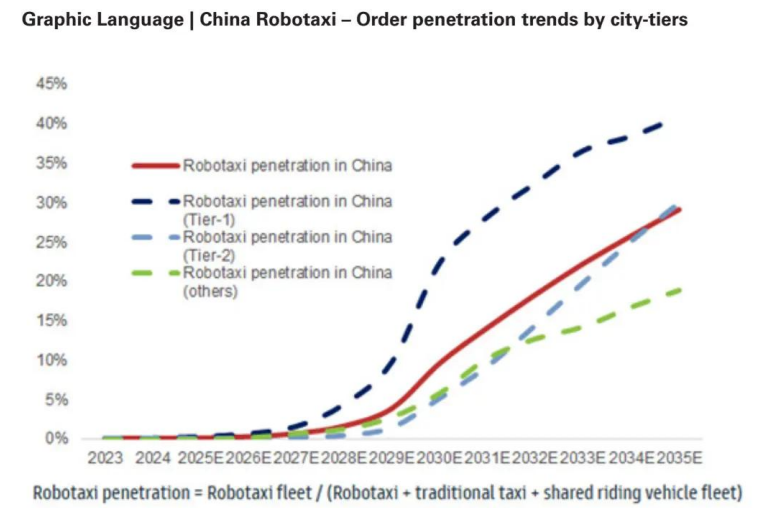
Economic Overview - China's GDP growth in Q2 was 5.2%, slightly above market consensus, with mixed economic activity data in June [1] - The average GDP growth for the first half of the year was 5.3%, leading to an upward adjustment of GDP growth forecasts for 2025/26 to 4.7% and 3.9% respectively [1] Focus Stocks - Didi received a "Buy" rating, with expectations of strong growth in its mobility business and advancements in autonomous driving, projecting a 12-month target price of $7.20 [4] - Anta's retail sales for 2025 are expected to align with forecasts, with a positive outlook for the second half of the year, maintaining a target price of HKD 117 [11] - MakeMy Trip is viewed as an attractive buy opportunity, with expectations of over 20% revenue growth starting in September, and a target price of $123 [12] - JD Health is favored over Alibaba Health due to higher sales growth trends and a target price of HKD 45.80, with a focus on its capital allocation strategy [13] Industry Focus - The market size for China's autonomous taxi sector is projected to reach $14 billion by 2030 and $61 billion by 2035, reflecting a 20% and 31% increase from previous estimates [5] - Improvements in chip supply are expected to positively impact China's cloud computing and data center sectors, with a cautious outlook on capital expenditures for 2025 [8]


每日投资策略-20250717
Zhao Yin Guo Ji· 2025-07-17 05:40
Industry Insights - The Chinese fiscal and tax digitalization industry is experiencing growth driven by both government and enterprise initiatives, with the implementation of the fourth phase of the Golden Tax Project expected to connect approximately 300,000 medium and large enterprises to the tax bureau's direct connection system, leading to continuous industry expansion [3] - The market size for digitalized fiscal and tax-related transactions is projected to grow from 5.1 billion RMB in 2019 to 34.3 billion RMB by 2028, representing a CAGR of 36.5% from 2023 to 2028, significantly higher than the 9.2% CAGR from 2019 to 2023 [3] - The report highlights the potential for leading service providers to increase market share as the fourth phase of the Golden Tax Project accelerates in 2024, with Baiwang Co., Ltd. positioned as a leader in the industry [3] Company Analysis - Tongcheng Travel (780 HK) is expected to achieve revenue of 4.6 billion RMB in Q2 2025, a year-on-year increase of 9.3%, with non-GAAP net profit projected at 738 million RMB, up 12.4%, aligning with previous forecasts and Bloomberg consensus [4][5] - Anta (2020 HK) has seen retail growth in July 2025 improve compared to Q2, although the brand's performance remains below expectations, with management maintaining a high single-digit growth target for FY25 despite potential short-term impacts from business reforms [6][7] - The company anticipates a controlled cost environment in FY25, aided by reasonable advertising and marketing expenditures, as well as increased bargaining power in rental negotiations due to rising vacancy rates [6] - Shengyi Technology (600183 CH) expects a net profit increase of 50%-56% to 1.4-1.45 billion RMB in H1 2025, driven by strong sales of copper-clad laminate products and PCB sales, which are projected to grow by 85%-97% year-on-year [9] - Zhongji Xuchuang (300308 CH) forecasts a net profit of 3.6-4.4 billion RMB for H1 2025, reflecting a year-on-year growth of 53%-87%, supported by strong demand for AI infrastructure and improved product mix [10]


皮革、制鞋业标准化建设迈入系统集成、协同联动新阶段
Xiao Fei Ri Bao Wang· 2025-07-17 02:42
Core Viewpoint - The meeting held by the China Light Industry Federation aims to enhance the standardization work in the light industry, focusing on high-quality development and the establishment of a new quality standard system, while summarizing the achievements and challenges faced during the 14th Five-Year Plan period [1][2]. Group 1: Achievements in Standardization - The leather and footwear industry standardization committees (皮标委 and 鞋标委) have made significant progress by establishing a comprehensive management system and enhancing the professional capabilities of their members through training and collaboration [2][3]. - A full-process verification mechanism has been developed, integrating various testing laboratories to support the implementation of new standards, ensuring their scientific validity and applicability [3][4]. Group 2: Project Management and Standard Development - The committees focus on industry dynamics and technical bottlenecks, ensuring that standard projects are relevant and feasible through various feedback mechanisms [3][4]. - A dual-review mechanism has been implemented for standard assessments, enhancing the quality and authority of the standards developed [3][4]. Group 3: Standardization and Sustainability - The committees have actively promoted group standards that respond to green and intelligent industry trends, filling technical gaps and providing clear pathways for carbon accounting and product sustainability [4][5]. - International cooperation has been strengthened, with efforts to align domestic standards with international ones, enhancing China's influence in global standardization [4][5]. Group 4: Future Directions - The committees plan to enhance the management of standards throughout their lifecycle, focusing on high-end manufacturing, digital transformation, and green development [6]. - A more open, scientific, and internationally influential standard system is being established, which will empower the high-quality development of the leather and footwear industry [6].
中泰国际每日晨讯-20250717
ZHONGTAI INTERNATIONAL SECURITIES· 2025-07-17 02:22
Market Overview - On July 16, the Hang Seng Index fell by 72 points or 0.3%, closing at 24,517 points, while the Hang Seng Tech Index decreased by 0.2% to 5,418 points[1] - The total market turnover reached HKD 259 billion, indicating active trading, with a net inflow of HKD 1.6 billion through the Hong Kong Stock Connect[1] Sector Performance - Funds are shifting towards previously lagging sectors such as technology, robotics, software, telecommunications, and food and beverage[1] - Pharmaceutical stocks like Lijun Pharmaceutical (1513 HK), Fosun Pharma (2196 HK), and Weigao Group (1066 HK) saw gains between 5.6% and 13.1%[1] - High-end manufacturing stocks such as Sanhua Intelligent Control (2050 HK) surged by 8.4%, while related AI and robotics manufacturing stocks rose by 3.9% to 6.4%[1] Global Financial Trends - The US dollar index and the 10-year US Treasury yield have been gradually rising since July, potentially impacting liquidity in the Hong Kong market[2] - The forecasted PE ratio for the Hang Seng Tech Index is 15.6 times, close to historical lows, with its valuation relative to the NASDAQ 100 at the 23.3% percentile over the past three years[2] Company Highlights - Pop Mart (9992 HK) expects a revenue increase of no less than 200% and a net profit growth of at least 350% for the first half of the year, but its stock fell by 4.0% post-announcement due to profit-taking[3] - 361 Degrees (1361 HK) anticipates double-digit revenue growth for the first half of the year, with a year-to-date increase of 19.1%[3] Healthcare Sector Developments - The Hang Seng Healthcare Index rose by 0.8%, with China Biologic Products (1177 HK) announcing a USD 500 million acquisition of a new drug company, which is expected to drive revenue growth[4] - Green Leaf Pharmaceutical (2186 HK) shares increased by 9.4%, driven by expectations of overseas licensing agreements[4] Renewable Energy and Utilities - The renewable energy and utilities sector saw a general decline, except for Winsun Holdings (3393 HK), which rose by 3.6% and has increased by 28.7% since coverage began in June[5]
交银国际每日晨报-20250717
BOCOM International· 2025-07-17 01:19
Group 1: Anta Sports Products (2020 HK) - The second quarter revenue met expectations, with management reaffirming the annual guidance for 2025, indicating low single-digit, mid single-digit, and 50-55% year-on-year revenue growth for Anta, FILA, and other brands respectively [3] - Despite intense industry competition, management maintains growth guidance for all brands, expecting high single-digit, mid single-digit, and over 30% year-on-year growth for Anta, FILA, and other brands respectively [3] - The forecast for net profit from 2025 to 2027 is projected to be between RMB 13.41 billion and RMB 16.54 billion, with a target price of HKD 110.20 based on a 20x P/E ratio for 2026, maintaining a buy rating [3][4] Group 2: Junda Co., Ltd. (002865 CH) - The company expects a loss of RMB 0.94 billion to RMB 1.94 billion in Q2 2025, which is an increase from the loss of RMB 1.06 billion in Q1 2025, primarily due to a decline in battery prices following a surge in installations in mainland China [5] - Junda has signed a strategic cooperation agreement with Turkey and Europe's largest photovoltaic module manufacturer to jointly build a solar cell production base with a capacity of up to 5GW [5] - The outlook remains positive for the company, anticipating a turnaround in performance in 2026 driven by the commencement of production in Oman and supply-side reforms [5] Group 3: E-commerce Industry - In Q2 2025, adjusted year-on-year growth for physical e-commerce retail sales was 6.3%, with categories like home appliances and cosmetics experiencing a decline in growth [7] - E-commerce platforms are increasing investments in instant retail to drive cross-selling with traditional shelf e-commerce, enhancing user engagement [7] - Major players like Alibaba and JD.com are expected to maintain double-digit year-on-year growth, although profitability may be pressured due to increased investments in flash sales and delivery services [8] Group 4: Economic Data Insights - The consumer price index for June is expected to show a month-on-month increase of 0.30% in both the US and China, with the previous data being 0.10% [9] - The industrial product factory price index is anticipated to rise by 0.20% year-on-year in the US for June [9]

户外新消费机会挖掘
2025-07-16 15:25
Summary of Key Points from Conference Call Records Industry Overview - The outdoor apparel industry in China is currently a market worth over 100 billion, while the international market reaches a scale of 1 trillion. The annual growth rate of the industry is between 10% to 15%, with some optimistic forecasts reaching 20% [2][12]. Company Performance - Amazon's brands in China are performing strongly, with projected sales of over 5 billion USD for the year 2024. The Chinese market accounts for over 30% of global sales, and if overseas purchases by Chinese consumers are included, it represents 50% of the group's sales [1][4]. - Arc'teryx holds a market share of 60% to 70%, while Salomon and Wilson each account for around 40% [4]. Marketing Strategies and Channels - The outdoor apparel industry primarily utilizes three marketing channels: e-commerce, direct retail, and wholesale. Amazon relies heavily on retail and wholesale, but the DTC model is gaining importance [5]. - Brands are adopting a strategy of closing smaller stores while opening larger ones, aiming for luxury and high-end positioning [5]. Competitive Landscape - The competition in the domestic outdoor apparel market is intense, with brands needing to shift from pure outdoor categories to more fashionable offerings. Emerging brands like Boshihe are gaining traction in the mid-to-low-end market [2][12]. - Salomon is aggressively expanding its flagship stores in first- and second-tier cities, contrasting with Arc'teryx's focus on enhancing single-store efficiency and high-end positioning [6][11]. Supply Chain Advantages - Supply chain barriers are crucial for competitive advantage. Arc'teryx's long-term partnership with Gore-Tex provides it with priority access to the latest products, while Salomon reduces costs through outsourcing production [9][10]. - The integration of resources within Anta Group helps optimize operations for both Arc'teryx and Salomon [10]. Future Growth and Strategies - Arc'teryx aims for a doubling of growth by 2030, transitioning to a normal growth state post-2025. Salomon, while growing rapidly, faces higher risks [3][27]. - Wilson's rapid rise is attributed to the surge in tennis popularity, with plans to open over 10 stores by 2025 or 2026 [8][7]. Market Dynamics - The market is increasingly segmented, with the top 50% dominated by large brands and the remaining 20% to 30% occupied by numerous small emerging brands, which have the potential to be absorbed by faster-growing brands [20]. - The North American market shows a strong growth in DTC channels, although hotel channels remain the primary driver in absolute terms [30]. Conclusion - The outdoor apparel industry in China is poised for significant growth, driven by strong brand performances, strategic marketing shifts, and competitive supply chain advantages. Brands must adapt to changing consumer preferences and market dynamics to maintain and enhance their market positions [12][25].
安踏体育(02020):安踏(2020HK)
BOCOM International· 2025-07-16 09:32
Investment Rating - The report assigns a "Buy" rating for the company, Anta (2020 HK), with a target price of HKD 110.20, indicating a potential upside of 22.7% from the current price of HKD 89.80 [1][2][15]. Core Insights - The company's second-quarter revenue met expectations, with management reaffirming the annual guidance for growth across its brands, despite a competitive industry landscape. The expected revenue growth for Anta, FILA, and other brands is high single digits, mid single digits, and over 30% respectively [6][7]. - The report maintains revenue forecasts for the next three years but slightly lowers profit margin expectations due to industry discount pressures. Projected net profits for 2025-2027 are estimated to be between RMB 134.1 billion and RMB 165.4 billion [6][7]. - Anta's brand sales momentum has slightly slowed, but improvements in online channels are anticipated in the second half of the year. The company is optimizing its offline store strategy and expects to maintain high single-digit growth for the Anta brand [6][7]. Financial Overview - Revenue projections for the company are as follows: RMB 62,356 million in 2023, RMB 70,826 million in 2024, RMB 77,140 million in 2025, RMB 83,936 million in 2026, and RMB 90,550 million in 2027, with year-on-year growth rates of 16.2%, 13.6%, 8.9%, 8.8%, and 7.9% respectively [5][8][16]. - The net profit forecast for the same years is RMB 10,236 million in 2023, RMB 15,596 million in 2024, RMB 13,410 million in 2025, RMB 15,021 million in 2026, and RMB 16,543 million in 2027, with corresponding growth rates of 30.8%, 50.3%, -14.0%, 12.4%, and 10.1% [5][8][16]. - The report highlights a projected decline in profit margins, with gross profit margins expected to be 62.0% in 2025, 62.1% in 2026, and 62.2% in 2027 [7][17]. Brand Performance - Anta's brand recorded low single-digit revenue growth in the second quarter, while FILA achieved mid single-digit growth. Other brands like Descente and KOLON saw high growth rates of over 40% and 70% respectively [6][7]. - The inventory turnover ratio for FILA improved to five months, and the company strategically increased discounts in the e-commerce channel to optimize inventory [6][7].

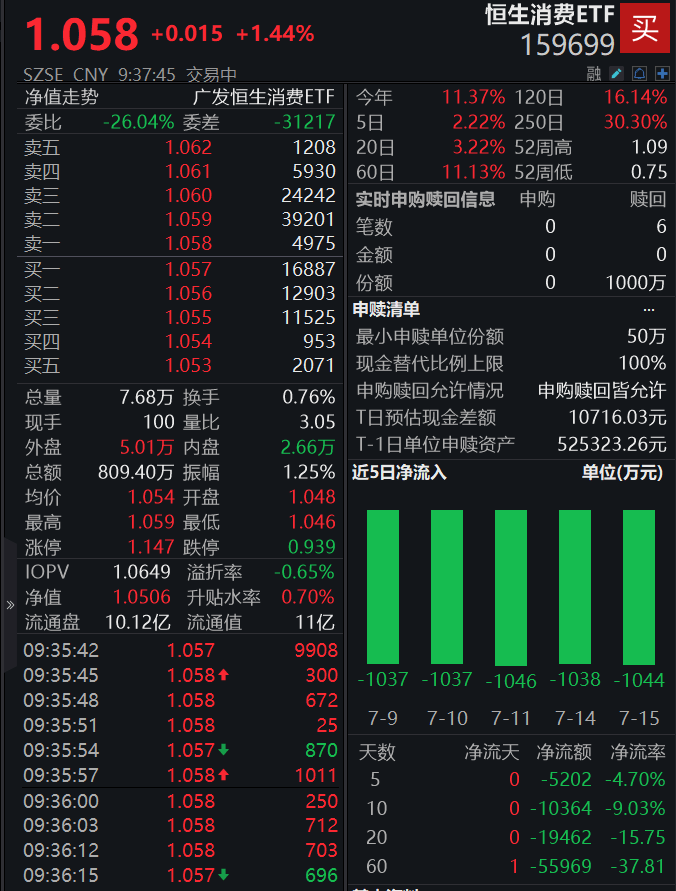
恒生消费ETF(159699)开盘涨超1%,冲击5连阳!成份股泡泡玛特上半年溢利预增超350%
Sou Hu Cai Jing· 2025-07-16 02:01
Group 1 - The core viewpoint of the article highlights that Pop Mart's revenue is expected to grow by no less than 200% year-on-year for the first half of 2025, with profit growth projected at no less than 350% [1] - In the first half of 2024, Pop Mart achieved revenue of 4.558 billion yuan, indicating that the revenue for the first half of 2025 could exceed 13.5 billion yuan, surpassing its total revenue for 2024 [1] - The company attributes its performance fluctuations to three main factors: increased global brand recognition, a rising proportion of overseas revenue, and continuous optimization of product costs and expense management [1] Group 2 - The article notes that the Hang Seng Consumption ETF (159699) opened higher by over 1% on July 16, with a two-week increase ranking first among comparable funds [1] - The liquidity of the Hang Seng Consumption ETF is highlighted, with an average daily transaction volume of 111 million yuan over the past year, also ranking first among comparable funds [1] Group 3 - The article discusses the diversification of Pop Mart's business model, including innovations in commercial monetization through jewelry, theme parks, and animation, which enhances its profitability channels [3] - The emotional and experiential consumption sectors are accelerating, with IP toys representing a significant market segment driven by evolving consumer psychological needs [4] - The Hang Seng Consumption ETF is positioned to benefit from new consumption stimulus policies and supports T+0 trading, focusing on four major sectors: food and beverages, textiles and apparel, home appliances, and leisure facilities [5][6]