嘉能可

Search documents
国泰君安期货商品研究晨报-20251222
Guo Tai Jun An Qi Huo· 2025-12-22 01:40
1. Report Industry Investment Ratings The document does not provide industry investment ratings. 2. Core Views of the Report - The report provides daily research and analysis of various futures commodities, including precious metals, base metals, energy, chemicals, and agricultural products, and gives corresponding trend forecasts and trading suggestions [2]. 3. Summary by Related Catalogs Precious Metals - **Gold**: Inflation is moderately declining, with a trend strength of 0 [2][5][7]. - **Silver**: Reached a new high, with a trend strength of 0 [2][5][7]. - **Platinum**: ETF holdings increased marginally, and the price center shifted upward, with a trend strength of 1 [25][27]. - **Palladium**: After a slight retreat, it resumed its upward momentum, with a trend strength of 1 [25][27]. Base Metals - **Copper**: Spot weakness restricts price increases, with a trend strength of 0 [2][9][11]. - **Zinc**: Trading in a sideways range, with a trend strength of 0 [2][12][14]. - **Lead**: Reduced inventory supports the price, with a trend strength of 0 [2][15]. - **Tin**: Supply is disrupted again, with a trend strength of 1 [2][17][21]. - **Aluminum**: Trading within a range, with a trend strength of 1; Alumina is continuing to bottom out, with a trend strength of -1; Cast aluminum alloy follows electrolytic aluminum, with a trend strength of 0 [22][24]. - **Nickel**: The fundamental contradictions have not changed significantly, and concerns about Indonesian policies have increased, with a trend strength of 0; Stainless steel has weak supply - demand fundamentals and is affected by Indonesian nickel ore news, with a trend strength of 0 [29][33]. Energy and Chemicals - **Industrial Silicon**: The strategy is mainly to short on rallies, with a trend strength of -1 [2][37][40]. - **Polysilicon**: Trading within a range, with a trend strength of 0 [2][38][40]. - **Iron Ore**: Macro risk appetite has been boosted again, and it is trading at a high level in a volatile range, with a trend strength of 0 [2][42][43]. - **Rebar and Hot - Rolled Coil**: Macro sentiment and fundamentals resonate, and prices are firm, with a trend strength of 0 for both [2][45][47]. - **Silicon Ferrosilicon**: The sector and fundamentals resonate, and the trend is oscillating strongly, with a trend strength of 0; Manganese silicon has a game between long and short sentiments, with a trend strength of 0 [2][49][51]. - **Coke and Coking Coal**: Trading in a wide - range oscillation, with a trend strength of 0 for both [2][52][55]. - **Log**: Trading at a low level in a volatile range, with a trend strength of 0 [2][57][60]. - **Para - Xylene**: The trend is relatively strong, with a trend strength of 1; PTA is strongly supported by cost, with a trend strength of 1; MEG is trading within a range, with a trend strength of 0 [2][61][65]. - **Rubber**: Trading in a wide - range oscillation, with a trend strength of 0 [2][68][69]. - **Synthetic Rubber**: Gradually entering an oscillating pattern, with a trend strength of 0 [2][73][75]. - **Asphalt**: Trading at a low level in a volatile range, and geopolitical factors should be monitored, with a trend strength of 0 [2][76][83]. - **LLDPE**: Some full - density products are switched in production, and valuation support is limited, with a trend strength of 0 [2][87][88]. - **PP**: PDH profit has recovered month - on - month, and the trend is weakly oscillating, with a trend strength of 0 [2][89][91]. - **Caustic Soda**: There is still pressure in the later stage, with a trend strength of 0 [2][92][95]. - **Pulp**: Oscillating strongly, with a trend strength of 1 [2][97][99]. - **Glass**: The price of the original sheet is stable, with a trend strength of 0 [2][108][109]. - **Methanol**: Oscillating with support, with a trend strength of 0 [2][111][114]. - **Urea**: Trading in an oscillating pattern, with a trend strength of 0 [2][115][118]. - **Styrene**: Oscillating in the short term, with a trend strength of - 1 [2][119]. - **Soda Ash**: The spot market has little change, with a trend strength of 0 [2][124][125]. - **LPG**: The short - term trend is weak, with a trend strength of - 1; Propylene has an expectation of supply reduction and demand increase, and the short - term trend has support, with a trend strength of 0 [2][127][131]. - **PVC**: The trend is weak, with a trend strength of - 1 [2][135][136]. - **Fuel Oil**: Mainly trading in an oscillating pattern, with support at the bottom, with a trend strength of 0; Low - sulfur fuel oil was strong at night, and the spot price spread between high - and low - sulfur fuel oil rebounded slightly, with a trend strength of 0 [2][138]. Agricultural Products - **Palm Oil**: May rebound in the short term, but overall it is oscillating and bottom - seeking, with a trend strength of 0; Soybean oil is weakly running, and it is difficult to stabilize, with a trend strength of 0 [2][166][167][171]. - **Soybean Meal**: Overnight, US soybeans slightly declined, and Dalian soybean meal may oscillate at a low level, with a trend strength of 0; Soybean No.1 is oscillating, with a trend strength of 0 [2][172][174]. - **Corn**: Attention should be paid to the spot market, with a trend strength of 0 [2][175][178]. - **Cotton**: The futures price is oscillating strongly, while the spot trading is light, with a trend strength of 0 [2][179][184]. - **Eggs**: Oscillating and adjusting, with a trend strength of 0 [2][186]. - **Hogs**: The weakness of the spot market is emerging, with a trend strength of - 1 [2][188][193]. - **Peanuts**: Attention should be paid to the purchases of oil mills, with a trend strength of 0 [2][195][197]. Shipping - **Container Freight Index (European Line)**: Pay attention to the delivery opportunities for the 02 contract, maintain rolling short - selling for the 04 contract, and focus on the progress of the peace talks in Gaza for the far - month contracts, with a trend strength of 0 [2][140][155]. Fibers - **Short - Cut Fiber**: Following the raw materials in the short term, with processing fees being compressed, with a trend strength of 0; Bottle chips are following the raw materials in the short term, with a trend strength of 0 [2][156][157]. Paper - **Offset Printing Paper**: The strategy is to wait and see, with a trend strength of 0 [2][159]. Aromatics - **Pure Benzene**: Oscillating mainly in the short term, with a trend strength of 0 [2][163][164].
南华期货有色金属锌2026年度展望:外援破局,韧性重估
Nan Hua Qi Huo· 2025-12-21 12:25
Report Industry Investment Rating - Not provided in the content Core Viewpoints of the Report - The zinc price will maintain a wide - range oscillation throughout 2026. The price will be relatively strong in the first half of the year due to the structural shortage of domestic raw materials, and the center of gravity may move slightly downward in the second half as the incremental supply is fully transmitted to zinc ingots [1]. - The global zinc mine is entering an expansion cycle (with an expected increase of 290,000 tons), but the domestic market will still be in a tight - balance state in the first half of the year. Driven by the repair of TC, the smelting output will show a trend of "first decreasing and then increasing", with an expected year - on - year growth of over 4.5% for the whole year, and the supply pressure will gradually shift from the mine end to the ingot end [1]. - Although affected by the real estate industry, at the beginning of the "15th Five - Year Plan", infrastructure (UHV, wind power) and high - end manufacturing (new energy vehicle exports) will significantly increase the zinc consumption density, effectively offsetting the decline in real estate. The actual consumption is expected to maintain positive growth and achieve a soft landing [1]. - The core fluctuation range of the SHFE Shanghai zinc main contract in 2026 is predicted to be between 21,500 - 24,800 yuan/ton, and the LME zinc will fluctuate between 2,750 - 3,350 US dollars/ton. In the first half of the year, the domestic market will be stronger than the overseas market, and the price is likely to rise. In the second half, with the arrival of imported ores, the increase in TC will drive smelters to release production. Coupled with the potential drag from the real estate completion end, supply - demand pressure will gradually emerge, and the price center of gravity may decline under pressure [1]. Summary by Relevant Catalog Chapter 2: Market Review - In the first three quarters of 2025, zinc prices fluctuated widely due to repeated macro - expectations and mismatches in industrial supply - demand rhythms. In Q1, the shortage of mines supported the price increase. In Q2, trade frictions and the strong US dollar led to a significant price correction. In Q3, the supply - demand mismatch between domestic and overseas markets led to a resistance - style upward trend with the overseas market stronger than the domestic one [3]. - In Q4, the structural contradiction in the global zinc market reached an extreme. The market shifted from unilateral gambling to cross - market arbitrage. The large gap between domestic and overseas inventories opened the export profit window for Chinese zinc ingots. The export - driven marginal inventory reduction became the core variable affecting price fluctuations, and the market established a pattern of re - balance through exports [5]. Chapter 3: Supply Side 3.1 Zinc Concentrate - In 2025, global zinc mine supply recovered. The annual output is expected to reach 12.51 million tons, a year - on - year increase of 4.6%. In 2026, the output is expected to continue to grow by 2.27% to 12.61 million tons [12]. - Overseas mine production is growing steadily, driven by the resumption of old capacities and the ramping - up of new mines. Key mining enterprises such as Glencore, Ivanhoe Mines, and Teck Resources have good production performance. In 2026, the global new zinc mine increment is about 290,000 tons, and the market will be in a tight - balance state [14][15]. - The overall cost center of global zinc mines has shifted upward. The 90 - percentile line (about $2,400 - $2,550/ton) is considered a long - term "price bottom". If the zinc price falls below this line, about 10% of high - cost mines will face cash - flow losses and trigger passive production cuts [17]. - In 2025, domestic zinc concentrate supply was sufficient in general, but production was affected by environmental and safety inspections at the end of the year. In 2026, new and resumed projects are expected to contribute about 60,000 tons of output (excluding Huoshaoyun). The Huoshaoyun lead - zinc mine needs attention regarding the commissioning of supporting smelters [22]. 3.2 Smelting End - From 2024 to the first half of 2025, the global zinc smelting industry was in a difficult situation due to the extreme shortage of mine supply. In the second half of 2025, with the supplement of imported ores and the increase in TC, domestic smelters' production willingness was positive. The cumulative zinc ingot output from January to October was 5.686 million tons, a year - on - year increase of 10.1%, and the annual output is expected to be 5.9 million tons, a year - on - year increase of 11.5% [35]. - In 2026, the long - term benchmark TC is expected to rise significantly. Domestic smelting capacity can be released with high elasticity, but the supply pressure is expected to be less than that in 2025 [35]. - For overseas smelters, high and volatile energy costs in Europe are a major risk. Other regions such as South Korea, Japan, and Canada are expected to maintain high and stable operating rates. Globally, the refined zinc output is expected to grow by 3% to 14.12 million tons in 2026, indicating a gradual entry into the inventory accumulation cycle [38]. 3.3 Import and Export and Internal - External Price Ratio - In 2025, the zinc import window was mostly in a deep - loss state, especially in the second half of the year. From January to October, China's cumulative refined zinc imports were 2.77 million tons, a year - on - year decrease of 26.6%. The reason is the difference in the fundamentals of domestic and overseas markets, with overseas smelters having difficulty in restoring production due to high costs [39]. - In the future, the repair of the price ratio may be a prerequisite for the reversal of TC. With the increase in overseas mine supply and the resumption of smelter production, the shortage of LME zinc will be alleviated, the premium will decline, the price structure will turn to Contango, and the SHFE - LME price ratio will rise, narrowing the import loss [40][41]. Chapter 4: Demand Side - In 2026, China's refined zinc consumption is expected to show a slight increase of 0.5% - 1.5%, and the demand side is expected to be more resilient than the market's concerns about the drag from the real estate industry, achieving a soft landing [43]. 4.1 Real Estate - In 2025, real estate indicators such as new construction, construction, and completion areas all declined. In 2026, the real estate market will continue to drag down the zinc market. The new construction area is expected to maintain a negative growth of - 10% to - 15%, and the decline in the completion area is expected to narrow significantly to about - 10%. The direct drag on zinc consumption is expected to be about - 2.3% to - 2.7% [47][48]. 4.2 Infrastructure - In 2026, infrastructure investment will benefit from the "15th Five - Year Plan" and is expected to maintain a year - on - year growth of 6.8%. UHV grid construction will be a major highlight, and the demand for high - quality hot - dip galvanized pipes will increase significantly, making the infrastructure sector a key factor in stabilizing the demand base [50]. 4.3 Automobile - In 2025, the Chinese automobile market grew strongly, especially in terms of exports and new energy vehicle penetration. In 2026, although the new energy vehicle purchase tax will be reduced from full exemption to half exemption, the decline in battery costs and price competition among car companies will offset the impact of the policy. The output of new energy vehicles is expected to grow by 22.0%. The high - growth of automobile exports will reshape the zinc consumption structure, as export - oriented vehicles have a higher demand for zinc [52][53][54]. 4.4 Home Appliances - In 2026, the home appliance sector is expected to show a stable growth in zinc consumption, with an expected growth rate of 2.5% - 3.0%. This is mainly due to policy - driven replacement demand, the lagging dividend of real - estate completion, and the increasing demand for anti - corrosion materials in emerging markets [59][60]. 4.5 Photovoltaic and Emerging Fields - In 2026, although the growth rate of new photovoltaic installations is expected to decline to 18.0%, the absolute increment is still high. The penetration rate of Zn - Al - Mg alloy - coated brackets will further increase, and the expansion of application scenarios will ensure that the photovoltaic sector continues to contribute to zinc consumption [69]. 4.6 Downstream High - Frequency Demand Indicators - Various downstream high - frequency demand indicators such as galvanized sheet coil inventory, production, and zinc downstream consumption index show certain seasonal trends, which reflect the real - time demand situation in the zinc market [75][77]. 4.7 Inventory - In the first half of 2025, the inventory was at a historical low, and in the second half, the social inventory began to accumulate, but the accumulation rate was lower than expected. This is mainly due to stronger - than - expected demand, the integration of zinc alloy smelting capacity, and the opening of the export window. In 2026, factors affecting inventory include the recovery of the internal - external price ratio and the increase in overseas smelter production due to the rise in TC [79]. Chapter 5: Supply - Demand Balance Sheet 5.1 Global Zinc Concentrate Balance - In 2026, the global zinc concentrate supply is expected to be 12.6094 million tons, a year - on - year increase of 2.27%, and the demand is expected to be 12.6342 million tons, a year - on - year increase of 2.59%. The market will be in a tight - balance state [81]. 5.2 Global Refined Zinc Balance - In 2026, the global refined zinc output is expected to be 14.1215 million tons, a year - on - year increase of 3.01%, and the consumption is expected to be 13.9837 million tons, a year - on - year increase of 1.49%. The market will turn from a shortage to a surplus [82]. 5.3 China's Refined Zinc Balance - In 2026, China's refined zinc output is expected to be 7.172 million tons, a year - on - year increase of 4.55%. The net import is expected to decrease by 100%. The apparent consumption is expected to be 7.172 million tons, a year - on - year increase of 0.84%, and the actual consumption is expected to be 7.07 million tons, a year - on - year increase of 1.00%. The supply - demand surplus is expected to decrease by 8.92% [83].
X @Bloomberg
Bloomberg· 2025-12-19 12:35
Company Strategy - Kazzinc (哈萨克矿业公司,由 Glencore 控股) 将向竞争对手开放金属销售 [1] Industry Trend - 各国政府寻求加强对自然资源的控制和增加收入 [1]

2026年锌期货年度行情展望:预期分化,把握确定性
Guo Tai Jun An Qi Huo· 2025-12-19 10:05
1. Report Industry Investment Rating - Not provided in the content 2. Core Viewpoints of the Report - In 2026, zinc prices may decline first and then rise. Pay attention to the start of the resonance of internal and external restocking under the reversal of expectations. The supply - side contradiction will continue to dominate the price, and the expansion of consumption space determines the upper limit of the price. [2][107] - The zinc ore market is approaching the end of the expansion cycle, and production disturbances are increasing. The incremental space of zinc ore is relatively limited, and the tight balance of zinc ore may become the norm, which means continuous pressure on TC. The upward space of TC in 2026 may be lower than that in 2025, and zinc prices have the elasticity to rise. [2][107] - The annual operating range of LME zinc is expected to be $2800 - 3400 per ton, and that of SHFE zinc is expected to be 21,000 - 25,000 yuan per ton. [2][107] 3. Summary According to Relevant Catalogs 3.1 2025 Review - In 2025, the market had a consistent expectation of zinc element surplus. At the beginning of the year, due to winter stockpiling and mine production increase expectations, processing fees rose, leading to an increase in smelter production expectations and a decline in zinc prices. In February - March, zinc prices fluctuated narrowly due to weak supply - demand. [8] - In the second quarter, zinc prices fell again due to unexpected US tariffs. After mid - April, prices gradually returned to fundamental pricing, and downstream buying interest was stimulated. In May, domestic smelter overhauls followed one after another, and prices were in a tangled consolidation. [9] - In the third quarter, global zinc ore production increased, and domestic refined zinc production continued to expand. However, the restart of the Fed's interest - rate cut and domestic economic policies provided support for zinc prices, which entered a sideways shock. Overseas smelters had difficulties in increasing production, and LME inventories continued to decline. [9] - In the fourth quarter, the refined zinc export window opened, but the actual export volume was lower than expected. The structural risk of overseas inventories still existed, and the price of LME zinc was relatively strong. At the same time, the shortage of ore supply increased, and TC accelerated downward, compressing smelter profits. [10][11] 3.2 Zinc Ore Incremental Space is Limited, and Tight Balance May Become the Main Theme 3.2.1 Zinc ore expansion is coming to an end, and production disturbances are increasing, resulting in limited incremental space for zinc ore - The zinc ore industry is in the stage of defensive capital expenditure, and the incremental scale of new zinc ore production has significantly narrowed compared with the past. Overseas zinc - mining enterprises have a weak willingness to make capital expenditures. [15] - Although the current LME zinc price can cover the profits of 99% of global mines, the low CAPEX in the past decade restricts the increase of zinc ore production, and the global ore production is sensitive to marginal disturbances. [17] - In 2025, global zinc ore production may increase by 500,000 tons, lower than the initial expectation. In 2026, it may increase by 400,000 tons, with limited incremental projects and structural differentiation. [22][23] 3.2.2 There is room for domestic zinc ore production increase, and the Huoshaoyun project is an additional variable - The Huoshaoyun project has uncertainties in production increase. Its ore is difficult to process, and the impact of the mine on the market is relatively limited. The production increase progress of its smelter is the key. [28] - Without considering the Huoshaoyun project, the actual new and restarted production capacity in 2025 may be about 50,000 tons, and the domestic mine increment may be the same as the previous year. Considering the project, there may be an increment of 30,000 - 50,000 tons in 2025 and 100,000 tons in 2026. [28] - In 2025, the cumulative import of zinc concentrates from January to October was 4.3489 million tons, a year - on - year increase of 36.59%. In the second half of the year, the import window closed, but in the fourth quarter, the import volume may have a certain recovery. [31] - Russia, Peru, and Australia are the main sources of domestic zinc ore imports. In 2026, the Ozernoye mine in Russia may contribute an increment of 100,000 tons, and Iranian mines may also have some incremental releases. [32] 3.2.3 Domestic zinc smelting capacity is continuously in surplus, and the gap between zinc ore production and demand is prominent - From January to November 2025, the cumulative production of refined zinc was 6.2815 million tons, a year - on - year increase of 10.69%. The annual output is expected to be 6.84 million tons, a year - on - year increase of 650,000 tons. [42] - In 2025, the expansion of zinc smelting capacity continued, with an expected incremental capacity of 430,000 tons. In 2026, there will still be some smelting capacity put into production, but the capacity utilization rate depends on smelting profits. [42] - Currently, the capacity utilization rate of refined zinc is declining, and low TC seriously erodes smelter profits, resulting in large - scale overhaul and production cuts. In 2026, the production of domestic smelters may increase, but the profit space of the smelting end may be further compressed. [42] 3.2.4 There is pressure on the increase of TC Benchmark, and the复产 space of overseas smelters is small - The market has different expectations for the increase of BM in 2026. It is expected that the BM in 2026 may be set at $80 - 100, and in a pessimistic scenario, it may remain at $80. [50] - European smelters' production remains stable, mainly depending on their own electricity prices. Asian smelters have a low cost and a willingness to resume production, but the expected BM may not provide good incentives for overseas smelters to resume production. [57][59] 3.3 In the First Year of the 15th Five - Year Plan, There is Room for Expansion in Domestic Consumption, and Overseas Consumption Continues to Recover 3.3.1 Fiscal policy supports domestic consumption, durable consumer goods have a weak recovery, and pay attention to the structural increment of UHV and ships - In 2025, fiscal policy increased its support for consumption, with the proportion of people's livelihood - related fiscal expenditures increasing. The issuance of local bonds was stable, but the funds flowing into infrastructure were squeezed to some extent. [72] - In 2025, fiscal policy was pre - exerted, and the policy intensity was insufficient in the second half of the year. In 2026, it is expected that fiscal policy will continue to be strong, and the growth rate of infrastructure investment is expected to reach 3.6%. [78] - The real estate market is still in the stage of adjustment and bottom - building, and its drag on zinc consumption is weakening. It is expected that the real estate policy will be further relaxed in 2026, but the zinc consumption at the completion end may still be negative, with a growth rate of - 13.8%. [85] 3.3.2 Overseas consumption continues a weak recovery, and pay attention to the growth of emerging countries - The US inventory replenishment cycle stimulates demand. The Fed's interest - rate cut restarts, which stimulates enterprise investment and household consumption. The US real estate market may have a mild recovery in 2026, and the zinc consumption chain is expected to maintain an inertial growth rate. [92] - India's zinc consumption has increased rapidly. In the 2025/2026 fiscal year, India's infrastructure capital expenditure has reached a record high, which will continuously drive the demand for zinc consumption. [98] 3.4 Supply - Demand Balance - For the supply increment in 2026, attention should be paid to the structural differentiation of mine increments and the uncertainty of supply release. The Huoshaoyun project and the output of mines in Russia and Iran are uncertain factors affecting the balance sheet. [101][102] - In 2026, it is expected that policies will further boost consumption, and the consumption end still has room for expansion. The infrastructure industry is the key support for zinc consumption, and the real estate industry's drag on zinc consumption is weakening. [102] - Domestically, the supply growth rate slows down, consumption space is optimistic, and there is only a slight surplus of zinc ingots. Overseas, smelters have limited restarts, consumption continues to recover, and the overseas surplus may be higher than that in China. [103][104] 3.5 Conclusions and Outlook - In 2026, zinc prices may decline first and then rise. Pay attention to the resonance of internal and external restocking. The supply - side contradiction dominates the price, and consumption space determines the upper limit of the price. [106][107] - The investment outlook includes a long - only strategy on dips or buying call options for single - side trading; for term arbitrage, there are opportunities for positive term arbitrage in the Shanghai zinc market; for internal - external trading, there is still uncertainty, and phased internal - external reverse arbitrage can be carried out based on the idea of opening the domestic zinc ore import window. [3][108]
国泰君安期货商品研究晨报-20251219
Guo Tai Jun An Qi Huo· 2025-12-19 01:42
Report Industry Investment Ratings The report does not provide industry investment ratings. Core Views of the Report The report offers comprehensive analysis and forecasts for various commodities in the futures market, including precious metals, base metals, energy, chemicals, agricultural products, etc. It assesses the supply - demand situation, price trends, and influencing factors of each commodity, providing investors with reference for trading decisions [2][4]. Summary by Commodity Categories Precious Metals - **Gold**: Inflation is moderately declining, with a trend strength of 0. Gold prices are affected by factors such as inflation data and central bank policies [2][5]. - **Silver**: Adjusting at a high level, trend strength is 0. Silver prices are in a high - level adjustment phase [2][5]. - **Platinum**: ETFs are continuously flowing in, and prices are oscillating upwards, trend strength is 1 [2][28]. - **Palladium**: Successfully breaking through the previous high, with strong upward momentum, trend strength is 1 [2][28]. Base Metals - **Copper**: Both domestic and overseas inventories are decreasing, providing support for prices, trend strength is 0 [2][11]. - **Zinc**: Moving sideways in a range, trend strength is 0 [2][14]. - **Lead**: Inventory reduction is supporting prices, trend strength is 0 [2][17]. - **Tin**: Supply is facing new disruptions, trend strength is 1 [2][20]. - **Aluminum**: Oscillating within a range, trend strength is 0 [2][25]. - **Alumina**: Slightly declining, trend strength is 0 [2][25]. - **Cast Aluminum Alloy**: Following the trend of electrolytic aluminum, trend strength is 0 [2][25]. - **Nickel**: The surplus is undergoing a structural shift, and attention should be paid to Indonesian policy risks, trend strength is 0 [2][32]. - **Stainless Steel**: Supply and demand are both weak, and steel prices are oscillating at a low level, trend strength is 0 [2][32]. Energy and Chemicals - **Crude Oil - related**: The report does not directly cover crude oil, but some products are affected by it. For example, asphalt is in a low - level oscillation, trend strength is 0 [2][78]. - **PTA**: Cost support is relatively strong, with a 4500 - 4800 range operation suggested, trend strength is 1 [2][63][69]. - **MEG**: In a range - bound market, trend strength is 1 [2][63][69]. - **Rubber**: Widely oscillating, trend strength is 0 [2][70]. - **Synthetic Rubber**: The upward trend is slowing down, trend strength is 0 [2][74]. - **LLDPE**: Supply elasticity is limited, and valuation continues to be under pressure, trend strength is 0 [2][92]. - **PP**: Factory warehouse warrants are cancelled, and the market is moving sideways, trend strength is 0 [2][95]. - **Caustic Soda**: There will still be pressure in the later stage, trend strength is 0 [2][98]. - **Paper Pulp**: Widely oscillating, trend strength is 0 [2][101]. - **Glass**: The price of the original sheet is stable, trend strength is 0 [2][108]. - **Methanol**: Oscillating with support, trend strength is 0 [2][111]. - **Urea**: Oscillating with support, trend strength is 0 [2][115]. - **Soda Ash**: The spot market has little change, trend strength is 0 [2][119]. - **LPG**: Strong in the short - term but under pressure in the long - term, trend strength is 0 [2][123]. - **Propylene**: Narrowly adjusting in the short - term, trend strength is 0 [2][124]. - **PVC**: The rebound is difficult to sustain, trend strength is 0 [2][132]. - **Fuel Oil**: Consolidating in the short - term with support below, trend strength is 0 [2][135]. - **Low - Sulfur Fuel Oil**: Narrowly oscillating, with the spread between high - and low - sulfur in the overseas spot market narrowing, trend strength is 0 [2][136]. Agricultural Products - **Palm Oil**: May rebound in the short - term and is searching for a bottom while oscillating, trend strength is 0 [2][160]. - **Soybean Oil**: Weak performance of US soybeans, and it is difficult for soybean oil to stabilize, trend strength is 0 [2][160]. - **Soybean Meal**: Oscillating at a low level, trend strength is 0 [2][166]. - **Soybean**: Oscillating, trend strength is 0 [2][166]. - **Corn**: Attention should be paid to the spot market, trend strength is 0 [2][169]. - **Sugar**: Weakly operating, trend strength is - 1 [2][173]. - **Cotton**: Oscillating with an upward bias, attention should be paid to downstream demand, trend strength is 0 [2][69][178]. - **Eggs**: Maintaining an oscillating trend, trend strength is 0 [2][184]. - **Hogs**: The peak demand during the Winter Solstice has passed, trend strength is - 1 [2][186]. - **Peanuts**: Attention should be paid to oil mill purchases, trend strength is 0 [2][192]. Shipping - **Container Freight Index (European Line)**: In an oscillating market, trend strength is 0 [2][138]. Fibers - **Short Fiber**: Oscillating at a low level in the short - term and facing pressure in the medium - term, trend strength is 0 [2][148]. - **Bottle Chip**: Oscillating at a low level in the short - term and facing pressure in the medium - term, trend strength is 0 [2][148]. Paper - **Offset Printing Paper**: It is advisable to take a wait - and - see approach, trend strength is 0 [2][151]. Aromatics - **Pure Benzene**: Oscillating in the short - term, trend strength is 0 [2][156].
国泰君安期货所长早读-20251219
Guo Tai Jun An Qi Huo· 2025-12-19 01:37
所长 早读 国泰君安期货 2025-12-19 期 请务必阅读正文之后的免责条款部分 1 期货研究 期货研究 煤焦:煤焦上行高度在春节前我们认为更多的是表现为弱反弹,近期价格出现大幅上涨的原 因并不是基于自身基本面,反而是受到消息面的影响居多,就其延续性我们认为相对存疑。 从驱动角度来看,近期市场交易逻辑主要集中在以下几个环节去兑现:其一、临近交割多空 博弈的行情是再度上演;其二、市场再度提及对于煤炭反内卷的题材,年底本身煤矿在完成 全年生产任务之后产量向上修复高度有限,主焦煤的紧缺导致预期和现实再度共振,加大价 请务必阅读正文之后的免责条款部分 2 格的波动弹性;其三、后续进口煤有可能发生偏紧扰动。综上,基于基本面近期所呈现出的 供需双弱的格局,在冬储补库行情驱动较为有限的背景下,我们认为情绪端的影响将更容易 放大价格的波动弹性,前期 15 反套可以考虑陆续止盈离场。 提醒:关注指数最高为★★★★ 相关品种详细研报,见下方。 本期内容提供:研究所 主编: 林小春 2025-12-19 所长 早读 今 日 发 现 美国 11 月核心 CPI 同比创 2021 年以来最低水平,经济学家表示怀疑 观点分享: 周四 ...
铜价 结构性牛市可期
Qi Huo Ri Bao· 2025-12-19 00:57
Group 1 - The current copper prices have fully absorbed optimistic expectations, and potential technical adjustments may occur if the Federal Reserve slows down interest rate cuts, downstream demand weakens, or mine restarts exceed expectations [1][4] - Since Q4 2025, global copper prices have continuously reached historical highs, with the Shanghai copper futures surpassing 94,500 yuan/ton and LME copper prices hitting $12,000/ton, both showing an annual increase of over 30% [1] - The recent surge in copper prices is attributed to multiple factors, including supply bottlenecks, the release of financial attributes, and policy disturbances, rather than a single supply-demand imbalance [1][2] Group 2 - Global copper mine supply is facing systemic pressure, with a projected year-on-year decline of approximately 4.7% in 2025 due to incidents in major mines, leading to an expected supply gap of 150,000 to 300,000 tons [2] - The average grade of copper mines has decreased by 30% since 1990, and the average annual growth rate of new projects is expected to be less than 2% over the next five years, exacerbating long-term supply pressures [2] - The global copper smelting sector is experiencing significant challenges, with processing fees at historically low levels, leading to production losses and reduced capacity among smelting companies [2] Group 3 - Traditional consumption sectors for copper, such as construction and home appliances, are showing weakness, while the renewable energy and AI industries are emerging as core growth drivers [3] - The annual copper consumption in photovoltaic and wind power installations exceeds 1.8 million tons, and the copper usage in electric vehicles is three times that of traditional vehicles [3] - Global copper inventory is showing significant regional disparities, with COMEX inventory surging to 400,000 tons (a 300% year-on-year increase), while LME Asian warehouse inventory has dropped below 150,000 tons [3] Group 4 - The copper market is expected to maintain a tight balance in 2026, with a projected supply-demand gap potentially expanding to 300,000 tons due to limited new capacity releases [4] - Demand growth driven by AI data centers and global grid upgrades is expected to average between 5% and 10% annually, which may offset declines in traditional consumption sectors [4] - In a low inventory environment, any supply disruptions due to geopolitical conflicts or policy changes could lead to a structural bull market in copper prices, potentially reaching the range of 100,000 to 110,000 yuan/ton [4]
多重因素共振 铜价结构性牛市可期
Qi Huo Ri Bao· 2025-12-19 00:09
全球铜矿供应正面临系统性压力。2025年,智利El Teniente矿难、印尼Grasberg泥石流及刚果(金) Kamoa-Kakula矿震等事件接连发生,导致全球铜矿产量同比下滑约4.7%,预计全年供应缺口将扩大至 15万~30万吨。与此同时,矿山品位持续下降(1990年以来平均品位降幅已达30%)与新增项目投产普 遍延迟(未来五年年均增速预计不足2%)进一步加剧中长期供应压力,引发全球市场对铜矿供应的担 忧,并显著推升其风险溢价水平。 2025年四季度以来,全球铜价持续刷新历史高位。12月上旬,沪铜主力合约突破9.45万元/吨,LME铜 价触及1.19万美元/吨,年内累计涨幅均超过30%。笔者认为,本轮铜价上涨并非由单一供需矛盾驱 动,而是供应瓶颈、金融属性释放与政策扰动等多重因素共振的结果。尽管国际铜研究组织数据显示, 2025年全球精炼铜市场预计小幅过剩17.8万吨,但区域性库存失衡叠加长期结构性缺口预期,共同推动 铜价脱离即期基本面约束,凸显出铜作为战略资源,在能源转型与地缘格局演变过程中正在经历价值重 估。 矿山中断与冶炼困局交织 从需求结构来看,铜市传统消费领域如建筑、家电等行业表现疲软,但新 ...
没劲!油价收盘微涨只是表象,实际已回吐近半地缘溢价
Xin Lang Cai Jing· 2025-12-18 23:16
虽然特朗普没有宣战动作,但美国逐步收紧的施压还是让委内瑞拉的石油出口面临了严峻考验,有消息 称委内瑞拉国内主要原油储存设施及码头待泊油轮的装载量正快速上升,预计约10天后将达到最大储存 热点栏目 自选股 数据中心 行情中心 资金流向 模拟交易 周四一早传出北京时间上午10点特朗普将对委内瑞拉宣战的消息吊足了市场胃口,大家花生瓜子都准备 好了,坐马扎子上兴奋的等着10点特朗普讲话,结果在一顿自我表扬过后,美国总统特朗普在整个国情 咨文演讲中一次也没有提到委内瑞拉,随着特朗普结束演讲,油价迅速回吐这个宣战消息带来的1美元 涨幅。 客户端 来源:能源研发中心 | ोंग्री | | | | 期货主力合约 | | | --- | --- | --- | --- | --- | --- | | 模 | | 收盘价 | 涨跌幅% | 持仓量 | 持仓走势 | | 每 | 中国SC原油期货 | 428.60 | 0.07 | 39577 | | | H | 美国WT原油期货 | 56.00 | 0.34 | 144000 | | | 信 | 英国BRENT原油期货 | 59.82 | 0.23 | 347989 | | ...


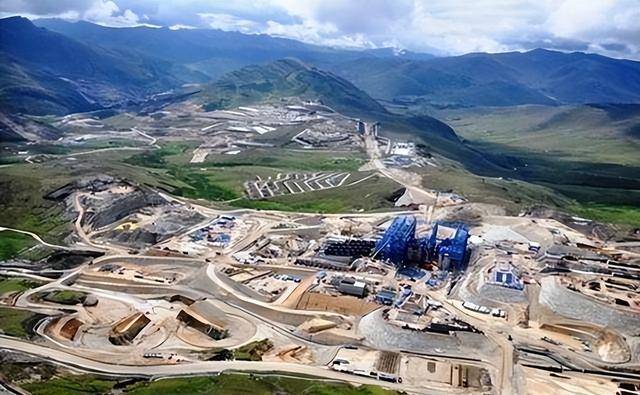
赚翻了!14年中国70亿美元收购邦巴斯铜矿,如今总价值超千亿美元
Sou Hu Cai Jing· 2025-12-18 12:42
Core Insights - The Las Bambas copper mine in Peru, acquired by a consortium led by China Minmetals for $7 billion, has significantly increased in value, now estimated to exceed $100 billion [2][4][12] - The mine has become a crucial asset for China's resource security, contributing to the country's copper supply and supporting its manufacturing sector [10][16] Group 1: Acquisition Details - China Minmetals, along with CITIC Metal and Guoxin International, purchased Las Bambas from Glencore's subsidiary for a total of $7.005 billion, which included both equity and capital expenditures [4][5] - The mine is located in the Apurímac region of Peru, with proven copper reserves exceeding 10 million tons and an average grade of 0.62% [5][7] Group 2: Production and Economic Impact - Since its commissioning in January 2016, the mine has produced a total of 3.1 million tons of copper, with an expected annual output of 400,000 tons by 2025 [12][16] - The mine contributes approximately 1% to Peru's GDP and has tripled the average income in the Apurímac region [12][14] Group 3: Operational Challenges and Innovations - The mine has faced operational challenges, including community protests and illegal mining activities, which have impacted production [14][16] - To enhance operational efficiency, the mine has implemented automation technologies, reducing safety incidents and maintaining stable production levels during the pandemic [16][18] Group 4: Strategic Importance - Las Bambas plays a vital role in China's copper supply chain, accounting for 14% of the country's copper imports and helping stabilize prices amid market fluctuations [10][16] - The project exemplifies China's strategic approach to securing resources abroad, demonstrating a successful model for overseas investments in the mining sector [18]