安踏

Search documents
福建县城,诞生了多少「中式豪门」?
创业邦· 2025-06-02 01:59
Core Viewpoint - The article explores the phenomenon of "霸总" (tycoons) in Fujian's Jinjiang, highlighting the region's unique economic landscape, family business dynamics, and the intertwining of wealth and social connections through marriage alliances. Group 1: Economic Landscape - Jinjiang has over a thousand enterprises with a valuation exceeding 100 million, producing 26 super-rich individuals with a total wealth of 750 billion yuan [4][6] - The region is known for its dominance in the sportswear industry, with one in five pairs of sports shoes globally produced in Jinjiang [10][11] - Jinjiang's GDP ranks third among China's top counties in 2024, breaking the dominance of Jiangsu in the top five [14][15] Group 2: Business Dynamics - Jinjiang's businesses are often family-owned, with a strong emphasis on local collaboration and competition among peers [40][42] - The region has developed specialized industrial clusters, including a shoe and clothing industry worth over 200 billion yuan [14][42] - Jinjiang's entrepreneurs typically start from humble beginnings, with many having backgrounds in farming or manual labor [38][40] Group 3: Marriage Alliances - The article discusses the trend of marriage alliances among wealthy families in Jinjiang, often involving significant dowries and connections to publicly listed companies [16][18] - These alliances are not just personal but serve as strategic business partnerships, enhancing collaboration and resource sharing among families [36][37] - The social dynamics of these marriages often reflect a preference for partners from similar economic backgrounds and local ties [24][30]



一笔漂亮的退出:93亿卖始祖鸟股份
投中网· 2025-05-31 03:04
Core Viewpoint - FountainVest is seeking to sell half of its stake in Amer Sports for approximately $1.3 billion, marking a significant cash-out opportunity for the investor after a successful investment in the company [1][9]. Group 1: Company Background - Amer Sports, known as the "Rolls-Royce of sports goods," owns high-end brands such as Arc'teryx, Salomon, Wilson, and Atomic, and has gained popularity in China, being referred to as the "new social currency" alongside Lululemon [1][5]. - The company was originally founded in 1950 as a tobacco company and transitioned to the sports goods industry after acquiring a hockey equipment brand in 1974 [3][4]. - Amer Sports has undergone significant mergers and acquisitions, acquiring brands like Wilson and Atomic, and fully divested its tobacco business in 2004 [4][5]. Group 2: Financial Performance - In 2024, Amer Sports reported annual revenue of $5.183 billion, with Arc'teryx generating over $2 billion, making it a key asset for the company [5]. - The company experienced a compound annual growth rate of 20.4% from 2020 to 2022, following a strategic focus on core brands and divestitures of non-core assets [5][9]. - By 2025, Amer Sports reported a revenue of $1.473 billion in Q1, a 23% increase year-over-year, with net profit soaring over 25 times compared to the previous year [9]. Group 3: Investment and Market Activity - FountainVest's initial investment in Amer Sports was part of a consortium led by Anta Sports, which acquired the company for €4.6 billion in 2018, marking the largest outbound acquisition by Chinese capital that year [1][5]. - Following the IPO in 2024, Amer Sports' market capitalization reached $6.492 billion, and its stock price has significantly increased since its listing [5][9]. - FountainVest's recent decision to sell half of its stake not only allows for a profitable exit but also provides liquidity for further investments in the consumer sector, as the market for consumer goods is heating up [10][11].

新消费快讯|黄子韬卫生巾上线;朴朴超市计划赴港上市
新消费智库· 2025-05-30 12:43
Core Insights - The article discusses various new consumer products and brand collaborations, highlighting trends in the beverage and fashion industries, as well as investment activities in the consumer sector [3][4][8][9][12]. Product Launches - G-SHOCK and Crocs have launched a collaborative shoe line called "Echo Wave," featuring a classic EVA sole and a unique waterproof design [3]. - Wahaha has introduced a new sugar-free tea product under the "Wah Xiaozong" trademark, which is managed by the Hongsheng Group [4]. - Coca-Cola has released a limited-time product in North America, combining Sprite with tea, inspired by a popular trend on TikTok [4]. - Naixue has launched its first caffeine-free bottled drink, made with South African jasmine and other natural ingredients [6]. Collaborations and Acquisitions - Patta and Rapha have collaborated for a second time to promote cycling culture through a new apparel collection [4]. - LVMH family consortium has made a €60 million acquisition offer for the French sports brand Le Coq Sportif, aiming to revitalize the brand [9][12]. - Chobani is reportedly acquiring plant-based food manufacturer Daily Harvest, although the terms of the deal are not disclosed [9]. - L'Oréal is a strong contender in the acquisition of the UK skincare brand Medi K8, which focuses on effective skincare products [9]. Investment Activities - Pupu Supermarket is planning to go public in Hong Kong, currently covering nine cities with over 400 front warehouses [8]. - Guangfan Technology has secured a new round of investment, focusing on AI applications and smart device manufacturing [9]. Brand Collaborations - Louis Vuitton and Takashi Murakami have released the final chapter of their collaboration, celebrating 20 years of partnership with over 70 collectible items [13]. - Roxy and Anta have launched a functional lifestyle capsule collection aimed at the Gen Z consumer market [13]. - Huang Zitao's sanitary napkin brand "Duo Wei" has been launched with an investment of 275 million yuan, offering various product types [13]. New Product Offerings - i Moutai has introduced promotional pricing for its red wine products, with discounts available for consumers [14]. - The high-end hot pot brand Cuocuo has announced a collaboration with the international IP Miffy for a themed experience [14].
迪卡侬高端化迷局:增收降利,涨价策略反噬品牌根基
Xi Niu Cai Jing· 2025-05-30 08:57
Core Insights - Decathlon's net sales reached €16.2 billion in 2024, marking a 3.8% year-on-year increase, while net profit significantly declined by 15.5% to €787 million [2] - The company has been pursuing a high-end development strategy, but this has led to a loss of brand recognition due to price increases that preceded consumer acceptance [2] - Despite a surge in outdoor sports popularity, Decathlon's performance in key categories like outdoor apparel and badminton has been mediocre [2] Group 1: Financial Performance - Decathlon's net sales for 2024 were €16.2 billion, a 3.8% increase from the previous year [2] - The net profit for the same period fell by 15.5% to €787 million [2] - The company has experienced a slowdown in revenue growth and stagnation in net profit over the past three years [2] Group 2: Market Trends and Product Performance - The high-end product pricing strategy has seen some items increase by over 50%, but this has not translated into strong market performance [2] - In 2025, Decathlon's quick-dry shorts ranked second in the "light outdoor" category with an 18.9% market share, while other popular categories like sun-protective clothing and shoes performed poorly [2] - The popularity of cycling has surged, with road bike sales increasing by 270% and mountain bike sales by 190% in 2025 [2] Group 3: Digital Transformation and Brand Strategy - Decathlon's online sales proportion rose to 20% in 2024, with outdoor apparel GMV growing by 84% and footwear by 68% [3] - The appointment of a new CEO with a digital background was aimed at accelerating the brand's digital transformation, but the early resignation of the CEO suggests dissatisfaction with the high-end strategy's effectiveness [3] - The company's physical store expansion in China has fallen short of expectations, with only 267 stores opened by 2023, compared to the initial goal of 500 within five years [3]

福建县城,诞生了多少“中式豪门”?
3 6 Ke· 2025-05-30 02:47
Core Insights - Fujian Jinjiang is a hub for wealthy entrepreneurs, with over a thousand companies valued at over 100 million yuan and 26 billionaires whose total wealth reaches 750 billion yuan [1][6][15] - The business landscape in Jinjiang is characterized by family-run enterprises and a strong emphasis on local connections, often leading to strategic marriages among the wealthy families [2][18][28] Group 1: Economic Landscape - Jinjiang has an average of one business owner for every seven people and one enterprise for every twenty-one people, showcasing its entrepreneurial density [5][15] - The region is home to significant industrial clusters, including a shoe and clothing industry worth over 200 billion yuan and several other clusters exceeding 100 billion yuan [14][15] - In 2024, Jinjiang ranked third among China's top counties by GDP, breaking the dominance of Jiangsu in the top five [15][16] Group 2: Key Industries - Jinjiang is known as a major production center for sports shoes, with one in every five pairs of sports shoes globally produced there, featuring brands like Anta, Xtep, and Peak [7][10] - The umbrella industry in Jinjiang is also notable, with the town of Dongshi producing nearly 130 billion yuan in output in 2022, accounting for one-third of the national umbrella production [12][14] - The region has a diverse range of well-known food companies, contributing to its economic landscape [12] Group 3: Business Practices and Culture - The business culture in Jinjiang is heavily influenced by familial ties and local networks, with many entrepreneurs starting from humble beginnings and building their wealth through collaboration and mutual support [44][46][57] - Jinjiang's entrepreneurs often engage in joint ventures and investment funds, fostering a cooperative environment that enhances their market power [40][43] - The local economy thrives on a model of specialization, where towns focus on specific industries, leading to efficient production and lower costs [48][50] Group 4: Social Dynamics and Marriages - Marriages among the wealthy families in Jinjiang are often strategic, reinforcing business ties and ensuring compatibility in social status [18][28][35] - Recent high-profile weddings, such as that of the second daughter of Xtep and the second son of Seven Wolves, highlight the extravagant nature of these unions, with reported dowries reaching 1.8 billion yuan [21][23] - The social fabric of Jinjiang emphasizes early relationships among the youth, often leading to marriages that align with family business interests [29][30]
阿迪、耐克的大经销商想要「改命」
华尔街见闻· 2025-05-26 09:26
Core Viewpoint - The article discusses the challenges faced by the sports retail operator, Tmall (滔搏), highlighting a significant decline in profits and the impact of market dynamics on its operations, particularly in relation to major brands like Nike and Adidas [2][3][4]. Group 1: Financial Performance - For the fiscal year ending February 2025, Tmall's profit dropped to 1.29 billion yuan, a 42% year-on-year decline, marking a record low since its listing [2]. - Tmall's revenue fell by 11.5% and 15.1% in the fiscal years 2022 and 2023, respectively, with a notable decrease in store numbers [17]. - As of February 2025, Tmall had 5,020 offline stores, an 18.3% year-on-year decrease, while inventory turnover days remained high at four and a half months [18][17]. Group 2: Market Dynamics - Major brands like Nike and Adidas are still struggling in the Chinese market, with Nike experiencing a 17% year-on-year sales decline from December to February [3]. - Tmall's revenue structure has been heavily reliant on Nike and Adidas, contributing over 85% to its performance, which poses risks due to the brands' shift towards direct-to-consumer (DTC) sales [9][11]. - The rise of domestic brands such as Anta and Li Ning has intensified competition, further complicating Tmall's market position [15]. Group 3: Strategic Initiatives - Tmall has increased online promotions to clear inventory, resulting in a 4.5% year-on-year decline in stock levels and a drop in gross margin to 38.4%, the first time below 40% [4]. - The company is focusing on transforming its brand portfolio by acquiring exclusive operating rights for high-end outdoor brands like Norrøna and Soar in Greater China [5][27]. - Tmall aims to enhance its online presence through various e-commerce strategies, currently operating 2,300 mini-program stores and 500 accounts on Douyin and WeChat [20]. Group 4: Future Outlook - Tmall's strategy includes expanding its brand matrix in vertical markets such as outdoor and trail running, with partnerships established with brands like HOKA ONE ONE and KAILAS [22][23]. - Despite the challenges, Tmall's cash and cash equivalents reached 2.59 billion yuan, a year-on-year increase of over 30%, providing some financial flexibility for future investments [31]. - The company acknowledges the need for a more nuanced approach to brand management, emphasizing the importance of both online and offline channels working synergistically [35].

年营收超17亿,伯希和IPO背后,资本押注中国户外“下一个始祖鸟”
新消费智库· 2025-05-21 13:07
Core Viewpoint - The article discusses the rapid evolution and competitive landscape of the Chinese outdoor sports market, highlighting the rise of domestic brands like PELLIOT amidst challenges faced by international brands. It emphasizes PELLIOT's unique positioning and growth strategy, which leverages e-commerce and direct-to-consumer (DTC) models to capture market share in the affordable outdoor apparel segment. Group 1: Market Dynamics - The Chinese outdoor sports market is undergoing a significant transformation, with international brands like Skechers exiting the market while domestic brands are gaining prominence [4] - Anta's acquisition of the German outdoor brand Jack Wolfskin for $290 million signifies a strategic move towards high-end positioning in the market [4] - PELLIOT, a domestic brand, has submitted its IPO application, attracting attention as a notable player in the outdoor apparel sector [4] Group 2: PELLIOT's Growth Strategy - PELLIOT was founded in 2012 as a "taobao brand," focusing on a light asset online direct sales model, primarily targeting the sub-1000 RMB market with high-performance products [9][10] - The brand's revenue skyrocketed from 379 million RMB in 2022 to 1.766 billion RMB in 2024, with a compound annual growth rate (CAGR) of 115.86% [7][17] - PELLIOT's net profit increased from 28 million RMB to 304 million RMB during the same period, showcasing a CAGR of 232% [7] Group 3: Product Strategy and Market Positioning - PELLIOT's pricing strategy is based on offering "90% performance at 10% of the price" compared to high-end brands, effectively positioning itself as a value alternative [10] - The brand's focus on a single product category, specifically jackets, has led to significant sales, with 3.8 million units sold from 2022 to 2024, contributing over 80% of its revenue [11][21] - The company has successfully utilized DTC and social media marketing, particularly through platforms like Douyin, to drive sales and brand awareness [14][15] Group 4: Financial Performance and Market Share - PELLIOT's gross margin improved from 54.3% in 2022 to 59.6% in 2024, indicating effective cost control [19] - Approximately 80% of PELLIOT's revenue comes from online DTC sales, with significant contributions from both online and offline channels [19][20] - The apparel segment accounted for 91.1% of PELLIOT's revenue by 2024, highlighting its dominance in this category [21] Group 5: Challenges and Future Outlook - Despite rapid growth, PELLIOT faces challenges in diversifying its product range beyond apparel, as its current focus may expose it to market volatility [21][24] - The brand's reliance on OEM/ODM suppliers raises concerns about quality control and product consistency [24] - The article suggests that PELLIOT's future success will depend on its ability to innovate and build a unique brand identity beyond being a cost-effective alternative [27][28]

对话:传承170年不衰,家办如何助力家族跨越周期?
3 6 Ke· 2025-05-21 09:22
Group 1: Family Office Overview - Family offices in Europe and the US have become a common wealth management vehicle for ultra-high-net-worth individuals, aiding families in wealth preservation and transfer [1] - The Hermansen family office, represented by Michael Zhang, utilizes global asset allocation strategies and robust risk management systems to navigate economic cycles [1] Group 2: Hermansen Family Business - The Hermansen family business has a history of over 170 years, with its largest company, DSD Group, founded in 1855, making it one of Norway's oldest private enterprises [2] - DSD Group was transformed from a regional ferry service into an international company with diverse operations under the leadership of Folke Hermansen [4] - DSD currently employs over 5,600 people, equating to one employee for every 1,000 Norwegians [4] Group 3: Investment Structure - The Hermansen family operates two main investment entities: DSD Group's strategic investment department and the family fund Herfo, both led by Yuhong Jin Hermansen [5] - The strategic investment department focuses on capturing emerging business trends and primarily invests in growth-stage companies, while also seeking acquisition opportunities [7] - Herfo, established in 2005, aims to assist the family in professional global asset allocation, leveraging the advantages of long-term investments [9] Group 4: Global Asset Allocation Strategy - Herfo allocates approximately 50% of its investments to global secondary markets, with the remainder in primary markets and real estate [10] - The family office has increased its investment in primary markets, particularly direct investments, to enhance team capabilities and experience [11][13] - The focus is on identifying quality projects based on the family's resources and advantages, with a keen interest in technology and niche traditional sectors [13] Group 5: Risk Management Strategies - The Hermansen family employs four core risk management strategies: maintaining legal and operational independence between the family business and the family fund, global diversification in asset allocation, liquidity management, and team collaboration [15][16][18][19] - The family office emphasizes the importance of team experience and diverse perspectives to avoid groupthink [19] Group 6: Advantages and Challenges of Overseas Branches - The Hermansen family office is unique in having a branch in China, allowing for long-term engagement in both Chinese and Norwegian markets [21] - The family office aims to leverage its experience in the complex Chinese market to identify and seize investment opportunities quickly [22] - The changing global economic and political landscape presents both opportunities and challenges for the family office in achieving global asset allocation [22] Group 7: Opportunities in Sino-Norwegian Cooperation - There are significant collaboration opportunities between China and Norway in the fields of renewable energy, technology co-creation, and capital co-creation [23][24] - The Hermansen family office has expanded its services to include consulting for Nordic companies entering the Chinese market and vice versa, enhancing its role as a bridge between the two markets [24]

摩根大通中国市场峰会:三大关键投资主题
Zhi Tong Cai Jing· 2025-05-21 02:29
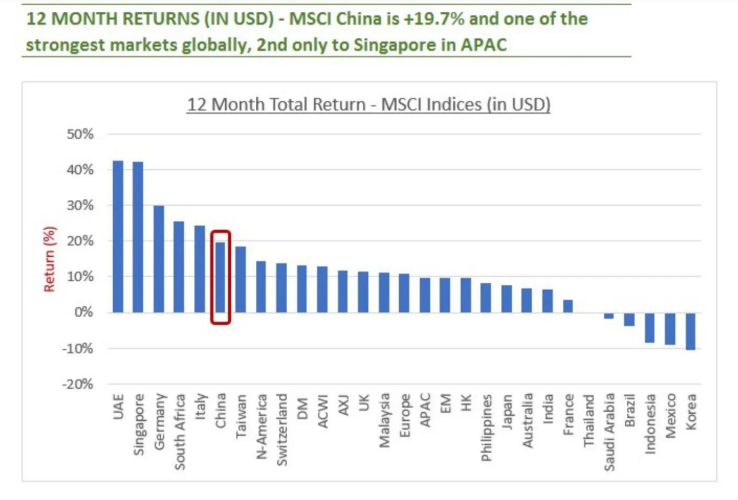
Core Insights - The Morgan Stanley China Summit is set to begin this week with over 2,800 participants, reflecting a more optimistic market sentiment compared to last year, which was focused on hope for policy shifts and growth stabilization that have since materialized [1] - The consensus for EPS growth for the MSCI China Index is projected at 8.3% for 2025 and 11.8% for 2026, with potential upside risks driven by increased AI applications [1][2] Group 1: Investment Themes - Three key investment themes highlighted by Morgan Stanley include: (1) AI innovations in enterprises, particularly in robotics and autonomous driving; (2) consumer demand supported by government policies; (3) the current state and future trajectory of US-China relations [2][10] Group 2: Market Positioning - Emerging market funds have returned to neutral positioning in Hong Kong/China markets, with a median overweight of +0.2 percentage points, ending a two-year low allocation period [4] - Global and EAFE funds remain significantly underweight in the Chinese market, requiring approximately $475 billion in long positions to adjust to neutral [4] Group 3: Market Performance - The MSCI China Index has risen 19% over the past year, outperforming the S&P 500 Index (+14%) and emerging markets (+10%), with a year-to-date increase of 16% [5][9] - Recent performance has lagged slightly, with a 9% increase in the past month compared to the S&P 500's 15% rise [5] Group 4: Valuation Metrics - The MSCI China Index's P/E ratio is currently at 12.6x, and P/B ratio at 1.6x, indicating valuations are no longer a barrier to market growth [6] - There are still significant value opportunities, particularly in the consumer discretionary sector, which is trading at a 30% discount to its 10-year average [6][11] Group 5: Consumer Sector Insights - The Chinese government is shifting focus from supply-side growth to boosting demand, which is crucial for EPS growth in consumer companies [10] - There is a notable disconnect between the earnings growth and stock performance of leading Chinese consumer companies, presenting attractive buying opportunities [11] Group 6: AI and Innovation - The focus on AI applications is expected to grow, with significant interest in "physical AI" such as robotics and advanced driver-assistance systems (ADAS) [14][15] - Companies like UBTECH and Unitree are leading in the humanoid robotics space, with a projected market size of $5 billion for humanoid robots [14] Group 7: US-China Relations - The strategic competition between the US and China extends beyond trade, with deep-rooted geopolitical tensions and a spectrum of potential outcomes ranging from a grand bargain to a new cold war [18][20][22] - The current geopolitical landscape poses risks for companies operating in both markets, with implications for their strategic decisions and operations [18]


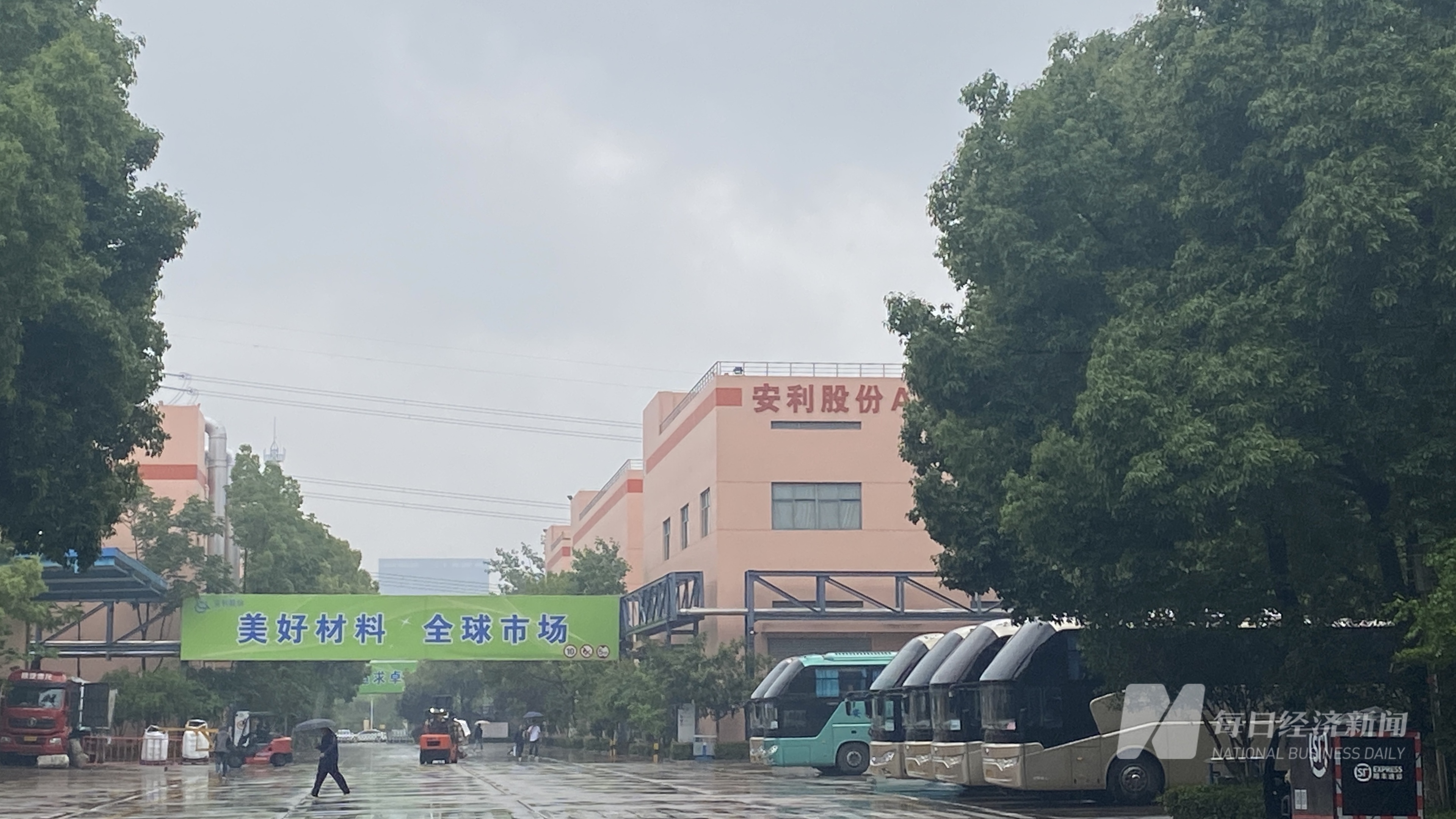
“拿下耐克,我们用了整整十年” 安利股份一季度营收创新高,如何靠大客户战略在全球逆袭?|寻光一季报
Mei Ri Jing Ji Xin Wen· 2025-05-20 14:47
Core Insights - Company achieved record revenue in Q1 2025, driven by a decade-long strategy of targeting major clients, continuous technological innovation, and responsiveness to global market changes [1][9][12] Group 1: Company Performance - In Q1 2025, the company reported revenue of 5.55 billion yuan and a net profit of 460 million yuan, marking a year-on-year growth of 12.47% [9][12] - For the full year 2024, the company achieved revenue of 24.03 billion yuan, a 20.12% increase, and a net profit of 1.94 billion yuan, up 174.19% [9][12] - The average selling price of products increased by approximately 9.43% in Q1 2025, with a gross margin of 26.81% [12] Group 2: Market Position and Industry Dynamics - The global polyurethane market is projected to grow from 81.4 billion USD in 2024 to 112 billion USD by 2029, indicating strong demand for high-performance materials [4] - The polyurethane industry in China has low market concentration, with the top four companies holding only 19.3% of the market share, leading to intense competition [8] - The company has positioned itself as a leader in the polyurethane composite materials sector, leveraging technological innovation to develop differentiated products [8][9] Group 3: Client Relationships and Strategic Partnerships - The company has successfully established partnerships with major global brands such as Nike, Adidas, and Apple, enhancing its market presence [16][18] - After a decade of effort, the company became a strategic partner of Nike, which significantly boosted its market access and credibility [16][18] - The company’s sales to the U.S. market represent only 2.55% of total revenue, indicating limited exposure to potential tariff impacts [20][22] Group 4: Technological Innovation - The company has focused on developing high-performance, multifunctional, and eco-friendly products, which has allowed it to maintain a competitive edge [8][9] - Recent advancements include the introduction of over 30 new materials, such as water-based and solvent-free products, which have increased their market appeal [9][12]