
吉利

Search documents
【联合发布】2025年4月汽车智能网联洞察报告
乘联分会· 2025-06-23 08:52
Core Insights - The article discusses the current state and future trends of the Chinese new energy vehicle (NEV) market, highlighting shifts in market structure, sales performance, and technological advancements in autonomous driving features. Market Structure - By May 2025, the market share of new energy sedans is 42.5%, down 2.4 percentage points year-on-year, while the share of new energy SUVs has reached 47.2%, an increase of 0.3 percentage points [7] - In May 2025, NEV sales reached 1.307 million units, a month-on-month increase of 6.7% and a year-on-year increase of 36.8%, with a penetration rate of 48.7% [9] Sales Performance - Sales of new energy passenger vehicles totaled 1.234 million units, with a month-on-month increase of 7.7%, while sales of new energy commercial vehicles were 73,000 units, down 8.3% month-on-month but up 63.4% year-on-year [9] - The commercial vehicle segment saw all models experience year-on-year growth, with tractor trucks increasing nearly 300% [7] Technological Advancements - The installation rate of L2 and above assisted driving features in new energy passenger vehicles reached 77.8% from January to April 2025, indicating a trend towards broader adoption of advanced driving technologies [11] - The overall installation rate of Automatic Emergency Braking (AEB) in passenger vehicles reached 60.1%, with new energy passenger vehicles at 64.3% [14][15] - Full-speed Adaptive Cruise Control (ACC) installation rates in the passenger vehicle market reached 57.5%, with new energy vehicles at 68.4% [20] Industry Trends - The market is transitioning from "price competition" to "value competition," emphasizing technology and service integration [9] - The "smart driving equality" movement is driving down the costs of sensors and chips, accelerating the adoption of assisted driving features across various price segments [33][35] - Major automakers are rapidly advancing the democratization of assisted driving technologies, with companies like BYD, Geely, and Changan releasing new intelligent driving systems [41]

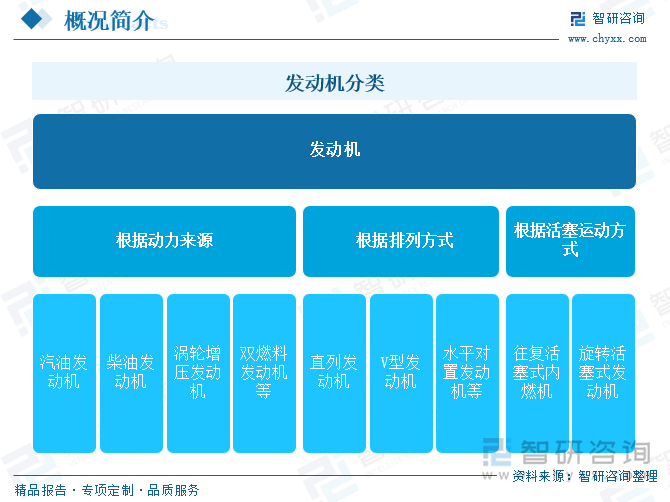
2025年中国发动机行业产业链图谱、市场现状、重点企业及发展趋势研判:新能源车渗透率不断提升,国内发动机产量出现下行波动[图]
Chan Ye Xin Xi Wang· 2025-06-20 01:24
Industry Overview - The automotive engine industry in China has experienced rapid development since the 21st century, driven by policy support and market demand, with significant upgrades in technology and product performance [1][6] - The rise of new energy vehicles (NEVs) has led to rapid advancements in hybrid and pure electric engine technologies, becoming new growth points for the industry [1][6] - Domestic companies are increasing R&D investments to push the industry towards high-end and intelligent development [1][6] - Since 2017, engine production in China has begun to fluctuate and decline due to market saturation, weak fuel vehicle sales, and increasing penetration of new energy vehicles [1][6] Production and Sales Data - In 2024, China's engine production is projected to be 237,766.8 million kilowatts, a year-on-year decrease of 1.5% [1][6] - From January to April 2025, the cumulative engine production was 77,867.8 million kilowatts, down 0.7% year-on-year [1][6] - The overall sales of fuel vehicles in China for 2024 are expected to be 12,767,400 units, reflecting an 11% year-on-year decline [10] Market Dynamics - The engine industry is characterized by a dual-track competition between traditional fuel engines and new energy power systems, with a focus on technological innovation and market adaptation [15][16] - The market is increasingly competitive, with foreign brands like Volkswagen and Toyota maintaining advantages in high-end fuel engines, while domestic brands like BYD and Geely rapidly expand their market share in the new energy sector [15][16] Regional Production Distribution - The production of engines in China is concentrated in economically developed regions, with East China accounting for approximately 38.83% of total production in 2024 [8] Future Trends - The aviation engine sector is expected to accelerate the process of domestic substitution and self-sufficiency, with policies supporting the development of key technologies [22] - The automotive engine industry is transitioning towards greener and smarter technologies, driven by government policies and consumer demand for lower emissions and higher efficiency [23][24] - Collaboration within the engine industry supply chain and international partnerships are becoming increasingly important for enhancing competitiveness and driving technological advancements [25]


2025年下半年消费品投资策略
2025-06-19 09:46
2025 年下半年消费品投资策略 20250618 摘要 城镇化率成熟及居民消费时间受限是服务消费增长的制约因素,但鼓励 带薪休假等政策及年轻人就业偏好或将推动服务消费提升。 连续下跌四年的资产已充分反映悲观预期,一旦出现乐观因素,股价弹 性较大。2025 年上半年医药、社会服务等行业表现良好,房地产股票 指数和白酒板块存在修复绝对收益空间。 医药行业经历四年调整后表现火爆,创新药及相关产业链标的值得关注。 恒瑞医药、康缘药业和首药控股等公司具备增长潜力。 传媒领域首推潮玩方向,如泡泡玛特,预计 2025 年净利润可观,需求 端表现强劲,但需关注供应链问题及黄牛囤货对消费者长期购买热情的 影响。 下半年汽车行业需求受以旧换新政策和财政补贴影响,中高端市场关注 理想汽车和江淮汽车,中低端市场聚焦比亚迪、吉利等龙头企业。零部 件领域关注福耀玻璃、双环等公司。 纺织服装行业内需复苏是重要做多线索,下半年低基数窗口开启,推荐 高性能运动户外、折扣零售、睡眠经济、母婴消费以及国潮学院风 IP 高 端服饰等五个方向。 家电行业以旧换新政策打破悲观预期,内需市场延续高增长,出口方面 新兴市场弥补北美市场缺口。推荐海尔智家, ...
中泰国际每日晨讯-20250619
ZHONGTAI INTERNATIONAL SECURITIES· 2025-06-19 02:49
Market Overview - The Hong Kong stock market experienced a decline on June 18, with the Hang Seng Index falling by 270 points or 1.1%, closing at 23,710 points. The Hang Seng Tech Index dropped by 1.5%, closing at 5,214 points. The trading volume decreased to 181.9 billion HKD, the lowest since June 2, with a net inflow of 1.24 billion HKD from the Stock Connect [1][2] - The internal quality of the Hong Kong stock market weakened, with many previously strong stocks retreating. Major internet stocks like Tencent, Meituan, Alibaba, and JD.com saw declines ranging from 1.0% to 3.5%. Other sectors such as real estate, automotive, non-bank financials, oil, and telecommunications also experienced pullbacks [1][2] Macroeconomic Dynamics - The U.S. retail sales data for May showed mixed results, indicating a gradual slowdown in consumer spending. Overall retail sales decreased by 0.9% month-on-month but increased by 3.3% year-on-year. The automotive sector was the largest drag, reflecting a decline in demand after consumers rushed to purchase vehicles in March to avoid tariffs [3] - Excluding automobiles, retail sales fell by 0.1% month-on-month but grew by 4.6% year-on-year, with e-commerce sales increasing by 8.3% year-on-year. This suggests that U.S. consumers are shifting from panic buying to a more cautious spending approach [3] Industry Dynamics - In the consumer sector, reports indicated that several regions are pausing or adjusting national subsidies for "trade-in" programs. The regulatory authorities announced a plan to allocate 300 billion RMB in special long-term bonds to support the trade-in program, with 162 billion RMB already distributed to local governments [4] - The automotive industry saw mixed performance, with companies like BYD and Geely declining by 1.1%, while others like Leap Motor and Xpeng saw increases of 0.9% to 1%. Li Auto and NIO experienced declines of 2% to 4% [4] Company-Specific Insights - The report on Cao Cao Mobility (2643 HK) highlights its position as a ride-hailing platform incubated by Geely Group, operating in 136 cities with a total GTV of 17 billion RMB, a year-on-year increase of 38.8% [6][7] - The company has developed a decision-making system powered by AI, which efficiently matches orders and optimizes operations, leading to a reduction in reliance on driver subsidies. The percentage of adjusted driver income and subsidies to total service revenue is expected to decrease from 84.2% in 2022 to 79.0% in 2024 [7] - The report on CSPC Pharmaceutical Group (1093 HK) indicates a strategic partnership with AstraZeneca to utilize its AI-driven drug discovery platform, with an initial payment of 110 million USD (approximately 790 million RMB) and potential milestone payments totaling up to 1.62 billion USD [9][10] - The target price for CSPC has been raised to 8.15 HKD, reflecting an upward revision in profit forecasts, with a focus on the progress of the EGFR ADC project [12]
以旧换新补贴成车市“助推器”
Ren Min Ri Bao· 2025-06-17 20:22
Core Insights - The report indicates that over 70% of consumers believe that subsidies will enhance their willingness to purchase vehicles [1][3] - Consumers prefer lower threshold subsidies, with "buy car and receive subsidy" being the most favored method [1][2] - The demand for vehicle upgrades is stronger among replacement consumers, who tend to favor mid to high-end models priced above 100,000 yuan [1][2] Group 1: Consumer Preferences - The preference for new car subsidies is evident, with a significant increase in the scale of vehicle replacements compared to scrappage updates [1] - Replacement consumers show a strong inclination towards mid to high-end vehicles, with over 50% preferring models priced between 200,000 and 500,000 yuan [1][2] - The trend towards larger and more intelligent vehicles is supported by local replacement policies that offer differentiated subsidies based on new car prices [2] Group 2: Market Dynamics - The implementation of the old-for-new policy has led to a significant increase in the total volume of passenger car replacements, reaching 2.793 million units in the first quarter, a year-on-year increase of 1.002 million units [3] - The penetration rate of new energy vehicles reached 51.5% in the first quarter of 2025, a nearly 10 percentage point increase year-on-year, driven by the old-for-new policy [3] - The policy has accelerated the concentration of market share among leading automakers and boosted the share of domestic brands, effectively meeting the preferences of price-sensitive consumers [2]
【环球财经】与中国建立合作伙伴关系对印尼电动汽车产业发展至关重要——访印尼汽车工业协会秘书长库库·库马拉
Zhong Guo Jin Rong Xin Xi Wang· 2025-06-17 16:19
Group 1 - The Secretary General of the Indonesian Automotive Industry Association, Kuku Kumala, emphasized the importance of establishing partnerships with countries leading in electric vehicle technology, particularly China, for the development of Indonesia's electric vehicle industry [1] - Indonesia, as the largest economy in Southeast Asia and the world's largest nickel producer, possesses key mineral resources necessary for manufacturing electric vehicles and batteries, attracting numerous international electric vehicle and battery manufacturers to invest [1] - Between 2024 and March 2025, seven automotive companies, including BYD, Citroën, Geely, and VinFast, have invested 150 trillion Indonesian Rupiah (approximately 6.6195 billion) in Indonesia, with a combined annual production capacity of 280,000 vehicles [1] Group 2 - Kumala highlighted the need for Indonesia to focus on developing the battery component industry, particularly for core components that are still imported, such as electric motors and battery management system semiconductors [3] - The Indonesian Automotive Industry Association reported that from January to April this year, sales of battery electric vehicles (BEVs) reached 23,900 units, a year-on-year increase of 211% [3] - Chinese brands dominated the top five most popular electric vehicles in Indonesia, with BYD's wholesale sales reaching 9,200 units, accounting for 38.5% of the country's electric vehicle wholesale sales [3]

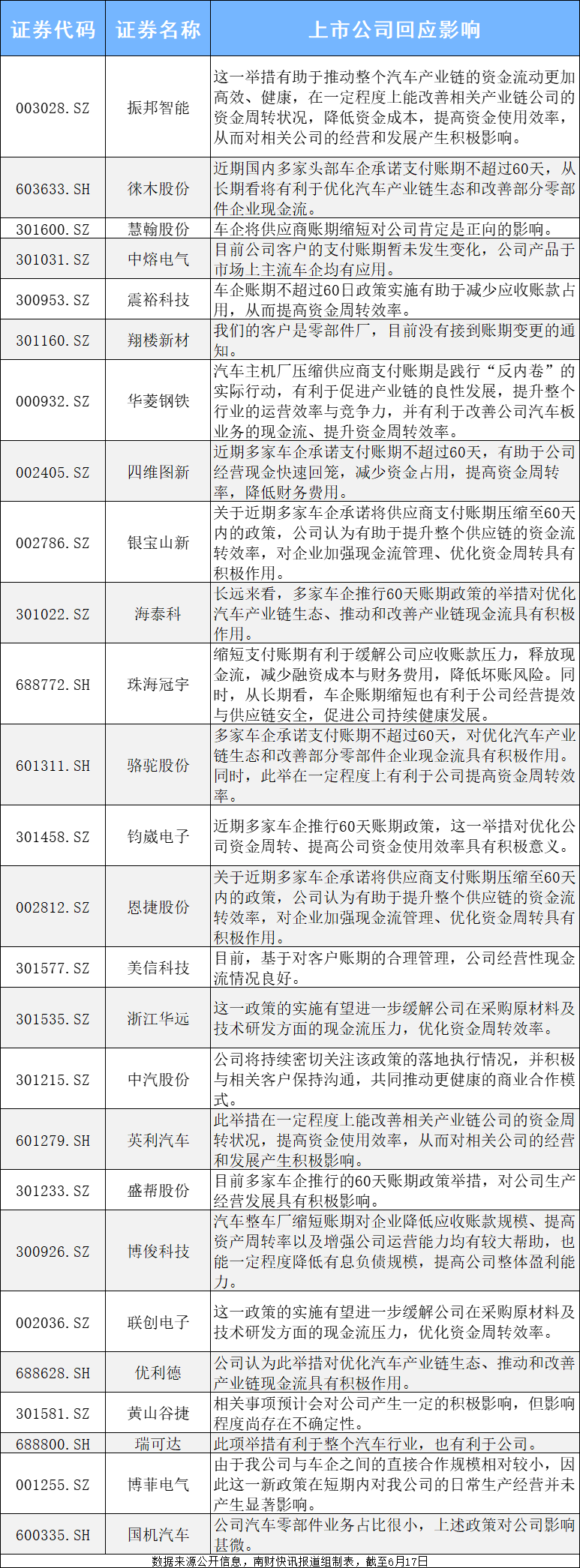
车企承诺支付账期不超60天!多家上市公司回应影响
2 1 Shi Ji Jing Ji Bao Dao· 2025-06-17 13:46
Core Viewpoint - Major automotive companies in China have committed to a payment term of no more than 60 days for suppliers, which is expected to enhance the cash flow of small and medium-sized enterprises in the supply chain and promote a healthier industry ecosystem [1][2]. Group 1: Industry Impact - The commitment to a 60-day payment term is seen as crucial for building a collaborative and win-win development ecosystem between vehicle manufacturers and parts suppliers, which is essential for sustainable industry growth [1]. - The automotive industry has historically faced long payment terms, with an average accounts payable turnover of 182 days, significantly exceeding the international standard of 90 days, leading to cash flow challenges for suppliers [2][7]. - Shortening payment terms is anticipated to alleviate financial pressure on suppliers, allowing them to invest more in research and development, thus driving industry innovation and upgrading the supply chain [2][3]. Group 2: Company Responses - Companies such as Huahan Co. and Yuli Technology have expressed that the reduction in payment terms will positively impact their cash flow and operational efficiency [3][4]. - Several listed companies have reported that the new policy will enhance the efficiency of capital flow within the supply chain, reduce financial costs, and improve overall business operations [4][5]. - Some companies, however, indicated that their exposure to the automotive parts business is minimal, and thus the impact of the new policy may be limited [4][6]. Group 3: Challenges Ahead - Analysts have pointed out that breaking the inertia of long-standing payment practices will be challenging, as some companies previously maintained payment terms exceeding 170 days [7]. - The complexity of payment models and the lack of a robust credit system in the industry may hinder the effective implementation of the new payment terms [7]. - There may be discrepancies in understanding the new payment terms between suppliers and automotive companies, particularly regarding the timing of when the 60-day period begins [7].
车圈为什么没有产生LABUBU?
阿尔法工场研究院· 2025-06-17 12:19
Core Viewpoint - The article emphasizes the importance of emotional value in products, particularly in the automotive industry, highlighting how LABUBU's success reflects a shift from "Made in China" to "Created by China" and the need for brands to connect with consumers emotionally rather than relying solely on technical specifications [1][37]. Group 1: Emotional Value and Branding - LABUBU's appeal lies in its unique design that combines "cute" and "edgy" elements, evoking both affection and excitement, which is crucial for emotional engagement [4][37]. - Successful brands like MINI and smart have established strong emotional narratives that resonate with consumers, while many domestic brands lack this depth and uniqueness [11][12]. - The article critiques the tendency of some brands to create products without a solid cultural foundation, leading to a lack of distinctiveness and emotional connection with consumers [11][13]. Group 2: Market Strategies and Consumer Engagement - Companies like Bubble Mart have successfully utilized consumer feedback to drive product development and marketing strategies, ensuring that their offerings align with user preferences [18][19]. - The automotive industry has examples of brands that have effectively engaged with consumers, such as Geely and Wuling, which have created products that resonate well with their target audience [22]. - The article warns against a self-centered approach to product development, where companies ignore consumer feedback and instead impose their vision, which can lead to commercial failure [25][27]. Group 3: Cultural and Emotional Depth - The success of LABUBU illustrates that true emotional value is rooted in cultural identity and shared values, rather than superficial trends [37][39]. - The article argues that products that can transform from mere commodities to cultural assets will ultimately succeed in a competitive market [39][41]. - It calls for the automotive industry to develop brands that embody emotional value and cultural significance, moving beyond price competition to create meaningful connections with consumers [41][42].
车企承诺60天账期,但花样赖账还没结束
2 1 Shi Ji Jing Ji Bao Dao· 2025-06-17 09:41
Core Viewpoint - Multiple automotive companies have announced a unified reduction of payment terms to suppliers to within 60 days, responding to government regulations aimed at protecting small and medium-sized enterprises [1][2] Group 1: Industry Response - Over 16 automotive companies, including BYD, NIO, and Great Wall Motors, have committed to the new payment terms [1] - The government has implemented the "Regulations on Payment of Funds to Small and Medium-sized Enterprises," which prohibits large enterprises from delaying payments to smaller suppliers [1] Group 2: Challenges in Implementation - Suppliers report that the 60-day payment term starts only after invoicing, with lengthy negotiation processes prior to this, often taking two to three months [2] - The reconciliation process and invoice confirmation can take an additional two to three months, leading to significant delays in actual payment [2] - Suppliers may receive payment in the form of bank or commercial acceptance bills, which can extend the actual payment period to 180 days or more [2] Group 3: Industry Dynamics - The competitive pricing war in the automotive industry is pressuring both car manufacturers and suppliers, potentially harming consumer interests [3] - There is a call for a more respectful and cooperative relationship between leading automotive companies and their suppliers to foster a healthier supply chain ecosystem [3]


交银国际每日晨报-20250617
BOCOM International· 2025-06-17 05:28
E-commerce Industry - In May 2025, adjusted year-on-year growth for physical e-commerce was 8.2%, compared to 6.1% in April and 5.7% in Q1 [1] - The growth was driven by the expansion of national subsidies and the extended duration of the 618 shopping festival, with significant increases in telecommunications equipment and home appliances [1] - The demand for furniture continued to recover as the home decoration season began, maintaining a rapid growth rate [1] - The growth trend in the industry is expected to continue into Q2 2025, with Alibaba's CMR projected to maintain double-digit growth and JD's home appliance category expected to grow rapidly [1][2] Automotive Industry - The 2025 Hong Kong International Auto and Supply Chain Expo showcased multiple flying cars and right-hand drive models, indicating a global upgrade of the automotive supply chain [4] - The introduction of a regulatory sandbox in Hong Kong is promoting the development of the low-altitude economy [4] - In 2024, automotive exports accounted for 3.3% of China's total exports, with a shift towards smart and electric vehicle supply chains [4] - Key automotive and supply chain companies are accelerating their listings in Hong Kong, enhancing their global presence and supporting the upgrade of China's supply chain [7] Banking Industry - In May 2025, new RMB loans amounted to 620 billion, lower than market expectations, with a year-on-year decrease of 330 billion, primarily from corporate medium to long-term loans [8] - New social financing in May reached 2.29 trillion, exceeding market expectations and showing a year-on-year increase of 227.1 billion, mainly driven by government and corporate bonds [8] - M1 growth showed a rebound on a low base, while M2 growth and social financing growth remained stable [8] Market Indices - The Hang Seng Index closed at 24,061, with a year-to-date increase of 16.76% [3] - The Hang Seng Index's technical indicators show a 50-day moving average of 23,358.72 and a 200-day moving average of 21,925.05 [5]