
华福证券

Search documents
港股异动 | AI医疗概念股多数走高 方舟健客(06086)涨超30% 英伟达携手礼来斥资10亿美元联合建立实验室
Zhi Tong Cai Jing· 2026-01-13 03:13
Group 1 - The core viewpoint of the news is that AI healthcare concept stocks are experiencing significant gains, driven by a partnership between Nvidia and Eli Lilly to invest $1 billion in a joint research lab to accelerate AI applications in the pharmaceutical industry [1][2] - Ark Health (06086) saw a rise of 30.8%, while other AI healthcare stocks like Medical Pulse (02192) and Crystal Technology Holdings (02228) also reported increases of 5.1% and 4.63% respectively [1] - The joint lab established by Nvidia and Eli Lilly aims to generate large-scale data and build AI models to enhance new drug development, with operations expected to start early this year [1] Group 2 - According to Fengzheng Securities, AI-driven healthcare is forming a new growth engine, with a positive outlook on the revolutionary potential of AI in pharmaceuticals, basic research, diagnosis, and health management [2] - Huafu Securities noted that the AI healthcare industry has entered a critical stage of commercialization, supported by national strategies and market demand, with a closed-loop demand for AI applications sustaining the sustainable development of the AI industry [2]



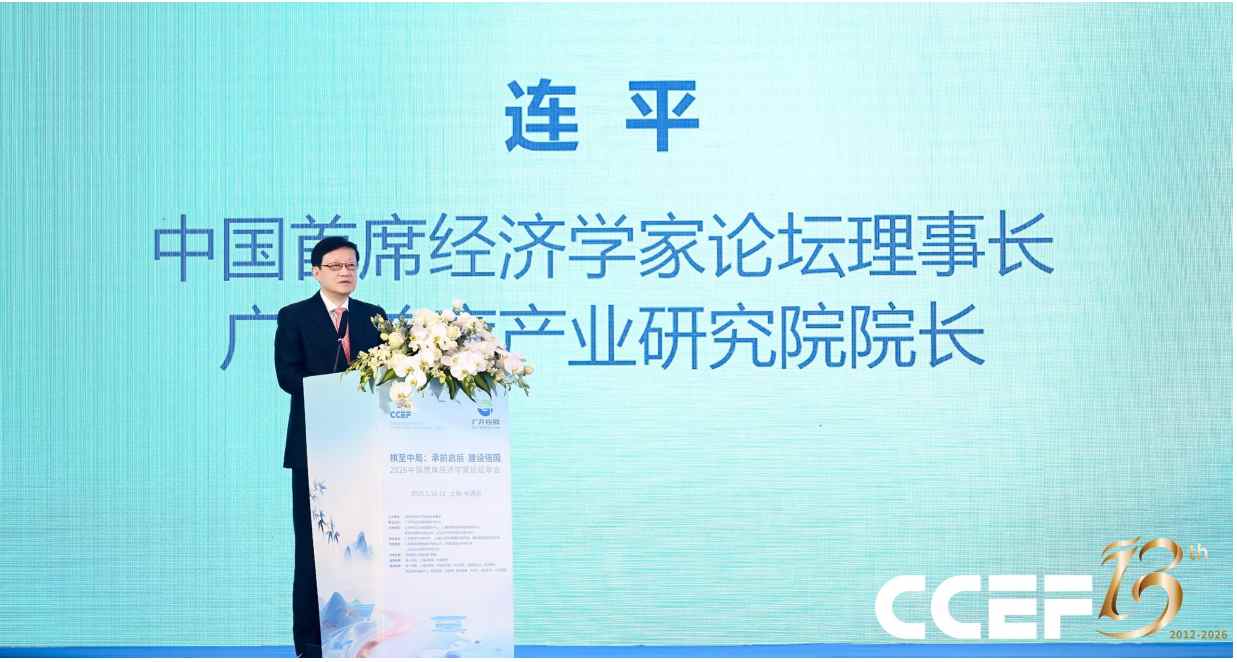
2026中国首席经济学家论坛年会在沪召开
Zhong Guo Jing Ying Bao· 2026-01-13 00:03
Group 1 - The 2026 China Chief Economist Forum successfully held its annual meeting in Shanghai, focusing on global political and economic changes and China's economic transformation path [1] - The forum attracted over 50 top economists and industry experts from domestic and international financial institutions to discuss key topics such as financial structure transformation, macroeconomic regulation, income distribution optimization, and global order restructuring [1] - The theme of the annual meeting was "Inheriting the Past and Building a Strong Nation," providing forward-looking decision-making references for high-quality economic development [2] Group 2 - Shanghai's financial center construction has shown significant results during the 14th Five-Year Plan, with the introduction of various financial products and services aimed at enhancing financial support for the real economy and increasing the level of openness [2] - The Hongkou District has gathered over 2,100 financial institutions, with asset management scale exceeding 8 trillion yuan, and has established several national firsts, including the only carbon emission trading market in the country [3] - The China Capital Market Society emphasized the need to explore a self-reliant theoretical system for China's capital market, rooted in national conditions and aimed at supporting high-quality development through advanced theoretical research [4]
黄金、白银大涨!又一黄金ETF暂停申购,基金公司密集加强风险管理
券商中国· 2026-01-12 15:11
Core Viewpoint - The precious metals market is experiencing significant price increases, with gold and silver reaching new highs, prompting concerns about trading risks associated with related products [1][5]. Group 1: Market Performance - On January 12, gold prices surged, with COMEX gold futures reaching $4,650 per ounce, marking a nearly 3% increase in a single day and a cumulative rise of over $300 in January [2][6]. - Silver also saw substantial gains, with prices rising over 8% in a single day, and the spot silver price exceeding $84 per ounce, setting a new historical high [2][6]. Group 2: Fund Adjustments - In response to increasing market volatility and high premium rates in the secondary market, several fund companies have implemented measures such as suspending subscriptions and adjusting redemption arrangements to manage risks [2][3]. - For instance, E Fund announced it would suspend subscriptions for its gold ETF starting January 16, citing the need to protect the interests of fund shareholders and ensure stable operations [3][4]. Group 3: Industry Overview - As of now, the total scale of seven gold ETFs tracking SGE gold 9999 has reached 223.68 billion yuan, with E Fund's gold ETF holding 37.91 billion yuan, ranking second among similar products [4]. - The National Investment Silver LOF also announced a temporary suspension of trading, indicating that the current high premium reflected in the secondary market is not sustainable, urging investors to be aware of associated risks [4]. Group 4: Institutional Insights - Institutions are increasingly optimistic about the outlook for precious metals, with geopolitical tensions and macroeconomic uncertainties providing support for gold prices [7]. - However, there are warnings about short-term risks, particularly in the silver market, where price volatility is expected to increase, necessitating close monitoring of Federal Reserve policies and geopolitical developments [7].
2026中国首席经济学家论坛年会在沪召开 50余位顶尖专家共话经济高质量发展
智通财经网· 2026-01-12 13:04
Core Insights - The 2026 China Chief Economist Forum was successfully held in Shanghai, focusing on global economic changes and China's economic transformation [1][2] - The forum gathered over 50 top economists and industry experts to discuss key topics such as financial structure transformation, macroeconomic regulation, income distribution optimization, and global order reconstruction [2][5] Group 1: Forum Overview - The forum was co-hosted by various financial institutions and aimed to provide a platform for high-level discussions on economic development [1] - The theme of the forum was "Building a Strong Nation," emphasizing the importance of expert dialogue on international political and economic conditions and macroeconomic forecasts [5] Group 2: Economic Context - 2026 is identified as a critical year for China's "14th Five-Year Plan," with a focus on structural transformation and high-quality development [2] - The forum highlighted the need for China to inject positive energy into the global economy through growth, supply, rules, and financial stability [13] Group 3: Key Discussions - Experts discussed the gradual reduction of reserve requirements and interest rates in China, suggesting that these measures could effectively support economic stability [14] - The importance of optimizing national income distribution was emphasized as a key driver for consumption growth and economic transformation [17] Group 4: Roundtable Discussions - Six roundtable discussions covered topics such as the interpretation of the "14th Five-Year Plan," global new order and reorganization, and capital market development [18] - Economists noted that the "14th Five-Year Plan" is a pivotal period for income enhancement and industrial adaptation to new technological revolutions [18] Group 5: Parallel Forum - The parallel forum focused on the deep integration of industry and finance, providing a platform for discussions on capital empowerment and industrial upgrades [21] - Key themes included the role of state-owned capital in supporting national strategies and the exploration of innovative investment strategies [21] Group 6: Index and Publications - The forum launched the "Chief Index," which reflects the insights of numerous chief economists and serves as a reference for capital market investments [23] - Three significant publications were released, addressing the "14th Five-Year Plan," global economic changes, and fund investment practices [23]

黄金站上4600美元 追?等?还是撤?
Sou Hu Cai Jing· 2026-01-12 09:21
Core Viewpoint - The recent surge in gold prices, surpassing $4600 per ounce, is driven by multiple factors including geopolitical tensions, a crisis of trust in the Federal Reserve, and a weakening dollar, leading to increased global risk aversion [2][3][4] Group 1: Factors Driving Gold Prices - The U.S. Department of Justice's criminal investigation into Federal Reserve Chairman Jerome Powell has reignited concerns over political interference in the Fed's independence, contributing to a decline in the dollar index and U.S. stock futures, which in turn supports higher gold and silver prices [3] - Ongoing U.S. military interventions, particularly in Venezuela, have heightened geopolitical risks, further bolstering market demand for safe-haven assets like gold [3][4] - The accumulation of fiscal risks in the U.S., with national debt nearing $40 trillion and a fiscal deficit rate of 6.8%, has diminished the attractiveness of dollar-denominated assets, making gold a preferred choice for both institutions and retail investors [3] Group 2: Central Bank Gold Purchases - Central banks globally are increasingly viewing gold as a strategic asset, with expectations of net purchases exceeding 1000 tons by 2025, reflecting a shift towards "de-dollarization" [4] - The strategic accumulation of gold by central banks is expected to continue, with UBS predicting purchases to rise to 950 tons in 2026, indicating a long-term trend in gold's role as a stabilizing asset on national balance sheets [4] Group 3: Investor Sentiment and Strategies - Ordinary investors are experiencing a divide in sentiment regarding gold prices, with a surge in gold account openings alongside reports of individuals facing losses from recent price fluctuations [6][7] - Investment strategies vary, with recommendations for those looking to "chase" gold to use idle funds and adopt a phased buying approach, while those opting to "wait" should set specific price triggers for entry [7] - For those considering "withdrawal," it is advised to lock in profits or exit if gold is misperceived as a short-term speculative tool [7] Group 4: Long-term Investment Perspective - The current gold price level serves as a reflection of individual attitudes towards risk and uncertainty, emphasizing the importance of a clear investment framework rather than merely speculating on price peaks [8] - Investors are encouraged to focus on building resilient portfolios that can withstand market volatility, rather than seeking quick gains, highlighting the significance of long-term holding strategies [8]

一周流动性观察 | 税期未至资金面依然平稳宽松 等待央行态度进一步明朗
Xin Hua Cai Jing· 2026-01-12 06:17
Group 1 - The People's Bank of China (PBOC) conducted a 7-day reverse repurchase operation of 861 billion yuan at an interest rate of 1.40%, maintaining the previous level, resulting in a net injection of 361 billion yuan after 500 billion yuan of reverse repos matured [1] - In the previous week, the PBOC had a net withdrawal of 16,550 billion yuan through reverse repos, indicating a significant tightening of liquidity, while the government debt repayment pressure increased [1] - The overall liquidity environment remains loose, supported by prior fiscal spending and a decrease in funding demand post-year-end, with overnight funding rates stabilizing around 1.33% [1] Group 2 - The upcoming week (January 12-16) will see a decrease in the 7-day reverse repo maturity scale to 1,387 billion yuan, with government debt net repayment dropping to -531 billion yuan, suggesting limited external disturbances to the funding environment [2] - Analysts expect the funding environment to remain stable and loose, with overnight funding rates fluctuating around 1.35% and 7-day rates around 1.50% [2] - A significant 6-month reverse repo of 6,000 billion yuan is set to mature, and the PBOC is likely to maintain incremental renewals to alleviate funding pressure as the tax period approaches [2] Group 3 - The PBOC's recent work meeting emphasized the importance of maintaining a moderately loose monetary policy to promote high-quality economic development and reasonable price recovery [3] - The meeting highlighted the flexible and efficient use of various monetary policy tools, including interest rate cuts, to ensure ample liquidity and support balanced credit growth [3][4] - Changes in policy goals were noted, shifting from "stable with a decrease" in financing costs to "operating at a low level," indicating a stronger commitment to supporting economic stability and price recovery [3][4]
光伏退税清零+太空光伏崛起,行业拐点多重催化,光伏ETF招商(认购代码:516233)顺势发行
Sou Hu Cai Jing· 2026-01-12 06:07
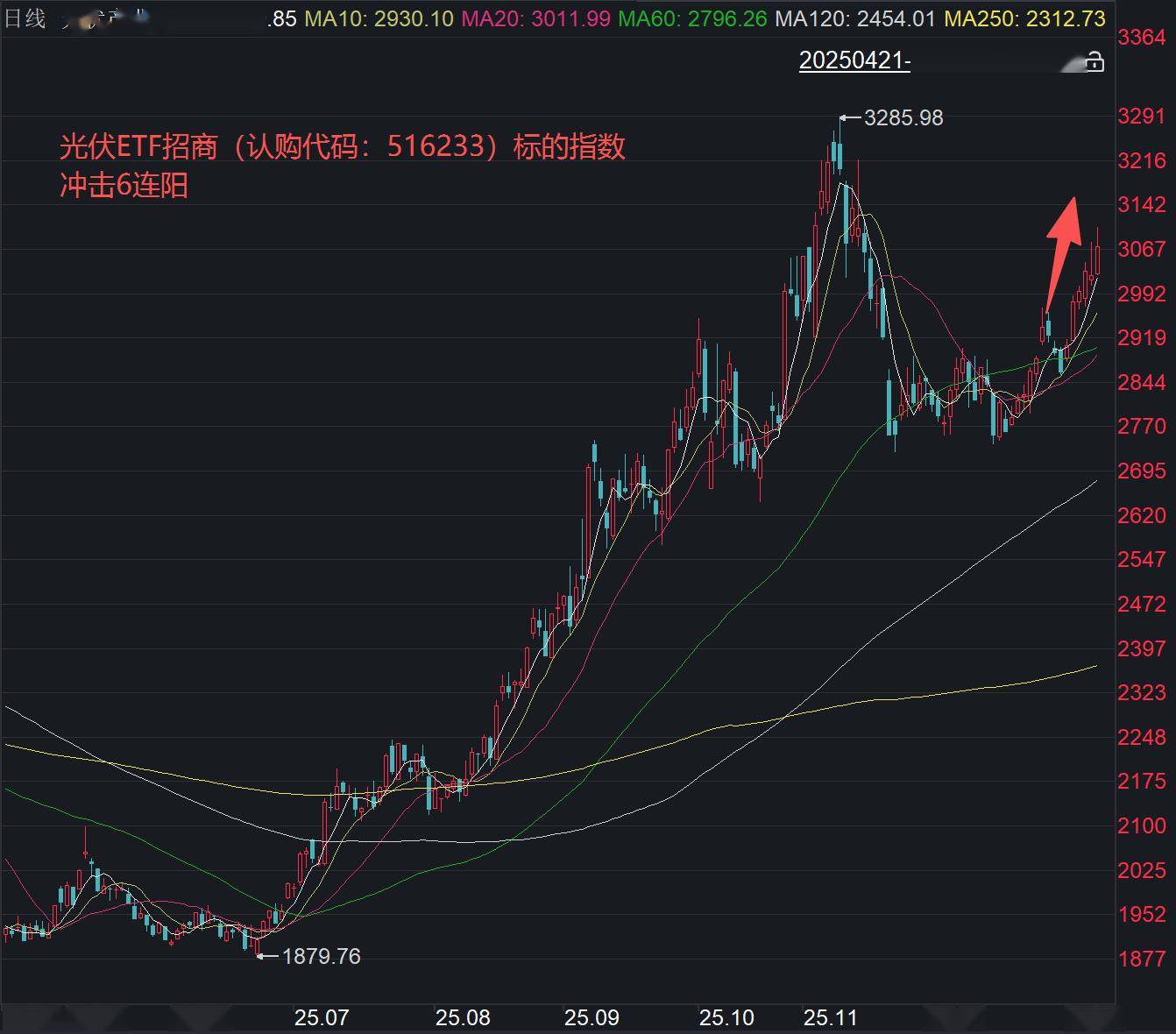
Core Viewpoint - The solar industry is experiencing significant developments, with the cancellation of export tax rebates marking a shift towards high-quality growth, while the space solar sector is anticipated to see increased demand and investment opportunities in the coming years [3][4][5]. Group 1: Solar Industry Developments - The Ministry of Finance and the State Taxation Administration announced the cancellation of the value-added tax export rebate for solar products starting April 1, 2026, following a previous reduction in the rebate rate from 13% to 9% in 2024 [3]. - This policy shift indicates a transition in China's renewable energy strategy from "scale expansion" to "high-quality development," with the solar and battery industries maintaining a dominant global position, accounting for over 80% of global solar module production and over 90% in several key segments [3]. - The end of the "rebate dividend" era is expected to lead to a surge in orders and installations before the policy takes effect, while also encouraging technological innovation and brand development among companies [3]. Group 2: Space Solar Opportunities - The commercial space sector has gained traction, with space solar technology recognized for its high value and potential, positioning it as a leading segment in the new energy sector by 2026 [4]. - Space solar is becoming the preferred power solution for spacecraft due to abundant sunlight in space and the simplicity of deploying solar panels on satellites [5]. - P-type HJT and perovskite batteries are projected to become mainstream solutions for space solar, with advantages such as lightweight design and high efficiency, respectively [5]. Group 3: Investment Opportunities - The solar ETF (subscription code: 516233) was officially launched from January 12 to January 23, 2026, focusing on the core solar industry chain and leading companies, providing investors with a chance to capitalize on the new growth cycle in the solar sector [6]. - The China Securities Index for the solar industry has shown an annualized return of 8.73% and a Sharpe ratio of 0.36%, outperforming other indices in the solar sector [6]. - The solar industry is expected to enter a new phase of high-quality development, with signs of recovery in revenue and net profit growth starting from the first quarter of 2025 [9].
迪安诊断涨停!医疗器械指数ETF(159898)“含脑量”24%成脑机接口抢筹良器?
Sou Hu Cai Jing· 2026-01-12 01:58
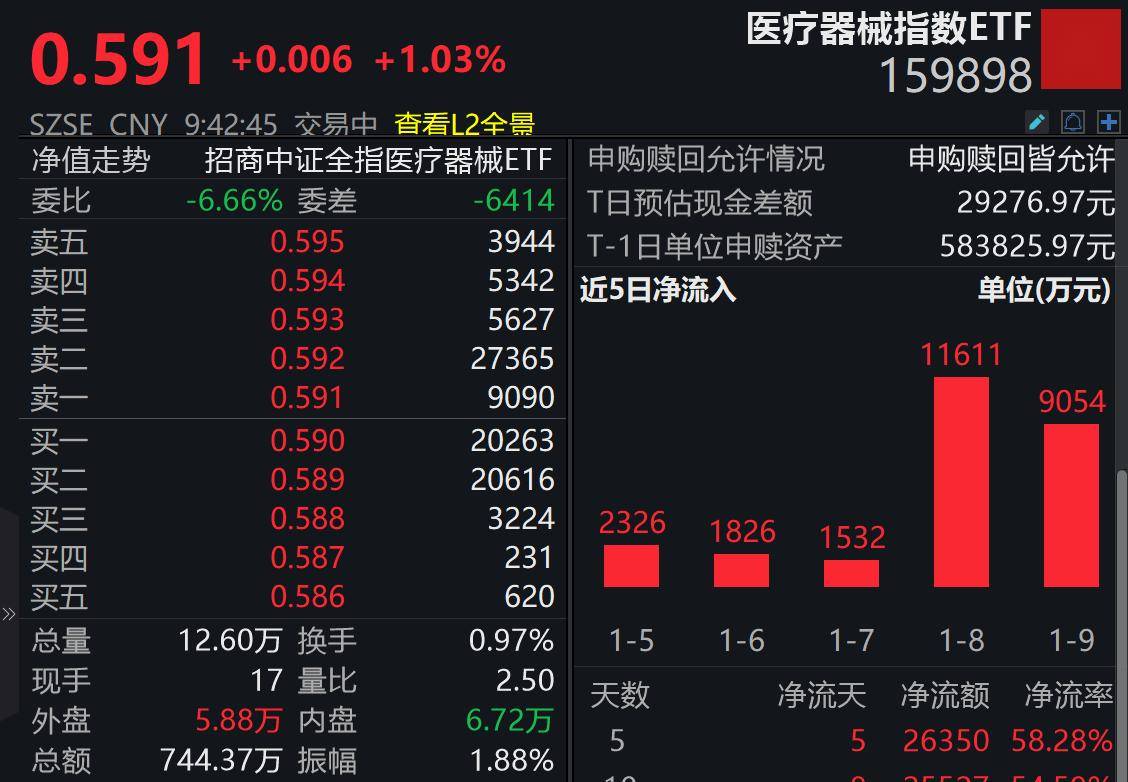
Core Insights - The brain-computer interface (BCI) sector is experiencing significant momentum driven by multiple catalysts, including investment inflows into the medical device index ETF, which has a 24% exposure to BCI-related companies [1][4] - The medical device index ETF (159898) has attracted 264 million CNY over five consecutive days, indicating strong investor interest [1][2] - Key stocks in the ETF, such as Di'an Diagnostics and Innotec, have shown substantial price increases, reflecting positive market sentiment towards the BCI sector [1][3] Investment Trends - The medical device index ETF (159898) has seen a high opening with a gain of over 1%, and several component stocks have experienced significant price increases, indicating a bullish trend in the market [1][3] - The ETF's structure allows for efficient exposure to the BCI sector, which is currently underrepresented in the A-share market [2][4] Industry Dynamics - The BCI market is expected to grow significantly, with projections indicating a global market size of approximately 2.62 billion USD in 2024, increasing to 12.4 billion USD by 2034, reflecting a compound annual growth rate of 17.35% [4] - Domestic policies are increasingly supportive of BCI development, with goals set for 2027 and 2030 to establish a competitive industry ecosystem [3][4] - Technological advancements in BCI, including new wireless implant systems, are enhancing the feasibility and efficiency of these devices, further driving market interest [3][4]

百亿私募增至113家!量化私募2025年备案产品增幅114.31%;段永平晒14年狂赚18倍;高毅、淡水泉、景林年末“扫货”路线曝光|私募透视镜
Jin Rong Jie· 2026-01-11 03:04
Group 1: Private Equity Industry Overview - The private equity industry is projected to exceed 22 trillion yuan by 2025, with the number of billion-yuan private equity firms increasing to 113, of which 55 are quantitative firms, marking a significant shift in the industry landscape [1] - In the past five years, the leading quantitative private equity firms have seen dramatic changes, with the "Four Kings" managing over 70 billion yuan each, and Century Frontier adding over 30 billion yuan in net scale in one year [1] - The competition among quantitative private equity firms has intensified, with AI becoming a core engine and a fierce talent competition emerging, while the top firms are actively promoting investor education [1] Group 2: Product Registration and Market Dynamics - The number of registered private equity securities products is expected to surge to 12,645 in 2025, nearly doubling from 2024, with a growth rate of 99.54% [2] - Quantitative investment products have seen a remarkable increase, with 5,617 products registered, a growth rate of 114.31%, accounting for 44.42% of the total [2] - The market structure is evolving, with a rise in multi-asset, futures, and derivative strategies, while stock strategies remain dominant [2] Group 3: Popularity Rankings and Performance - In 2025, 14 out of the top 20 popular private equity firms are quantitative, with Ningbo Huansheng Quantitative leading in popularity, achieving an average return of 58.52% across three products [3] - The top fund managers include Dan Bin, who has an average return of 150.26% over three years, and Liang Wenfeng, who ranks second in popularity among fund managers [3] - The popularity rankings highlight a significant presence of subjective private equity firms, with 14 out of the top 20 fund managers being from this category [3] Group 4: Custody Market Landscape - The private equity fund custody market is increasingly dominated by brokerage firms, with a custody market share of 98.52% for brokerages compared to only 1.48% for banks [4] - Guotai Junan leads the market with 3,067 new custody products and a 25.17% market share, followed by CITIC Securities and China Merchants Securities [4] - The concentration in the industry is strengthening, with the top three brokerages accounting for nearly 60% of new custody products [4] Group 5: Investment Strategies and Future Outlook - The investment focus for 2026 includes sectors such as brain-computer interfaces and commercial aerospace, with significant interest from private equity giants [6] - The market for brain-computer interfaces is expanding, with companies like Xiangyu Medical seeing stock price increases of up to 86.39% due to their products being adopted by major hospitals [6] - The outlook for 2026 suggests a continued bullish trend in A-shares, driven by liquidity and fundamental factors, with a potential "water buffalo" market expected [12]

央行投放“精耕细作”,2026年流动性充裕格局已明确
Zhong Guo Zheng Quan Bao· 2026-01-09 09:48
Core Viewpoint - The People's Bank of China (PBOC) is expected to maintain liquidity through various policy tools, including government bond transactions and Medium-term Lending Facility (MLF), to ensure a continued loose monetary environment in January [1][5]. Group 1: Liquidity Factors - Multiple factors, including fiscal deposits and credit issuance, are anticipated to impact liquidity in January, with a net increase in fiscal deposits estimated at approximately 620 billion yuan, potentially widening the liquidity gap [3][5]. - The total liquidity gap for January 2026 is projected to be around 1.9 trillion yuan, influenced by fiscal deposits, cash withdrawals, and bank reserve requirements [3][5]. Group 2: Policy Tools Utilization - The PBOC is expected to actively utilize policy tools such as reverse repos and MLF to inject medium-term liquidity into the market, reflecting a continuation of the "moderately loose" monetary policy stance [5][7]. - The central bank's approach may include a combination of reverse repos, MLF, and government bond transactions, with a cautious stance on tools like reserve requirement ratio (RRR) cuts and interest rate reductions [7][6]. Group 3: Market Expectations - Market expectations indicate that the PBOC will increase the use of policy tools to stabilize the funding environment, with anticipated lower fluctuations in funding rates compared to seasonal patterns [5][6]. - The average overnight funding rate is expected to remain below the policy rate, with a low probability of the one-day bond repurchase rate returning to 1.35%-1.4% throughout January [5][6].