
奔驰

Search documents
崔东树:2025年1-9月进口汽车36万辆 同比下降32%
智通财经网· 2025-10-28 09:33
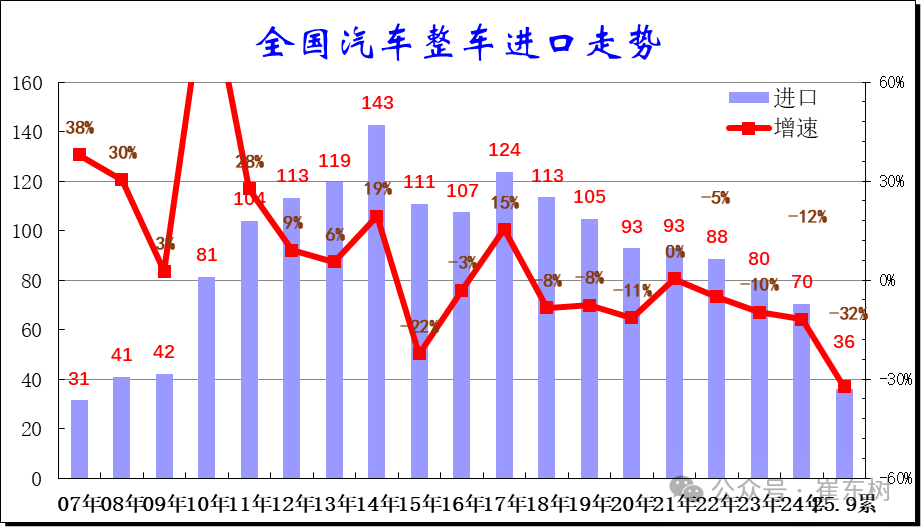
Core Insights - The import of automobiles in China is experiencing a significant decline, with a projected 360,000 units imported from January to September 2025, representing a 32% year-on-year decrease. This trend is attributed to the rise of domestic new energy vehicles and a shift towards high-end models, leading to sustained pressure on imported vehicles [1][6][20]. Group 1: Overall Trends in Automobile Imports - The peak of automobile imports occurred in 2014 with 1.43 million units, followed by a continuous decline. The import volume is expected to drop to 700,000 units in 2024, down 12% year-on-year, and further to 360,000 units in the first nine months of 2025, down 32% year-on-year [6][20]. - In September 2025, 41,000 imported vehicles were recorded, marking a 26% decline year-on-year and a 10% decrease from August [1][6]. Group 2: Country-Specific Import Data - The top ten countries for automobile imports in September 2025 included Japan (18,265 units), Germany (10,549 units), and Slovakia (3,832 units). Notably, imports from the U.S. have plummeted, with only 41,736 units imported from January to September 2025, a staggering 52% decrease year-on-year [1][2][20]. - The U.S. vehicle imports saw a dramatic drop in September 2025, with only 1,462 units imported, reflecting an 85% year-on-year decline [2][20]. Group 3: Market Dynamics and Consumer Preferences - The demand for traditional fuel vehicles continues to shrink, with domestic manufacturers benefiting from a low base effect in sales. The market is shifting towards electric vehicles, which has led to a notable decrease in the demand for imported fuel vehicles [2][6][15]. - The luxury car segment showed some improvement in September 2025, with brands like Rolls-Royce and Ferrari performing well, particularly in the Shanghai region [3]. Group 4: Import Structure and Vehicle Types - In the first nine months of 2025, passenger cars accounted for 98% of total imports, with a significant focus on gasoline vehicles, which dominate the market despite the rise of new energy vehicles [12][13]. - The import of electric vehicles has seen a drastic decline, with pure electric vehicle imports dropping by 81% year-on-year in the first nine months of 2025 [14][15]. Group 5: Future Outlook - The ongoing decline in imported vehicles is expected to continue, with challenges in maintaining a reasonable scale of imports and ensuring the security of international supply chains amid complex international relations [2][20].

动力更强,玩法更多 三电机、四电机车型盘点
Zhong Guo Zhi Liang Xin Wen Wang· 2025-10-28 06:15
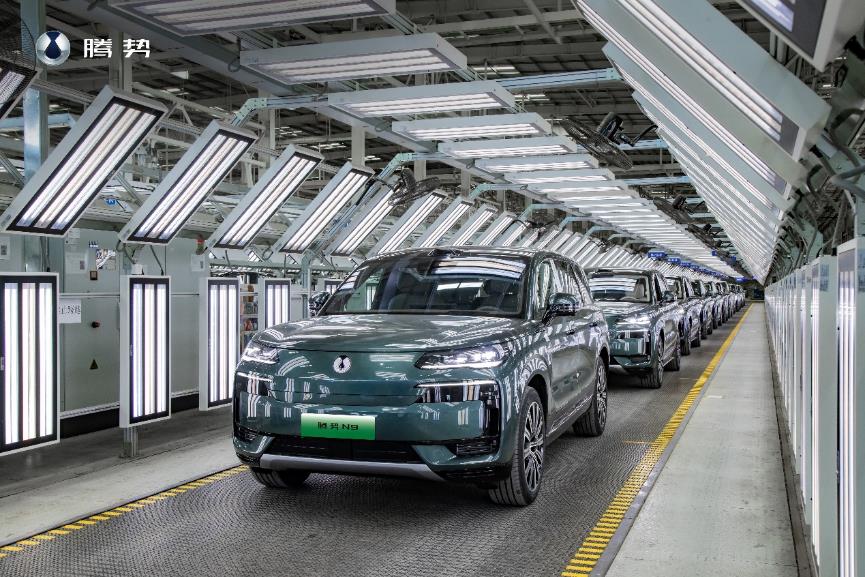
Core Insights - The article discusses the growing popularity of three-motor and four-motor electric vehicles, highlighting specific models and their features. Group 1: Vehicle Models - The Tengshi N9 is a large luxury SUV with a price range of 389,800 to 449,800 yuan, achieving 0-100 km/h in 3.9 seconds and a top speed of 230 km/h, powered by a three-motor system [1][3][5] - The Lynk & Co 900 is positioned as a large six-seat SUV, priced between 289,900 and 396,900 yuan, with a top speed of 240 km/h and a 0-100 km/h acceleration time of 4.3 seconds, featuring a three-motor setup in the top model [7][9][12] - The Xiaomi SU7 Ultra is marketed as a peak driving machine, priced at 529,900 yuan, with an impressive 0-100 km/h time of 2.1 seconds and a top speed of 350 km/h, utilizing a three-motor system [16] - The Yangwang U8L, part of BYD's flagship brand, features a four-motor system, priced at 1.28 million yuan, with a 0-100 km/h acceleration time of 3.5 seconds [17][19][24] - The Mercedes-Benz G580, a pure electric model from the G-Class family, is priced at 2.17 million yuan, achieving 0-100 km/h in 4.9 seconds with a four-motor setup [25][26][28] Group 2: Design and Features - The Tengshi N9 features a "elegant momentum" design language, with a spacious interior and multiple seating configurations, including options for cinema and relaxation modes [3][5][7] - The Lynk & Co 900 incorporates the "THE NEXT DAY" design language, offering customizable LED lighting and a luxurious interior with advanced materials [10][12] - The Xiaomi SU7 Ultra emphasizes aerodynamics with various enhancements, including a significant downforce capability and a high-performance interior featuring carbon fiber [16] - The Yangwang U8L boasts a symmetrical interior design with advanced seating options and a high-tech dashboard [21][23] - The Mercedes-Benz G580 maintains classic design elements while integrating modern technology, including a dual-screen layout for the dashboard [26][28] Group 3: Performance Specifications - The Tengshi N9 delivers a combined power of 680 kW and torque exceeding 900 Nm, with advanced suspension for stability [5][24] - The Lynk & Co 900's top model features a peak power of 650 kW and torque of 1248 Nm, with a battery capacity of 52.38 kWh [12][14] - The Xiaomi SU7 Ultra achieves a maximum power of 1548 hp and torque of 1770 Nm, with a range of 630 km [16] - The Yangwang U8L has a peak power of 1200 hp and torque of 1520 Nm, with a pure electric range of 200 km [24] - The Mercedes-Benz G580 features a maximum power of 587 hp and torque of 1164 Nm, with a battery capacity of 116 kWh [28]
产品为王,保时捷也不能例外
Zhong Guo Jing Ji Wang· 2025-10-28 06:10
Core Insights - Porsche reported a significant loss of €966 million (approximately ¥8 billion) in Q3, with profits plummeting 99% from €4 billion in the same period last year to just €40 million [1][3] - The decline in sales and profits has raised concerns about Porsche's market position, leading to discussions about its ability to recover through new product launches [1][3] Financial Performance - Q3 sales revenue was €8.7 billion, below market expectations of €9 billion, with a total revenue of approximately €26.86 billion for the first three quarters, a 6% year-on-year decline [1][3] - Deliveries in the first three quarters totaled 212,509 units, a 6% decrease compared to the previous year, with notable declines in key markets such as China, where sales dropped 26% [2][4] Strategic Challenges - Porsche's losses are attributed to past strategic decisions, including the postponement of electric vehicle launches and the extension of the lifecycle for several fuel and hybrid models, resulting in additional costs of approximately €2.7 billion [3][4] - The U.S. tariff policy has further pressured Porsche's performance, with an estimated additional cost of €300 million in the first three quarters of 2025, leading to a projected total loss of €700 million for the year [4] Market Dynamics - Despite the challenges, Porsche achieved record delivery numbers in the U.S. market, with sales increasing by 5% to 64,446 units, contrasting with a 26% decline in China [4][5] - The company is facing intense competition in the entry-level segment, with competitors offering superior price, quality, and emotional value, leading to a loss of younger customers [7][10] Product Development and Innovation - Porsche has not introduced a new flagship model in over a decade, leading to concerns about its product lineup and market appeal [5][11] - The electric vehicle strategy has been inconsistent, with the flagship electric model Taycan experiencing a 10% decline in sales, and the new electric Macan facing delays and challenges in the competitive Chinese market [8][10] Future Outlook - Porsche plans to optimize its organizational structure, with plans to lay off 1,900 employees and cut 2,000 temporary positions by 2025 [4][11] - The company anticipates that its performance will hit bottom this year, with expectations of significant improvement starting in 2026, although this is still far from its historical profit margins of 15% [4][11]
利润暴跌99%,保时捷在中国卖不动了?
阿尔法工场研究院· 2025-10-28 00:06
Core Viewpoint - Porsche is experiencing a significant decline in performance, with a 99% drop in operating profit and a challenging market environment, particularly in China, which has become a major drag on its sales [4][5][12]. Financial Performance - Porsche's revenue for the first three quarters of 2025 was €26.86 billion, a decrease of 6% compared to €28.56 billion in the same period of 2024 [9]. - The operating profit plummeted from €4.035 billion to €40 million, marking a staggering 99% decline [9]. - Deliveries to customers fell by 6% to 212,509 units [9]. - The stock price has dropped nearly 58% from its IPO price of €82.5 to €34.81 as of October 24 [9]. Reasons for Decline - The decline is attributed to multiple factors, including: 1. High restructuring costs due to an uncertain electrification strategy, resulting in an additional €2.7 billion in expenses [10][11]. 2. Special expenses related to product strategy adjustments [12]. 3. A challenging market environment in China, which was once Porsche's largest market, with sales expected to drop 28% in 2024 and another 26% in the first three quarters of 2025 [12]. 4. Organizational change costs and increased import tariffs in the U.S. [12]. Market Challenges - The luxury car market is facing broader challenges, with competitors like Mercedes, BMW, and Audi also reporting significant profit declines [17]. - In the first half of 2025, Mercedes saw a 55.8% drop in net profit, while BMW and Audi reported declines of 29% and 37.5%, respectively [17]. - Sales in China for these brands have also decreased, with Mercedes down 14%, Audi down 10.2%, and BMW down 15.5% [19]. Strategic Adjustments - Traditional luxury car brands are implementing cost-cutting measures, including layoffs, to manage financial pressures [20][21]. - Mercedes is executing its largest-ever layoff plan, aiming to save €5 billion annually by 2027 [21]. - Porsche plans to optimize its organizational structure, with plans to cut 1,900 jobs and reduce 2,000 temporary positions [21]. - The aggressive electrification goals are being replaced with more pragmatic approaches, with major brands adjusting their strategies for electric and hybrid vehicles [22].
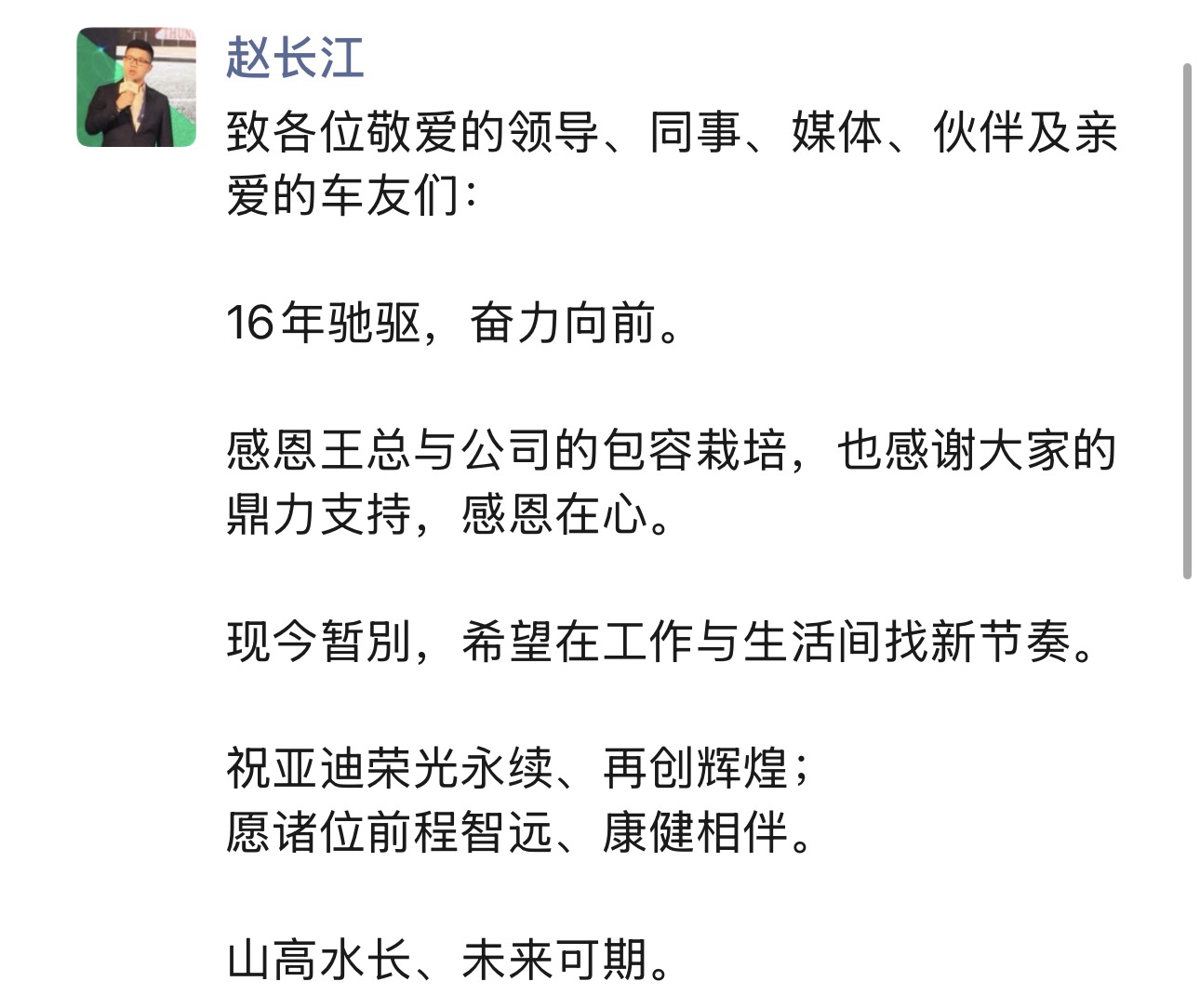
效力16年后,原腾势总经理赵长江宣布离开比亚迪
Guan Cha Zhe Wang· 2025-10-27 21:09
Core Insights - Zhao Changjiang announced his departure from BYD after 16 years of service, having played a significant role in revitalizing the Tengshi brand [12] - Tengshi, initially a joint venture between BYD and Mercedes, faced continuous market struggles, accumulating losses exceeding 4 billion yuan since 2016 [8] - Under Zhao's leadership, Tengshi launched the D9 model, achieving unprecedented success with total sales of 128,000 units in 2023 [10] Group 1 - Zhao Changjiang joined BYD in 2009 and rose to become the General Manager of BYD Auto Sales Co., Ltd. by 2017 [4] - In 2021, BYD decided to revamp its high-end brand, appointing Zhao as the General Manager of the Tengshi brand division [4] - Tengshi became a wholly-owned subsidiary of BYD in September 2024 after a series of equity adjustments [8] Group 2 - The D9 model was the first vehicle launched after the brand's revamp, marking a significant turnaround for Tengshi [10] - Despite the initial success of the D9, subsequent models like the N7, N8, and Z9 did not replicate its success [10] - Tengshi's total sales for 2024 were 126,000 units, falling short of the 200,000 unit target, with a goal of 300,000 units set for 2025 [11] Group 3 - Zhao Changjiang's role was adjusted in July 2023, and he expressed intentions to continue working in a new position [11] - Speculation arose regarding his next move, with rumors suggesting a potential role at Chery and Huawei's Hongmeng Intelligent brand, though this remains unconfirmed [12]

保时捷利润暴跌99% 将以裁员应对业绩滑铁卢
Zheng Quan Shi Bao Wang· 2025-10-27 08:29
Core Insights - The luxury car market is undergoing a significant "bubble deflation" process, with Porsche experiencing a substantial decline in performance [1] - Porsche reported a third-quarter loss of €966 million, with a 99% year-on-year drop in sales profit for the first three quarters [1] - The company's revenue for the first nine months was approximately €26.8 billion, reflecting a 6% year-on-year decrease [1] Market Challenges - U.S. tariff policies have contributed to Porsche's performance pressure, with an estimated loss of around €700 million for the year due to these tariffs [1] - The rise of China's smart electric vehicle industry, including competitors like Xiaomi, has impacted Porsche's brand premium and market position [1] - Porsche's sales in China have seen a significant decline, with a 15% drop in 2023 and a projected 28% decrease in 2024 [2] Strategic Responses - To address the declining performance, Porsche plans to optimize its organizational structure by laying off 1,900 employees and cutting 2,000 temporary positions this year [3] - The company has also postponed the launch of certain electric vehicle models and extended the market lifecycle of several fuel and hybrid models [3] - Porsche has decided to terminate its battery production plans as part of its strategic adjustments [3]
全球再裁3万人,奔驰被逼到悬崖边上
Tai Mei Ti A P P· 2025-10-27 01:54
Core Viewpoint - Mercedes-Benz is initiating its largest-ever layoff plan, aiming to cut 30,000 jobs to save €5 billion (approximately ¥41.3 billion) annually, which will be reinvested into the development of 36 new models, including 17 electric vehicles [1][5]. Group 1: Layoff and Cost-Saving Measures - The layoff plan includes attractive severance packages, with some employees eligible for up to €500,000 (approximately ¥4.13 million) in compensation [3]. - The company has already seen 4,000 employees voluntarily leave under this plan, with senior management receiving significant payouts [3]. - This marks the third major restructuring effort by Mercedes in four years, following previous layoffs of 10,000 in 2019 and additional cuts in 2023 [4][5]. Group 2: Sales Decline and Market Challenges - Mercedes reported a 12% year-on-year decline in global sales for Q3, with a staggering 27% drop in the Chinese market [6]. - The sales downturn is attributed to the competitive pressure from new electric vehicle entrants and the need for internal cost optimization [6][7]. Group 3: Shift in Electric Vehicle Strategy - The company initially pursued a "oil-to-electric" strategy with the EQC model, which faced significant market challenges and led to a reassessment of its approach [9][10]. - CEO Ola Källenius has shifted the strategy from "oil-to-electric" to a fully electric model, emphasizing the need for a dedicated electric platform [10][11]. - Despite setbacks with the EQS model, which failed to meet market expectations, Mercedes has ramped up its electric vehicle offerings, achieving a 67% increase in sales for electric models in 2022 [18]. Group 4: Strategic Adjustments and Future Outlook - The company has recognized the challenges of transitioning to electric vehicles and has adjusted its strategy to maintain a dual approach, balancing electric and internal combustion engine models [19]. - The target for electric vehicle sales to account for 50% of total sales has been postponed from 2025 to 2030, reflecting a more cautious approach [19]. - Mercedes is now focused on survival and adapting to market demands, with the understanding that the transition to electric vehicles is a long-term endeavor [20][21].
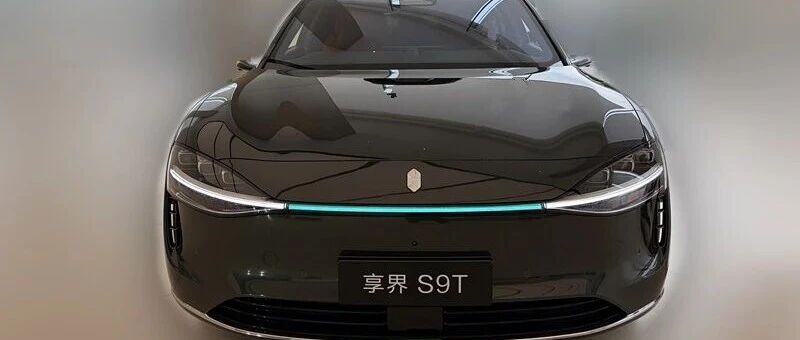
享界S9T:喜欢瓦罐会果断下定,对比最多的是问界和BBA
车fans· 2025-10-27 00:30
Sales Performance - The S9T has generated significant interest, with 75 units sold last month and 27 pre-orders placed before the National Day holiday [2][3] - The most popular configurations are the range-extended Max with a price of 324,800 and the pure electric Max long-range at 329,800 [3] - The best-selling colors are "仙踪绿" (Mystic Green), "寰宇红" (Cosmic Red), and "鎏金黑" (Golden Black) [3][16] Customer Demographics - Customers are primarily divided into two groups: those transitioning from the S9 and those specifically interested in travel vehicles [3] - Notable customers include a graduate student who prefers the S9T for its travel capabilities and a textile factory owner who initially considered luxury brands but was swayed by the S9T's features [6][8] Competitive Analysis - The main competitors identified are the Tesla Model Y and NIO ET5T, although customers often compare various models based on budget rather than fixed competitors [11][12] - The S9T is perceived as a strong alternative to traditional luxury brands, with customers associating it with high-quality manufacturing due to its collaboration with BAIC [6][8] Customer Feedback - Common complaints from customers include concerns about noise insulation due to frameless doors, visibility issues with the steering wheel obstructing the instrument panel, and limited trunk space [18] - Maintenance costs for the range-extended version are approximately 700 yuan per service, while the pure electric version costs around 650 yuan every 20,000 kilometers [20] Marketing and Promotions - The company offers promotional activities for car owners, including points for referrals that can be redeemed for discounts [21] - There are strict price controls on the new model, with penalties for dealerships that offer unauthorized discounts [21]
光抢安世半导体不够?冯德莱恩:欧洲机遇已到,首先从中国下手
Sou Hu Cai Jing· 2025-10-26 23:57
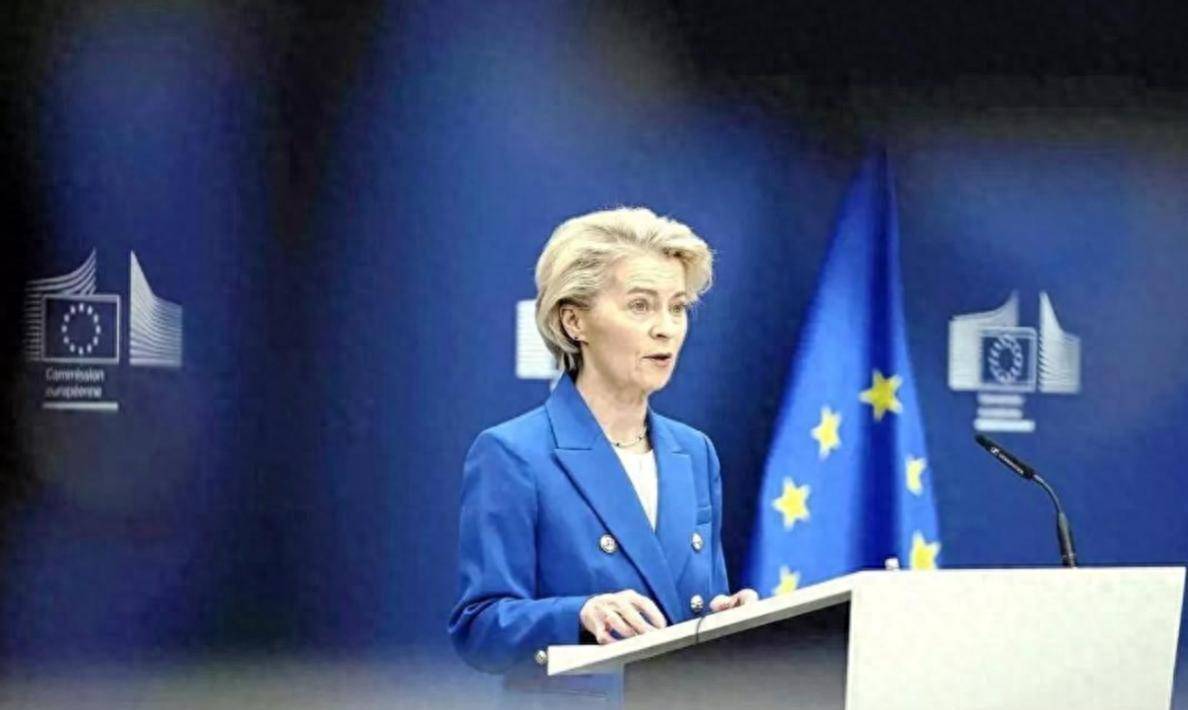
Core Points - The article discusses the European Union's (EU) struggle to maintain industrial competitiveness against China, particularly in the clean technology sector, while facing internal and external pressures [3][10][19] - The EU's ambitious climate goals, including a 90% reduction in greenhouse gas emissions by 2040 and achieving net-zero emissions by 2050, are challenged by geopolitical realities and supply chain vulnerabilities [3][12][19] Group 1: EU's Industrial Strategy and Challenges - The EU aims to reshape its industrial competitiveness and reduce emissions significantly, viewing this as a necessary response to China's dominance in clean technologies [3][16] - The recent actions by the Dutch government to freeze the control of a semiconductor company by a Chinese firm highlight the EU's urgent need to secure its supply chains, particularly in the automotive sector [5][6] - The EU's reliance on Chinese technology and the subsequent supply chain disruptions have forced it to reconsider its aggressive stance towards China [6][19] Group 2: Geopolitical Dynamics - The EU's efforts to establish a "green alliance" are complicated by the withdrawal of the U.S. from the clean energy race, as indicated by Trump's policies favoring fossil fuels [10][12] - The EU faces pressure from traditional energy suppliers, such as the U.S. and Qatar, regarding its stringent environmental regulations, which could jeopardize energy supplies [12][18] - The EU's internal divisions regarding financial support for Ukraine using frozen Russian assets reflect broader strategic contradictions within the bloc [14][19] Group 3: Future Outlook - The EU's current approach of confrontation with China may not be sustainable, as it struggles with internal dissent and external pressures [19] - The article suggests that the EU may need to adopt a more cooperative stance with China, focusing on mutual benefits rather than competition [19] - The ongoing semiconductor supply crisis serves as a wake-up call for the EU, emphasizing the need for a balanced strategy that includes collaboration with China [6][19]
南财观察:硬刚荷兰 底气何在?
2 1 Shi Ji Jing Ji Bao Dao· 2025-10-26 09:41
Core Insights - A control dispute over a Chinese semiconductor company, Anshi Semiconductor, is causing unprecedented crises in the global automotive supply chain [1][2] - Anshi Semiconductor, previously part of Philips, was acquired by China's Wentai Technology for 33 billion yuan in 2019, and has since risen to become the third-largest player in the global power semiconductor market [1] - The Dutch government has frozen Anshi's global assets and knowledge rights for one year, citing national security, and has removed the Chinese CEO, leading to a forced custodianship of Wentai's shares [1][2] Group 1 - Anshi Semiconductor's production capacity is heavily concentrated in Dongguan, China, where 80% of its output is located, producing 70% of the world's automotive-grade power chips [2] - The company announced an "independent operation" status, rejecting any directives not recognized by its Chinese division, and severed system connections with its Dutch headquarters [2] - The European Automobile Manufacturers Association (ACEA) warned of a potential three-month disruption in the automotive supply chain if the dispute is not resolved quickly, with major manufacturers like Volkswagen and BMW facing severe inventory shortages [2][3] Group 2 - Wentai Technology reported a record high revenue from its semiconductor business in China for Q3 2025, with a year-on-year growth of approximately 14%, and automotive business revenue increasing over 26% [3] - China accounted for 49.29% of Anshi's global revenue, making it the fastest-growing and highest strategic priority region for the company [3] - The Dutch Economic Affairs Minister signaled a willingness to negotiate, emphasizing Anshi's importance to the global supply chain, while the Chinese market's support has empowered Anshi's response to the Dutch headquarters [2][3]
