
合盛硅业

Search documents
合盛硅业(603260) - 合盛硅业关于召开2024年年度股东大会的通知
2025-06-05 09:15
证券代码:603260 证券简称:合盛硅业 公告编号:2025-036 (五)网络投票的系统、起止日期和投票时间。 股东大会召开日期:2025年6月26日 本次股东大会采用的网络投票系统:上海证券交易所股东大会网络投票 系统 合盛硅业股份有限公司 关于召开2024年年度股东大会的通知 本公司董事会及全体董事保证本公告内容不存在任何虚假记载、误导性陈述 或者重大遗漏,并对其内容的真实性、准确性和完整性承担法律责任。 重要内容提示: 一、 召开会议的基本情况 (一)股东大会类型和届次 2024年年度股东大会 (四)现场会议召开的日期、时间和地点 召开的日期时间:2025 年 6 月 26 日 14 点 00 分 召开地点:浙江省慈溪市北三环东路 1988 号恒元广场 A 座 4 楼公司会议室 (二)股东大会召集人:董事会 (三)投票方式:本次股东大会所采用的表决方式是现场投票和网络投票相结合的 方式 网络投票系统:上海证券交易所股东大会网络投票系统 网络投票起止时间:自2025 年 6 月 26 日 至2025 年 6 月 26 日 采用上海证券交易所网络投票系统,通过交易系统投票平台的投票时间为股 东大会召开当 ...

光伏月报:工业硅:基本面改善困难,加速下跌探底多晶硅:政策真空期,硅料再度进入弱势局面-20250604
Jian Xin Qi Huo· 2025-06-04 03:21
Report Information - Report Date: June 4, 2025 [2] - Report Type: Monthly Report - Report Focus: Industrial Silicon and Polysilicon in the Photovoltaic Industry Industry Investment Rating - Not provided in the report Core Views - Industrial silicon's fundamentals are difficult to improve, and the price will accelerate to fall and reach the bottom in June [4][7] - Polysilicon has entered a policy vacuum period, and the spot price will continue to be under pressure in June, with the futures price remaining weak [4][8] Summary by Directory Industrial Silicon 1. Market Review and Outlook - In May, industrial silicon futures and spot prices entered an accelerated downward trend. By May 30, the main - continuous contract closed at 7,160 yuan/ton, with a monthly decline of 9.54%. Spot prices also fell significantly [21] - In June, due to the macro - policy observation period, the decline of the commodity index, and the lack of supply - side reduction and demand growth, the price will accelerate to explore the bottom, and the improvement of fundamentals will lag behind the price [7][23][24] 2. Supply Side - In 2024, industrial silicon production increased rapidly, and there is still new production capacity expected to be put into operation in 2025. In April 2025, the effective production capacity was 748,200 tons, with a monthly increase of 1.34% and a year - on - year increase of 7.83% [27] - The current supply - side reduction is less than expected. To reach the supply - demand balance, the weekly output should drop to 63,200 tons, but in May, the monthly output remained above 308,500 tons. The southwest region faces the pressure of resuming production, and the output of the three northern regions continues to increase [29][30][32] 3. Demand - Organic silicon enterprises have reached a consensus on production reduction to support prices, and the demand for industrial silicon in June is expected to be about 100,000 tons [46][47] - The change in polysilicon production is relatively limited, and the monthly demand for industrial silicon will remain below 110,000 tons [49] - The export of industrial silicon has ended the "rush - export" situation, and the export volume and price are both declining [53] 4. Inventory - The total industrial silicon inventory is 737,165 tons, with the inventory/consumption ratio increasing to 2.38. The futures inventory has been continuously cancelled, while the现货 inventory is still increasing [54][55] Polysilicon 1. Market Review and Outlook - In May, the price of the polysilicon futures main contract was weak. The "rush - installation" in the photovoltaic industry has ended, and the supply - side needs to expand production reduction to achieve effective inventory reduction [60][61] - In June, after the "rush - installation" ends, the weak downstream demand will be transmitted upstream. The spot price will continue to test the cost support, and the futures price will remain weak [8][63] 2. Inventory - As of May 30, polysilicon, silicon wafers, and battery cells have all entered a rapid inventory accumulation stage, and the inventory reduction is still difficult [65] 3. Terminal Demand - The photovoltaic "rush - installation" has ended. The new photovoltaic installation volume is expected to decline in June, and the overseas demand is relatively stable. The supply - demand contradiction will gradually ease [67] 4. Supply Side - The new production capacity of polysilicon is difficult to be realized. The annual demand growth is limited, and the supply - side needs to further increase production reduction to achieve supply - demand balance [77][79][81]
知名企业:瓦克化学复盘启示,国内应如何布局?(附36页PPT)
材料汇· 2025-06-03 15:04
Core Viewpoint - Wacker Chemie, a leading global player in silicon-based and ethylene/acetic acid-based materials, emphasizes differentiation, new technology development, and globalization as key competitive factors for sustained growth and market leadership [2][3][4]. Differentiation Competition - Wacker focuses on high-value specialty products in its core businesses of silicone and polymers, with 2024 revenue contributions of 50% and 26% respectively, and EBITDA contributions of 41% and 32% [3][19]. - The company has over 3,000 types of silicone products, with specialty silicones accounting for 85% of its silicone sales in 2023 [3][56]. - Wacker has established a strong position in the photovoltaic polysilicon market, particularly in the U.S., maintaining leadership in niche markets despite global competition [3][62]. New Technology Development - Wacker is investing in high-growth areas such as semiconductor polysilicon and biotechnology, with semiconductor polysilicon sales expected to account for approximately 50% of total sales in 2024 [4][19]. - The biotechnology segment has shown a CAGR of 8% from 2008 to 2024, with plans to reach €1 billion in revenue by 2030, up from €370 million in 2024 [4][19]. Globalization Strategy - Wacker operates 27 production sites, 21 technology centers, and 46 sales offices globally, with sales distribution of 16% in Germany, 23% in Europe, 19% in the Americas, and 37% in Asia [5][19]. - The company has enhanced its upstream supply chain through acquisitions, such as the purchase of a silicon metal plant in Norway, achieving about one-third self-sufficiency in silicon-based raw materials [5][19]. - Wacker's global market expansion includes a comprehensive presence in emerging markets like China, benefiting from rising per capita consumption levels [5][19]. Insights for Chinese Chemical Enterprises - Chinese chemical companies are encouraged to focus on fine chemicals and new technology sectors, as well as to enhance their globalization capabilities to expand market reach and reduce costs [6].


24年营收微增利润承压、25Q1盈利能力环比修复
Tianfeng Securities· 2025-05-28 14:45
Investment Rating - Industry rating is Neutral (maintained rating) [1] Core Viewpoints - The basic chemical industry saw a slight increase in revenue in 2024, with a year-on-year growth of 2.6%, reaching a total revenue of 22,285 billion yuan. However, profits faced pressure, with a net profit decrease of 5.7% to 1,211 billion yuan [4][13]. - In Q1 2025, the industry experienced a year-on-year revenue increase of 5.4%, totaling 5,345 billion yuan, while net profit rose by 10.6% to 374 billion yuan [6][10]. - The overall gross profit margin for the industry in 2024 was 12.8%, a decline of 0.7 percentage points year-on-year, while the net profit margin was 5.6%, down 0.5 percentage points [4][13]. Summary by Sections Revenue and Profit Trends - In 2024, the basic chemical industry achieved a total operating revenue of 22,285 billion yuan, with a slight year-on-year increase of 2.6%. Operating profit was 1,564 billion yuan, down 4.1% year-on-year, and net profit attributable to shareholders was 1,211 billion yuan, down 5.7% [4][13]. - For Q1 2025, the industry reported operating revenue of 5,345 billion yuan, a year-on-year increase of 5.4%, and a net profit of 374 billion yuan, reflecting a 10.6% increase [6][10]. Profitability Metrics - The industry’s overall gross profit margin was 12.8% in 2024, a decrease of 0.7 percentage points from the previous year. The net profit margin stood at 5.6%, down 0.5 percentage points year-on-year [4][13]. - In Q1 2025, the net profit margin improved to 7.2%, with a year-on-year increase of 0.3 percentage points and a quarter-on-quarter increase of 4.7 percentage points [6][10]. Investment Recommendations - The report suggests focusing on industries with stable demand and supply logic, such as refrigerants, phosphate fertilizers, and amino acids, while also considering sectors with stable supply and demand logic, including MDI and agricultural chemicals [8]. - It emphasizes the importance of identifying industries with marginal improvements in both supply and demand, such as organic silicon [8]. Construction and Fixed Assets - In Q1 2025, the growth rate of construction in progress fell into negative territory for the first time since 2018, indicating a shift in capital expenditure trends within the industry [7]. - The total fixed assets for the industry reached 13,979 billion yuan, reflecting an 11.9% year-on-year increase [7].
化工行业运行指标跟踪:2025年4月数据
Tianfeng Securities· 2025-05-26 15:31
Investment Rating - The report maintains a neutral rating for the chemical industry [1] Core Insights - The current cycle is nearing its end, with expectations for demand recovery. Infrastructure and export remain robust, while the real estate cycle continues to decline. Recovery in consumption is anticipated after two years of stability [3] - Supply-side pressures are significant, with global chemical capital growth expected to turn negative in 2024. Domestic construction projects are declining, but fixed asset investment remains above 15% growth [3] - The chemical industry is entering a replenishment phase after a year of destocking, with price and profit levels expected to rebound in Q2 2024, although overall performance will remain under pressure for the year [3] Summary by Sections Industry Valuation and Economic Indicators - The report tracks various indicators including the comprehensive prosperity index of the chemical industry and industrial added value [2] Price Indicators - The report includes PPI, PPIRM, and CCPI, along with price differentials for chemical products [2] Supply-side Indicators - Key metrics include capacity utilization, energy consumption, fixed asset investment, inventory, and ongoing projects [2] Import and Export Indicators - The report analyzes the contribution of import and export values [2] Downstream Industry Performance Indicators - It covers PMI, real estate, home appliances, automotive, and textile sectors [2] Economic Efficiency Indicators - The report presents three major economic efficiency indicators for the industry [2] Global Macro and End Market Indicators - It includes procurement manager index, GDP year-on-year, civil construction starts, consumer confidence index, and automotive sales [2] Global Chemical Product Prices and Differentials - The report details prices and differentials for chemical raw materials, intermediate products, and sub-industries like resins and fibers [2] Global Industry Economic Efficiency Indicators - It discusses changes in sales, profitability, growth capacity, solvency, operational capacity, and per-share indicators [2] Chemical Product Prices and Production Indicators in Europe and the US - The report provides insights into the prosperity index, confidence index, capacity utilization, production index, PPI, and production index for the chemical industry in these regions [2]
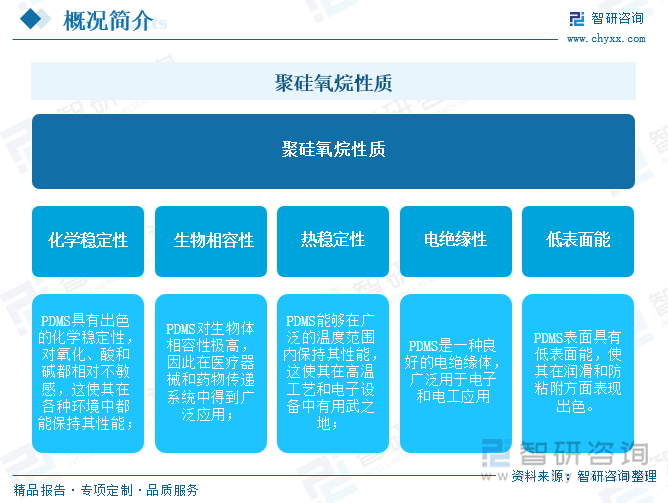
研判2025!中国聚硅氧烷行业产业链图谱、产业现状、进出口及未来前景:国内产能不断扩张,高端产品仍依赖进口补充[图]
Chan Ye Xin Xi Wang· 2025-05-26 01:24
Industry Overview - Polydimethylsiloxane (PDMS) is a polymer with a main chain of repeating Si-O bonds, widely used in various fields such as cosmetics, medical devices, industrial lubricants, food processing, and electronic devices [1][2][5] - The production capacity of PDMS in China has increased from 141.5 thousand tons in 2018 to 282.2 thousand tons in 2024, with a compound annual growth rate (CAGR) of 12.23% [7][9] - The domestic PDMS production reached 229.5 thousand tons in 2024, representing a year-on-year growth of 10.02% [7][9] Supply Side - The supply chain for PDMS includes upstream raw material suppliers (silicon powder, chloromethane), midstream PDMS producers (e.g., Xingfa Group, Dongyue Silicon Materials, Hoshine Silicon Industry), and downstream application sectors [5][7] - China has transitioned from being a net importer to a net exporter of PDMS since 2015, although high-end products still rely on imports [9] Consumption Side - PDMS is primarily consumed in the production of silicone rubber, accounting for 70% of total consumption [11][13] - Key application sectors for PDMS include electronics (21.3%), power/new energy (19.1%), construction (14.1%), and textiles (8.9%), with a trend of increasing consumption in electronics and new energy sectors [11][13] Market Dynamics - The market is characterized by high concentration, with the top six companies (CR6) accounting for over 75% of the market share [15] - Hoshine Silicon Industry is the leading company in the PDMS sector, with a production capacity of 62.1 thousand tons and a production volume of 51.1 thousand tons in 2024 [15][17] - Dongyue Silicon Materials follows closely, with a capacity of 28.2 thousand tons and a production volume of 24.9 thousand tons [15][19] Development Trends 1. The industry is expected to continue expanding capacity, with a need to achieve a dynamic balance between supply and demand [21] 2. Diversification of downstream applications and consumption upgrades will drive industry growth, particularly in high-performance silicone products [22] 3. Technological innovation and green development will lead the industry's transformation, focusing on high-end product development and environmentally friendly production methods [23]

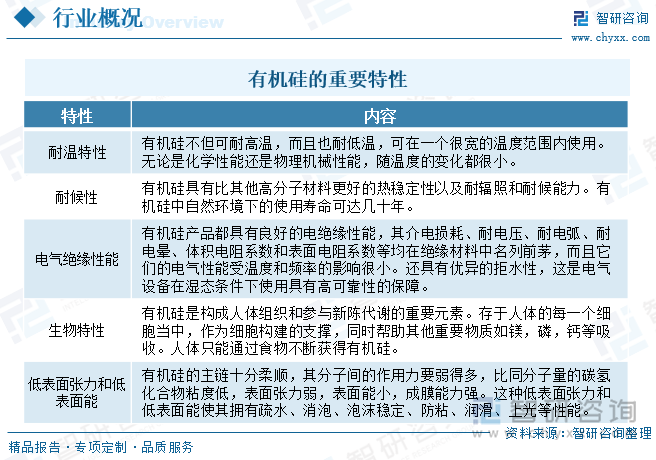
2025年中国有机硅产业供给及格局概况,产能粗放式扩产周期步入尾声[图]
Chan Ye Xin Xi Wang· 2025-05-23 01:42
Industry Overview - The organic silicon industry in China is currently in a rapid expansion phase, driven by demand from strategic emerging industries such as renewable energy, 5G communication, and smart vehicles, with production capacity expected to reach 3.44 million tons and output to grow to 2.253 million tons by 2024, although capacity utilization has slightly decreased to a new low since 2018 due to concentrated expansion [1][10] - The industry is undergoing significant structural adjustments, with expansion concentrated among leading companies like Hoshine Silicon Industry and Dongyue Silicone Materials, forming a coal-electricity-silicon integrated industrial cluster in regions with energy cost advantages such as Xinjiang and Inner Mongolia [1][10] Policy Background - China's organic silicon industry policies focus on technological iteration, green transformation, and industrial chain collaboration, promoting upgrades towards high-end, refined, and low-carbon directions [4] - The policy framework emphasizes technological breakthroughs, particularly in the development of specialty materials such as phenyl monomers and fluorosilicone polymers, and encourages the application of innovations in cutting-edge fields like aerospace and semiconductor packaging [4] Industry Chain - The upstream of the organic silicon industry relies on metallic silicon and methyl chloride as core raw materials, with metallic silicon forming a large-scale supply system in energy-rich areas, while methyl chloride's self-sufficiency is enhanced through recycling processes [6] - The midstream focuses on the synthesis and deep processing of organic silicon monomers, with a product matrix dominated by silicone rubber, silicone oil, and silicone resin, catering to various industrial needs [6] Competitive Landscape - The organic silicon industry in China exhibits a highly concentrated competitive landscape, with leading companies leveraging technological advantages and scale effects to dominate the market, resulting in a tiered structure [14] - As of 2024, there are 13 major organic silicon monomer production companies, with Hoshine Silicon Industry, Dongyue Silicone Materials, and Jiangxi Xinghuo being the largest in terms of production capacity [14] Development Trends - The organic silicon industry is accelerating its transition towards green and low-carbon practices, with companies innovating production processes to reduce energy consumption and pollution [16] - The focus is shifting from traditional sectors like construction and textiles to high-end fields such as renewable energy, electronic communication, and healthcare, with increasing demand for high-performance organic silicon materials in applications like photovoltaic module encapsulation and thermal management for electric vehicle batteries [16]
银河期货有色金属衍生品日报-20250522
Yin He Qi Huo· 2025-05-22 12:57
1. Report Industry Investment Rating No relevant content provided. 2. Core Views of the Report - Copper prices are consolidating at high levels. The market may show a long - term back structure. It is recommended to wait and see for unilateral, arbitrage, and option trading [4][7][8]. - Alumina prices are expected to be strongly volatile in the short term. Pay attention to the progress of bauxite suspension in Guinea, bauxite price expectations, and domestic alumina capacity changes. For now, arbitrage and option trading should be on hold [14][15][16]. - Aluminum prices are expected to fluctuate. Consider a positive spread opportunity for 06 - 09 contracts, and wait and see for option trading [21][24]. - Zinc prices are expected to fluctuate within a range. It is advisable to try short - selling at high prices on a light position. Arbitrage and option trading should be on hold [27][28]. - Lead prices are expected to fluctuate within a range. Be vigilant about the impact of capital on lead prices. Arbitrage and option trading should be on hold [34][35]. - Nickel prices are expected to weaken with fluctuations. Consider a range double - selling strategy for options, and wait and see for arbitrage [38][40][43]. - Stainless steel prices are expected to be strongly volatile in the short term. Wait and see for arbitrage [47][48][49]. - Tin prices are expected to adjust with fluctuations in the short term. Pay attention to the supply situation of the ore end. Wait and see for options [53][54][55]. - Industrial silicon prices are expected to decline. Hold short positions, sell out - of - the - money call options, and conduct reverse spreads for Si2511 and Si2512 [59][60]. - Polysilicon prices are expected to be bearish. Hold short positions for the PS2507 contract, sell PS2507 - C - 40000, and wait and see for arbitrage [63][65]. - Lithium carbonate prices are expected to be strongly volatile in the short term. Wait and see for arbitrage [68][69][70]. 3. Summary According to Relevant Catalogs 3.1 Market Review - **Copper**: The Shanghai Copper 2506 contract closed at 77,920 yuan, down 0.22%. The Shanghai Copper index reduced its position by 6,043 lots to 525,000 lots. Spot premiums in different regions showed varying degrees of decline [2]. - **Alumina**: The Alumina 2509 contract rose 32 yuan/ton to 3,216 yuan/ton, up 1.01%. Positions increased by 19,583 lots to 511,400 lots. Spot prices in various regions increased [9]. - **Aluminum**: The Shanghai Aluminum 2506 contract rose 55 yuan/ton to 20,270 yuan/ton. Positions increased by 3,682 lots to 520,000 lots. Spot prices in different regions increased [18]. - **Zinc**: The Shanghai Zinc 2507 contract fell 0.63% to 22,245 yuan/ton. The Shanghai Zinc index increased its position by 1,119 lots to 227,500 lots. Spot prices in Shanghai showed a slight improvement in trading [26]. - **Lead**: The Shanghai Lead 2507 contract fell 1.21% to 16,685 yuan/ton. The Shanghai Lead index increased its position by 7,829 lots to 73,000 lots. Spot prices decreased [30]. - **Nickel**: The main contract of Shanghai Nickel NI2506 rose 40 to 123,400 yuan/ton. Index positions decreased by 687 lots. Spot premiums remained unchanged [37]. - **Stainless Steel**: The main contract of stainless steel SS2507 rose 5 to 12,880 yuan/ton. Index positions decreased by 15,580 lots. Spot prices remained stable [45]. - **Tin**: The main contract of Shanghai Tin closed at 264,780 yuan/ton, down 2,320 yuan/ton or 0.87%. Positions decreased by 4,639 lots to 54,185 lots. Spot prices decreased [52]. - **Industrial Silicon**: The main contract of industrial silicon futures fluctuated narrowly and strengthened slightly, closing at 7,880 yuan/ton, down 0.19%. Spot prices generally decreased [56]. - **Polysilicon**: The main contract of polysilicon futures fluctuated and strengthened, closing at 36,080 yuan/ton, up 1.14%. Spot prices remained stable [61]. - **Lithium Carbonate**: The main contract of lithium carbonate rose 5 to 12,880 yuan/ton. Index positions decreased by 15,580 lots. Spot prices remained stable [66]. 3.2 Important Information - **Copper**: Freeport Indonesia's Manyar smelter has resumed operation ahead of schedule and is expected to reach full - capacity production in December. As of May 22, copper inventories in mainstream regions in China increased slightly week - on - week, and it is expected that supply and demand will be weak next week [3]. - **Alumina**: The Guinea Axis mining area has been shut down, and the recovery time is unknown. The Guinea transitional authorities have designated multiple mining rights as strategic reserve areas. Alumina production increased week - on - week, and inventories decreased [10][12]. - **Aluminum**: EU - US trade negotiations are still uncertain. Global primary aluminum production in April 2025 was 6.033 million tons. China's primary aluminum production in April was estimated to be 3.621 million tons. Aluminum inventories decreased, and imports reached a record high [19][20]. - **Zinc**: As of May 22, zinc inventories in seven major regions in China decreased week - on - week [27]. - **Lead**: Due to continuous losses in the secondary lead smelting enterprises, waste battery purchase prices in many regions have been significantly reduced. As of May 22, lead inventories in five major regions decreased [31][33]. - **Nickel**: In March 2025, the global refined nickel production was 317,300 tons, with a supply surplus of 39,400 tons. From January to March, the supply surplus was 123,000 tons [38]. - **Stainless Steel**: In April, China's stainless steel exports decreased by 5% month - on - month, and imports increased by 10% month - on - month. As of May 22, stainless steel inventories increased slightly [46]. - **Tin**: In April, the production of integrated circuits, electronic computers, and washing machines showed different trends. African tin mines are gradually resuming production [53]. - **Industrial Silicon**: The US has launched anti - dumping and counter - subsidy investigations on imported silicon metal from multiple countries [57][58]. - **Polysilicon**: In April, China's total social electricity consumption was 772.1 billion kWh, up 4.7% year - on - year [62]. 3.3 Logic Analysis - **Copper**: The US is negotiating tariffs, and the negotiation of copper concentrate processing fees is approaching. The spread between Comex and LME is driving the flow of electrolytic copper. Although there is short - term pressure on spreads after delivery, the inventory is still far below the safety level, and demand remains resilient [4]. - **Alumina**: The Guinea policy may reduce the annual supply surplus of bauxite, and bauxite prices are expected to rise. Alumina production increased, but inventories decreased. Attention should be paid to the resumption of alumina production capacity [13][14]. - **Aluminum**: The macro - environment is stable. LME aluminum inventories are decreasing, aluminum imports are increasing, and consumption is growing. Aluminum inventories are at a low level, which may support the price difference [21]. - **Zinc**: The market is in a state of supply and demand balance, and inventories are decreasing [27]. - **Lead**: Secondary lead smelters are still in a loss state, which supports lead prices, but the off - season demand restricts the upward space of prices [34]. - **Nickel**: In the first quarter, there was a surplus of refined nickel. Although nickel ore prices support nickel prices, the supply is expected to increase after May, and demand will enter the off - season [38]. - **Stainless Steel**: The supply of 304 may be tight, but demand is mainly based on rigid needs. Spot inventories are difficult to digest, and prices will fluctuate widely in the short term [47]. - **Tin**: African tin mines are resuming production, and the supply - demand tension is expected to ease. The demand side has not improved significantly, and prices are mainly driven by the macro - environment [53]. - **Industrial Silicon**: Demand is weak, and supply is expected to increase. Inventories are high, which suppresses prices [59]. - **Polysilicon**: In May, polysilicon production and silicon wafer production decreased, and inventories are expected to decrease. The spot price is weak, and the 07 contract is facing a game between fundamentals and delivery contradictions [63][65]. - **Lithium Carbonate**: The supply of 304 may be tight, but demand is mainly based on rigid needs. Spot inventories are difficult to digest, and prices will fluctuate widely in the short term [68]. 3.4 Trading Strategies - **Copper**: Wait and see for unilateral, arbitrage, and option trading [4][7][8]. - **Alumina**: It is expected to be strongly volatile in the short term. Wait and see for arbitrage and option trading [15][16]. - **Aluminum**: It is expected to fluctuate. Consider a positive spread opportunity for 06 - 09 contracts, and wait and see for option trading [24]. - **Zinc**: Fluctuate within a range. Try short - selling at high prices on a light position. Wait and see for arbitrage and option trading [28]. - **Lead**: Fluctuate within a range. Be vigilant about the impact of capital on prices. Wait and see for arbitrage and option trading [35]. - **Nickel**: Weaken with fluctuations. Consider a range double - selling strategy for options, and wait and see for arbitrage [41][42][43]. - **Stainless Steel**: Be strongly volatile in the short term. Wait and see for arbitrage [48][49]. - **Tin**: Adjust with fluctuations in the short term. Pay attention to the supply situation of the ore end. Wait and see for options [54][55]. - **Industrial Silicon**: Hold short positions, sell out - of - the - money call options, and conduct reverse spreads for Si2511 and Si2512 [60]. - **Polysilicon**: Hold short positions for the PS2507 contract, sell PS2507 - C - 40000, and wait and see for arbitrage [65]. - **Lithium Carbonate**: Be strongly volatile in the short term. Wait and see for arbitrage [69][70].
芯片法案受害者?美国碳化硅巨头被曝申请破产
3 6 Ke· 2025-05-22 00:55
Core Viewpoint - Wolfspeed, a leading manufacturer of silicon carbide chips, is preparing to file for Chapter 11 bankruptcy protection due to unresolved debt issues, despite having significant market share and major clients like Tesla [1][2]. Group 1: Financial Challenges - Wolfspeed is facing a staggering $6.5 billion in debt, with cash reserves only sufficient for five quarters of operation [2]. - The company's yield rate for its 8-inch wafer factory has been consistently below 30%, leading to a high cost of $17,000 per wafer and a drastic drop in gross margin from 32% in 2023 to 10% in 2024 [2][4]. - Since 2021, Wolfspeed has accumulated a net loss of $864 million, exacerbated by management changes, factory closures, and a 20% workforce reduction [2][4]. Group 2: Market Position and Competition - Wolfspeed holds a 33.7% market share in the global silicon carbide substrate market as of 2024, making it the top player [1]. - The company has historically been a technology leader, having started mass production of 6-inch substrates in 2011, while domestic competitors only began around 2019 [5]. - However, the rapid growth of Chinese electric vehicle manufacturers has narrowed the technological gap, increasing competition [5]. Group 3: Pricing and Profitability - The price of 6-inch silicon carbide substrates is projected to drop nearly 30% in 2024, from $1,500 per piece to $450, which pressures high-cost manufacturers like Wolfspeed [5]. - As Chinese firms ramp up production and reduce costs below $500 per substrate, Wolfspeed faces a profitability crisis [5]. Group 4: Policy and Regulatory Environment - Wolfspeed has been adversely affected by the uncertainty surrounding the U.S. CHIPS and Science Act, which was intended to provide $7.5 billion in funding for its expansion but has faced political shifts that jeopardize this support [6]. - The company's convertible bonds are trading at only 60% of their face value due to investor confidence issues stemming from these uncertainties [6]. - The conflicting U.S. semiconductor policies create challenges for Wolfspeed, as the focus on debt reduction may hinder necessary technological advancements [6][7].

银河期货有色金属衍生品日报-20250521
Yin He Qi Huo· 2025-05-21 12:46
Group 1: Report Summary Investment Rating - No report industry investment rating was provided in the content [1][21][35] Core View - The report analyzes the market conditions of various non - ferrous metals including copper, aluminum, zinc, etc., and provides trading strategies based on market data, industry news, and logical analysis [4][23][37] Section Summaries Copper - **Market Review**: The Shanghai Copper 2506 contract closed at 78,100 yuan with a 0.31% increase, and the Shanghai Copper index increased its position by 3,097 lots to 531,000 lots. Spot prices in different regions showed different trends [2] - **Important Information**: Ivanhoe Mining suspended the operation of its Kakula underground mine due to earthquake activity [3] - **Logic Analysis**: The mid - year negotiation between Antofagasta and smelters is approaching, and the copper concentrate processing fee is under pressure. The import of recycled copper may increase, but the long - term supply is still tight. The market may show a back structure in the medium term [4] - **Trading Strategy**: It is recommended to temporarily observe for single - sided trading, arbitrage, and options [5][7] Alumina - **Market Review**: The Alumina 2509 contract rose by 98 yuan/ton to 3,246 yuan/ton, with an increase of 3.11%. Spot prices in various regions also increased [9] - **Related Information**: Guinea's Axis mining area had its mining license revoked, and the transition authorities designated multiple mining rights as strategic reserve areas [10][11] - **Logic Analysis**: The Guinea event may reduce the annual surplus of bauxite supply and support the bauxite price. Short - term attention should be paid to the resumption of alumina production capacity [13][14] - **Trading Strategy**: It is expected that the alumina price will be strongly volatile in the short term. Temporarily observe for arbitrage and options [15][16] Electrolytic Aluminum - **Market Review**: The Shanghai Aluminum 2506 contract decreased by 80 yuan/ton to 20,125 yuan/ton. Spot prices in different regions also changed [18] - **Related Information**: There were news about Sino - US trade, real - estate data, bank interest rates, and Fed officials' statements. Aluminum inventory decreased [19][20] - **Trading Logic**: Fed officials hinted at no interest rate cut before September, and domestic banks lowered deposit rates. Aluminum consumption maintained an upward trend, and low inventory supported the price difference [23] - **Trading Strategy**: It is expected that the aluminum price will fluctuate. Consider the positive arbitrage opportunity for the 06 - 09 contract and temporarily observe for options [24] Zinc - **Market Review**: The Shanghai Zinc 2507 rose by 0.83% to 22,410 yuan/ton. Spot trading was mainly among traders, and the spot premium declined slightly [26] - **Related Information**: The Hong Kong Exchange plans to add three storage facilities in Hong Kong, and the zinc ore tender price in North China increased [27] - **Logic Analysis**: Some smelters resumed production, downstream orders did not improve, and short - term zinc prices may fluctuate within a range [28] - **Trading Strategy**: For single - sided trading, short positions can be lightly tested at high prices. Temporarily observe for arbitrage and options [29] Lead - **Market Review**: The Shanghai Lead 2506 rose by 0.45% to 16,900 yuan/ton. Spot trading was mainly for rigid demand, and regional trading was acceptable [30] - **Related Information**: Some recycled lead smelters reduced the purchase price of waste batteries and planned to stop production [31] - **Logic Analysis**: Recycled lead smelters are in a loss state, and the short - term resumption of production willingness is not strong. The demand off - season restricts the upward space of lead prices [32] - **Trading Strategy**: The lead price is expected to fluctuate within a range. Temporarily observe for arbitrage and options [33] Nickel - **Market Review**: The main contract of Shanghai Nickel NI2506 decreased by 60 to 123,280 yuan/ton. Spot premiums changed [34] - **Related Information**: In April 2025, nickel ore imports increased seasonally, and the export of ternary precursors decreased [36] - **Logic Analysis**: LME nickel inventory increased, nickel ore prices supported the nickel price, but the supply surplus is expected to expand after May [37] - **Trading Strategy**: The nickel price is expected to weaken. Consider the double - selling strategy for options and temporarily observe for arbitrage [38] Stainless Steel - **Market Review**: The main contract of stainless steel SS2507 rose by 30 to 12,870 yuan/ton. Spot prices were given [39] - **Important Information**: The European stainless steel market is facing challenges, and prices are falling [40] - **Logic Analysis**: In May, steel mills' production decreased, demand was mainly for rigid demand, and the price is expected to fluctuate widely in the short term [41] - **Trading Strategy**: The stainless - steel price is expected to be slightly stronger in the short - term. Temporarily observe for arbitrage [43][44] Tin - **Market Review**: The main contract of Shanghai Tin closed at 267,730 yuan/ton, with a 1.11% increase. Spot trading was limited [46] - **Related Information**: There was news about the US missile defense system, but it had little impact on the tin market [47] - **Logic Analysis**: Tin prices are in a high - level shock. African tin mines are gradually resuming production, and the supply - demand situation is expected to ease [48] - **Trading Strategy**: The tin price is expected to adjust in the short term. Temporarily observe for options [49][50] Industrial Silicon - **Market Review**: The main contract of industrial silicon futures weakened, and spot prices were generally lowered [52] - **Related Information**: The US launched anti - dumping and anti - subsidy investigations on imported industrial silicon from multiple countries [53] - **Logic Analysis**: Demand is weak, supply will increase, and high inventory suppresses prices [54] - **Trading Strategy**: Hold short positions, sell out - of - the - money call options, and conduct reverse arbitrage for Si2511 and Si2512 [54] Polysilicon - **Market Review**: The main contract of polysilicon futures strengthened, and spot prices were given [55] - **Related Information**: The US electricity consumption is expected to reach a record high, and solar power installation capacity is expected to remain stable [56] - **Logic Analysis**: In May, production decreased, inventory decreased, and the 07 contract is facing a game between fundamentals and delivery contradictions [57][58] - **Trading Strategy**: Hold short positions for the PS2507 contract, sell PS2507 - C - 40000, and temporarily observe for arbitrage [59] Lithium Carbonate - **Market Review**: The main contract of lithium carbonate rose, and spot prices decreased [60] - **Related Information**: In April 2025, lithium carbonate imports increased significantly [61] - **Logic Analysis**: Some smelters and mines are reducing production, but demand is not optimistic, and inventory is high [62] - **Trading Strategy**: Short on rebounds, hold put ratio options, and temporarily observe for arbitrage [63][65][66] Second Part: Non - ferrous Industry Price and Related Data - The report provides daily data tables for various non - ferrous metals, including price, spread, inventory, and profit data, as well as multiple charts showing the historical trends of price, spread, inventory, etc. for each metal [68][79][184]