瑞幸

Search documents
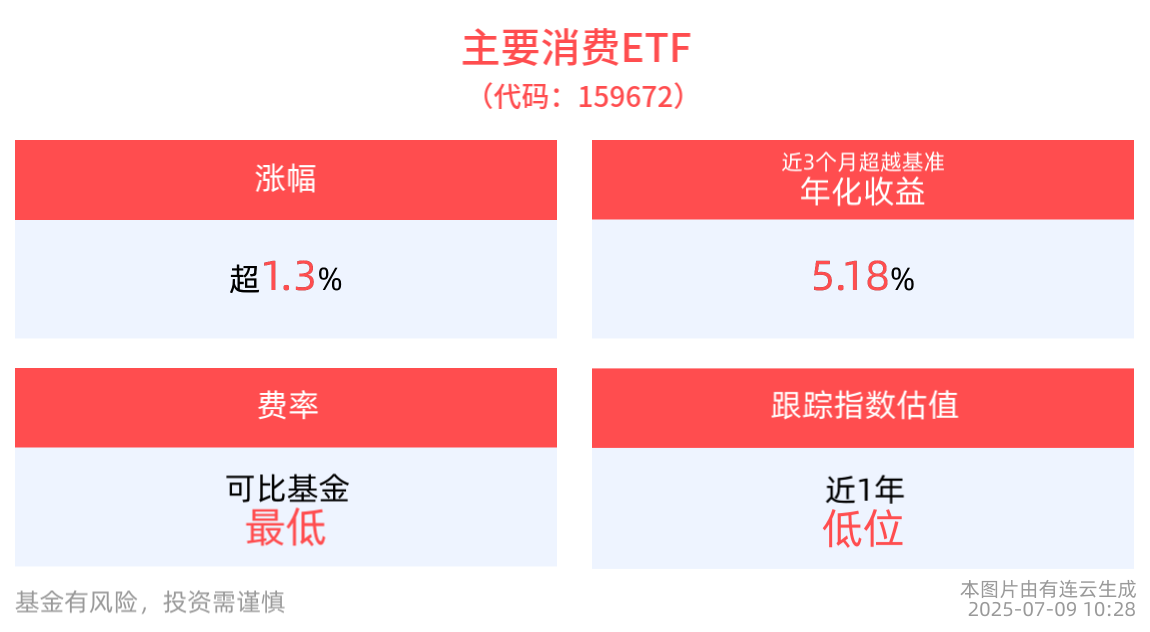
主要消费ETF(159672)上涨1.32%,政策红利逐步释放,服务消费有望在下半年持续回暖
Xin Lang Cai Jing· 2025-07-09 03:15
Group 1 - The main consumption index (000932) has shown a strong increase of 1.31%, with significant gains in constituent stocks such as Shengnong Development (002299) up 4.70% and Shanxi Fenjiu (600809) up 3.86% [3] - The major consumption ETF (159672) has risen by 1.32%, with a latest price of 0.77 yuan, and has accumulated a weekly increase of 0.53% as of July 8, 2025 [3] - The liquidity of the major consumption ETF is reflected in a turnover rate of 3.76% and a transaction volume of 280.22 million yuan [3] Group 2 - Recent policies in the consumption sector are favorable, with a focus on service consumption as a core strategy for expanding domestic demand by 2025 [4] - The major consumption ETF has seen a net value increase of 4.70% over the past year, with a maximum monthly return of 24.35% since its inception [4] - The major consumption ETF's maximum drawdown this year is 6.82%, which is relatively low compared to its benchmark [4] Group 3 - The management fee for the major consumption ETF is 0.50%, and the custody fee is 0.10%, making it one of the lowest in its category [5] - The latest price-to-earnings ratio (PE-TTM) for the major consumption index is 18.74, indicating it is at a historical low compared to the past year [5] - The top ten weighted stocks in the major consumption index account for 67.93% of the total index, with notable companies including Yili Group (600887) and Kweichow Moutai (600519) [5]

古茗王云安,不学蜜雪冰城张红超
Sou Hu Cai Jing· 2025-07-07 04:43
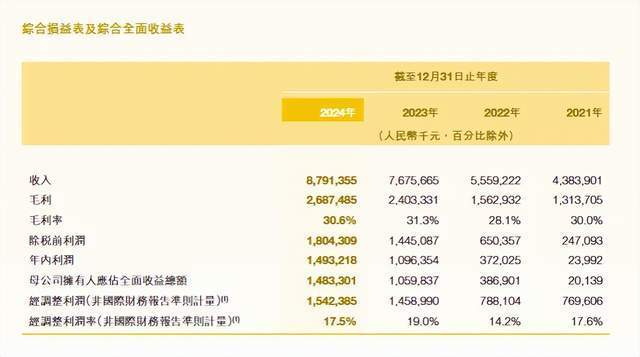
Group 1 - Company Overview: Founded in 2010 by Wang Yunan in Zhejiang, Guming specializes in fruit tea, milk tea, and coffee, targeting the "small town youth" demographic with affordable pricing between 10-20 RMB [1][3] - Ownership Structure: Wang Yunan holds 43.21% of shares, making him the largest shareholder, while co-founders Qi Xia and Ruan Xiudi hold 19.78% and 13.74% respectively [1] - Funding History: Prior to its IPO, Guming secured two rounds of financing from notable investors including Sequoia China, Meituan, Tencent, and others [1] Group 2 - Revenue Growth: In 2024, Guming reported revenue of 8.79 billion RMB, reflecting a 14.5% year-on-year increase, but a significant decline from the previous year's 38.1% growth [4][6] - Profitability Concerns: The adjusted net profit grew only 5.7% to 1.54 billion RMB, indicating a decline in core business profitability despite a nominal increase in net profit [5][6] Group 3 - Market Saturation: The tea beverage market is experiencing high saturation, with over 410,000 milk tea shops nationwide and a closure rate of 60% in lower-tier cities, leading to reduced customer acquisition and retention for Guming [7][9] - Competitive Landscape: Guming faces intense competition from both high-end brands like Heytea and Nayuki, which have entered the lower price segments, and low-cost competitors like Mixue Ice City [9][12] Group 4 - Innovation Challenges: Guming launched 85 new products in 2024, but none became a hit, leading to a decline in customer loyalty and increased competition in a market characterized by product homogeneity [11][12] - Strategic Dilemmas: The company is caught in a strategic bind due to price wars and a lack of unique selling propositions, making it difficult to attract new customers and retain existing ones [12][13] Group 5 - Franchise Expansion Issues: Guming's franchise growth has slowed, with new store openings dropping from 2,597 in 2023 to 1,587 in 2024, while closures increased significantly [17][23] - Store Performance Metrics: Single-store GMV decreased from 2.47 million RMB in 2023 to 2.36 million RMB in 2024, reflecting a decline in sales efficiency [19][21] Group 6 - Shift to Coffee: Guming is pivoting towards the coffee market as a second growth curve, recognizing the trend of coffee becoming a mainstream beverage and leveraging its existing infrastructure [25][28] - Operational Strengths: The company has a robust supply chain and a high "second store rate" among franchisees, indicating confidence in the brand and providing a buffer for operational adjustments [24][29] Group 7 - Market Positioning: Guming aims to integrate coffee and tea offerings, creating a "tea-coffee integrated" experience to meet diverse consumer demands and enhance brand loyalty [34][35] - Future Growth Strategy: The company is focused on breaking category boundaries and embracing market trends to navigate the challenges of a saturated market and achieve sustainable growth [35]
57元一杯,瑞幸开去美国
盐财经· 2025-07-03 10:20
Core Viewpoint - The article discusses the entry of Luckin Coffee, China's largest coffee chain, into the U.S. market, highlighting its low-price strategy and the competitive landscape against Starbucks, which has been facing challenges in both the U.S. and Chinese markets [4][5][7][17]. Group 1: Market Entry and Strategy - Luckin Coffee officially entered the U.S. market on June 30, opening two stores in New York, marking its first foray into the American market [4]. - The company employs a low-price strategy, offering promotions such as $1.99 coupons for new users, with overall pricing approximately 20% lower than Starbucks in the U.S. [5][10]. - On its official menu, prices range from $3.45 to $7.95, with specific items like drip coffee priced at $3.45 and lattes at $5.75 [9]. Group 2: Competitive Landscape - Luckin Coffee's entry poses a significant challenge to Starbucks, which has been experiencing pressure from local brands in China and is considering selling a minority stake in its Chinese operations [7][18]. - As of March 2025, Luckin has over 24,000 stores globally, with 99% located in China, while Starbucks has 17,122 stores in the U.S. and 7,758 in China [17][16]. - Starbucks has faced declining sales in China, with a 1.4% revenue drop in fiscal 2024, while Luckin reported a 41.2% revenue increase in Q1 2025 [18][17]. Group 3: Financial Performance - Luckin Coffee reported a revenue of 8.865 billion RMB in Q1 2025, with a gross merchandise volume (GMV) of 10.354 billion RMB and a GAAP operating profit of 737 million RMB, reflecting an operating profit margin of 8.3% [17]. - In contrast, Starbucks' revenue in China for Q1 2025 was $739.7 million, showing a 5% year-over-year increase, but still indicating challenges in maintaining growth [18]. Group 4: Future Prospects - Luckin Coffee's expansion strategy includes learning from its U.S. operations to inform its global strategy, while Starbucks is exploring options to increase its store count in China from 8,000 to 20,000 [6][20][21].
公安部通报:男子编造 "工行假金条" 谣言被追责
21世纪经济报道· 2025-07-02 09:06
Group 1 - The article discusses a case where a man named Chen, aged 46, was held legally accountable for spreading rumors about fake gold bars from Industrial and Commercial Bank of China (ICBC) to gain attention on social media [1][3] - The rumors originated from a customer's complaint about impurities found in gold bars purchased from ICBC's Jiading branch, which was later confirmed to be untrue [3][4] - ICBC's Jiading branch took the matter seriously, contacted the customer, and arranged for the gold bars to be tested by a quality inspection center, which confirmed a gold content of 99.99% with no quality issues [4][5] Group 2 - The gold bars in question were produced by Zhaojin Mining Industry Company, which has been in operation since 1974 and is a large comprehensive group involved in mining, deep processing, finance, and other industries [5] - The article emphasizes the importance of discerning information on the internet and encourages the public to rely on authoritative sources to avoid spreading rumors [5]


“零售大变局:中国品牌仅彰显传统特色,就已经奏效了”
Guan Cha Zhe Wang· 2025-06-30 08:53
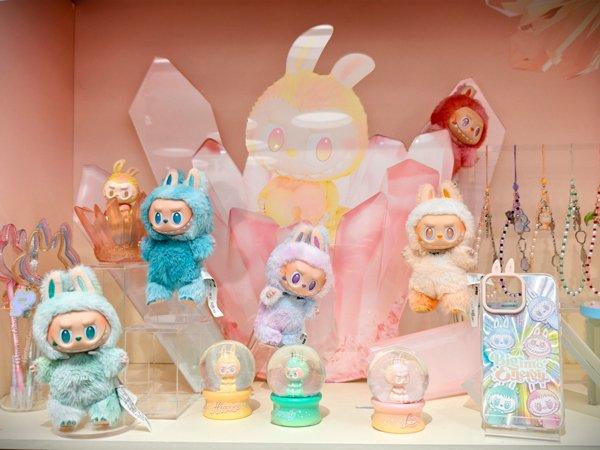
Core Insights - The article highlights the rise of Chinese brands in the global market, indicating a shift in consumer preferences from Western brands to local alternatives [1][8] - It emphasizes that Chinese consumers are increasingly favoring domestic luxury brands, high-end cosmetics, and local food and beverage options, marking a significant change in consumption patterns [1][4] Group 1: Rise of Chinese Brands - The popularity of the LABUBU toy exemplifies the success of Chinese brands, with its demand leading to a surge in the stock price of its manufacturer, Pop Mart [1][3] - Chinese brands like Kudi and Luckin Coffee are gaining traction by offering quality comparable to international brands like Starbucks at significantly lower prices [3][4] - The jewelry brand Laopu Gold has seen rapid growth, with its average store sales exceeding those of many foreign competitors by at least 50% [4][6] Group 2: Changing Consumer Behavior - Consumers are now willing to pay prices comparable to imported goods for local products, as seen with the high-end tea brand Bawang Chaji, which positions itself as a premium option [4][6] - There is a notable shift in consumer awareness, with younger demographics researching products more thoroughly and seeking local alternatives that offer similar quality at lower prices [6][7] - The success of brands like Mao Geping in the high-end cosmetics market illustrates the changing landscape, as it becomes the only domestic player among the top ten luxury beauty groups in China [6][7] Group 3: Strategic Market Positioning - Many Chinese brands are expanding their presence in lower-tier cities, where consumer activity is reportedly stronger than in major urban centers [7][8] - The strategy of targeting smaller cities has proven effective for brands like Bawang Chaji and Mxue Ice City, which began in less affluent areas before moving to larger markets [7][8] - The article notes that the increasing recognition of these brands internationally will likely enhance their appeal domestically, signaling a potential end to the era where retail trends predominantly flowed from the West to China [8]
传媒互联网产业行业周报:虚拟资产大趋势,交易平台持续是重点方向-20250629
SINOLINK SECURITIES· 2025-06-29 11:18
Investment Rating - The report maintains a positive outlook on the virtual asset sector and trading platforms, indicating a sustained focus on these areas [1][8]. Core Insights - The report highlights the ongoing trend of virtual assets, with increasing regulatory frameworks and institutional involvement, suggesting a favorable long-term outlook for the sector [1][8]. - The Hong Kong government has released a new digital asset development policy, reinforcing its commitment to becoming a global innovation center for digital assets [48]. - The report emphasizes the importance of quality assets in the Hong Kong stock market, particularly in light of the influx of mainland Chinese companies going public [8]. Industry Summary Education - The K12 education sector remains robust, with leading institutions like New Oriental showing positive enrollment feedback for summer programs [3][18]. - The education index rose by 7.41% during the week, outperforming major indices [9][11]. Luxury Goods - The luxury goods sector is experiencing slight pressure due to macroeconomic factors, but brands with strong innovation capabilities are still seeing growth [3][22]. - Notable stock movements include a 6.10% increase for Samsonite and a slight decline for Prada [22][29]. Coffee and Tea - The coffee sector continues to thrive, with net increases in store numbers and positive same-store sales growth for leading brands [3][31]. - The tea beverage sector faces increased competition due to supply growth driven by delivery platform subsidies [3]. E-commerce - The e-commerce sector is under pressure, with a slowdown in overall growth and intense competition, particularly in instant retail [3][30]. - Key players like JD.com and Pinduoduo have shown positive stock performance during the week [30]. Streaming Platforms - Music streaming platforms are highlighted as quality internet assets driven by domestic demand, with continued profitability growth [3][37]. - The report notes a 4.5% decline in the media index, with Spotify and Netflix showing significant gains [37]. Virtual Assets & Trading Platforms - The report emphasizes the positive trend in virtual assets, supported by regulatory developments and institutional interest [1][8]. - The global cryptocurrency market capitalization reached $337.24 billion, with Bitcoin and Ethereum prices increasing [41][48]. Automotive Services - The automotive maintenance sector is monitored, with key players identified and ongoing changes in the aftermarket ecosystem [3][50]. - The report notes a 3.10% increase in the automotive services index, with mixed performances among key companies [50].




Tims天好中国一季度营收3亿,同店销售下滑7.8%
3 6 Ke· 2025-06-27 03:22
Core Viewpoint - Tims China is facing significant operational challenges, with a decline in revenue and same-store sales, despite some improvements in cost management and expansion efforts [1][3][7]. Financial Performance - In Q1 2025, Tims China reported revenue of 300.7 million RMB, a year-on-year decrease of 9.5% [1]. - The operating loss narrowed to 85 million RMB from 121.3 million RMB in the same period last year [1]. - Adjusted EBITDA was -29.3 million RMB, an improvement from -52.3 million RMB year-on-year [1]. - Same-store sales fell by 7.8%, with self-operated store sales down 6.5% due to a 14.0% drop in order volume and a slight decrease of 1.9% in average transaction value [3]. Market Competition - The coffee industry in China is experiencing intensified competition, with major players like Luckin Coffee and Starbucks implementing aggressive pricing and marketing strategies [2][3]. - Tims China is competing against established brands that have a stronger market presence, which affects its attractiveness to potential franchisees [7]. Strategic Initiatives - Tims China has implemented cost-cutting measures, reducing costs and expenses by 19.0% compared to the previous year, with significant reductions in food and packaging costs by 24.6% [4]. - The company is expanding its franchise model, with 455 franchise stores as of March 31, 2025, up from 302 a year earlier [4]. - Tims China plans to open over 200 new stores this year, focusing on high-tier cities and special channel layouts [5]. Product and Service Innovation - Tims China is enhancing its product offerings by introducing lunch options, such as the "Light Bagel Lunch Box" series, to increase foot traffic during lunch hours [6]. - The company is also collaborating with brands like Oatly to launch health-oriented products, contributing to a 25.7% increase in registered members, reaching 25.15 million [6]. Challenges Ahead - Despite progress in franchise expansion and product innovation, Tims China faces ongoing challenges in establishing a strong brand presence and competing effectively in a crowded market [7].

开源证券晨会-20250623
KAIYUAN SECURITIES· 2025-06-23 14:41
Macro Economic Overview - Industrial production remains resilient, with overall industrial activity at a historically high level despite weak construction demand and fluctuating automotive and home appliance sales [3][4]. - Recent data indicates that construction starts are low, with cement shipments at historical lows, while industrial production remains strong, particularly in the chemical sector [3]. - The demand side shows weakness in construction, with lower apparent demand for rebar and building materials compared to historical levels [3]. Agricultural Sector - The poultry market is entering a seasonal downturn, leading to potential short-term pressure on chicken prices. In May, the average price for white feather broilers was 7.41 yuan/kg, with a slight decrease from the previous month [7][8]. - The inventory levels for breeding chickens are relatively high, indicating sufficient supply despite the pressure on prices [7]. - Egg prices are expected to decline further in June due to weak terminal demand and high supply pressure, with the average wholesale price for eggs dropping significantly [8][9]. Semiconductor Industry - The domestic high-end semiconductor packaging leader, Shenghe Jingwei, has entered the guidance acceptance phase for its IPO, focusing on advanced packaging materials [13][14]. - The global semiconductor packaging materials market is projected to grow, with a current domestic localization rate of around 15% for semiconductor materials [15]. - Key materials for advanced packaging are being closely monitored, with several domestic companies positioned to benefit from the localization of these materials [15][16][17]. Chemical Industry - The solid-state battery industry is experiencing accelerated industrialization, supported by favorable policies and advancements in high-performance materials [20][21]. - The demand for solid-state batteries is increasing, with several companies making significant progress in material production and technology [22][23]. - The industry is expected to reach a commercialization inflection point by 2030, with ongoing developments in production capabilities and material costs [21][22]. Consumer Services Sector - The 618 shopping festival showed strong performance in instant retail, with significant growth in sales for tea and coffee brands, indicating a recovery in consumer spending [25][26]. - The beauty and personal care sector also saw stable growth during the 618 period, with major e-commerce platforms reporting substantial sales figures [27]. - The overall consumer services index has underperformed the broader market, highlighting competitive pressures within the sector [28]. Pharmaceutical Industry - Zhongsheng Pharmaceutical is focusing on traditional Chinese medicine while innovating in drug development, with a robust pipeline expected to drive future growth [33][34]. - The company has established a sustainable business model that integrates innovative drugs with traditional Chinese medicine, positioning itself well in the market [34]. - The projected net profits for Zhongsheng Pharmaceutical are expected to grow steadily from 3.08 billion yuan in 2025 to 3.92 billion yuan by 2027 [33][34].

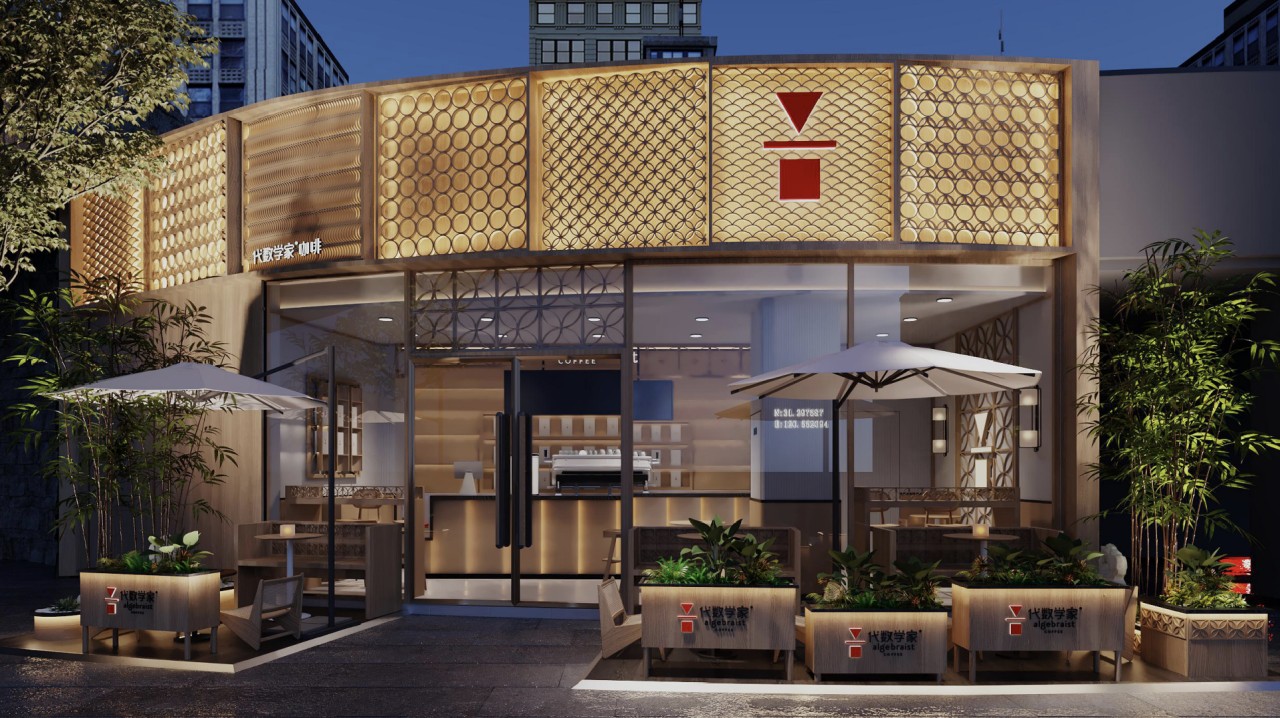
时隔四年再获新一轮融资,「代数学家咖啡algebraist coffee」比以往走得更稳了
3 6 Ke· 2025-06-23 05:18
Core Insights - The article discusses the evolution of the specialty coffee brand "Algebraist Coffee," highlighting its journey through various funding rounds and its current market positioning [1][3][6] Funding and Financial Performance - Algebraist Coffee has completed four rounds of financing from 2019 to 2022, with a total funding amount exceeding 200 million yuan [1][3] - The company is set to complete a new financing round in early 2025, with an investment of several million yuan from Su Gao Xin Jin Kong, focusing on product and brand enhancement rather than survival [3][6] - Since Q3 2024, Algebraist Coffee has achieved positive monthly financial profit and cash flow, with performance steadily increasing [3][6] Market Positioning and Strategy - The brand aims to be a "consumer upgrade for the mass market," optimizing pricing, costs, and supply chain while maintaining its commitment to quality coffee [6][8] - Algebraist Coffee has a product innovation frequency of once a month, with notable sales figures such as 117,000 cups sold in the first month of the "KIRI Latte Series" and over 650,000 cups of the "Double Petal Rose Brew" sold in 2024 [6][8] Expansion and Operational Strategy - The company has transitioned from a direct sales model to a franchise model, with a stable monthly addition of 8 to 10 new stores, totaling over 150 locations [8] - The primary focus for expansion remains in the Jiangsu, Zhejiang, and Shanghai regions, with cautious exploration of cross-regional opportunities [8] - The founder emphasizes the importance of solid product quality and team building to create a trustworthy brand that resonates with consumers [8]
幸运咖“不幸”,蜜雪下一步豪赌“田间地头”?
海豚投研· 2025-06-10 11:03
Core Viewpoint - The article analyzes the growth potential of Mixue Ice City, focusing on its business model, market expansion, and the competitive landscape within the beverage industry, particularly in the context of the current market valuation and growth opportunities [2][4]. Group 1: Market Overview - The current market for ready-to-drink beverages is divided into packaged and freshly made drinks, with the latter experiencing significant growth due to consumer demand for freshness and social engagement [6][7]. - Freshly made beverages have increased their market share from 24% in 2019 to nearly 40% currently, with projections suggesting it could reach 50% by 2028 [8][10]. Group 2: Growth Potential of Mixue Ice City - The potential for Mixue Ice City to expand its store count is significant, with estimates suggesting a possible increase to 57,000 to 61,000 stores across China, representing a 50%-60% growth from current levels [10][14]. - The analysis indicates that the brand's growth will be driven by capturing market share from other beverage brands, particularly local non-chain tea shops, as well as expanding into rural areas where competition is less intense [16][24]. Group 3: Competitive Landscape - The competitive environment has intensified due to a price war among beverage brands, leading to a reduction in average product prices from 15-20 RMB to 10-15 RMB [18][20]. - Mixue Ice City has maintained a low closure rate of 3.1% in 2024, allowing it to capitalize on the market share vacated by struggling competitors [21]. Group 4: Expansion into Rural Markets - Mixue Ice City has begun expanding into rural areas, with over 4,900 stores established in towns by the end of 2024, and plans to increase this number significantly in the coming years [23][24]. - The brand's pricing strategy aligns well with rural consumer spending power, making it well-positioned to dominate in these markets [24][25]. Group 5: Challenges for Lucky Coffee - The coffee brand Lucky Coffee, acquired by Mixue, has struggled to gain traction, primarily due to its focus on lower-tier markets and a lack of brand recognition compared to competitors like Luckin Coffee [29][32]. - Lucky Coffee's average monthly revenue is only 60% of that of Mixue Ice City, and its profitability is hindered by higher costs associated with coffee bean procurement [39][40]. - The potential for Lucky Coffee to expand is limited, with estimates suggesting it could reach around 9,400 stores, but this is contingent on developing coffee consumption habits in lower-tier markets [41][43].