
油价波动

Search documents
美加政策分化加元拉锯
Jin Tou Wang· 2025-12-23 02:32
Group 1 - The core logic of the USD/CAD exchange rate is focused on the divergence in monetary policy between the Bank of Canada and the Federal Reserve, with the former pausing interest rate cuts while the latter continues its accommodative stance [1][3] - The Bank of Canada has maintained its interest rate at 2.25% after a total of 100 basis points of cuts throughout the year, signaling a neutral to hawkish stance, which has led the market to price in potential rate hikes by 2026 [1][2] - In contrast, the Federal Reserve completed its third rate cut of the year in December, lowering the rate to a range of 3.5%-3.75%, with expectations of only one more cut next year, but internal dissent among officials indicates significant divisions [1][2] Group 2 - Canada's economy shows resilience with a 2.6% annualized GDP growth in Q3 and a drop in unemployment to 6.5%, supporting the central bank's policy stance [2] - However, as a resource-exporting economy, the Canadian dollar is still pressured by falling oil prices, which are projected to decline by 15.2% by 2025, affecting export revenues [2] - Geopolitical tensions, particularly between the U.S. and Venezuela/Russia, have increased volatility and boosted demand for the dollar as a safe haven, further suppressing the Canadian dollar [2] Group 3 - The USD/CAD exchange rate is expected to remain in a range-bound fluctuation due to the interplay of monetary policy divergence, oil price volatility, and economic fundamentals [3] - Key future indicators to watch include guidance on potential rate hikes from the Bank of Canada, OPEC+ production policies, U.S. inflation data, and developments in U.S.-Canada trade negotiations [3]
石化周报:美全面封锁委国受制裁油轮,供应过剩担忧下油价表现疲软-20251220
Guolian Minsheng Securities· 2025-12-20 08:01
Investment Rating - The report maintains a "Buy" rating for the following companies: China National Petroleum Corporation (PetroChina), China National Offshore Oil Corporation (CNOOC), China Petroleum & Chemical Corporation (Sinopec), Zhongman Petroleum and Natural Gas, and New Natural Gas [2][3]. Core Views - The report highlights concerns over oil price weakness due to supply surplus fears, exacerbated by geopolitical tensions and sanctions affecting Venezuela [7][10]. - It suggests that the oil price has a floor, with stable earnings expected for oil companies, particularly those with low production costs and high dividends [12]. - The report emphasizes the importance of focusing on industry leaders with strong performance stability and high dividends, particularly PetroChina and Sinopec [12]. Summary by Sections 1. Weekly Insights - Oil prices have shown weakness amid concerns of oversupply and geopolitical tensions, particularly regarding Venezuela and the Russia-Ukraine conflict [7][10]. - The Brent crude oil futures price settled at $60.47 per barrel, down 1.06% week-on-week, while WTI futures settled at $56.52 per barrel, down 1.60% [10][36]. 2. Market Performance - As of December 19, the CITIC Petroleum and Chemical sector rose by 1.9%, outperforming the CSI 300 index, which fell by 0.3% [14][17]. - The report notes that the other petrochemical sub-sector had the highest weekly increase of 5.1% [17]. 3. Company Performance - The report lists the top performers in the petroleum and petrochemical sector, with Shengtong Energy leading at a 61.06% increase [18]. - Conversely, Heshun Petroleum experienced the largest decline at 9.70% [18]. 4. Industry Dynamics - The report discusses the stable growth in natural gas production, with November output reaching 21.9 billion cubic meters, a 5.7% year-on-year increase [21]. - It also notes that OPEC's total oil production remained stable at 2,848 million barrels per day in November [56]. 5. Oil and Gas Price Tracking - The report provides detailed tracking of oil and gas prices, indicating a decline in both Brent and WTI crude oil prices compared to the previous week [36][45]. - Natural gas prices also showed a decrease, with NYMEX natural gas futures closing at $4.03 per million British thermal units, down 1.83% week-on-week [45].





原油成品油早报-20251218
Yong An Qi Huo· 2025-12-18 02:25
Report Summary 1. Report Industry Investment Rating No information provided. 2. Core View of the Report This week, oil prices have declined due to a rapid weakening of global supply and demand. On - land and on - water inventories have significantly increased, and the Dubai monthly spread has further weakened. Geopolitical incidents include the US seizing Venezuelan oil tankers and ongoing Russia - Ukraine negotiations. There are rumors that Russia has found more ways to export crude oil. The CPC No. 3 berth is expected to resume on the 17th. Global gasoline and diesel crack spreads are declining, US refinery operations have recovered to over 94%, and domestic refinery operations are fluctuating. The fundamental surplus has intensified. If there are no new geopolitical changes, the surplus in the first quarter will be close to that during the pandemic. In the short term, short positions in monthly spreads and absolute prices are recommended. [5] 3. Summary by Relevant Catalogs 3.1 Oil Price Data - From December 11 - 17, 2025, WTI crude oil price changed by $0.67, BRENT by $0.76, and DUBAI by $0.32. Other related indicators such as NYMEX RB, HO - BRT also had corresponding changes [3] - During the same period, SC - BRT changed by - 1.28, SC - WTI by - 1.19, domestic gasoline - BRT by - 73.00, and domestic diesel - BRT by - 82.00 [3] - Japan naphtha - BRT changed by - 8.34, Singapore 380 - BRT by - 1.83, and other indicators also had different degrees of change [3] 3.2 Daily News - Venezuelan Defense Minister Lopez said on the 17th that US President Trump's remarks about blocking the Caribbean Sea were "delusions", and Venezuela stated that its oil exports were continuing [3] - The EU Parliament approved an agreement to gradually phase out Russian natural gas imports by the end of 2027 [3] 3.3 Inventory - US API crude oil inventory for the week ending December 12 was - 932200 barrels, gasoline inventory was 483500 barrels, and refined oil inventory was 251100 barrels [3] - According to the EIA report, commercial crude oil inventory (excluding strategic reserves) decreased by 1274000 barrels to 424 million barrels, a decrease of 0.3%. Strategic Petroleum Reserve (SPR) inventory increased by 249000 barrels to 4122 million barrels, an increase of 0.06%. US domestic crude oil production decreased by 1000 barrels to 1384300 barrels per day [4] - US crude oil exports increased by 655000 barrels per day to 4664000 barrels per day, and commercial crude oil imports (excluding strategic reserves) decreased by 6400 barrels per day to 6525000 barrels per day [16] - The four - week average supply of US crude oil products was 2052100 barrels per day, an increase of 0.82% compared to the same period last year [16]
特朗普:全面封锁!油价拉升!
证券时报· 2025-12-17 14:32
Core Viewpoint - The article discusses the sudden increase in oil prices due to geopolitical tensions, particularly the potential new sanctions by the U.S. against Russia and the ongoing situation in Venezuela [2][3]. Group 1: Oil Price Surge - International oil prices saw a sharp increase, with WTI and Brent crude oil prices rising significantly amid reports of impending U.S. sanctions against Russia [2]. - Brent crude futures rose by as much as 2.4%, surpassing $60 per barrel during trading [3]. Group 2: U.S. Sanctions and Military Actions - President Trump announced a complete blockade of all sanctioned oil tankers entering or leaving Venezuela, citing reasons such as asset theft and terrorism [5][7]. - The U.S. military has seized a tanker near Venezuela, which was allegedly involved in transporting oil from Venezuela and Iran, as part of a broader strategy to enforce sanctions [9]. - The U.S. Treasury updated its sanctions list, adding six oil tankers linked to Venezuela, indicating a tightening of economic pressure on the country [9]. Group 3: Venezuelan Response - Venezuela's Defense Minister stated that surrender is not an option for the country, emphasizing readiness to defend against U.S. actions [11]. - The Venezuelan government has accused the U.S. of attempting to instigate regime change through military threats and has condemned the U.S. military presence in the Caribbean [11].


光大期货:12月16日能源化工日报
Xin Lang Cai Jing· 2025-12-16 01:25
Oil Market - Oil prices continued to decline, with WTI January contract closing at $56.82 per barrel, down $0.62, a decrease of 1.08% [2][12] - Brent February contract closed at $60.56 per barrel, down $0.56, a decrease of 0.92% [2][12] - China's industrial crude oil production in November was 17.63 million tons, a year-on-year increase of 2.2%, with an average daily production of 588,000 tons [2][12] - Kazakhstan has increased oil supplies to Kyrgyzstan and plans to resume shipments to Uzbekistan in December, which may exert pressure on oil prices [2][12] Fuel Oil - The main contract for fuel oil on the Shanghai Futures Exchange rose by 2.11% to 2417 yuan/ton, while low-sulfur fuel oil increased by 1.08% to 3005 yuan/ton [3][13] - The market remains under pressure due to ample supply, with significant inventory accumulation in November [3][13] - Downstream demand for marine fuel remains stable, but high sulfur fuel oil margins have decreased, potentially increasing demand from refineries [3][13] Asphalt - The main asphalt contract BU2602 rose by 0.54% to 2963 yuan/ton, supported by concerns over raw material shortages due to geopolitical tensions [4][14] - Domestic demand for asphalt shows regional disparities, with the northern market focused on storage and the southern market on actual consumption [4][14] Rubber - The main contract for Shanghai rubber RU2605 fell by 30 yuan/ton to 15200 yuan/ton, while NR rose by 30 yuan/ton to 12360 yuan/ton [5][15] - U.S. tire imports increased by 6.6% year-on-year in the first three quarters of 2025, with notable increases from Thailand [5][15] - Natural rubber inventory in Qingdao increased by 0.94 million tons, indicating a rise in supply [5][15] PX, PTA, and MEG - TA601 closed at 4696 yuan/ton, up 1.78%, while EG2601 closed at 3651 yuan/ton, up 0.66% [6][16] - PX futures closed at 6784 yuan/ton, with a narrowing basis indicating stable demand [6][16] - Ethylene glycol prices remain low, with some facilities operating at a loss, which may alleviate domestic supply pressure [6][16] Polyolefins - Mainstream prices for polyolefins in East China range from 6170 to 6400 yuan/ton, with production margins remaining negative [7][17] - Supply is expected to remain high, but demand is weakening, leading to increased inventory pressure [7][17] PVC - PVC prices in East China increased, with prices for calcium carbide method ranging from 4310 to 4420 yuan/ton [8][18] - Domestic real estate construction is expected to slow down, impacting demand for pipes and profiles [8][18] Urea - Urea futures prices showed slight fluctuations, with the main contract closing at 1629 yuan/ton, down 0.06% [9][19] - Supply levels are decreasing, with daily production at 194,600 tons, while demand remains weak [9][19] Glass - Glass futures prices showed slight increases, with the main contract closing at 950 yuan/ton, up 0.11% [10][20] - The glass market remains cautious, with production levels stable but demand showing signs of weakness [10][20]

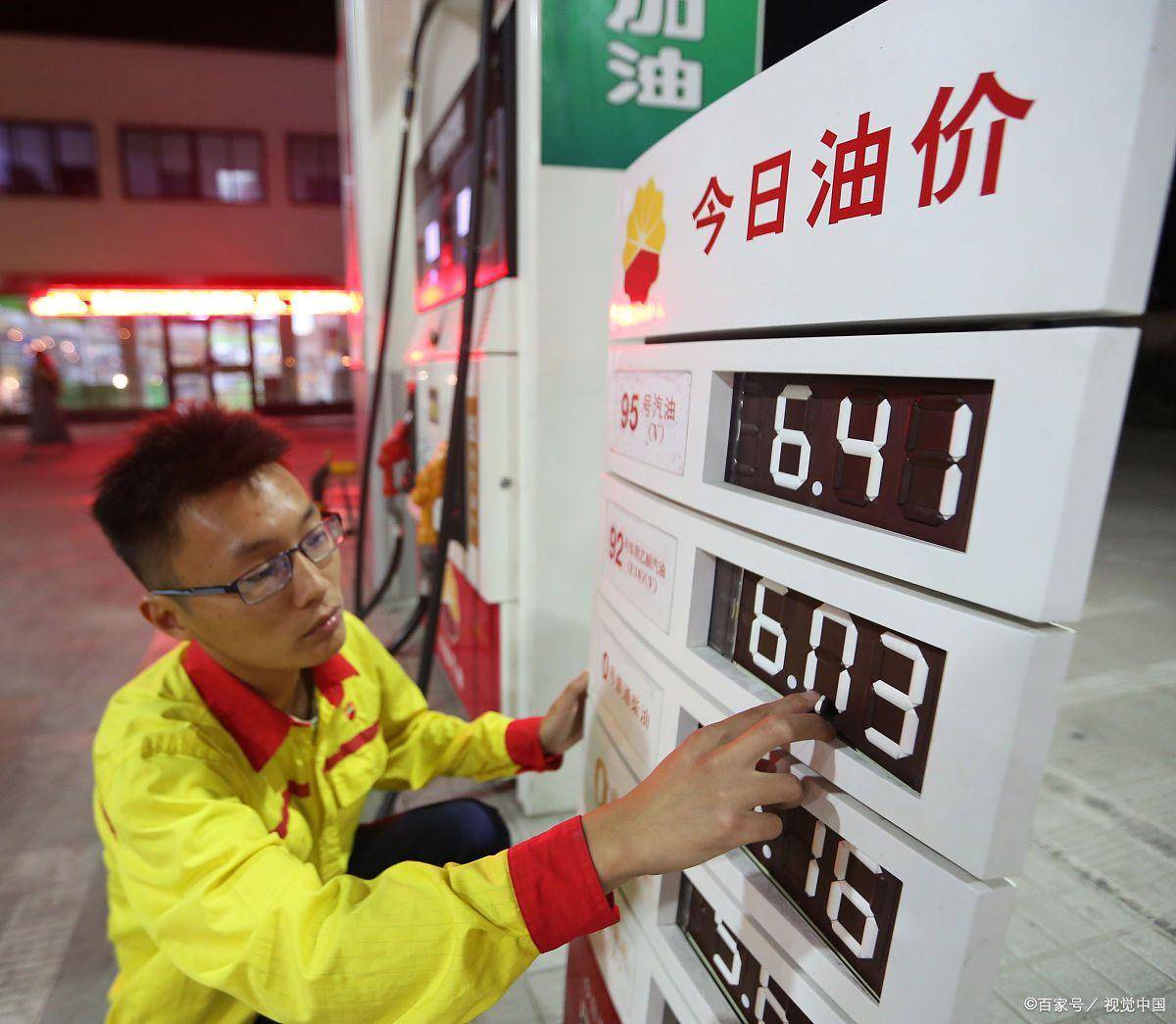
答案即将揭晓!92、95汽油新售价背后的信号,预示了怎样的未来?
Sou Hu Cai Jing· 2025-12-12 17:25
Core Viewpoint - The recent sharp decline in oil prices, with WTI crude falling below $58, raises questions about whether this is a temporary relief for consumers or a warning sign of economic troubles ahead [1][3]. Oil Price Movement - As of the latest report, WTI crude oil futures are priced at $57.39 per barrel, reflecting a daily drop of over 1.8%, while Brent crude also fell to $61.07 per barrel [3]. - The market's initial optimism following the Federal Reserve's interest rate cut was quickly dampened by the EIA's report indicating a mere 1.8 million barrel decrease in commercial crude oil inventories, significantly below the expected 4.8 million barrels [3][4]. Consumer Impact - The anticipated reduction in oil prices is expected to translate to a decrease of approximately 6 to 7 cents per liter for gasoline, which could have a substantial cumulative effect on consumers across the country [6][7]. - The next adjustment window for oil prices is set for December 22, with expectations that the current downward trend could lead to a more significant price drop by year-end [7]. Market Sentiment - The psychological impact of fluctuating oil prices is evident, as traders and consumers alike experience a rollercoaster of emotions, oscillating between hope for a rebound and disappointment when faced with unfavorable data [4][5]. - The ongoing decline in oil prices may reflect a broader trend of traditional energy sources facing challenges from the rise of renewable energy, prompting questions about whether this is a cyclical downturn or a structural shift in the market [7].
石油股集体走低 地缘事件对油价支撑弱化 机构仍看好三桶油长期投资价值
Zhi Tong Cai Jing· 2025-12-09 03:20
Group 1 - Oil stocks collectively declined, with PetroChina (00857) down 2.88% to HKD 8.43, Sinopec (00386) down 2.21% to HKD 4.42, CNOOC Services (601808) (02883) down 2.18% to HKD 7.19, and CNOOC (00883) down 1.95% to HKD 21.16 [1] - The ongoing peace negotiations between Russia and Ukraine are progressing slowly, with recent high-level meetings failing to reach an agreement, leading to a neutral to bearish impact on oil prices [1] - Everbright Securities reported that the "three major oil companies" are deepening reserves and production while strengthening cost control to respond to external uncertainties, highlighting their resilience during periods of declining oil prices [1] Group 2 - The "three major oil companies" are expected to achieve long-term growth that can withstand oil price cycles, emphasizing their long-term investment value [1]



周一油价下跌 市场关注乌克兰谈判与美联储会议
Sou Hu Cai Jing· 2025-12-08 20:44
Core Viewpoint - International crude oil prices declined as investors focused on the progress of negotiations aimed at ending the Ukraine war and anticipated a rate cut by the U.S. Federal Reserve this week [1][2]. Group 1: Oil Price Movements - West Texas Intermediate (WTI) crude oil for January delivery fell by $1.20, a decrease of 1%, closing at $58.88 per barrel [1]. - The January Brent crude oil contract settled down $1.26, a drop of 1.98%, at $62.49 per barrel [1]. - Both oil contracts reached their highest levels since November 18 during Friday's trading session [2]. Group 2: Market Influences - Analysts suggest that any agreement on the Ukraine issue could lead to increased Russian oil exports, exerting downward pressure on oil prices [2]. - The market anticipates an 84% probability of a 25 basis point rate cut by the Federal Reserve during its upcoming meetings [2]. - Comments from Federal Reserve board members indicate significant internal disagreements, raising investor concerns about the direction of Fed policy [2]. Group 3: Ukraine Negotiations - Progress in peace negotiations regarding Ukraine remains slow, with unresolved issues concerning security guarantees for Kyiv and the status of Russian-occupied territories [2]. - U.S. and Russian officials have differing views on the peace proposals put forth by the Trump administration [2]. Group 4: Supply Risks and Projections - Analysts predict that potential outcomes from the latest push to end the war could lead to daily oil supply fluctuations exceeding 2 million barrels [3]. - A ceasefire is identified as a major downside risk for oil price outlook, while ongoing damage to Russian oil infrastructure presents an upside risk [3]. - Concerns about oversupply are expected to materialize, particularly as Russian crude and refined oil begin to circumvent existing sanctions, potentially pushing futures prices towards $60 per barrel by 2026 [3]. Group 5: Regulatory Developments - The G7 and EU are reportedly discussing a comprehensive maritime service ban to replace the price cap on Russian oil exports, which could further restrict supply from the world's second-largest oil producer [4]. - The U.S. is intensifying pressure on OPEC member Venezuela, including actions against alleged drug smuggling vessels and discussions of military action to overthrow President Nicolás Maduro [4].
化工日报:织造订单加速转弱,聚酯负荷维持-20251205
Hua Tai Qi Huo· 2025-12-05 02:52
Report Summary 1. Report Industry Investment Rating - PX/PTA/PF/PR are cautiously bullish, but the rebound space of the 01 contract may be limited. Long - term attention should be paid to the 05 contract [3] 2. Core Viewpoints of the Report - Cost - end: Brent oil prices range from $60 - 65 per barrel. OPEC+ agreed to keep production stable next year, and eight major oil - producing countries reiterated the suspension of production increases in Q1 next year, partially alleviating oil price pressure, but the overall fundamentals have a bearish impact on oil prices, and geopolitical and macro events may affect market sentiment. PX load remains high, and PXN has support but limited rebound space. PTA's supply - demand situation has improved, and processing fees are expected to gradually improve in the long - run. - Demand: The polyester operating rate is 91.5% (a 0.2% increase from the previous period). Although weaving orders are weakening, the short - term polyester load is expected to remain around 91% due to low inventory in polyester factories. PF has good fundamentals but weakening demand, and the processing fee is slightly compressed. PR's fundamentals change little, and the processing fee is expected to fluctuate within a range [1][2][3] 3. Summary by Relevant Catalogs Price and Basis - The TA main - contract spot basis is - 32 yuan/ton (a 3 - yuan increase from the previous period), the PTA spot processing fee is 184 yuan/ton (a 6 - yuan increase from the previous period), and the main - contract disk processing fee is 266 yuan/ton (a 2 - yuan increase from the previous period). The PXN of PX is 286 dollars/ton (a 2.25 - dollar increase from the previous period) [1] Upstream Profits and Spreads - Relying on the current abundant MX supply, the PX load can be maintained at a high level, and PXN has support under the support of polyester operation. The PTA processing fee is expected to gradually improve in the long - run [1][3] International Spreads and Import - Export Profits - India's BIS cancellation has boosted PTA export demand [1] Upstream PX and PTA Operation - PX load remains high, and PTA has concentrated maintenance recently, and the supply - demand situation has improved [1][3] Social Inventory and Warehouse Receipts - Polyester factory inventory is currently low [2] Downstream Polyester Load - The polyester operating rate is 91.5% (a 0.2% increase from the previous period), and it is expected to remain around 91% in the short - term [2] PF Detailed Data - The PF spot production profit is 183 yuan/ton (a 9 - yuan increase from the previous period). Short - fiber load is at a high level, and inventory has decreased to a low level. However, downstream demand is weakening, and the processing fee is slightly compressed [2] PR Fundamental Detailed Data - The PR bottle - chip spot processing fee is 445 yuan/ton (a 13 - yuan decrease from the previous period). The bottle - chip load remains stable, large manufacturers continue to cut or stop production, and the inventory of polyester bottle - chip factories remains stable [2]
国投期货能源日报-20251204
Guo Tou Qi Huo· 2025-12-04 11:18
Report Industry Investment Ratings - Crude oil: ★★★, indicating a clearer upward or downward trend with relatively appropriate investment opportunities currently [2] - Fuel oil: ★★★, indicating a clearer upward or downward trend with relatively appropriate investment opportunities currently [2] - Low-sulfur fuel oil: ★★★, indicating a clearer upward or downward trend with relatively appropriate investment opportunities currently [2] - Asphalt: ★★★, indicating a clearer upward or downward trend with relatively appropriate investment opportunities currently [2] Core Viewpoints - Short-term news for crude oil is mixed, leading to increased price volatility, while in the medium to long term, the supply-demand balance is loosening, putting downward pressure on the price center [3] - The fuel oil market remains weak, with high-sulfur fuel oil supply affected by geopolitical factors and low-sulfur fuel oil facing pressure from refinery outages and weakening product cracks [4] - Asphalt prices show regional differences, with overall commercial inventory depletion slowing, and the BU is expected to remain under pressure but with limited short-term downside [5] Summary by Related Catalogs Crude Oil - EIA weekly data shows US crude oil inventory build-up, and gasoline inventory builds up significantly more than expected [3] - Venezuelan oil exports rose to 921,000 barrels per day in January [3] - Putin stated that Russia cannot accept Europe's attempt to modify the US-proposed Russia-Ukraine "peace plan" [3] - Multiple Russian cargo ships were attacked in the Black Sea near the Turkish coast [3] Fuel Oil & Low-sulfur Fuel Oil - The fuel oil market continues to be weak, with cracking spreads and spot premiums both weakening [4] - High-sulfur fuel oil: Difficulties in Russia-Ukraine negotiations keep geopolitical risk premiums high, and sanctions increase shipping difficulties, but increased Middle Eastern shipments after refinery maintenance may offset some supply disruptions [4] - Low-sulfur fuel oil: Affected by unplanned overseas refinery outages, and weakening product cracks continue to put pressure on it [4] Asphalt - Asphalt prices in the Northeast rebounded slightly, while prices in Shandong, East China, North China decreased slightly, and prices in the Northwest dropped significantly [5] - Since mid-November, weekly asphalt shipments have been at the lowest level in the same period in the past four years [5] - Social inventory decreased slightly month-on-month, and the year-on-year increase has been expanding since late October; refinery inventory increased slightly month-on-month, and the overall commercial inventory depletion has slowed down significantly [5]