
地缘政治风险

Search documents
美国国债收益率基本持平 美联储官员将发表讲话
Sou Hu Cai Jing· 2026-01-15 06:57
Core Viewpoint - US Treasury yields remained stable during Asian midday trading, influenced by data, geopolitical factors, and monetary policy expectations [1] Group 1: Economic Indicators - Weekly initial jobless claims are a potential driver for market movements on Thursday [1] - The 10-year US Treasury yield increased by 0.4 basis points to 4.143% [1] Group 2: Geopolitical and Policy Factors - Increased policy uncertainty is causing cautious sentiment in the market, driven by efforts from the Trump administration to undermine the Federal Reserve's policy independence [1] - Escalating geopolitical risks in the Middle East and ongoing trade disputes are contributing to market apprehension [1] Group 3: Federal Reserve Insights - Speeches from Raphael Bostic, President of the Atlanta Federal Reserve Bank, and Jeffrey Schmid, President of the Kansas City Federal Reserve Bank, are anticipated to provide insights into monetary policy [1]
市场继续关注伊朗局势,欧美原油期货连续第五个交易日上涨
Xin Lang Cai Jing· 2026-01-15 05:26
Group 1 - The article discusses the rising geopolitical tensions in Iran and the potential actions by the United States, which have kept risk premiums high in the oil market [5][14][15] - West Texas Intermediate crude oil for February 2026 settled at $62.02 per barrel, up $0.87 or 1.42%, while Brent crude for March 2026 settled at $66.52 per barrel, up $1.05 or 1.60% [5][14] - Analysts from Citibank noted that while protests in Iran may lead to short-term supply reductions, the primary impact is an increase in geopolitical risk, raising associated risk premiums [5][14] Group 2 - Unexpected increases in U.S. crude oil inventories have suppressed upward price momentum, with total U.S. crude oil inventories rising to 836.125 million barrels, an increase of 3.605 million barrels from the previous week [7][16] - The U.S. crude oil production averaged 13.753 million barrels per day, a decrease of 58,000 barrels from the previous week but an increase of 272,000 barrels compared to the same week last year [8][17] - The U.S. crude oil net imports increased by nearly 5 million barrels, with the average daily net imports reaching 2.786 million barrels [7][16]

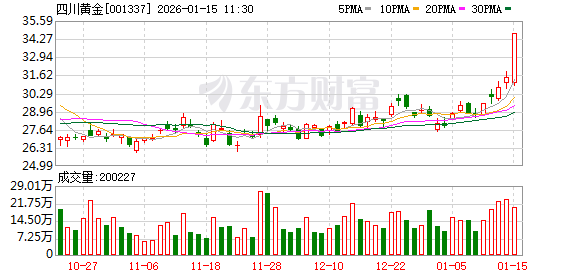
沪指盘中跌破4100点,贵金属逆势拉涨,四川黄金涨停
2 1 Shi Ji Jing Ji Bao Dao· 2026-01-15 04:49
Core Viewpoint - The market experienced a decline with all three major indices falling, while precious metals, particularly gold and silver, saw significant price increases driven by geopolitical risks and monetary easing expectations [1] Market Performance - As of the midday close on January 15, the three major indices collectively dropped, with the ChiNext Index falling over 1% and the Shanghai Composite Index dipping below 4100 points [1] - Precious metals, including gold and silver, performed well, with Sichuan Gold hitting the daily limit and Hunan Silver and Xiaocheng Technology rising over 5% [1] Precious Metals Analysis - The recent rise in gold prices is attributed to a combination of short-term geopolitical risks, concerns over the independence of the Federal Reserve, and long-term structural factors [1] - Silver prices have surged approximately 15% this week, while gold prices have only increased about 2%, leading to a significant decline in the gold-silver ratio, which is currently around 50, the lowest in 14 years [1] - This low gold-silver ratio is expected to attract arbitrage funds into gold [1] - The sentiment in the precious metals market, especially for silver, is currently high, and the 4600 USD level is noted as a key point for market dynamics [1]
沪指盘中跌破4100点 贵金属逆势拉涨 四川黄金涨停
2 1 Shi Ji Jing Ji Bao Dao· 2026-01-15 04:45
Group 1 - The core viewpoint of the article highlights a collective decline in major stock indices, with the ChiNext index dropping over 1% and the Shanghai Composite Index falling below 4100 points during the trading session [2] - Precious metals, particularly gold and silver, have seen a significant increase in prices due to factors such as geopolitical risks and expectations of monetary easing [2] - The recent surge in silver prices, which rose approximately 15% this week, has contributed to the upward movement of gold prices, which increased by about 2% [2] Group 2 - The gold-silver ratio has notably decreased to around 50, marking a 14-year low, which is expected to attract arbitrage funds into gold [2] - Market sentiment for precious metals, especially silver, is currently high, indicating a potential for further price movements [2] - The focus is on the 4600 USD level for silver, where a battle between bulls and bears is anticipated [2]
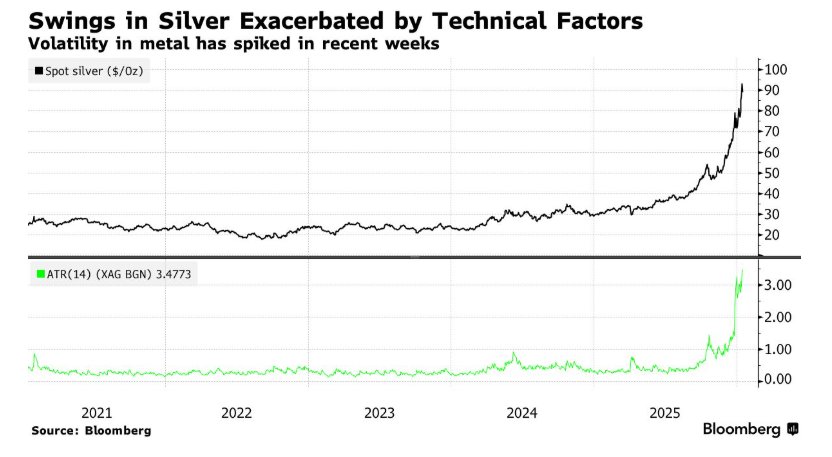
白银牛市狂热遭遇“关税冷却”! 投机势力掀起抛售潮 银价一度暴跌超7%
智通财经网· 2026-01-15 04:28
Group 1 - Silver prices experienced a significant drop of over 4% to around $87.2 after reaching a historical high of $93.7, primarily due to President Trump's announcement to delay tariffs on key mineral imports, which cooled market enthusiasm for silver [1][3] - The recent surge in silver prices, which increased by over 20% in just four trading days, was followed by a sharp correction, attributed to profit-taking by speculative investors and significant selling pressure from the Bloomberg Commodity Index rebalancing [1][4] - Gold prices also saw a decline, but the drop was less than 0.5%, indicating a stronger resilience compared to silver, which is heavily influenced by speculative trading [1][8] Group 2 - The geopolitical tensions, particularly in Venezuela, Cuba, and Iran, have been driving factors behind the recent strong performance of gold and silver, as investors seek safe-haven assets amid fears of escalating conflicts [2][4] - Trump's administration's approach to tariffs, which includes setting price floors rather than percentage-based taxes, has alleviated fears of broad policy impacts, contributing to the recent volatility in precious metals [3][7] - The recent tightening of margin requirements by the CME, shifting from fixed dollar amounts to percentage-based calculations, has increased the cost of high-leverage speculation, leading some investors to reduce their positions in silver [8]
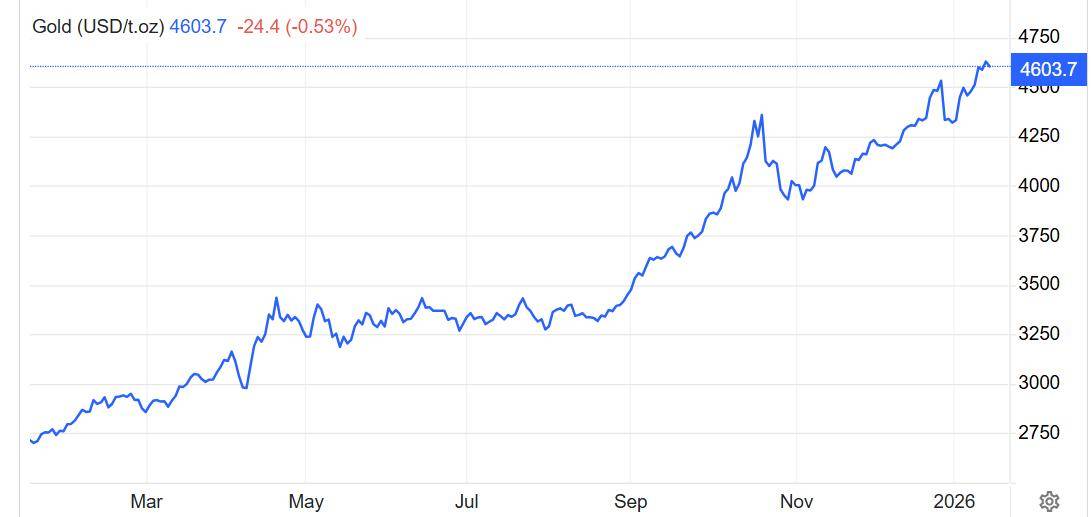
黄金信仰永不灭!狂飙70%的金价仍在翱翔,华尔街奏响5000美元狂想曲
Sou Hu Cai Jing· 2026-01-15 03:35
Core Viewpoint - Gold and silver futures prices have reached new historical highs due to escalating geopolitical tensions, particularly in Venezuela, Cuba, and Iran, alongside concerns regarding the independence of the Federal Reserve's monetary policy and the depreciation of the US dollar [1][2][3] Group 1: Geopolitical Factors - The ongoing unrest in Iran and threats from the Trump administration regarding military intervention have heightened geopolitical risks, driving investors towards gold as a safe haven [1][2] - Analysts from ANZ Bank suggest that geopolitical instability and concerns over the Federal Reserve's independence will continue to boost global demand for gold, with expectations for prices to exceed $5,000 per ounce in the latter half of the year [2][3] Group 2: Market Predictions - Citigroup has raised its bullish forecast for silver to $100 per ounce and for gold to $5,000 per ounce, citing unprecedented high price trends and ongoing geopolitical tensions [3][6] - HSBC predicts that gold prices could surpass $5,000 per ounce in the first half of 2026, driven by increasing geopolitical risks and rising fiscal deficits [6][7] Group 3: Economic Indicators - The US federal deficit is projected to reach $2.05 trillion in the 2026 fiscal year, approximately 6.5% of GDP, which is expected to erode the credibility of fiat currencies and stimulate demand for gold [7][8] - Emerging market central banks are accelerating the process of "de-dollarization," leading to a stronger demand for gold as a reserve asset [8][9] Group 4: Investment Trends - The past year has seen gold and silver prices significantly outperforming other asset classes, with gold futures rising approximately 70% and silver nearly quadrupling in value [3][5] - Analysts emphasize that even a small shift of private investment from US Treasury bonds to gold could lead to substantial price increases, reinforcing the bullish outlook for gold prices [8][9]
格林大华期货早盘提示:纯苯-20260115
Ge Lin Qi Huo· 2026-01-15 03:30
研究员:吴志桥 从业资格:F3085283 交易咨询资格:Z0019267 Morning session notice 早盘提示 更多精彩内容请关注格林大华期货官方微信 格林大华期货研究院 证监许可【2011】1288 号 2026 年 1 月 15 日星期四 联系方式:15000295386 | 板块 | 品种 | 多(空) | 推荐理由 | | --- | --- | --- | --- | | | | | 【行情复盘】 周三主力合约期货BZ2603价格上涨54元至5725元/吨,华东主流地区现货价格5585 | | | | | 元/吨(环比+130),山东地区现货价格 5465 元/吨(环比+140)。持仓方面,多头 | | | | | 增加 580 手至 2.07 万手,空头减少 60 手至 2.53 万手。 | | | | | 【重要资讯】 | | | | | 1、供应方面,12 月国内纯苯产量 193.4 万吨,同比+1.3%。11 月纯苯进口量 45.96 | | | | | 万吨,环比-7.4%。 | | | | | 2、库存方面,江苏纯苯港口样本商业库存总量:32.4 万吨,较上期库存 3 ...
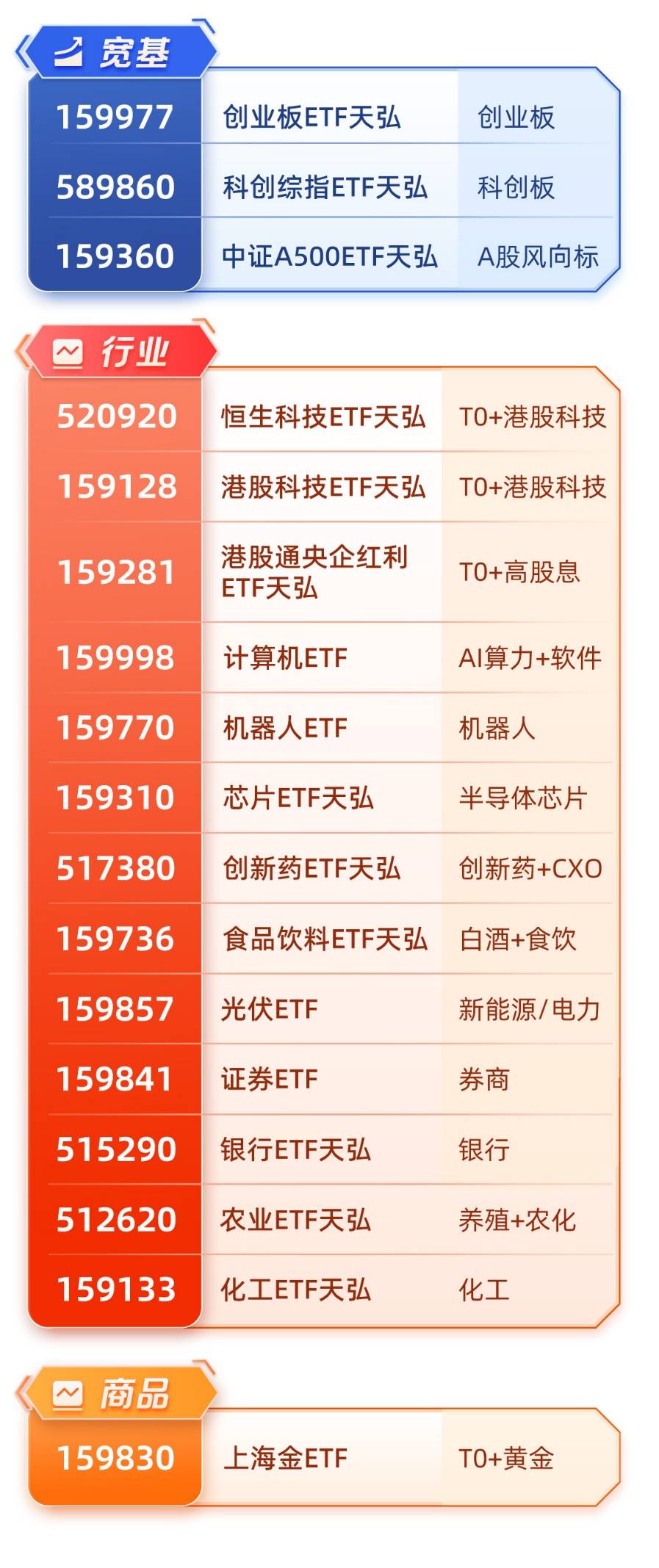
局势升级,区域冲突再起!军工含量最高的航空航天ETF天弘(159241)回调蓄势,近5日净流入近2.3亿元
Sou Hu Cai Jing· 2026-01-15 03:13
Group 1 - The Aerospace ETF Tianhong (159241) has seen a trading volume of 9.4% with a transaction value of 77.8 million yuan, while the tracked CN5082 Aerospace Industry Index has decreased by 3.30% [1] - The top-performing stocks within the Aerospace ETF include Hongdu Aviation, which rose by 10.00%, Guorui Technology up by 4.81%, and AVIC Shenyang Aircraft Corporation up by 3.80%. Conversely, Guobo Electronics fell by 16.07%, Guoguang Electric down by 10.62%, and China Satellite down by 10.00% [1] - The Aerospace ETF Tianhong (159241) has experienced a significant growth of 469 million yuan in scale over the past six months [1] - In terms of capital inflow, the Aerospace ETF Tianhong (159241) has attracted a total of 229 million yuan over the last five trading days [1] Group 2 - The Shanghai Gold ETF (159830) closely tracks Shanghai Gold (SHAU.SGE) and has a management fee rate of 0.25% and a custody fee rate of 0.05%, both lower than the average for similar products. This ETF also supports T+0 trading [2] - The global geopolitical situation has escalated, leading to an increase in arms races and a surge in international gold prices. On January 14, the international spot gold price exceeded 4,640 USD per ounce, setting a new historical record [2] - According to Shenwan Hongyuan Securities, the military industry is expected to see continued improvement in its fundamentals in the first half of 2026, with a gradual recovery in orders and performance. The implementation of the 14th Five-Year Plan is anticipated to enhance certainty in the military sector [2]
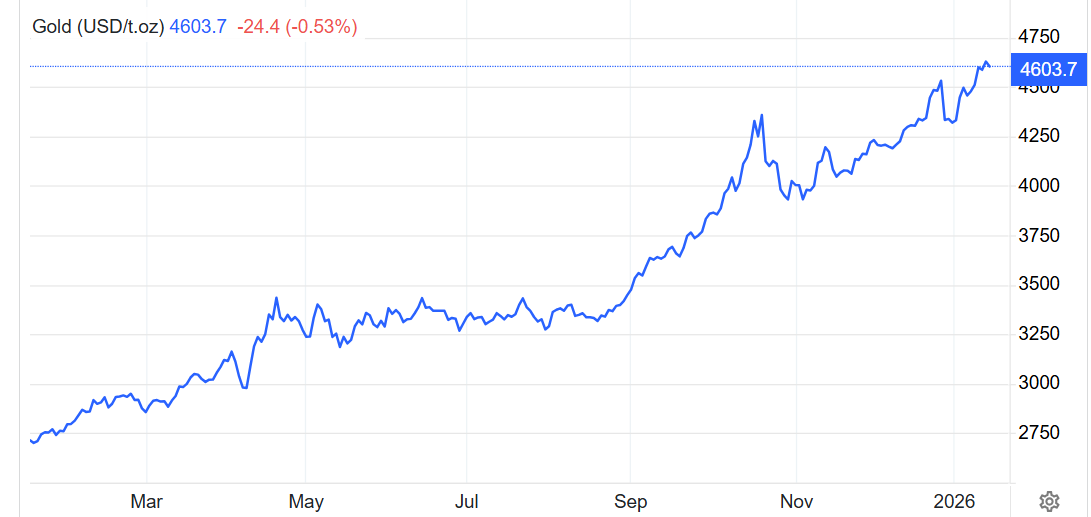
黄金信仰永不灭! 狂飙70%的金价仍在翱翔 华尔街奏响5000美元狂想曲
智通财经网· 2026-01-15 03:05
Core Viewpoint - Gold and silver futures prices have reached new historical highs due to escalating geopolitical tensions, particularly in Venezuela, Cuba, and Iran, alongside concerns over the independence of the Federal Reserve's monetary policy and the depreciation of the US dollar [1][2][3]. Group 1: Geopolitical Factors - The ongoing unrest in Iran and threats from the Trump administration regarding military intervention have heightened geopolitical risks, driving investors towards gold as a safe-haven asset [1][2]. - Analysts from ANZ Bank suggest that geopolitical instability and concerns over monetary policy will continue to boost global demand for gold, with expectations for prices to exceed $5,000 per ounce in the latter half of the year [2][3]. Group 2: Federal Reserve Independence - The Federal Reserve's independence is facing unprecedented political pressure, with Chairman Jerome Powell stating that threats of criminal charges are aimed at undermining the Fed's ability to set interest rates based on economic data rather than political preferences [2][3]. - Concerns over the Fed's independence have led to increased demand for gold, as investors seek to diversify their reserves amid uncertainty [3][7]. Group 3: Market Predictions - Citigroup has raised its price forecasts for gold and silver, predicting gold could reach $5,000 per ounce and silver could rise to $100 per ounce within three months due to ongoing geopolitical risks and supply shortages [3][6]. - HSBC's analysis indicates that the combination of geopolitical risks and rising fiscal deficits is likely to support gold prices, with expectations for prices to surpass $5,000 per ounce in the first half of 2026 [6][7]. Group 4: Demand Dynamics - Emerging market central banks are accelerating their gold purchases as part of a "de-dollarization" trend, indicating a significant shift in global reserve management from US Treasuries to gold [7][8]. - Goldman Sachs and JPMorgan have projected that gold prices could reach approximately $4,900 to $5,055 per ounce by late 2026, driven by structural demand from central banks and potential shifts in private sector investments [8].
光大期货能化商品日报-20260115
Guang Da Qi Huo· 2026-01-15 03:05
Report Industry Investment Rating - Not provided in the document Core Viewpoints of the Report - The prices of various energy and chemical products are in a state of shock. Geopolitical factors, especially the situation in Iran and Venezuela, have a significant impact on the prices of oil - related products. The supply and demand fundamentals of different products also affect their price trends [1][3][4] Summary by Relevant Catalogs Research Views - **Crude Oil**: On Wednesday, the closing price of oil rose, but there was a significant plunge around 4 am, with a maximum drawdown of nearly 5%. The WTI February crude oil contract closed at $62.02/barrel, and the Brent March contract closed at $66.52/barrel. SC2602 closed at 457.0 yuan/barrel, up 8.1 yuan/barrel or 1.80%. Trump's statements on the Gaza conflict and the Iranian situation eased geopolitical concerns, causing large - scale fluctuations in oil prices. The view is that the price will be in a state of shock [1] - **Fuel Oil**: On Wednesday, the main contract of fuel oil (FU2603) on the Shanghai Futures Exchange rose 6.07% to 2586 yuan/ton, and the low - sulfur fuel oil main contract (LU2603) rose 2.51% to 3098 yuan/ton. The sharp rise in high - sulfur fuel oil was driven by the geopolitical situation in Iran and its relatively low valuation. The low - sulfur fuel oil market structure is generally stable, and the high - sulfur fuel oil market has some support. The short - term absolute prices of FU and LU may follow the oil price fluctuations, and the view is shock [1][3] - **Asphalt**: On Wednesday, the main contract of asphalt (BU2602) on the Shanghai Futures Exchange rose 1.38% to 3168 yuan/ton. This week, the social inventory rate was 23.91%, down 0.28% from last week; the domestic refinery asphalt inventory level was 24.81%, up 0.45% from last week; the domestic asphalt plant operating rate was 32.47%, up 3.41% from last week. The asphalt market is driven by the expectation of tight processing raw materials and reduced refinery supply, and the price is expected to be stable and slightly stronger, with a shock view [3] - **Polyester**: TA605 closed at 5116 yuan/ton, down 0.47%; EG2605 closed at 3867 yuan/ton, up 1.36%. Multiple PTA and polyester device maintenance plans were announced. In 2025, textile and clothing exports showed a downward trend. Geopolitical risks may push up oil prices. The contradiction between downstream negative feedback and rising oil prices is the focus of the market. The polyester price is expected to be slightly stronger in the short - term, and the ethylene glycol price is expected to fluctuate widely, with a shock view [3][4] - **Rubber**: On Wednesday, the main contract of Shanghai rubber (RU2605) rose 185 yuan/ton to 16160 yuan/ton, and the NR main contract rose 175 yuan/ton to 13015 yuan/ton. In 2025, China's imports of natural and synthetic rubber increased. The rubber price rebounded under the macro - expectation warming, but the price elasticity decreased after the low - production season, and the inventory - accumulation pressure may suppress the price, with a shock view [5] - **Methanol**: On Wednesday, the Taicang spot price was 2257 yuan/ton. In January, the arrival volume decreased, but the MTO device load also decreased. The port de - stocking pressure will gradually appear. It is expected that methanol will maintain a bottom - shock state, but the tense situation in Iran may intensify the fluctuations, with a shock view [5] - **Polyolefins**: On Wednesday, the mainstream price of East China wire drawing was 6430 - 6550 yuan/ton. In January, the supply may decrease slightly due to some temporary maintenance and shutdowns of upstream devices. The demand will recover in the first half of January and decline in the second half. It is expected that polyolefins will still be in a bottom - shock state, with a shock view [5][6] - **Polyvinyl Chloride (PVC)**: On Wednesday, the prices in the East, North, and South China PVC markets showed different trends. The supply is at a high - level shock, and the domestic demand is slowing down. The 05 contract has a large premium. The export policy change will affect the price trend. It is expected that the PVC price will maintain a bottom - shock state, with a shock view [6] Daily Data Monitoring - Provides the basis price information of various energy and chemical products on January 15, 2026, including spot price, futures price, basis, basis rate, price increase and decrease, and the position of the latest basis rate in historical data [7] Market News - The commander - in - chief of the Iranian Islamic Revolutionary Guard Corps stated that they are ready to respond to any misjudgment of the enemy. Trump's envoy announced the second phase of the "20 - point plan" to end the Gaza conflict, and Trump said that the US would observe the development of the Iranian situation before making a decision, not excluding the possibility of military action [9] Chart Analysis - **Main Contract Prices**: Displays the closing price trends of the main contracts of various energy and chemical products from 2022 to 2026, including crude oil, fuel oil, low - sulfur fuel oil, asphalt, etc. [11][13][15] - **Main Contract Basis**: Presents the basis trends of the main contracts of various energy and chemical products, such as crude oil, fuel oil, low - sulfur fuel oil, etc. [28][31][35] - **Inter - period Contract Spreads**: Shows the spreads of different contracts of various energy and chemical products, such as fuel oil, asphalt, PTA, etc. [41][43][46] - **Inter - variety Spreads**: Displays the spreads between different varieties of energy and chemical products, such as crude oil internal and external spreads, fuel oil high - low sulfur spreads, etc. [57][59][61] - **Production Profits**: Presents the production profit trends of various energy and chemical products, such as LLDPE, PP, PTA, etc. [65][67] Team Member Introduction - Introduces the members of the Everbright Futures Energy and Chemical Research Team, including their positions, educational backgrounds, honors, and research directions [70][71][72]