地缘政治

Search documents
能源化策略:乌克兰袭击俄罗斯基础设施,原油和化?延续震荡整理
Zhong Xin Qi Huo· 2025-12-02 01:11
1. Report Industry Investment Rating The report does not explicitly mention the industry investment rating. 2. Core Viewpoints of the Report - The energy and chemical industry continues to experience weak and volatile trends, with olefins showing weakness and aromatics presenting a slightly stronger pattern [4]. - In December, the rebound space of the industry is expected to be limited under the weak fundamental outlook, and special attention should be paid to geopolitical disturbances [7]. 3. Summary by Relevant Catalogs 3.1 Market Overview - **Geopolitical Factors**: The situation in the Caribbean region remains tense. After the reduction of Russian oil output, the marginal positive impact of the Russia - Ukraine conflict has diminished. The OPEC+ production policy is set until the first quarter of next year, with limited short - term disturbances. The global crude oil inventory has been rising since the fourth quarter, and the situation of supply surplus is difficult to change [7]. - **Chemical Industry**: The chemical industry as a whole continues to fluctuate and consolidate. Most liquid chemicals have accumulated inventory this week. The reduction of disproportionation load will help reduce the supply of pure benzene [3]. 3.2 Variety Analysis - **Crude Oil**: Geopolitical premiums fluctuate, and supply pressure persists. The weak fundamental situation in December limits the rebound space, and attention should be paid to geopolitical disturbances [4][7]. - **Asphalt**: Asphalt profits continue to be compressed. The supply and demand are both weak, and the pressure of inventory accumulation is high [4][8]. - **High - Sulfur Fuel Oil**: The futures price of high - sulfur fuel oil shows a weak and volatile trend. The three major drivers supporting high - sulfur fuel oil are currently weak, and the demand is relatively weak [4][8]. - **Low - Sulfur Fuel Oil**: The futures price of low - sulfur fuel oil shows a weak and volatile trend. It is affected by factors such as the decline in shipping demand, substitution by green energy and high - sulfur fuel, but its current valuation is low and it follows the movement of crude oil [4][10]. - **Methanol**: The unloading at coastal areas fails to meet expectations, and the supply - demand situation in the inland provides phased support, so the upward trend of methanol continues [4]. - **Urea**: The progress of off - season storage slows down, and the futures market fluctuates and consolidates [4]. - **Ethylene Glycol**: The rebound height is limited under the pressure of supply and demand, and the price fluctuates widely [4]. - **PX**: The market anticipates a shortage of raw materials in the second quarter in advance, and short - term benefits remain strong [4]. - **PTA**: Supported by strong upstream costs and an improved supply - demand pattern, the price rises synchronously [4]. - **Short Fibers**: Downstream customers make moderate replenishments in stages, but the willingness to continuously chase price increases is not strong [4]. - **Bottle Chips**: The support from the cost side strengthens, and attention should be paid to the commissioning of new plants [4]. - **Propylene**: Driven by PG, PL fluctuates and rebounds [4]. - **PP**: Driven by propane but with limited fundamental support, attention should be paid to changes in maintenance [4]. - **Plastic**: The support from maintenance is limited, and the price fluctuates [4]. - **Styrene**: The inventory reduction continues in December, and market sentiment improves [4]. - **PVC**: There is a game between long and short positions, and PVC shows a weak rebound [4]. - **Caustic Soda**: The marginal cost decreases, and caustic soda fluctuates weakly [4]. 3.3 Variety Data Monitoring - **Inter - Period Spreads**: The report provides the latest values and changes of inter - period spreads for various varieties such as Brent, Dubai, PX, PTA, etc. [31]. - **Basis and Warehouse Receipts**: It shows the basis, changes in basis, and the number of warehouse receipts for different varieties including asphalt, high - sulfur fuel oil, low - sulfur fuel oil, etc. [32]. - **Inter - Variety Spreads**: The report presents the latest values and changes of inter - variety spreads for different combinations such as 1 - month PP - 3MA, 1 - month TA - EG, etc. [33].
尼泊尔央行找中国企业印钞,印度媒体反应过度
Sou Hu Cai Jing· 2025-12-02 00:32
Core Points - Nepal Rastra Bank has signed an agreement with China Banknote Printing and Minting Corporation to print new denominations of Nepalese Rupees [1][2] - The agreement includes the printing of 50, 500, and 1000 Nepalese Rupee notes, with the design and production to be completed within nine months [1] - The issuance of the new 100 Nepalese Rupee note, which features a map including disputed territories, has sparked media speculation regarding Nepal's alignment with China [2][3] Company Summary - China Banknote Printing and Minting Corporation has been awarded contracts for printing Nepalese currency multiple times since 2016, indicating a strong business relationship [2] - The recent contract win is attributed to the company's competitive bidding and compliance with technical requirements set by Nepal Rastra Bank [1] - The printing of the new currency is seen as a strategic move that enhances China's influence in the region, prompting concerns from Indian media [3] Industry Context - The issuance of currency featuring disputed territories reflects ongoing geopolitical tensions between Nepal and India, with implications for regional economic dynamics [2][3] - Nepal's choice to partner with a Chinese firm for currency printing highlights a shift in economic alliances and the potential for increased Chinese investment in Nepal [1][3] - The situation underscores the broader context of South Asian geopolitics, where economic cooperation is often intertwined with national sovereignty issues [3]
尼泊尔找中企印钞,印媒反应过度,专家:中尼经贸合作完全顺理成章
Huan Qiu Shi Bao· 2025-12-01 22:51
Core Viewpoint - The agreement between Nepal Rastra Bank and China Banknote Printing and Minting Corporation to print new denominations of Nepalese currency reflects the strengthening economic ties between Nepal and China, amidst geopolitical tensions with India [1][2][3] Group 1: Agreement Details - Nepal Rastra Bank has contracted China Banknote Printing and Minting Corporation to print 50, 500, and 1000 Nepalese Rupee notes, with the design and supply to be completed within nine months [1] - The new 100 Nepalese Rupee note, which includes a map of disputed territories, was officially issued on November 27, 2023 [2] - The contract was awarded to China Banknote Printing and Minting Corporation due to its competitive bid that met all technical requirements [1] Group 2: Geopolitical Context - The issuance of the new currency has reignited discussions in Indian media regarding the territorial disputes between Nepal and India, particularly concerning areas claimed by both nations [2] - Indian media's reaction suggests a perception of Nepal moving closer to China, which is viewed as a threat to India's influence in the region [3] - Experts argue that India's concerns stem from a desire to maintain economic control over Nepal, reflecting a broader geopolitical struggle in South Asia [3] Group 3: Historical Context - Historically, Nepal's currency was printed by Indian facilities from 1945 to 1955, and while India has previously held contracts, the current political sensitivity surrounding the new currency has made this a contentious issue [2] - The ongoing collaboration between Nepal and China is seen as a natural progression of their economic relationship, welcomed by surrounding nations [3]
【环球财经】贵金属市场再掀涨势 银价年内涨幅远超黄金
Xin Hua Cai Jing· 2025-12-01 10:52
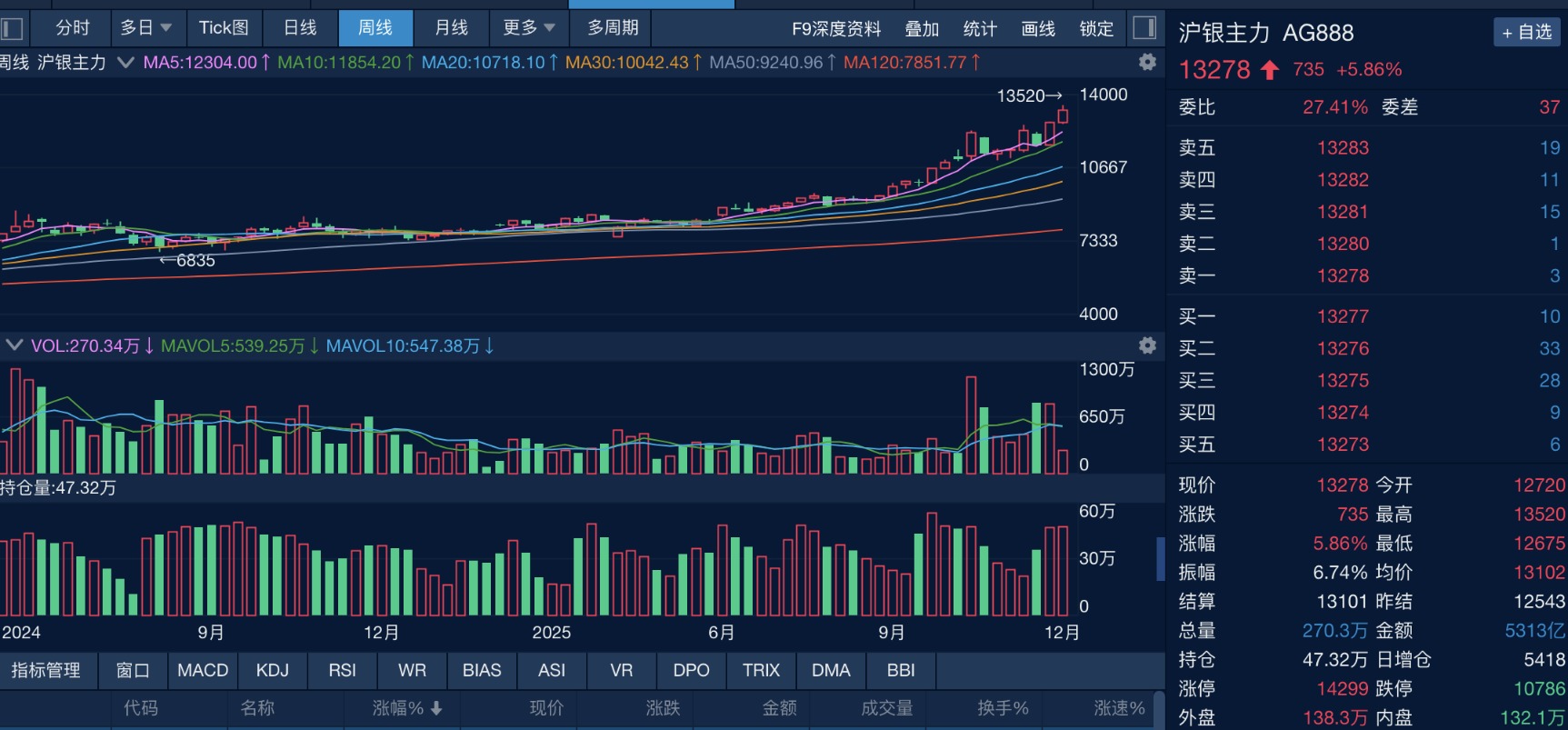
新华财经上海12月1日电 近期全球贵金属及有色板块强势延续,白银价格不断创出新高,领涨市场。截至发稿,伦敦现货白银历史首次站上每盎司57美元上 方,日内涨超2%,年内涨幅接近100%;COMEX白银主力期货合约首次突破每盎司58美元,年内涨幅超过98%;沪银期货主力合约收盘涨近6%,刷新历史 新高,年内涨幅超过77%。 国信期货首席分析师顾冯达接受新华财经采访时表示,在年末交割月临近的背景下,白银市场低库存与实物流动性紧缩共同推升价格走势,同时全球资本对 战略性金属资源的配置需求与投机资金形成共振,进一步强化了市场易涨难跌的格局。 白银年内涨近100%背后 今年以来,白银接近100%的涨幅成为表现最好的资产之一,超过黄金市场61%和纳指21%的涨幅。面对通货膨胀、地缘政治担忧以及利率下行,投资者正将 贵金属视为"避风港"。此外,与黄金不同,白银的涨势还受到了人工智能、电动汽车和能源转型热潮的推动。 "白银价格短期调整后,快速上涨并突破新的历史新高,背后是宏观环境、供需格局和资金情绪三重共振的结果。"光大期货研究所有色金属研究总监展大鹏 对新华财经表示,一是当前市场对美联储12月降息的预期已升至近90%,该因素 ...

伦敦金强势走涨 美联储明年将继续降息
Jin Tou Wang· 2025-12-01 09:36
周一(12月1日)欧盘时段,伦敦金目前交投于4242一线上方,截至发稿,伦敦金暂报4250.59美元/盎司, 上涨0.50%,最高触及4256.20美元/盎司,最低下探4205.33美元/盎司。目前来看,伦敦金短线偏向上涨 走势。 【要闻速递】 法国兴业银行利率策略师在一份报告中表示,即将公布的经济数据应会继续显示美国经济具有韧性、通 胀具有粘性,以及劳动力市场状况略有恶化;尽管如此,到2026年底,美国国债收益率仍有下降空间。 摘要周一(12月1日)欧盘时段,伦敦金目前交投于4242一线上方,截至发稿,伦敦金暂报4250.59美元/盎 司,上涨0.50%,最高触及4256.20美元/盎司,最低下探4205.33美元/盎司。目前来看,伦敦金短线偏向 上涨走势。 与此同时,中东局势显着升级,黎巴嫩真主党高级领导人在以色列空袭中身亡,这一事件加剧了该地区 的局部动荡。11月底普京首度公开谈和平计划,准备下周同美方"严肃"讨论。当前美俄乌会谈仍存极大 不确定性,密切关注。 【最新伦敦金行情解析】 从4小时图分析,价格的主要支撑已上移至4200美元整数关口附近,该位置是判断短期强势能否延续的 首要防线。更为精确的多头 ...
原油周报(SC):俄乌和平协议摇摆,国际油价震荡表现-20251201
Guo Mao Qi Huo· 2025-12-01 05:28
1. Report Industry Investment Rating - The investment view is bearish [3]. 2. Core View of the Report - OPEC+ continues to increase production, and the three major monthly reports are pessimistic about demand forecasts. The long - term supply - demand situation remains bearish. With the progress of the Russia - Ukraine peace agreement, oil prices will still fluctuate in the short term, and the long - term price center tends to decline [3]. 3. Summary by Relevant Catalogs PART ONE: Main Views and Strategy Overview - **Supply (Medium - Long Term)**: EIA slightly raises the forecast for global crude oil and related liquid production in 2025 and 2026. OPEC and IEA show different trends in OPEC and Non - OPEC DoC countries' production in October 2025. Overall, the supply situation is bearish [3]. - **Demand (Medium - Long Term)**: EIA, OPEC, and IEA have different forecasts for the growth rate of global crude oil and related liquid demand in 2025 and 2026, with an overall neutral view [3]. - **Inventory (Short Term)**: As of the week ending November 21, US commercial crude oil inventories (excluding strategic reserves) increased, and Cushing crude oil inventories decreased. The inventory situation is neutral [3]. - **Oil - Producing Country Policies (Medium - Long Term)**: OPEC+ may maintain the oil production level, and Saudi Arabia's production has reached a high level in recent years, showing a bearish trend [3]. - **Geopolitics (Short Term)**: The signals from the US and Russia regarding the Venezuela and Ukraine issues put downward pressure on oil prices, showing a bearish trend [3]. - **Macro - Finance (Short Term)**: The market's expectation of a Fed rate cut in December has increased, and the situation is neutral [3]. - **Investment View**: Bearish on the oil market [3]. - **Trading Strategy**: Unilateral: Rebound and short. Arbitrage: Wait and see [3]. PART TWO: Futures Market Data - **Market Review**: This week, oil prices fluctuated. The possible Russia - Ukraine peace agreement and OPEC+ production increase operations pressured the oil market. US refinery operating rates remained high, but macro - demand growth slowed. WTI, Brent, and SC crude oil showed different price trends [6]. - **Monthly Spread & Internal - External Spread**: The near - month spread weakened, and the internal - external spread declined [9]. - **Forward Curve**: The near - month spread strengthened [23]. - **Cracking Spread**: The cracking spreads of gasoline and diesel, as well as jet fuel, strengthened [26][38]. PART THREE: Crude Oil Supply - Demand Fundamental Data - **Production**: In October 2025, global crude oil production decreased. Different organizations' data on OPEC and Non - OPEC DoC countries' production vary. The US weekly crude oil production decreased, imports increased, and exports decreased [59][84]. - **Inventory**: US commercial inventories increased, and Cushing inventories decreased. Northwest European crude oil inventories increased, and Singapore fuel oil inventories decreased [85][94]. - **Demand**: In the US, gasoline implied demand rebounded, and refinery operating rates increased. In China, refinery weekly crude oil processing volume decreased, but the capacity utilization rate of independent refineries increased [112][120]. - **Macro - Finance**: The probability of a Fed rate cut in December decreased, and the US dollar index rebounded [134]. - **CFTC Positioning**: The speculative net short position of WTI crude oil increased [138].
黄金再创新高,牛市炒股却为什么挣不了钱
Sou Hu Cai Jing· 2025-12-01 02:40
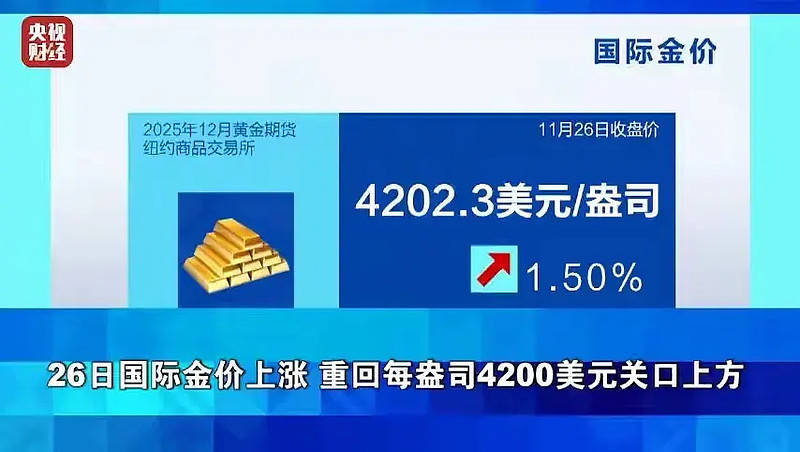
Core Viewpoint - The article discusses the contrasting performance of gold and stocks in the current market, highlighting that while gold has reached new highs, it has not become the mainstream investment choice for the general public, who often suffer losses in the stock market [2][3][12]. Group 1: Gold Market Analysis - Gold has shown a remarkable increase, with international gold prices rising above $4,200 per ounce, reflecting a 92% increase since the beginning of 2023, outperforming most other asset classes [5][7]. - The demand for gold is significantly influenced by geopolitical risks, which have contributed to a 173% increase in its pricing dynamics [8][10]. - Central banks have been major players in the gold market, purchasing 1,136 tons in 2022, marking the highest level in 55 years, which supports gold prices as they prioritize asset safety and liquidity over immediate returns [9][10]. Group 2: Stock Market Dynamics - The stock market has seen significant volatility, with many retail investors experiencing losses despite a bullish market environment, often driven by irrational trading behaviors such as chasing trends [13][15]. - The article emphasizes that the nature of stock trading can lead to bubbles, where ordinary investors may not realize the true value of their investments, resulting in losses even during bull markets [15][16]. - Institutional investors, like Warren Buffett, tend to avoid losses by maintaining a long-term perspective and understanding market fundamentals, contrasting with the behavior of retail investors [16][17]. Group 3: Investment Philosophy - Investment is portrayed as a journey of personal growth and understanding, where successful investors develop mature investment philosophies and strong emotional control [4][17]. - The article suggests that rather than focusing solely on whether to invest in gold or stocks, individuals should cultivate wisdom and understanding of market dynamics and human behavior [27].
有色金属日报 2025-12-1-20251201
Wu Kuang Qi Huo· 2025-12-01 01:54
有色金属日报 2025-12-1 五矿期货早报 | 有色金属 铜 有色金属小组 【行情资讯】 吴坤金 从业资格号:F3036210 交易咨询号:Z0015924 0755-23375135 wukj1@wkqh.cn 曾宇轲 从业资格号:F03121027 交易咨询号:Z0023147 0755-23375139 zengyuke@wkqh.cn 张世骄 从业资格号:F03120988 交易咨询号:Z0023261 0755-23375122 zhangsj3@wkqh.cn 王梓铧 从业资格号:F03130785 0755-23375132 wangzh7@wkqh.cn 刘显杰 从业资格号:F03130746 0755-23375125 liuxianjie@wkqh.cn 陈逸 从业资格号:F03137504 0755-23375125 cheny40@wkqh.cn 冶炼减产忧虑下铜价一度突破历史新高,周五伦铜 3M 合约收涨 2.25%至 11175 美元/吨,沪铜主力 合约收至 88740 元/吨。LME 铜库存增加 2250 至 159425 吨,注销仓单比例抬升,Cash/3M 升水走强。 国 ...
中辉能化观点-20251201
Zhong Hui Qi Huo· 2025-12-01 01:52
1. Report Industry Investment Ratings - **Cautiously Bearish**: Crude oil, LPG, L, PP, PVC, ethylene glycol, urea, asphalt, soda ash [1][3][5] - **Cautiously Bullish**: PX/PTA, methanol, natural gas [3][5] - **Bearish Rebound**: L, PP, glass [1][5] - **Bearish Continuation**: Soda ash [5] 2. Core Views of the Report - **Crude Oil**: OPEC+ maintains production policy, supply surplus in the off - season dominates. Geopolitical tensions ease, and prices are under pressure. Consider partial profit - taking on short positions [1][8]. - **LPG**: Saudi Arabia raises CP contract price, but the market has priced it in. There is short - term correction pressure. Consider buying put options [1]. - **L**: Cost support improves, but supply is sufficient, and demand weakens after November. Close short positions and wait for a rebound to go short [1]. - **PP**: 12 - month CP quote rises, providing cost support. Supply is under pressure, and there is a high de - stocking pressure. Close short positions and wait for a rebound to go short [1]. - **PVC**: Chlor - alkali profit is compressed. Social inventory is high, but there is low - valuation support. Consider short - term long positions based on capital dynamics and long - term long positions after inventory de - stocking [1]. - **PX/PTA**: Processing fees are low, supply pressure eases due to device maintenance, and downstream demand is good. Consider going long on dips [3]. - **Ethylene Glycol**: Supply pressure may ease with future device maintenance, but there is a cumulative inventory expectation in December. Lack of upward drivers, consider short positions on rebounds [3]. - **Methanol**: Port inventory is decreasing, but supply pressure is still high. Consider going long on 05 contract on dips [3]. - **Urea**: Supply pressure is large, demand is weak domestically and strong overseas. Consider short positions on rebounds [3]. - **Natural Gas**: Entering the consumption peak season, demand is supported, and prices are likely to rise [5]. - **Asphalt**: Supply and demand are both weak, and prices are under pressure. Continue to hold short positions [5]. - **Glass**: Pay attention to the implementation of cold - repair plans. Short - term may be strong, but long - term is bearish [5]. - **Soda Ash**: Warehouse receipts increase, supply is in a long - term high - production cycle, and demand is weak. Hold short positions on the 01 alkali - glass spread and wait for a rebound to go short [5]. 3. Summaries According to Relevant Catalogs 3.1 Crude Oil - **Market Review**: On November 27, WTI decreased by 0.17%, Brent decreased by 0.78%, and SC increased by 1.30% [7]. - **Basic Logic**: OPEC+ maintains production policy, supply surplus in the off - season, and geopolitical tensions ease [8]. - **Fundamentals**: Supply: US oil rig count decreases, and Mexican oil production declines. Demand: OPEC expects global oil demand to increase in 2025 and 2026. Inventory: US crude and refined product inventories increase [9]. - **Strategy Recommendation**: Consider partial profit - taking on short positions. Pay attention to the range of SC [450 - 460] [10]. 3.2 LPG - **Market Review**: On November 28, the PG main contract closed at 4361 yuan/ton, up 2.16% [11]. - **Basic Logic**: Cost is linked to crude oil, downstream demand is resilient, and inventory decreases [12]. - **Strategy Recommendation**: Do not chase the rise, buy put options. Pay attention to the range of PG [4350 - 4450] [13]. 3.3 L - **Market Review**: L2601 contract closed at 6699 yuan/ton [16]. - **Basic Logic**: Cost support improves, but supply is sufficient, and demand weakens after November [18]. - **Strategy Recommendation**: Close short positions, wait for a rebound to go short. Pay attention to the range of L [6750 - 6900] [18]. 3.4 PP - **Market Review**: PP2601 closed at 6265 yuan/ton [21]. - **Basic Logic**: 12 - month CP quote rises, supply is under pressure, and there is a high de - stocking pressure [22]. - **Strategy Recommendation**: Close short positions, wait for a rebound to go short. Pay attention to the range of PP [6350 - 6500] [22]. 3.5 PVC - **Market Review**: V2601 closed at 4586 yuan/ton [25]. - **Basic Logic**: Chlor - alkali profit is compressed, social inventory is high, but there is low - valuation support [26]. - **Strategy Recommendation**: Consider short - term long positions based on capital dynamics and long - term long positions after inventory de - stocking. Pay attention to the range of V [4500 - 4700] [26]. 3.6 PX/PTA - **Market Review**: TA05 closed at 4752 yuan/ton [27]. - **Basic Logic**: Processing fees are low, supply pressure eases due to device maintenance, and downstream demand is good. There is a cumulative inventory expectation in December [28]. - **Strategy Recommendation**: Consider going long on dips. Pay attention to the range of TA [4650 - 4740] [29]. 3.7 Ethylene Glycol - **Market Review**: Not explicitly mentioned. - **Basic Logic**: Domestic coal - based ethylene glycol device starts to increase, but future integrated device maintenance will ease supply pressure. There is a cumulative inventory expectation in December [31]. - **Strategy Recommendation**: Consider short positions on rebounds. Pay attention to the range of EG [3850 - 3920] [32]. 3.8 Methanol - **Market Review**: Not explicitly mentioned. - **Basic Logic**: Taicang spot strengthens, port inventory decreases, supply pressure is high, and demand improves [35]. - **Strategy Recommendation**: Continue to pay attention to going long on the 05 contract on dips. Pay attention to the range of MA [2105 - 2145] [38]. 3.9 Urea - **Market Review**: URO5 closed at 1743 yuan/ton [39]. - **Basic Logic**: Supply pressure is large, demand is weak domestically and strong overseas, and inventory is high [40]. - **Strategy Recommendation**: Consider short positions on rebounds. Pay attention to the range of UR [1640 - 1680] [41]. 3.10 Natural Gas - **Market Review**: On November 27, the NG main contract closed at 4.850 dollars/million British thermal units, up 6.41% [43]. - **Basic Logic**: EU bans Russian gas imports, entering the consumption peak season, and demand is supported [44]. - **Strategy Recommendation**: Gas prices are likely to rise. Pay attention to the range of NG [4.680 - 5.000] [45]. 3.11 Asphalt - **Market Review**: On November 28, the BU main contract closed at 2996 yuan/ton, down 0.37% [48]. - **Basic Logic**: Cost is linked to crude oil, supply is sufficient, and demand is in the off - season [49]. - **Strategy Recommendation**: Continue to hold short positions. Pay attention to the range of BU [2950 - 3050] [50]. 3.12 Glass - **Market Review**: FG2601 closed at 1053 yuan/ton [53]. - **Basic Logic**: Multiple production lines plan cold - repair in December, but demand is weak [54]. - **Strategy Recommendation**: Pay attention to cold - repair implementation. Short - term may be strong, long - term is bearish. Pay attention to the range of FG [1020 - 1070] [54]. 3.13 Soda Ash - **Market Review**: SA2601 closed at 1239 yuan/ton [57]. - **Basic Logic**: Warehouse receipts increase, supply is in a long - term high - production cycle, and demand is weak [58]. - **Strategy Recommendation**: Hold short positions on the 01 alkali - glass spread and wait for a rebound to go short. Pay attention to the range of SA [1140 - 1180] [58].
原油周报:市场关注俄乌和平谈判进展,国际油价震荡-20251130
Xinda Securities· 2025-11-30 13:33
Investment Rating - The industry investment rating is "Positive" [1] Core Views - The report highlights that international oil prices experienced fluctuations due to geopolitical factors, particularly the ongoing situation in Ukraine. As of November 28, 2025, Brent and WTI oil prices were reported at $62.38 and $58.55 per barrel, respectively [2][9] - The report indicates an increase in U.S. crude oil and refined product inventories, which negatively impacted the market. However, a reduction in the number of active oil rigs in the U.S. and skepticism regarding the peace negotiations in Ukraine contributed to price volatility [2][9] - The report notes that the oil and petrochemical sector underperformed compared to the broader market, with a decline of 0.73% in the sector as of November 28, 2025 [10] Summary by Sections Oil Price Review - As of November 28, 2025, Brent crude futures settled at $62.38 per barrel, down $0.18 (-0.29%) from the previous week, while WTI crude futures increased by $0.49 (+0.84%) to $58.55 per barrel [24] - The report also mentions the Urals crude price remained stable at $65.49 per barrel, while ESPO crude fell by $0.84 (-1.56%) to $53.16 per barrel [24] Offshore Drilling Services - The number of global offshore self-elevating drilling platforms was reported at 366, with a net increase of 1 platform. The floating drilling platform count rose to 129, with an increase of 2 platforms [27] U.S. Crude Oil Supply - U.S. crude oil production was reported at 13.814 million barrels per day, a decrease of 20,000 barrels from the previous week. The number of active drilling rigs fell to 407, down by 12 rigs [38] U.S. Crude Oil Demand - U.S. refinery crude processing averaged 16.443 million barrels per day, an increase of 211,000 barrels from the previous week, with a refinery utilization rate of 92.30%, up 2.3 percentage points [45] U.S. Crude Oil Inventory - Total U.S. crude oil inventories reached 838 million barrels, an increase of 3.272 million barrels (+0.39%) from the previous week. Strategic reserves were at 411 million barrels, up 498,000 barrels (+0.12%) [54] Refined Oil Products - In the North American market, average prices for diesel, gasoline, and jet fuel were reported at $99.57, $79.04, and $89.17 per barrel, respectively, with corresponding price differentials to crude oil [77]