货币政策

Search documents
地缘扰动加剧,资源保障存忧,沪铜仍强:铜周报20260111-20260112
Guo Lian Qi Huo· 2026-01-12 03:51
1. Report Industry Investment Rating No relevant information provided. 2. Core View of the Report The geopolitical disturbances are intensifying, there are concerns about resource security, and the Shanghai copper market remains strong [1]. 3. Summary by Relevant Catalogs 3.1 Impact Factor Analysis - **Macro (Positive)**: In 2026, the central bank will increase counter - cyclical and cross - cyclical adjustment efforts, and flexibly and efficiently use various monetary policy tools such as reserve requirement ratio cuts and interest rate cuts. The US president is discussing a plan to acquire Greenland, including military options, and has instructed the purchase of $200 billion in US mortgage - backed bonds. China's December CPI year - on - year increase reached a 34 - month high, and PPI increased month - on - month for three consecutive months. The US added 50,000 non - farm jobs in December, falling short of expectations, and the unemployment rate dropped to 4.4%. The January Michigan consumer confidence index reached a four - month high [6]. - **Demand (Negative)**: Affected by holidays and high prices, the operating rate of refined copper rods continued to be under pressure, showing both month - on - month and year - on - year declines. The transaction area of new and second - hand houses in 10 key cities last week decreased both month - on - month and year - on - year. The production plan of household air conditioners in January increased by 11% compared with last year's actual performance, but the production plans in January and February were different due to the Spring Festival, with the cumulative production basically flat. The retail volume of new energy passenger vehicles in the national market from December 1st to 31st increased by 7% year - on - year. The overall production plan of photovoltaic modules in January is expected to decline significantly, and the export tax rebate for photovoltaic value - added tax will be cancelled starting from April [6]. - **Supply (Neutral)**: According to Steel Union, the port inventory of copper concentrates this week was 428,000 tons, a month - on - month decrease of 68,000 tons and at a low level compared with the same period last year. Codelco's copper production in 2025 was 1.332 million tons, a slight increase compared with 2024. Rio Tinto and Glencore are conducting preliminary consultations on a potential business merger. According to SMM, the domestic electrolytic copper production in December increased by 6.8% month - on - month and 7.54% year - on - year, mainly due to the resumption of production of previously overhauled smelters and the increase in the production of scrap - produced anode copper. The electrolytic copper production in January is expected to decrease month - on - month but increase year - on - year [6]. - **Inventory (Negative)**: This week, the spot and bonded - area inventories of electrolytic copper increased month - on - month. LME copper stocks decreased, while COMEX copper stocks increased. According to Steel Union, the spot inventory of electrolytic copper on Thursday was 284,700 tons, an increase of 13,300 tons compared with Monday and 37,600 tons compared with last Thursday; the bonded - area inventory was 115,200 tons, an increase of 1,700 tons compared with Monday and 6,800 tons compared with last Thursday. The LME copper inventory on Friday was 138,975 tons, a week - on - week decrease of 6,350 tons; the COMEX copper inventory on Friday was 517,999 short tons, a month - on - month increase of 18,158 short tons [6]. - **Specific Production (Neutral)**: On Friday, the spot premiums and discounts of premium copper, flat - grade copper, and wet - process copper were 30, - 80, and - 175 yuan/ton respectively. Due to the high price level and weak spot copper transactions, the premiums and discounts were under pressure. The spread between the February and March contracts of Shanghai copper closed at - 170 yuan/ton on Friday afternoon, continuing to be under pressure. The LME copper 0 - 3M premium strengthened slightly week - on - week [6]. 3.2 Price Data - The high price level led to weak spot copper transactions, and the premiums and discounts were under pressure [11]. - The LME copper 0 - 3M premium strengthened slightly week - on - week [13]. 3.3 Fundamental Data - The average price of the copper concentrate TC index this week decreased by $0.43/ton month - on - month to - $45.41/ton, still at a low level [15]. - The port inventory of copper concentrates this week was 428,000 tons, a month - on - month decrease of 68,000 tons and at a low level compared with the same period last year [18]. - The price difference between refined copper and scrap copper strengthened [20]. - The domestic electrolytic copper production in December increased by 6.8% month - on - month and 7.54% year - on - year, and the production in January is expected to decrease month - on - month but increase year - on - year [23]. - In November, China imported 269,200 tons of refined copper, a month - on - month decrease of 3.8%, and exported 143,000 tons, a month - on - month increase of 116.8% [26]. - This week, the spot and bonded - area inventories of electrolytic copper increased month - on - month, LME copper stocks decreased, and COMEX copper stocks increased [27][28]. - Affected by holidays and high prices, the operating rate of refined copper rods continued to be under pressure, showing both month - on - month and year - on - year declines [31]. - The retail volume of new energy passenger vehicles in the national market from December 1st to 31st increased by 7% year - on - year [32]. - The overall production plan of photovoltaic modules in January is expected to decline, and the export tax rebate for photovoltaic value - added tax will be cancelled starting from April [33]. - The production plans of household air conditioners in January and February were different due to the Spring Festival, with the cumulative production basically flat [35]. 3.4 Macroeconomic Data - China's RatingDog service industry PMI in December was 52, remaining in the expansion range, but new export orders fell back into contraction [37]. - The US January Michigan consumer confidence index reached a four - month high, and inflation expectations were relatively stable [40]. - "New Fed Wire" said that the December non - farm employment data paved the way for maintaining the status quo, and traders expect it is almost impossible to make a change in January [41].
一大早涨100美元,黄金正在抒写历史!
Sou Hu Cai Jing· 2026-01-12 03:41
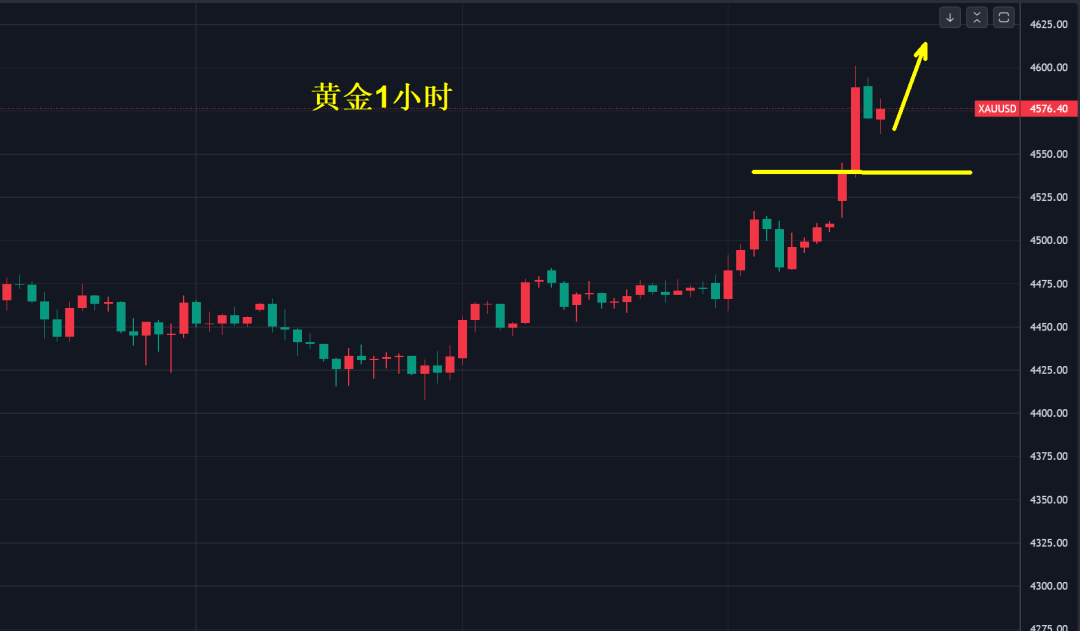
Group 1 - The core viewpoint is that gold prices have surged dramatically, reaching $4600, with previous resistance levels being easily surpassed [1][7] - There is a prevailing sense of urgency among both holders and non-holders of gold, driven by fears of missing out or the potential for a market correction [2][5] - The recent U.S. non-farm employment data presents mixed signals, with a strong employment rate but a declining unemployment rate, raising questions about the data's reliability and its implications for monetary policy [2][3] Group 2 - The current market sentiment is characterized by a one-sided upward trend in gold prices, with significant breakthroughs in key resistance levels following the non-farm data release [9] - The Chicago Mercantile Exchange has been increasing margin requirements to temper the exuberant bullish sentiment among traders, indicating a potential shift in market dynamics [4] - Technical analysis suggests that the price of gold is expected to continue rising, with key levels identified for potential entry points and stop-loss placements [9]

“特朗普变量”搅得金融市场天翻地覆,美联储与全球央行政策路径愈发分化
Sou Hu Cai Jing· 2026-01-12 03:19
Group 1 - The core influence of the "Trump variable" is shaping global central bank policy and stock market trends, particularly regarding the Federal Reserve's future monetary policy direction and interest rate expectations [2][3] - Global central banks are expected to adopt increasingly diverse monetary policy paths, moving away from synchronized actions in response to U.S. economic uncertainties under Trump's administration [1][2] - Bloomberg Economics predicts that major central banks will exhibit varied interest rate trajectories, with the U.S. policy uncertainty continuing to challenge central bank decision-making confidence [2][5] Group 2 - Excluding the U.S., developed economies' interest rate indicators are expected to remain stable, highlighting the potential for significant divergence in monetary policies among developed nations [3][5] - The Federal Reserve's policy decisions are likely to be more scrutinized than before, as it faces mixed economic signals and political pressures from the Trump administration [3][6] - Economists anticipate that while the Federal Reserve may implement more substantial rate cuts than previously expected, other major central banks may not follow suit due to their earlier aggressive rate cuts and inflation concerns [6][5]
鲍威尔:检方刑事调查指控是“借口”
Sou Hu Cai Jing· 2026-01-12 01:32
美国联邦储备委员会主席鲍威尔11日在视频声明中表示,检方对他进行刑事调查是破坏美联储在设定利 率方面"独立性"的"借口"。鲍威尔说:"这关系到美联储是否还能依据证据和经济状况来制定利率—— 或者说,货币政策是否会受政治压力或胁迫所左右。" ...
中银晨会聚焦-20260112-20260112
Bank of China Securities· 2026-01-12 01:26
Core Insights - The report highlights a slight improvement in December's CPI and PPI growth rates, which were better than consensus expectations, indicating a positive trend in consumer prices and industrial production prices [2][4][5] - The report emphasizes the ongoing effects of consumption-boosting policies, which have contributed to the stabilization and gradual recovery of prices in various sectors [4][5][6] - The analysis suggests that the macroeconomic environment in 2026 may support a moderate increase in both CPI and PPI, driven by improved supply-demand dynamics and policy measures [6][12] Macroeconomic Overview - December CPI increased by 0.2% month-on-month and 0.8% year-on-year, with core CPI rising by 1.2% year-on-year [4][5] - Food prices had a lesser drag on CPI, contributing approximately 0.05 percentage points to the month-on-month increase, while industrial consumer goods prices (excluding energy) contributed about 0.16 percentage points [4][5] - PPI showed a month-on-month increase of 0.2% but a year-on-year decline of 1.9%, indicating a mixed performance in industrial prices [5][6] Strategy Research - The report discusses the current valuation pressures on the A-share market, noting that the equity risk premium (ERP) is approaching a critical threshold, which could limit upside potential [8][10] - Historical analysis indicates that the A-share index has only breached the "2X" ERP threshold during significant bull markets in 2007 and 2015, suggesting caution in the current market environment [8][9] - The report outlines four constraints that may prevent a repeat of past "2X" breakthroughs, including limited profit elasticity, a shift in funding sources, and regulatory expectations [9][10] Fixed Income Outlook - The report anticipates that fiscal policy will maintain a stable broad deficit rate relative to 2025, while monetary policy may allow for two 10 basis point rate cuts and one to two 25 basis point reserve requirement ratio reductions [12][16] - The interplay between fiscal and monetary policies is crucial for interest rate movements, with potential upward pressure from stronger fiscal measures and downward pressure from more aggressive monetary easing [12][16] - The bond market is expected to experience range-bound trading with opportunities, particularly when the 10-year government bond yield approaches or reaches 1.9% [12][16]
10W!或是美国降息的就业分水岭
一瑜中的· 2026-01-12 01:22
Core Viewpoint - The article discusses the weak employment growth in the U.S. for December 2025, highlighting a significant decline in non-farm payrolls and the unexpected drop in the unemployment rate, while analyzing the contributing factors and implications for monetary policy [2][4][24]. Employment Data Summary - Non-farm payrolls for December 2025 increased by only 50,000, below the expected 70,000, with private sector jobs rising by 37,000 against an expectation of 75,000. The previous two months' data were revised downwards by a total of 76,000 [2][24]. - Employment growth was primarily concentrated in education and healthcare services (+41,000) and leisure and hospitality (+47,000), while sectors like retail, construction, and manufacturing saw job losses [2][26]. Unemployment Rate Analysis - The unemployment rate unexpectedly fell to 4.4% from a previous 4.5%, with labor force participation decreasing slightly from 62.46% to 62.40%. This decline was attributed to job growth and a slight contraction in labor supply [2][30]. - The household survey indicated an increase in total employment by 232,000, with a decrease in unemployment by 78,000, reflecting a complex labor market dynamic [30][33]. Wage and Hourly Earnings Insights - Private sector hourly wage growth met expectations, rising by 0.3% month-on-month and 3.8% year-on-year, while weekly hours worked decreased from 34.3 to 34.2, remaining at historically low levels [2][35]. - The stability in weekly earnings suggests a lack of growth despite the increase in hourly wages, indicating potential underlying weaknesses in labor demand [35]. Market Reaction and Interest Rate Expectations - Following the employment report, market expectations for interest rate cuts have cooled, with futures pricing indicating a reduction from 2.266 to 2.087 cuts expected this year, with the first anticipated in June and the second in December [3][37]. - U.S. stock markets experienced slight gains, while bond yields remained stable, reflecting a cautious optimism in response to the employment data [3][37]. Structural Factors Affecting Employment - The article identifies several structural factors contributing to weak employment growth, including federal government layoffs (approximately 28,000 jobs), tightening immigration policies (around 33,000 jobs), and potential layoffs due to AI (estimated at 6,500 jobs per month) [4][10][21]. - The remaining employment weakness, estimated at 48,000 jobs, is attributed to a general decline in labor demand, influenced by restrictive monetary policy and fiscal tightening [21][23]. Implications for Federal Reserve Policy - A monthly job growth of around 100,000 is seen as a critical threshold for assessing Federal Reserve policy direction. If job growth stabilizes at this level, it may reduce the need for further rate cuts [6][23]. - The article suggests that if employment continues to grow steadily, the Fed may pause rate cuts, while rapid recovery above 100,000 jobs could eliminate the necessity for further reductions [6][23].

证券时报2025年四季度经济学家问卷调查显示:经济预期进一步改善 看好2026年A股表现
Zheng Quan Shi Bao Wang· 2026-01-11 23:32
Group 1 - The survey conducted by Securities Times indicates an improvement in economic expectations for China, with "stability" being a frequently mentioned term among economists [1][2] - Over 70% of surveyed economists believe that China's economic growth in the past year met expectations, with 21% stating it exceeded them [2][3] - The "Securities Times Economic Expectation Heat Index" has risen for three consecutive quarters, reflecting a sustained improvement in economic outlook [2] Group 2 - Economists expect the international economic and trade situation to remain stable, with 61% believing its impact on China's economy will be manageable [3] - The primary focus for economic work in the coming year is to expand domestic demand, with 75% of respondents anticipating stabilization or improvement in price levels [3][6] - The majority of respondents (96%) rated the stock market's outlook positively for the first half of 2026, indicating strong confidence in market performance [4] Group 3 - The report suggests that the fiscal deficit rate may have room for increase, with over 60% of respondents expecting it to remain above 4% [6] - Economists recommend implementing more policies to stabilize the real estate market, including the establishment of a national housing acquisition fund and lowering mortgage rates [7] - The overall sentiment is that despite global economic slowdowns, China's growth advantages remain, providing potential for income growth and industrial upgrades [7]
深度|债市“低性价比”时代,“羊群效应”消失了
2 1 Shi Ji Jing Ji Bao Dao· 2026-01-11 23:17
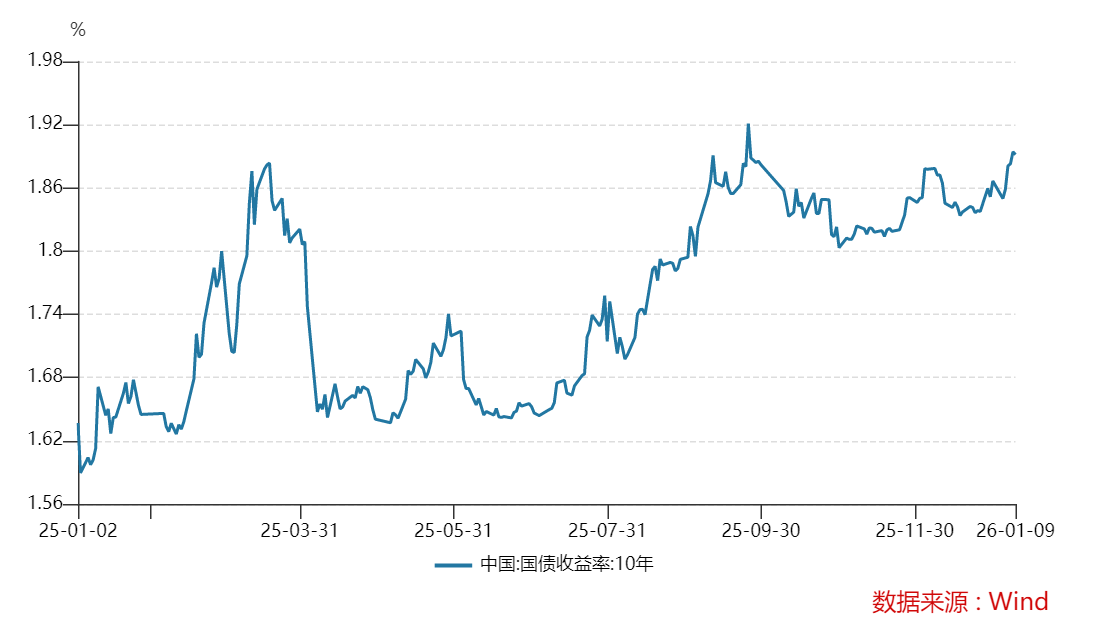
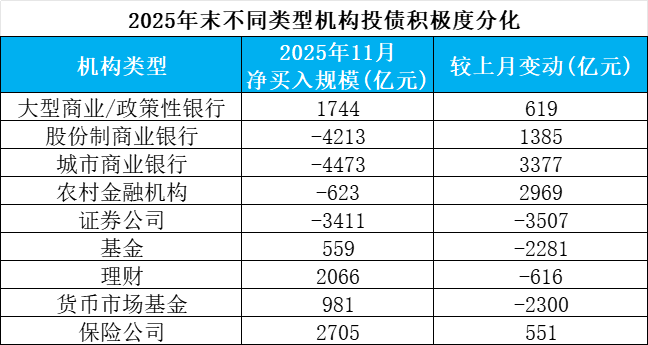
Core Insights - The bond market in 2025 faced significant challenges, characterized by high volatility and a complex interplay of factors affecting investment strategies [1][2][3] - The pressure on institutions to generate returns has intensified, leading to increased competition and operational difficulties in navigating the market [2][3] Market Dynamics - The bond market experienced a notable decline in interest rates, with the yield on 10-year government bonds decreasing by nearly 1 percentage point compared to the same period in 2024, resulting in a challenging investment environment [3][5] - The yield on 10-year government bonds fluctuated throughout the year, starting at 1.6% and reaching approximately 1.92% by September, reflecting economic recovery expectations and supply pressures [5][6] Institutional Behavior - Different types of institutions displayed varied investment behaviors by the end of 2025, with large commercial and policy banks showing strong buying activity, while other institutions like joint-stock banks and city commercial banks were net sellers [11][12] - The investment strategies of institutions have diverged, with some focusing on short-term trading for excess returns, while others are more cautious, aiming to reduce costs and losses [9][12] Future Outlook - As 2026 begins, the bond market is anticipated to open with a yield of around 1.85% on 10-year government bonds, with expectations for potential interest rate cuts in the first quarter [13][16] - The market is expected to remain volatile, with institutions adopting a cautious approach and preparing for potential adjustments based on monetary policy developments [15][16]
债市“低性价比”时代,“羊群效应”消失了
2 1 Shi Ji Jing Ji Bao Dao· 2026-01-11 23:14
Core Insights - The bond market in 2025 faced significant challenges, characterized by high volatility and low yield environments, leading to increased operational difficulties for investment institutions [1][2] - The market dynamics shifted towards short-term sentiment driven by external factors rather than fundamental analysis, reflecting intense institutional competition and pressure for returns [1][2] - The differentiation in investment strategies among various types of institutions became more pronounced, with some actively seeking opportunities while others adopted a more cautious approach [6][7] Group 1: Market Conditions - The bond market experienced a notable decline in interest rates, with the 10-year government bond yield dropping nearly 1 percentage point compared to the end of 2024, leading to a correction phase [2] - By the end of 2025, the 10-year government bond yield fluctuated, reaching a high of approximately 1.92% in September before stabilizing towards year-end [2][3] - The yield curve showed steepening trends, with long-term bonds like the 30-year government bond rising by 8 basis points in December, while shorter maturities saw slight declines [3] Group 2: Institutional Behavior - Different types of institutions displayed varied levels of engagement in the bond market, with large commercial and policy banks showing strong net buying activity, while others like city commercial banks and securities firms were net sellers [6][7] - The net buying figures for November 2025 indicated a stark contrast, with large banks net buying 1,744 billion and insurance companies 2,705 billion, while securities firms and funds were significantly reducing their positions [6][7] - The behavior of institutions was influenced by year-end performance assessments, with some locking in profits while others adjusted their portfolios for the upcoming year [3][5] Group 3: Future Outlook - As 2026 begins, the bond market is expected to open with a 10-year government bond yield of around 1.85%, with potential for policy easing anticipated in the first quarter [8][9] - There is a consensus among market participants that monetary policy may become more accommodative, with expectations for 1-2 rate cuts throughout 2026, although the timing and extent remain uncertain [9][10] - The market is likely to continue experiencing volatility, with institutions preparing for a challenging environment while seeking to optimize their strategies for better performance [11][12]
中欧国际工商学院教授盛松成:货币政策“小步走”可能性较大 降准降息仍有空间
Shang Hai Zheng Quan Bao· 2026-01-11 18:51
Monetary Policy Outlook - The possibility of a "small step" approach in monetary policy is high in the near term, with room for both reserve requirement ratio (RRR) cuts and interest rate reductions [2] - Monetary policy typically focuses on short- to medium-term goals and requires cooperation from the private sector, commercial banks, and the entire financial system for effective implementation [2] Tools and Strategies - The toolbox for monetary policy in China is becoming increasingly rich, with the central bank enhancing the role of policy rates and using various liquidity support tools and secondary market government bond transactions to manage liquidity and adjust funding costs [2] - RRR cuts are preferred over interest rate cuts, as there is still significant room for RRR reductions compared to major central banks globally [3] Banking Sector Insights - As of Q3 2025, the net interest margin for commercial banks is at a historical low of 1.42%, which may influence the preference for RRR cuts over significant interest rate reductions [3] - The low interest rate elasticity of consumption and investment means that interest rate cuts have limited effects on stimulating these areas, as businesses prioritize investment risks and profits over minor interest rate changes [3] Inflation and External Environment - Current low inflation rates lead to higher real interest rates, with CPI growth at only 0.2% in 2024 and zero growth in 2025, while PPI remains in negative territory [4] - The external environment for interest rate cuts is improving due to the appreciation of the RMB and the Federal Reserve's ongoing rate cut cycle [4] Structural Monetary Policy Tools - The central bank is innovating with a series of structural monetary policy tools to guide credit structure adjustments, which can provide both quantity and price incentives [4] - There is potential for interest rate cuts through structural tools, particularly to support technological innovation and economically weaker sectors [4]